
My First Numismatic Auction
UPDATE: The auction is online and begins to close at 7:00 PM on Sunday, November 3, 2019!
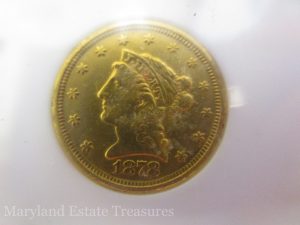
Lot #1: Beautiful classic Liberty Head $2½ quarter eagle gold coin in a Capital Plastics holder.
A few weeks ago, someone walked into the shop and asked about consigning coins. The coins were something he inherited and did not know what to do with them. Then my consignor removed an 1878 Liberty $2½ quarter eagle gold coin in a Capital Plastics holder. It is a beautiful coin in hand. It looks uncirculated.
Although the 1984 U.S. Olympics Commemorative Set sare not popular, he handed two of the three-coin sets with the gold coin.
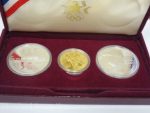
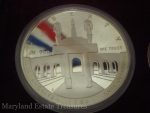
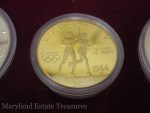
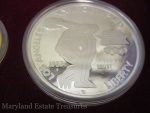
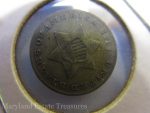
He continued to empty the bag, and I found Morgan and Peace dollars, Seated Liberty quarters, and a few other coins.
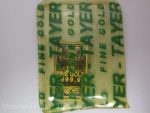
1 Gram TAYER Gold Ingot
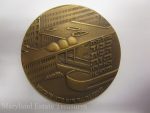
Finally, someone brought in the few Israeli coins and medals his late father owned.
Put it all together, add a few of my surplus coins, and there are 54 total coins in my company’s current auction.
Here is a small sample of some of the coins in this auction:
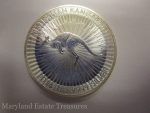
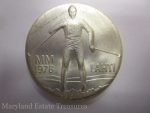
We do ship!
If you want more than coins, check out the rest of the auction which includes sports autographs (like a Joe Montana autographed football), art (two prints from Yaacov Agam), a Black Forest Cukoo Clock (it works!), and so much more. Feel free to peruse the entire 284 lot auction.
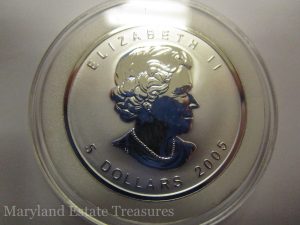
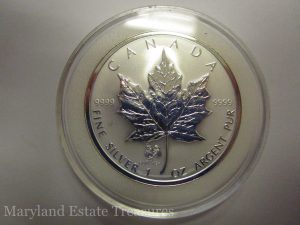
But don’t forget the coins, including this 2005 Canadian Silver Maple Leaf silver bullion coin with a Rooster Privy Mark.
Collecting History
A friend sent an email note reminding me that today (March 16) is the 258th anniversary of James Madison’s birth and the 207th Anniversary of the founding of the United States Military Academy at West Point.
 Madison, our 4th President, was the Commander-in-Chief during the War of 1812 and the victory over the British. He was a major contributor to the Federalist Papers and the framer of the Bill of Rights. Numismatically, the Madison Dollar was the last of the Presidential dollars issued in 2007.
 The United State Military Academy is the oldest of the service academies. West Point is considered the premier school of its type worldwide and its graduates includes war heroes, former presidents, and a famous college basketball coach. In 2002, the US Mint issued the West Point Bicentennial Dollar to commemorate 200 years of training our nation’s best.
I mention this note because the friend who sent the note has a unique perspective on coin collection. He has taken the phrase “history in your hand” to heart and has built his collection around history represented by the coins. Rather than purchase albums to collect series of coins, he has three-ring binders with pages to present his collection in date order of significance.
Using 12 three-inch binders, date numbered tabs, and various mylar pages, he insert his collection into the area where there is the most significance. For example, he collected the 50 State Quarter coin covers and inserted them on the date corresponding to when the state was admitted into the union. His Presidential Dollar coin covers are stored based on the birth date of the president. In this system, March 16 has the James Madison dollar coin cover and the West Point Bicentennial commemorative.
It sounds unwieldy, but my friend has done a great job creating a collection that he uses to teach his children and their friends the significance of history and coinage. I will try to post pictures if he gives me permission.
The moral of this story is that there is no right way to collect coins. Collect what you like and how you like. If you slowed your collecting activities because of the economy, maybe you can come up with a new idea as to how to organize your collection.
Images courtesy of the US Mint.
Still Not Finding 2009
I went to my bank and branches of three other banks to look for rolls of Martin Van Buren dollars and Lincoln Birth and Early Childhood cents. I know that the William Henry Harrison dollars are the current issue, but I was not able to find Van Buren dollars when they were in active release.
One bank I went to had just emptied the cent bags from its coin counting machine. The teller showed me the three bags of cents that will be sent to their contractor to be counted and sent back to the Federal Reserve. They did have Harrison Dollars and some John Quincy Adams dollars, but no Van Burens. A teller in another bank showed me a box of cent rolls they just received from the Federal Reserve. All the rolls had mixed coins, no new cents.
I also asked for District of Columbia quarters. Only one bank had a roll.
I have heard that Lincoln cents have started to be found in pocket change west of the Rockies and DC Quarters in the northern midwest states. But friends living throughout the Northeast Corridor have not found any of these coins in change.
Last year, I found my first 2008 coin in mid-June. Other than the special distribution of dollars and quarters, I don’t expect to see 2009 coins until June or July.
A Lesson for Three Dollars
After work, I decided to stop at a local coffee shop for a beverage. As I ordered my libation and noticed a $2 bill in the tip jar. The numismatist in me became excited. I reached in to take the note and replaced it with three William Henry Harrison dollars.
The barista watched carefully and noticed the gold-colored coins. She looked at me and asked why I was taking her money and leaving tokens. I pulled one out of the jar and showed her that it was a $1 coin. Apparently, it was the first time she had seen the dollar coin.
I told her about the Presidential Dollar Program and how they were honoring four presidents each year. She seemed interested and looked at the coin and asked who William Henry Harrison was.
If nothing else, the Presidential Dollar Program helped educate one high school student today!
Ultra High WOW!
At our coin club meeting, our speaker brought in a 2009 Ultra High Relief gold coin. In hand, the coin is more impressive than pictures can show.
I tried to take pictures with the camera on my iPhone, but the room light was too low for a good picture.
The coin is presented in a capsul that should have been made better. Capsuls from the US Mint have “seams” on the top and bottom of the rim. Since the rim of this coin is an important design element, I would have thought that the Mint would have looked to use a cleaner design. But the edge lettering is readable through the capsul and a nice element to the coin.
Augustus Saint-Gauden’s Liberty design seems to almost come to life on the coin. It is almost as if Miss Liberty is walking off the coin. The brightness of the coin leaves a great impression.
The eagle on the revese appears as if it is flying swiftly over the coin with a rising Sun in the background. The yellow of the gold is so appropriate for the image that I could not imagine this image being struck in any other metal. Whomever engraved the coin did a good job preventing the motto from detracting from the coin’s look.
The coin is presented in a felt-lined wood box that screems there is something special inside. That box was placed inside a protective box. Both the protective box and Certificate of Authenticity was placed in an outer box. It gives the coin a regal treatment that is well deserved.
Regardless of what you think of the Mint’s recent performance issues, they did a wonderful job with this coin and packaging!
Recently, it has been reported that several of these coins were graded MS-70 by the top two grading services. This does not surprise me given the information as part of the exhibit that was at last year’s Worlds Fair of Money in Baltimore. One thing that was said was the presses were run manually and struck twice with 65 metric tons of force. It was also said that they were going to limit the number of coins struck per die set. Thus, unless the dies are worn, this coin should never grade below MS-69.
I find it interesting that people are removing the coin from the wonderful presentation to have it placed in a cold-looking slab. Compared with the design of the packaging, the slab cannot do this coin justice, regardless of its grade. I think it will detract from the coin’s beauty and the impact the packaging is designed to provide. If I can afford one of these coins (and I am going to try), it will stay in its orginal US Mint packaging.
Awarded Numismatically
I had written about NBC Nightly News anchor Brian Williams and his collection of challenge coins. In short, challenge coins are medals that bears an organization’s logo or emblem that are carried by the members and given to outsiders as an honor. When a member draws his or her challenge coin and slaps it on the table, others must produce their challenge coin or buy a round of drinks for the group. It is very popular in the military.
The company I work for has an excellent relationship with the military and other federal agencies. Aside from our business, we have many employees and board members who are retired military officers. What makes us different from an ordinary Beltway bandit firm is that the company is a non-profit that runs three (soon to be four) Federally Funded Research and Development Centers (FFRDC). In short, an FFRDC “is a unique organization that assists the United States government with scientific research and analysis, development and acquisition, and/or systems engineering and integration. FFRDCs address long-term problems of considerable complexity, analyze technical questions with a high degree of objectivity, and provide creative and cost-effective solutions to government problems.” Our non-profit status gives us the freedom to make the right decisions without conflicts of interests getting in the way.
There is a tradition similar to challenge coins in my company. When a large project successfully ends, project members are awarded with a medal representing the project. Medals are either mounted on a plaque or framed in a coaster form. While most people do not use it as a coaster I was told that there was a time that team members would use the coasters during the celebration of their accomplishment.
I have seen a few project medals given to co-workers. Most of these co-workers have been employed by the company longer than I have and were given the medals for projects that ended before I started working for the company. Many have more than one. Although I had worked on a few large projects I never received one… until now!
 As I was leaving early on Friday a co-worker stopped me at my office door. She told me the project director was giving this to all team members handed me my first project medal. After not seeing one awarded in nearly eight years, I was very surprised. I stammered out a thank you and stopped to look at the medal.
Within the wood coaster is a 38 millimeter bronze medal that has the name of the company and the agency that benefited from our work around the outer edge. The inner ring has the initials of the centers that had members participating in the project. In the middle is the logo of the government agency.
It is very satisfying to be a member of a significant, successful project. It is also great that one of the rewards is numismatically satisfying!
Support the Coin Collectors Blog
 Buy me a coffee
Thank you for your support!
Let Me Know What You Think
Are you going to the World's Fair of Money
Total Voters: 17
 Loading ...