
Happy Anniversary to Modern Coinage
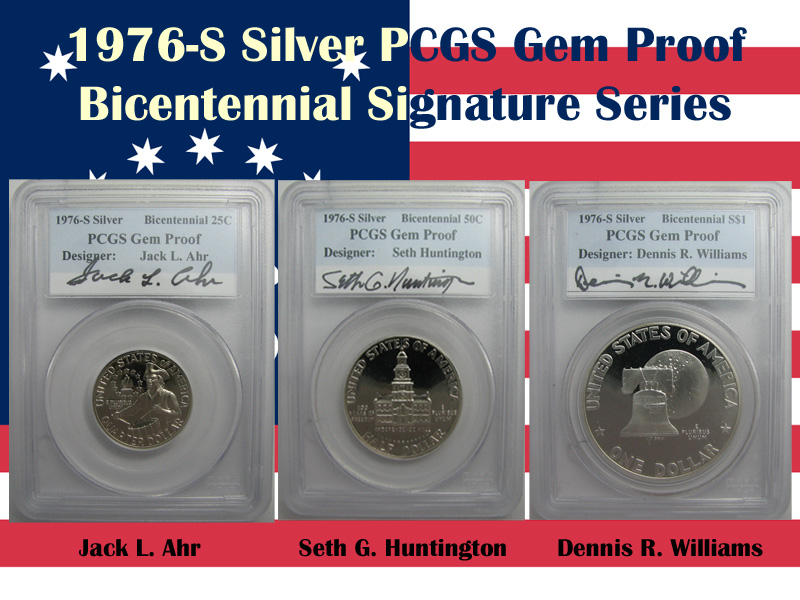
The dual-dated Bicentennial reverse designs are still very popular amontst collectors
The act forbade the striking of silver dollars for five years ending an experiment with the striking of Peace Dollars in 1964. There are rumors that at least one 1964-D Peace exists despite the U.S. Mint’s insistence that all of the coins were melted.
Finally, the act made all coins and currency produced in the United States and specific bank issues as legal tender, which reversed the demonetization of the Trade Dollar in 1867.
The Coinage Act of 1965 marks the dividing line between “classic” and “modern” coinage.
After fifty-four years of modern coinage, there continues to be collectors and dealers who turn up their noses at modern coins.
Although the stories behind many of the classic issues are interesting, modern coins provide a diversity that is meaningful and affordable for the average collector.
The first coin of the modern era that had a public impact was the dual-dated coins with the reverses honoring the nation’s bicentennial. The bicentennial was a two-year celebration preceded by three years of hype and prep. When the coins were released, many people searched their change, looking for the coins. It was the first time in many years that half-dollar and large dollar coins circulated in significant numbers since finding them in change was exciting.
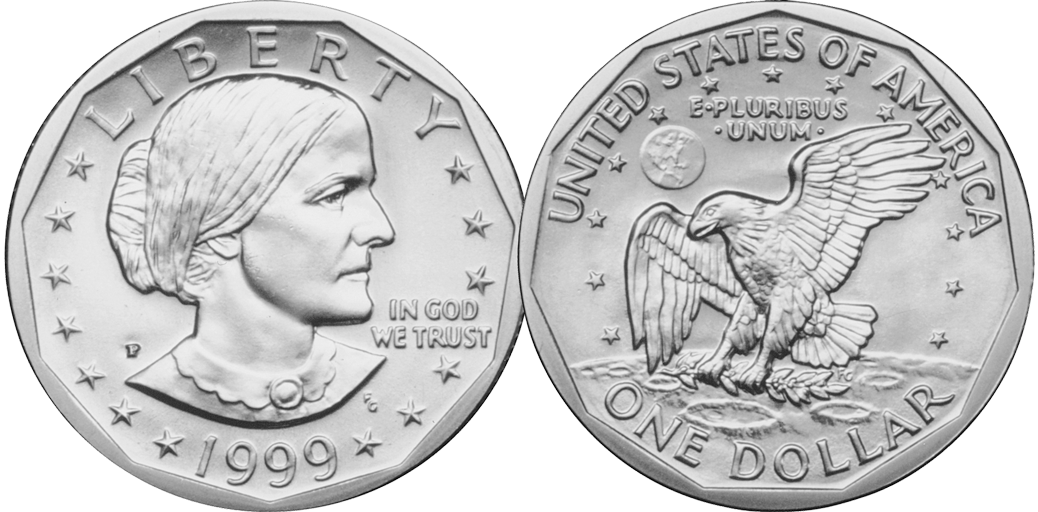
The Susan B. Anthony dollar was less than successful because it was confused with a quarter
The most successful program of the modern era was the 50 State Quarters program. The program started strong with a lot of interest. Unfortunately, a downturn in the economy and the television hucksters overselling the potential value of the series turned away a lot of potential collectors.
As the success of the 50 State Quarters program grew, Congress passed laws to create several other circulating commemoratives. The programs include the Westward Journey Nickels, Abraham Lincon Bicentennial cents, and the Native American $1 coin program using the golden-colored planchets of the Sacagawea dollar.
The modern era saw the return of the commemorative coin programs. Some were very popular, like the 2001 American Buffalo Commemorative Coin and 2014 National Baseball Hall of Fame Commemorative Coin programs. There were less popular coins, but none had flopped as bad as the 2013 Girl Scouts of the USA Centennial Silver Dollar.
Unlike previous commemorative coin laws, modern laws help the U.S. Mint limit the time these coins can remain on sale. It also limits their production to one year.
Finally, the modern era has given us the bullion coin series. It started with the American Silver Eagle program that was created to provide a way for the United States government to sell off silver saved in the Defense National Stockpile. As a result, the U.S. Mint has used the program to experiment with different finishes, including burnished and reverse proof.
Congress passed the Gold Bullion Coin Act of 1985 a few months later after being lobbied by the gold mining interests. This law created the American Eagle Gold Bullion Program.
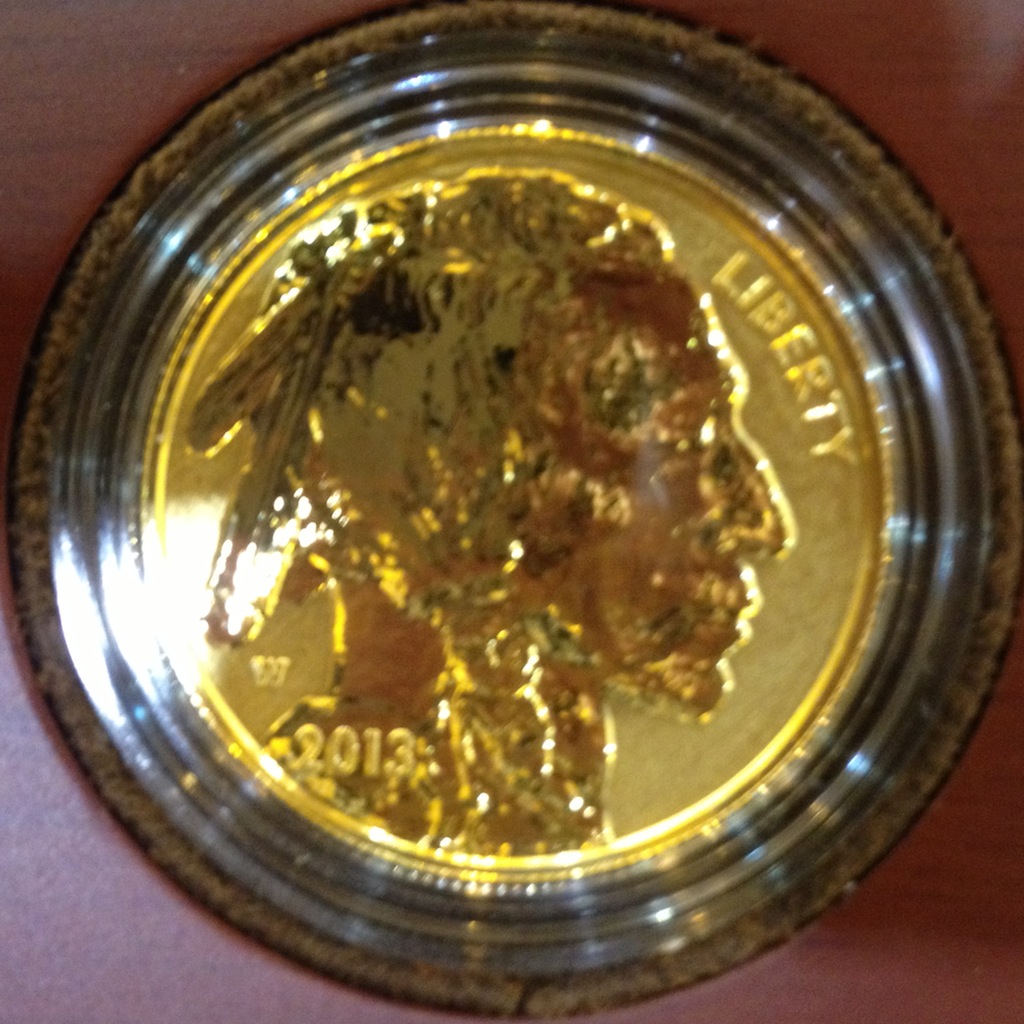
2013-W American Buffalo gold reverse proof obverse
After 54 years there are a lot of exciting choices for the modern collector. And this does not consider the collection of errors or varieties, like the three types of 1972 Eisenhower dollars or the wide versus narrow lettering on the reverse of the 1999 Lincoln cent.
It is past the time for the numismatic community to embrace the collection of modern coins more than it has. There may be few modern coins that are worth thousands of dollars, but they are available to capture the interest of potential collectors. After all, how many of us started collecting by searching pocket change.
Girl Scout Commemorative Proposed
Yesterday, I was notified by one of my political junkie sites, govtrack.us, that H.R. 6404, a bill to “require the Secretary of the Treasury to mint coins in commemoration of the centennial of the establishment of the Girl Scouts of the United States of America.”
As I write this, the information is so new that it has not been posted on Thomas, the Library of Congress site that shares legislative information with the public. So there is no further information. When the bill is posted, it will be available via this link.
If we look at other commemorative legislation, I speculate that the bill with be a $1 silver commemorative coin that will be available in proof and business strike issues. Since the Girl Scouts were founded in 1912, the coin will celebrate their centennial in 2012. Other than design specifics, the bill will call for the minting of 300,000 to 500,000 coins with a $10 surcharge that will be donated to the Girl Scouts.
We will check back to see how well I played swami!
High Relief Double Eagle to be Unveiled in Baltimore
Another reason to attend the World’s Fair of Money® at the end of July in Baltimore is to be there for the unveiling of the 2009 Ultra High Relief Double Eagle Gold Coin.
The US Mint announced that US Mint Director Ed Moy will participate in the show’s opening ceremony and then officially open the Mint exhibit that will feature the one ounce gold coin that will go on sale in 2009.
The coin&rsqou;s design will be a high-relief $20 gold piece on a double-thick, 24-karat gold planchet (sometimes called a piefort) 27 millimeters in diameter. The design will feature Augustus Saint-Gaudens original 1907 design where the date will be in roman numerals (MMIX). The inspiration for this coin came from 1907 when the Mint tried to strike an experimental double eagle using two stacked $10 eagle planchets. When it was realized that congress would have to approve the striking of the coin for circulation, the project was abandoned and the test pieces were melted.
Aside from the date, the only difference between the 1907 test pieces and the 2009 bullion issue is that the the motto “In God We Trust” will be added over the rising sun as it appeared in 1908.
Register for ANA Classes in Baltimore TODAY!
The American Numismatic Association emailed a note to members announcing that space was still available for the classes at the ANA World’s Fair of Money® being held in Baltimore. If you are going to attend the show, this would be a great time to learn more about your hobby.
Here is the announcement from the ANA:
Take a Course at the World’s Fair of Money!
Space Still Available for Pre-convention SeminarsANA members can save up to $100 on pre-convention and professional development seminars before and during the Baltimore World’s Fair of Money® by enrolling by July 1. Technical and collector series courses cater to collectors of all ages and interests.
Technical Series Seminars
Fundamentals of Grading United States Coins: Learn how U.S. coins should be graded according to the latest ANA and market standards. Instructor: Lane Brunner, Ph.D., author and collector. Time: 9 a.m. to 5 p.m. July 28-29. ANA member cost: $295 through July 1; $345 after. Life member discount: $50.
Forensic Numismatics: Detecting Counterfeit and Altered U.S. Coins: Focus on items most often seen on the market today with examination of genuine and counterfeit specimens. Instructor: Brian Silliman, NGC grader. Time: 9 a.m. to 5 p.m. July 28-29. ANA member cost: $295 through July 1; $345 after. Life member discount: $50.Collector Series Seminars
Advanced Morgan Dollar Study: Take your passion for Morgan dollars to the next level with hands-on grading and identification of the best varieties of the series. Instructor: Ash Harrison, Society of Silver Dollar Collectors president. Time: 9 a.m. to 5 p.m. July 28-29. ANA member cost: $120 through July 1; $145 after. Life member discount: $10.
Numismatics of Colonial America: Discover the intricacies of the early history of the nation’s coinage by learning die varieties, grading, methods of collecting and how to form a colonial coin library. Instructor: Erik Goldstein, numismatic curator at the Colonial Williamsburg Foundation. Time: 9 a.m. to 5 p.m. Aug. 1. ANA member cost: $88 through July 1; $98 after. Life member discount: $10.
Overview of Post-Civil War Tokens: Discover why token collecting has become such a popular field, why tokens where produced and used, how to collect, and what factors determine value. Instructor: David Schenkman, columnist for The Numismatist and editor of the TAMS Journal. Time: 9 a.m. to 5 p.m. Aug. 1. ANA member cost: $88 through July 1; $98 after. Life member discount: $10.>Professional Development Seminar
Coins in the Classroom shows educators how to use money as a tool to create and enhance lessons in mathematics, social studies, language arts and economics. Instructor: Rod Gillis, ANA Numismatic Educator. Time: 9 a.m. to 5 p.m. July 30-31. Cost: $45.Free workshops and lectures
The World’s Fair of Money provides numerous free workshops and lectures, including Numismatic Theatre and World Mint Theatre presentations and the Sundman Lecture Series on the topic, “Money as a Means of Propaganda.”Pre-registration is required for some workshops. For more information, visit www.money.org and select “World’s Fair of Money” from the “Numismatic Events” dropdown menu.
To register or for more information, call 719-482-9857, e-mail education@money.org or visit www.money.org (select “World’s Fair of Money” from the “Numismatic Events” dropdown menu, then select “Education”).
History Detectives Investigates Annie Oakley Coin
One of my favorite television shows is History Detectives, the PBS show featuring four investigators with interests in antiques, history, and sociology research the background and history of artifacts in the possession of ordinary Americans. It is one of the most popular series on PBS.
 The show enters its sixth season starting on June 30. The first episode will feature Elyse Luray investigating a coin with a bent, split edge that may have been shot by Annie Oakley during a Buffalo Bill Wild West Show and given to the contributor’s great-grand uncle.
There are two issues for this investigation: was the great-grand uncle in a place to be able to receive the coin and was the coin something that would have been used by Oakley in the show? The coin is an 1853 two Centimes coin from France. Would that coin have been available in America during the mid-ninteenth century?
You can find out when the show will be aired in your area from the PBS website. If you do not mind a little spoiler before watching the show, you can write up by Susan Headly, the moderator at coins.about.com.
Image courtesy of PBS.org
NASA 50th Anniversary Commemorative
This passed week, the Senate passed S. 2159, NASA 50th Anniversary Commemorative Coin Act, by unanimous consent. The bill was held at the desk, meaning that it was not sent to the House of Representatives for consideration.
The bill is similar to H.R. 2750, which was passed by the House in July, 2007. The significant different between the bills is that the House bill specifies where the coins can be minted and the Senate bill does not. Because the 50th anniversary of NASA is this year, the Senate bill specifies that the coins will be dated 2008, allows the coins to be issued through 2009, and specifies that it does not count against the maximum of two commemorative programs for 2009.
Both bills call for a high relief $50 gold coin and $1 silver coins. For the $50 coin, the obverse will bear an image of the sun and the reverse will “bear a design emblematic of the sacrifice of the United States astronauts who lost their lives in the line of duty over the course of the space program.” There will be a mintage limit of 50,000 gold coins and 300,000 silver coins. The US Mint would be allowed to make bronze medals based on the design of the gold coin.
For the $1 silver coins, the bill calls for nine different obverse designs representing the nine planets of the solar system, including Earth. It appears that congress is not paying attention to Pluto being voted out of the solar system. The reverses of these coins will be “be emblematic of the contributions of the research and space centers.” The bill requires the following:
- On the Earth coin, the reverse will “bear images emblematic of, and honoring, the discoveries and missions of the National Aeronautics and Space Administration, the Mercury, Gemini, and Space Shuttle missions and other manned Earth-orbiting missions, and the Apollo missions to the Moon.”
- On the Jupiter coin, the reverse will “include a scientifically accurate depiction of the Galilean moon Europa and depict both a past and future mission to Europa.”
- For the Saturn coin, the reverse will “bear an image of the planet Saturn on the obverse shall include a scientifically accurate depiction of the moon Titan and depict both a past and a future mission to Titan.”
- For the Pluto and Other Dwarf Plant coins, the reverse will “include a design that is emblematic of telescopic exploration of deep space by the National Aeronautics and Space Administration and the ongoing search for Earth-like planets orbiting other stars.”
The bill also calls for images that would be selected for realism and scientific accuracy.
There will be a surcharge of $50 for the gold coin, $10 for the silver coin, and $1 for the bronze medals. The first $4 million collected will be paid to “NASA Family Assistance Fund, for the purpose of providing need-based financial assistance to the families of NASA personnel who lose their lives as a result of injuries suffered in the performance of their official duties.” The next $1 million of the money collected will be split between the Dr. Ronald E. McNair Educational (D.R.E.M.E.) Science Literacy Foundation and Challenger Center for Space Science Education. Any balance will be given to the Smithsonian National Air and Space Museum for their exhibits.
If done right, this program could create very interesting collectibles. I can see a set with the gold coin in the middle surrounded by the nine planet coins in a display case. Given the current cost of the metals, this set may be more expensive than most collectors can afford. In the mean time, the House and Senate have to work out the differences between the two versions.
Support the Coin Collectors Blog
 Buy me a coffee
Thank you for your support!
Let Me Know What You Think
Are you going to the World's Fair of Money
Total Voters: 17
 Loading ...