
W Quarter Find Average is Still Below the Mendoza Line
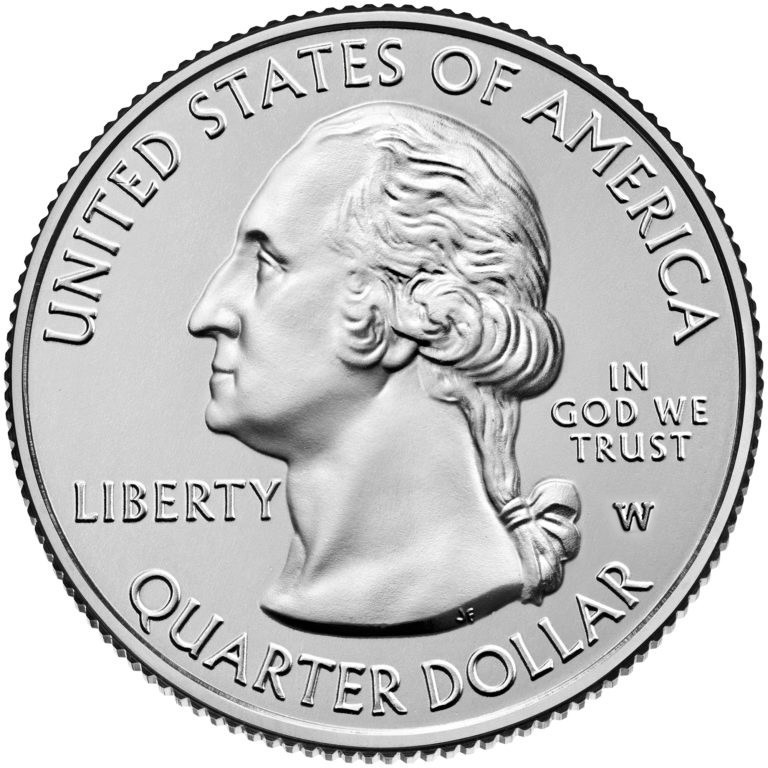 Today I was able to see a West Point Mint struck Lowell National Historical Park quarter. The problem was that it was not my coin.
One of my regular customers came into the shop to ask about the quarter. He had heard that there was a bounty issued to find the first quarter and wanted to know if I could help claim the prize.
I was surprised when he dropped five 2019-W quarters in my hands. After I explained that the first-find bounty was claimed, I asked how he found five coins. The answer was obvious: roll hunting.
My customer works in the Baltimore area and stopped in a few banks to buy a few rolls. He said that he could buy two rolls at each bank without the tellers complaining that he is not a customer. When he searched through the rolls, he found the five coins.
I do not know why I was surprised by the coin roll response. It would make sense that if the U.S. Mint were sending the bags directly to the Federal Reserve for circulation, the rolls would be at the banks rather than in circulation. Large retailers usually get their change from logistics companies who specialize in transporting large sums of money. Small retailers may have a small batch of coins that are just stored and not circulated. Both situations are not conducive to forcing coins into circulation.
Then I read that one of the PCGS $5,000 First Discover winners found the coin at the end of a roll.
When I closed the shop earlier today, I opened the five rolls of quarters I purchased from my bank on Thursday. To put it in baseball terms, I am oh-for-200 with a batting average of .000! That is definitely below the Mendoza Line!
Grading First Day of Mintage
Numismatic Guarantee Corporation (NGC) announced today that they will recognize the Presidential Dollar coins submitted for grading still in US Mint Official American Presidency $1 Coin Cover Series holders as “First Day of Mintage.” NGC said that there will be no date sensitivity requirements but the coins will have to be submitted in the Mint’s shrink wrap for the coins to be eligible for the designation.
NGC will post additional detail to their website on Monday, April 16. Stay tuned.
Commemorating Washington
The Great Depression was taking its toll on the nation in 1931. Desperate economic times were gripping the nation, a severe drought created the Dust Bowl across the Great Plains. In order to try to lift the spirits of a nation, congress authorized the formation of the George Washington Bicentennial Commission to celebrate the 200th birthday of the nation’s first president in 1932. To be part of the celebration, the US Mint and the Department of the Treasury proposed to issue a circulating commemorative half-dollar honoring Washington. Congress agreed and requested that Treasury Secretary Andrew Mellon work with the Commission of Fine Arts (CFA) and the Washington Bicentennial Commission to begin a design competition.
 One of the rules of the design competition was that the proposals must be based on the famous bust of Washington by sculpture Jean-Antoine Houdon, considered the most accurate depiction of the first president. During the competition, congress was convinced to change the denomination to the quarter under the assumption that more people would have access to quarters than half-dollars. Although this meant the end of the popular Standing Liberty design by Hermon MacNeil, there was little opposition to this change.
At the end of the competition the CFA chose the design of Laura Gardin Fraser, medal designer and wife of James Earl Fraser. But Secretary Mellon had his own ideas of artistic value. Mellon was well known as a collector of fine art who later went on to donate his collection and money to create the National Gallery of Art. Mellon also did not like the idea that a woman could win this type of competition over a man. With his chauvinism intact, Mellon asserted his authority and selected the work of sculptor John Flanagan for the design. Although most agreed that Fraser’s designs were better, Mellon justified his selection noting that Flanagan was noted for his period-style (e.g., bland) designs and being a student of Augustus Saint-Gaudens.
Shortly after the selection process, Ogden Mills became Treasury Secretary when Mellon was appointed to become ambassador to Great Brittan in 1932. Mills was not interested in the design process although the CFA and the Mint were him lobbying for a change. Mills noted that work had begun on the master dies and ordered that the Mint continue to use the Flanagan design.
The coin was very well received by the public. With the letters and acclaim from the public, Mint Director Robert J. Grant impressed upon Secretary Mills to request that congress extend the one-year issue to be a regular issue. But it was the height of the Great Depression, an election year, and the Democratic challenger, Franklin Delano Roosevelt was campaigning hard against the incumbent President Herbert Hoover. Hoover was not interested in sponsoring “frivolous” legislation and ignored the requests from Grant and Mills. Hoover was being accused of allowing the country to slip deeper into the depression by the Roosevelt campaign—Hoover did not want to give Roosevelt more fodder for the bitter campaign.
Roosevelt won and Hoover became a lame duck. At that time, the new president would not take the oath of office until March. From the November election until March, Hoover and the Roosevelt transition team did not communicate. Hoover was honorable in defeat and would have done anything to help the transition. But the lack of communication created real political gridlock. No bills were introduced and no laws were passed during that time. Statistically, it began the worst six months of the depression. It was this situation that prompted the passage of the Twentieth Amendment to the Constitution that changed the date of the presidential inauguration to January 20th.
Two weeks prior to his inauguration, FDR asked his old friend and Wall Street executive William H. Woodin, to be the Secretary of the Treasury and help implement a new monetary policy. Woodin rushed to Washington to work with Ogden Mills in order to understand the issues. On the day of FDR’s inauguration, Mills resigned and voluntarily stayed in Washington to help Woodin with various policy changes. Woodin and Mills worked together on the gold recall and the creation of the Federal Deposit Insurance Corporation (FDIC).
Once the Gold Reserve Act was passed, Mills left Washington and Ogden set about implementing the policy he created for Roosevelt. One of his tasks was to recommend a Mint director. Woodin recommended that FDR appoint Nellie Tayloe Ross as the first female Director of the Mint.
When Ross took over at the Mint, they were operating at a lower capacity and mostly minting cents in order to keep people employed. Ross began to revive the Mint and proposed to keep the popular Flanagan design for the Washington quarter in order not spend the money on a redesign. Woodin agreed to allow the continuation of the Washington Quarter. Treasury officials and Congress agreed that the Secretary had the authority to continue with the design. Coin production picked up in 1934 with the Washington Quarter Dollar as a regular issue coin.
It can be said that the 1932 Washington Quarter was the first coin minted as a circulating commemorative. Starting with 1934, the Flanagan design was used as a regular issue including the modified design that is used as part of the 50 State Quarters® Program today.
Image of the Washington Bust by Jean-Antoine Houdon from the Boston Athenæum.
Thank You, Uncle Bill
My Uncle Bill died this past week, succumbing to the pancreatic cancer that he fought for the last year. His funeral was last Monday. Aside from being the patriarch of the family, he was a consummate teller of corny jokes, offerer of simple and sage advice, and an avid stamp collector. Although he gave up his philatelic endeavors a few years ago, he had a good sense for collecting. Uncle Bill was an inspiration for aspects of how I work with my current collection.
A few years ago, I hosted Thanksgiving dinner at my home. I spend the few days prior preparing and cooking for the few who avail themselves of my invitation for a home cooked Thanksgiving that includes my chestnut stuffing, which always gets rave reviews. While in my home, I showed Uncle Bill the row of Whitman Folders with my coins and the few albums I had. He noticed the age of the Whitman Deluxe album with the Roosevelt Dimes and suggested that I replace the album with a newer one and the folders for albums. Aside from updating to more archival quality materials, the albums will allow the viewing of both sides of the coins.
One thing I had not counted on was the toning from the older album. While looking at the dimes, Uncle Bill pointed out the album toning on a few coins. After the holiday weekend I purchased Whitman Classic albums, transferred the coins, and replaced the album toned coins. Then I systematically purchased Whitman Classic albums to replace the folders. With some exceptions, all of the folders have been replaced with albums.
It was Uncle Bill’s simple and sage advice that has improved the presentation and enjoyment of this hobby of kings. Thank you, Uncle Bill. Thank you for the advice. Thank you for all of the corny jokes. Thank you for your love and support. Thank you for improving the lives of all around you.
Celebrating!
As I celebrate the start of another year of life on this rock we call Earth, I unbury my head from my work responsibilities to catch up on the news and events of the week. It seems the US Mint has been busy, so let’s get started.
The Mint published a Hot Item consumer advisory discussing the altering of the edge lettering on the George Washington Dollar Coin. Although I discussed this in my posting “NGC Warns About Altered Washington Dollars,” the Mint adds the potential for this being a criminal act. According to the Mint:
Although altering and defacing United States coinage generally is not illegal, doing so violates a Federal criminal statute (18 U.S.C. § 331) when the act is accompanied by an intent to defraud. Accordingly, a person is committing a Federal crime if he or she intentionally alters an ordinary Presidential $1 Coin to make it look like an error coin for the purpose of selling it at a premium to someone who believes it to be a real error coin. Under this statute, it is also a Federal crime to sell at a premium an ordinary Presidential $1 Coin that one knows has been altered so it looks like an error coin to someone who believes it to be a real error coin. Penalties include a fine and up to five years in prison.
The Mint announced that the Secretary of the Treasury appointed thre new members of the Citizens Coinage Advisory Committee (CCAC). The CCAC advises “the Secretary of the Treasury on the themes and designs of all US coins and medals. The CCAC serves as an informed, experienced and impartial resource to the Secretary of the Treasury and represents the interests of American citizens and collectors.” The three appointees are
- Gary Marks, the City Manager of Whitefish, Montana and the Commissioner of the Montana Quarter Design Selection Committee
- Michael Brown, Vice President of Public Affairs for Barrick Gold Corporation and former Special Assistant to US Mint Director Donna Pope from 1981 to 1989
- Reverend Dr. Richard J. Meier, a hobbyist and current Pastor of the Alpine Lutheran Church in Rockford, Illinois.
The Mint also began to take subscription orders for the uncirculated American Silver Eagle coins. These coins will be dated with the “W” mint mark to be sold for collectors. Silver Eagles without the mint mark will continue to be available for the bullion market and sold through dealers. As a reflection of the rise in the price of silver, the 2007-W coins will cost $21.95, up $2 from last year.
Finally, as a celebration of my birthday, I would like my readers to consider joining other numismatists and collectors to promote the hobby. If you are not a member of the American Numismatic Association, take this opportunity to join. If you have access to a local coin club, why not join others in your community. There are national clubs based on your interest, so consider joining them. Finally, if you know of a collector who is not a member, whether they are a young numismatist or otherwise, get them to join. It is fun and will help promote the hobby as it is showing a lot of growth. Just join!
More First Day Coin Covers
When it comes to modern collectibles, I am into the “oh, neat!” of collectibles. I collect American Silver Eagles, silver Chinese Pandas, and British Britannias because they are neat! One neat collectible I discovered are First Day Coin Covers sold by the US Mint.
For those who do not collect philatelic items, First Day Covers are envelopes with stamps that are canceled on the first day of issue. Coin covers, also called Philatelic Numismatic Covers (PNC), are covers with coins or medals encased and usually postmarked on the first day of issue of the numismatic item. I have come to learn that PNCs are popular in Europe. The Royal Mint and Royal Mail partner to create wonder PNC collectibles in the United Kingdom.
The Mint has participated in the production of PNCs in the past but did not produce their own products until the 50 State Quarters program. Since 1999, the Mint as produced covers for all special circulated issues including the 50 State Quarters, Sacagawea Dollar, and the Westward Journey nickels. I have collected these covers from the beginning.
 I was perusing the Mint’s online catalog to see what products are on the horizon. There, I found that the Mint will be issuing The American Presidency $1 Coin Cover Series. These covers will feature uncirculated Presidential Dollars from the Denver and Philadelphia mints from the first day of manufacturing. The coins will be attached to an envelope that will include a portrait of the President being honored and a paragraph describing his term of office. The envelope will have the prevailing stamp of the day and will be postmarked on the first day of issue in the president’s hometown. The Mint limits the production to 50,000 covers and cost $14.95—a bargain compared with similar offerings from other sources.
As opposed to the First Strikes or Early Releases coins designated by the third-party grading services, the coins included on the cover are from the first day of production for the coins. This makes them true first day of issue coins as guaranteed by the US Mint. This will be another interesting way to collect the new Presidential Dollar coins. I am looking forward to seeing these covers!
Image from the US Mint.
Support the Coin Collectors Blog
 Buy me a coffee
Thank you for your support!
Let Me Know What You Think
Are you going to the World's Fair of Money
Total Voters: 17
 Loading ...