
Weekly World Numismatic News for February 10, 2019
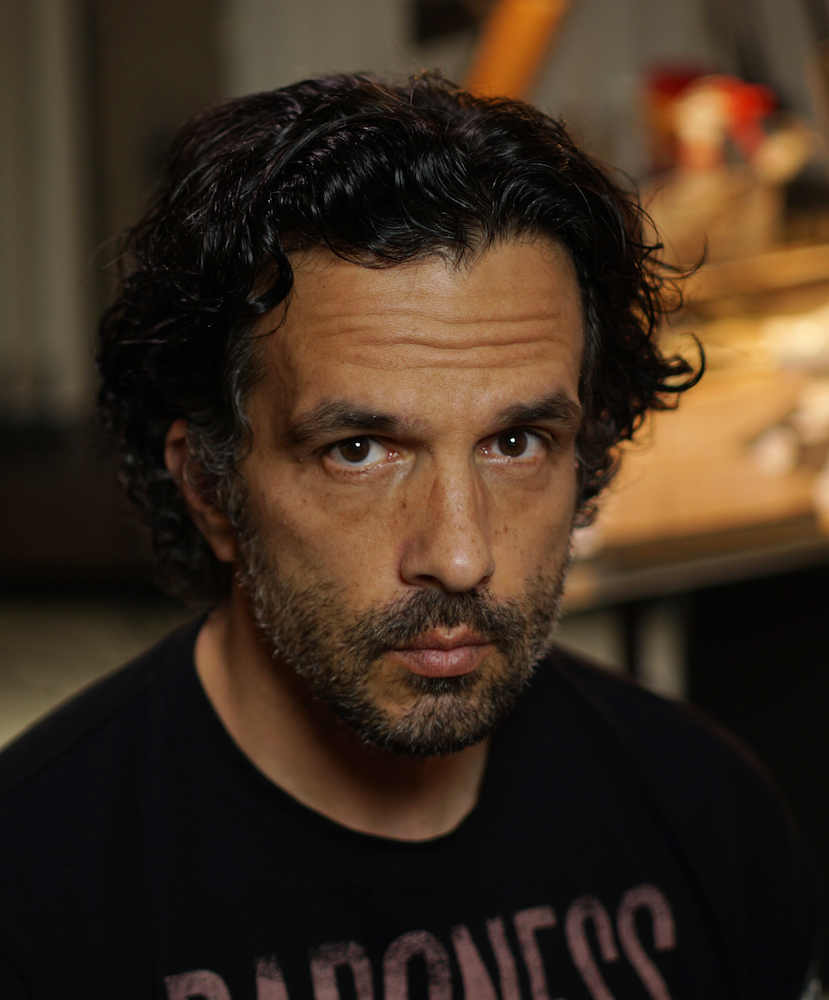 The numismatic news of the week of the week is the appointment of Joseph Menna as the 13th Chief Engraver of the U.S. Mint.
Although the position of Chief Engraver was abolished in 1996 as an appointed position, Mint Director Edmund Moy resumed the position and appointed John Mercanti as the 12th Chief Engraver. The position was vacant since Mercanti’s resignation in 2010.
Many references cite Public Law 104-208 as the law that eliminated the Chief Engraver position. That bill is the Omnibus Consolidated Appropriations Act of 1997. As with a lot of these omnibus acts, there is a lot of “stuff” packed into this law, but there does not appear to be a reference to the Chief Engraver.
In fact, a search the term “chief engraver” at govinfo.gov, the site for the Government Printing Office shows no public or private law with those words. The GPO has nearly every bill and public law for the past 100 years available for full-text search.
This is something to look into.
In the mean time, congratulations Joe Menna!
And now the news…
 January 30, 2019
A 300-year-old British coin has sold at auction for a world-record price of £845,000. The five guinea 'Vigo' coin dates to 1703 and was made using gold seized by the British from a Spanish treasure ship at the Battle of Vigo Bay.  → Read more at dailymail.co.uk
February 3, 2019MANCHESTER, N.H. — Hundreds of students took part Saturday in a robotics competition at Southern New Hampshire University. And the event came with an assignment from inventor Dean Kamen: He wants every student to get involved with an effort to honor a New Hampshire hero. → Read more at wmur.com
February 5, 2019More than a decade ago Aries Cheung, a Toronto-based artist, graphic designer and filmmaker, was approached by a representative from the Royal Canadian Mint. Would he like to enter a competition for a new series of coins to celebrate the Lunar New Year? → Read more at scmp.com
CFA To Review Little Rock High School Commem
The United States Commission of Fine Arts published its agenda for the July 27, 2006 meeting. On the agenda is the final design review for the Little Rock Central High School Desegregation 50th Anniversary Commemorative one-dollar silver coin. Public Law 109-146 (GPO: Text, PDF), authorizes the minting of 500,000 $1 coins commemorating the 50th Anniversary of the landmark desegregation of Little Rock’s Central High School.
This commemorative will be available in 2007. The law prescribes that a $10 surcharge will be added to the sale of the commemorative coin. That money will be used by the Department of the Interior to enhance education, maintenance and make improvements to Little Rock Central High School National Historic Site.
What About A New Coin Show
After posting the entry about my day at the Baltimore Coin and Currency Convention nothing that there used to be a small, regular coin show in New Carrollton, Maryland, I started thinking about what it would take to put together a show like that in this area.
I know I would be asked why I would do this. First, it looks like fun. Although I love going to the Baltimore show, I really have a good time at smaller shows. The crowds are cozier, the dealers seem more talkative, and it feels like a more fun atmosphere. To me, it seems as if the hobbyists and collectors are the ones who dominate the attendance at the smaller shows where the larger shows attract the investors and those with more “high-priced” collections. While there is a place for everyone in numismatics, and I love going to the Baltimore show, it would be nice to see a smaller show come back to the DC area, accessible to an area that seems to have a higher concentration of hobbyists and collectors, on the east side of the Beltway. Maybe one downtown would be a nice draw!
So what would it take to put on a show, aside from a venue? Finding a place would be relatively easy. It could be scheduled enough in advance to attract dealers and provide publicity. There would probably have to be security, too. But what else? Does anyone have any thoughts?
Uncirculated Sets Available
I received a note from the US Mint this morning announcing that the 2006 Uncirculated Set was available to purchase. The 20-coin set includes uncirculated coins from both the Philadelphia and Denver branch mints. The set includes the Return to Monticello nickel and the 2006 50 State Quarters for Nebraska, Nevada, Colorado, North Dakota, and South Dakota. All 20 coins will have the satin finish that the Mint introduced last year. The set costs $16.95 and can be purchased from the Mint’s online store or by phone at 800-USA-MINT (800-872-6468).
Of Baltimore and Buffaloes
One of the activities that I have enjoyed in my return to numismatics has been going to coin shows. I started by going to smaller shows. In the DC area, there used to be a show in New Carrollton, Maryland. The show was held in a basement exhibition area of a hotel that was not the most exciting room, but the 50-75 table show was fun. It was great talking with the dealers and negotiating deals on nice fillers for my collection.
Then I found the Baltimore Coin and Currency Convention. It is the largest regular show in the area and is held in the Baltimore Convention Center. Even when I go on a Sunday during the summer when at least half of the dealers went home after Saturday’s session, I still meet very nice people and see very interesting coins and currency. Bowers and Merena made a respectable $3.7 million in two days.
Sometimes, I find it more interesting to see interesting items than some of my purchases. Sure, I found a nice Canadian Quarter collection in a Library of Coins album that will allow me to continue to build a respectable Canadian coin collection. But I saw two buffaloes that I find very interesting: the American Buffalo $50 24-karat Proof Gold coin and a 1901 Series $10 Buffalo United States Note.
The American Buffalo gold coin is beautiful. It is a copy of the 1913 Type 1 Buffalo Nickel with small modifications. On the American Buffalo coin, the mint mark was moved to the front to the left of the Indian’s neck and the composition is included on the mound. After I compared the coin with a 1913 Buffalo nickel side-by-side, I noticed that the elements on the gold coin does not extend all the way to the rim as on the nickel. Even before I compared the two coins, it appeared to me as if the legends were further away from the rims. It is still a beautiful coin!
If you are going to buy one of these coins, I would recommend buying the proof coin. The proof coin shows shiny fields and frosty elements that really shows off the design. The uncirculated coin that is intended for investment buyers is a nice coin but the matte finish is does not have the same impact of the proof coin. Looking at the coins together, eyes are really drawn to the proof. It is not the same as doing this comparison with the American Silver Eagles. Visit your local dealer to look for yourself. Note that some dealers are charging $75 more for the proof coin than if you would buy it directly from the US Mint.
There is something about the image of the buffalo on US coins and currency that I find appealing. The buffalo is a real symbol of the growth of the United States as a nation across the Great Plains. In 1901, the Treasury issued a $10 United States Note with the image of Black Diamond, a buffalo that was living in the Bronx Zoo, on the front with vignettes of Meriwether Lewis and William Clark on either side. Lewis and Clark helped shape the westward expansion over a land where bison roamed. The beautiful note is a fantastic representation of the early 20th century United States.
In Baltimore, I found a dealer who had one sealed in a grading service holder. It is a large note with very ornate engraving and a very compelling portrait of Black Diamond. I do not remember the grade because I was mesmerized by its beauty. It is one thing to see the note in pictures, it is quite another to hold one. The dealer who had the note said he would sell it to me for $1300. As much as I would appreciate owning one of these beauties, the price was a bit beyond my budget.
Circumstances will prevent me from going to Denver for the World’s Fair of Money in August. Hopefully, I will make it to Charlotte for the National Money Show next March. Until then, the next Baltimore show is in November. Maybe I should bring my camera to show everyone this show!
Happy Birthday Rembrant
There has been some interesting things to write about over the last ten days. But over that time, those of us in the Washington, DC metropolitan area have been catching up on our work after contemplating building an ark following the flooding from a week of rain. So after a very long week, I was looking around for something interesting and out of the ordinary, especially after sleeping in and missing the Saturday session to the Baltimore Coin and Currency Convention.
Very few people are known by one name and endure for hundreds of years. The renaissance has produced two whose work is recognized today for their beauty, innovative styles, and contribution to the general knowledge of the time. Michelangelo di Lodovico Buonarroti is known by his first name and whose art and study of the human body continues to marvel everyone today. The other is celebrating his 400th birthday on July 15, Rembrandt Harmenszoon van Rijn.
Rembrandt created his art during the time when the Dutch where the world power, also know as the Dutch Golden Age. At that time, Dutch artists were the cultural center of the world elite and Rembrandt was their star. He is credited with producing over 2,000 self-portraits, 600 paintings, and 300 etchings. Rembrandt’s goal was to show natural movement through his art.
What better way to honor the anniversary of the birth of this master than with a commemorative coin depicting a Rembrandt self-portrait. At the request of the Netherlands Ministry of Finance, the Royal Dutch Mint has created a Rembrandt Five Euro Silver Coin and a Rembrandt Ten Euro Gold Coin with the reverse being based on a Rembrandt self-portrait. The obverse depicts Queen Beatrix of the Netherlands. It is a beautiful coin where the artist, Berend Strik, added stitching to the background of both sides to that looks like embroidery to tie both sides together.
Pre-sale for both coins began on June 2, 2006 with production beginning on July 7, 2006. The Royal Dutch Mint reports that the Ten Euro Gold Commemorative is 22.5 milimeters and 6.72 grams of 22-karat (90-percent) gold. The price was set at €197.95 (approximately $250.86) and sold out its 8500 mintage. The Five Euro Silver coin is 29 millimeters and 11.9 grams of .925 fine silver. The price is set at €27.95 ($35.42) with 168 still available out of the mintage of 35,000. I have seen a few being sold on the secondary market if you cannot order directly from the Royal Dutch Mint.
I would love to see this coin. I wonder if it was shipped in time to make it to bourse in Baltimore. I will find out on Sunday.
Support the Coin Collectors Blog
 Buy me a coffee
Thank you for your support!
Let Me Know What You Think
Are you going to the World's Fair of Money
Total Voters: 17
 Loading ...