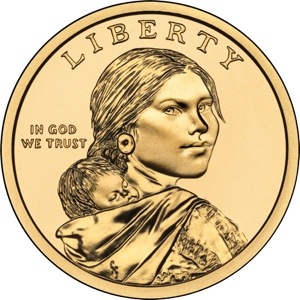
Sen. John McCain (R-AZ) once again introduced the Currency Optimization, Innovation, and National Savings Act of 2017 (COINS Act). Similar to the same bill he introduced in the last congress, the COINS Act (S. 759) proposed to end the production of the $1 Federal Reserve Note, reduce the production cost of the five cent coin by changing its composition, and eliminating the one cent coin. Mike Enzi (R-WY) is a co-sponsor.
“With our country facing $20 trillion in debt, Congress must act to protect the American taxpayer,” in a statement issued by McCain’s staff. “By reforming and modernizing America’s outdated currency system, this commonsense bill would bring about billions in savings without raising taxes.”
Of course “common sense” has a very different definition in Washington than the rest of the country. The first attempt to introduce a bill to end the production of the $1 note started in 1991 by then Rep. Jim Kolbe (R-AZ) and died at the end of the 102nd Congress. Kolbe introduced the legislation every session until his retirement in 2007 following the adjournment of the 109th congress. McCain has introduced the bill in the last three sessions of congress.
“Change can be hard sometimes, but switching to a dollar coin could save our country $150 million a year,” Enzi said. “Our country is in a difficult financial position because we didn’t value the cost of the dollars we spent. We can’t afford to keep that up, and these innovative opportunities are a way to save taxpayer money that is really just being wasted with each new dollar we print and penny we mint.”
I am sure that the usual arguments about eliminating the paper dollar will come up again. Even though a GAO report has shown that eliminating the paper dollar could save the government about $4.4 billion in production and handling costs, economic surveys have claimed a potential $16-18 billion benefit for the government.
When the public is asked about eliminating the paper dollar, the arguments usually line up along generational lines. Surveys have shown that Baby Boomers (those born before 1964) and those older are overwhelmingly not in favor of eliminating the the paper note. The GenXers, those born 1965-1980, are almost evenly divided while the Millenials, those born since 1980, do not care because they are mostly tied to their credit and debit cards.
The Baby Boomer that writes this blog is in favor of eliminating the paper dollar. In the past, he was in favor of eliminating the one cent coin but is beginning to have second thoughts.
For the longest time, the Massachusetts delegation have held these types of bills back. This is because the Dalton, Massachusetts based Crane & Co., the maker of currency paper, has been the exclusive currency paper supplier to the Bureau of Engraving and Printing since 1879. Although Elizabeth Warren (D-MA) has become a more powerful figure in the Senate, she is not a favorite amongst the majority and is tolerated by the more centrist members of her own party. Sen. Ed Markey (D-MA) does not have the gravitas either of his predecessors, the late Ted Kennedy and John Kerry, to yield influence. The only power the Senators have would be to filibuster any measure that would eliminate the $1 note. Sen. Warren has railed against military-related spending for non-essential equipment so that members of congress could keep these jobs in their districts. Would she be willing to follow her lead that could reduce the revenue of a company in her home state?
By the time the sun rises on the east coast of the United States, the Royal Mint, on behalf of HM Treasury, will have released the new 12-sided £1 coin. Billed as the most secure coin in the world, the Royal Mint touts the following security features:
12–sided — its distinctive shape makes it instantly recognisable, even by touch.
Bimetallic — it is made of two metals. The outer ring is gold coloured (nickel-brass) and the inner ring is silver coloured (nickel-plated alloy).
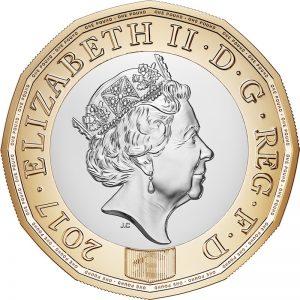
Latent image — it has an image like a hologram that changes from a £ symbol to the number ‘1’ when the coin is seen from different angles.
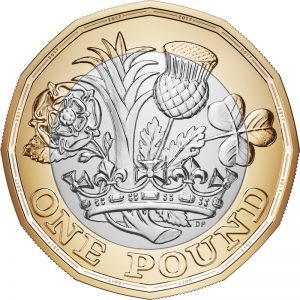
Micro-lettering — it has very small lettering on the lower inside rim on both sides of the coin. One pound on the obverse heads side and the year of production on the reverse “tails” side, for example 2016 or 2017.
Milled edges — it has grooves on alternate sides.
Hidden High Security Feature — with a patented High Security Feature to protect it from counterfeiting into the future.
Of course, the Royal Mint is offering collectibles for the new pound that includes a “farewell” to the one being replaced nicknamed the “Round Pound.”
Obverse of the new 2017 12-sided £1 coin
Reverse of the new 2017 12-sided £1 coin
Design and production of the new pound coin have been nearly three years in the making following the discovery of a large number of counterfeit £1 coins. Sources estimated that about 3-percent of the £1 coins in circulation are fake amounting to more than 45 million counterfeit coins. These fakes are so convincing and very well constructed that they can be successfully used in vending machines for payment including in London’s Underground.
The coin-operated businesses in Britain began complaining three years about the changes with reports that only a small fraction of all vending machines will be able to accept the new coin. Each coin-operated machine will have to be reprogramed and recalibrated to detect a coin that will have a different weight, specific gravity, and the electromagnetic signature.
Amongst those systems not ready include the London Underground and several major supermarkets.
While watching the news, I found that British supermarkets charge for people to use their trollies, which are called shopping carts on this side of the pond. I do not know if it is a deposit similar to the carts available at the airports, but could you imagine having to pay to use a shopping cart at your local supermarket? I do not think that would go over well in the United States!
Back in October 2016, the Royal Mint published education material and test coins that the coin-operating machine companies could use to test their equipment. Some of these test coins have appeared for sale on websites like eBay. Since then, there have been weekly stories about the new coin and stories have appeared daily in the British media.
Now that the new £1 coin has been released, it will co-circulate with the round pound through October 15, 2017. Banks will only distribute the new £1 coins while stores and other businesses will be allowed to accept either. During that time, it is expected for coin-operated equipment to be converted as soon as possible.
On October 16, 2017, the round pound will be demonetized and lose all legal tender status. Once the round pound loses legal tender status, they may be exchanged at some banks and the Post Office. The plan is to end the exchange of the round pound by March 27, 2018.
For collectors, this is an opportunity to collect something that was once a real circulating coin. The current round pound came into existence in 1971 when the UK transition from the pounds, shillings, and pence (£sd) system based on the power of 12 to a decimal system, called decimalization. Of course, when this happened in 1971 the web did not exist and real paper newspapers were the primary means of spreading the information about the new currency. Based on reports, there were some issues during the one-year transition but there were no stories of tragedies once the new money was issued.
Somewhat like the end of the Canadian cent, this is the end for a significant circulating coin. Except the Canadians did not replace the cent while the British are exchanging coins.
The Trade Dollar
Before you write to me to explain about the Trade Dollar, I know it was demonetized in 1876. However, it gained legal tender status again as part of the Coinage Act of 1965.
For those concerned over proposals that the United States change composition of various coins, including the one-cent coin that costs 1.5-cents to produce, watching how the UK handles the change will provide an insight as to how it might be handled here. Except for one problem: The United States does not demonetize coins (see the note in the box to the right). Every coin produced by the U.S. Mint can be used as legal tender at their face value, although it would be foolish to spend a Saint-Gaudens Double Eagle for its $20 face value since its gold content would be worth more!
It will be interesting to see how stiff those proverbial stiff upper lips hold up during this transition.
All images, videos, and British-style English text courtesy of the Royal Mint.
Astute observers might have noticed minor changes to the blog. While the look has been the same, I add a News menu item and a Recent News feature to the sidebar. These were added along with the soft launch of the Coin Collectors News.
Following a number of years writing the blog, I have been added to many mailing lists that send press releases and announcements from around the numismatic industry. Usually, I only publish these releases on the blog when I have something to add. When I do not, they end up being deleted. Since most have good information for the community, I decided to publish them.
Rather than add the press releases to the blog, I created a microsite called Coin Collectors News at news.coinsblog.ws. Although the microsite has the same look and feel of the blog (it’s now my brand), it is separate from the blog. Since it is separate, there is a different RSS feed for the site. If you use an RSS reader, you can find the feed here. For those who want to receive updates via email, you can sign up at here. Later on, if you decided you want to subscribe to the feeds, see the signup fields on the top and bottom right of any page.
When news items are published, an alert will be posted to the @coinsblog Twitter feed, the same account as the blog.
The items posted on Coin Collectors News will be press announcements only. No comments or commentary will be allowed, including by me.
Subscribers of the Numismatic World News Newsletter were the first to know about this service. It was announced to them about two weeks ago as a perk for subscribing. Last week, I added the links to the microsite to the blog and now I am ready to let everyone else on the new resource.
Behind the scenes, I am working on a numismatic bill tracker. Currently, I manually keep a list that I update monthly. After doing this a while I decided to put my technical background to good use and write programs to search for new bills, maintain their status, and produce a formatted report. With that work done, the next step is to create a microsite to share this with everyone. When it is ready for the soft launch, the subscribers to the Numismatic World Newsletter will be the first to know.
There are times that while we are having fun collecting coins, currency, exonumia, and the like, there is a real world out there with real issues. For some, this hobby can be an escape from that reality.
On Wednesday, the Bank of England announced that they were looking into the issue where their new polymer notes contain traces of tallow. According to the supplier of the pellets that are used to make the polymer substrate, tallow is used in the resin it sources from a supplier to make those polymer pellets. It was a low-key response to an issue that was made bigger by the British vegan community.
While writing a snarky response, my Twitter feed blew up with the news of the attack on the Westminster Bridge and near Parliament Square in London. I stopped writing and turned on the news. Having once walked on that bridge there was a sinking feeling I could not shake.
We know that five people have died, including a police officer and the attacker. One was a man from Utah on the last leg of a 25th Anniversary trip with his wife. She was amongst the reported 50 people injured and one of the 31 requiring hospital treatment. One woman was so scared she jumped off the bridge and into the Thames River
MI5, the United Kingdom’s internal security force, arrested seven men and four women on terrorism charges. One of the women posted bail, the other 10 are still in custody. They have collected over 2,700 pieces of evidence that they will be studying.
Although I am not a “run-and-hide” type, I find it difficult to be snarky given the recent events, even if the story deserves that type of treatment. I am sure that the heartbreak of tallow will return to the news and will give me a chance to have fun at their expense. But for now, let’s wish the best for the people who were injured and the families of those who are mourning.
Although I have been writing about something other than coins, I continue to expand my collection. Most of the items I have been buying are ordinary like the uncirculated National Parks quarters struck in San Francisco. I also have been filling some of the holes in my albums. Nothing really extraordinary. I did pick up a 1915-S Barber quarter and an 1883-S Morgan dollar, both in about extra fine (XF) condition. I like the coins but these are not something to write about, until now.
Almost every series has at least one key coin. The one coin that is not that difficult to find but if you are trying to stay within a budget, it is something you hope to find at a good price. For these coins, I am just looking for a coin that appeals to me regardless of the grade. Sometimes, if it is a good buy, I can drop my standard just a little. After all, I love bargains.
In this case, I dropped my standard a little to pick up a coin that would only grade very good (VG) to fine (F). Not only did I get a good buy but when I received the coin it had a nice look that the online images could not convey.
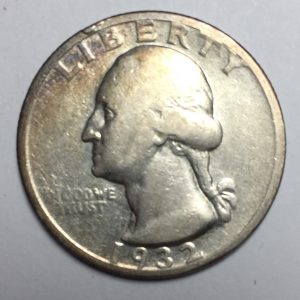
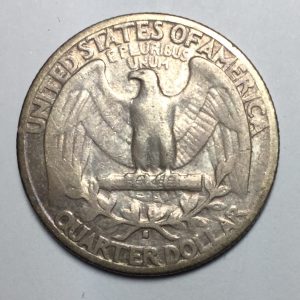
My new purchase is a 1932-S Washington Quarter.
1932-S Washington Quarter (obv)
1932-S Washington Quarter (rev)
Between the 1932-D, which I own, and the 1932-S there were fewer Washington quarters struck in San Francisco (408,000) and Denver (436,800). Granted, it is easier to find higher quality quarters struck in San Francisco, but to find a decent quarter that survived from having only 408,000 minted is a very good thing.
And I paid less than the value listed in various price guides!
With this purchase, I can now say that I have a complete set of silver Washington quarters in my blue albums. Next, I will work on completing the Standing Liberty quarter set so that I can say I have every quarter of the 20th century.
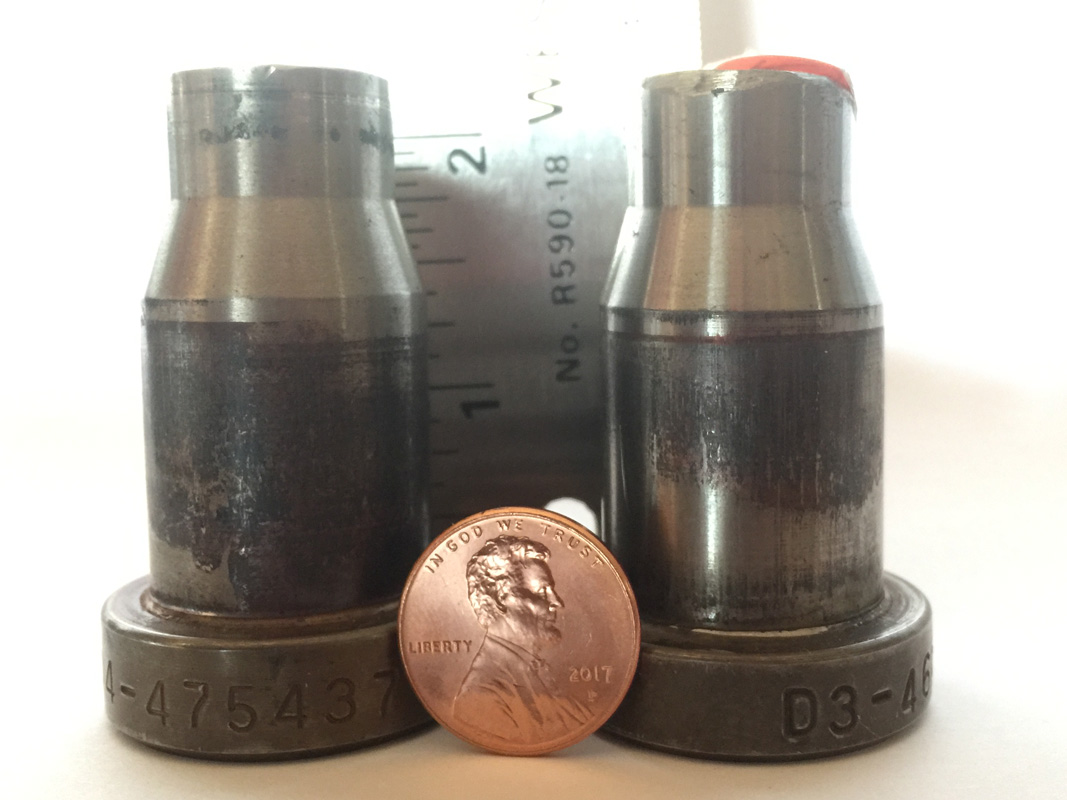
In the hunt for something interesting, I stumbled across two listings on eBay for a two error dies from the Denver Mint being sold by noted error expert Fred Weinberg. These Lincoln cent dies are not dies with errors but dies with part of the design still visible.
Dies from the U.S. Mint makes for an interesting collectible. Standing about 2½ inches tall and about 1¼ inches across the base where it is loaded into the coining press, it is really an unremarkable piece of metal. Weighing 192 grams (about 6.8 ounces), the only distinguishing marks on the die is the serial number stamped on the base.
Before being discarded, workers at the U.S. Mint are supposed to completely grind off the design so that it cannot be used to strike counterfeit coins. Even though it is not cost effective to flood the U.S. economy with counterfeit Lincoln cents, the U.S. Mint does not want to take the chance someone will try. Once the design is removed from the die it can become a collectible.
Close-up images of the dies make the visible design look more dramatic than in person. After all, the images were likely taken with a macro lens on a die used to strike a coin 19.05 mm (0.750 inches) in diameter. Even so, the idea was fascinating enough for me to submit bids high enough to win both dies.
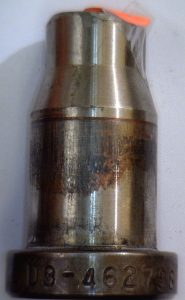
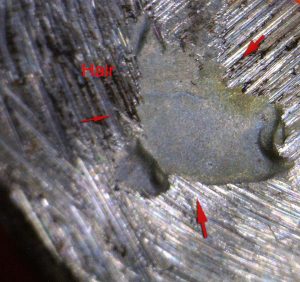
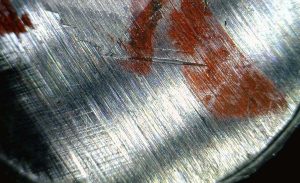
The first “error” die was used to strike the obverse of 1993-D Lincoln cents. This die is not completely filed down since it does show some of Lincoln’s hair. Although not a large area, there is enough of the incuse portion of the die’s section to be able to identify it as hair and providing a good guess as to where it would be on the coin. The sticker in the image was placed there by the seller. I decided to leave the sticker.
View of the 1993-D Lincoln Cent obverse die
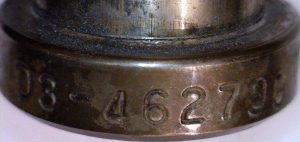
Serial number for the 1993-D Lincoln Cent obverse die shows the D for Denver, 3 for 1993, and followed by a sequence number
Close up of the 1993-D Lincoln cent die showing part of the hair design still visible.
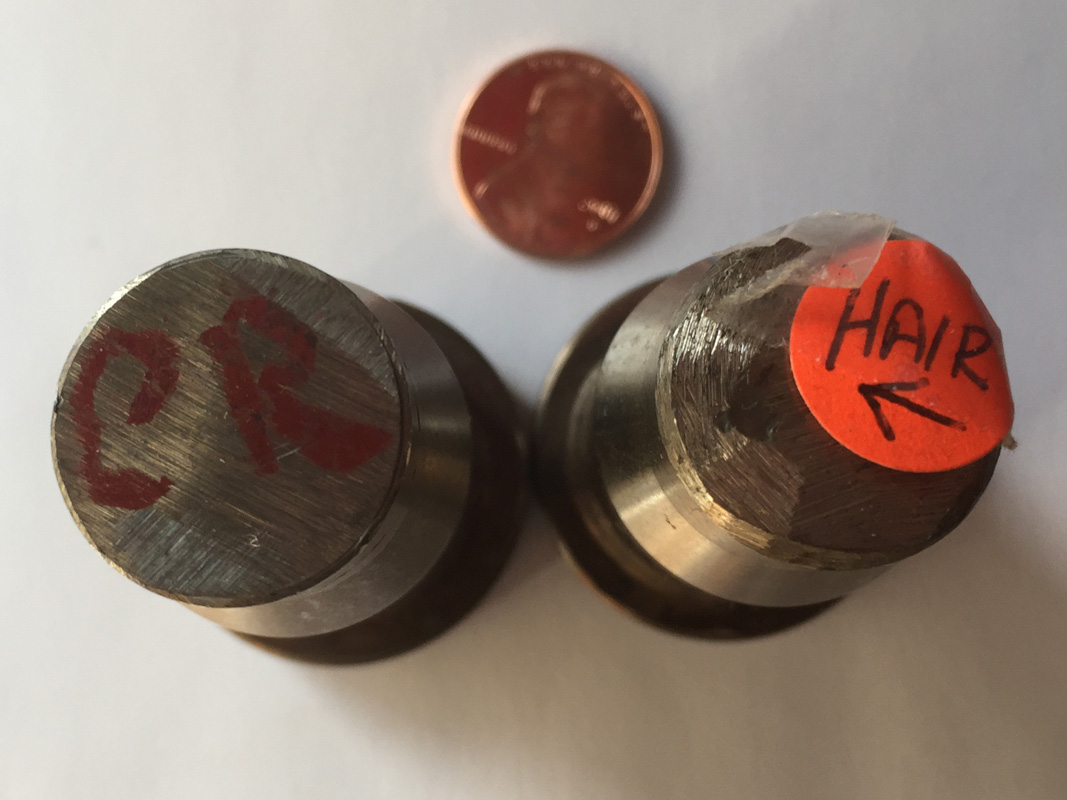
The other error die was used to strike the reverse of 1994-D Lincoln cents. In this case, the “error” is very subtle. There are two lines that would have been where the bottom two steps of the Lincoln Memorial would have been. Based on the placement, these would be to the center-right of the Lincoln statue in the monument. In the image, it is at the bottom of the “R.” I do not know why the “CR” is written on the die but I am not removing it, for now.
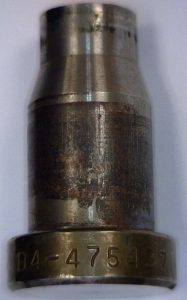
View of the 1994-D Lincoln Cent reverse die
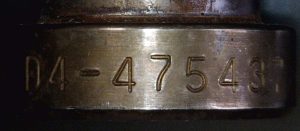
Serial number for the 1994-D Lincoln Cent reverse die shows the D for Denver, 4 for 1994, and followed by a sequence number
Close up of the 1994-D Lincoln cent reverse die showing a small section of the steps to the Lincoln Memorial still visible
I do not know how Fred Weinberg finds these items but they are fascinating. The next time you go to a show you should check out his inventory. He finds some really interesting errors that have to be seen to be believed.
Looking down on the Lincoln Cent “error” dies. The 1994-D reverse die is on the left, The 1993-D obverse die is on the right.
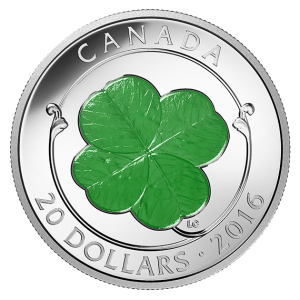
2016 Canada Lucky Four-Leaf Clover 1 oz Silver Coin
When Patrick was 16, he was captured by Irish pirates and was taken to Ireland as a slave to look after the animals. After six years, he escaped his enslavement to return to his family in Great Britain. After becoming a cleric, he returned to Ireland follow his vision that he was called to help the people.
Patrick was not welcomed when he arrived but worked with the society to convert them to Christianity. Although most of his writings portrayed that he was probably more successful than he was, but after working with the people, first in the northern regions of Ireland, he did find success. He once wrote that he baptized thousands of people and some have written that he baptized hundreds on a single day. Using the native three-leaf shamrock to describe the Holy Trinity, Patrick was promoted bishop and apostle of Ireland. He died on March 17, 461 in Saul, where he founded his first church.
For thousands of years, the Irish have observed the day of Saint Patrick’s death as a religious holiday, attending church in the morning and celebrating with food and drink in the afternoon. The first St. Patrick’s Day parade was celebrated in 1762 when Irish soldiers serving in the English military marched through New York City.
With Saint Patrick’s Day, talk about “the luck of the Irish” and associate the shamrock of four-leaf clover as a lucky symbol. I was thinking if there are coins or currency that would bring you luck. After searching around online for lucky coins there was a common theme: something that is special to you. Here is a composite of the types of lucky coins:
Coins from the year of your birth: I have helped several people buy proof and mint sets of coins from the year they were born. On one of my father’s milestone birthdays, I bought uncirculated coins from the year of his birth and had them slabbed in an NGC multi-coin holder when they were still being offered.
Coins from a country special to you: On one of my wife’s milestone birthdays, I purchased a Canadian proof set from the year of her birth. Although she was born in the United States, her parents were from Canada and it has become a special collectible.
Coins that have a special meaning: A friend keeps a Morgan Dollar in his top desk drawer. The desk used to belong to his grandfather who kept that coin as his “emergency dollar” during the Great Depression.
Coins found during a happy or coincidental time: A client once showed me a 1958 Cuban peso that he found on the street in Miami that he keeps as a pocket piece. He decided that since it was the same year his family fled Cuba, it was a fortuitous find.
Coins of a specific design: Sometimes the design may be added to the coin. I once met someone who had several Love Tokens from his relatives he says it is his family’s way of watching over him.
A silver sixpence in her shoe
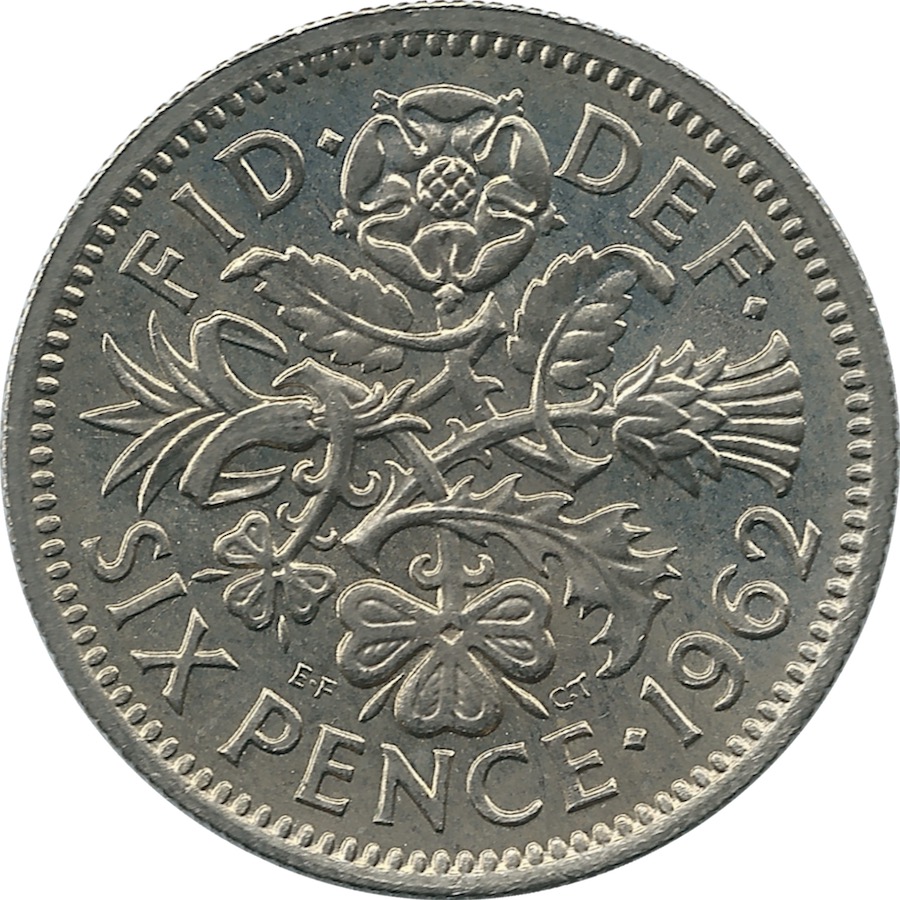
1962 British Sixpence
A more specific coin that is supposed to bring luck is the British sixpence. According to the Victorian poem, to bring luck to the marriage, the bride is supposed to wear “Something old, something new, something borrowed, something blue, and a silver sixpence in her shoe.” The lucky sixpence would be placed in her left shoe by her father to wish his daughter good health and great wealth for the couple. Although the sixpence was discontinued in 1971 when the United Kingdom converted from the old system to decimalization. The tradition remains popular in the UK and to a certain degree in the U.S. except a silver quarter is used.
Feng Shui
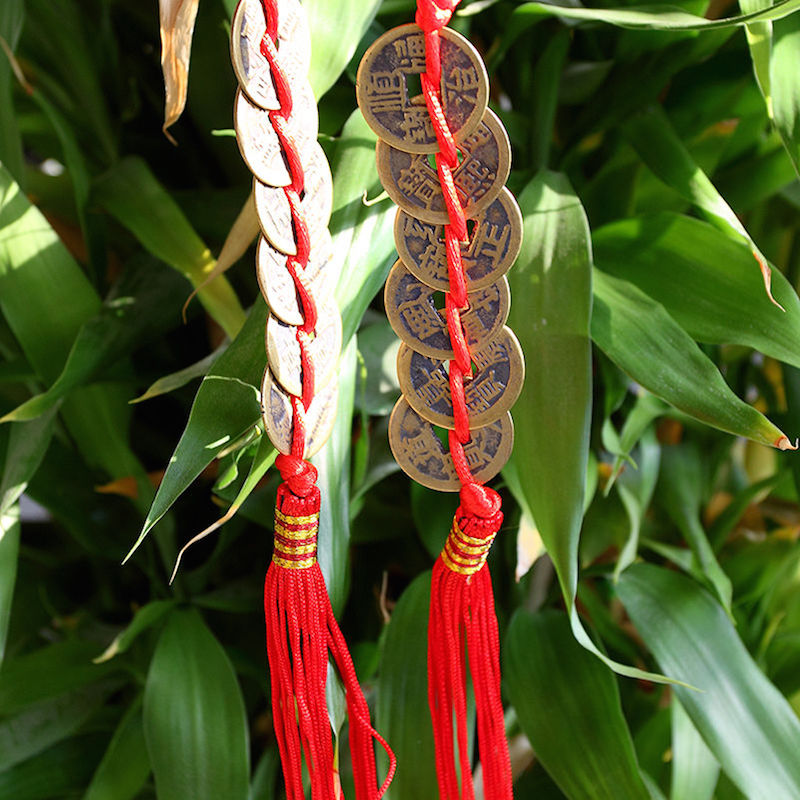
Feng Shui Coins
Then there are Feng Shui Coins. These are Chinese lucky coins that are supposed to attract wealth and success. Feng Shui coins are round and have a square hole in the middle. The round shape represents the heavens. The square is a symbol of the four corners of the earth. For luck, Feng Shui coins should be tied together using a red ribbon or thread. The red ribbon is said to activate the power of the coins to protect your existing income and attracting more money.
The number of coins tied together is important. One coin is believed to promote loneliness and will leave you empty. Two is better but does not have the power of rebirth that three does. Three coins tied together represents the heavens, earth, and mankind. Four represents death and not something that would promote Feng Shui. The Chinese do not know why five is not lucky but this is accepted. While three is considered proper Feng Shui, making it more powerful would be three-times-three, or nine, coins.
For luck, you can hang Feng Shui coins on the on the inside of your front door, not the outside. You want the luck inside. Do not hang your Feng Shui coins on your back door because it will luck to leave your house.
You can place three Feng Shui coins on top of items to bring them luck. When you do this, it is important to place the Yang side facing up to invite the luck to protect your item. The Yang side is the side with the four characters.
When giving a gift, attach three Feng Shui coins to the package to bring double happiness. It tells the recipient that with the gift you are also wishing them wealth, prosperity, and happiness. Doing this will add to your Feng Shui for giving generous and unselfish wishes.
Numerology and currency
Numerology is the belief in the divine or mystical relationship between numbers and the physical world. Many people practice a mild form of numerology called a “lucky number.” For those who believe in some type of numerology can turn to the serial number of currency to add to their collection.
One of the more expensive aspects of notaphily is the collection of patterns numbers. Typical patterns are as follows:
Solid: every digit the same
Ladder: numbers that count up, like 12345678, or down, like 98765432
Low or High numbers
Radar numbers: when the serial number repeats forward and backward, like 12344321
Repeater numbers: when the serial number is repeated, like 12341234
Super Repeater: pairs of numbers that repeat four times, like 36363636
Double Quad: two pairs of four numbers, like 88889999
Seven of a kind: both in a row or seven of the same number
Notes that represent dates can bring luck such as one that has your birthdate. For someone born on March 17, 1977, finding a note with the serial number 03171977 or even 19770317 could be very lucky. Since the numbers reset for every series and there are 12 Federal Reserve branches used as a prefix, you have quite a few chances of finding these.
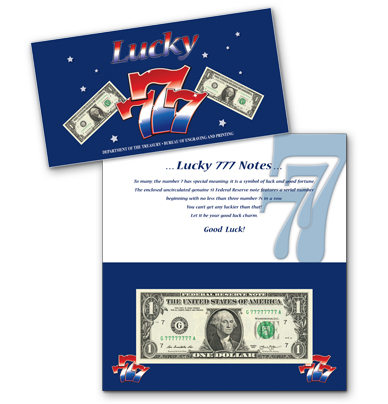
The BEP also sells lucky money that includes the Lucky 7 set. These notes have a serial number that begins with three 7s. You can also buy notes in special Chinese holders with serial numbers that begin with “8888” and “168.” In Chinese, the “eight” sounds similar to the word for “prosper” or “wealth.” Selling the Lucky 8888 note is to help promote prosperity and wealth.
The “168 Prosperity Forever” note plays on the Mandarin pronunciation of the number that sounds similar to “prosperity forever.” If the BEP used the Cantonese pronunciation, they would have the use the serial numbers beginning “768.”
Go find your lucky coin and may you have health and prosperity.
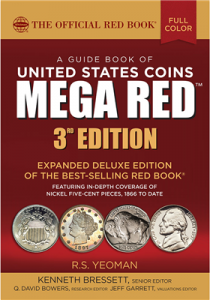
Over the last few years, Whitman has been adding more information to the Red Book to entice people to buy a new edition each year. This year, they are adding new information to the MEGA RED Book to the book whose page count continues at 1,504 pages. It is physically a large book with a lot of information.
The key feature of the Red Books are the prices. Prices are set by industry insiders who report what they have seen as prices for coins. Because of the publishing lead times, the prices may not be accurate to market conditions. Some say that the prices are not in line with current prices because the market moves quickly. In fact, a comparison with online resources like the Numismedia Fair Market Value prices and PCGS Price Guide shows that the Red Book may need updating for the most common coins. The disparity is that great.
Even so, the Red Book in all its forms probably is the bestselling book on U.S. coins of all time. Whenever someone wants to know more about U.S. coins and what they are worth, the persistent recommendation is to tell them to buy a copy of the Red Book.
This brings us to the latest poll question:
Will you buy a 2018 Red Book?
Yes, I always buy the Red Book (37%, 7 Votes)
I don't buy any of these books. (37%, 7 Votes)
I will buy the 2018 MEGA RED Book (16%, 3 Votes)
I don't always buy the Red Book but I will this year (11%, 2 Votes)
I buy the special edition Red Books when they are produced (0%, 0 Votes)
I buy both the Red Book and Blue Book (0%, 0 Votes)
I don't bother with the Red Book and only buy the Blue Book (0%, 0 Votes)
Total Voters: 19
Loading ...
Select as many as you want. If you have another opinion, add your comments to this post.
Some of you might have noticed that many of the links to the blog stopped working properly. I know that the indexing robots (e.g., Google, MSN, Yahoo) have been filling my error log with messages.
Over the weekend I made some behind the scenes adjustments so that I can add new features. Apparently, most of my work went without a problem except I selected the wrong options. I think it is fixed now.
Don’t worry about telling me that something went wrong, I will be watching the logs to make sure everything is correct. The logs will give me more information about what is happening behind the scenes to identify the problems.
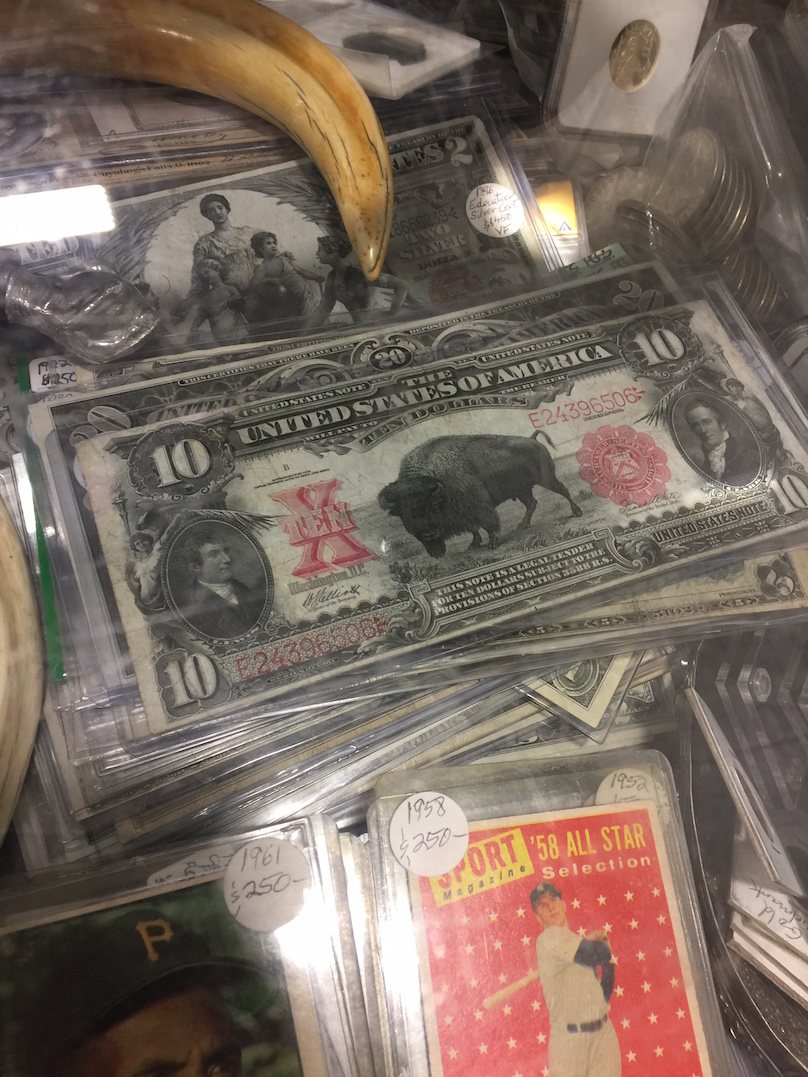
How would you like to find one of these at a flea market?
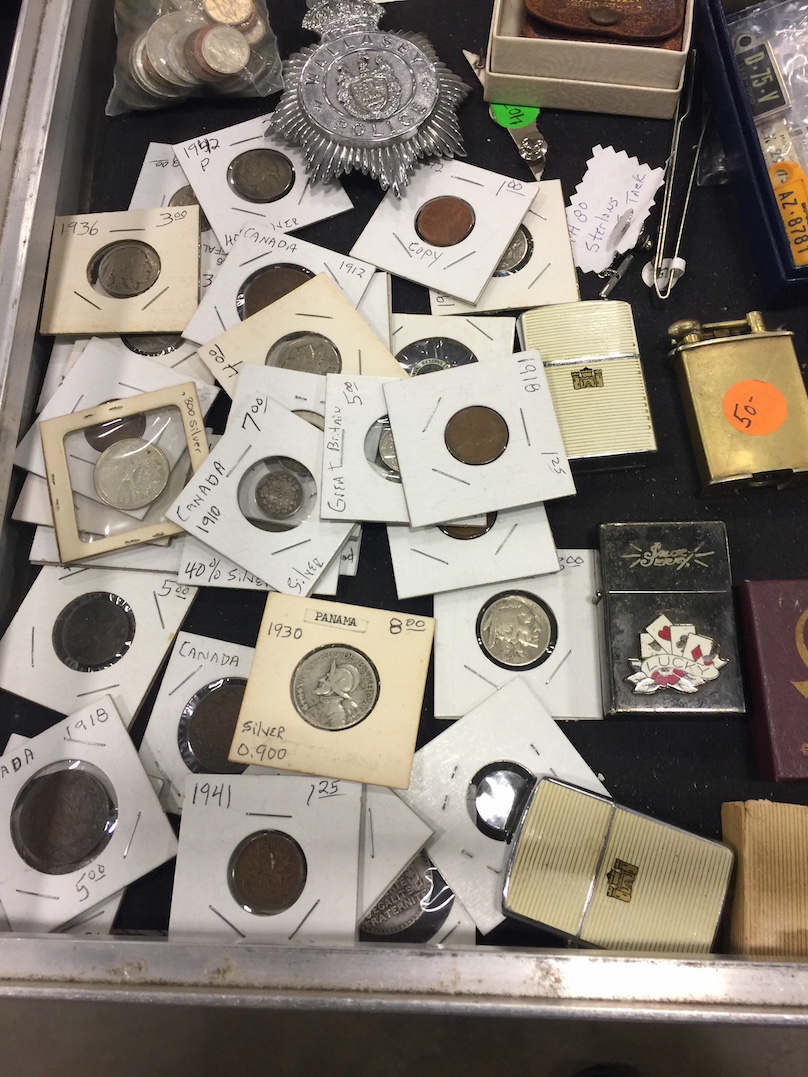
There are buying options for numismatics that go beyond online auctions, shows, and shops. You may be missing some opportunities if you do not consider exploring other collectibles markets. Since my business interests have me working in other areas of the collectibles markets, here are some of the places I have found numismatics and had fun at the same time.
Estate Sales and Auctions
In my current business, I am able to buy inventory from estate sales and estate auctions. Most estate sales are either the lifetime accumulation of a deceased loved one or a forced sell-off of assets mainly as part of a court-ordered restructuring. An estate sale company will come into a home, stage it for a sale, add prices to everything and open the house for the public to buy what they want.
Adding prices mean tagging the items with a price that the company running the estate sale thinks is a fair price for the item. This tagging also has these sales also called Tag Sales. When it comes to tagging, some companies are better than others. After they pick the better items, the rest of the house is tagged either at prices too low or prices too high because most of the estate sales company do not know about the items they sell. They might use an average price of similar items they sold in the past or they just pull prices out of the air.
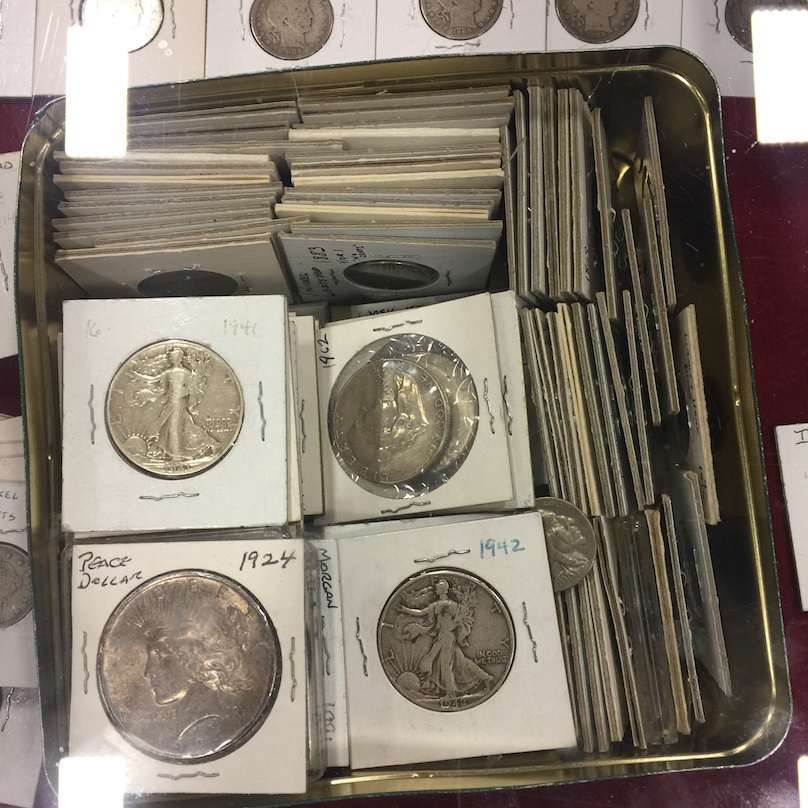
Estate sale companies have little to know expertise with coins and currency which is reflected in their prices. I cannot tell you how many times that I have walked into an estate sale and seen common date Morgan and Peace dollars priced at over market value.
Case of foreign coins at a flea market
Unfortunately, many of these companies are not interested in learning about how to price coins. During a recent estate sale, I found quite a number of Walking Liberty half dollars. Most were in the VG-XF range. Some were better dates but none were the 1921 key date coins. Using the Numismedia Fair Market Value pricing guide I came up with a bulk price that I feel was fair for the entire lot. Unfortunately for the company, it was less than 50-percent below their price and about 20-percent lower than the fair market value. I am a reseller and I need to be able to make a profit. The manager on site acted as if I told him his baby was ugly.
When I presented my offer, I told him that I understood the coin market and would explain how I came up with the price. I showed him the Numismedia Fair Market Value pricing guide and explaining that it is a retail price guide. Confused by the differences in grade pricing he questioned how to grade coins, I show him the condition of the coins compared to the images in the PCGS Photograde app. After being confused by everything he said that he would take a chance on his price and turned down my offer.
I returned to the estate sale on Sunday afternoon about a half-hour before closing and noticed that none of the coins sold. I lowered my offer to a small percentage above its melt value. The offer was declined. A week later I found out that the coins were brought to a local coin shop. Imagine their surprise when they were offered a price between my two prices.
If you go estate sale shopping for coins, be prepared to be patient. Even though it is not their merchandise, they act as if it is their personal property. Most will be reasonable if you are reasonable with them. I would recommend reviewing the “Negotiating” section in my post “How Are Coins Priced (Part II).”
Silver halves and Peace dollars found at a recent flea market
Estate auctions are very different than what most people are used to if their only experience has either been at coin shows or eBay. If you attend a live estate auction, there is a possibility to purchase bargains. But like any auction, two people can also drive the price of the coin higher than fair market value. Most auctioneers understand how coins are priced and how bullion-based coins should not sell below their current melt value.
In my experience, gold and U.S. Mint packaged items usually sell at prices greater than fair market value. I cannot tell you why a 1977 Proof Set would sell for $15 when it is valued at $8, but it happens at these auctions.
If you are not involved in this market, there is a world of online estate auctions that hides in the open. Online estate auctions are hosted on sites that are not quite well known outside of those of us who work and shop in this world. These auctions are simply a company imaging and posting the inventory online, managing the auction, collecting money, and making sure everyone is paid. Most companies will hold absolute auctions that run for 7-10 days with all items starting at $1.00.
For those who do not know, an absolute auction is one where the lots sell at whatever the price is when bidding ends, also known as the hammer price in reference to a hammer that is used during live auctions. Winners will also pay a buyer’s fee which average 15-percent of the hammer price.
Although it is possible to find bargains in these estate auctions, many times I have seen numismatic items sell for more than fair market value. This is not good if you are a re-seller but sellers are doing well.
Antique Shows and Flea Markets
I go to a lot of antique shows and flea markets. I will set up a table at a few flea markets in a month and do a big show at least every month. One big I regularly participate is D.C. Big Flea, the mid-Atlantic’s largest antiques show and flea market. The show attracts 400-700 vendors, depending if they can use the entire center, with a variety of antique, vintage, and collectible items.
German Notgeld found at a flea market
Although I will buy and sell some numismatics, I do not bring numismatics to these shows mainly because they do not sell as well as other items. But when I have a chance to walk around the tables, I can find a number of cases with numismatic items.
Buying numismatic items at these large shows can be problematic. One of the biggest problems is that the vendor might have bought the item at full price and has overpriced it to gain a profit. There was also the time that a vendor had bought a roll of American Silver Eagles, placed them into AirTite holders and was selling them at a premium similar to the collectible Eagles struck at West Point with the “W” mintmark. When I questioned his prices and showed him that he was charging a 100-percent markup based on the per-roll price at a known distributor, he bluntly told me how unhappy he was with my questioning.
Most dealers will not try to swindle you based on a false narrative of value. In fact, many appreciate the education including the pointer to online resources. They will negotiate, and if you are fair with them, they will be fair with you. Sometimes, you can find items that you might not see on a bourse floor. During the last show I attended, one dealer had a case with a lot of German Notgeld, most in Extra Fine and Uncirculated condition.
During a previous show, I found a dealer who emptied boxes of tokens, trinkets, buttons, and medals on a large table. It was a treasure hunter’s dream! Although I did not have time to do an extensive search, I did find a few small New York-related items that I had never seen before including a merchant token for a business I know existed into the 1970s.
Although estates sales and auctions, antiques shows, and flea markets could present problems because most of the dealers are not as knowledgeable, if you come armed with knowledge, patience, and be on your best behavior, you can find some good bargains.

 Sen. John McCain (R-AZ) once again introduced the Currency Optimization, Innovation, and National Savings Act of 2017 (COINS Act). Similar to the same bill he introduced in the last congress, the COINS Act (S. 759) proposed to end the production of the $1 Federal Reserve Note, reduce the production cost of the five cent coin by changing its composition, and eliminating the one cent coin. Mike Enzi (R-WY) is a co-sponsor.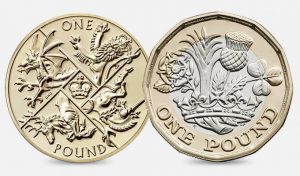


 Loading ...
 Some of you might have noticed that many of the links to the blog stopped working properly. I know that the indexing robots (e.g., Google, MSN, Yahoo) have been filling my error log with messages.