Jun 26, 2012 | coins, national park quarters, video
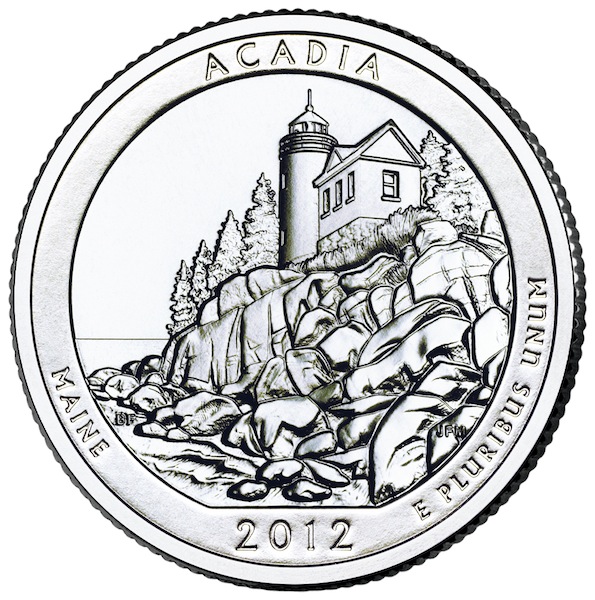
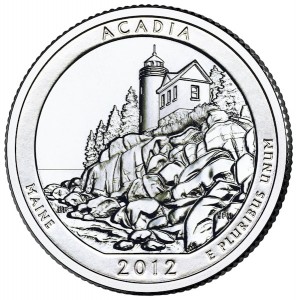 If you are going to be in the area of Acadia National Park today, June 26, the U.S. Mint will hold the launch ceremony at 9:30 AM at the Hulls Grove Visitors Center, Bar Harbor, Maine.
Scheduled to speak at the event are:
- B.B. Craig, Associate Director, Sales and Marketing, United States Mint
- Sheridan Steele, Superintendent, Acadia National Park
- Timothy Harrison, Founder, American Lighthouse Foundation
- Bill Green, Host, WCSH-TV’s “Bill Green’s Maine”
Rolls of the newly-minted coins, which feature an image of Bass Harbor Head Lighthouse, which, ironically isn’t actually in the park, will be available for sale.
For those who like video, and who doesn’t, the following is B-Roll footage from the U.S. Mint including a few seconds of U.S. Mint Sculptor and Engraver Joseph Menna working on the design of the coin using a computer. Coin was designed by Artistic Infusion Program Associate Designer Barbara Fox.
Jun 15, 2012 | coins, commemorative, commentary
Twenty-five years ago, on June 12, 1987, President Ronald Reagan stood in front of the Brandenburg Gate at the Berlin Wall and delivered a public message to Soviet Union leader Mikhail Gorbachev to remove the wall between East and West Berlin:
General Secretary Gorbachev, if you seek peace, if you seek prosperity for the Soviet Union and Eastern Europe, if you seek liberalization: Come here to this gate!
Mr. Gorbachev, open this gate!
Mr. Gorbachev, tear down this wall!
The iconic message to Gorbachev was proven prophetic as the Berlin Wall was torn down by the people of Berlin two years later.
Although I am not a fan of Ronald Reagan, I am a fan of history and iconic moments in history. Reagan’s speech that day in Berlin has to rank one of the iconic moments of the 20th century and should be remembered.
So why don’t we have some type of commemorative coin honoring this history?
The main reason what we do not commemorate major historical events is congress. Congress has taken its authority in the Constitution “To coin Money, regulate the Value thereof, and of foreign Coin, and fix the Standard of Weights and Measures” to a parochial degree. It does not say that congress designs the coins nor does it say that once the standards are set, the U.S. Mint could not issue different types of collectible coins based on those standard.
Maybe it is time to expand the role of the Citizens Coinage Advisory Committee to a real coinage advisory committee to recommend producing circulating and non-circulating legal tender coins. The concept of an advisory board to oversee this type of coin production is used in other countries like Canada and Great Britain. While the Royal Canadian Mint can be accused of abusing their authority, the Royal Mint does a better job at limiting the coinage and production to make real collectibles without too many gimmicks.
Using numismatics to honor history and those who made it is not a new idea. Educational Notes of the 1880s were printed with neoclassical allegorical images to represent themes that may have been out of reach for most people. While not popular at the time, the these notes are amongst the most desirable by collectors.
More recently, we have honored the 50 states; national parks and forests; the Louisiana Purchase and the Journey of Merriweather Lewis and William Clark; accomplishments of native Americans; and the Presidents of the United States on circulating coins. Lincoln was honored on the cent which bears his portrait before changing the reverse to honor the union he helped preserve.
Why not use our coinage to commemorate our history? Why not pick four significant events in history, one with a significant anniversary, and honor it on a circulating coin?
With the U.S. Mint looking for a way to increase coin collecting, which is their motivation for producing national parks business strike coins at the San Francisco Mint, why not use the reverse of the half-dollar as the canvas for a historical design series?
Prior to the production of the Kennedy Half Dollar, half-dollars were common circulating coins. Following the assassination of the popular president, people wanted to a souvenir of the slain president so when the new halves were released, the coins were hoarded and effectively ended the circulation of half dollars. Bringing back the half-dollar into favor would not only increase the number of people interested in collecting but the seignorage of these collectible coins would provide a windfall for the general treasury.
Rather than make just collectible business strikes at San Francisco, the new half-dollars struck at San Francisco would be added to the coins sold to the Federal Reserve for circulation. This could build interest in coins produced at the San Francisco Mint, increase production which will increase seignorage opportunities.
Adding the historical half-dollar reverse would introduce new themes that teachers could use to teach students about history, give collectors new outlets, and remind the rest of nation about the rich history that we pride as her citizens.
Of course the extra seignorage would not hurt, either.
Jun 12, 2012 | coins, pocket change
I still hunt pocket change. Occasionally, I will hunt through my wife’s pocket change. Actually, she saves her coins in a jar for me to search through at my convenience. Every so often, she asks me to look at the quarter so that they can be used in her office’s soda machine. I took the opportunity to look at the top eighth of the jar to see what I could find.
While digging through the jar looking for quarters, I found a dime that initially struck me as odd. I was expecting to see the usual torch of the Roosevelt Dime reverse but this was different. Not only was the color different but it was a fasces and not a torch. Instantly, I recognized it as the reverse of a Mercury Dime.
When I started collecting in the early 1970s, I would find a Mercury Dime in change along with the silver Roosevelt Dimes. But as the economy fell apart, what was left of circulating silver coins were promptly removed from change. In fact, I have found more silver certificates in change than silver dimes.
Although it is not worth much, it is still fun to find something like this in change.
Jun 9, 2012 | coins
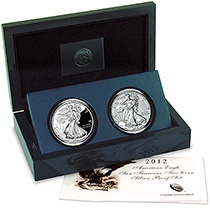
2012 American Eagle San Francisco Two-Coin Silver Proof Set
As part of the catalog page, the U.S. Mint is providing a running total of the units ordered that is updated at 3:00 P.M. during the work week. As of Friday, June 8, the total sales are 85,341.
Sales of the San Francisco two-coin set is slower than the 25th Anniversary set that sold out of all 100,000 sets in five hours. However, a key difference between the two sets is that the 25th Anniversary set had a limited run while the San Francisco set will be struck to order making the ordering process feel less than urgent. Although I have not ordered, I will order before July 5.
I am not sure how many sets I will buy since it will not be an investment like the 25th Anniversary set. The 25th anniversary set was $300 per set and I purchases the maximum five sets. I sold four sets at $600 each. Now, the sets are selling for around $850 each. This is typical of the law of supply and demand: when the supply is low but the demand is high, the price will rise. If the U.S. Mint is producing these sets to the demand, the aftermarket demand curve will not be as high and not bring in the same types of returns. This does not make buying more than one of these sets attractive.
I will buy a set and keep it with the 20th and 25th anniversary sets. I still love the American Silver Eagle coins and look forward to adding these to my collection!
Image Courtesy of the U.S. Mint.
Jun 6, 2012 | coins
Welcome to the new Coin Collectors Blog!
If everything has gone well, those that have subscribed to the RSS feed on the old blog should continue to receive updates. If not, use this link or the links in the far right sidebar to subscribe. Updates will also be posted to Twitter as before.
I am now self-hosting the Coin Collectors Blog on a commercial service rather than using Blogger. Aside from having my own domain name (which I could have done with Blogger), I have more control over the software. This will prove the flexibility for me to use my tech background to add more and different content in the future.
As I announced before, the Coin Collectors Blog now has an account on Pinterest, the social media site that is based on sharing images. I will be using Pinterest to pin interesting images and some of my own finds. I will also use it when I go to show, such as the Whitman Baltimore Expo at the end of June and the American Numismatic Association’s World’s Fair of Money in August.
For now, everything should work. If you have any questions or issues with the new blog, please click on the “Contact Me” link on the right side of this page to let me know what you find.
Enjoy!
UPDATE: It looks like past comments did not transfer properly. I will investigate and see if I can have them uploaded from a backup. Thank you to those who brought this to my attention.
May 29, 2012 | coin design, coins, legislative, US Mint
As our 35th President, John Fitzgerald Kennedy became the youngest person to ever be elected as President and the first Roman Catholic. At 43, Kennedy was the promise of a new future; a new vision that would have the United States leading the world in fighting the “common enemies of man: tyranny, poverty, disease, and war itself.” In his inaugural address, he called the nation to arm when he said, “Ask not what your country can do for you, ask what you can do for your country.”
From standing up to the Soviet Union’s Nikita Khrushchev, to the success in defense of the nation during the Cuban Missile Crisis, to the failures of the Bay of Pigs, the starting of the Peace Corps, and challenging the United States’ resolve using the space program by proclaiming, “We choose to go to the Moon in this decade and do the other things, not because they are easy, but because they are hard.” In over two years, Kennedy made an impact on this country in such a short period of time that one can wonder what would had happened if….
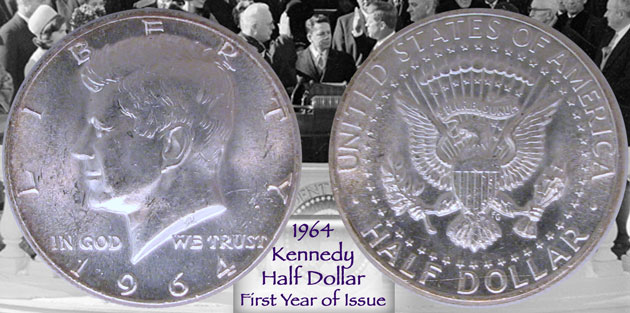 A few days after Kennedy’s assassination on November 22, 1963, U.S. Mint Director Eva Adams, Chief Engraver Gilroy Roberts reported that there was discussions about putting Kennedy’s portrait on a silver coin. Since Jacqueline Kennedy did not want to replace Washington’s portrait on the quarter, it was decided to use the half-dollar. Roberts used models from the inaugural medal for the obverse design and Assistant Engraver Frank Gasparro prepared the reverse design using the Presidential Seal.
Since the law stated that coinage design could not be changed more often than 25 years, and that the Franklin Half was only 15 years old, it required Congress to authorize the change. The Act of December 30, 1963 (Public Law No. 88-253) allowed the design to be changed.
When the coin was released in 1964, the 90-percent silver coin was saved by a grieving nation wanting something that represented the fallen President. Over 273 million coins were struck in Philadelphia and 156 million in Denver. The composition was changed in 1965 with the introduction of clad coinage. Half dollars consisted of 40-percent silver that included a core made from 79-percent copper and 21-percent silver. In 1971, the composition was changed to current copper-nickel clad that is in use today.
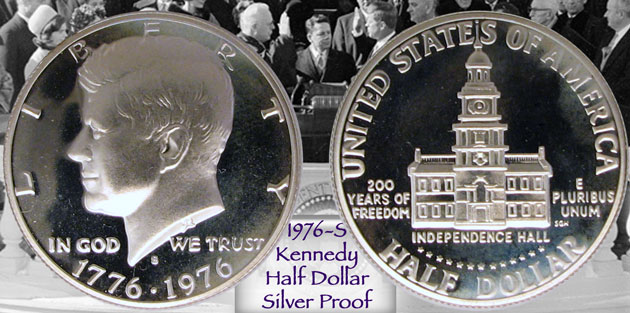 There has been one design change to the coin and that occurred in 1975 and 1976 in honor of the American Revolution Bicentennial. A special reverse depicting Independence Hall in Philadelphia was designed by Seth G. Huntington. For both years, the obverse featured the dual date 1776-1976 in celebration.
John F. Kennedy would have been 95 years old on May 29, 2012.
May 10, 2012 | ANA, coins, shows
Regular readers know that I am proponent of electronic books and using technology to expand the reach of the hobby. But there is one thing that the hobby cannot make electric and that is the coin show.
This week, the American Numismatic Association National Money Show is being held in Denver. While not as big of a production as the summer’s World’s Fair of Money, it is still a premiere event of the numismatic calendar. Sure, there are other significant shows, but nobody puts on a show like the ANA.
Even if you go to one of the other larger shows or a smaller regional show, there is nothing that can duplicate the atmosphere and energy of a show’s bourse. There is nothing like walking into a room full of tables and seeing coins, currencies, medals, tokens, and other numismatics fill rooms, ballrooms, or convention centers. All for sale!
There is nothing like the dealers and collectors that you meet on the bourse floor. While their personalities are as varied as what they sell or collect, numismatic collectors are intelligent, fun, and engaging. Even those dealers, authors, and researchers who are “famous” in the industry are as approachable as anyone else.
The last time I was able to attend the National Money Show was in 2007 that was held in Charlotte, North Carolina. When I first entered the Civic Center in downtown Charlotte, I was surprised as to how much smaller the show was than the Whitman Baltimore Expo but was even more surprised when the energy surpassed that of the Baltimore shows.
The difference is the ANA—they put on a heck of a show!
Since Whitman took over the Baltimore Expo, they have improved the experience making it more of a destination show—one I hope to attend in June. But the ANA shows are different in that as a membership organization, they have generate a fraternal feeling amongst those who attend the show that cannot be duplicated.
But that does not mean other shows are now worth attending. On the contrary, local and regional shows can be as much fun as the large national shows. Local shows can be destinations to bring local numismatists together. They are also places to meet the local and regional dealers who can help you put together your collection.
If you cannot attend a national show, attend a local show. Get out from behind the computer screen and meet your fellow collectors and the dealers. Experiencing the numismatic community at a show cannot be duplicated in email, on a forum, or through a blog. You have to experience it for yourself.
The Whitman Baltimore Expo starts on Thursday, June 28 and end on Sunday, July 1. Unless something comes up, I plan on attending on Saturday, June 30. The World’s Fair of Money will be August 7-11 in Philadelphia. I will be there for a few days during that show. If you are going to attend either of these shows feel free to stop me and say hello. I would love to meet you!
May 6, 2012 | auction, coins, rareties
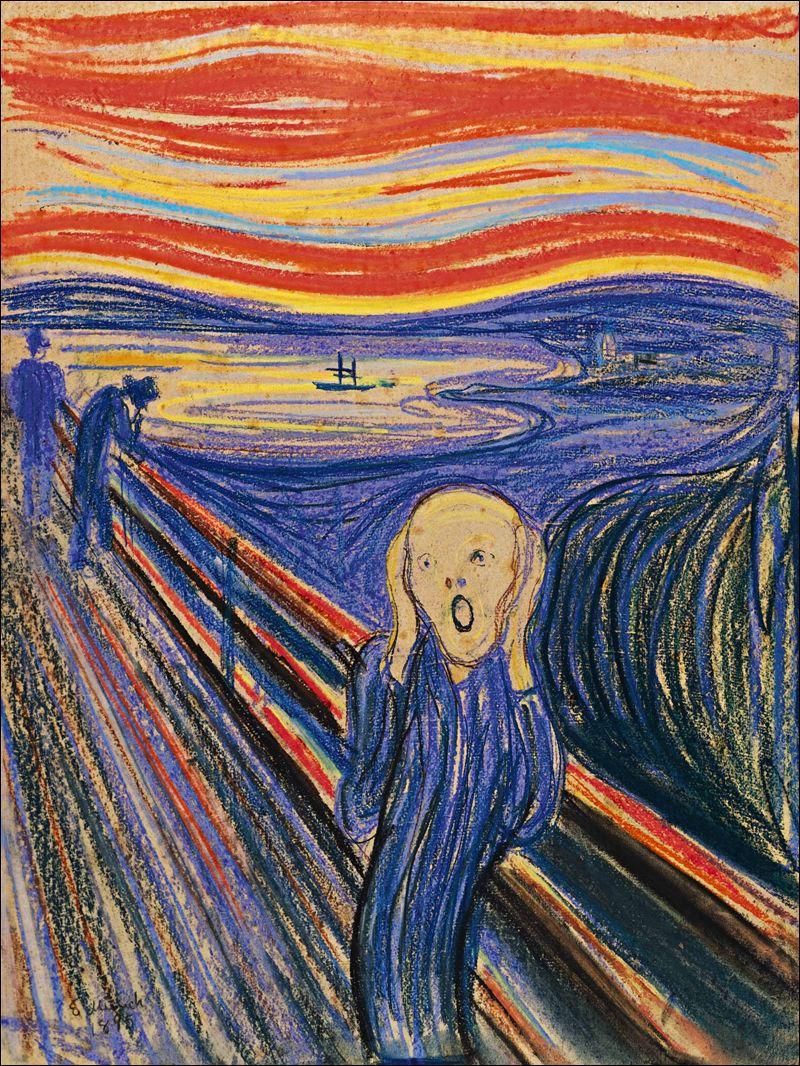
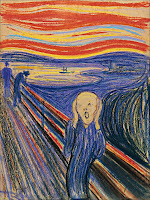 Earlier this week, “The Screem,” an iconic painting by Norwegian impressionism artist Edvard Munch was sold at auction [PDF] by the famous Sotheby’s auction house. The hammer price with auction premium was a record $119,922,500 to an anonymous buyer.
Classic works of iconic designs do very well at auction. In the numismatic world, Augustus Saint-Gaudens’ Liberty design is one of those iconic image. First appearing in 1909, it was used on all $20 Double Eagle coins struck until 1933. When the American Eagle bullion program was introduced, the design was returned to the American Gold Eagle coins.
Of the coins bearing the Saint-Gaudens design, the 1933 Double Eagle is the most iconic of the series. It was not supposed to exist. After two were sent to the Smithsonian Institute, the balance of the 445,500 mintage was supposed to have been destroyed as part of the gold recall ordered by Franklin D. Roosevelt at the beginning of his presidency. In a story that inspired two very good books, it was found that the only 1933 Double Eagle that is legally in private hands was once authorized to be exported to Egypt to be in King Farouk’s collection.
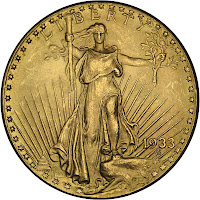 After many years of fighting, the auction by Sotheby’s-Stacks sold the coin to a private collector for $7,590,020 in 2002, with $20 being paid directly to the U.S. Treasury to monetize the coin. This remains the record for the sale of a single coin.
If a good story sells a coin, then the story of the 1933 Double Eagle will continue to drive up the price of the coin. Last July, a jury awarded ten 1933 Double Eagle coins owned by Joan Landbord to the government. Langbord, the daughter of Israel Switt, claims to have found the coins while searching through her father’s old goods. On more than one occasion, Switt has been accused of being the source of the 1933 Double Eagle coins that made it out of the Philadelphia Mint.
Although the coins remain locked up at the United States Bullion Depository in Fort Knox, Kentucky, the Langbord family is planning an appeal of the court’s decision. Even through there are three other known specimens, this story is going to drive up the price of these coins.
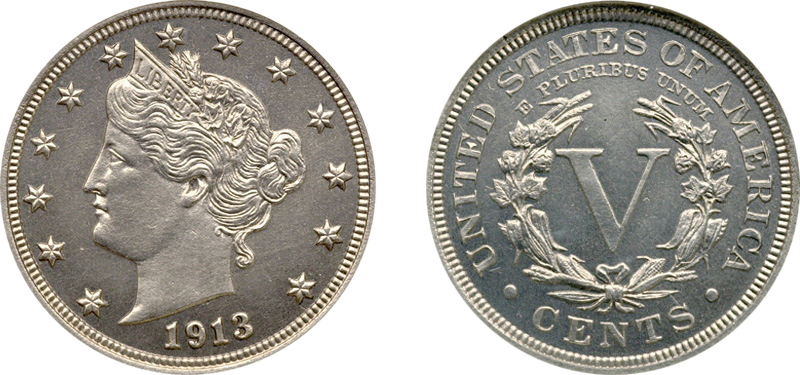
Stories can turn an average design into something spectacular. For instance, the 1913 Liberty Head Nickel does not have one of those iconic designs. In fact, President Theodore Roosevelt called the design by the Mint’s Chief Engraver Charles Barber “hideous.” But as an extension of Roosevelt’s “pet crime,” the coin was being replaced by the to-be-iconic Buffalo Nickel design by James Earle Fraser. But in 1913, Mint employee Samuel Brown allegedly had five examples of the Liberty Head design struck as souvenirs.
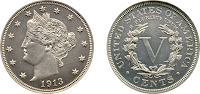 The story becomes more interesting with the pedigree of each coin. The Eliasberg Specimen once was a feature of the Louis Eliasberg collection, a Baltimore financier who attempted to collect an example of every known coin. This coin was sold in 2007 to a private collector for $5 million, currently the second most amount paid for a single coin.
Other storied coins include the Olsen Specimen that was once owned by Egypt’s King Farouk and appeared on the first version of the television show Hawaii Five-0. The McDermott specimen is the only one that shows signs of circulation and is now part of the American Numismatic Association Money Museum’s collection. The Norweb Specimen is now part of the Smithsonian Institute’s National Numismatic Collection.
The Walton Specimen was once owned by dealer and collector George O. Walton who died in an automobile accident in 1962. In an attempt to auction the coin in 1963, it was thought to be one of the copies that Walton was known to carry around. For forty years, Walton’s daughter kept the coin in a box that was sitting in the bottom of a closet. The coin was brought to the 2003 ANA World’s Fair of Money in Baltimore where a group of experts spent hours authenticating the coin as genuine.
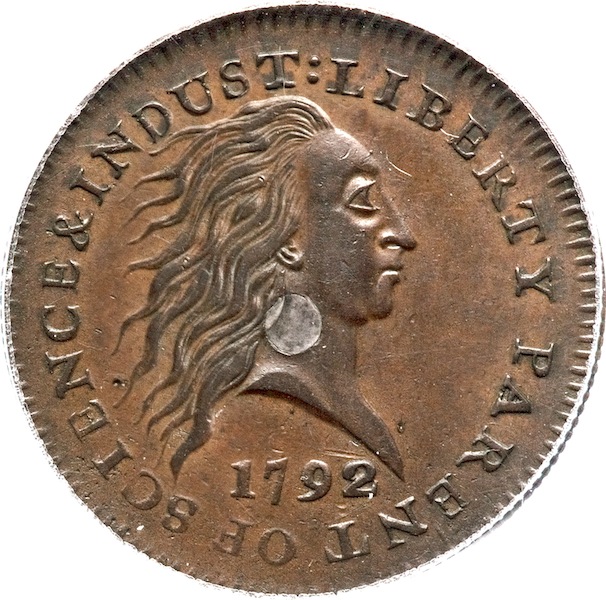
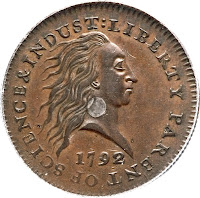 Recently, the 1792 Silver Center Cent, a pattern that was the first coin struck at the new Philadelphia Mint, sold for $1.15 million. Its design features the work of chief coiner Henry Voight, whose liberty head design has been described as “scary.” But it is the story of the founding of the Mint and of the Mint’s first director, David Rittenhouse.
We may never see rare coins sell for the same prices as famous works of art, but the numismatic community can celebrate the stories and history of these iconic coins in a way that the art world is not able to, which makes numismatics a special hobby.
Image Credits
Image of The Scream courtesy of the Associated Press.
1933 Double Eagle image courtesy of Wikimedia Commons.
Eliasberg 1913 Liberty Head Nickel image courtesy of Wikimedia Commons.
Image of the 1792 Silver Center Cent Pattern courtesy of Heritage Auction Galleries.
Apr 25, 2012 | coins, education
Numismatics is the collecting and study of items used in the exchange for goods, resolve debts, and objects used to represent something of monetary value. The dominant area of numismatics is the collection and study of legal tender coins with United States coins being the most collected. But there are so many other forms of numismatics that there are collectibles to pique anyone’s interest.
Evidence of coin collecting has been found as far back to the early days of the Roman Empire when collecting art came into vogue. Since coin design was considered art, it was assumed that coins were part of every collection. Archeologists have discovered hoards of coins with no two being alike in the areas believed to be cultural centers of the Roman Empire. The fact that the hoards have unique coins have archeologist beliving that these were lost collections.
Coin collecting did not become a broader hobby until the Italian Rennaisance when the lords and kings began to collect what we call ancient coins primarily found on their land or during conquests of other lands. Since only these nobles could afford to collect, coin collecting became known as the “Hobby of Kings.”
By the 17th century, collectors started to study and catalog the coins in their collection beginning the era of numismatic research that continues today. As the study of the coins began to advance, there was the rise of public collections. Coins held by the royalty were either given or confiscated for the state and placed in museums. As the collections began to build, museums began to sponsor research to document their holdings.
Modern numsimatics is said to have begun in the 19th century with the interest in the coins of a new nation. Collectors in the United States and overseas saw potential in the promise of the new coinage as the nation grew. By the latter part of the century after congress ended the use of foreign coins in commerce, collectors started to hoard older designs and created clubs for collectors to network and share information.
The 20th century saw new markets for numismatics develop. Growing interest in numismatics caused excavation of sites believed to have been inhabited in ancient times to find coins while hoards of United States gold and silver coins were being discovered primarily in Europe with others found in Asia. Collectors started searching banks and pocket chains for coins like the 1909-S VDB and 1914-D Lincoln Cents, 1913 Type 1 Buffalo Nickels, and 1916-D Mercury Dime.
The first change in numismatics came with the introduction of the coin board, cardboard-made boards with holes the size of the coins so that collectors can organize their collections. Coin boards introduced the concept of collecting coins in a series. Boards were printed to allow the collector to insert coins of each date and the date with mint mark. Soon after publishers printed folders that brought down the size of the coin board so it could fit on a book shelf and then the album with the ability to view both sides of the coin.
Another change occurred in 1955 when the 1955 Double-Die Obverse (DDO) Lincoln Cent was discovered. Known as the “King of Errors,” this coin lead to collectors to search for errors, varieties, and anything out of the ordinary. New clubs were formed to organize and promote this new hobby segment. One of the most comprehensive study of die varieties was published in 1971 by Leroy C. Van Allen and A. George Mallis. Their book, The Comprehensive Catalog and Encyclopedia of Morgan & Peace Dollars, documents the dies and strike varieties of America’s last circulating large silver dollars. Their catalog, also known as the “VAM Book” provides a numbering system to identified the different varieties whose impact created a new way to collect silver dollars.
The biggest change in coin collecting occurred in 1965 when the United States stopped striking coins using silver. With the price of silver rising and costing more than their face value, the country was facing a coinage shortage as people started to hoard the coins vor their silver values. Although the government erroneously blamed collectors, congress voted to change the composition of what were silver coins to copper-nickel clad alloy. Even though the half-dollar continued to be minted in silver until 1970, the silver was clad over a copper core.
Collectors consider 1964 the end of the United States’s classic coin era and 1965 the beginning of the modern era. The modern era saw the last of the large dollars and the transition to the small dollars, changes in composition for the Lincoln cent, the rotating circulating commemorative series beginning with tht 50 State Quarters program, and the reintroduction of the commemorative coin program. Another addition to the modern era in the United States and around the world is the resurgance of bullion coins.
After the world stopped using precious metals for coins, South Africa made a strategic decision to continue to strike the 22-karat krugerrand for world investment. For many years, the krugerrand was the standard for bullion investment until the United States began the American Eagle Bullion Program striking silver and gold coins. While other countries have followed suit, the American Eagle set the standard that other countries followed. Also popular at the Chinese Pandas, Canadian Maple Leafs, British Britannias, Mexican Libertads, and Australia Kookaburra.
Bullion programs lead to a new set of collectibles that are a cross between bullion and commemoratives called non-circulating legal tender (NCLT) coins. NCLT collecting has introduced new collecting opportunities by allowing mints and central banks to create new themes to intice new collectors and established collectors to expand their collections with new coins.
Rotating circulating commemorative designs and NCLT coins along with an expanded interest in other numismatic collectibles from the past including obsolete tokens, medals, old stock certificates, and paper money gives the numismatic collector an opportunity to create great collectings by collecting what you like.
Apr 18, 2012 | coins, commentary, grading
In a late press release on April 17, it was announced that after two years, the members of the Professional Numismatists Guild approved a three-point definition of “coin doctoring.”
“This is a complex issue, but we needed to have a concise definition to help combat the deliberative and unacceptable alteration of coins in an effort to deceive,” said PNG President Jeffrey Bernberg.
As the hobby has grown and the ability to sell coins have become easier, the problem of coin doctoring has been one of those issues simmering just below the industry’s radar. But as the prices of key and semi-key coins have risen, the temptation by some to cash in has caused coin doctoring to be a more significant issue.
“We’ve been working on this for over two years with Numismatic Guaranty Corporation and Professional Coin Grading Service as well as a committee of dealers and collectors to formulate an industry-acceptable definition,” said PNG Executive Director Robert Brueggeman.
According to PNG, coin doctoring refers to the alteration of any portion of a coin, when that process includes any of the following (emphasis added):
- Movement, addition to, or otherwise altering of metal, so that a coin appears to be in a better state of preservation, or more valuable than it otherwise would be. A few examples are plugging, whizzing, polishing, engraving, “lasering” and adding or removing mint marks.
- Addition of any substance to a coin so that it appears to be in a better state of preservation or more valuable than it otherwise would be. The use of solvents and/or commercially available dilute acids, such as Jeweluster, by qualified professionals is not considered coin doctoring.
- Intentional exposure of a coin to any chemicals, substances, or processes which impart toning, such that the coin appears to be in a better state of preservation or more valuable than it otherwise would be. Naturally occurring toning imparted during long-term storage using established/traditional methods, such as coin albums, rolls, flips, or envelopes, does not constitute coin doctoring.
While much of this makes sense in the current environment, there are some things that the collecting public must remember. First, not all doctored coins are an effort to deceive. One example are Buffalo Nickels that have been treated with a chemical to make the date readable. These “acid coins” are easy to detect since the chemical leaves a stain where used and, in the vast majority of cases, are advertised as being altered coins.
Another issue is that at one time coin doctoring was an accepted practice. People did not want ugly coins, so dealers would use various methods to polish he coins to make them look better. It was also common for some to use the same abrasive copper polish that was used to clean copper cookware to clean older copper coins to try to make the coins look mint red. Others embraced the natural oxidation of copper that turned them brown and coated them with lacquer to preserve its rich, dark color.
When blatant altering of the surface fell out of fashion, dipping the coins in chemicals to improve the surface continued, especially for copper coins. While not as easy to detect, it is possible to find better and semi-key Indian and Lincoln cents that were dipped a long time ago when the practice was acceptable. An experienced eye can tell if a coin was once dipped, but it is not easy. If you have any question, either ask that coin be graded by a third party or do not buy the coin.
One item that is objectionable is in the second definition where it says, “the use of solvents and/or commercially available dilute acids… by qualified professionals is not considered coin doctoring.” What this says is that if I have coins that have been contaminated with polyvinyl chloride (PVC) from being improperly stored, I cannot buy acetone to rid the coins of the damage. Rather, it appears that NGC has preserved the business of its sister company, Numismatic Conservation Service by saying only NCS can do the job and a vigilant collector is a coin doctor.
Dear PNG: I am going to continue to carefully remove the deteriorated foam from a set of improperly stored 1939 World’s Fair tokens using olive oil and acetone. Just because I do not work for NCS does not mean I am doctoring these coins.
A collector who uses a dilute or neutral acid that does not alter surfaces like acetone to remove PVC, dirt, or other contaminants is not a coin doctor!
Toning is a controversial topic because toning is he result of the oxidation of the coin metal accelerated by environmental contaminants. Oxidation alters the irreversibly alters the surface of a coin. Usual causes of toning comes from storage using non-neutral materials. Since toning can give coins a pleasing or pretty look with many interesting colors, there are collectors who seek out toned coins.
Artificially toning a coin can be used to hide the work of doctored coins or make the coin more desirable. The problem is that there is no definitive way to tell the difference between artificial and natural toning. There are ways to tell the difference between deliberate attempts at toning, but there has been anecdotal evidence demonstrating that it is possible tone a coin that has fooled the grading services.
Now that we have he definition of coin doctoring, what do we do with it? While PNG can use this definition to police its own members, what happens to dealers who are not PNG members? Will PNG work with the American Numismatic Association to adopt similar ethics rules? If so, will ANA members be allowed in this conversation?
“It frankly took longer than some of us expected or wanted to get something substantive finally approved, but the overwhelmingly vote now by PNG members to support a specific coin doctoring definition is an important, major step for the hobby and the profession. It needed to be done,” said Brueggeman.
Maybe they should have waited longer and put out their definition for general comment before enthusiastically adapt a message with questions.

 If you are going to be in the area of Acadia National Park today, June 26, the U.S. Mint will hold the launch ceremony at 9:30 AM at the Hulls Grove Visitors Center, Bar Harbor, Maine.


 Loading ...