
Pay-Per-Listen Radio and an Interesting History

The Dahlberg Radio in a hospital setting
Newspapers were the dominant media of the day. Many broadsheets published two or three times a day plus special editions. The provided news, stories, and advertising, but there was always a delay. Broadcast radio began to change how news was delivered, starting with the first commercial radio stations in the early 1920s. Although the first radio stations experimented with the new format, by the late 1920s, radio offered a wide range of programming.
Like all new technology, radios were expensive. Manufacturing processes would take a while to lower costs. But as radio began to become popular, the Great Depression slowed its growth.
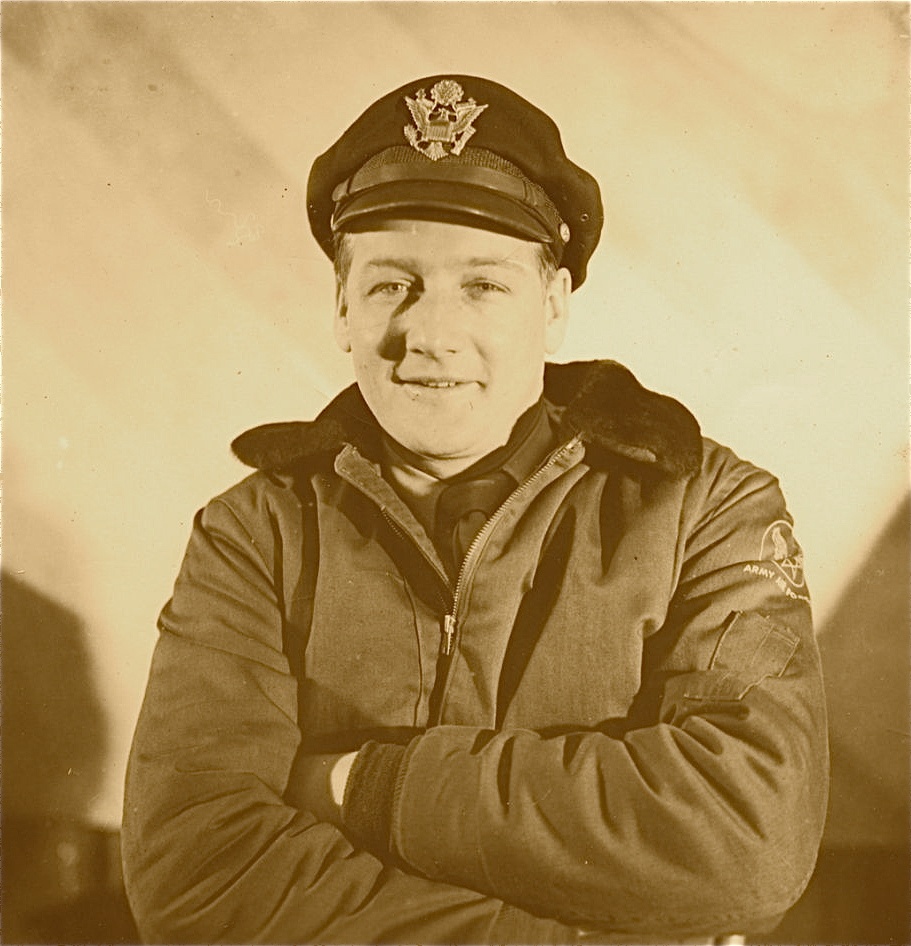
Ken Dahlberg
Dahlberg sold tokens to the hospital with their name on it in an attempt from people taking the tokens to other hospitals. The tokens were the size of a dime with a hole in the center. It was a pay-per-listen radio when the medium was popular. By the mid-1950s, technology reduced the size of the radio, and the family of patients brought their radios.
-
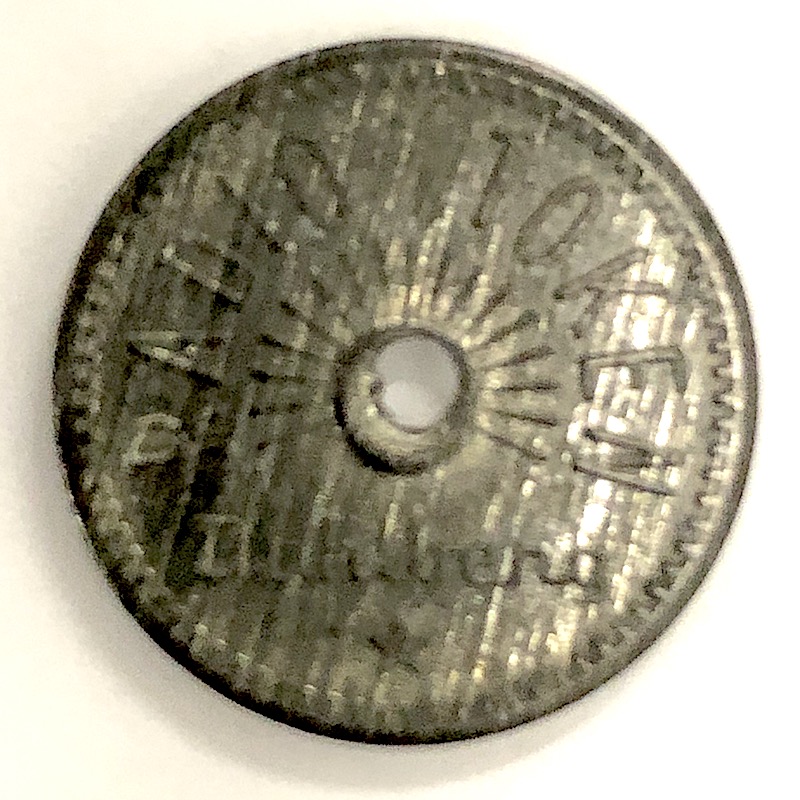
- The common obverse of the Dahlberg Radio Token
-
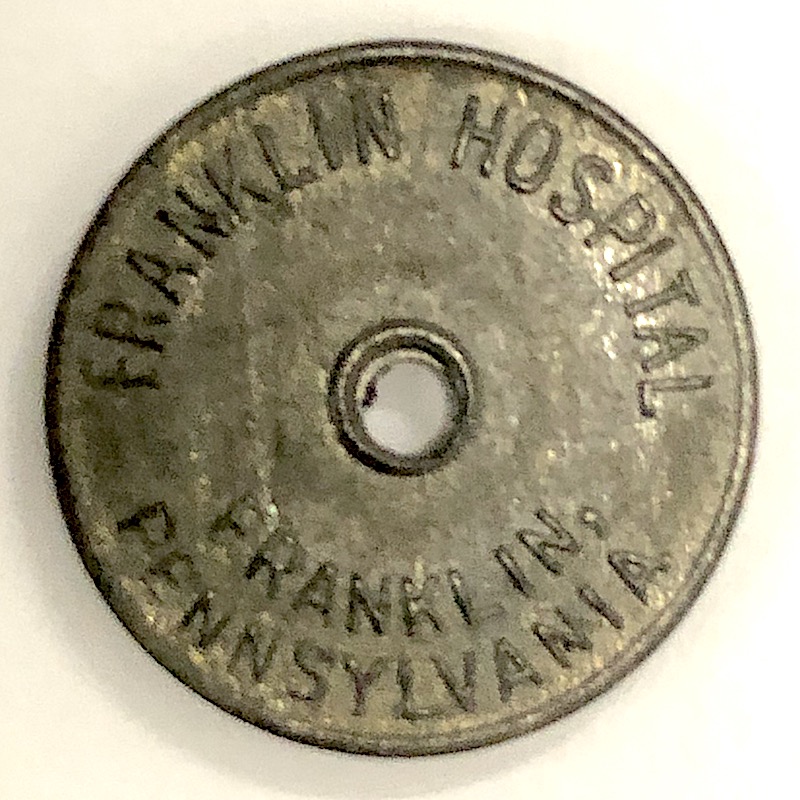
- Reverse of a Dahlberg Radio Token from Franklin Hospital in Franklin, PA
Dahlberg stopped making radios in the early 1960s to pursue other ventures. The hearing aid company Miracle-Ear was a subsidiary of Dahlberg electronics.
In 1972, Ken Dahlberg was the midwest finance chair for the Committee to Re-Elect the President. Dahlberg facilitated the payments that eventually found its way into the bank account of one of the Watergate burglars. He was never charged with a crime since it was clear he was following the campaign finance procedures and did not have knowledge of where the money was going.
Dahlberg radio tokens are scarce but not difficult to find. People who collect these tokens look for different hospitals, and different cities struck in the metal. One collector said that he had found tokens from 21 different hospitals in 20 different cities. Collectors do not know the number of hospitals that had tokens made, and there has been no attempt to document the ones found.
The tokens pictured above were found mixed with other collectible items. Their discovery allowed for a look back to an interesting past.

A Second Bicentennial
Following the end of the American Revolutionary War in 1783, Britain concentrated its efforts in colonizing Canada and defending itself in Europe. After the turn of the century, the British Empire was threatened by France with the rise of Napoleon Bonaparte.
As the new nation was forming and expanding, the British were also expanding and began to recruit Native American Tribes to agitate the Americans. The British were also hijacking American merchant vessels, many trading with France.
Some historians call War of 1812 the United State’s second revolutionary war. The primary reason for declaring war on Great Britain was after years of the Royal Navy harassing or capturing merchant ships bound for France. At the time, England was in the middle of the Napoleonic Wars and was trying to prevent France from getting the supplies it needed. This lead to President James Madison writing a letter to congress explaining England’s actions. Although Madison did not call for a declaration of war, the Democrat-Republican lead congress voted to declare war on Great Britain (79-49 in the House, 19-13 in the Senate). Madison signed the declaration on June 18, 1812. It was the first Declaration of War passed by the new nation.
To commemorate the bicentennial of the start of the what has been called America’s Second Revolutionary War, the Star Spangled 200 and the Maryland War of 1812 Bicentennial Commission held Sailabration in Baltimore’s Inner Harbor.
The week long celebration featured concerts, vendors, tours of Fort McHenry, tall ships, air show by the famous Blue Angels, and more.
As part of the celebration, the Star Spangled 200 organization was present to sell the 2012 Star-Spangled Banner Commemorative Proof Silver Dollar and promote the sale of the other options.
To assist the Star Spangled 200 organization and the coin clubs of Maryland, the organization invited the Maryland State Numismatic Association to set up a table on the side of their tent to promote the coin clubs of Maryland. MSNA and the Montgomery County Coin Club Vice President, your blog host, staffed the table on Sunday.
Aside from promoting collecting and the clubs of Maryland, I was also able to help talk with visitors about the 2012 commemorative coin to the various visitors. For seven hours, I stayed with the wonderful staff of the Star Spangled 200 organization talking with many visitors.


A New Circulating Commem Idea

Source: coinsblog.ws via CoinsBlog on Pinterest
Twenty-five years ago, on June 12, 1987, President Ronald Reagan stood in front of the Brandenburg Gate at the Berlin Wall and delivered a public message to Soviet Union leader Mikhail Gorbachev to remove the wall between East and West Berlin:
Mr. Gorbachev, open this gate!
Mr. Gorbachev, tear down this wall!
The iconic message to Gorbachev was proven prophetic as the Berlin Wall was torn down by the people of Berlin two years later.
Although I am not a fan of Ronald Reagan, I am a fan of history and iconic moments in history. Reagan’s speech that day in Berlin has to rank one of the iconic moments of the 20th century and should be remembered.
So why don’t we have some type of commemorative coin honoring this history?
The main reason what we do not commemorate major historical events is congress. Congress has taken its authority in the Constitution “To coin Money, regulate the Value thereof, and of foreign Coin, and fix the Standard of Weights and Measures” to a parochial degree. It does not say that congress designs the coins nor does it say that once the standards are set, the U.S. Mint could not issue different types of collectible coins based on those standard.
Maybe it is time to expand the role of the Citizens Coinage Advisory Committee to a real coinage advisory committee to recommend producing circulating and non-circulating legal tender coins. The concept of an advisory board to oversee this type of coin production is used in other countries like Canada and Great Britain. While the Royal Canadian Mint can be accused of abusing their authority, the Royal Mint does a better job at limiting the coinage and production to make real collectibles without too many gimmicks.
Using numismatics to honor history and those who made it is not a new idea. Educational Notes of the 1880s were printed with neoclassical allegorical images to represent themes that may have been out of reach for most people. While not popular at the time, the these notes are amongst the most desirable by collectors.
More recently, we have honored the 50 states; national parks and forests; the Louisiana Purchase and the Journey of Merriweather Lewis and William Clark; accomplishments of native Americans; and the Presidents of the United States on circulating coins. Lincoln was honored on the cent which bears his portrait before changing the reverse to honor the union he helped preserve.
Why not use our coinage to commemorate our history? Why not pick four significant events in history, one with a significant anniversary, and honor it on a circulating coin?
With the U.S. Mint looking for a way to increase coin collecting, which is their motivation for producing national parks business strike coins at the San Francisco Mint, why not use the reverse of the half-dollar as the canvas for a historical design series?
Prior to the production of the Kennedy Half Dollar, half-dollars were common circulating coins. Following the assassination of the popular president, people wanted to a souvenir of the slain president so when the new halves were released, the coins were hoarded and effectively ended the circulation of half dollars. Bringing back the half-dollar into favor would not only increase the number of people interested in collecting but the seignorage of these collectible coins would provide a windfall for the general treasury.
Rather than make just collectible business strikes at San Francisco, the new half-dollars struck at San Francisco would be added to the coins sold to the Federal Reserve for circulation. This could build interest in coins produced at the San Francisco Mint, increase production which will increase seignorage opportunities.
Adding the historical half-dollar reverse would introduce new themes that teachers could use to teach students about history, give collectors new outlets, and remind the rest of nation about the rich history that we pride as her citizens.
Of course the extra seignorage would not hurt, either.
Not In Too Many Pockets These Days
I still hunt pocket change. Occasionally, I will hunt through my wife’s pocket change. Actually, she saves her coins in a jar for me to search through at my convenience. Every so often, she asks me to look at the quarter so that they can be used in her office’s soda machine. I took the opportunity to look at the top eighth of the jar to see what I could find.
While digging through the jar looking for quarters, I found a dime that initially struck me as odd. I was expecting to see the usual torch of the Roosevelt Dime reverse but this was different. Not only was the color different but it was a fasces and not a torch. Instantly, I recognized it as the reverse of a Mercury Dime.
When I started collecting in the early 1970s, I would find a Mercury Dime in change along with the silver Roosevelt Dimes. But as the economy fell apart, what was left of circulating silver coins were promptly removed from change. In fact, I have found more silver certificates in change than silver dimes.
Although it is not worth much, it is still fun to find something like this in change.
2012 San Francisco Eagles Now On Sale
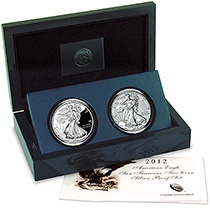
2012 American Eagle San Francisco Two-Coin Silver Proof Set
As part of the catalog page, the U.S. Mint is providing a running total of the units ordered that is updated at 3:00 P.M. during the work week. As of Friday, June 8, the total sales are 85,341.
Sales of the San Francisco two-coin set is slower than the 25th Anniversary set that sold out of all 100,000 sets in five hours. However, a key difference between the two sets is that the 25th Anniversary set had a limited run while the San Francisco set will be struck to order making the ordering process feel less than urgent. Although I have not ordered, I will order before July 5.
I am not sure how many sets I will buy since it will not be an investment like the 25th Anniversary set. The 25th anniversary set was $300 per set and I purchases the maximum five sets. I sold four sets at $600 each. Now, the sets are selling for around $850 each. This is typical of the law of supply and demand: when the supply is low but the demand is high, the price will rise. If the U.S. Mint is producing these sets to the demand, the aftermarket demand curve will not be as high and not bring in the same types of returns. This does not make buying more than one of these sets attractive.
I will buy a set and keep it with the 20th and 25th anniversary sets. I still love the American Silver Eagle coins and look forward to adding these to my collection!
Image Courtesy of the U.S. Mint.
We’ve Moved!
Welcome to the new Coin Collectors Blog!
If everything has gone well, those that have subscribed to the RSS feed on the old blog should continue to receive updates. If not, use this link or the links in the far right sidebar to subscribe. Updates will also be posted to Twitter as before.
I am now self-hosting the Coin Collectors Blog on a commercial service rather than using Blogger. Aside from having my own domain name (which I could have done with Blogger), I have more control over the software. This will prove the flexibility for me to use my tech background to add more and different content in the future.
As I announced before, the Coin Collectors Blog now has an account on Pinterest, the social media site that is based on sharing images. I will be using Pinterest to pin interesting images and some of my own finds. I will also use it when I go to show, such as the Whitman Baltimore Expo at the end of June and the American Numismatic Association’s World’s Fair of Money in August.
For now, everything should work. If you have any questions or issues with the new blog, please click on the “Contact Me” link on the right side of this page to let me know what you find.
Enjoy!
UPDATE: It looks like past comments did not transfer properly. I will investigate and see if I can have them uploaded from a backup. Thank you to those who brought this to my attention.
Support the Coin Collectors Blog
 Buy me a coffee
Thank you for your support!
Let Me Know What You Think
Are you going to the World's Fair of Money
Total Voters: 17
 Loading ...