
Weekly World Numismatic News for September 29, 2019
While reading the news from around the world, it is easy to understand why numismatics is not well received in the United States. Compared to numismatic-related articles from countries like the United Kingdom, France, and India, U.S. reporting lives down to the reputation that politicians claim.
For example, in The Trentonian, the newspaper of record for Trenton, New Jersey, columnist L.A. Parker wrote an opinion piece that calls for the elimination of the “penny.” Although the article reads like Parker was trying to add a little snarkiness, his premise lies flatter than a coin.
If Parker were a proper journalist, he would recognize that the article contains one significant mistake that ranks high on my pet peeve list. The lowest denomination coin produced by the U.S. Mint is the CENT. While it is colloquially called a “penny,” the penny as the lowest denomination of the British coin system.
The difference is clear. If one looks at the reverse of the two coins, each has their denominations spelled out.
-
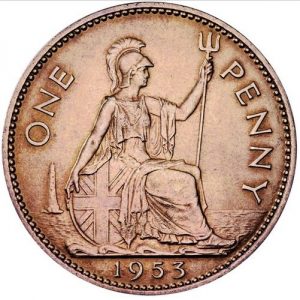
- British pre-decimalization Penny
-
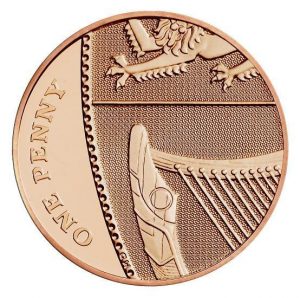
- The reverse of a 2018 U.K. One Penny coin
-
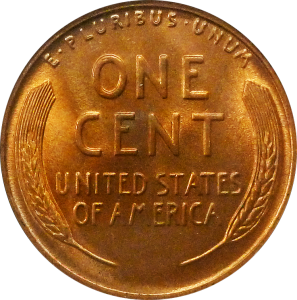
- Lincoln Cent Wheat Ears reverse
-
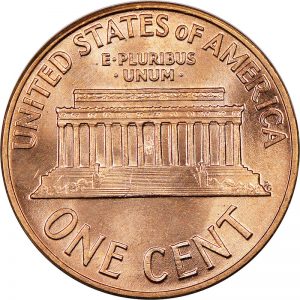
- Lincoln Memorial Cent
-
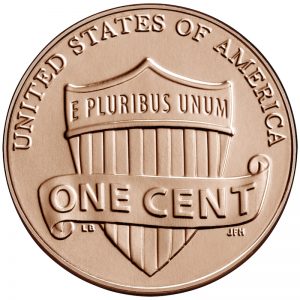
- Modern Lincoln Shield Cent
Lately, the U.S. Mint has been adding to the confusion by using the word “penny” instead of “cent.” The significant abuser appears to be U.S. Mint Director David Ryder. While previous directors and acting directors have been careful with the name, it seems to have loosened its language since the appointment of Ryder. Ryder should know better since this is not his first appointment to the U.S. Mint.
Adding to the confusion in Parker’s article, he cites statistics in favor of the cent that was compiled by Americans for Common Cents. Americans for Common Cents is a lobbying organization dedicated to preserving the United States’ lowest denomination coin.
According to Parker, “Pennies no longer matter.” If the one-cent coin no longer matters, then why does the U.S. Mint produce over 13 billion of them each year?
The primary client of the U.S. Mint is the Federal Reserve. Every year, the Federal Reserve places an order for the U.S. Mint to produce coins for circulation. Although the order can be updated during the year, the Federal Reserve rarely requests few coins. It means that the U.S. Mint manufactures coin the Federal Reserve will buy.
The U.S. Mint does produce coins for the collector market. But in comparison to their circulating coin production, the numismatic market is tiny.
Naturally, this leads to wondering if the coins no longer matter, then why is the Federal Reserve asking the U.S. Mint to manufacture and deliver over 13 billion coins?
And now the news…
 September 22, 2019
Two women have designed a commemorative coin to recognize 100 years since the Boll Weevil monument was erected. Enterprise high school Quarterbacks club secretary Judi Stinnett got the design idea from a coin she received at the Diamond Jubilee over 60 years ago.  → Read more at wtvy.com
September 22, 2019The South African Mint Company are doing something a little different to celebrate 25 years of democracy in this country. So what better way to commemorate “power to the people” than by handing them control of what should appear on the new R2 coin? → Read more at thesouthafrican.com
September 23, 2019Nassau County District Attorney Madeline Singas announced that a coin dealer from Fort Salonga was arraigned for a $330,000 cross-country coin consignment and sale scheme that targeted coin dealers and private collectors from California, Michigan, Ohio and Long Island. → Read more at longisland.com
September 24, 2019A builder is celebrating after finding a huge haul of 1,000-year-old silver coins worth £50,000 – including one from Lincolnshire which experts have never seen before. Don Crawley, 50, was searching for buried treasure in farmland using his metal detector when he discovered the haul. → Read more at lincolnshirelive.co.uk
September 24, 2019(Image: © FIRST/Jack Kamen/NASA via collectSPACE.com) The United States Mint will memorialize the first teacher who launched toward space with a new coin that will help continue her mission of science and technology education. → Read more at space.com
September 25, 2019Have only seven red cents to my name and soon a self-description will employ penniless as identification. Not ready for the poorhouse though as poor mouth expressions mean only that all pennies have been removed from jars, drawers and a car console. → Read more at trentonian.com
September 26, 2019AN EXTREMELY rare copper coin marking King Edward VIII's short reign has sold for a record price of £133,000. The Edward VIII 1937 Pattern Penny was created as a trial coin by the Royal Mint ahead of his coronation in the same year. → Read more at thesun.co.uk
September 26, 2019Lori Ann Lewis was doing charity work in downtown Orlando when, by chance, she ran into someone who worked in the gold business. It was in the lobby of the Seacoast Bank skyscraper in 2016, just before the presidential election, when she met Susan Kitzmiller, an employee at U.S. → Read more at orlandosentinel.com
September 28, 2019The Bank of Jamaica (BOJ) estimates that at least J$100 million in one- 10- and 25-cent coins, the ‘red’ money, is ‘lost in circulation’ in the Jamaican economy, and has partnered with GraceKennedy (GK) Money Service in a recovery drive. → Read more at jamaica-gleaner.com
GELT
Those of us who normally do not celebrate a holiday on December 25 was able to celebrate the lighting of the fifth Chanukah candle. For those who do not know the story of Chanukah: after the Maccabees drove the Greeks from Holy Land, the people went to clean up and rededicate the Second Temple in Jerusalem. When they went to light the menorah, they found a one-day supply of olive oil that was not contaminated. Knowing that it would take a week to manufacture more olive oil, the people lit the menorah for the dedication. That one-day supply of oil kept the menorah lit for eight days. Chanukah is the celebration of that miracle.
A tradition that came out this era was the play with the dreidle. A dreidle is a four-sided top with the Hebrew letters of the phrase (transliterated) &ldquot;nes gadol hayah sham” which means “a great miracle happened there.” In Israel, the last word is replaced with “po” meaning “here.” To play, players start with an ante and one person spins the dreidle. Depending on which letter the dreidle lands is what the spinner does. Using the order of the Hebrew phrase, the moves are (Nun) to give or get nothing, (Gimel) get everything in the pot, (Hey) get half of what is in the pot, and (Shin or Peh) means to pay into the pot. Yes, it’s a gambling game.
 While anything can be used to play dreidle, it is traditional for parents to give children Chanukah gelt to play. Although we think of gelt as money, it can take any form of exchange. One of my favorite types of gelt is chocolate gelt. Little disks of chocolate that resembles the coin of the relm.
My wife indulged my passion for gelt by giving me chocolate gelt and a few gift cards. I had found other gold foil-covered disks that look like quarters and halves, but her choice of chocolate was better than mine. Now I have to go find someone to play dreidle—one can never have enough chocolate!
Regardless of what you celebrate, may you find happiness and peace in your celebration and a hope that 2009 is better than 2008!
Holiday Cheer
A Call to Veto Quarters Bill
Apparently, I an not the only one who would like to see the president veto the recently passed H.R. 6184, America’s Beautiful National Parks Quarter Dollar Coin Act of 2008. Eric Lurio, blogger at The Huffington Post, also thinks this is a bad idea.
Lurio, who admits to purchasing annual sets, compares the excessive coin issues to the excessive stamp issues that helped kill philatelics. “The thing that destroyed philately was too much product,” writes Lurio. “Back in the day you’d have at most ten to fifteen commemoratives and some “regular” issues with weird denominations. That was cheap. It was fun. Not any more it’s not. There are fifty commemoratives, all expensive.”
Readers have sent quite a few private messages admitting to what I called “collector fatique.” Someone also suggested that congress has “Jumped the Shark” with this measure.
Today is the tenth day (not including Sundays) since the bill has been received by the president. Although the Senate will convene for a pro forma session—a session just to say congress was in session—the president could still not sign the bill today. With no session scheduled for tomorrow, it is possible that the result will be a pocket veto.
“Coins are a medium of exchange, not advertising. Sure the designs should be pleasing, if not beautiful, but don’t do tourist traps,” concludes Lurio, “It’s just not right.”
I cannot imagine what Teddy Roosevelt would say about this!
Byzantine Era Gold Coins Found in Israel
 Archaeologists excavating an area at the Jerusalem National Park in Israel uncovered 264 gold coins from the Byzantine period, early in the seventh century.
The Israel Antiquities Authority reported that the coins were found under a large rock in an area where a car park was being excavated. In Israel, it is required that construction sites must undergo an archaeological investigation to ensure antiquities are recovered. This was one such dig.
 All of the coins bear the likeness of the emperor Heraclius who was emperor of the Byzantine empire 610-641. Archaeologist believe the coins were minted and hidden at the site prior to the Persian capture of Jerusalem in 614. Heraclius is depicted on the obverse wearing his military uniform and holding a cross in his right hand. A cross is shown on the reverse. The coins were found in near mint condition.
Daily Mail (UK) credits the discovery to Nadine Ross, a British volunteer working in the fourth and last week of the excavation.
Dr. Doron Ben-Ami and Yana Tchekhanovets, directors of the excavation, said that the coins had likely been hidden in a niche in one of the building’s walls because the of the lack of other items found in the area. Archaeologists hope that more can be found as they continue to explore.
First image courtesy of the Israel Antiquities Authority
Second image courtesy of the Daily Mail
2009 Will Be Quite A Year
As we end 2008 and look to 2009, numismatists are going to have a lot of options to add to their collections. There will be quite a number of coins that will excite many. But the shear numbers may be overwhelming to others. However you feel, the US Mint will have a very busy year. Let’s look at what is coming up in the new year.
First, three coins will not see any changes. The “Return to Monticello” Jefferson Nickel introduced in 2006 will not be changed. Neither will the Roosevelt Dime, in circulation since 1946, and the Kennedy Half Dollar, as it has been since 1964 except for the Bicentennial issues.
For 2009, we will celebrate the bicentennial birthday of Abraham Lincoln. In celebration, congress has authorized the 2009 Lincoln Bicentennial One Cent Program as part of Public Law 105-145. As part of this program, the Mint will issue four reverse design representing Lincoln’s birth and early childhood in Kentucky (1809-1816), his formative years in Indiana (1816-1830), his professional Life in Illinois (1830-1861), and an extraordinary presidency in Washington, DC (1861-1865).
As part of the Lincoln Cent program, the US Mint will issue a 2009-S VDB non-circulating coin that will be struck in the .950 copper alloy used when the 1909-S VDB was first struck. Also, Public Law 109-285 was passed earlier this year that created Abraham Lincoln Commemorative Silver Dollar to round out the celebration of our 16th president.
To round out the State Quarter program, 2009 will issue quarters to honor the District of Columbia and five US territories: Puerto Rico, Guam, American Samoa, the US Virgin Islands, and the Commonwealth of the Northern Mariana Islands. The DC and US Territories Quarter Program authorized by congress in an amendment as part of an omnibus budget bill at the end of 2007.
The same omnibus budget bill also removed the motto “IN G-D WE TRUST” from the edge of the dollar coins. The amendment was introduced by Rep. Virgil Goode (R-VA) who was defeated for re-election.
The Presidential $1 Coin Program continues in 2009 to honor presidents William Henry Harrison, John Tyler, James K. Polk, and Zachary Taylor. Harrison had the shortest term when he died one month into office after contracting the flu following his refusal to wear an overcoat during his two-hour inaugural address on a cold day in March, 1841. All of the packaging options with Presidential $1 Coins will not be offered in 2009 after not selling well the last two years.
Along with the presidents, the First Spouse Gold Coins will be issued for Anna Harrison, Letitia Tyler, Julia Tyler, Sarah Polk and Margaret Taylor. Letitia Tyler was the first President’s wife to die in the White House. Julia Tyler became First Lady after marrying John Tyler in 1844.
Native American $1 Coins program will begin in 2009 with a design honoring the “Three Sisters’ agriculture, in which corn, beans and squash growing in the same mound enhanced the productivity of each plant. It was a unique program that lead to the concept of crop rotation we know today. This change was authorized by Public Law 110-82 and add edge lettering to these coins.
That brings the total number of circulating coins to 18! Proof sets will have 18 coins and the uncirculated Mint Sets will have 36 coins. Although the Mint has not announced pricing, it would be fair to guess that the prices will raise with more coins in the set. Clad and Mint sets should see a modest price increase. Silver proof sets will add an additional silver quarter and is likely to see a $10-15 rise in price.
Beyond circulating coinage, the Mint will produce the 2009 Louis Braille Bicentennial Silver Dollar to honor the 200th anniversary of Braille’s birth. It is being touted by the Mint as being the first coin with readable Braille.
Precious metals programs will change in 2009. First, only the bullion issues of the American Eagle coins will be strucl. The Mint has discontinued the collector’s uncirculated coin program, eliminating the W mintmark from their portfolio. American Eagles will be available in proof and bullion coins in one-ounce, half-ounce, quarter-ounce, and tenth-ounce denominations.
American Buffalo 24-Karat Gold Coins will also continue in 2009 but without fractional issues. The Mint will offer only one-ounce proof and investor bullion coins.
Last, but certainly not least, is probably the most intriguing coin that will be issued in 2009: the 2009 Ultra High Relief Double Eagle Gold Coin. The coin’s design will be a high-relief $20 gold piece on a double-thick, 24-karat gold planchet (sometimes called a piefort) 27 millimeters in diameter. The design will feature Augustus Saint-Gaudens’ original 1907 design where the date will be in roman numerals (MMIX). The inspiration for this coin came from 1907 when the Mint tried to strike an experimental double eagle coins using two stacked $10 eagle planchets. When the Mint’s management realized that congress would have to approve the striking of the coin for circulation, the project was abandoned and the test pieces were melted. Aside from the date, the only difference between the 1907 test pieces and the 2009 bullion issue is that the the motto “In G-D We Trust” will be added over the rising sun as it appeared in 1908. It is expected that these coins will be struck in proof-only varieties.
It will be quite a year!
Support the Coin Collectors Blog
 Buy me a coffee
Thank you for your support!
Let Me Know What You Think
Are you going to the World's Fair of Money
Total Voters: 17
 Loading ...