Feb 4, 2017 | Canada, coins, education, video
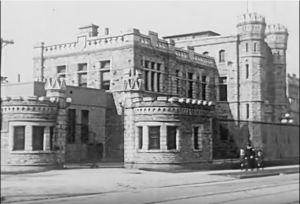
1920 Image of the Royal Canadian Mint in Ottawa
Take the video below, for example. It is titled “How money is Made” and appears to have been made for the Royal Canadian Mint by a company called Mogull Brothers Film Library in New York.
A quick bit of Internet research shows the company was founded and run by Charles Mogull (1898-1986) in Brooklyn, New York. Mogull Brothers were one of the early content creation pioneers. They would shoot a film on various subjects, edit them into smaller features, and sell the features to companies that would use them in larger compilations. Their content would be everything from features like the one they created for the Royal Canadian Mint, news events, interviews, show promotions, etc. and footage they would buy from photographers. The little information I could find on Mogull suggests that the company ceased operation in the late 1950s.
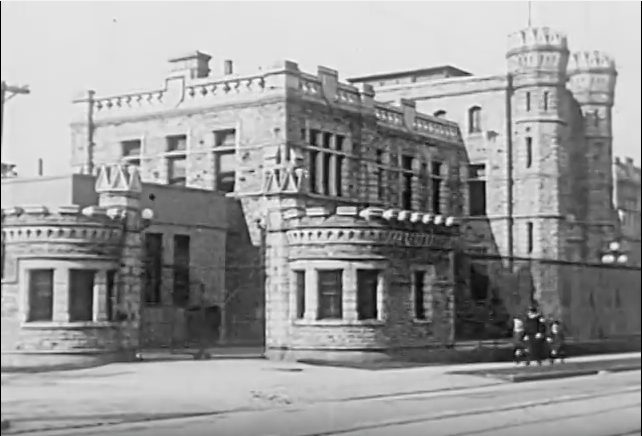
As for the film, the architecture of the original Royal Canadian Mint in Ottawa looks like a castle. I believe I read somewhere that the Royal Canadian Mint still uses the building as storage. To see this marvelous looking structure and to visit the Mint appears to be a good excuse to visit the Canadian capital.
It is a silent film that the person who posted it to YouTube added music. Even with the music, you can see how film technology has changed. Rather than being able to overlay the wording over the image, a process called keying, printed cards are used to describe the content and spliced into the film.
At the moment the film shows the making of the dies, they show the dies of a 1920 Canadian one cent coin with the image of George V. It was under George V, shortly after his ascension to the throne, that the Parliament Act 1911 transferred a lot of governing power to the House of Commons and started the erosion of monarch’s power.
Although we are well into the industrial revolution, the mix of automation and human interaction is fascinating. For example, starting around the 8-minute mark, there is a man bouncing the coins listening for its distinctive ring that silver coins make when bounced on a hard surface. Nowadays, machines with sensors and computers check the coins for quality. Even circulating coins are rarely touched by human hands.
Finally, as a little comic relief, when the film shows the title cards, look in the lower right corner at the graphics they chose to use. The filmmaker tried to use the graphics to emphasize something about what you will see next.
Now enjoy the show:
Feb 3, 2017 | coins, US Mint
On April 2, 2017, the U.S. Mint will be celebrating its 225th Anniversary. It marks 225 years since the passage and signing of the Coinage Act of 1792. During the year, the U.S. Mint will be doing a number of things to celebrate including issuing the new American Liberty Gold Coin.
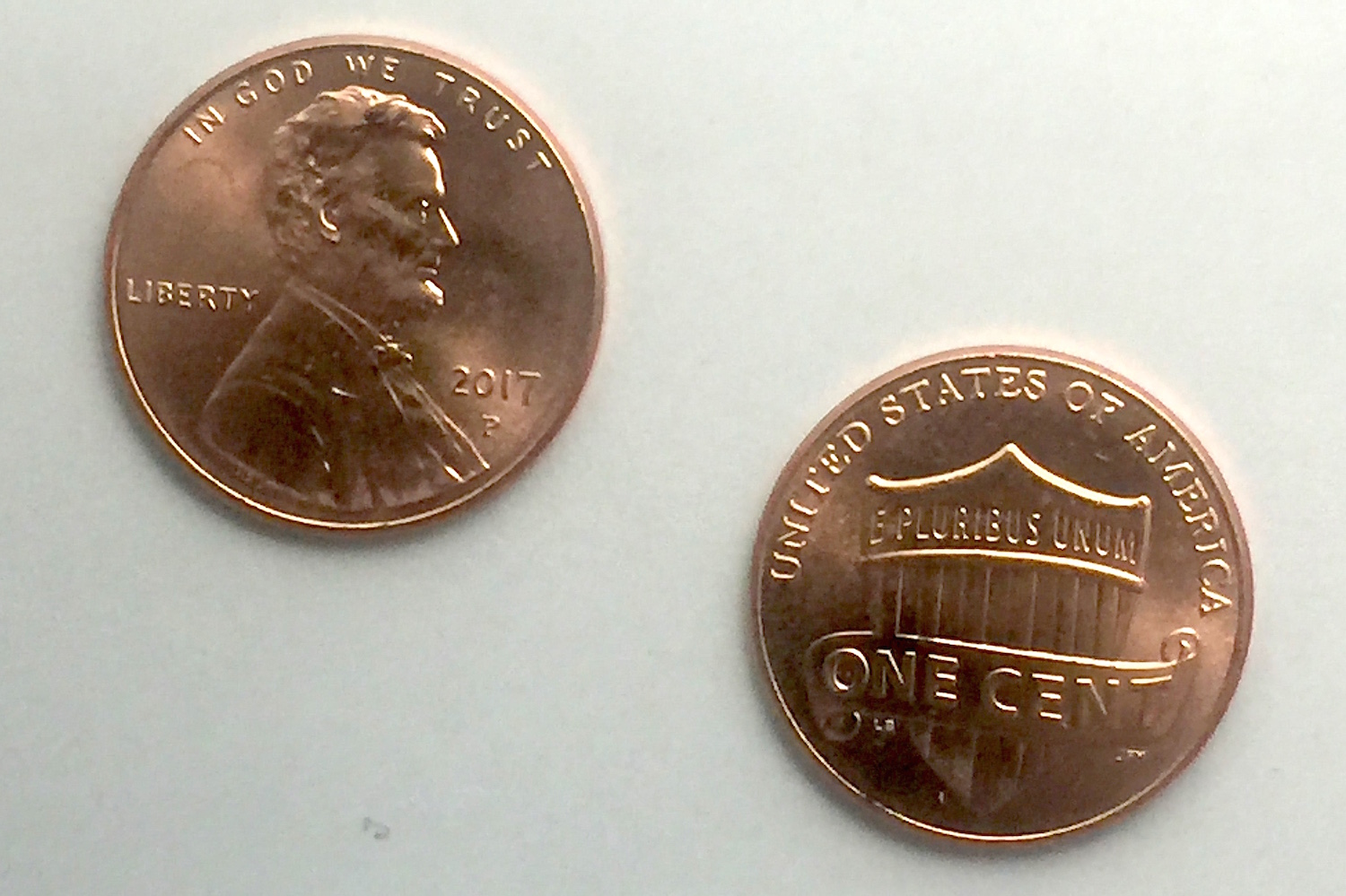
The U.S. Mint has also issued a 2017-P Lincoln Cent with a mintmark. It is the first and the only year the U.S. Mint will be issuing a mintmark on the one-cent coin that is already in circulation. Finding two in pocket change makes it one of my earliest new years find.
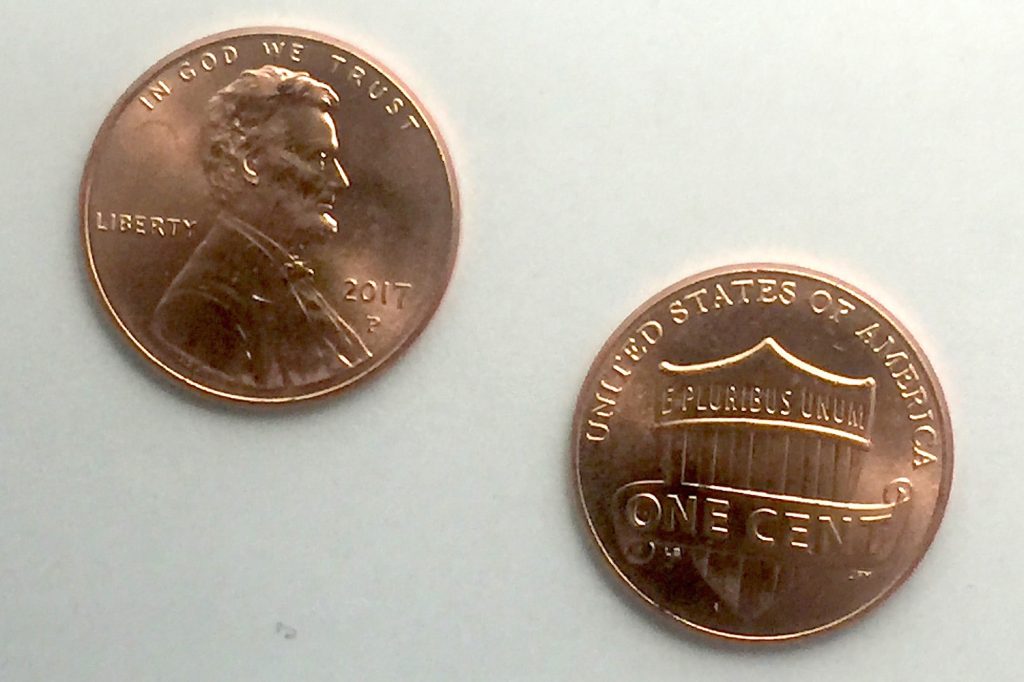
A pair of 2017-P Lincoln Cents found in pocket change
Coins struck in Philadelphia from the founding of the Mint in 1793 until 1980 did not include a mintmark. The exception was the Type 2 Jefferson nickels minted using the wartime alloy from 1942-1945. Coins struck using the silver-copper-manganese alloy feature a large mintmark above Monticello, including a “P” for Philadelphia.
In 1979, Susan B. Anthony dollars struck in Philadelphia included the “P” mintmark.
Gold, silver, and platinum coins struck for the American Eagle bullion market do not include a mintmark. Although most of these coins are struck at the Philadelphia and West Point facilities, San Francisco and Denver have produced American Eagle bullion coins also without mintmarks.
Beginning in 1980, all circulating coins struck in Philadelphia include the “P” mintmark except for the Lincoln cent until now.
A mintmark is part of the coin design that tells which mint the coins were produced. Using mintmarks to identify where coins were made began in ancient Greece. Coins that were released into circulation were required to have a “Magistrate Mark,” a distinct mark representing the magistrate in charge of producing the coin. If a coin was to have problems, whether by accident or on purpose, the government knows who the responsible party was.
The law does not require the U.S. Mint to add mintmarks to U.S. coins. It never has. However, the Coinage Act of 1965 (Pub.L. 89–81, 79 Stat. 254) eliminated the mintmark on coins for up to five years. When the U.S. Mint felt that the coinage crisis that led to this law was no longer a factor, they seized upon the “up to” language to return mintmarks to circulating coins in 1968.
The U.S. Mint did not announce that they will be issuing 2017-P cents. It came as a surprise to pocket-change hunters who just found them. When asked, the U.S. Mint confirmed that the coins will have a mintmark and that they will be issued only in 2017.
When asked whether there will be special packaging that includes the 2017-P Lincoln cent, a spokesperson for the U.S. Mint said that they were not prepared to comment on that question. Stay tuned!
Feb 2, 2017 | coins, commemorative, legislative
 New congress means a new round of legislation. We begin the new congress with a new historical celebration commission, a commemorative bill, and what looks like a future quarter design bill.
H.R. 66: Route 66 Centennial Commission Act
Sponsor: Rep. Rodney Davis (R-IL)
• Introduced: January 3, 2017
• Bill to create to create a celebratory commission whose job will include suggesting commemorative coins
• Referred to the House Transportation and Infrastructure Subcommittee on Highways and Transit
This bill can be tracked at http://bit.ly/115-HR66.
S. 579: Muhammad Ali Commemorative Coin Act
Sponsor: Rep. John Yarmuth (D-KY)
• Introduced: January 13, 2017
• Referred to the House Financial Services Committee
This bill can be tracked at http://bit.ly/115-HR579.
S. 166: Muhammad Ali Commemorative Coin Act
Sponsor: Sen. Orrin Hatch (R-UT)
• Introduced: January 17, 2017
• Referred to the Senate Banking, Housing, and Urban Affairs Committee
This bill can be tracked at http://bit.ly/115-S166.
H.R. 770: To require the Secretary of the Treasury to mint coins in recognition of American innovation and significant innovation and pioneering efforts of individuals or groups from each of the 50 States, the District of Columbia, and the United States territories, to promote the importance of innovation in the United States, the District of Columbia, and the United States territories, and for other purposes.
Sponsor: Rep. Jim Himes (D-CT)
• Introduced: January 31, 2017
• Referred to the House Financial Services Committee
This bill can be tracked at http://bit.ly/115-HR770.


 Loading ...