May 5, 2022 | commemorative, legislative
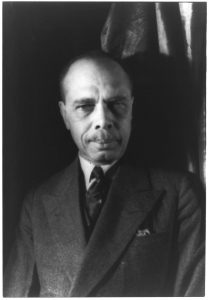
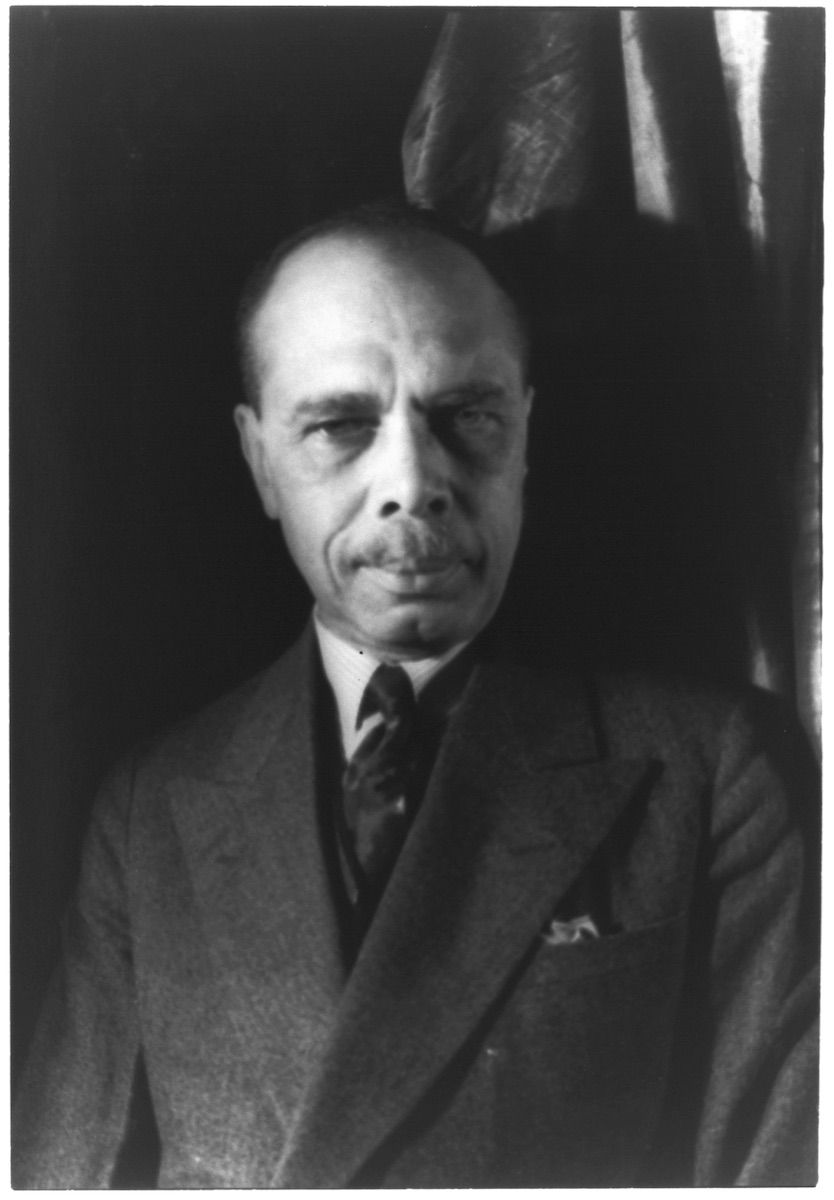
James Weldon Johnson (Photographed by Carl Van Vechten, 1932)
James Weldon Johnson was a writer and civil rights activist who was a leader of the NAACP. In 1920, Johnson was chosen as the first African-American executive secretary of the NAACP, effectively becoming its chief operating officer.
Johnson was known for his writing about black culture during the Harlem Renaissance. His work includes the lyrics for “Lift Every Voice and Sing,” which later became known as the Negro National Anthem. The music was written by his younger brother, J. Rosamond Johnson.
Johnson’s other accomplishments include his appointment as the U.S. consul in Venezuela and Nicaragua by Theodore Roosevelt, the first African-American professor hired by New York University, and later became a professor at Fisk University.
If this bill becomes law, 85-percent of the surcharges will be divided equally between the Marshall-Motley Scholars Program, the Stanton College Preparatory School, and the National Association for the Advancement of Colored People (NAACP). The rest of the money will be given to the James Weldon Johnson Foundation.
H.R. 7469: James Weldon Johnson Commemorative Coin Act
Introduced in House — Apr 7, 2022
Referred to the House Committee on Financial Services. — Apr 7, 2022
May 4, 2022 | ANA, commentary
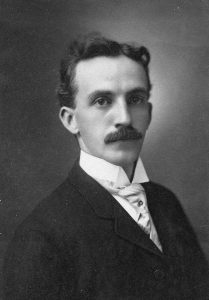
Faran Zerbe ca. 1908
In early 2021, the Board voted to remove Faran Zerbe’s name from the award based on unproven accusations. Based on the Board’s statement, they accused Zerbe of “hucksterism and fraud” for a collectible created in 1904 for the Louisiana Purchase Expo. However, contemporary accounts do not support this accusation, and Zerbe went on to serve as head numismatist for the expositions in 1905 (Portland) and 1915 (San Francisco).
The Board also accused Zerbe of “unscrupulously obtained personal ownership of The Numismatist in 1908 from relatives of the ANA’s late founder, Dr. George F. Heath.” Their statement even said it was an “allegation” and has never provided documentation to confirm their allegations.
It is difficult to argue against creating an award for Chet Krause, and his work and dedication to the ANA and the hobby deserve an honor. But honoring Krause should NOT diminish the contribution of Zerbe, and the ANA should have created a separate award or renamed the award the Zerbe-Krause Distinguished Service Award.
Instead of joining the politically correct “woke” crowd, the ANA Board of Governors should be working on ways to expand the association’s reach and impact. There is so much the Board can do to better the ANA than play these games.
May 1, 2022 | BEP, currency, news
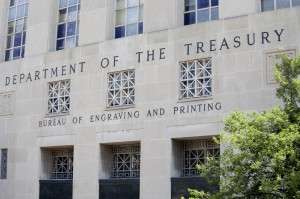 The Bureau of Engraving and Printing announced that they negotiated a transfer of land from the U.S. Department of Agriculture to build a new facility in the Maryland suburbs of Washington, D.C.
The USDA will transfer the 104-acre Beltsville Agricultural Research Center northwest of the Capital Beltway for the new printing facility. The BEP plans to begin construction in 2023 and complete the facility by 2027. The new printing facility will employ at least 850 people.
The BEP used to be the security printer for the United States government. The BEP printed security documents, including bonds and deed certificates, and stamps, other than printing currency.
Legally, the primary mission of the BEP is to print currency for the Federal Reserve. They would offer other printing services as long as they continued to supply the Fed with currency. Beginning in the 1970s, the BEP reduced the number of stamps they printed until ending stamp printing in the early 1990s. When the Treasury ended the Series E savings bond program, they contracted printing to other contractors.
The economic expansion of the 1980s led the BEP to end almost all security printing to print currency. Before opening the Fort Worth printing center in 1991, Treasury officials explored using commercial printers to supplement the BEP’s capabilities.
In 2022, the Federal Reserve ordered the printing of over 6.9 billion notes. Although this is less than last year’s order, the BEP is approaching its maximum capacity between the Washington and Fort Worth sites. And even though bonds and stamps have become electronic assets, the U.S. government still has a security printing requirement. Although a source at the BEP would not elaborate on the printing requirement, they said that government officials want to make security printing a government function.
And now the news…

April 27, 2022
It will house a new state-of-the-art and environmentally conscious production facility to print U.S. paper currency and other federal security products.

→ Read more at
nbcwashington.com
April 30, 2022
COIN collecting was once a hobby for Stephanie Sabin – now she lives her dream by steering the ship for a major grading service firm. Mrs Sabin, who is the president of Professional Coin Grading Services (PCGS), has been into collecting since she was a child thanks to her family’s numismatic background.
→ Read more at
the-sun.com



 Loading ...