
POLL: What Guide Should be Next
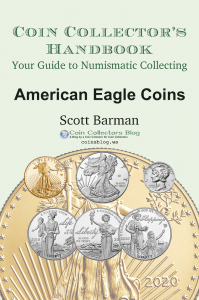 Over the weekend, I received the report telling me how many people downloaded my new e-book Coin Collector’s Handbook: American Eagle Coins. Thank you to everyone who purchased a copy! If you have not purchased your copy, you can do so today. For $9, the e-book is a description of the American Eagle Program from its inception in 1986 through 2019 without the fluff.
Did you know that the book described all of the special issue American Eagle coins, including anniversary and partnered series like the Legacies of Freedom set? There are mintage figures for every coin and set in the book. I plan to update the book annually, including updated mintage figures and new designs.
Now, it is time to move on to another guide.
The Guides are designed for the collector to add to your collecting experience. They provide essential information that every collector wants to know without a lot of extra details.
I started with the American Eagle coins because it generates the most interest on the bog. For the next guide, I have taken a few of the topics of interest, sorted the list, and will ask you, the readers, what you would like to see next.
A Field Guide to Detecting Counterfeits and Scams will be written for the everyday collector to understand how they can protect themselves. The Guide will explain how to look at the coin and pictures of coins at the strike, understand why you should understand precisely how a coin is to look, and what to do if you buy a counterfeit coin. This Guide will also look at the over-promising sales pitches some companies use, especially on television, that causes people to overpay.
Guide to Modern U.S. Circulating Commemorative Coins will look at each of the changing coins produced since 1999. It will cover every coin from the 50 State Quarters Program through Innovation Dollar with descriptions, design, mintage figures, and more. The book will include other related collectibles produced by the U.S. Mint, including coin covers and the 50 State Quarters Bears.
Guide to Defining Your Own Collection has been a popular question since I posted a redefinition of the Lincoln Cent Type Set. Since asked from creating different type sets, there were other ideas based on different themes. How about a collection of American buffalos or bison? Birth year sets are common, but what about collecting world coins from every year of your birth? Over the years, I have collected many different ideas for creating more than coin collections.
Guide to Modern Dollar Coins beings with the Eisenhower Dollars, the last series of large dollar coins, and continues to the Native American and Innovation dollar coins. In between, there are a lot of stories, controversies, composition changes, and presidents. Although the coins are easy to collect, this guide will add to your appreciation of these coins.
Something else tells me that you are interested in another topic. It does not have to be something that fits into a narrow topic. Most collectors have a broad interest that cannot be classified into a neat topic. I am willing to explore something out of the ordinary.
 Loading ...
POLL: What kind of collector are you?

Source: Uploaded by user via CoinsBlog on Pinterest
This week’s poll I want to know what kind of collector do you consider yourself to be?
I am not asking what you collect but how. I want to know if you buy raw coins and save them in an album or does your collection have to be only graded coins or coins that will be grade.
Do you pick from pocket change or do you go to the bank and buy rolls to search for something interesting?
For this poll, I thought of ten different categories of collectors. If you have a different strategy that is not in the list, add it to the comments below. Since there is no “right way” to collect, I would like to hear what other people do. Let me know what suits you best!
What kind of collector are you?
Total Voters: 22
Loading ...Yes, that is my set of Somalia Motorcycle coins. I bought them from a dealer at a Baltimore show.
Image of Peace at the ANA
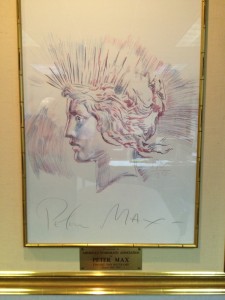
Drawing of Peace Dollar Liberty by Peter Max (1983)
Did you know that the American Numismatic Association owns a Peter Max original? While I was in Colorado Springs the week of February 19, I met briefly with Executive Director Jeff Shevlin in his office. Hanging on the wall across from his desk is a drawing of Liberty based on the design from Anthony de Francisci’s Peace dollar.
The picture looks like it was done in charcoal on paper. It is hand signed by Max and dated 1983. The picture is mounted on a fame that would have been contemporary to 1983 and has a plaque under the glass that reads:
American Numismatic Association
by
PETER MAX
VINCENT VAN ROTTKAMP
August 20th, 1983
As a fan of the Peace Dollar and Peter Max, this is a fantastic picture.
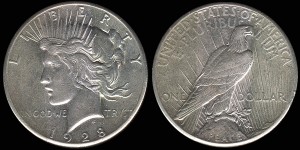
1928 Peace Dollar is a classic and under-appreciated design
Does anyone know why Max did this drawing? Who Vincent Van Rottkamp was and what was his association with this picture?
Maybe, we can convince Jeff to display the picture at an upcoming show for all members to enjoy.
- Image of the Peter Max drawing by the author.
- Quote from The Numismatist (October 1920) which can be found at Google Books
- Image of the 1928 Peace dollar from the author’s collection.
Click on any image to see a larger version.
Lew brings his lewpts to Treasury

The 75th Secretary of the Treasury Jacob “Jack” Lew
The White House release a statement from the president following the confirmation of his former Chief of Staff saying “here is no one more qualified for this position than Jack.”
Aside from being in charge of the department that includes the U.S. Mint and the Bureau of Engraving and Printing, currency collectors now get to look forward to the addition of Lew’s “Lewpty” autograph on United States currency. When Lew was nominated to succeed Tim Geithner, it was joked that Lew’s autograph resembled a series of loops or the icing decoration on the Hostess Cupcake. There was even a petition on the White House website to “Save the Lewpty-Lew” autograph on U.S. currency (the petition ended and can no longer be found on the White House’s website).
Given the realities of the Treasury and our current economics, we wish Jack Lew well in his new position. We also hope he does not follow through on the promise he told Sen. Max Baucus (D-Montana) he made to the president “to make at least one letter legible.”
Please Mr. Secretary, Save the Lewpty Lew!
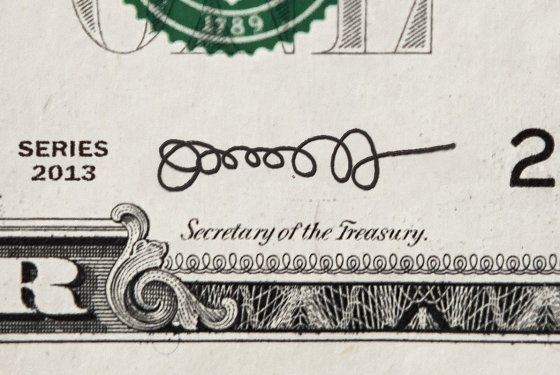
A mock-up of what Jack Lew’s signature would look like on a one-dollar note
- Picture of Jack Lew courtesy of Wikipedia.
- Dollar Bill mock-up with Lew’s Loops courtesy of New York Magazine.
POLL: Should the U.S. Mint be allowed to make colored coins?

Source: newzealandmint.com via CoinsBlog on Pinterest
It seems that the biggest trend in modern collectibles are colored non-circulating legal tender (NCLT) coins. You have seen these coins from various countries including Canada, Somalia, New Zealand, and Australia to name a few.
Not all colored coins are made of precious metals. My set of Somalia Motorcycle and Classic Sports Cars coins are silver-plated copper-nickel coins. In fact, most of the Somalia-shaped coins are not made from precious metals. But the shaped coins are so cool that they find buyers around the world, including with me.
Amongst the newest shaped NCLT coins are the New Zealand Mint’s new Star War set and Monopoly coins—that cost more than you would get passing Go!
In addition to making commercial collectibles, coins have had art imprinted on them, enhanced designs, and even commemorate something based on the country of issue.

Source: Uploaded by user via CoinsBlog on Pinterest
So what do you think? Should congress give the U.S. Mint permission to produce colored coins? Rather than pay for a third-party colored coins, what if the U.S. Mint produced a colorized American Silver Eagle coin? Or maybe a bi-metalic coin where the coin is silver and Adolph A. Weinman’s Walking Liberty design is struck in gold on specially made planchets?
Vote in the current poll and let me know what you think below.
Should the U.S. Mint be allowed to make colored coins?
Total Voters: 27
Loading ...ANA members should visit Colorado Springs
I am in Colorado Springs attending meetings at the American Numismatic Association Headquarters about updating the technology that is being used to support the education mission of the ANA. I will talk about my time in Colorado Springs over the weekend, but let me talk about being at the ANA Headquarters.
After walking into the reception area, to the right of the reception desk is the museum store that leads to the Rochette Money Museum. Even with the current exhibition about the history of the Civil War in numismatics, the first floor also has the first steam press used by the U.S. Mint, the McDermott/Bebee specimen 1913 Liberty Head nickel, and an 1804 silver dollar. There is also a balance from the Denver Mint.
On the other side of the main level is the Harry W. Bass, Jr. collection of gold coins and rare patterns. Bass put together the finest and most complete set of gold coins ever assembled. After Bass died, his foundation donated a portion of the collection to the ANA. I posted some of the pictures to Twitter and Pintrest and will post more when I return home, but pictures do this collection justice. You have to come here to see it for yourself.
If you are an ANA member, you should make a trip to Colorado Springs to see the Money Museum. Aside from being a benefit of your membership, the ANA has an impressive collection that is nicely displayed and worth spending the time seeing. Numismatically, there is not a display like this in the United States, especially since the Smithsonian’s National Numismatic Collection was taken off of exhibit. The ANA Money Museum is the only place you can see a real half-union pattern, typesets of every gold coin ever struck by the U.S. Mint, and even the oldest known surviving currency note.
Do you like Hobo Nickels? It’s here. Assortment of Confederate currency? They’re here, too. Examples of world currency? That’s in the lower level gallery. It is near examples of colonial currency including two Maryland notes I have in my collection.
But wait, there’s more. Do you want to learn more about what you’re looking at? On the other side of the lobby is the Dwight Manley Library. In the Manley Library you can find nearly every book ever printed on numismatics including government reports, price guides, specialty books, and books on nearly every topic of numismatics.
The library also has the oldest known illustrated coin book, dating back to the 16th century. It uses images of ancient coins to talk about the various rulers of the time. This book and the oldest book about numismatics, which does not have images, written in Latin.
Before you leave the library, stop at the old card catalog case and see the printing press that ANA founder, Dr. George F. Heath, used to print the first six editions of The Numismatist.
Yes, you can check out books from the library and have them mailed to you. Yes, you can see the traveling exhibits at various shows around the nations. But to get the full impact of what the ANA has to offer, you have to come to Colorado Springs and see for yourself.
Aside from figuring out when I can schedule a return trip, I want to know why I received three, new 2013 White Mountain quarters struck in Philadelphia when I am 70 miles away from the Denver mint.
Support the Coin Collectors Blog
 Buy me a coffee
Thank you for your support!
Let Me Know What You Think
Are you going to the World's Fair of Money
Total Voters: 17
Loading ...