
Weekly World Numismatic News for September 20, 2020
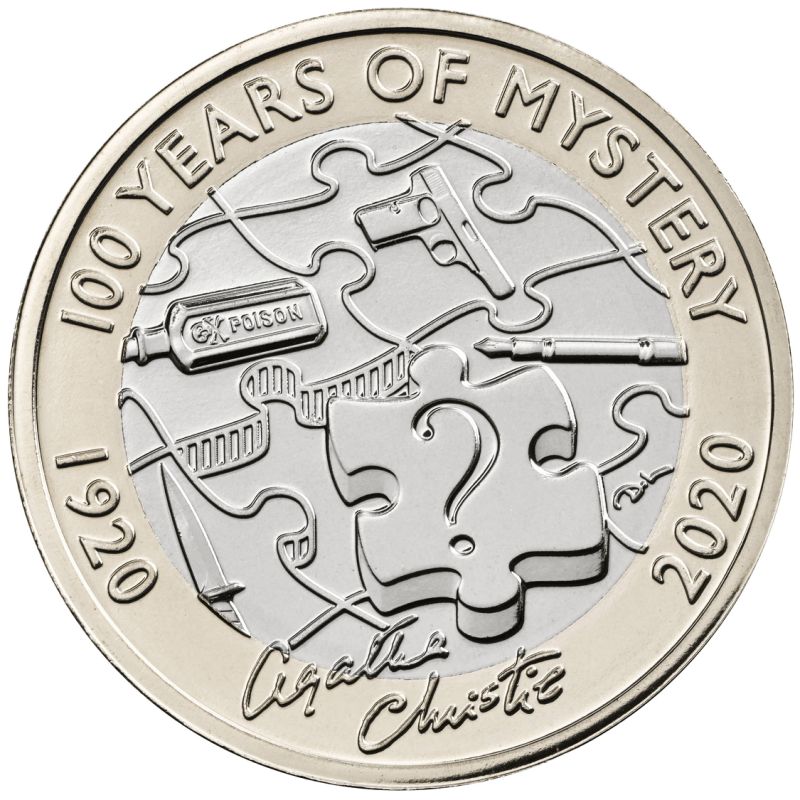
A brilliant uncirculated version of the new £2 coin, which features jigsaw pieces and a replication of Dame Agatha Christie’s signature (The Royal Mint/PA)
In the meantime, the Royal Mint issued a £2 coin commemorating the 100th Anniversary the publishing of Agatha Christie’s first novel, The Mysterious Affair At Styles. The exciting design featuring a puzzle with a missing piece and implements from the novel had several Coin Collectors Blog readers wondering why the U.S. Mint could not produce something similar for American literature.
Then there was the announcement that the late owner of the Utah Jazz amassed a collection of 1,600 quality coins that is estimated to be worth about $25 million. Larry H. Miller, an entrepreneur from Salt Lake City, was a fixture of the city’s business scene for his business and his support of professional sports. Miller died in 2009 at 64 years old, leaving behind the collection that nobody other than his family knew about.
The Larry H. Miller Collection, which includes an 1804 Draped Bust Dollar, will be auctioned by Stack’s Bowers Galleries later this year. The proceeds from the auction will go toward constructing a children’s hospital in Lehi, Utah, a city south of Salt Lake City.
The news of the Miller Collection appeared to excite more people in the collecting world than the other stories. Although the other coins are obtainable to the average collector, numismatic rubberneckers watch the rarities that most cannot afford.
Just as rubbernecking slows down traffic on the highway, numismatic rubbernecking slows down the growth of the hobby. The hobby can revel in a previously unknown collection uncovered from their hiding places, but it should not be the standard in which collections are judged.
We should be collecting stories with the coins. Without the stories, the coins are just pieces of metal with designs. Yes, the 1804 Dollar has a heck of a story, but very few can afford to collect that story. But show me someone who collects coins based on comic book characters, historical humans, historic events, sports themes, or has created a theme that tells their story, and you will be showing me someone who is enjoying their collection.
And now the news…
 September 10, 2020
 → Read more at metrowestdailynews.com
September 10, 2020 → Read more at barrons.com
September 13, 2020 → Read more at uk.news.yahoo.com
September 14, 2020 → Read more at ksl.com
September 17, 2020 → Read more at fool.com
September 19, 2020 → Read more at finance.yahoo.com
→ Read more at metrowestdailynews.com
September 10, 2020 → Read more at barrons.com
September 13, 2020 → Read more at uk.news.yahoo.com
September 14, 2020 → Read more at ksl.com
September 17, 2020 → Read more at fool.com
September 19, 2020 → Read more at finance.yahoo.com

Heritage Publishes A Great Auction Catalog
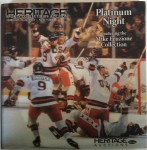
Front Cover of the Heritage Platinum Night Sports Auction
Opening the Priority Mail envelope delivered in February 4 was a beautiful holographic image of iconic image of the 1980 United States Men’s Olympic Hockey Team celebrating their victory over the Soviet Red Army team. The eye-popping three-dimensional image is far more impressive than the image that appeared on the front cover of Sports Illustrated because of the visual texture it delivers.
The “Miracle on Ice” 1980 U.S. Olympic Hockey Team may have been a bunch of guys trying to play hockey, but to the rest of us, they were a proxy in the Cold War. With the games being played in Lake Placid, New York, the nation gathered around television sets across the nation to hope and watch our boys beat the Soviets—just because they were the Soviets, long suspected of cheating by twisting the rules to pay players at a time when the Olympics were an all-amateur competition. I remember a group of us transplanted New Yorkers watching hockey in the dorms at the University of Georgia trying to teach the southerners about hockey was almost as entertaining as the games.
After staring at the cover you tilt it and the image of Mike Eruzione’s jersey can be seen. Eruzione’s “Miracle on Ice”, game worn gold medal game jersey, and other memorabilia from the 1980 gold medal winning hockey team is what Heritage picked as the highlight of the auction. Current bid for “The Miracle on Ice” jersey is $325,000.
Turn the cover over and there is a three-dimensional holographic image of Lou Gehrig and Babe Ruth sitting on a bench, hats in hand holding a baseball bat. The image is from the 1927 Murders Row team. Tilt the cover to see the 1927-1928 game worn Gehrig uniform jersey that is part of the auction.
Inside the catalog are some of the most phenomenal sports collectibles that could ever be imagined from nearly every sport. One of the more unusual items if “The Bloody Sock” worn by Curt Schilling during the second game of the 2004 World Series. Schilling’s performance on bad tendons have been compared with the fictional Roy Hobbs in the 1984 movie The Natural. It also represents the end of the 84-year Curse of the Bambino. Starting bid is $25,000.
Heritage also has a ticket stub from the 1962 Philadelphia Warriors Wilt Chamberlain 100 Point Game on March 2, 1962 at the Hershey Sports Arena in Hershey, Pennsylvania. Officially, the attendance was 4,124 (or 10 million as the legend grew!). This PSA authenticated ticket is currently at $3,000.
For those looking for a numismatic tie to this auction, you might want to consider:
- Steve Christoff’s 1980 Hockey Gold Medal
- Speaking of “The Curse of the Bambino,” there are two checks from the New York Yankees to the Boston Red Sox for the purchase of Babe Ruth
- 1924 Babe Ruth Signed New York Yankees Payroll Check
- 1949 Mickey Mantle Endorsed New York Yankees Signing Bonus Check
- 1928 Helen Wills Wimbledon Ladies’ Singles Winner’s Medal & Club Tag
Since this is not specifically a numismatic item, I am grading it as a specimen release. I am grading this SP69 deducting a point for the typos that should have been caught in the editing process—one being in an item title that could not be ignored. It is a fantastic item and should be on the shelf of anyone who has an interest in sports and sports collectibles.
Happy bidding!
-
- Front Cover of the Heritage Platinum Night Sports Auction
-
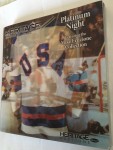
- Front Cover of the Heritage Platinum Night Sports Auction tilted to show Eruzione jersey
-
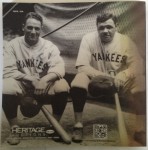
- Back Cover of the Heritage Platinum Night Sports Auction
-
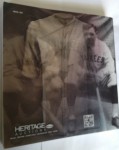
- Back Cover of the Heritage Platinum Night Sports Auction tilted to show Gehrig jersey
Catalog image is from the author whose catalog is not for sale!
Summary of January 2013 Coin-Related Legislation
The 113th congress was gaveled into session at noon on January 3, 2013 as required by the U.S. Constitution. First meeting of the new congress are largely procedural that includes giving the oath of office to anyone that was elected (the entire House of Representatives and one-third of the Senate) and electing leaders. Congress began their legislative calendar on January 4.
H.R. 77: Free Competition in Currency Act of 2013
To repeal the legal tender laws, to prohibit taxation on certain coins and bullion, and to repeal superfluous sections related to coinage.
Sponsor: Rep. Paul Broun Jr. (R-GA)
• Introduced on January 3, 2013
• Referred to the Financial Services, Ways and Means, and the Judiciary Committees on January 3, 2013
Track this bill at http://www.govtrack.us/congress/bills/113/hr77
H.R. 220: Stop the Coin Act
To limit the face value of coins that the Secretary of the Treasury may issue.
Sponsor: Rep. Greg Walden (R-OR)
• Introduced on January 14, 2013
• Referred to the House Committee on Financial Services on January 14, 2013
Track this bill at http://www.govtrack.us/congress/bills/113/hr220
S. 94: To terminate the $1 presidential coin program
Sponsor: Sen. David Vitter (R-LA)
• Introduced on January 23, 2013
• Referred to the Senate Committee on Banking, Housing, and Urban Affairs on January 23, 2013
Track this bill at http://www.govtrack.us/congress/bills/113/s94
A Little Different Poll
This week’s poll is going to help me support you, the collecting community and the dealers who serve them should I be privileged to be elected to the American Numismatic Association Board of Governors. I have not made it a secret that I am against the show being fixed in Chicago. So one of my platform items is rotate the World’s Fair of Money to different areas of the country and different cities within those regions.
Thinking about this, I was curious about where would you, my readers, like to see the World’s Fair of Money. While looking at a map, I thought about several places across the country where it might be interesting to hold the show. Read the list and think about your top three preferences. Mark your choice in the poll and let me know. If you have another suggestion, let me know in the comments, below.
By the way: you will notice there is one entry that I am interested in… not that it should influence your choice!
Where would you like to see the ANA World's Fair of Money held? (select 3)
Total Voters: 21
 Loading ...
Meet Me At The Automat
Growing up in the metropolitan New York area, you can find people who live around all of these famous landmarks but had never visited them. Whether it is visiting the observation deck Empire State Building or the Statue of Liberty, sometimes jaded New Yorkers just never get around to it.
My mother was different. She grew up in Coney Island and was adept at navigating the subway, so she wanted her children to be as wise about our hometown. During breaks from school, especially the winter break, we would take the Long Island Railroad into Penn Station and do something or see something that a tourist would do.
One of the treats about taking this trip was seeing my father in his office in Manhattan. As a youngster, it was cool to see the people who you might have spoken with on the telephone when trying to call my father or someone he had spoken to my mother about. It was also my first look into my future of working in an office, something I tried to resist to no avail.
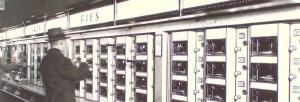
Lunch at the Automat (ca. 1940s)
Behind the machines was a kitchen that refilled the machines and a cashier was in the center of the dining hall to give change. When the Automat first opened, the machines only accepted nickels. Things were a little more expensive in the 1960s, an era before vending machines were able to accept currency, Horn & Hardart used tokens. Remember, this was a time there were almost no dollar coins in circulation, a reported shortage of coins, and when half-dollars stopped circulating because the silver was worth more than their face value.
Tables were set up all around the room like a cafeteria and the decor was what I would later understand to be art deco.
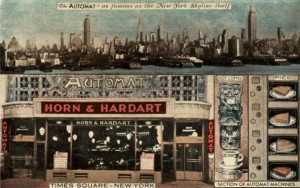
Automat in Times Square Postcard ca. 1939
A dash to see my father and then we went to the Automat. I remember I had a sandwich and soda. Then, as my mother ran to a quick shopping excursion, I argued with my father about getting a piece of pie. He finally gave in and bought the pie that the three of us shared as we waited for my mother to return. When she did return, packages in hand, my father went back to work and we took the subway downtown to see Macy’s front window. From Macy’s it is a short walk down 34th Street to Penn Station. We went downstairs under Madison Square Garden to board the Long Island Railroad to go home.
This trip down memory lane is courtesy of the Alexandria Coin Club whose annual show was held on February 2. It was a show filled with a nice mix of dealers with varying types of collectibles, I made the trip in the snow flurries to see what I could find. While searching through an exonumia dealer’s box, I found a token that was as irresistible as a youngster picking a sandwich from an Automat vending machine. A wide smile ran across my face as the memories of the food in the machines ran through my memories. There was no way I was leaving the show without an Automat token!
I am not sure what the token is made from, but it is heavier than aluminum. It is 20 mm in diameter, larger than the cent (19.05 mm) and smaller than the nickel (21.21 mm). The front has the distinct Automat logo and the reverse has a child at one of the set of vending machines reaching up for his treat. Around the edge, it says the token commemorates the 70th anniversary of the Automat, which dates the token to 1981. What a great addition to my New York collection. Not only is it different but the memories are priceless.
Along with the Automat token I also found a commemorative medal someone issued for the Statue of Liberty centennial in 1986 and an aluminum souvenir from the Democratic National Convention held July 12-16, 1976 in New York City. When I picked it up I thought it had the look of a Mardi Gras token. When I turned it over, it says it is from Louisiana. The reverse image is that of a pelican since Louisiana’s official nickname is “The Pelican State.” Since the convention was in New York, it is added to my New York collection. Now I need to find something numismatic related from the 2008 Republican National Convention that was held in Madison Square Garden to balance the collection.
By the time I was old enough to become interested in the Automat it was in its decline. In the 1960s saw a decline in their clientele as people started to leave the city to live in the suburbs. Then companies began to open their own cafeterias and buildings reconfigured their lobbies to bring in retail customers including eating establishments. Finally, the city closed a loophole that allowed cafeteria patrons to avoid paying sales taxes and it forced the Automat to raise prices to cover the new tax burden. High labor and food costs drove its regular customers away as quality declined and the restaurants grew seedy. H&H closed half of their locations by 1971. By 1991, the last Automat in New York closed its doors for the last time.
- Read more about the Automat by Steve Stollman who restores old Automat equipment.
- You may also want to consider buying the book, The Automat: The History, Recipes, and Allure of Horn & Hardart’s Masterpiece by Lorraine B. Diehl and Marianne Hardart. Marianne Hardart is the great granddaughter of cofounder Frank Hardart.
- 1940s Automat image courtesy of the New York Public Library
- 1939 Postcard image courtesy of Wikimedia Commons
Thinking About Home
My hometown was in the news today for two very different reasons, yet both remind me of why I continue to love New York.

Mayor Ed Koch at the commissioning ceremony for the USS LAKE CHAMPLAIN (CG 57), 1988
Koch’s exuberance and love of New York propelled himself and the city from the what was seen as the bottom to a trajectory that you could not think of New York without Ed Koch or Ed Koch without New York. Koch’s perpetual question, “How am I doing?” will forever be his trademark throughout the streets, cabs, subways, highways, and byways of New York City.
A more happier note, it was on February 1, 1913 that Grand Central Station (really named “Grand Central Terminal” but that’s not what we called it growing up in New York) opened. It was not the first terminal on the site to bear the Grand Central name. The previous version opened in 1903 and comprised of three separate buildings. Over the next ten years the structure that stands there today was built in phases that including the underground rail tunnels that are still in use today.
Grand Central underwent a rehabilitation that started in 1994 through 2000 that cleaned up the famous ceiling in the grand concourse and reconfigured the above ground areas to include more shops. But it still represents the major transportation hub of New York.

Source: Uploaded by user via CoinsBlog on Pinterest
Collecting transportation tokens are the ultimate numismatic collection that represents local history. Transportation has been at the heart of every city and can be used as a personal tie to your collectible. Tokens and medals representing local transportation can be more beautiful and significant than coins from the same era. Not long ago, I was able to find a pewter medal from the dedication of the East River Bridge. The bridge was rename in 1915 and is known today as the Brooklyn Bridge.

Source: Uploaded by user via CoinsBlog on Pinterest
Having a collection of subway tokens reminds me of all those subway trips I had taken over the course of my life and the sesquicentennial medal of the Long Island Railroad represents my daily commutes from Long Island to my job at 30 Rock.
As I think about my hometown today, remember where you are from and consider starting a collection of tokens and medals that helps to tell your story. It can be as rewarding as your memories.
And to Hizzoner, you did just fine! Rest in peace.

Source: Uploaded by user via CoinsBlog on Pinterest
Image of Ed Koch courtesy of Wikipedia.
Support the Coin Collectors Blog
 Buy me a coffee
Thank you for your support!
Let Me Know What You Think
Are you going to the World's Fair of Money
Total Voters: 17
Loading ...