
The Story of Tubman on the $20: a mass of lies, evasions, folly, and hatred
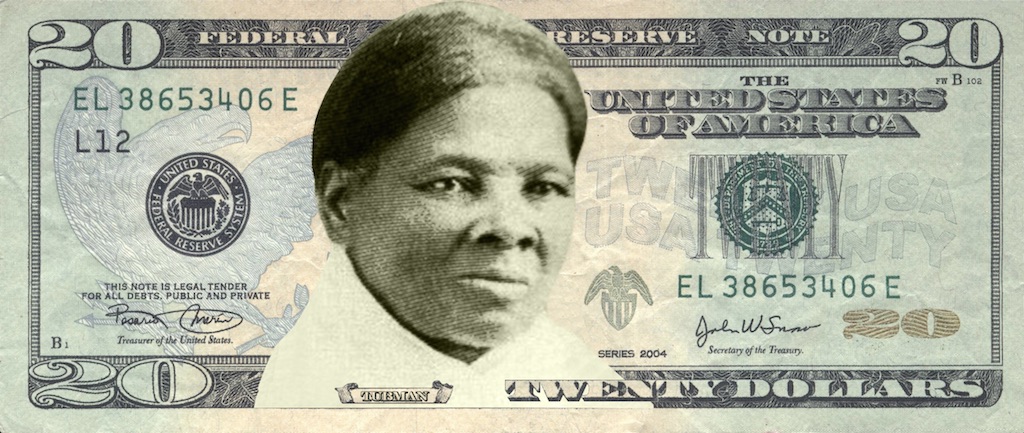
Mockup of the $20 note featuring Harriet Tubman
Aside from my interest in the nuance of politics, beyond reports on cable news, it is why there is a monthly report on legislation that would effect numismatics. Whether it is a proposal for a commemorative coin or the creation of a commission to celebrate something in history, every bill introduced in Congress has the potential to change numismatics.
Paper currency is less regulated than coins. Coining money is mentioned in Article I Section 8 of the United States Constitution. The federal regulation of currency began with the National Bank Act of 1863. Whereas the Constitution says, “Congress shall have Power…to coin Money, regulate the Value thereof, and of foreign Coin,” there is no provision for paper currency.
The Constitution does not say that Congress should design the coins, but they do, sometimes to the detriment of the final result. But the design of the currency is left to the Department of the Treasury.
There is no set process that the Treasury goes through to decide on the design of the nation’s currency. The process changes for each new Secretary that heads the department. In the previous administration, Secretary Jacob “Jack” Lew, went through his version of the process to decide that the portrait of Andrew Jackson on the $20 Federal Reserve Note will be replaced with Harriett Tubman by 2020.
According to sources, although the Bureau of Engraving and Printing would have preferred a little more time to create the master engraving plates to make this change, the timing of the announcement would not present a significant problem.
Lew resigned as the 76th Secretary of the Treasury on January 20, 2017, with the inauguration of a new administration. Steven T. Mnuchin was sworn in as the 77th Secretary of the Treasury on February 13, 2017.

Steven T. Mnuchin, the 77th Secretary of the Treasury
The paper $5 note was a more significant focus for the BEP. In working with the U.S. Secret Service, they were finding that many counterfeiters were using bleaching products to remove the ink from the paper to use it to print higher denominations, predominantly $20 bills. One internal report suggested that the criminal would see a net gain of $14 for each $20 note they could produce.
Although it costs more to counterfeit $20 bills this way, it is a lower risk for the criminal. As we have seen, few people pay attention to the problem and those that do find that the currency passes the iodine pen test. After all, it is currency paper.
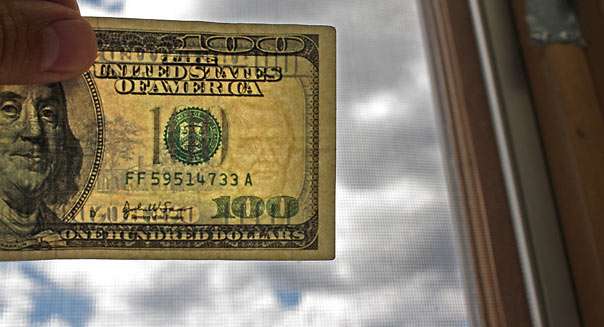
An example of a $100 Federal Reserve Note printed on a bleached $5 note (Image courtesy of Prescott Police Department via AOL.com)
Interference from Mnuchin came after his first three months in office. It started with a question from a reporter who asked the president about the change. The president’s statement was followed by a cabinet meeting where the president said something to Mnuchin about the change. Then, a source reports that the president said something to Mnuchin who agreed to do something without raising concerns.
Mnuchin did not directly interfere with the process. Instead, he used the budgetary process to direct funds away from the development of the proposed change in portrait.
Mnuchin was able to hide the change from the public because of the nature of Treasury’s budgetary process. Since the BEP is self-funded by the profits (seigniorage) that is deposited in its Public Enterprise Fund, all Treasury had to do was obtain Congress’s permission to use a set amount from the fund without providing details.
Treasury and BEP were able to hide the changes in the CFO’s Annual Report by using internal reorganization to obfuscate where the spending was going.
In short, Mnuchin ordered the BEP, which is lead by a career professional and not a politician, to move the resources away from the redesign and prioritizing other aspects of currency redesign. Mnuchin purposely slowed the redesign process in a way that gives Treasury and the BEP deniability.
A statement published on the BEP website, BEP Director Len Olijar wrote in response to the news reports, “BEP was never going to unveil a note design in 2020.” That was not the policy of the Treasury Department and the BEP when Secretary Lew announced the change. Mnuchin changed it at the request of the president.
The story of the “delay” of the redesign with Tubman’s portrait appeared in The New York Times. In the story, the Times used an image from the original announcement that depicted Tubman superimposed on the $20 bill. Sources suggested that Olijar, under orders from Mnuchin, was to try to discredit the story in any way possible. Rather than continue with the fact, albeit flawed compared to previous reports, the statement went on to pick on an inconsequential aspect of the story, the image published by the Times.
“The illustration published by the New York Times was a copy of an old Series note with the signatures of former officials, with a different image superimposed on it.”
As my source said, “let’s attack the messenger and not the message.”
Unfortunately, Olijar, a career government employee, is caught in the middle having to work with the politicians. He loses credibility by contradicting the previous reporting, which is unfortunate because sources have suggested that some other than Mnuchin “ordered” Olijar to issue the statement.
There is an old expression that one should never discuss politics, religion, and sex/money/pick something in polite company. It is impossible to be polite when talking about coins and currency before their manufacture. It spreads through the entire process. Or as George Orwell aptly said:
ANA School of Numismatics at Baltimore
When one catches a cold, life becomes miserable as we slog through our daily routines. Add the bad weather to the cold symptoms and getting out of bed becomes a chore. So after the dog climbed into bed to wake me up, I went to the computer to check my email to see a note from the American Numismatic Association announcing two courses will be taught at the Whitman Baltimore Coin and Currency Show in February.
While everyone points to the FUN Show as the beginning of the numismatic year, I look to Baltimore. After all, the Baltimore Convention Center is a little more than a one hour drive. And since Whitman took over the show, there have been many improvements that make it more enjoyable. One of the improvements was the inviting of the ANA School of Numismatics to teach courses on site. I love walking the floor looking for bargains and coins to fill the holes in my collection. I have also met a number of great people who are regulars in Baltimore. I look forward to seeing them again.
For this show, the ANA will present Understanding Die Varieties and Coin Collecting 101. Both classes will be held from 9 a.m. to 5 p.m. on Saturday, March 1, at the Baltimore Convention Center. For more information see the ANA School of Numismatics website for more information.
Last year, I recommended the Coin Collecting 101 to a new collector based on the description of the course. He enjoyed the course so much that he became an ANA member at the show. This morning, he said that he will be coming back to the show from suburban Philadelphia so he can take the Understanding Die Varieties course. Since this friend is also in information security, and those of us in this business tend to be skeptics by nature, I think this is high praise.
If nothing else, if you are in the area, you need to drop by the Baltimore Convention Center. It will be worth the trip.
Director Moy Apologizes for Web Outage
Dave Harper, editor of Numismatic News, published a letter from US Mint Director Edmund Moy apologizing for the recent outage of the US Mint online catalog. The letter reads as follows:
To Our Valued Customers:
The United States Mint temporarily suspended its online catalog recently while we shifted our online ordering capability from one provider to another. We didn’t plan an interruption in service but, as the transition from one company to another took place, we realized that we couldn’t guarantee to our customers that our online ordering system was completely reliable until the new provider had enough time to take over operations and make them secure.
During the transition to new service providers, we know that many of you tried to log in to the United States Mint’s retail Web site and found a notice that the online catalog was unavailable. We also know that many of you called our toll-free Customer Service lines to place orders. Because of extremely high call volume, many customers were unable to get through or spent a long time waiting on hold. This is not the level of service that you deserve from the United States Mint and certainly not the kind of service that I want you to have.
I take full responsibility for the lapse in service and apologize to you for any inconvenience and frustration you experienced. I thank you for your patience while we improve our system of online operation. The United States Mint’s service mission is to create the highest quality products for the United States and our customers, and we are working to make this vision a reality. I truly regret service interruptions and will take measures to avoid them in the future.
Edmund C. Moy
Director
United States Mint
Although Director Moy has fallen on his sword for his staff, it does not excuse the situation. Nor does it change the opinions I wrote about on January 18. I am sure that the Mint will perform a root cause analysis into the problem. Unfortunately, we may never know what really happened. If the Mint is going to promote the online model, they will have to do better.
DC & Territories Own Program
While checking the US Mint website about the outage of the online catalog, I noticed that the D.C. & U.S. Territories Quarters will be treated as their own program. According to the program fact sheet, the new “program immediately follows the 50 State Quarters® Program, which ends in 2008.”
The D.C. & U.S. Territories Quarter program will feature six coins released in equal intervals during 2009. The Mint has set the order of release as: The District of Columbia, The Commonwealth of Puerto Rico, Guam, American Samoa, The United States Virgin Islands, and The Commonwealth of the Northern Mariana Islands. The design process will be run in the same manner as the Mint has run the 50 State Quarters program.
With the addition of the D.C. & U.S. Territories Quarter program, 2009 will also see the Native American $1 Coins and the redesign of the Lincoln Cent for the Lincoln Bicentennial. Although it is only January 2008, this makes it fun to anticipate 2009!
It’s Alive!
After eight days of outage and two product announcements, the US Mint on-line catalog is now working! The website went down on January 15, the same day that the Bald Eagle Commemorative Coin program goes on sale only to return in time for the sale of the 50 State Quarters Proof Set—available at noon today.
The Mint has not explained the reason for the outage. But considering how less than forthcoming they have been, they will be under the scrutiny of some form of oversight. Hopefully, this will be the last technical problem for the Mint for some time.
Learning About A Morgan Sketched Pattern
 I came across a thread on the Collectors Society message boards about a slabbed medal whose design was based on a sketch by US Mint engraver and artist George T. Morgan. The sketch was found by researchers in 2002 at the Smithsonian Institute. It was buried in the pages of a sketchbook Morgan used to draw design ideas. This sketch was an 1876 idea for the grandest of all coins, a coin with such a high denomination that the design had to be the most beautiful ever proposed. It was the design for a $100 Union gold coin.
There appears to be very little written about the coin or why Morgan sketched the design. In 2005, the Smithsonian entered into a deal with the New York Mint to strike private issue gold and silver proof medals based on the design. The New York Mint struck 999 one-ounce gold proof medals, had them certified by NGC, and housed them in a cherry-wood box whose cover has a replica the original Morgan sketch. These medals are sold out. The New York Mint continues to sell a 1½-ounce silver proof coin also certified by NGC issued in a velvet pouch.
Morgan’s design features Miss Liberty, sitting on what appears to be bales of cotton, next to stalks of wheat, on the banks of a river with the mountains in the background. She is holding an olive branch in her left hand and a caduceus on a long staff in her right. Although we think of the caduceus as a medical symbol, it has a history dating back to ancient Greece as an astrological symbol of commerce and attributed to Hermes. It was a symbol to show the Greek authority over trading (the long staff) with the strength to enforce its authority (the wings), with the wisdom to not abuse its power (the snakes). The symbolism is interesting given the history of its use.
Snakes, or serpents, have a long history of being symbols for deceit or other negative symbols. But in ancient Greece, the serpents were a symbol of wisdom and even strength that would inspire the thinkers of the time. Since wisdom can have differing views, two snakes were used to symbolize the balance achieved by considering opposing forces. Interestingly, the Rod of Asclepius was the symbol of healing used by Asclepius, the son of Apollo, and uses one snake to symbolize rebirth—as the snake sheds and re-grows its skin—and fertility.
In later years, the Pagans were known to be fascinated by the mysticism of snakes. Pagan leaders liked to control the masses and adopted the snakes as a sinister representation of wisdom. The practice lead to snakes becoming a representation of the mystics whose faux wisdom was used to empower the animal’s handlers. The handlers would train the snakes to attack on command, which were used as threats to those who would not believe. When the crusades were fought against the Pagans, snake handlers would use their skills to attack Christian soldiers. As the Pagans were defeated and converted to Catholicism, papal edicts banned the use of snakes in all religious ceremonies and symbols. Even though the church had compromised with Pagans and many others to facilitate conversion, the church was adamant about not allowing snakes as part of any religious ceremonies.
When Morgan arrived in the United States from his native Great Britain in 1876, the dominant design on US coinage was seen on the Seated Liberty coins and the Trade Dollar. The Seated Liberty design appears to be based on Britannia with American symbols. Britannia is an allegorical symbol of Great Britain who holds a trident proclaiming her superiority of the sea and a shield emblazoned with the Union Jack saying she is ready to defend her homeland. Britannia is usually depicted wearing a helmet and near the sea. For the Seated Liberty design, the allegorical symbol for Liberty replaces Britannia, a version of the US flag is shaped as a shield showing defense of the new nation, and the trident replaced by the phrygian cap (sometimes called the Liberty Cap) on a pole that is considered a protest symbol as being pro liberty.
It can be speculated that a grand coin, such as a $100 issue, would require a design worthy of the country’s first one hundred years and the growth being seen in recent memory. Morgan may have looked at the phrygian cap and thought that the protest should be over, especially since the United States and Great Britain had normalized relations. Morgan may have thought that the caduceus would represent the new strength of the nation: commerce, after the Transcontinental Express traveled from New York to San Francisco in just over 83 hours. Morgan borrowed the bales of hay and stalks of wheat from the Trade Dollar and placed Miss Liberty on the banks of a river to represent the trading routes offered through the country.
Using the caduceus was an interesting symbolic choice. It has both noble and ignoble meanings throughout history. On one hand, it is a positive symbol of commerce. On the other hand, it is a symbol of deceit in a time when the election of Rutherford B. Hayes as the 19th President and the corruption represented by the political machine of Tammany Hall dominated the headlines. Although the concept for the coin never made it beyond Morgan’s sketch, it can be speculated that the Christians of the time may have objected to its use.
We may never know why George Morgan sketched this pattern or the symbolism he was trying to capture. But given what we know about the symbols, it shows Morgan’s talent for classic design. One can only wonder what our coin designs might have been had his presence was not resented by William and Charles Barber.
Image courtesy of user bsshog40 from the Collectors Society message boards.
Support the Coin Collectors Blog
 Buy me a coffee
Thank you for your support!
Let Me Know What You Think
Are you going to the World's Fair of Money
Total Voters: 17
 Loading ...