
Numismatic Purists Heads are Exploding
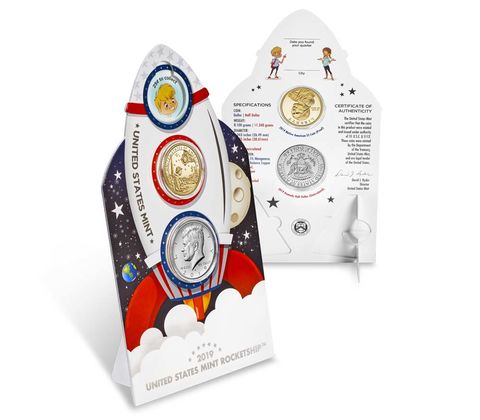 Last week, the U.S. Mint reported that the sales of the Rocket Ship Set is close to being a sellout. With an announced limit of 50,000 sets, they said that 46,762 were sold.
The Rocket Ship Set is a coin product produced for kids to tie in with the space theme generated by the 50th Anniversary of the Apollo 11 Commemorative Coin program. The set contains two coins: an uncirculated 2019 Kennedy Half Dollar an a proof Native American $1 Coin honoring American Indians in the Space Program. The coins are mounted on a card shaped like a rocket ship that glows in the dark and can be set up to stand up on a desk, shelf, or anywhere else.
The text an the card explains the significance of the coins in honoring the space program written for children.
When the set was announced, there was a lot of commentary how the U.S. Mint was wrong for doing this. I read and received emails saying that this is the wrong way to reach children that many thought this set would barely reach 15,000 units sold.
While the numismatic snobs were throwing around adjectives like “dumb” and “stupid” claiming it is “bad for the hobby” and wondering out too loud what the U.S. Mint was thinking, customers bought up 93½-percent of the available inventory in two-weeks!
Although we do not know how many of the sales are to dealers or other institutional buyers, the fact that there is that level of interest suggests the U.S. Mint might have a better idea as to what’s good for the hobby than the snobs.
2007 First Spouse Coins Introduced
At the National First Lady Library (NFLL) in Canton, Ohio on December 19, the US Mint unveiled the first four designs of the First Spouse Commemorative Coin Program. The one-half ounce $10 24-karat gold coins will be issued for each First Spouse in the order that they served. In the case where a president services without a First Spouse, a coin emblematic of Liberty will be used—except for President Chester A. Arthur, who served without a First Spouse, suffragette Alice Paul will be featured on the coin.
In 2007, the coins will honor Martha Washington, Abigail Adams, and Dolley Madison. Since Thomas Jefferson was a widow during his tenure in office, a coin with an obverse similar to the Draped Bust Half-Cent will be issued.
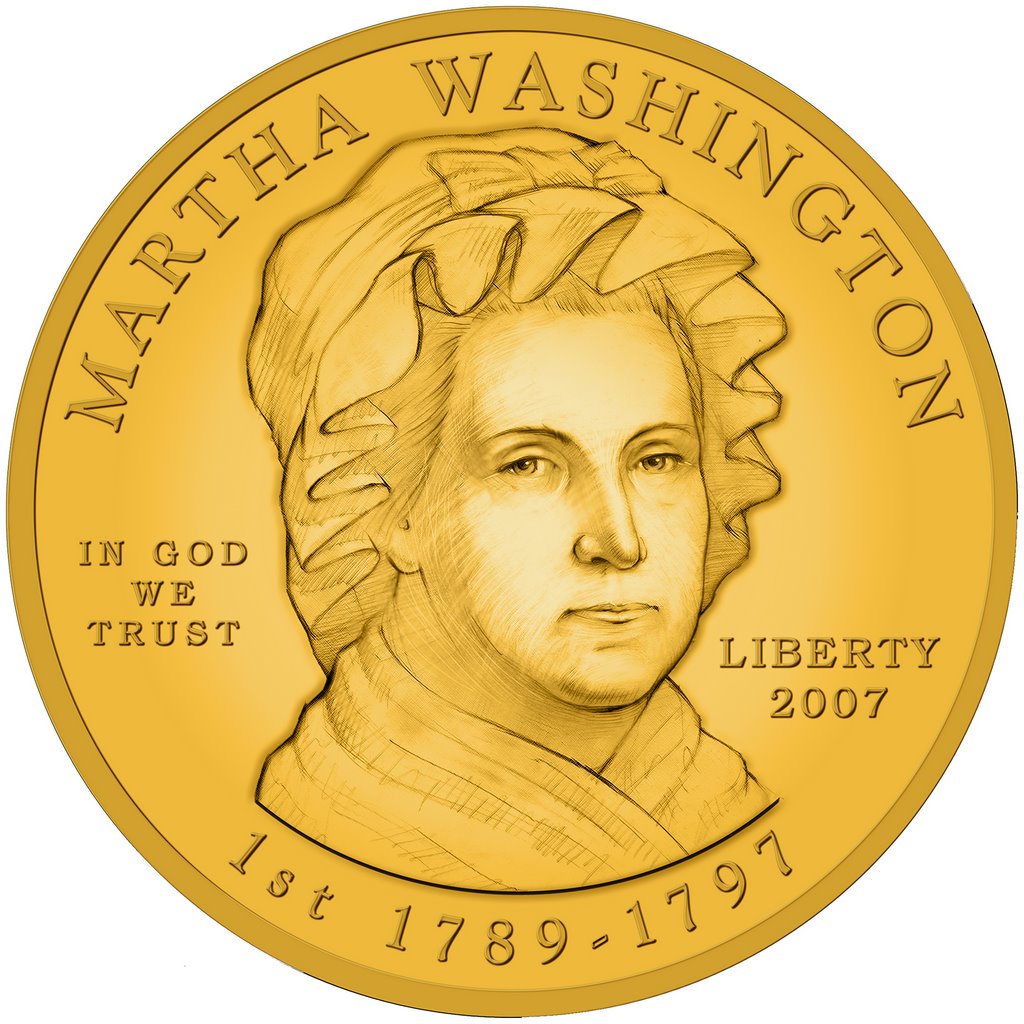
 The first coin honoring Martha Washington bears a portrait designed and sculpted by Joseph Menna, a sculpture and engraver at the Mint. The Martha Washington reverse was designed by Susan Gamble of Arlington, Virginia, an Artistic Infusion Program (AIP) Master Designer. The image was sculpted by Don Everhart, a United States Mint sculptor-engraver. The reverse depicts the future First Lady sewing a button onto her husband’s uniform jacket. During the Revolutionary War, Martha Washington’s concern for the colonial soldiers earned their lasting respect and admiration.
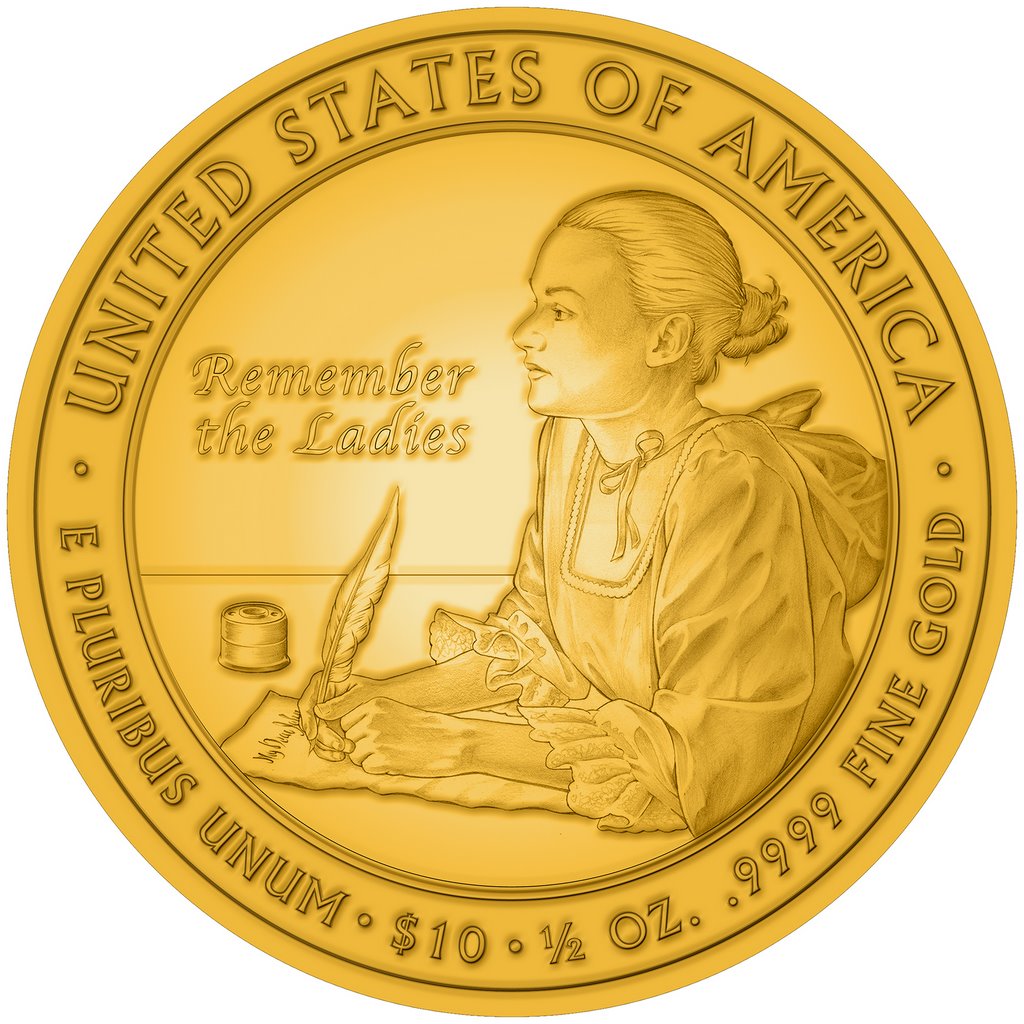
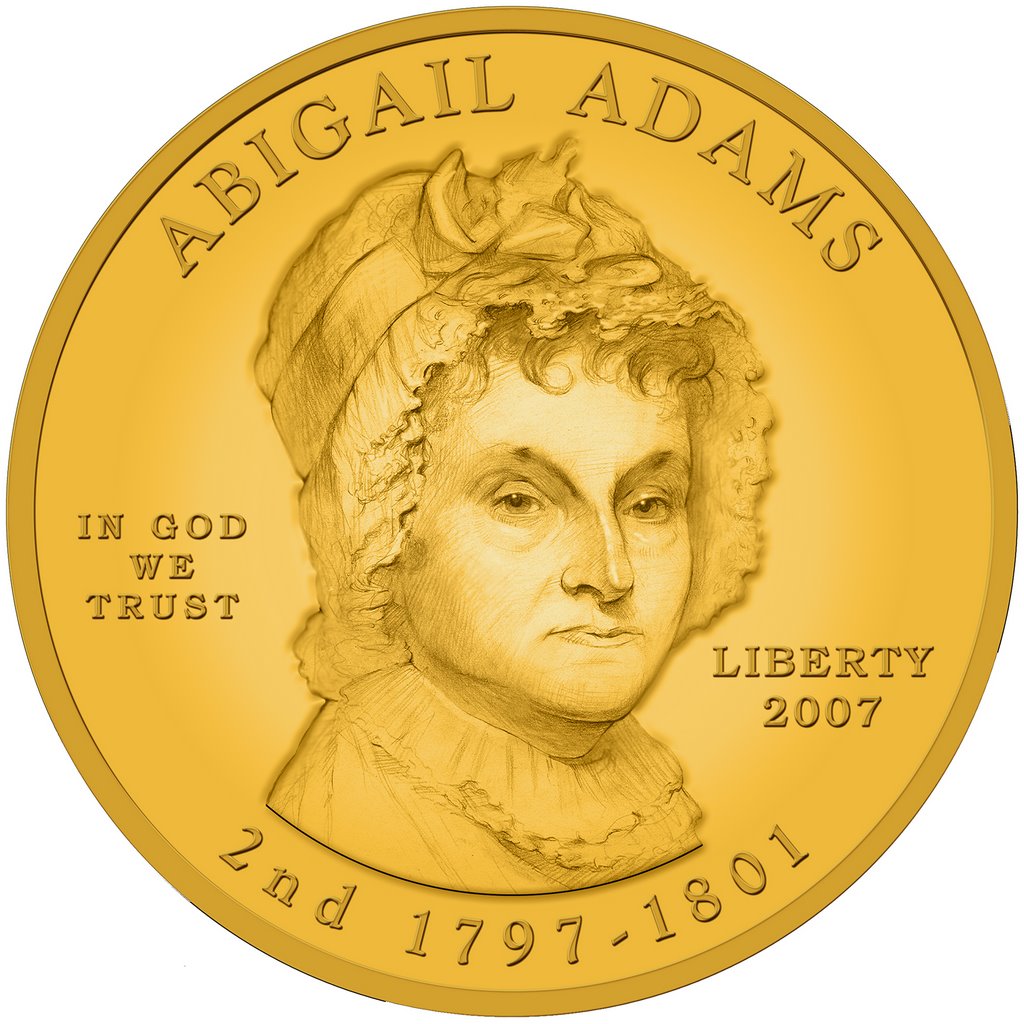 The obverse of the Abagail Adams coin was also designed and sculpted by Don Everhart. The reverse was designed by Thomas Cleveland of Houston, Texas, an AIP Master Designer. The image was sculpted by Phebe Hemphill, a United States Mint medallic sculptor. In one of her most memorable letters, Mrs. Adams requested that her husband “remember the ladies” when creating the new Republic. That inscription is on this coin. John Adams acknowledged that Abigail Adams had as much political insight as any of his colleagues, and that he valued her counsel above all others.
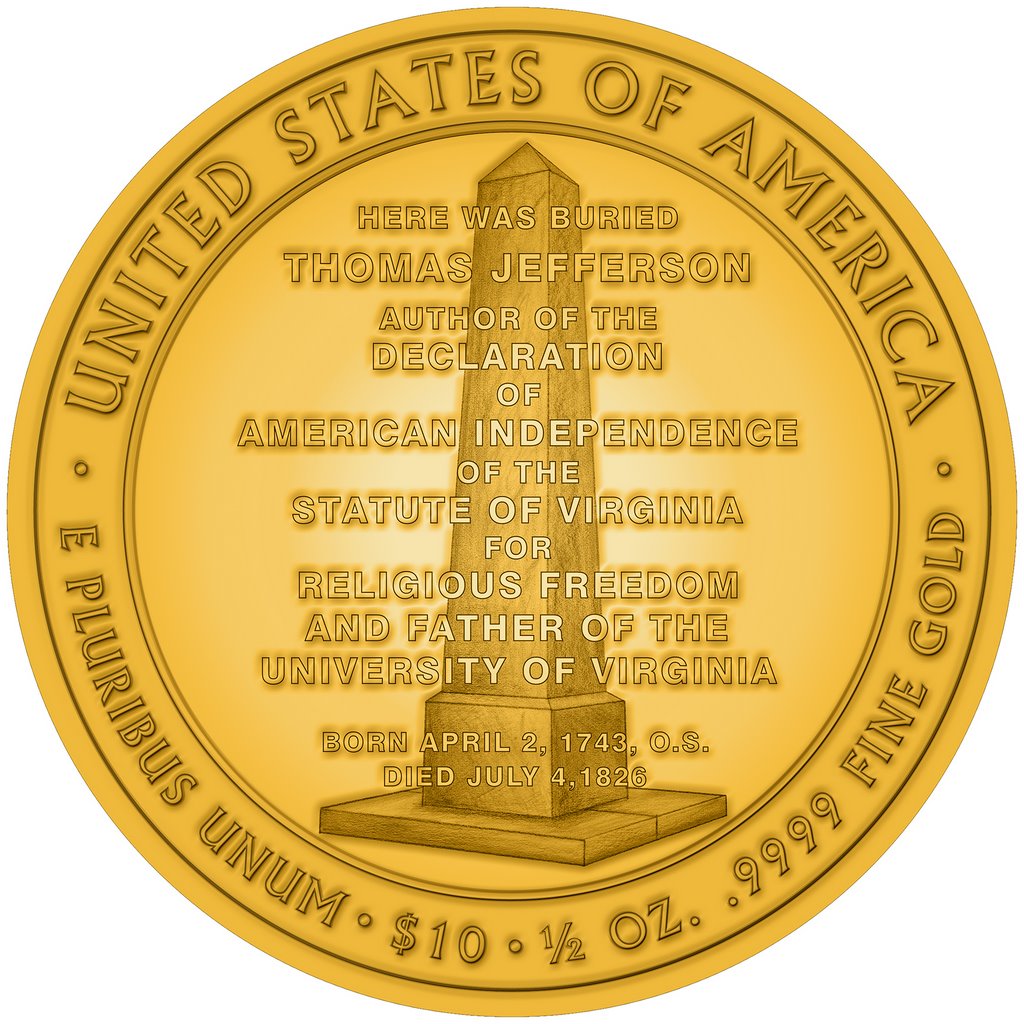
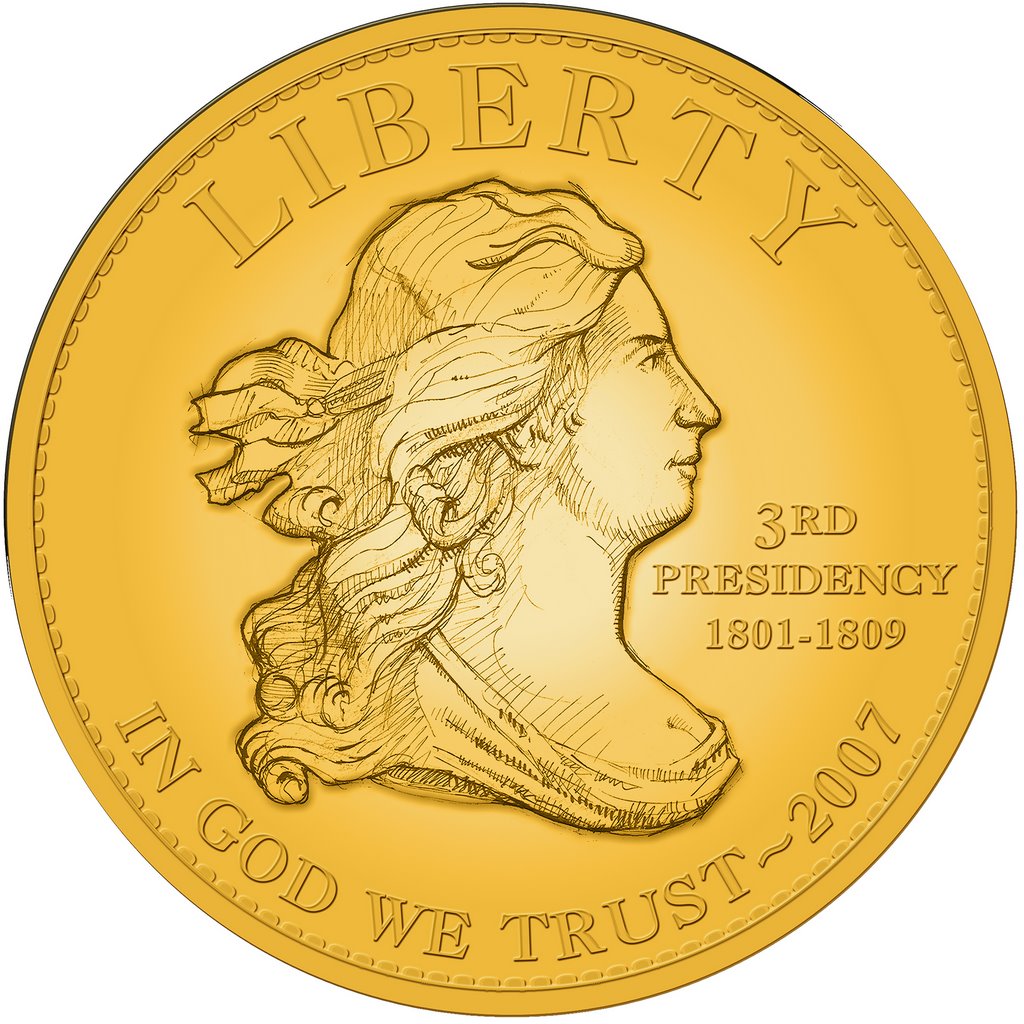 Martha Jefferson died 18 years before her husband became the third president. Since Jefferson officially served as a widower, a coin emblematic of his term was used. The Draped Bust Half Cent was originally designed by Robert Scot, the first Chief Engraver of the Mint, it was re-executed for this coin by Phebe Hemphill. The reverse was designed and sculpted by Charles Vickers, a United States Mint sculptor-engraver, depicts Thomas Jefferson’s monument, located on the grounds of his Monticello estate.

 The obverse of the Dolley Madison coin was designed and sculpted by Don Everhart. The reverse design depicts Dolley Madison, in an act of patriotism, saving the Cabinet papers and the beautiful Gilbert Stuart portrait of George Washington, when forced to flee the White House in advance of oncoming British troops in August 1814. It was designed by Joel Iskowitz of Woodstock, New York, an AIP Master Designer, and sculpted by Don Everhart.
Coins should be available around Mother’s Day, 2007. The Mint also announced that bronze medals using these designs will be made available to collectors. The price for the medals are projected $3-4.
Images and some of the descriptions are from the US Mint.
Searching Pocket Change Is Still Fun
While standing in front of the soda machine looking for an afternoon beverage, I reached into my pocket for change and found a 1937 Lincoln Cent in approximately very good (VG-8) condition. It may not be worth more than the value of the copper, but it confirms that the thrill of finding something in pocket change is still there. This coin will have an honored home in a coin bank where I “hoard” non-valuable finds from my change.
Now if I find something interesting, like a 1909-S VDB, 1914-D, … cue dream sequence!
NGC Offers "Early Releases" Following Lawsuit
Numismatic Guarantee Corporation (NGC) announced that bullion coins received within the first 30 days of release in US Mint packaging will be designated as “EARLY RELEASES.” Previously, these coins were given First Strike designation using the same submission rules. But last month, NGC and Professional Coin Grading Service (PCGS) were sued in U.S. District Court, Southern District of Florida, Miami Division, calling the First Strike designation of fraudulent and deceptive.
The FIRST STRIKE designation has been controversial because of the potential of misinterpreting its meaning. According to both NGC and ANACS, the definition of FIRST STRIKE was the one that NGC is now using for EARLY RELEASES. Although these third-party grading services defined the meaning of FIRST STRIKE, less than ethical dealers would misinform customers to claim the coins were something they were not. This was a typical scenario on the home shopping channels, whose products are usually overpriced and over-hyped.
I am not a fan of the FIRST STRIKE (and now EARLY RELEASES) designation, but I felt the third-party grading services defined the designation properly and provided proper information to the collecting public. Unfortunately, in this litigious society where purveyors of the frivolity attacks the labeler and not the ones who misuse the label, it is a credit to NGC for making this move. It is a matter of time before the others follow their lead.
New Mint Rules Outlaws Melting of Coins
In an effort to protect the supply of one-cent and five-cent coins, the US Mint issued an interim rule to make melting and export of these coins illegal. Even though the cost of the metals have risen above the cost of the coin, Mint Director Edmund Moy said that the regulations will prevent these coins from being “melted down so a few individuals can take advantage of the American taxpayer. Replacing these coins would be an enormous cost to taxpayers.” These rules are being implemented under the authority of 31 U.S.C. §5111(d).
Rules limiting the melting and exporting of US coinage are being implemented for the third time. The first time was in the 1960s when silver prices forced the conversion to clad coinage. It was used again during the inflationary period of the late 1970s shortly before the cent was changed from a copper coin to a copper-coated zinc coin. If history hold true, this may be a prelude to changing the composition of the one-cent and five-cent coins.
Historically, the five-cent coin we call a “nickel” has been minted using the same alloy of .750 copper and .250 nickel since the Shield Nickel in 1866. Nickel Three-Cent pieces were also minted using the same alloy from 1865 through 1889. The exception to this was the wartime silver Jefferson Nickels (1942-1945) that contained copper, silver, and manganese, but no nickel in the alloy.
In 1974, the Mint experimented with striking cents using aluminum. Images of these coins are bluish in tint, but that may be an artifact of the image. Aluminum cents were distributed to congress but law makers rejected the change. The Mint requested the return of the coin and were destroyed. At least one was not returned and certified last year by the family of a deceased US Capital police officer.
The odds against acceptance the aluminum cent were great at the time because of the change from silver to clad coinage using base metals. By 1971, the Kennedy Half-Dollar and newly minted Eisenhower Dollars were copper-nickel clad coins ending the use of silver for circulating coinage.
Today, the environment has changed. After 35 years of base-metal coinage, maybe the use of aluminum for the cent is an option that may be accepted. This time, rather than just an aluminum coin, the Mint could try to coat the coin with the .8 percent copper that the Mint uses to cover the current zinc planchets. It may be different for the nickel considering a change may affect more than just the look and feel of the coin including the modifications necessary for the use in the vending machines.
Look for a change with your change in the next few years.
DC & Territories Quarters Bill Passes But…
The end of the 109th Congress brought a flurry of actions from both chambers as the members were looking to return home for the holidays. Many of the bills considered “non-substanative” was passed by voice vote. One of those bills was H.R. 3885, District of Columbia and United States Territories Circulating Quarter Dollar Program Act, sponsored by DC Delegate Eleanor Holmes Norton.
H.R. 3885 was introduced to extend the program one year to to honor the District of Columbia and the territories: the Commonwealth of Puerto Rico, Guam, American Samoa, the United States Virgin Islands, and the Commonwealth of the Northern Mariana Islands. Residents of these areas are US citizens and do pay federal taxes. Each adds their own part to the American culture, they should have a quarter to commemorate for when they became a territory. It could make the 2009 set one of the most beautiful one-year series of the entire program.
At the close of the session, in the early hours of Saturday, December 9, the House of Representatives passed the bill by unanimous consent and sent the bill to the Senate. The Senate adjourned shortly thereafter and never considered the bill.
Bills introduced in the 109th Congress do not carry over to the 110th Congress which is scheduled to convene on January 4, 2007. Del. Norton has indicated that she will reintroduce the bill at the beginning of the new congress.
Support the Coin Collectors Blog
 Buy me a coffee
Thank you for your support!
Let Me Know What You Think
Are you going to the World's Fair of Money
Total Voters: 17
 Loading ...