This past week, President Barack Obama signed H.R. 3187, the March of Dimes Commemorative Coin Act of 2012 (Public Law No. 112-209 [TXT] [PDF]).
According to the law, the U.S. Mint will strike no more than 500,000 silver dollar coins in 2015 that “shall be emblematic of the mission and programs of the March of Dimes, and its distinguished record of generating Americans’ support to protect our children’s health.”. The law says that the designs of the coin will “contain motifs that represent the past, present, and future of the March of Dimes and its role as champion for all babies, such designs to be consistent with the traditions and heritage of the March of Dimes.”
As with other silver dollar commemoratives, the sale of this commemorative will include a $10 surcharge that will be paid “to the March of Dimes to help finance research, education, and services aimed at improving the health of women, infants, and children.”
After congressed passed the law, the March of Dimes issued press release thanking Senators Kay Hagan (D-NC) and Susan Collins (R-ME) as well as Rep. Robert Dold (R-IL) and Nita Lowey (D-NY) for their work in getting this bill passed.
Between now and 2015 when the commemorative silver dollar is issued, I am sure the March of Dimes would appreciate as many $10 donations as you can afford. Donations to the March of Dimes are tax deductible to the extent allowed by law. It is a good way to save on taxes and do good at the same time!
Last week, the U.S. Mint published their product schedule for the rest of the month and the first quarter of 2013. So for this week’s poll, which 2013 coin are you most interested in?
American Silver Eagle Proof
While I could have allowed more than one answer, I decided to limit you to just one of the programs that change plus the American Eagle coins. For me, I will always buy at least one example of the silver bullion, uncirculated, and proof coins each year to keep my nearly complete collection going—missing only the 1995-W proof.
For the changing programs, the 2013 Presidential $1 Coins will honor the presidencies of William McKinley (the 25th President), Theodore Roosevelt (26th, whose “Pet Crime” gave us better coin designs), William Howard Taft (27th, the only president to become Chief Justice of the Supreme Court), and Woodrow Wilson (28th president). Although there are interesting stories about earlier presidents, “modern” United States history is usually taught beginning either McKinley or Roosevelt—which is unfortunate because many people could learn a lot from post-reconstruction politics.
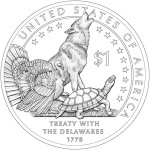
2013 Native American Dollar Reverse Design
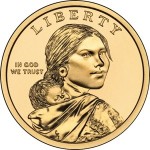
One of the most under-appreciated designs have been those for the Native American $1 Coin. Using the obverse of the original Sacagawea Dollar, the reverse has been changing since 2009 to honor the history and other contributions made by native Americans. Aside from honoring their important contributions, the designs have been wonderful. In 2013, the reverse design commemorates the Delaware Treaty of 1778. The design features a turkey, howling wolf, and a turtle as the symbols of the clans of the Delaware Tribes, and 13 stars to represent the colonies. Not only are these great designs but they make wonderful education pieces that should gain more attention when congress does the right thing and eliminates the paper dollar note.
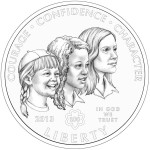
2013 Girl Scouts of the USA Centennial Silver Dollar
The 2013 Girl Scouts of the USA Centennial Silver Dollar honors the organization’s founding by Juliette Gordon Low in Savannah, Georgia on March 12, 1912. Low founded the Girl Scouts a year after meeting Sir Robert Baden-Power, founder of the Boy Scouts and Girl Guides in England. When Low returned to Savannah, she put the concept in motion. According to the Girl Scouts’ website, “On March 12, 1912, Juliette Low gathered 18 girls to register the first troop of American Girl Guides. Margaret ‘Daisy Doots’ Gordon, her niece and namesake, was the first registered member. The name of the organization was changed to Girl Scouts the following year.” Surcharges from the sales of this coin will be paid to the Girl Scouts for program development and delivery.
Which 2013 coins are you interested in purchasing?
Which 2013 coins are you most interested in?
Any of the American Eagle Coins (30%, 11 Votes)
Native American Dollar (22%, 8 Votes)
5-Star General Commemorative (19%, 7 Votes)
Girl Scouts of the USA Centennial Silver Dollar (14%, 5 Votes)
I am not interested in any of these coins (14%, 5 Votes)
As we come down to the home stretch of the 2012 products, let me put in a word for the 2012 Star-Spangled Banner Commemorative Coins. Proceeds from the sale of these coins ($35 for the gold coin and $10 for the silver dollar) goes to the Maryland War of 1812 Bicentennial Commission to support their bicentennial activities, educational outreach, and preservation and improvement of the sites and structures related to the War of 1812, a war that has been called our second war for independence.
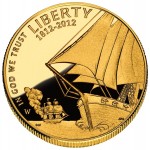
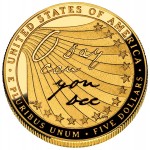
The design of the 2012 Star-Spangled Banner commemorative coins enhance the depiction of liberty and the fight for freedom that should be the hallmark of U.S. coin designs. The gold coin features a naval battle scene representing the victory in Baltimore Harbor over the Royal Navy in defending Fort McHenry and the reverse has the first words of Francis Scott Key’s poem, “The Defence of Fort McHenry.”
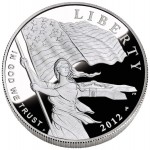
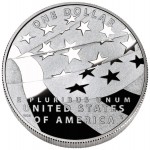
While the gold coin is a nice design, the design of the silver coin is even better. The obverse depicts Lady Liberty waving the 15-star, 15-stripe Star-Spangled Banner flag with Fort McHenry in the background. It is a powerful image representing one of the best designs representing freedom and liberty. The reverse is a modern 50-star flag waving. Images (included below) does not do this coin justice. You have to see this coin in hand to appreciate the design.
The last day to purchase the Star-Spangled Banner Commemorative Coin will be on Monday, December 17, 2012 at 5:00 p.m. Eastern Standard Time.
It is always fascinating to see how the U.S. Mint works behind the scenes and hear from the designers and engravers. Philadelphia’s WPVI-TV went to the Philadelphia Mint to see how the 2012 Star-Spangled Banner commemorative coins are made. Here is their report:
In related news, it was announced that the Navy’s heralded Blue Angels will perform in Baltimore for the finale of the War of 1812 commemoration September 12-13, 2014. The Blue Angles will appear during the Star-Spangled Spectacular that will be held September 6-14, 2014 in Baltimore.
Buying the coins will not only add a beautiful coin to your collection but will help support the celebrations of the bicentennial of these important events in United States history. I bought the silver proof coin at Fort McHenry during the launch event.
The Coins:
2012 Star-Spangled Banner Gold Commemorative Obverse depicts a naval battle scene from the War of 1812, with an American sailing ship in the foreground and a damaged and fleeing British ship in the background. Designed by Donna Weaver and engraved by Joseph Menna.
2012 Star-Spangled Banner Gold Commemorative Reverse Depicts the first words of the Star-Spangled Banner anthem, O say can you see, in Francis Scott Key’s handwriting against a backdrop of 15 stars and 15 stripes, representing the Star-Spangled Banner flag. Designed by Richard Masters and engraved by Joseph Menna.
2012 Star-Spangled Banner Silver Commemorative Obverse depicts Lady Liberty waving the 15-star, 15-stripe Star-Spangled Banner flag with Fort McHenry in the background. Designed by Joel Iskowitz and engraved by Phebe Hemphill.
2012 Star-Spangled Banner Silver Commemorative Reverse depicts a waving modern American flag. Designed by William C. Burgard III and engraved by Don Everhart.
Scott’s coin:
Credits
Logo courtesy of the Maryland War of 1812 Bicentennial Commission.
Video courtesy of WPVI-TV, Philadelphia.
Coin images courtesy of the U.S. Mint.
Image of Scott’s coin is owned by the author and covered under CC BY-NC-ND 3.0 license.
Obverse of the 2009-present Native American Dollar
There has been a lot of misinformation by the media about what was said during the hearing before the House Financial Services subcommittee on Domestic Monetary Policy and Technology on November 29. It is difficult to believe that these alleged journalists had investigated anything beyond their keyboards making simple online searches.
Let’s look at the drivel about eliminating the dollar coins:
Replacing the dollar bill with a coin will not save money.
A summary of these arguments could be read on the Wonk Blog at The Washington Post. As I read the argument against, there is a lot of phrases with qualifiers like “if” and “may” that does not provide a solid feeling of deep analysis.
The bottom line is that for every dollar coin the U.S. Mint strikes, the government collects 72½ cents per coin. On the other hand, the Bureau of Engraving and Printing prints each note for around 8 cents per note but does not charge the Federal Reserve $1 for each note. By cost, the U.S. government makes more on seigniorage for the coin than the currency.
Converting to coins from the paper currency will cost the Fed more to purchase the dollar coin over printing currency. However, the Fed is not a government agency and does not use taxpayer money for its operations. It uses money earned off of its banking operations and turns over a percentage of its profits to the United States Treasury. While this will lower the amount of profit, it will be made up by the additional seigniorage.
People have not forgotten the Susan B. Anthony dollar coin… failed to wean Americans from the dollar bill because it looked too much like a quarter.
When I read this in an editorial from my hometown The New York Times, I scratched my head and wondered what happened to The Old Grey Lady. What used to be a forward thinking newspaper sounds like the elderly neighbor chewing his gums yelling at you to “get off my lawn.” What The Times forgot is that following the problems the design of the Susie B’s caused, congress authorized changes to prevent those issues from reoccurring by changing the coin’s color and using a smooth edge rather than a reeded edge.
I challenge The Times editorial board to handle a quarter and a post-2000 dollar while reconsidering their misguided editorial.
Why worry about the dollar because more people are using credit cards
A story in Bloomberg points out the savings may be limited because of the reduced number of dollar notes being produced. The writer credits the increased use of credit cards as a reason. However, reports show that consumer credit card debt has gone down every month since October 2008 until the first rise in October 2012.
The record shows that Americans have used their credit cards less and the use of cash has increased until these last few months while the Bureau of Economic Analysis reports wages have increased modestly during the slow recovery. In other words, the Bloomberg report does not hold up against facts.
It will not save the government money because it is a transfer costs.
Once again, some “analyst” at National Public Radio over thinks the issue with wrong data. NPR’s Jacob Goldstein writes that it is not a cost savings to the government because of shift from the production by the Bureau of Engraving and Printing to the U.S. Mint. However, his conclusion is based on the assumption that the seigniorage is the same for printing the note as it is for striking the coin. It is not, as we discussed earlier.
A better way to save money is by eliminating 1-cent coins entirely.
An interesting thing happens when the government tries to tackle an issue is that you get alleged pundits like Mike Rosen making irrelevant arguments based on an tangential premiss. The reason why Rosen’s writing is inconsequential is that the discussion is replacing one form of a dollar for another not eliminating a denomination. If the time comes to discuss the elimination of a denomination, then we can learn from the 1856 discussion that lead to the elimination of the half-cent. Otherwise, trying to justify eliminating a denomination using the discussion to replace the representation of another is an exercise in twisted logic.
That fancy money clip you inherited from your grandfather would be useless.
From Boston, Jon Keller writes that it is not culturally possible to change from notes to coins. Keller is indicative of alleged analysts who are thinking with their head up the past and not providing anything but his emotional reasoning for not making the change.
This goes along with the arguments that Americans do not want to change that will put more change in their pocket. These people say that Americans do not want the coin and will resist this move. But if you look at reality, Americans are all about change. In the last 50 years we gave up our silver coinage, went from muscle cars to more fuel efficient cars, brought in and (thankfully) dumped disco, changed the Lincoln cent from copper to copper-plated zinc, handled the end of the Cold War while ushering in the era of terrorism, and adapted to life post 9/11/01. There have been floods, droughts, hurricanes, tornadoes, mega-storms, and earthquakes that has show the resiliency of the American people. To ask Americans to adapt to using coins instead of notes is a pittance compared to everything else.
Take away our dollar bills, and our assault rifles will be next.
I do not believe in conspiracy theories but there some who are not afraid to spout this insolence. It is an argument based on false equivalency based on being unaware of the legal mechanisms of how the government works.
If anyone has a real reason based on documented fact to support saving the paper dollar for the coin, I welcome their argument below.
Mark Twain in his gown (scarlet with grey sleeves and facings) for his D.Litt. degree, awarded to him by Oxford University
On Tuesday, December 4, President Barack Obama signed H.R. 2453, the Mark Twain Commemorative Coin Act into law. With the president’s signature, the measure is now Public Law No. 112-201 ([TXT] [PDF]).
This law will allow the striking of the Twain commemorative in 2016. The program will be for 100,000 $5 gold coins and 350,000 silver dollars whose designs “shall be emblematic of the life and legacy of Mark Twain.” There will be the usual $35 surcharge for the gold coin and $10 for the silver dollar that will be distributed evenly to:
Sponsor: Rep. Blaine Luetkemeyer (R-MO) To require the Secretary of the Treasury to mint coins in commemoration of Mark Twain.
This bill was passed by the Senate and enrolled on 11/15/12.
Presented to the President for his signature on 11/28/12.
See this bill at http://www.govtrack.us/congress/bills/112/hr2453
Congressional Committee Discusses Budget Savings Benefit Of Dollar Coin
900 19th St. NW 8th Floor Washington, DC 20006
WASHINGTON (11/29/12) – Congress’ own budget watchdog once again recommended saving billions of dollars by modernizing U.S. currency from the $1 note to a $1 coin in testimony today in front of a House Financial Services subcommittee.
The independent, non-partisan Government Accountability Office (GAO) has now recommended a move to the dollar coin eight times to Congress. They have estimated that the federal government could save at least $4.4 billion, if not more, without raising a single tax or cutting a single program.
“GAO stands for accountability, reliability and independence,” Philip Diehl, former Director of the U.S. Mint testified, “Since 1990, GAO has issued seven reports, all reaching the same conclusion: billions will be saved. The estimated savings over 30 years have ranged from $4.4 billion to $15.7 billion. It didn’t matter whether a Republican or Democrat asked the question, the answer always came back the same.”
“We continue to believe that replacing the note with a coin is likely to provide a financial benefit to the government if the note is eliminated and negative public reaction is effectively managed through stakeholder outreach and public education,” said Lorelei St. James, who testified on behalf of the GAO. “Many other countries have successfully replaced low denomination notes with coins, even when initially faced with public opposition.”
“Canada’s replacement of the one-dollar bank note with a circulation coin, and later the introduction of the two-dollar coin, can be deemed a success, from the perspective of the Mint and all end-users of Canadian currency,” noted Beverley Lepine, Chief Operating Officer of the Royal Canadian Mint.
Today’s hearing was chaired by Congressman David Schweikert (R-AZ-5), cosponsor of the Currency Optimization, Innovation and National Savings (COINS) Act (H.R. 2977) and comes at a time when Congress is considering options for avoiding the fiscal cliff and addressing the federal budget deficit.
The COINS Act (H.R. 2977 and S. 2049) was introduced earlier this year by a bipartisan group including Congressman Schweikert, Senators Tom Harkin (D-IA), John McCain (R-AZ), Tom Coburn (R-OK), Mike Enzi (R-WY) and is designed to save the country billions of dollars by eliminating the wasteful, inefficient $1 note.
About Dollar Coin Alliance
The Dollar Coin Alliance is a coalition of small businesses, budget watchdogs, transit agencies, and labor groups dedicated to saving American taxpayers billions of dollars by transitioning to a one-dollar coin, and focused on educating taxpayers and policy-makers about the benefits of increasing dollar coin circulation. For more information, or to get involved, please visit www.DollarCoinAlliance.org.
CREDITS:Press release from Dollar Coin Alliance. Edited to add hyperlinks.
The testimony is by Lorelei St. James, Director, Physical Infrastructure Issues of the non-partisan Government Accountability Office. The testimony report, “Benefits and Considerations for Replacing the $1 Note with a $1 Coin,” reiterates the six previous GAO reports claiming large savings by replacing the paper dollar with a coin. This is not a new stance by the GAO. They have issued six reports since 1990 making the same recommendation with the last report (GAO-12-307) released on February 15, 2012—something I wrote about here.
Rather than concentrating on the redux of the GAO’s statements, the media missed the advance statement from Beverley Lepin, Chief Operating officer of the Royal Canadian Mint. In her testimony, Lepin will point out how the RCM changed alloys twice, has a coin recycling program, added color, and has anti-counterfeiting technology for their one-dollar (Loonie) and two-dollar (Toonie) coins.
Basically, Lepin is saying something only whispered by some: the Royal Canadian Mint is more advanced than the U.S. Mint.
But the problem is not the U.S. Mint’s fault. When it come to running their operation like a business, the RCM has a real business structure that works with the the Bank of Canada and the Parliament of Canada to ensure that their money supply is modern and more efficient. Neither Canada’s parliament nor the Bank of Canada micro-manages the RCM’s operations the way congress micro-manages the U.S. Mint.
I know that Article I, Section 8 of the United States Constitution says that “The Congress shall have Power… To coin Money, regulate the Value thereof, …” but it does not say that congress shall have the power to micro-manage the U.S. Mint to the point where it is running using rules that have been made as long as 220 year ago. Maybe it is time to learn the real lessons from the RCM and modernize the structure of the U.S. Mint.
Before some strict constitutionalist or ardent supporter of congress accuse me of trying to usurp congress’s powers, let me remind you that Article I, Section 8 also grants congress the power “To establish Post Offices and post Roads.” The last time I looked, the United States Postal Service is an independent organization that establishes and closes post offices and it has been over 50 years since the last time a “post Road” has been built.
I do not expect anything to happen as a result of this hearing except for verbal fireworks from the politicians, overly excited sound-bites from the cable news talking heads, and incorrect information from the print media—which we will correct here, of course. I will just sit back and enjoy the show of the last hearing of this type held by a Ron Paul-lead subcommittee.
GAO Reports
The following is a list of the reports and testimonies from the Government Accountability Office about replacing the one-dollar note with a one-dollar coin:
National Coinage Proposals: Limited Public Demand for New Dollar Coin or Elimination of Pennies, GAO/GGD-90-88, May 23, 1990
1-Dollar Coin: Reintroduction Could Save Millions If Properly Managed, GAO/GGD-93-56, March 11, 1993
Dollar Coin Could Save Millions, GAO/T-GGD-95-203, July 13, 1995
Financial Impact of Issuing the New $1 Coin, GAO/GGD-00-111R, April 7, 2000
U.S. Coins: Replacing the $1 Note with a $1 Coin Would Provide a Financial Benefit to the Government, GAO-11-281, March 4, 2011
U.S. Coins: Alternate Scenarios Suggest Different Benefits and Losses from Replacing the $1 Note with a $1 Coin), GAO-12-307, February 15, 2012
U.S. Coins: Benefits and Considerations for Replacing the $1 Note with a $1 Coin, GAO-13-164T, November 29, 2012
“Nothing exists except atoms and empty space; everything else is opinion.” — Democritus
The power of the opinion. Opinions drive us to do things based on what we hear, how we feel, and process the information around us. Opinions make us different and even binds us together as a species. Opinions can have a significant effect on society, like and election. Other times, opinions can be like screaming into the wind, like complaining about the U.S. Mint.
Sometimes, expressing our opinion can be fun. I have taken the fun part of expressing our opinions in collecting and numismatics and added the ability to express your opinion privately, without anyone knowing what you think. If you look in the right column of this page, there is Poll section where I will post a weekly poll asking for your opinion on something. Anything. All related to numismatics.
The first poll is asking which is your favorite dollar coin design of the six choices listed. Pick one, click on the “Vote” button, and your opinion will be recorded.
Polls will change every week on Monday. Some polls may be about something serious or I may ask less than serious questions. Regardless of the question, it is all in fun.
You can vote once per poll. Yes, I know there is a way to “beat the system.” But if you are that passionate about a question, go ahead!
“It were not best that we should all think alike; it is difference of opinion that makes horse races.” — Mark Twain in The Tragedy of Pudd’nhead Wilson

 This past week, President Barack Obama signed H.R. 3187, the March of Dimes Commemorative Coin Act of 2012 (Public Law No. 112-209 [TXT] [PDF]).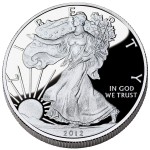
 Loading ...