A Small Find From France

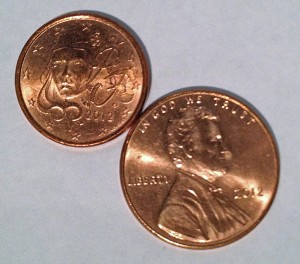
A 2012 one Euro cent pocket change find from France next to a 2012 Lincoln cent.

Somewhere in my travels I received a 2012 one Euro cent coin from France. It is interesting how this coin made it into change here in the United States unless someone was really not paying attention since the Euro cent coin is smaller than our Lincoln cent. Although both are copper coated, our Lincoln cent is 19.05 mm (.75 inches) in diameter while the standard Euro cent is 16.25 mm (.639 inches). The Lincoln cent is also heavier at 2.5 grams made of copper-plated zinc with 2.5-percent being copper. The Euro cent is copper-plated steel weighing in at 2.27 grams where 5.65-percent is copper.

After doing an online search, I found that this is a 2012 coin from France.

As with all Euro coins, the reverse or common side depicts the same common Euro cent design that every country in the European Union uses and has used since Euro coins and currency were issued in 2002.

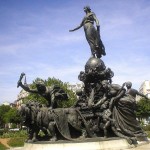
Le Triomphe de la République by sculptor Aimé-Jules Dalou at Place de la Nation in Paris features Marianne, the national emblem of France.

On the reverse, or national side, the coin features Marianne, the national emblem of France and an allegorical figure of Liberty and Reason. Marianne symbolizes “Le Triomphe de la République” (Triumph of the Republic), a bronze sculpture that overlooks the Place de la Nation in Paris. Marianne embodies the desire for a sound and lasting Europe.

To the right of Marianne are the letters “R” and “F” for the République Française (French Republic). The design is surrounded by 12 stars symbolizing the the 12 nations in the European Union at the time of the design. It was designed by Fabienne Courtiade, an engraver from Monnaie de Paris (Paris Mint) whose name appears as “F COURTIADE” between the fourth and fifth star (assuming clock-like positions). This design is used on France’s one, two, and five Euro cent coins—all copper-plated steel coins.

If nothing else, I am a little ahead of the game since the coin is worth 1.3-cents at the current exchange rate. I hope you had a good Thanksgiving.

Image of the statue “The Triumph of the Republic” courtesy of Wikimedia Commons.

Assessing the Lame Duck

On November 6, two weeks ago, the United States held an election and it resulted in basically no change in the political structure. President Barack Obama was re-elected, the House of Representatives is still being lead by the Republicans and the Senate by the Democrats. Leadership in both chambers should not change.

For numismatists, there will be one change in the 113th Congress with the retirement of Ron Paul (R-TX) who is currently Chairman of the Financial Services Subcommittee on Domestic Monetary Policy and Technology, the subcommittee that oversees the U.S. Mint. There will also be a change on the leadership of the Financial Services Committee itself with the retirement of Barney Frank (D-MA), the Democrats will have to select a ranking member. There is no speculation as to who will replace these two retiring representatives.

In retrospect, after worrying about Paul becoming chairman of this subcommittee, the Financial Services Committee was able to maneuver around Paul’s usual intransigence by taking on legislation at the committee level rather than rely on the vetting of the subcommittee. In fact, because of Paul’s attempted run for the presidency, his absence made it easy for the committee to bypass his subcommittee.

There is still work for the 112th congress to do aside from the “fiscal cliff” and sequestration. H.R. 5977, the Collectible Coin Protection Act, still needs to be acted upon. The Collectible Coin Protection Act will allow collectors, dealers, and grading services to bring legal actions that are much more effective, with much stronger remedies than previously existed. It will allow those harmed to work with the Justice Department to bring criminal actions, where appropriate.

Now that congress is in their lame duck session, the only way H.R. 5977 can become law, is to have it considered under suspension of the rules and force an up or down vote. In order for the bill to be considered under suspension of the rules will be to have members of congress co-sponsor the legislation. At the time of this writing, there are 11 co-sponsors from both sides of the aisle. I urge all of my readers to support H.R. 5977 by asking their representative to co-sponsor H.R. 5977. If you can help, read the information I wrote for the posting “ANACS Revelation Shows We Continue to Have Counterfeit Problems” that describes how to contact your member of congress.

Bibiana Boerio was nominate to be the Director of the U.S. Mint.

Another bit of business left for the lame duck Senate is the nomination of Bibiana Boerio to be the 39th Director of the United States Mint. Although there has been no report of problems with her nomination, the partisanship battles in the Senate could cause a senator to threaten a filibuster to put her confirmation on hold. If Boerio is not confirmed by the final adjournment of the 112th Congress, President Obama will have to resubmit her nomination to the 113th Congress after it is seated on January 3rd.

An issue that will probably be deferred to the 113th congress will be the report to congress that is required under the Coin Modernization, Oversight, and Continuity Act of 2010, (Public Law No: 111-302 [Text] [PDF]). The law requires the U.S. Mint to produce a report about the metals used for coinage and alternatives two years from enactment. Since the law was signed by the president on December 14, 2010, the U.S. Mint is required to submit their report by December 14, 2012.

Adolph A. Weinman’s Winged Liberty Head “Mercury” Dime effigy to be used on the new palladium bullion coin.

Another issue that will also probably be deferred to the 113th congress will be the study of the viability of issuing palladium bullion coins. Under the American Eagle Palladium Bullion Coin Act of 2010 (Public Law No: 111-303 [Text] [PDF]), the U.S. Mint is supposed to study whether it is viable to produce palladium coins as specified under the Act. That report is also due to congress on December 14, 2012.

Although there is no report from the U.S. Mint as to the status of either report, it would be reasonably certain that the U.S. Mint will submit both reports by December 14. However, it would also be reasonably certain that the House Financial Services Subcommittee on Domestic Monetary Policy and Technology will leave it for the next congress’s agenda.

Twain Would Be Amused

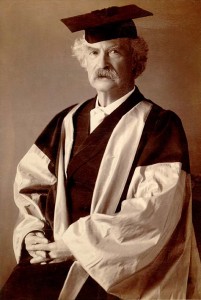
Mark Twain in his gown (scarlet with grey sleeves and facings) for his D.Litt. degree, awarded to him by Oxford University

Under suspension of the rules, the House of Representatives voted 408-4 to pass H.R. 2453, Mark Twain Commemorative Coin Act. The bill has been officially enrolled and sent to the president for his signature.

When the bill becomes law, the Twain commemorative will be in 2016 to sell 100,000 $5 gold coins and 350,000 silver dollars whose designs “shall be emblematic of the life and legacy of Mark Twain.” There will be the usual $35 surcharge for the gold coin and $10 for the silver dollar that will be distributed evenly to:

  1. Mark Twain House & Museum in Hartford, Connecticut
  2. University of California, Berkeley for the benefit of the Mark Twain Project at the Bancroft Library
  3. Elmira College, New York, to be used for research and education purposes
  4. Mark Twain Boyhood Home and Museum in Hannibal, Missouri

After looking at the list, I could not imagine why Elmira College is on the list until I discovered the Center for Mark Twain Studies. Twain was married in February 1870 to the former Olivia Langdon in Elmira. While Twain and his family lived in Hartford, Connecticut, he summered at Quarry Farm in Elmira, the hole of Susan Crane, Olivia’s sister.

Twain would be amused by the commemorative. While he had a love for science and technology, Twain did not embrace his celebrity as much as some do today. Even after he faced financial troubles from bad investments and the depression from the death of his daughter Susy of meningitis, friends pushed Twain to the lecture circuit. His lectures were humorous bordering on an early form of stand-up comedy full of self-deprecating humor. Part of his talks marveled how people would pay to hear his speak or seek him out for advice.

Samuel L. Clemens stamp, 1940

Twain always marveled at the concept of celebrity for the sake of being famous. He thought that the great thinkers and inventors should have been more revered. Twain befriended Nikola Tesla understanding that Tesla was a far greater innovator that people gave him credit for. At the same time, he become friends with Henry Huttleston Rogers, a principal of Standard Oil, who largely stayed out of the limelight while company founder John D. Rockefeller remained the face of the corporation.

Mark Twain, or Samuel Longhorne Clemens as he was born, was an interesting character in United States culture. It would be interesting to see if the design of his commemorative would honor his humor and character or go the safe route by honoring his writing. Using Tom Sawyer and Huckleberry Finn as themes would be safe designs. Basing a design on his humor would be more daring and fun.

Images courtesy of Wikimedia Commons.

Remembrance Day 2012

In Flanders Fields
by John McCrae, May 1915
In Flanders fields the poppies blow
Between the crosses, row on row,
That mark our place; and in the sky
The larks, still bravely singing, fly
Scarce heard amid the guns below.

We are the Dead. Short days ago
We lived, felt dawn, saw sunset glow,
Loved and were loved, and now we lie
In Flanders fields.

Take up our quarrel with the foe:
To you from failing hands we throw
The torch; be yours to hold it high.
If ye break faith with us who die
We shall not sleep, though poppies grow
In Flanders fields.

“In Flanders Fields” was written during World War I by Lieutenant Colonel John McCrae, a Canadian physician stationed in northern France. Aside from being a physician, he was a teacher, poet, and author. McCrea was appointed as a field surgeon and was in charge of a field hospital during the Second Battle of Ypres when his friend and former student Lieutenant Alexis Helmer was killed in the battle. The death and funeral of his friend inspired McCrae to write the poem.

“In Flanders Fields” was published anonymously in the British magazine Punch on December 8, 1915. However, the index for the year printed only a few weeks later attributed the poem to McCrea. The poem became one of the most popular of the war and was extensively printed in the United States while its leaders were debated whether to join the war.

McCrae died of pneumonia on January 28, 1918 while commanding No. 3 Canadian General Hospital (McGill) at Boulogne. He was buried with full military honors at Wimereaux Cemetery near the English Channel 3 miles from Boulogne.

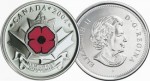
2004 Canada Poppy Quarter, the first colorized coin ever issued for circulation by any mint.

McCrae’s poem has made the poppy a popular and powerful symbol of Remembrance Day celebrated on the eleventh day of the eleventh month in the Commonwealth Realm to mark the anniversary of Armistice Day in 1919. In the United States, we celebrate it as Veterans Day.

The remembrance poppy is not as strong a symbol in the United States since the nation did not declare war on Germany until April 1917. The American Legion has used the poppy as part of its fund raising efforts.

Maybe the United States should embrace the poppy as well. Why not create a commemorative coin with a colored poppy as the design and use the seignorage from the sales to support the work of the Department of Veterans Affairs? How about changing the reverse of the Roosevelt Dime to be a red-colored poppy to raise awareness of all our veterans? Using the Roosevelt Dime would give it a needed refresh and would tie both World Wars in one coin. Then the U.S. Mint could strike special silver dime for sale to the public.

Maybe it is an idea whose time has come.

Credits

U.S. Mint and BEP Making American History

Rosie Rios

Earlier today, the U.S. Mint posted a video on its YouTube channel a video about the history of the 220 year history U.S. Mint and the 150 year history of the Bureau of Engraving and Printing. The video is hosted by Treasurer of the United States Rosie Rios.

Here is a basic history of the United State’s money manufacturing organizations:

For reference, the official “birth date” for the U.S. Mint is April 2, 1792 when President George Washington signed the Coinage Act of 1792.

On February 25, 1863, President Abraham Lincoln signed the National Bank Act of 1863 that created a single currency standard for the United States where the notes would be backed by the United States Treasury and printed by the federal government. The result of this act lead to the establishment of the National Currency Bureau which was later rename to the Bureau of Engraving and Printing.

Passing of an American Hero

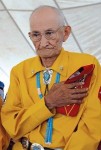
Navajo Code Talker George Smith

On October 31, 2012, President Ben Shelly of the Navajo Nation announced that Navajo Code Talker George Smith passed away on Tuesday at 90 years old. As a tribute to Smith’s service, President Shelly ordered the Navajo Nation Flag to be flow at half-staff through sundown on November 4.

After learning that Japanese intelligence experts broke every code the United States armed forces could devise, Philip Johnston, a missionary who learned the difficult Navajo language, proposed to create a code based on that spoken-only language. Johnston recruited 29 Navajo native speakers and they devised a code based on the Navajo language that Japanese intelligence was never able to decipher.

From the 200 word code, it grew to over 600 words and required 400 additional native Navajo soldiers to help with the communications across the Pacific theater.
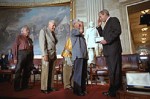
President George W. Bush presented the Congressional Gold Medal to Navajo code talkers on July 26, 2001.

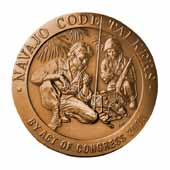
The “Honoring the Code Talkers Act,” introduced by Senator Jeff Bingaman from New Mexico in April 2000, and signed into law December 21, 2000, called for the recognition of the Navajo code talkers. During a ceremony at the U.S. Capitol on July 26, 2001, the first 29 soldiers received the Congressional Gold Medal. The Congressional Silver Medal was presented to the remaining Navajos who later qualified to be code talkers.

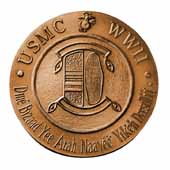
As part of the authorizing legislation, the U.S. Mint produced bronze versions of the medal for the public. These medals are no longer for sale by are still on sale at the U.S. Mint. [Correction complements of the Mint News Blog]

“This news has saddened me. Our Navajo Code Talkers have been real life heroes to generations of Navajo people. They have brought pride to our Navajo people in so many ways. The Nation’s prayers and thoughts are with the family at this time as they mourn the passing of a great family man who served his country and protected his people,” President Shelly said.

We are all saddened by the passing of this true American hero. May his family and friends take comfort and pride in his memory.

Credits

  • † From “Semper Fidelis, Code Talkers” by Adam Jevec.
  • Photo of George Smith courtesy of Navajo Times photographer Paul Natonabah via Navajo Nation President Ben Shelly’s website.
  • Congressional Gold Medal Presentation image courtesy of the White House Photo Office.
  • Bronze medal image courtesy of the U.S. Mint.

Coin Magic for a Saturday

It is homecoming weekend at my undergraduate alma mater. For the first time in many years, I am off to join other alumni to relive some good times from our youth in front of more than 92,000 of our closest friends. I’m sure we will find time to watch some football.

In the mean time, let me leave you with this video for a little weekend fun. Magician Rick Lax performs a trick to penetrate a clear drinking glass with a coin.

Rick Lax sent the link to me in hopes I would give him some free publicity. Since it is a cool trick and it only costs $19.95 to learn how to do it, I thought I would give him a shout out for the trick. Click here to learn more about the trick.

If you want to really have some fun, you can watch my personal Twitter stream. I might take some pictures before the game, from the field during pre-game, and provide other commentary during the game!

Summary of October 2012 Coin-Related Legislation

Public Law 112-181: Lions Clubs International Century of Service Commemorative Coin Act

Sponsor: Rep. Peter Roskam (R-IL)
Signed by the President on October 5, 2012
See this bill at http://www.govtrack.us/congress/bills/112/hr2139

H.R. 6571: Korean Immigration Commemorative Coin Act

Sponsor: Rep. Robert Andrews (D-NJ)
To require the Secretary of the Treasury to mint coins in commemoration of the 100th anniversary of the beginning of Korean immigration into the United States.
Introduced and referred to the House Committee on Financial Services 10/12/12
Track this bill at: http://www.govtrack.us/congress/bills/112/hr6571

PCGS Grades its 25 Millionth Coin

Source: pcgs.com via CoinsBlog on Pinterest

Professional Coin Grading Service announced that they certified their 25 Millionth coin. The coin is a rare 1871 (Meiji 4) 10 Yen With Border on the Reverse variety. It was among a group of 33 coins recently submitted by a PCGS Collectors Club member in Toyko. On October 24, 2012 it was certified PCGS Secure Plus™ MS65.

As a gift of appreciation to mark the milestone submission, PCGS is awarding the Japanese collector a Saint-Gaudens Double Eagle gold coin graded PCGS Secure Plus MS65 and valued today at $2,500.

The 1871 10 Yen is an important coin in Japanese numismatic history, according to PCGS. During the fourth year of the reign of Emperor Meiji, Japan adopted a gold standard under the New Currency Act of 1871, and it marked the start of the modern era of Japanese decimal coinage.

The 1871 10 Yen contains 16.6 grams of .900 fine gold, and 1,867,032 of the coins were minted that first year. The obverse design features a dragon and a pearl representing the sun. The reverse includes a mirror, sunburst and military banners with a raised line border around some of the design elements.

PCGS estimates the value of this particular coin at $6,000 or more.

Congratulations to PCGS on this milestone!

Image courtesy of PCGS.

Go Have Fun at an Auction in Penna.

How many of you look at the online auctions from the auction houses dedicated to numismatics and feel intimidated?

I can see quite a few virtual hands raised. You probably like coins shows but find the large crowds at some of those shows may also be intimidating. After all, you’re a collector, not an investor or a professional. Sometimes, you can find gems at smaller shows and even smaller auctions.

This is why I was intrigued by an auction notice sent by Stephenson’s Auctioneers and Appraisers from Southampton (Bucks County), Pennsylvania. Judging by their website, Stephenson’s is a local auction company that mainly serves buyers and sellers in its region with and probably has some clientele outside the eastern Pennsylvania area where they are located.

The nice thing about these local auction houses is that they are more accessible than the big houses and they usually have items that are affordable to the average collector. While high-end auctions are fun, if you are buying for yourself, you may not be the type looking to spend six-figures or higher on a coin.

If that is the case and you are in the Bucks County, Pennsylvania area on Friday, November 2, you may want to stop by Stephenson’s and check out their more than 200-lot coin auction that may include “some nice last-minute surprises.”

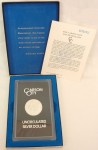
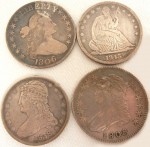
These are estate auction from the eastern Pennsylvania area. According to the information sent to me, the auction includes a wealth of Morgan silver dollars will be offered, with no fewer than 15 lots comprised of three Morgans each. An uncirculated 1882 Carson City Morgan silver dollar is one of the highlights, and another early example is a trade silver dollar dated 1877. Other antique American coins include Capped Bust half dollars from 1809 and 1838; an 1806 Draped Bust half dollar, and a Seated Liberty half dollar from 1843.

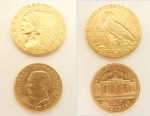
The auction includes two gold pieces. One is a 1914 Indian Head quarter eagle ($2½) and a 1917 $1 gold coin commemorating the slain U.S. President William McKinley.

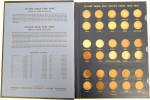
There are many collectors’ books of coins, including a Washington quarter book (1932-1945) with 24 silver quarters, a Liberty Head nickel book (1883-1912) with 25 nickels, a Standing Liberty book with 10 silver half dollars, a Mercury dime book with 74 silver dimes, including 1921 and 1921-D; and a book consisting of 60 Buffalo nickels. Also included are a Walking Liberty half dollar book with 14 half dollars, a Barber dime book, Roosevelt dime book and Kennedy half dollar book with 59 Kennedy halves, including three 1964 and nine 1965 through 1970 coins. Flying Eagle and Indian Head penny sets will be available, as well as many other books, too numerous to mention.

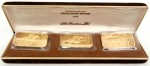
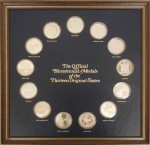
Desirable non-monetary gold and silver items with both intrinsic and historical value include a boxed set of three 24K gold over .999 silver ingots commemorating the 1973 Triple Crown Winner Secretariat, and a framed sterling silver set titled “The Official Bicentennial Medals of the Thirteen Original States.”

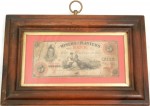
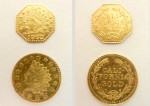
Other lots of interest include two California Gold tokens (1852 and 1853) and an 1860 $5 note issued by the Miners and Planters Bank of North Carolina. Fractional currency, and U.S. Prestige and Olympic Prestige sets.

Auction will be held on Friday, November 2, 2012 at Stephenson’s gallery located at 1005 Industrial Blvd., Southampton, PA 18966. Auction preview is on the auction day from 2-4 p.m. The auction starts at 4 p.m.

For additional information, call Cindy Stephenson at 215-322-6182 or e-mail info@stephensonsauction.com. There will be no Internet bidding for this sale; it is exclusively for gallery, phone and absentee bidders. Visit Stephenson’s online at www.stephensonsauction.com.

If you are in the area, go and have some fun. Who knows, you may find something interesting to bid on!

Some of the items in this auction

All images courtesy of Stephenson’s Auctioneers.

Pin It on Pinterest