Nov 3, 2016 | coins, fun, history, medals, news
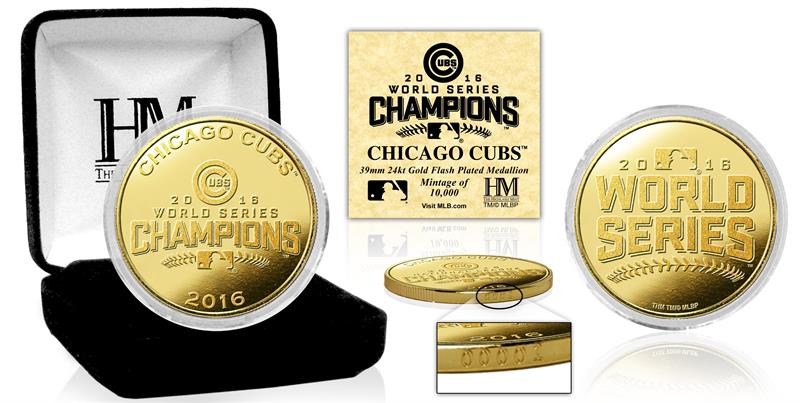
Congratulations to the Chicago Cubs!
It only took 108 years!
Obligitory numismatic content:
Nov 2, 2016 | legislative, news
 I don’t know about you, but I am ready for this campaign to be over!
Congress has not been in session because the members are in their states and districts either campaigning to maintain their seats or, in the case of the senate, helping their colleagues in their elections.
I have a few friends who work on Capitol Hill and they are tired of these campaigns. During a recent meet-up for dinner, that expanded by the time we reached dessert, over a dozen staffers from both sides of the aisle are now considering employment outside of Washington. Everyone agree that the work environment on Capitol Hill has turned toxic. The partisanship has caused even the most cordial relationships to become strained. And this is not limited to cross-party relationships. Differences between the chambers and the leadership are straining relationships.
Everyone expects the partisan bickering to escalate during the lame duck session and for congress to adjourn shortly after a budget is passed. I still wish they would consider something for the 50th anniversary of Apollo 11. Both S. 2957 and H.R. 2726 have been introduced by members from Florida. Maybe congress can see their way to do something right, for a change!
Otherwise, since congress was not in Washington, there were no bills introduced or acted upon.

“Buzz Aldrin on the Moon” taken July 20, 1969
Oct 16, 2016 | administrative, news, poll
 Those who follow me on Twitter or watch the widget in the sidebar on these pages can watch the coin, currency, and bullion-related stories I find on the Internet. Rather than find the stories from the regular numismatic sources, I try to find things reported in the non-numismatic media.
Some of you may not use Twitter, find it difficult to watch the timeline, and do not see some of the stories I find even if you are peering into my timeline using the widget. You might think that you are missing something interesting that you would not think about otherwise. Some of the recent stories I found include:
If there is an interest, I will create a weekly newsletter with a short introduction to the stories and links to where to find more information. For example, I would write a blurb about the Battle of Hastings 50p coins, maybe add a picture, and send links to the 2-to-3 sites I found stories about the coin.
Most of these stories will be new content probably not appearing on the blog or in the numismatic press—with the exception of the coin recyclers’ issues since I have more information than what is published. It also provides insights into what the press says about coins and currency.

Loading ...
NOTE: If the poll does not appear please click here.
Oct 13, 2016 | coins, news, US Mint
 Hello from Philadelphia!
I am in Philadelphia to attend the U.S. Mint’s Numismatic Forum. According to the U.S. Mint, “The purpose of the event is to gather leaders and stakeholders of the numismatic community to explore ways to stimulate and revitalize the hobby. As we approach the U.S. Mint’s 225th anniversary next year, we hope this unique opportunity to examine and discuss the Mint’s past, present and future will help move all the elements of the numismatic industry forward.”
I do not know who will be there but I am sure that I will see many of the regulars of the numismatic community. From the U.S. Mint, we will probably hear from the current Principal Deputy Director Rhett Jeppson and others from the Mint’s staff. Here is an overview of the schedule:
- Arrival and welcome from the U.S. Mint along with introductions.
- Recognizing the past:
- U.S. Mint Heritage Assets overview
- Smithsonian Numismatic Collection overview
- The Present:
- Mint product update and marketing initiatives update
- “Invigorating the Coin Collecting Hobby” panel discussion
- The Future: Workgroup discussions with reports from the workgroups
- Visit to the Philadelphia Mint
For those of you who will not be there and would like to follow along, you can follow @coinsblog on Twitter as I send out periodic updates. The widget on the upper-right side of the page can also be used to follow the progress. Also, when I can post pictures, they will be copied to the Pinterest on the board “Numismatic Forum” or watch the widget below.
Of course, there will be a report posted over the weekend!
Oct 6, 2016 | charity, news, YN
 With many thanks to my readers and the numismatic community, the DonorsChoose.org campaign to fund the trip for Mrs. Janas of Juniata Park Academy class to visit the Philadelphia Mint and Federal Reserve has been funded!
It will be a great experience for the class to be able to visit both the Mint and Fed.
I had previously contacted Mrs. Janas and offered to travel to Philadelphia to give her students a presentation about numismatics in daily life. Now that the project is funded, I will make the arrangement to visit her class to provide a more hands on the convergence between numismatics, math, and economics. I will bring some “gifts” for the class so that they can have in-hand examples.
There aren’t the words to express how thrilled I am that this project was funded.
Thank you!
Oct 5, 2016 | coins, commemorative, legislative, news
Congress returned to work right after Labor Day, not that you would have noticed. Aside from the legislation that renames most offices or other federal structures in honor of someone most of us have never hear about, congress was locked in a battle over the federal budget that was to expire on September 30. Of course, the fights were based on partisan politics. Rather than doing what is right for the nation, these hacks broke down into partisan bickering. A continuing resolution, not a real budget, was passed on September 29. They have until December 9 to fix their problems.
In another part of my life, I write a monthly newsletter for the Gold & Silver Political Action Committee. The PAC was started by former American Numismatic Association President Barry Stuppler to help be a voice for issues facing the numismatic and bullion industry. As part of my research into issues, I speak with staffers and other contacts on Capitol Hill to provide background information on the PAC’s issues.
This past month I used an opportunity to have a discussion about the state of congress with two lobbyists. Both are former staffers working with members on opposite sides of the aisle and have been working in the halls of congress since early in the Clinton administration. Neither were optimistic that congress would accomplish anything, even during the lame duck session after the election. With the budget battle looming and the unsettle Supreme Court nomination, neither of these professionals were optimistic.
For some of us, watching congress is a sport. While it might be as painful as watching the 1962 New York Mets or the 2003 Detroit Tigers or waiting for the Cubs to win the World Series, I will continue to report potential legislation that may affect modern collecting.
Only one bill was introduced in September:
H.R. 6025 American Innovation $1 Coin Act
Sponsor: Rep. James Himes (D-CT)
• Summary: Redesign and issuance of $1 coins honoring innovation, innovators, and pioneers from each State, the District of Columbia, and each territory.
• Introduced: September 14, 2016
• Referred to the House Financial Services Committee
This bill can be tracked at https://www.govtrack.us/congress/bills/114/hr6025.
Sep 29, 2016 | charity, Federal Reserve, news, US Mint, YN
Mrs. Janas of Juniata Park Academy in
Philadelphia, PA (Grades 6-8)
The project can be funded for a paltry sum of $512.92. With the donations matched by the Dottie Lutz Foundation, we can send underprivileged students to visit the Mint and the Fed for $256.46!
As I said in my original post, maybe a few would become interested in numismatics. Seeing the exhibits and learning how money is made can inspire these children to become collectors. And as inner-city students in a minority community, adding this diversity to the hobby is one of the best gifts we can give the hobby.
There is ONE MONTH to go on this project.
Previously, I asked to see if nine readers of the Coin Collectors Blog would step in with a $25.00 donation. Thankfully, it appears that only one person did step up. This effort now needs $413.00 to be funded meaning it will take is $206.50 in donations for this to be funded!
I am asking for everyone to
give any amount to fund this project.
It would be wonderful if the numismatic community stepped up to help fund the visits to the Mint and Fed for these students. Let’s see if we can influence some students to become numismatists.
Will you please join me?
Sep 10, 2016 | coins, commentary, news, US Mint
 The U.S. Mint announced that they will hold a one-day forum to “share perspectives on the past, present, and future of the numismatic hobby.” It is part of their preparation for the U.S. Mint’s 225th anniversary in 2017. The agenda will be the future of the Mint and the numismatic environment as a whole.
“It seems only appropriate that, while we as a bureau are celebrating our history, the Mint is also looking for ways to improve the way we engage our customers and invigorate our relevance into the future,” said United States Mint Principal Deputy Director Rhett Jeppson.
It will be interesting to hear the discussion and to observe the outcome of this forum because of the limited things the U.S. Mint can do without an act of congress. Although the U.S. Mint can create medals without an act of congress many of the medals they produce are required by law such as the duplicates of the awards to congressional gold medal recipients. As for legal tender coins, most of what the U.S. Mint does is governed by legislation. Although there is some leeway in areas like special finishes for proof and other non-circulating legal tender (NCLT) coins, what the U.S. Mint is allowed to produce is governed by law (see 31 U.S. Code §5112).
One area that they U.S. Mint has had a lot of freedom is the with the 24-karat gold special issue coins. As part of the bill that created the Presidential $1 Coins, there was a section (31 U.S. Code §5112(q))) that allowed the U.S. Mint to string $50 gold bullion coins of .9999 purity (24-karat). The law says that only the first issue must resemble the 1913 Type 1 Buffalo Nickel. Subsequent designs are at the discretion of the Secretary of the Treasury with designs reviewed by the Citizens Coinage Advisory Committee and the U.S. Commission of Fine Arts.
Subsequently, the U.S. Mint used this law to issue the 2009 Saint-Gaudens Ultra High Relief Gold Coin, 2014 Kennedy Half Dollar 50th Anniversary Gold Coin, 2015 American Liberty High Relief Gold Coin, and the 2016 Centennial Gold Coins. Even though the coins are popular and their low mintage does help generate interest, these coins are not affordable to the ordinary collector.
One way to make these available to the average collector is to strike a version as a medal, similar to the First Spouse medals that resemble their gold counterparts without a denomination. First Spouse medals are struck on the same planchet as the modern dollar coins.
The U.S. Mint does not have the freedom other world mints have. It is highly regulated by a congress with a parochial view on its constitutional obligation to coin money (Article I, Section 8). Remember, the U.S. Constitution says that “The Congress shall have Power… To coin Money, regulate the Value thereof, and of foreign Coin,” not micro-manage the process.
From a collector’s perspective, I am not sure what the U.S. Mint can do. They can take notes and recommendations from this forum and ask congress to make changes. However, given the behavior of the members of congress does anyone really think that they will craft any reasonable legislation?
Shortly after the press release landed in my Inbox I responded to the U.S. Mint expressing my interest in attending.
Those interested in attending should submit requests to USMintNumismaticForum@usmint.treas.gov by no later than Sept. 15, 2016. Individual requests to attend should include the person’s affiliation (e.g., hobbyist, coin dealer, coin grader, etc.). Seating is limited and submitting a request does not guarantee admission. Attendance will be at the cost of the participant. Detailed information will be provided to confirmed attendees. For those unable to attend or who do not receive an invitation, any formal presentations made by the Mint during the forum will be made available online as soon as practicable after the event.
Sep 8, 2016 | cash, counterfeit, currency, news
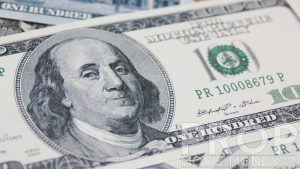
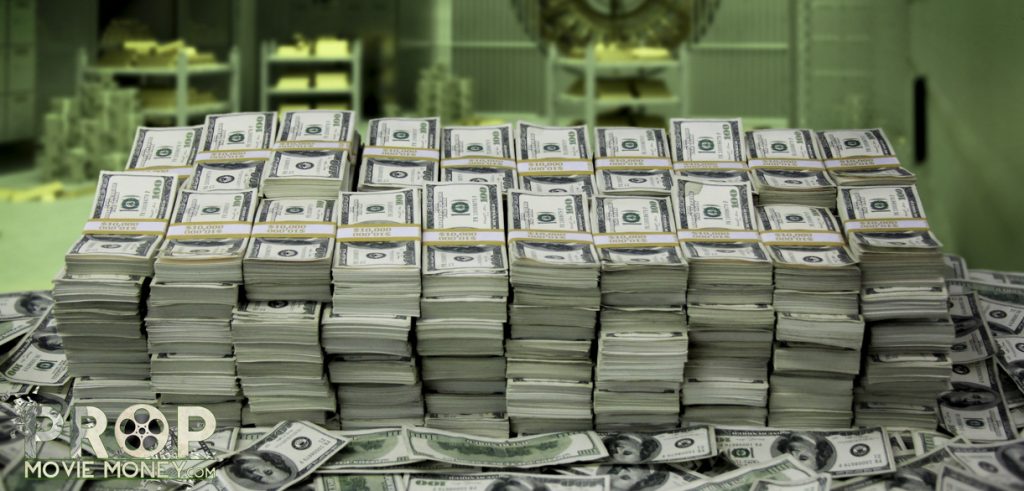
One of the strangest set of stories about the problem of counterfeiting was the several stories that came out at the end of August about people trying to make purchases with movie prop money. This has caused regional U.S. Secret Service across the south to issue warnings.
Prop movie money is designed to look close enough to real U.S. currency so that a moviegoer would not be able to tell the difference on screen. When these notes are examined closely, they are clearly marked with “THIS NOTE IS NOT LEGAL TENDER” and “FOR MOTION PICTURE USE ONLY.” Prop money is smaller than real U.S. currency and does not have the anti-counterfeiting features of a real Federal Reserve Note. But that has not stopped people from trying to pass these notes as real currency.
-
-
Prop Movie Money
-

-
Prop Movie Money
-
-
Prop Movie Money
Here is a sample of the reports about people trying to use prop money as real currency:
In Athens, Georgia, a 30 year-old man beat a customer with a baseball bat at a fast food restaurant when he alleged the customer bought marijuana using two prop $100 notes.
Police in the Gwinnett County, a suburb of Atlanta, are looking for two suspects who went on a spending spree by buying two cars and paying with prop money.
Prop money has shown up in Morristown, Tennessee, northwest of Knoxville.
U.S. Secret Service issued a warning in the Tampa Bay area when someone tried to buy a smartphone using prop money and noted that there has been an increase in the use of this currency.
Areas of East Texas have reported several cases in which prop money has been used. Texas Bank and Trust reported that they have seen a few of these notes were deposited into accounts at their bank.
Sources have not confirmed the source of this recent uptick in prop money usage but noted that the currency can be purchased online. Although eBay rules do not allow for this type of currency to be sold on its site, a recent search yielded several listings offering prop money. There is no restriction on Etsy where searches lead to over 300 listings of all types of prop or replica money.
Why was the criminal in the in the Dateline video attached to my post “How easy is it to pass counterfeit currency” so successful? Like he said, nobody pays attention!
Prop Movie Money
Aug 23, 2016 | coins, gold, legal, news, US Mint
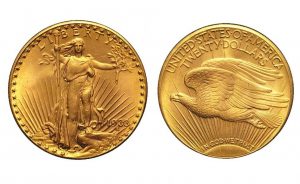
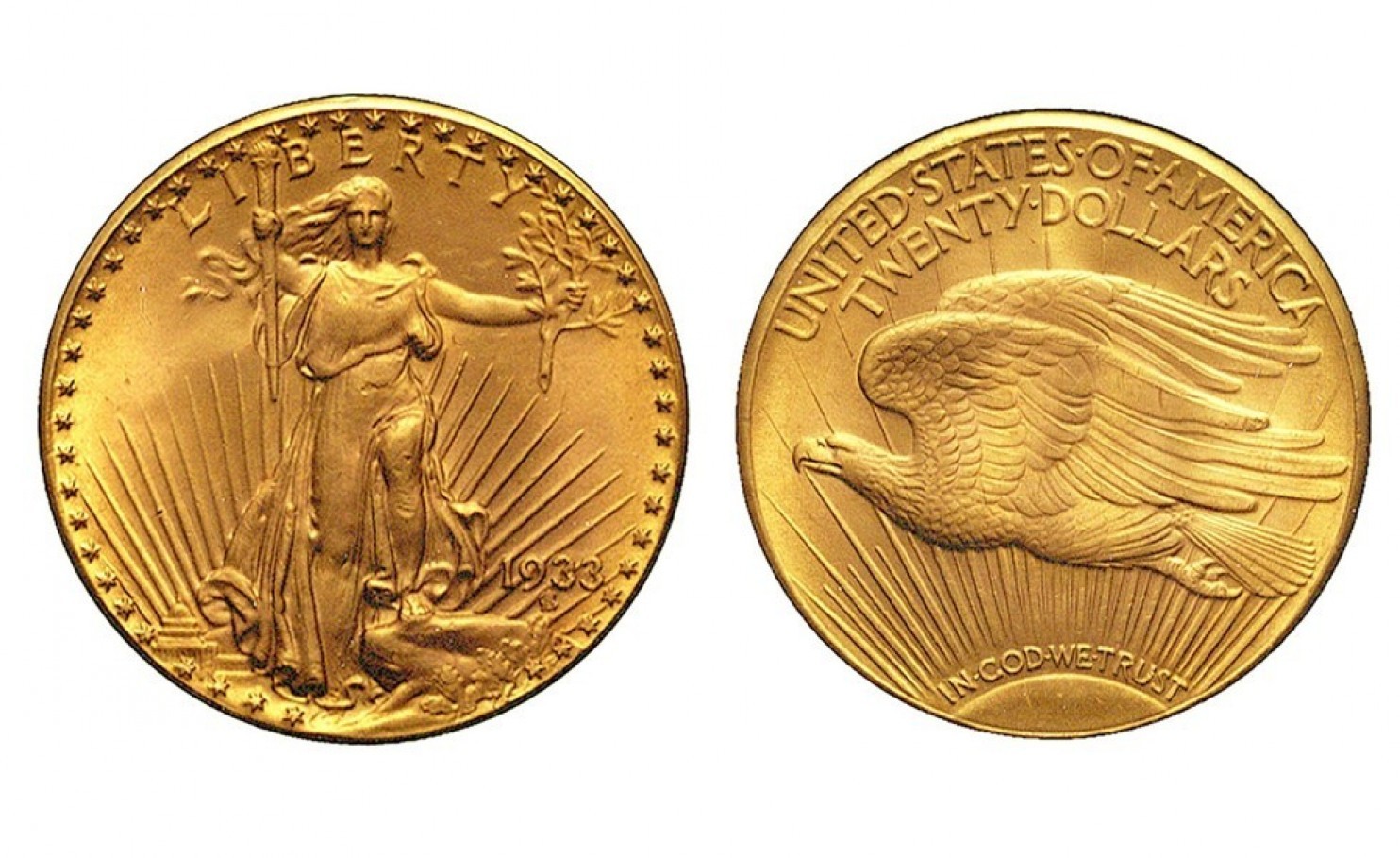
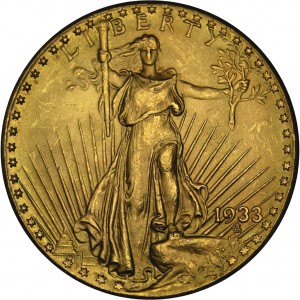
One of the ten 1933 Saint-Gaudens $20 Double Eagle gold coins from the Longbord Hoard confiscated by the U.S. Mint
This is a case that has been ongoing for ten years following the “discovery” of ten 1933 Saint-Gaudens $20 gold Double Eagle coins by Joan Langbord, the daughter of Philadelphia jeweler Israel Switt. Following the auction in 2002 of the only legal Double Eagle for a single coin record of $7,590,020 (since broken), Langbord claims that she found ten 1933 Double Eagles in a safe deposit box where Switt stored the coins.
Langbord reported the find to the Mint to “attempt to reach an amicable resolution of any issues that might be raised.” When Langbord gave the coins to the Mint to be authenticated, the Mint confiscated the coins. Langbord retained Barry H. Berke, the attorney who represented the plaintiffs in the case that resulted in the sale of the King Farouk coin.
-
-
-
-
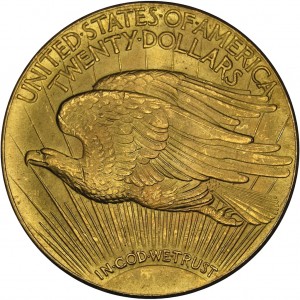
Reverse of the iconic 1933 Saint Gaudens
$20 Double Eagle gold coin
After adding her sons Roy and David as plaintiffs to protect the property since Joan is elderly, the case is finally heard in July 2011. The court handed down an unanimous decision against the Langbords. The coins are moved to the United States Bullion Depository at Fort Knox, Kentucky.
Langbords appeal the trail to the Third Circuit where a three-judge panel vacated the forfeiture and order the government to return the coins.
The government appeals and asks that the return order be vacated in order to appeal the decision. Rather, the Chief Judge of the Third Circuit will stay the order and ruled that the appeal will be en banc, meaning that the appeal will be heard before the entire bench of judges.
In this round the government did not file in the proper time-frame and the Longboards appealed all rulings. The Third Circuit order the return of the coins but the government appealed the ruling again.
On August 1, 2016, in a 9-3 vote, a full Third Circuit panel of judges ruled that they agreed with the government who argued that forfeiture laws were not applicable because the coins were already U.S. property and could only be surrendered. The majority also ruled against granting a new trial noting that the errors of the 2011 trial were harmless even though a previous three-judge panel ruled differently.
In writing the dissenting opinion, Judge Majorie Rendell said that the majority based its opinion “mainly on its buy-in to the Government’s audacity—the Government’s say—so that it owned the 1933 Double Eagles and had no intention of forfeiting them.” She noted that the Civil Asset Forfeiture Reform Act was designed to prevent the government from forcefully seizing civilian property and that the ruling sets an “incorrect and dangerous precedent.”
A part of the government’s argument that is disturbing is that the they claim the Langbords are “the family of a thief” and should not benefit. Switt was never charged or convicted of a crime. While there is significant circumstantial evidence that Switt was the private seller of the coins and probably worked with the Mint’s cashier, his role has not been legally proven in any of the cases regarding any of the Double Eagle coins. Although this sounds like a legal arm-twist, it is important not only for this case but for any possible case the government can levy against any citizen. It is not right, fair, or legal and a violation of rights.
Berk told Reuters, “The Langbord family fully intends to seek review by the Supreme Court of the important issue of the unbridled power of the government to take and keep a citizen’s property.”
It is likely that the case will be filed to the U.S. Supreme Court for hearing in its next session beginning in October. Hopefully by then a ninth justice will be seated before hearing this case.
Image courtesy of U.S. Mint