Dec 18, 2016 | charity, news, YN

As you know, I took on a project to fund a trip for the sixth grade class of Juniata Park Academy of Philadelphia so that they can visit the Philadelphia Mint and Federal Reserve Bank of Philadelphia to learn more about their money and how it plays into their everyday lives. I received a note from the DonorsChoose.org, the non-profit site the helped raise the funds, that Ms. Janas, the teacher at Juniata Park Academy, posted a note about the trip. She wrote:
Dear Scott,
We just completed our trip to the Federal Reserve and U.S. Mint on Friday. Even in the chilling temperatures, the enthusiasm was in full swing. One of the highlights of the trip was seeing all the money in both places we visited. Between coins and currency, the students were overwhelmed with how the coins originated, their artists and all the interactive activities that helped them understand how our money is made and all the safety measures that are taken to secure it. They could not believe that under the Federal Reserve Building were two vaults which each are the size of a football field.
They gave us samples of shredded currency at the Federal Reserve and we saw coins being processed in the U.S. Mint. Going through security screening was quite interesting because most of the students didn’t realize that any metal sets off the alarm and many alarms went off. It helped them understand how security works with government locations.
We will be going over our scavenger hunt that we completed at the Federal Reserve and additional information I received about the mint. Also this week one of our donors will be visiting our classroom to give us more hands on knowledge of coins. This was a great trip and we appreciate all of our donors giving us the opportunity to take this trip this year.
With gratitude,
Mrs. Janas
I am so excited for these kids and glad they got the opportunity to go to both places.
As promised, I will be visiting Juniata Park Academy. Aside from bringing pieces of my collection for them to see, I am also bringing gifts. After all, it is the holiday season! Since I will not be coming home right away, my cousin and I will be at the football game at Lincoln Financial Field (Go Big Blue!), I will report on my visit over the weekend.
UPDATE: Pictures were added to the original note at DonorsChoose.org. Go there to see them!
Dec 17, 2016 | coins, commemorative, gold, legislative, news, silver, US Mint
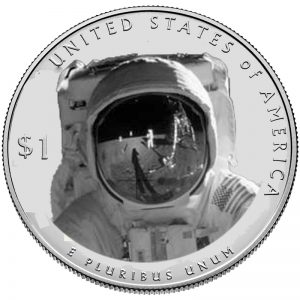
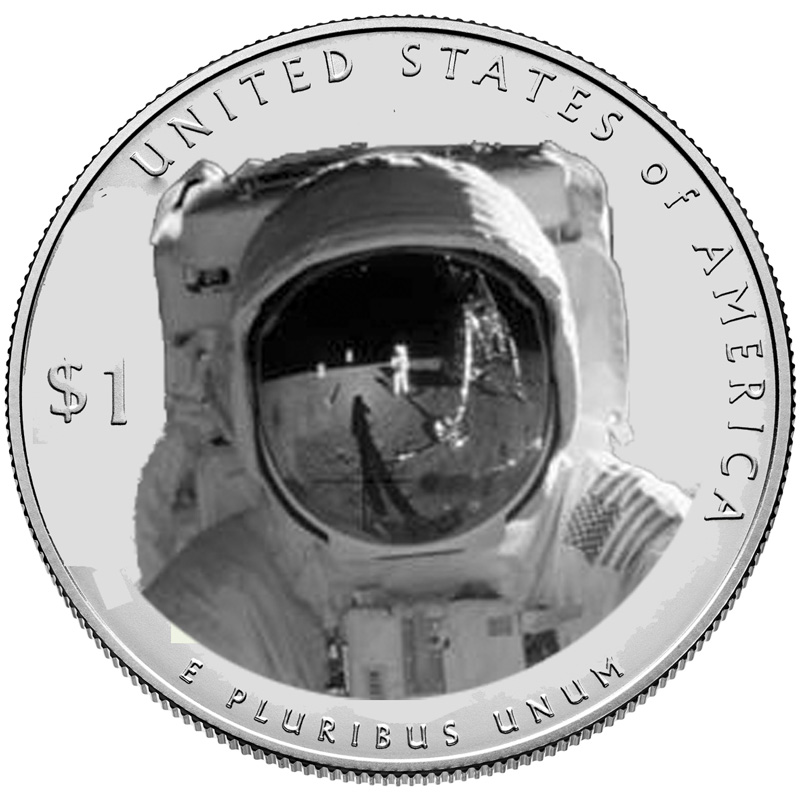
Artist’s conception† of the common reverse for the 2019 Apollo 11 commemorative coin program.
Based on my posts from the last few weeks, I am sure you can tell I have a fascination with space. In fact, if there is such thing as reincarnation, I want to come back in the future to be able to travel around the universe in a manner similar to what we see in the movies. It is sad that there is no real enthusiasm for space exploration as there was when Apollo 11 landed on the moon!
In July 1969, my family lived in the Long Island suburbs of New York. The year before Apollo 11, my father bought a new, large RCA color television. Aside from learning that the beginning and end of Wizard of Oz was in black-and-white, I was able to watch the launches of the world’s largest Roman candle, the Saturn V rocket. Before Skylab and the Shuttle programs, it was a marvel of human achievement. I loved watching the liftoffs from Cape Kennedy and always wanted to go see one in person. I never did get to see a rocket launched, but I hope to some day.
This was a time when kids went outside to play, even in the summer evenings. We played a lot of baseball-related games including setting up a “field” in the street. Nobody was in the street. We were all home watching television and watching overhead shots of Mission Control in Houston. Even through the television, you could sense the tension until Neil Armstrong announced, “Houston, Tranquility Base here. TheEagle has landed.”
It wasn’t until years later when I learned more about the Cold War when I understood why it was more important for the United States to land and walk on the moon first. All I knew was it was very cool that an American was up there. It made Star Trek seem possible!
The moon walk was Monday night. Again, we were staring at the television watching the enactments as to what to expect. There were mockups of the Lunar Module and astronauts demonstrating what Armstrong was supposed to do. I remember the concentration on the “D-Ring,” the D-shaped handle that Armstrong had to pull on to open the door that had the camera. There was a question that the ring had to survive the landing and that the door could have jammed. We would have a historical moment without it being recorded on video!
“These are the first pictures ever broadcast from the moon,” was the words by whoever was on television. I remember the words but not who said them. Pulling on the D-ring worked and the world was watching. We watched as Neil Armstrong climbed down the ladder onto the surface of the moon. After a brief stop to remove the cover on the plaque that was attached to the ladder, Armstrong put both feet on the footpad of the lunar module. After a quick bounce step from the footpad to the surface of the moon, Armstrong gave his famous like, “That’s one small step for [a] man, one giant leap for mankind.”
There has been a “controversy” about whether Armstrong said “… one small step for man,” or “… one small step for a man.” Whatever is the correct version does not take away from the feat and the fact that Neil Armstrong was the first human being to set foot on Earth’s only natural satellite!
While NASA was the inspiration for many of the modern technologies we enjoy today, only Apollo 11 took it to the level of defining U.S. technology. While Skylab and the Shuttle programs were far more advanced, Apollo 11 stands as one of the 20th-century’s most amazing feats.
Needless to say, I am excited!
- Commemorative program issued in 2019
- Required design elements:
- Convex in shape “to more closely resemble the faceplate of the astronaut’s helmet of the time”
- “The Secretary shall hold a juried, compensated competition to determine the design of the common obverse of the coins minted under this Act, with such design being emblematic of the United States space program leading up to the first manned Moon landing.”
- Winning designer to receive no less than $5,000 for their design.
- Common reverse design “shall be a representation of a close-up of the famous ‘Buzz Aldrin on the Moon’ photograph taken July 20, 1969, showing just the visor and part of the helmet of astronaut Edwin ‘Buzz’ Aldrin, in which the visor reflects the image of the United States flag, astronaut Neil Armstrong, and the lunar lander.”
- Mintage Limit: 50,000 $5 gold; 400,000 silver dollars; 750,000 clad half-dollar; 100,000 five-ounce silver proof dollars
- Surcharges of $35 per $5 gold; $10 per silver dollar; $5 per half-dollar; and $50 per five-ounce bullion.
- Payouts: 50-percent to Smithsonian Institution’s National Air and Space Museum’s “Destination Moon” exhibit; 25-percent to the Astronauts Memorial Foundation; and 25-percent to the Astronaut Scholarship Foundation.
† I may not be much of an artist but I can play a little with Photoshop!
Dec 14, 2016 | coins, gold, news, US Mint
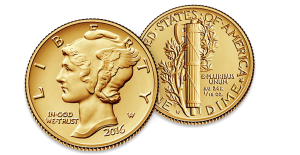 The U.S. Mint announced that they will sell off the remaining Mercury Dime 2016 Centennial Gold Coin starting at 12 Noon Eastern Time on Thursday, December 15, 2016. Although the website says the price is $200, it is likely that the opening price may be $205 based on the U.S. Mint Centennial Gold Price Grid and the average price of the London Gold Fix.
Order limit will be one per household.
Coins that will be on sale are coins that were left over when the sale was closed earlier this year, orders that were not completed for many reasons including credit cards that could not be processed, and a few returns that are not “spoiled.” If you order, you will not receive coins that were damaged and return.
There are only a few thousand left. Good luck!
Dec 9, 2016 | history, news, obituary
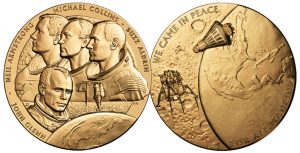
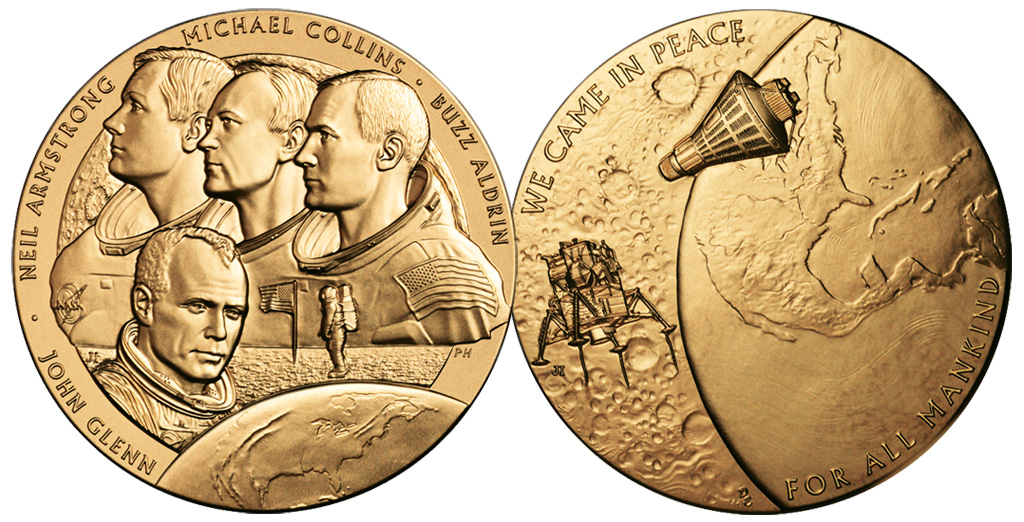
New Frontier Bronze Medal features the portraits of Apollo 11 astronauts Neil A. Armstrong, Michael Collins, and Edwin E. “Buzz” Aldrin Jr. facing left, and Friendship 7 astronaut John Herschel Glenn Jr. facing right. The reverse features the Apollo 11 LEM orbiting the moon and the Friendship 7 mission capsule orbiting Earth.
Heroism is climbing to the top of the Atlas LV-3B rocket, that was rushed to completion and whose tests did not exactly go as planned and launched into low Earth orbit trying to help the United States catch up in the space race. With the entire world watching and the next year after the Soviets made their own flight into orbit, John Herschel Glenn, Jr. rode Friendship 7 into history.

COL John Glenn
Glenn was so humble that he said that he was the just the next one up. But subsequent stories came out later that with the push to have an American fly in Earth’s orbit quickly, the schedule was manipulated so that Glenn was the pilot of that mission. Some have accused Glenn of using his relationship with President Kennedy for that honor, but that was later disproven.

NASA Payload Specialist for STS-95
In between flights into space, Glenn became a corporate executive with Royal Crown Cola with an eye on politics. He started with an attempted run at the senate in 1964 but withdrew after a personal accident. He was with Robert F. Kennedy on the campaign trail when Kennedy was assassinated. In 1970 lost the Democratic primary for the senate against Howard Metzenbaum. Glenn finally won the 1974 Democratic primary and was elected Senator from Ohio, a seat he held until retiring in 1999.

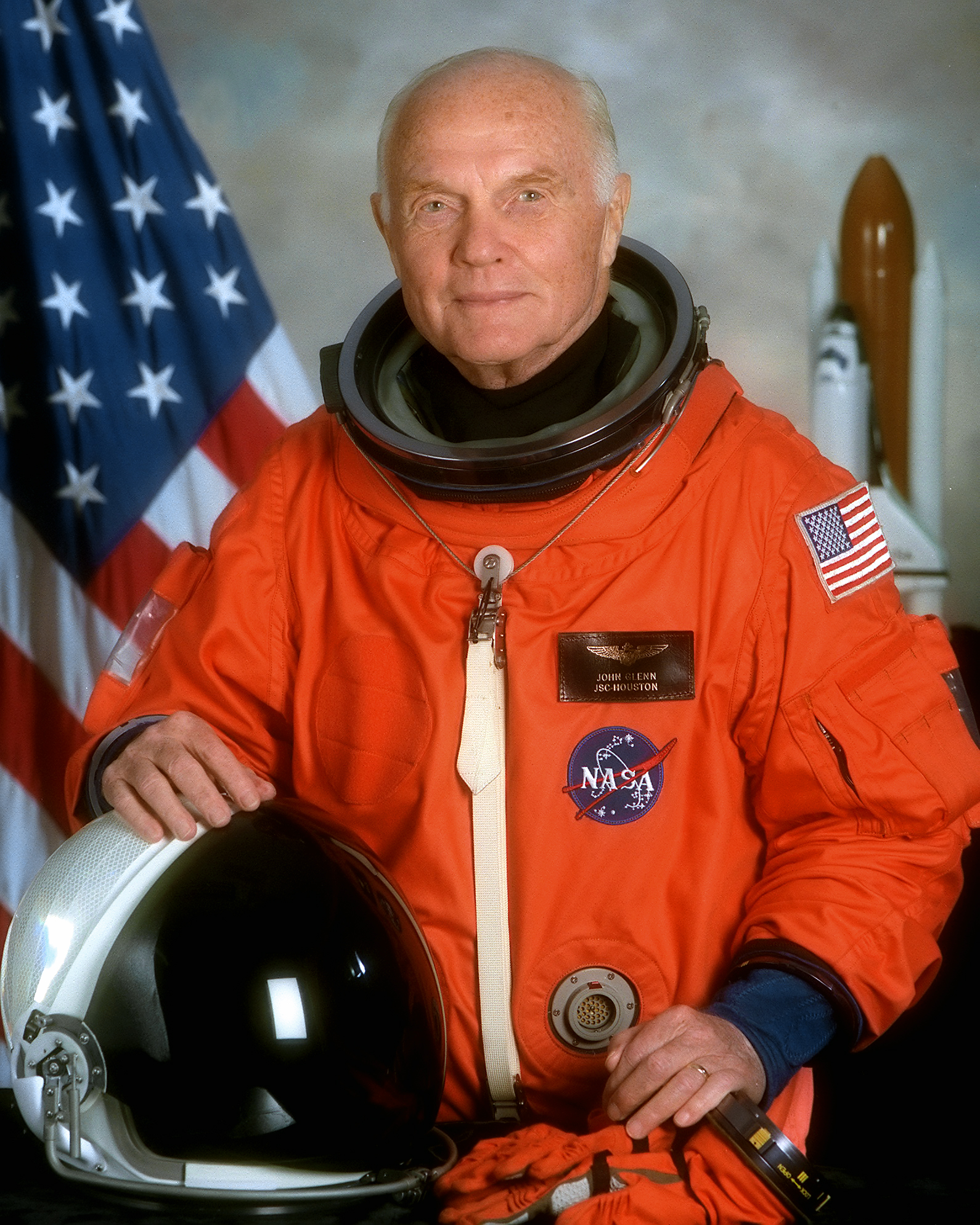
Official U.S. Senate portrait of John Glenn
From the day he dropped out of college to join the Army through the end, John Glenn has been nothing less than a hero. He spent most of this life in service to his country with impeccable honor and distinction. Glenn showed how good people can serve for the sake of service without having to get anything more out of the service than the satisfaction that he made life better.
We are better for having had John Herschel Glenn, Jr. amongst us.
Godspeed, John Glenn.
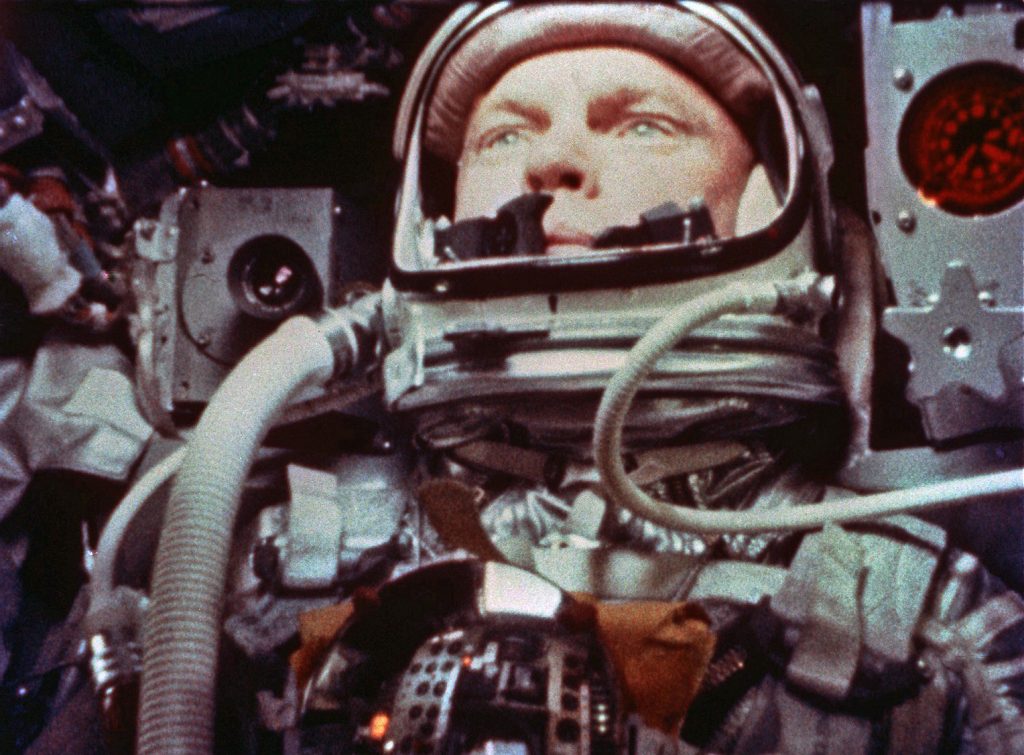
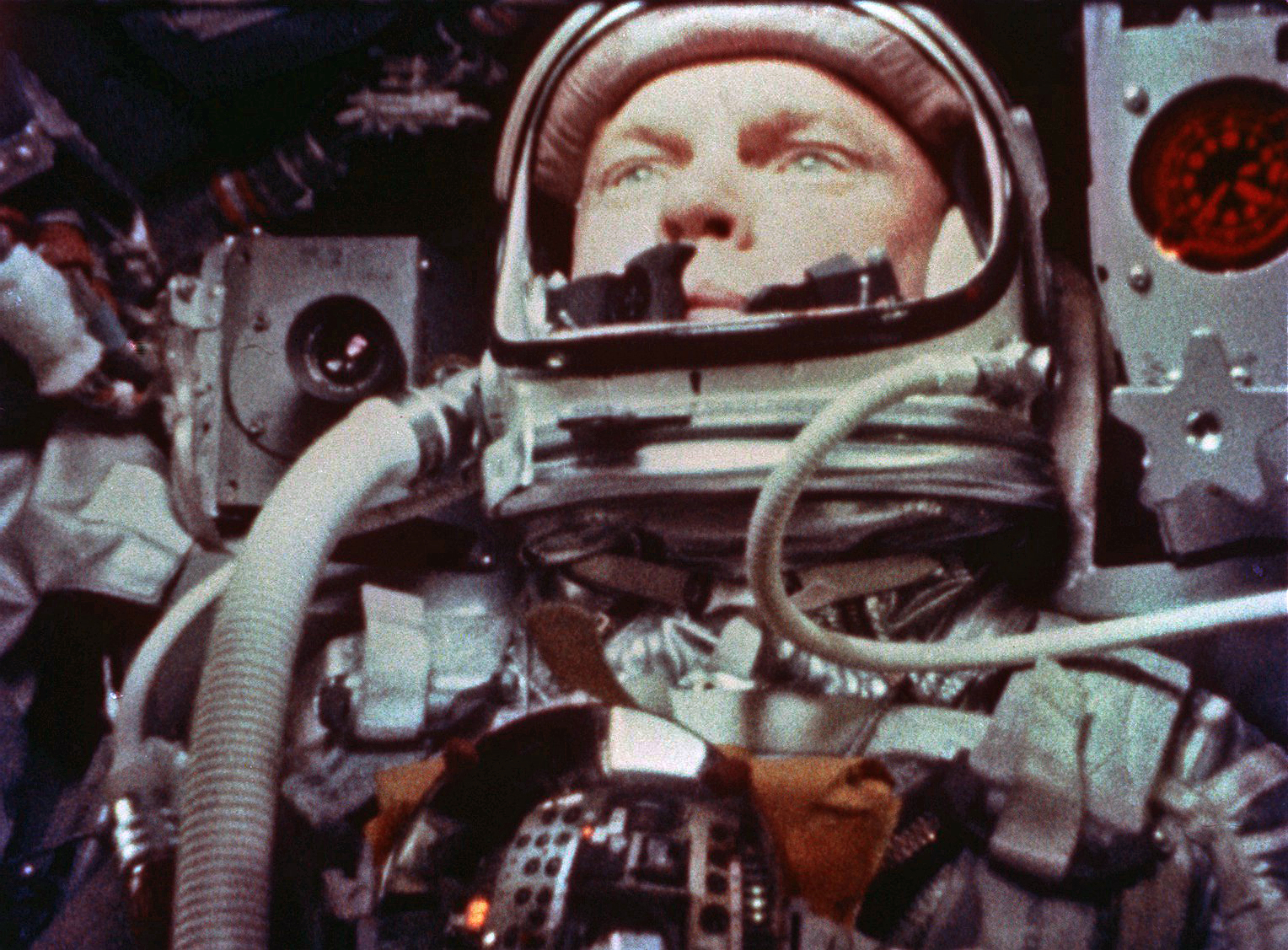
Still frame of John Glenn in orbit, taken by a motion picture camera inside Friendship 7
Credits
- Image of the New Frontier Bronze Medal courtesy of the U.S. Mint.
- All other images are from government sources and in the public domain.
Dec 2, 2016 | coins, news, policy, US Mint
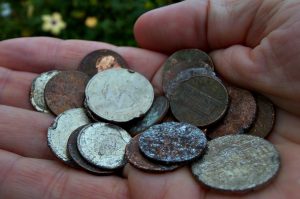
Coins found in the recycling stream.
The mutilated coin redemption industry is a multi-million dollar business. Most of the businesses involved with this industry are recyclers that find coins in cars and machines that are recycled. Recycling these metals require the use of heavy machinery that takes apart the items and compresses them to transport to processors. Six compressed cars can take up the same amount of space as one full-size car. More can fit in the same space if the metal is shredded.
Although some of the coins are removed from the cars, others end up in the machinery. After processing through high pressure and high heat, the found coins are in no condition to be sent to banks for redemption. Most of the time, these coins are cut, bent, or badly scorched making them impossible to process using normal coin counting mechanisms. According to an industry representative, recyclers can find an average of over $2 per car and over $10 in coin-operated machines as they are taken apart and crushed.
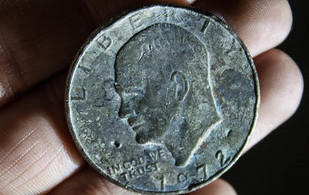 Coin-operated machines are not as well made as people suspect. For every time you might have had a coin “stuck” and lost in the machine, the coin might have dropped into an area outside of the coin bin and between internal parts. When the machines are serviced, the coins are usually dumped into bags and taken back to the company to be placed into coin counting machines. In many cases, the count between the expected amount of money and the number of items sold are not exact. This type of “shrinkage” is part of their business risk plans.
When the coin-operated machines are taken out of service, many are cleaned and inspected for loose coins. But the way the machines are designed, it is common that many coins are missed. They will continue to stay within the machine until it is discarded for scrap.
Cars and other machines sometimes gain a second life overseas. Machines are sold as surplus, repaired by their new owners and put into service around the world. These machines end up in the recycle system when they fall beyond the ability to be repaired. International recyclers recover U.S. coins from these cars and coin-operated machines. This is not including the scrap cars that are shipped overseas for recycling. Brokers buy the coins from recyclers and ship them to the United States. Currently, there is an estimated $1 million in mutilated coins being held by Customs and Border Patrol (CBP) while the redemption program is suspended. It is also estimated that more than $50 million in mutilated coins are being stored overseas while shipments are suspended.
As the mutilated coins accumulate, recyclers are now paying for storage and security over and above their regular business expenses. Some have sold their mutilated coins to other recyclers and brokers at a discount to avoid paying the storage costs. Those accumulating these mutilated coins are hedging on the mutilated coin-recycling program being restarted soon.
Brokers handling the import of these coins have filed suit against the CBP for blocking and holding the shipments of mutilated coins. Plaintiffs cite a report from a company called FormerFeds Group, a company made up of former federal lawyers and other senior officials, that said the accusation of importing mutilated coins from China is not true and that the amount of “junk” (non-coins in the batch) are within tolerances of the program. They are requesting that the court grants an order to release the coins and to compel the U.S. Mint to resume the Mutilated Coin Redemption Program.
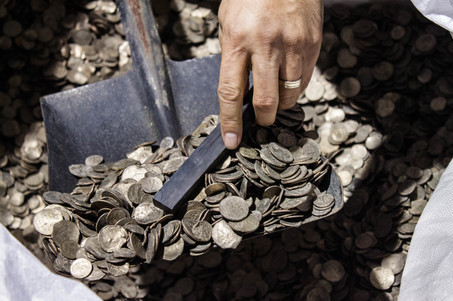
Hong Kong-based Wealthy Max Ltd. publicly opened and sampled 13 tonnes of mutilated U.S. coins waiting for shipment in Hong Kong. The coins come from piles of metal generated by automotive shredders and via incinerated waste streams.
Without fanfare, the U.S. Mint published a request in the Federal Register (81 FR 75922) asking for comments regarding the Mutilated Coin Exchange Program to supplement the information it has already gathered. The notice was published on November 1, 2016, without a follow up from the U.S. Mint press office. The U.S. Mint allowed for a two-week comment period that ended on November 15, 2016.
According to the Federal Register, the “Mint is considering include requiring participant certification, coinage material authentication, chain of custody information, and annual submission limitations.” They were seeking comment on that and other possible factors to better secure the program. There is no indication as to whether this is tied to the case brought by the brokers handling foreign recycling.
Coins make up a very small minority of the amount of scrap in the recycling stream. But with the problems caused by the U.S. Mint’s refusal to properly deal with this issue, it is taking up a lot of time and money both here in the United States and with long time business partners abroad.
Dec 1, 2016 | legislative, news
 I begin every month with a review of the numismatic-related legislation that occurred in the previous month. Although congress returned to work on November 14, not much has been done. The services I subscribe to so that I can receive alerts on votes or signed legislation shows not much has been done except for a few bills that have unanimous support or asks to rename a building, park, or some other federal property in the name of a hometown hero.
Given the results of the election, sources say that the partisan rancor is so fervent that even the most cordial relationships have turned icy. These feelings are not limited to cross-party relationships. There is a growing divide between ideological members in both parties that could almost split the congress into four parties. Many are predicting more gridlock ahead—as if there was not gridlock in the past.
I continue to hope that congress can see past their personal issues and do something right like pass a commemorative coin program for the 50th anniversary of Apollo 11. If you have to name the top defining events of the 20th century, Apollo 11 has to be on that list.
Nov 30, 2016 | ancient, coins, museum, news
While growing up in the New York City area, my mother felt that her children should go out and see the area which we lived. New York has a lot to see and do, but many do not visit the attractions even though many are a short subway ride away. Vacations were the same, whether it was to the Pennsylvania Dutch Country or Cooperstown, the destination was always something more than just seeing the sights.
After I started collecting coins, one of the trips was to the Chase Manhattan Bank Money Museum. Before the museum closed in 1974 and its assets were donated to the Smithsonian Institute for a tax deduction, the Money Museum was something for a wide-eyed pre-teen to see. I remember there was a Chinese Money Tree, a bronze tree structure with holed coins attached to its structure. Although I later learned it was a symbol of good luck, the image was important since my parents used to tell me, “Money doesn’t grow on trees.” Of course, the precocious child in me used the image to contradict that claim!
Museums tell the story of our history with props. With notable exceptions, numismatics are amongst the props used to tell the stories. Hollywood-themed museums have checks signed by the producers of major motion pictures and endorsed by actors. Political exhibits display the medals used to entice voters to vote for them. Colonial recreations use scrip that looks like paper money of the time to allow you to buy in their shops—Colonial Williamsburg used to do this many years ago.

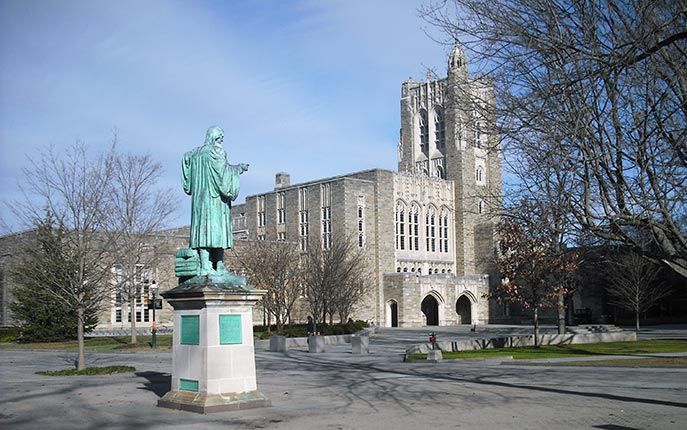
Princeton University’s Firestone Library
In 2015, members of the Princeton University Art Museum Student Advisory Board (SAB) proposed that the library created the exhibit to supplement their education into ancient and medieval history. Constantin Weickart, a member of the SAB said, “I got interested in coins through courses in Late Antiquity, and basically all my professors used coins in their lectures. I saw how important coins are not only as objects but also as historical sources. Princeton has one the best coin collections in the world.”
SAB members Weickart, Daniel Elkind, and Hannah Baumann designed the exhibit including writing the labels that were associated with the coins and other images. They worked with Dr. Alan Stahl, the University curator of numismatics.
“[The coin collection] is there primarily for educational use. A lot of classes visit the coin collection during the course of the year,” Stahl said. “Students come to do research for term papers or get images of coins to use in presentations.”
Stahl added that the exhibit is also open to outside scholars for their research, especially since the coin collection will not be part of the rotating exhibit hall but part of the permanent display.
Although the collection is maintained for research, the Princeton Library is open to the public allowing anyone to visit the exhibit. Outside researchers can contact the library to gain access to their collection and some of the collection can be viewed online.
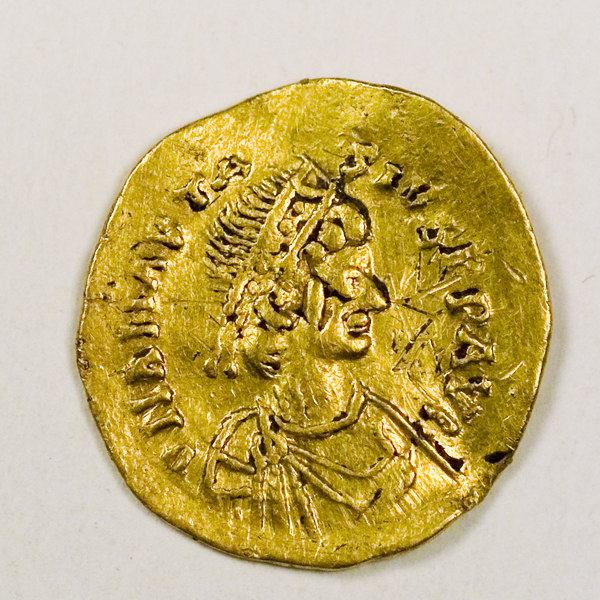
Sample of Princeton Collection
-
-
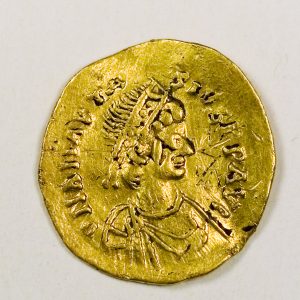
Byzantine Era Thrace tremissis gold coin of Anastasius I (491-518)
-
-
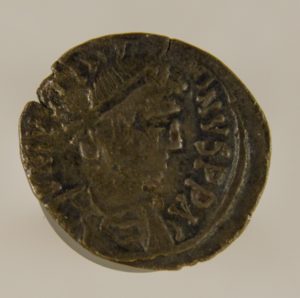
Carthage silver half-siliqua Justinian I (527 to 565)
-
-
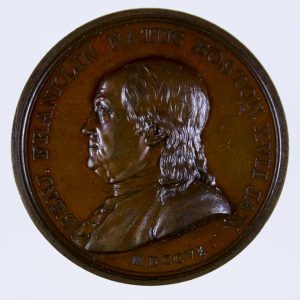
1786 Benjamin Franklin Medal by the Paris Mint
Nov 18, 2016 | bicentennial, coins, grading, news

NGC Chairman Mark Salzberg
In the past, NGC would accept coins graded by Professional Coin Grading Service in the registry. They did this while PCGS only accepted their own coins. This created a lot of options for collectors. Many of the registry collectors have tried to use only NGC-graded coins as a source of pride. Others have been looking for the best coin for their sets.
I had started a few registry sets based on the 1975-76 Bicentennial coins. After a few years, I had stopped working on the set while other things took priority. Since I had not looked in a while, it appears that overall, I rank 4,653 with a total 12,050 points. While I know that the point values change based on population, I am not sure how this has changed. What has not changed is my America’s Bicentennial Celebration set, a 1776-1976 Clad Mint Set. According to NGC, the set is still ranked THIRD in this category with a score of 3,883 points.
During the last few years, I have divested many of the coins I purchased for registry sets except for the Bicentennial coinage.
As part of the change, Salzberg’s letter said that coins from “other services” that have been added prior to the change will be allowed to remain. In this case, the other services would be PCGS since it was the only service allowed in registry sets. Salzberg said that there will be no point deductions for those coins.
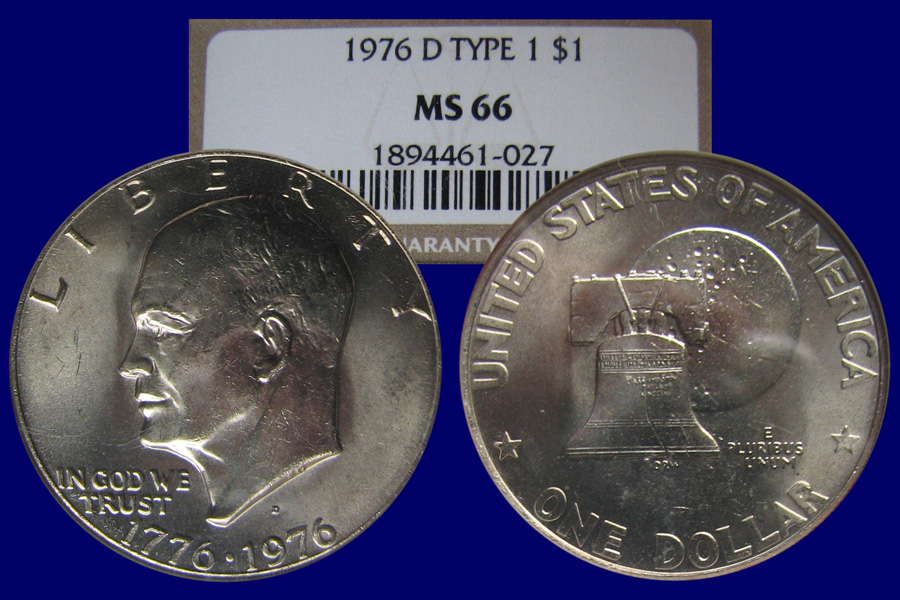
At 949 registry points, this coin scores the most points in the America’s Bicentennial Mint Registry Set
Unfortunately, I must have missed something because while looking at my sets, my 1776-1976 Silver Mint Set should be a top set but is made up of all PCGS coins. If PCGS coins are still allowed, then why are these coins not counted? Time to sent NGC a note and ask!
Frankly, I am surprised NGC has waited this long to make this change. As the quality of the coins and the number of people participating in registry sets have increased, NGC should have considered this move a few years ago. After all, PCGS does not accept NGC-certified coins in their registry.
In thinking about the competition between the two services, it is interesting that Salzberg noted that there will be some who will be upset “but I cannot continue to allow coins graded by companies whose standards do not match those of NGC.” Since the only non-NGC graded coins allowed in the sets are from PCGS, is this a commentary on PCGS?
Aside from questions that caused the formation of the Certified Acceptance Corporation as the “third-party grading service verifier,” or a fourth-party grading service, there have been some that claim PCGS has lowered their standards to grade more coins at higher grades to make their service more attractive. One dealer pointed out that it was once very rare to submit American Eagle bullion coins to PCGS and receive more than 5-percent graded as a 70 (perfect). Now, if at least 25-percent do not come back with a 70 grading he wonders if there was something wrong.
Another dealer pointed to high-profile online dealers who pre-sell 70 graded coins from both services. How do they know that the services are going to be able to supply these companies with the appropriate inventory? One said that they expect a certain number to come back with the perfect grade based on a percentage of what is submitted, noting that it is easier to predict.
I have no problems with registry set collecting, competition, or NGC only allow coins they graded in their competition. It is their Registry Service and they can set whatever rules they want. I now have to consider whether I want to try to cross-over the PCGS coins or buy new coins.
Image of Mark Salzberg courtesy of NGC.
Nov 12, 2016 | BEP, legislative, news, policy, US Mint
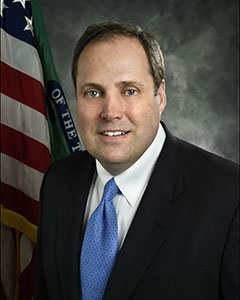
Rhett Jeppson, nominated to be the 39th Director of the U.S. Mint
The immediate impact of the election results is that Rhett Jeppson will not be confirmed to become the Director of the U.S. Mint. Even though the Senate Banking Committee held a hearing for his nomination on March 15, the chance of the GOP-led Senate confirming any of President Obama’s appointment nominations are non-existent.
Jeppson was hired in January 2015 as Principal Deputy Director. Jeppson was hired as a member of the government’s Senior Executive Service (SES) program. In July, it was announced that Jeppson would be nominated as the Director. Since the nomination will likely die in committee, Jeppson will remain on the U.S. Mint staff as a government employee. Although he has not announced his intentions, Jeppson is likely to continue as Principal Deputy Director.
It is unlikely that the next administration will nominate Jeppson or anyone in the near future. Considering that there has not been political appointee running the U.S. Mint since January 2011, maybe President Obama could use his power to convert the term appointment into a permanent government employee. This way, the U.S. Mint can be run by competent managers rather than a pol who might do something like not ordering enough planchets to maintain a major bullion program.
The Bureau of Engraving and Printing is not affected by a change in administrations because the position of the director is a permanent government employee. Len Olijar will remain Director of the BEP as long as he is a government employee in good standing.
As for any of the pending legislation, do not count on anything being passed. Given the results of the election, sources say that the partisan rancor is so fervent that even the most cordial relationships have turned icy. These feelings are not limited to cross-party relationships. There is a growing divide between ideological members in both parties that could almost split the congress into four parties.
To suggest that the partisan bickering to escalate during the lame duck session would be an understatement. Remember, congress passed a continuing resolution, not a real budget, in late September that will expire on December 9. If a budget is not passed by December 9 then the government will have to be shutdown.
The 114th congress will adjourn being one of the most ineffective congress on record.
For the 115th congress that will convene on January 3, 2017, there will be 239 Republicans and 193 Democrats with three runoffs pending (two in Louisiana). Although the Republicans lost 7 total seats, they continue to hold a majority. Currently, Rep. Jeb Hensarling (R-TX) is the Chairman of the House Committee on Financial Services. Although it is not known if Hensarling will remain as chair of this committee, it is likely the new leadership will continue the previous policies. If the attitudes of this committee do not change, there may be very few commemorative coin programs that get through this committee.
Although revenue generating bills are required to be introduced in the House of Representatives (U.S. Constitution, Article I, Section 4), the Senate has been known to introduce commemorative coin bills without argument from their House counterparts. For the 115th congress, the Senate will have 51 Republicans and 48 Democrats with a runoff in Louisiana scheduled for December 10. However, Senate rules make the composition somewhat irrelevant because of their ability to filibuster.
Under the Senate’s filibuster rules (Senate Rule XXII), a senator can inform the presiding member that they intend to filibuster the debate. At that point, the presiding member will set the bill aside to allow other business to continue because the Senate can only work on one item at a time. This means that a filibuster stops all other floor actions. By setting the bill aside and not bringing it to the floor, this allows for other senate business to continue while the leadership tries to gather support for a cloture vote.
Cloture, or closure, is the act to end the free-flow debate of the senate and apply restrictions, such as a 30 hour limit on debate. Cloture requires a three-fifths vote of the senate (60 votes) to agree on cloture. Anyone who remembers some of the past discussions on the composition of the senate, when one party controls 60 seats, they called that a “filibuster-proof majority.” Otherwise, any senator can threaten a filibuster and have that measure buried.
Although it is unlikely that the senate would filibuster the vote on a commemorative coin bill, but it would be obstructed by the another bill ahead of it in the queue.
Even though I would like for the Apollo 11 50th Anniversary Commemorative Coin Act (H.R. 2726 and S. 2957) to pass, I will not be holding my breath during the lame duck session this year or a new version introduced anytime next year.
Nov 5, 2016 | coins, counterfeit, legal, news
 The Federal Trade Commission (FTC) published the “Final Rule of its Rules and Guidelines” for enforcing the Hobby Protection Act (16 CFR Part 304) to include the provisions of the Collectible Coin Protection Act (Pub. L. 113-288) that was signed into law by President Obama on December 19, 2014.
It is the job of the FTC to provide support to enforce the Hobby Protection Act. When updates are made to the law, such as the Collectible Coin Protection Act, the FTC is required to figure out how they will implement the law. Executive agencies, like the FTC, is required to write regulations that conform with the law and legal precedent, announce them to the public, allow for public comment, and then publish the file rule.
On October 14, 2016, the final rules that the FTC will use to enforce the Hobby Protection Act was published in the Federal Register (81 FR 70935). Since this is the final rule, the section begins with explanations and commentary about the information received from the public comments.
What appears to be troubling is that the FTC rejected comments from noted numismatists that there should be a rule to cover the manufacturing of fantasy coins. Fantasy coins are those that were not manufactured by the U.S. Mint. An example cited was the manufacturing of a 1964-D Peace Dollar “FANTASY” since the coins were never officially manufactured. Although the coins were struck, they were considered trial strikes and subsequently destroyed.
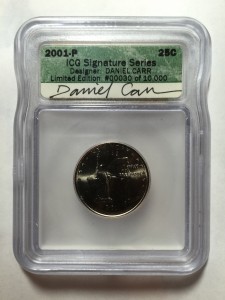
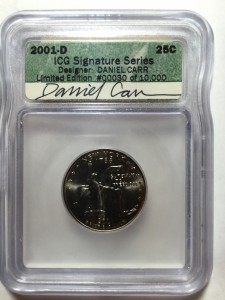
Daniel Carr is a mechanical engineer who also studied computer graphics and later turned it into an art career. He had entered U.S. Mint sponsored competitions for coin designs that have been used on commemorative coins. Carr is the designer of the New York and Rhode Island state quarters and his design was used as the basis of the Maine state quarter.
-
-
2000-P New York quarter with Daniel Carr’s autograph on ICG label
-
-
2000-D New York quarter with Daniel Carr’s autograph on ICG label
Carr had bought surplus coining machines from the Denver Mint, repaired them, and had been using them to strike fantasy coins. One of his fantasy coins was the 1964-D Peace Dollar. Over 300,000 coins were struck in 1965 at the Denver Mint anticipating its circulation only to be destroyed after congress disapproved of the way the Mint was allegedly handing the program. Some believe that some coins have survived, much like the 1933 Saint-Gaudens Double Eagle. But like that famed double eagle, it would spark a legal battle if a coin would surface.
Capitalizing on the story, Carr struck his own versions with varieties, errors, and finishes. He sold them as fantasy coins but were not marked in any way. Advertising and writings from Carr explicitly call them fantasy coins, but what about future sellers?
FTC claims it is not necessary to amend the rules “because it can address specific items as the need arises” The FTC further states they have “addressed whether coins resembling government-issued coins with date variations are subject to the Rules.” Using past precedent, the FTC concludes “such coins should be marked as a ‘COPY’ because otherwise they could be mistaken for an original numismatic item.”
Many numismatic industry experts who have seen how Chinese counterfeits have damaged the hobby, wanted the FTC the rule codified so that it would force someone like Daniel Carr to mark his fantasy pieces appropriately. Carr continues to manufacture fantasy pieces based on designs of actual coins changing the date. Recently, Carr has produced Clark Gruber fantasy products with modern dates without the word “COPY” imprinted on the coin.
While Clark Gruber gold pieces were never legal tender, there were allegedly pattern pieces of Presidential dollars that included the required inscriptions and included a denomination. There was no indication on the coins that they were not legal tender even though Carr marketed them as medallions.
The purpose of the CCPA was to prevent counterfeit coins from misleading the public. Carr has allegedly jumped over that line joining the Chinese counterfeiters in an effort that will mislead the public with the apparent blessing of the FTC.
Sources I contacted were not encouraged by the FTC action. It was noted that when Carr’s 1964-D Peace fantasy dollars were reported, the FTC did not take action.
The new rules go into effect on November 16, 2016.
NOTE: Normally, I will include links and other details to the items I write about so you can read more. However, because it is my opinion that what Carr has done violates every spirit that the Hobby Protection Act stands for, I will not provide links to dignify his efforts. I wholeheartedly believe that if similar coins were brought into the United States from abroad, especially from China, the FTC would act to protect our rights under the Hobby Protection Act. However, since Carr previously provided art to the U.S. Mint, it is likely the government may be trying to spare its own embarrassment.










 Loading ...