Aug 2, 2012 | coins, US Mint, video
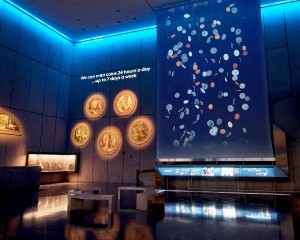
The new visitor lobby at the Philadelphia Mint
Eleven members of the media were invited to see the new tour area, access to the Mint floor, Mint employees, and other areas of the Mint not accessible by the public.
Tom Jurkowsky, Director of Public Affairs, was sure to point out that the project was, “on time and on budget.”
Finally, the Philadelphia Mint held an opening ceremony to 250 invited guests and Mint employees. Speaking at the ceremony included Associate Mint Director Dick Peterson and Treasurer of the United States Rosie Rios. The ribbon was cut by Rios flanked by Peterson and Jurkowsky.
You can download the brochure A Handbook to the Self-Guided Tour of the United States Mint [PDF] from the U.S. Mint’s website.
The U.S. Mint recently provided a video about the opening of the new tour area. You can watch it here:
Anyone attending the World’s Fair of Money next week in Philadelphia may want to consider taking the new tour and adding your comment about it here!
Jul 31, 2012 | BEP, currency, Eagles, US Mint
Although my collection consists mostly of coins, I have been branching out into some areas of currency. Other than collecting Israeli currency, I am not sure what direction I want to go. Since 2007, the Bureau of Engraving and Printing has issued a yearly $2 Single Note Collection where each folder has a $2 note from each of the Federal Reserve branches and the serial number begins with the year, allowing for only 10,000 collectibles per Fed branch (YYYY0000-YYYY9999). This year, the Single Note is just being issued for the Federal Reserve Band of Kansas City. This is not good for someone who has only purchased the notes from the New York Fed.
This year represents the sesquicentennial of the Bureau of Engraving and Printing. Formed as a result of the National Currency Act, the Department of the Treasury opened the National Currency Bureau in a basement office of the Treasury Building on August 29, 1862 to cut and manage the fractional currency that was being printed for the government. With the passage of the National Bank Act of 1863 centralizing currency production with the federal government, the office became its own bureau with a mission to print currency and other security documents. The name was changed a few times before it was settled on the Bureau of Engraving and Printing.
The U.S. Mint and the BEP have combined to sell the Making American History Coin and Currency Set to celebrate the 150th anniversary of the BEP and 220th Anniversary of the U.S. Mint. The set will contain a 2012-S American Silver Eagle Proof coin and a Series 2009 $5 note from the Federal Reserve Bank of San Francisco with a “unique serial number” that begins with “150.”
Sales of the set will be handled by the U.S. Mint and scheduled to begin on August 7, 2012, at 12:00 Noon. Sets will cost $72.95 with no purchase or production limits announced. Considering that the serial number is eight digits long, the de facto limit will probably be 100,000 sets.
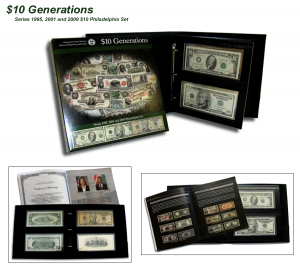
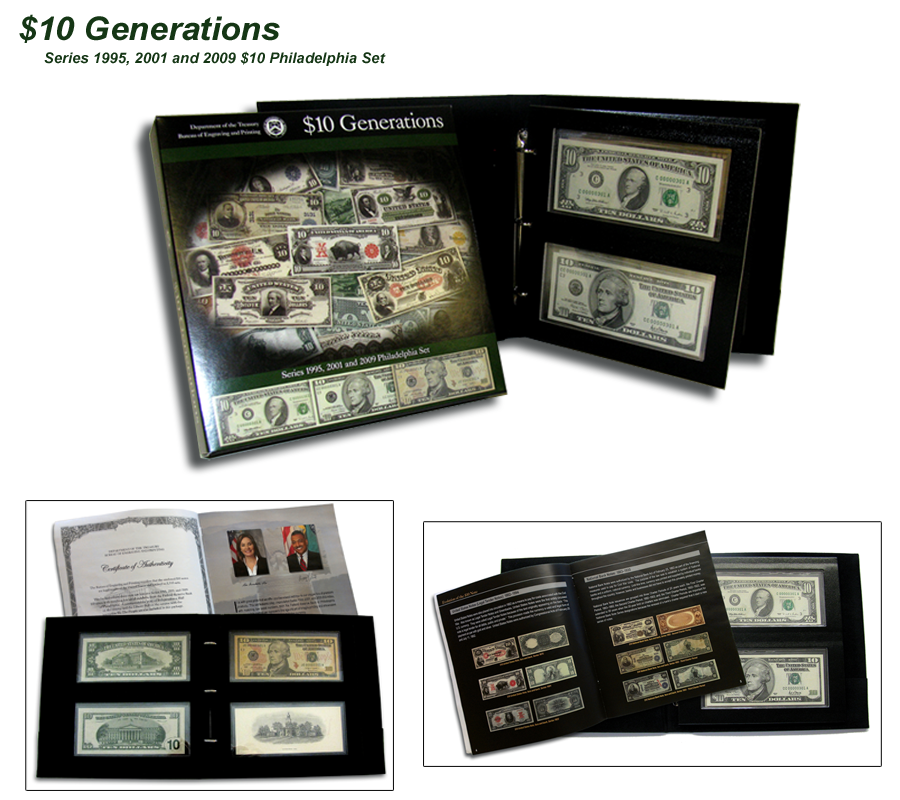
Limited edition, three-note set features Series 1995, 2001 and 2009 $10 notes, with matching low serial numbers, from the Federal Reserve Bank of Philadelphia.
BEP began printing the small-sized notes starting in 1928 with the Series 1929 notes. Since then, the basic designs had note changed until the re-design effort that began in 1996. The $1 Federal Reserve Note continues to use the design similar to that first circulated in 1929.
The set will be in a leatherette binder with the notes stored in acid-free polymer sleeve. Included in the set will be a commemorative print of Independence Hall with the Liberty Bell and “We the People” on the reverse. It will also include a booklet about the history of the $10 note since 1861.
Sales will begin on August 7, 2012. There will be a limit of 3,333 set priced at $149.95, $135 for purchasing ten or more with a 25 set purchase limit the first week.
Since August 7 is the first day of the World’s Fair of Money in Philadelphia, I wonder if the U.S. Mint and the Bureau of Engraving and Printing will have sets there for sale?
Jul 30, 2012 | BEP, coins, currency, education, legislative, policy, US Mint
There has been a lot of legislation passed by Congress that affects the coin and currency production in the United States. While some of it has been as mundane as changing the composition of coins or the approval of a commemorative coin, there are some that has had a significant impact on coin and currency production. Here is a list of those laws that had a major impact.
- Coinage Act of 1792
- The first coin-related law passed by congress and signed by President George Washington on April 2, 1792, establishes a mint, says that congress is the regulating authority of coins, and establishes the dollar as the unit of money. It made the United States one of the first countries to use a decimal system for currency and established legal tender laws. It is the foundation for the creation of the money production in the United States.
- Act of April 10, 1806
- This act regulates the legal tender value of foreign coins used in the United States.
- Act of April 21, 1806
- This act establishes the penalty for counterfeiting coins to be between three and five years of hard labor. Although there was no law regarding counterfeiting coins before this act, it was assumed that penalty was death because of the statements printed on colonial currency.
- Coinage Act of 1834
- This act changed the ratio of silver-to-gold weight from 15:1 that was established in the Coinage Act of 1792 to 16:1, setting the price of an ounce of gold to $20.67. This was done to strengthen the financial system after the Panic of 1833 and stem the tide of paper currency in favor of “hard money.” President Andrew Jackson signed this bill into law on June 27, 1834.
- Coinage Act of 1849
- Signed into law by President James K. Polk as one of his last acts as president on March 3, 1849, it established the use of gold for a $1 coin and the $20 gold double eagle coin. This act also refined the variances that were permissible for United States gold coinage. This act came largely because of the California Gold Rush.
- Coinage Act of 1857
- Signed into law by President Franklin Pierce February 21, 1857, this act repealed the legal tender status for foreign coins in the United States. It required the Treasury to exchange foreign coins at a market rate set by Treasury. This act discontinued the half-cent and reduced the size of the one-cent coin from 27mm (large cent) to the modern size of 19.05mm (small cent) that is still being used today.
- National Bank Act of 1863
- Originally known as the National Currency Act and signed into law by President Abraham Lincoln on February 25, 1863, it created a single currency standard for the United States where the notes would be backed by the United States Treasury and printed by the federal government. The result of this act lead to the establishment of the National Currency Bureau which was later rename to the Bureau of Engraving and Printing.
- Coinage Act of 1864
- This act changed the composition of the one-cent coin to bronze (0.95 copper, 0.05 tin and zinc) from 0.88 copper and 0.12 nickel. It authorized the minting of the two-cent coins with the motto “In God We Trust” to appear the first time on a United States coin. President Abraham Lincoln signed this act into law on April 22, 1864.
- Coinage Act of 1873
- Sometimes referred to as the “Crime of ’73,” demonetized silver and set the standard for gold as the backing of the national currency. This act placed the U.S. Mint under the jurisdiction of the Department of the Treasury and officially established four branch mints at Philadelphia, San Francisco, Carson City, and Denver. Two assay offices were established in New York and Boise City, Idaho. The act also ended the production of the half-dime, silver three-cent piece, and two-cent coin. President Ulysses S. Grant signed this act on February 12, 1873.
- Bland-Allison Act
- Named for Rep. Richard P Bland (D-MO) and Sen. William B. Allison (R-IA), the act required the Treasury Department to buy silver from western mines and put them into circulation as silver dollars. The act authorized the striking of the Morgan Dollar. President Rutherford B. Hayes vetoed the bill but congress overrode his veto on February 28, 1873.
- Sherman Silver Purchase Act
- Signed into law by President Benjamin Harrison on July 14, 1890 and named for Sen. John Sherman (R-OH), the law increased the amount of silver the government was required to purchase from western silver mines.
- Federal Reserve Act of 1913
- President Woodrow Wilson signed the Federal Reserve Act into law on December 23, 1913 that allowed the creation of the Federal Reserve System as the central bank of the United States. It also granted the Federal Reserve authority to issue Federal Reserve Notes and Federal Reserve Banknotes.
- Pittman Act
- Named for Sen. Key Pittman (D-NV) and signed into law by President Woodrow Wilson on April 23, 1918 authorized the conversion of up to 350 million silver dollars into bullion for sale or to be used to strike subsidiary coinage. The act required the government to buy all silver mined in the United States at a fixed price of $1 per ounce above market rate.
- Gold Reserve Act of 1934
- Even though Franklin D. Roosevelt as part of Executive Order 6102 ordered the withdrawal of gold from the economy on April 5, 1933, there was one challenge and one reissue of the executive order. Congress felt that the executive order needed codification and passed this act on January 30, 1934. Roosevelt signed the law the same day. The law withdrew all gold and gold certificates from circulation and outlawed most private possession of gold with the exception of some jewelry and collector coins. This act established the nominal price of gold to $35 per troy ounce.
- Public Law 84-851 (70 Stat. 732, H.J.Res. 396)
- On July 30, 1956, this law established the national motto of the United States to be “In God We Trust.” While the motto appeared on most coins of the time, the Bureau of Engraving and Printing phased it in on currency between 1957 and 1965.
- Coinage Act of 1965
- In response to the coin shortages caused by the rising silver prices, the act eliminated silver from circulating dimes, and quarters while reducing the amount of silver used to strike half-dollars from 90-percent to 40-percent for five years. After five years, the half-dollar would be struck using the same copper-nickel clad composition as the lower denominations. The act forbade the striking of silver dollars for five year ending an experiment with the striking of Peace Dollars in 1964. Finally, the act made all coins and currency produced in the United States and certain bank issues as legal tender–which reversed the 1876 demonetization of the Trade Dollar. Signed into law on July 23, 1965 by President Lyndon B. Johnson, it is seen as the dividing line between “classic” and “modern” coinage.
- Hobby Protection Act or 1973
- Signed into law by President Richard Nixon on November 29, 1973, this act requires that replica collectibles, including coins, be marked “plainly and permanently” with the word “COPY” to indicate that the item is not genuine. This act grants the Federal Trade Commission permission to take action against suppliers who violate this act.
- Statue of Liberty-Ellis Island Commemorative Coin Act—Title II: Liberty Coins
- Signed by President Ronald Reagan on July 9, 1985, Title II of this act allowed for the U.S. Mint to establish the American Eagle Silver Bullion Program.
- Gold Bullion Coin Act of 1985
- A few months after the passage of the act to allow for silver bullion coins, this act was enacted on December 17, 1985 that lead to the establishment of the American Eagle Gold Bullion Program.
- 50 States Commemorative Coin Program Act
- Considered one of the most significant act affecting circulating coinage since the Coinage Act of 1965, this act lead to the very successful 50 State Quarters Program. Section 4 of the act, named the “United States $1 Coin Act of 1997” changed the composition of the one dollar coin to be “golden in color” which lead to the creation of the Sacagawea “Golden” Dollar. President Bill Clinton signed this bill into law on December 1, 1997.
Jul 15, 2012 | commemorative, foreign, history, US Mint
For over 80 years since its founding, the U.S. Mint worked to increase production for it to be the sole supplier of coins for the young country. During that time, foreign coins, specifically the Spanish Milled Dollar (8 Real silver coin) was legal tender and served daily commerce. Congress revoked their legal tender status with the passage of the Coinage Act of 1857 making the U.S. Mint the sole supplier of coins in the United States.
Although the U.S. Mint was supposed to be building to supply the country with coins, it was taking on contract minting since it was the only entity with the ability to strike high quality medals. The first record of producing medals for someone other than the government was in 1833 for the American Colonization Society, a group whose purpose was to transport free-born blacks and emancipated slaves back to Africa and settle what today is known as Liberia.
Congress authorized the U.S. Mint to strike circulating coinage for foreign governments with the passage of the Act of January 29, 1874, “Provided, That the manufacture of such coin shall not interfere with the required coinage of the United States.”
The first legal tender coins produced for a foreign government was struck at Philadelphia for the Venezuelan government in 1875-1876 dated 1876-1877. The last circulating foreign coins were struck for Panama in 1983 when congress revoked the authorization because it began to interfere with domestic coin production.
The last time a coin was struck for a foreign country was in 2000 when the Leif Ericson commemorative silver coins were produced for domestic sales and for Iceland. The Iceland coin was struck with a face value of 1,000 Krónur.
Between the first coins struck for Venezuela and the Leif Ericson Commemorative Coin for Iceland, the U.S. Mint produced 1,127 coin types, not including varieties, for 43 countries. Coins were produced in gold, varied fineness of silver, bronze, brass, copper-nickel, nickel, steel, aluminum, and steel. Foreign coins were produced at Philadelphia, Denver, San Francisco, New Orleans, West Point, and Manila.
After the Philippines became a colony of the United States, the U.S. Mint established a branch mint in Manila in 1920. It is the only branch mint outside of the continental United States. Coins struck in Manila used the “M” mintmark making it the first foreign coin produced with a U.S. mintmark. The first foreign coins struck with a mintmark from one of the continental U.S. branch mints was the “P” that appeared on four different foreign coins in 1941. However, these were not the first time a foreign coin was identified as being struck in Philadelphia. In 1895, the word “PHILADELPHIA” was incorporated into the design of the reverse on the Ecuadorian 2 decimos coin.
Jul 13, 2012 | coins, education, history, US Mint
A mintmark is part of the coin design that tells which mint the coins were produced. Using mintmarks to identify where coins were made began in ancient Greece. Coins that were released into circulation were required to have a “Magistrate Mark,” a distinct mark representing the magistrate in charge of producing the coin. If a coin was to have problems, whether by accident or on purpose, the government knows who the responsible party was.
Mintmarks were first used in ancient times as a quality control mechanism. If a coin did not fit the specifications (under or overweight, not the right metal, etc.) it was easy to identify where the coin was made.
Another type of mark made on non-United State coin is a privy mark. A privy mark is a small design added to the coin to identify the where the coin was made, the coiner responsible for the coin, or some other aspect of the coin’s production for quality control purposes. Privy marks fell out of favor in modern times and countries with multiple branches use lettered mintmarks. Some mints use privy marks to differentiate different types of non-circulating legal tender coins.
Mintmarks used on United States coins are as follows:
P: Philadelphia, Pennsylvania (1793-present)
The U.S. Mint was formally founded with the passage of the Mint Act of 1792. David Rittenhouse, the first Mint Director, was able to find a building in Philadelphia and begin operations in 1793. The first mint building served the country until 1833. The second mint building served from 1833-1901 and was demolished in 1902. The third mint was in service from 1901-1969. The building is now part of the Community College of Philadelphia. The fourth mint, located two blocks from the location of the first mint building, was opened in 1969 and continues to be used today. Up until 2009, it was the largest mint building in the world. However, no other mint in the world produces more circulating coinage than the Philadelphia mint.
All coins struck in Philadelphia from the founding of the Mint in 1793 until 1980 did not include a mintmark. The exception was the Type 2 Jefferson Nickels minted using the wartime alloy from 1942-1945. Coins struck using the silver-copper-manganese alloy feature a large mintmark above Monticello, including a “P” for Philadelphia.
In 1979, Susan B. Anthony dollars struck in Philadelphia included the “P” mintmark.
Beginning in 1980, all coins struck in Philadelphia, except for the Lincoln Cent, includes the “P” mintmark.
C: Charlotte, North Carolina (1838-1861)
Charlotte became the first branch mint outside of Philadelphia. Authorized in 1835 following the gold strike at the Reed Gold Mine, it first became operational in 1838. The Charlotte branch mint was closed when the building was seized by the Confederacy during the Civil War in 1861. It was not reopened after the war. The Charlotte Mint’s “C” mintmark only appears on gold coins.
D: Dahlonega, Georgia (1838-1861)
The Dahlonega Branch Mint was authorized by congress in 1837 after the Georgia Gold Strike. It opened for production in 1838. Like the Charlotte Mint, the Dahlonega Mint was seized by the Confederacy during the Civil War in 1861 and was never reopened. Gold coins dated 1838-1861 with the “D” mintmark were struck in Dahlonega. Coins with the “D” mintmark starting in 1906 were struck in Denver.
O: New Orleans, Louisiana (1838-1861 and 1879-1909)
The branch mint at New Orleans was authorized by congress in 1836 as part of a discussion to make New Orleans a central trading gateway to the Midwest. This branch mint struck all denominations with the “O” mintmark. In 1861, the building was seized by the Confederacy and used by the Confederate government to strike coins. The Union Army recaptured New Orleans and the building in 1862. Unlike Charlotte and Dahlonega, the New Orleans Mint was eventually reopened. Its second life began as an assay office in 1876. With the passage of the Bland-Allison Silver Act of 1878, the building was refurbished to bring it back to coining standard and was used to strike silver coins, mostly dollars, until 1909. It was closed for the last time in 1909 with production down and Denver taking over the production load.
S: San Francisco, California (1854-1955 and 1968-present)
The San Francisco branch mint was opened in 1854 to assay and coin gold discovered during the California Gold Rush. The first building, known as the “Granite Lady,” was one of the few buildings to survive the Great San Francisco Earthquake of 1906. During the aftermath of the earthquake, Superintendant Frank Leach helped local residents by allowing them to use the grounds as a refuge. A new building was opened in 1937 and celebrated its 75th anniversary in 2012. Today, the Granite Lady is being refurbished as the Museum of San Francisco.
San Francisco produced circulating coins with the “S” mintmark until 1955 when production was suspended and the facility was “downgraded” to an assay office. Production of proof coinage was transferred to San Francisco in 1968 and they began to strike some coinage for circulation until 1974. Since 1975, San Francisco produced only proof coins along with cents without mintmarks to supplement production from Philadelphia. It is not possible to distinguish from no mintmark cents from either mint. San Francisco also produced circulating Susan B. Anthony dollars 1979-1981 with the “S” mintmark. They were granted mint status in 1988.
CC: Carson City, Nevada (1870-1893)
After the major discovery of silver as part of the Comstock Lode in what is Virginia City today, politicians lobbied congress for the formation of a branch mint to assay and strike coins. Congress authorized a mint in 1868 for nearby Carson City and the building was opened for production in 1870. The Carson City branch mint struck silver and gold coins but in lesser amounts than the other mints, making their coins highly collectible and more expensive because of their rarity. The “CC” mintmark is the only two-character mintmark used on U.S. coins.
Production ended in 1893 with the reduced production from nearby silver mines. Starting in 1895 the building served as an Assay Office until the gold recall of 1933. The building was sold to the State of Nevada in 1939 and was turned into the Nevada State Museum.
D: Denver, Colorado (1906-present)
During the Pikes Peak Gold Rush, congress authorized the opening of a Denver assay office in 1863. Congress authorized the building of a branch mint in 1896 and construction began in 1898. Operations from the assay office were transferred to the new building in 1904 and the mint started to strike circulation coins in 1906. Denver struck gold coins until 1933 when gold was recalled. All coins with the “D” mintmark struck since 1906 were minted in Denver. Earlier gold coins dated 1838-1861 were struck in Dahlonega, Georgia.
W: West Point, New York (1976-present)
In 1937, the Treasury built a facility on the northern part of the campus of the U.S. Military Academy to store silver. Originally, it was called the West Point Bullion Repository and was nicknamed as “The Fort Knox of Silver.” From 1968-1973, West Point produced cents without a mintmark in order to supplement the production from Philadelphia. They also produced Bicentennial and Washington Quarters 1975-1979 without mintmarks.
The “W” mintmark first appeared on the 1983 Olympics Commemorative Coins. West Point produces coins for the American Eagle Bullion program without mintmarks but produces collectable versions of the American Eagle with the “W” mintmark. Other commemoratives have been struck at West Point that includes the “W” mintmark.
The same bill that returned the San Francisco branch mint back to mint status in 1983 granted mint status to the West Point branch mint.
M: Manila, Philippines (1920-1941)
After the Philippines became a colony of the United States, the U.S. Mint established a branch mint in Manila. It is the only branch mint outside of the continental United States. The mint opened in 1920 and produced coins in one, five, ten, twenty, and fifty centavo denominations. Coins struck by this mint bear either the “M” mintmark or no mintmark.
May 29, 2012 | coin design, coins, legislative, US Mint
As our 35th President, John Fitzgerald Kennedy became the youngest person to ever be elected as President and the first Roman Catholic. At 43, Kennedy was the promise of a new future; a new vision that would have the United States leading the world in fighting the “common enemies of man: tyranny, poverty, disease, and war itself.” In his inaugural address, he called the nation to arm when he said, “Ask not what your country can do for you, ask what you can do for your country.”
From standing up to the Soviet Union’s Nikita Khrushchev, to the success in defense of the nation during the Cuban Missile Crisis, to the failures of the Bay of Pigs, the starting of the Peace Corps, and challenging the United States’ resolve using the space program by proclaiming, “We choose to go to the Moon in this decade and do the other things, not because they are easy, but because they are hard.” In over two years, Kennedy made an impact on this country in such a short period of time that one can wonder what would had happened if….
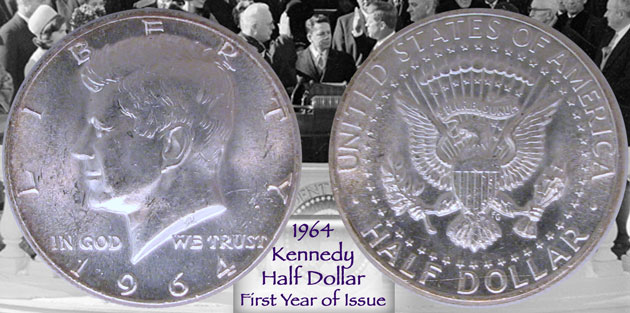 A few days after Kennedy’s assassination on November 22, 1963, U.S. Mint Director Eva Adams, Chief Engraver Gilroy Roberts reported that there was discussions about putting Kennedy’s portrait on a silver coin. Since Jacqueline Kennedy did not want to replace Washington’s portrait on the quarter, it was decided to use the half-dollar. Roberts used models from the inaugural medal for the obverse design and Assistant Engraver Frank Gasparro prepared the reverse design using the Presidential Seal.
Since the law stated that coinage design could not be changed more often than 25 years, and that the Franklin Half was only 15 years old, it required Congress to authorize the change. The Act of December 30, 1963 (Public Law No. 88-253) allowed the design to be changed.
When the coin was released in 1964, the 90-percent silver coin was saved by a grieving nation wanting something that represented the fallen President. Over 273 million coins were struck in Philadelphia and 156 million in Denver. The composition was changed in 1965 with the introduction of clad coinage. Half dollars consisted of 40-percent silver that included a core made from 79-percent copper and 21-percent silver. In 1971, the composition was changed to current copper-nickel clad that is in use today.
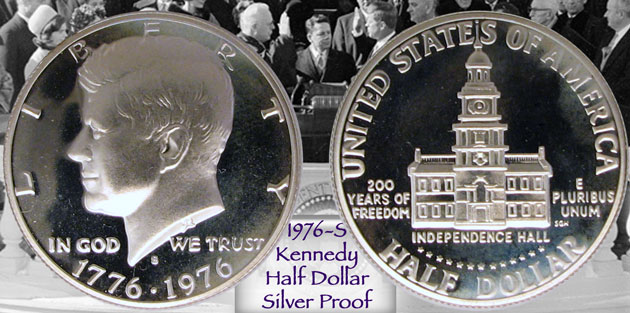 There has been one design change to the coin and that occurred in 1975 and 1976 in honor of the American Revolution Bicentennial. A special reverse depicting Independence Hall in Philadelphia was designed by Seth G. Huntington. For both years, the obverse featured the dual date 1776-1976 in celebration.
John F. Kennedy would have been 95 years old on May 29, 2012.
May 25, 2012 | Eagles, national park quarters, silver, US Mint, video
This week, the U.S. Mint branch in San Francisco opened its doors for the press in honor of the facility’s 75th Anniversary. Reporters were given a tour of the production lines and spoke with employees of the U.S. Mint about upcoming collectibles.
Here is the story that appeared on KTVU, Channel 2 in San Francisco (commercial embedded by KTVU):
The U.S. Mint has clearly increased production to meet a potential demand for the American Silver Eagle Proof set with both regular proof and reverse proof coins for the upcoming sale. In the video we see a lot of silver planchettes and a few racks of beautiful silver coins. A pair are shown to the camera including the reverse of the reverse proof.
We also learned that the San Francisco Mint is striking circulation quality (business strikes) National Parks Quarters that will be distributed in special collectibles. These coins will not be added into circulation.
San Francisco Mint Plant Manager Larry Eckerman made an unfortunate mistake when he said that there has not been any S mintmark coins in circulation since the early 1950s. Collectors of Lincoln Cents can tell you that S mintmark cents were issued starting in 1968 through 1974.
The 2012 American Eagle San Francisco Two-Coin Silver Proof Set goes on sale starting June 7, 2012. Coins will be minted to demand based on sales through the end date of July 5, 2012. Price will be determined prior to sale and based on the cost of silver. Here’s to hoping that silver prices drop between now and June 7!
Video courtesy of KTVU San Francisco.
Apr 27, 2012 | celebration, Eagles, silver, US Mint
The San Francisco Branch of the U.S. Mint first opened in 1857 to serve the coinage needs caused by the California Gold Rush. With the population growth in California and the demand for coins the Mint out grew the building and built a new Mint that was opened in 1874.
The new building was built beyond specification to be secure based on the known risks of the times. One worry about the new building was preventing the ability for someone to break into the building by tunneling into the basement. To prevent this, the foundation and basement were made with granite. Although the above ground structure was built using sandstone, the building earned the title “Granite Lady” following the 1906 San Francisco Earthquake when it survived with only a few exterior cracks.
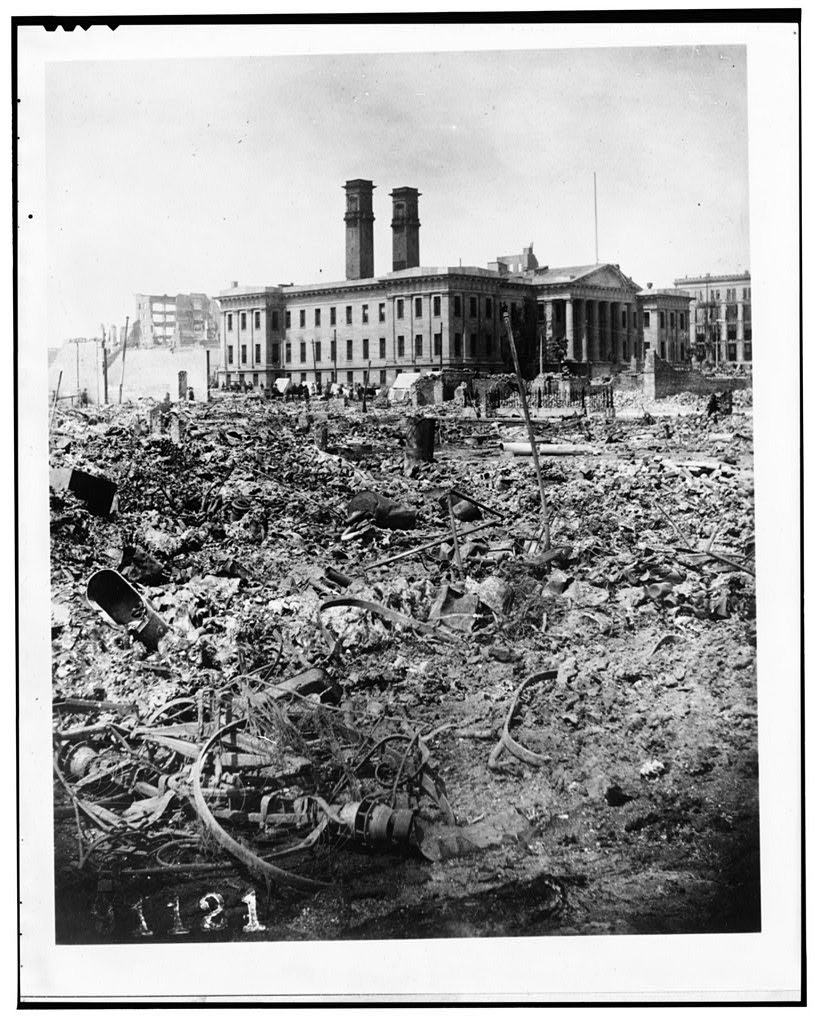
The Granite Lady was the only building in its area to survive the destructive force of the quake. After the earthquake, the Mint Superintendent Frank Leach and his staff used the building and the grounds to assist with the rescue and housing effort after the earthquake. A tent city was built around the Mint and stayed until there were places for them to move.
Production continued with coins bearing the familiar “S” mintmark. Amongst the coins struck at The Granite Lady is the famous 1909-S VDB Lincoln Cent. The year after producing only 309,000 1908-S Indian Head Cents, the San Francisco Mint geared up to increase the production of the newly introduced Lincoln Cent. As the new coins landed in circulation, there was an outcry over the large “V.D.B” initials on the reverse for designer Victor David Brenner, the Mint stopped production of the coins. The Mint in San Francisco stopped after production of 484,000 of these cents, making it one of the most desired collectibles and a key date in the Lincoln Cent series.
As what happened after the San Francisco Branch Mint opened, they began to outgrow The Granite Lady. At the same time that congress authorized $524,000 to build the Bullion Repository at Fort Knox in 1935, they authorized $1.225 million to build the new San Francisco Mint.
The state of the art facility was built as a fortress with two-foot reinforced concrete walls to protect the vaults, a pistol range on the fifth floor, and tear gas pipes throughout the building for security. Also included in the construction was a generator to operate the electricity in case the power was cut to the building. When it opened, there was a plumbing shop, carpentry shop, and a blacksmith shop to support operations.
San Francisco’s new Mint opened in 1937 and became fully operational by 1938. It continued to strike circulating coins until 1955. In 1962, San Francisco was “downgraded” to an assay office. As an assay office, it struck circulating coinage starting in 1968 and ending in 1974. The San Francisco facility continued to strike proof coinage and added striking circulating Susan B. Anthony Dollars from 1979 through 1981.
Since 1981, the San Francisco Mint has struck Lincoln Cents for circulation to supplement the output of the Philadelphia Mint. It is not known how many cents San Francisco produced since their coins contained no mint mark and their inventory was included in the general reporting by the U.S. Mint without distinguishing between the facilities.
The San Francisco Assay Office was officially granted mint status again on March 31, 1988 as part of Public Law No. 100-274. That law also granted mint status to Silver Bullion Depository at West Point.
To celebrate the 75th Anniversary of the “new” San Francisco Mint, the U.S. Mint will sell a two-coin American Silver Eagle Proof set struck at the San Francisco Mint featuring the “S” mintmark. The set will include one regular proof and one reverse proof coin in a special presentation case.
In an attempt to avoid the problems of the past, the U.S. Mint will take pre-orders for the set and strike as many as collectors purchase. The U.S. Mint is likely to limit the number of sets sold during the pre-sale period, but there will be no limits on the number of sets produced.
The San Francisco Mint will begin to strike American Silver Eagle Proof coins on May 11 and will host a public ceremony on May 15. This set be on sale only during the period of June 7, 2012, to July 5, 2012 with mintage limits is being reported as “to demand.” Price has yet to be announced.
The American Silver Eagle Reverse Proof has to be one of the best looking coins produced by the U.S. Mint in the last 50 years. Aside from using the Adolf A. Weinman Walking Liberty design, which is one of my favorites, the shiny relief over the matte field really makes the design pop.
With the current American Silver Eagle Proof coin selling for $59.95, it is possible that the San Francisco set would be priced around $120. However, I think the set price may be set to $99.95 to increase sales and show some good will to collectors, especially those that were shutout of purchasing the 25th Anniversary Silver Eagle Set.
As an aside, the 100,000 unit 25th Anniversary set sold for $299.95. Recent price guides show that the set is selling is worth $825. Since the U.S. Mint plans to strike “to demand,” it is unlikely the San Francisco Anniversary set will see that kind of increase on the secondary market.
Image of the San Francisco Mint after the 1906 Earthquake courtesy of the Library of Congress.
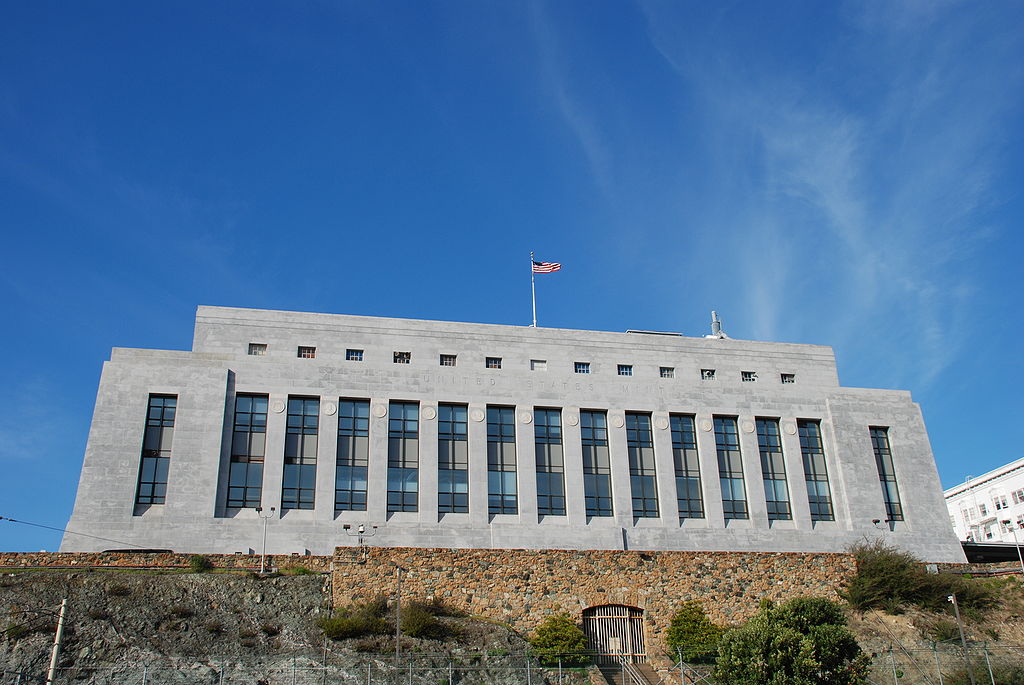
Image of the new San Francisco Mint courtesy of Wikipedia.
Image of the San Francisco 75th Anniversary Silver Eagle Set courtesy of the U.S. Mint.
Apr 13, 2012 | BEP, education, history, US Mint, video
Originally released on March 30, 2012 and updated on April 12, the Department of the Treasury updated their video honoring the history of women working for the U.S. Mint and the Bureau of Engraving and Printing over its history. The video also honors the 220th Anniversary of the U.S. Mint and the 150th Anniversary of the BEP.
Introduced by Treasurer of the United States Rosie Rios, the video shows how both the U.S. Mint and the BEP have a history of providing opportunities for women since each agencies founding.
Considering that women were considered second class citizens in the 18th century, it is amazing to find out that within two years the U.S. Mint hired two women to be adjusters. When the BEP was founded in 1862, women were hired alongside men and held the majority of positions within four years. I do not think any other agency in the U.S. government has a similar recrod.
Mar 22, 2012 | dollar, US Mint
The U.S. Mint announced that they are creating four new numismatic product options for the Presidential $1 Coin program. For collectors, the U.S. Mint is adding a “Four Coin Set” for $9.95, a 100-coin bag for $111.95, 250-coin box for $275.95, and a 500-coin box for $550.95. The bulk options will cotton unmixed coins of each design.
All previous products will remain including the Presidential $1 Coin & First Spouse Medal Set, First Day Coin Covers, along with the proof and uncirculated sets. Also continuing are the coin rolls of the Presidential and Native American dollars.
The Presidential $1 Program continues on April 5 with the release of the coin honoring Chester A. Arthur, our 21st President.
Arthur’s wife, Ellen Lewis Herndon “Nell” Arthur, died from pneumonia in 1880. When Arthur became president after President James A. Garfield died on September 19, 1881 from the assassination attempt on July 2, 1881.
Although Arthur was a widower during his administration, the U.S. Mint will not be issuing an Arthur “Liberty” coin as part of the First Spouse Gold Coin Series. The Presidential $1 Coin Act of 2005 (Public Law 109-145 [Text] [PDF]) requires the U.S. Mint to issue a coin honoring Alice Paul, a leading suffragist who was born on January 11, 1885, during the Arthur administration.
The U.S. Mint has not announced when the Alice Paul Gold Coin will be available.
The public will not be able to order rolls of 2012 $1 coins from the banks since the Federal Reserve will not be taking delivery of new $1 coins. Orders to banks will be filled from existing storage consisting of $1 coins struck from 2007 through 2011. Since the U.S. Mint will be selling $1 coins for $1.11 as part of their bulk sales (bags and boxes), look for these coins to be priced $1.75 to $2.50 from dealers.



 Loading ...