On November 6, two weeks ago, the United States held an election and it resulted in basically no change in the political structure. President Barack Obama was re-elected, the House of Representatives is still being lead by the Republicans and the Senate by the Democrats. Leadership in both chambers should not change.
For numismatists, there will be one change in the 113th Congress with the retirement of Ron Paul (R-TX) who is currently Chairman of the Financial Services Subcommittee on Domestic Monetary Policy and Technology, the subcommittee that oversees the U.S. Mint. There will also be a change on the leadership of the Financial Services Committee itself with the retirement of Barney Frank (D-MA), the Democrats will have to select a ranking member. There is no speculation as to who will replace these two retiring representatives.
In retrospect, after worrying about Paul becoming chairman of this subcommittee, the Financial Services Committee was able to maneuver around Paul’s usual intransigence by taking on legislation at the committee level rather than rely on the vetting of the subcommittee. In fact, because of Paul’s attempted run for the presidency, his absence made it easy for the committee to bypass his subcommittee.
There is still work for the 112th congress to do aside from the “fiscal cliff” and sequestration. H.R. 5977, the Collectible Coin Protection Act, still needs to be acted upon. The Collectible Coin Protection Act will allow collectors, dealers, and grading services to bring legal actions that are much more effective, with much stronger remedies than previously existed. It will allow those harmed to work with the Justice Department to bring criminal actions, where appropriate.
Now that congress is in their lame duck session, the only way H.R. 5977 can become law, is to have it considered under suspension of the rules and force an up or down vote. In order for the bill to be considered under suspension of the rules will be to have members of congress co-sponsor the legislation. At the time of this writing, there are 11 co-sponsors from both sides of the aisle. I urge all of my readers to support H.R. 5977 by asking their representative to co-sponsor H.R. 5977. If you can help, read the information I wrote for the posting “ANACS Revelation Shows We Continue to Have Counterfeit Problems” that describes how to contact your member of congress.
Bibiana Boerio was nominate to be the Director of the U.S. Mint.
Another bit of business left for the lame duck Senate is the nomination of Bibiana Boerio to be the 39th Director of the United States Mint. Although there has been no report of problems with her nomination, the partisanship battles in the Senate could cause a senator to threaten a filibuster to put her confirmation on hold. If Boerio is not confirmed by the final adjournment of the 112th Congress, President Obama will have to resubmit her nomination to the 113th Congress after it is seated on January 3rd.
An issue that will probably be deferred to the 113th congress will be the report to congress that is required under the Coin Modernization, Oversight, and Continuity Act of 2010, (Public Law No: 111-302 [Text] [PDF]). The law requires the U.S. Mint to produce a report about the metals used for coinage and alternatives two years from enactment. Since the law was signed by the president on December 14, 2010, the U.S. Mint is required to submit their report by December 14, 2012.
Adolph A. Weinman’s Winged Liberty Head “Mercury” Dime effigy to be used on the new palladium bullion coin.
Another issue that will also probably be deferred to the 113th congress will be the study of the viability of issuing palladium bullion coins. Under the American Eagle Palladium Bullion Coin Act of 2010 (Public Law No: 111-303 [Text] [PDF]), the U.S. Mint is supposed to study whether it is viable to produce palladium coins as specified under the Act. That report is also due to congress on December 14, 2012.
Although there is no report from the U.S. Mint as to the status of either report, it would be reasonably certain that the U.S. Mint will submit both reports by December 14. However, it would also be reasonably certain that the House Financial Services Subcommittee on Domestic Monetary Policy and Technology will leave it for the next congress’s agenda.
On February 25, 1863, President Abraham Lincoln signed the National Bank Act of 1863 that created a single currency standard for the United States where the notes would be backed by the United States Treasury and printed by the federal government. The result of this act lead to the establishment of the National Currency Bureau which was later rename to the Bureau of Engraving and Printing.
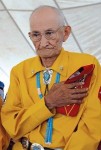
On October 31, 2012, President Ben Shelly of the Navajo Nationannounced that Navajo Code Talker George Smith passed away on Tuesday at 90 years old. As a tribute to Smith’s service, President Shelly ordered the Navajo Nation Flag to be flow at half-staff through sundown on November 4.
After learning that Japanese intelligence experts broke every code the United States armed forces could devise, Philip Johnston, a missionary who learned the difficult Navajo language, proposed to create a code based on that spoken-only language. Johnston recruited 29 Navajo native speakers and they devised a code based on the Navajo language that Japanese intelligence was never able to decipher.
From the 200 word code, it grew to over 600 words and required 400 additional native Navajo soldiers to help with the communications across the Pacific theater.
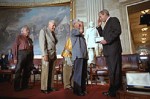
President George W. Bush presented the Congressional Gold Medal to Navajo code talkers on July 26, 2001.
The “Honoring the Code Talkers Act,” introduced by Senator Jeff Bingaman from New Mexico in April 2000, and signed into law December 21, 2000, called for the recognition of the Navajo code talkers. During a ceremony at the U.S. Capitol on July 26, 2001, the first 29 soldiers received the Congressional Gold Medal. The Congressional Silver Medal was presented to the remaining Navajos who later qualified to be code talkers.†
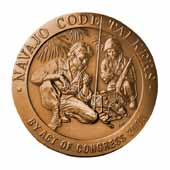
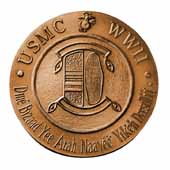
As part of the authorizing legislation, the U.S. Mint produced bronze versions of the medal for the public. These medals are no longer for sale by are still on sale at the U.S. Mint. [Correction complements of the Mint News Blog]
“This news has saddened me. Our Navajo Code Talkers have been real life heroes to generations of Navajo people. They have brought pride to our Navajo people in so many ways. The Nation’s prayers and thoughts are with the family at this time as they mourn the passing of a great family man who served his country and protected his people,” President Shelly said.
We are all saddened by the passing of this true American hero. May his family and friends take comfort and pride in his memory.
The 2000 Navajo Code Talkers Bronze Medal sold to collectors by the U.S. Mint
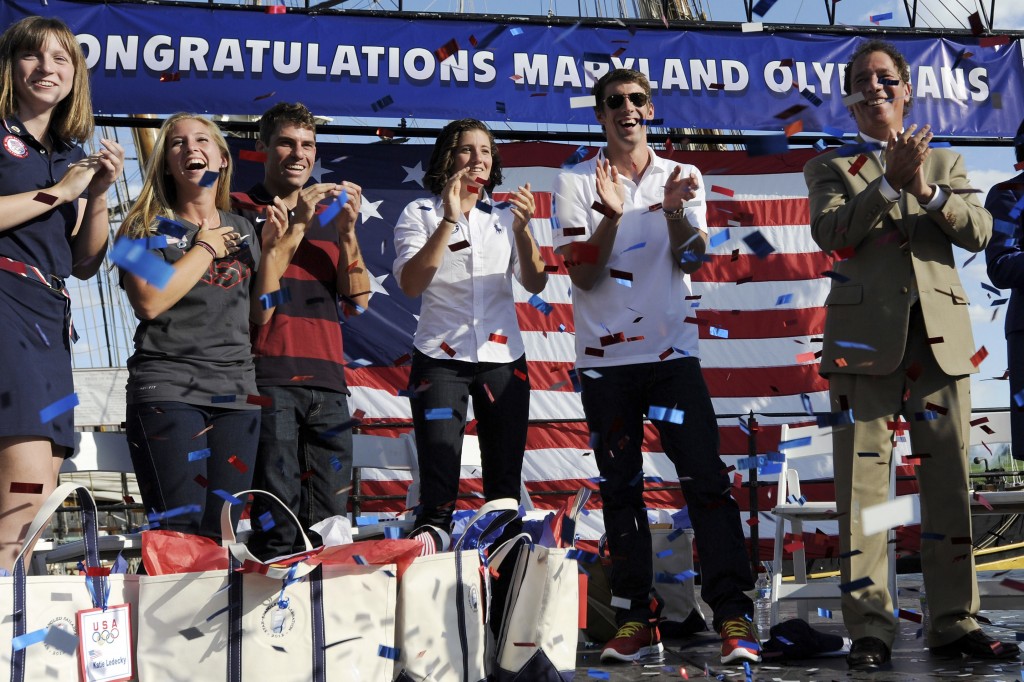
On the heels of their success in the London 2012 Olympic Games, Michael Phelps and other Olympic athletes from Maryland including Katie Ledecky of Bethesda and Suzanne Stettinius of Parkton were presented with a Star-Spangled Banner Commemorative Coin at a celebration held on Monday, September 10, 2012 at Baltimore’s Inner Harbor.
Michael Phelps, second from right, joins other Olympic athletes from Maryland, including Katie Ledecky, left, windsurfer Farrah Hall, second from left, and Suzanne Stettinius, third from right, and Baltimore County Executive Kevin Kamenetz, right, during a celebration of the achievements of Maryland Olympians. (Steve Ruark/AP Photo)
Olympian Michael Phelps shows his Star-Spangled spirit and receives a new piece of “metal” from Maryland Governor Martin O’Malley.
Maryland Governor Martin O’Malley, Baltimore Mayor Stephanie Rawlings-Blake, Baltimore County Executive Kevin Kamenetz, and Michael Phelps spoke at a ceremony honoring the achievements of Maryland Olympians. Following the remarks, Gov O’Malley present each athlete with a silver 2012 Star-Spangled Banner Commemorative Coin in honor of their hard work and determination at the Olympic Games.
“Our Maryland Olympians’ resolve to work hard, train and excel embodies the spirit of our state,” said Gov. Martin O’Malley. “It’s only fitting that we honor them with these 2012 Star-Spangled Banner Commemorative Coins, which pay tribute to Maryland’s vibrant people and extraordinary history.”
Star-Spangled Banner Commemorative held by the referee that was used at the Ravens-Browns game on September 10, 2012.
In addition, a Star-Spangled Banner Commemorative Coin was used for the coin toss at the Baltimore Ravens’ season home opener at M&T Bank Stadium. The Ravens beat the Bengles 44-13
“As we celebrate a variety of sports on Monday, the Star-Spangled Banner Commemorative Coin will serve as a symbol to our local athletes of Maryland’s historic tie in defending our freedom during the War of 1812,” said Ann Beegle, executive director of Star-Spangled 200 Inc., the non-profit affiliate of the Maryland War of 1812 Bicentennial Commission prior to the game. “Baltimore is home to the Star-Spangled Banner and we are pleased to recognize these athletes’ dedication with a historic symbol of our state.”
The 2012 Star-Spangled Banner Commemorative Coins, created in honor of the bicentennial of the War of 1812, exemplify the Star-Spangled Banner flag and Francis Scott Key’s poem, “The Defence of Fort McHenry” that became our national anthem. These are two of America’s most enduring icons. Coin sales will continue through December 17 and are only available through the United States Mint. The Star-Spangled Banner Commemorative coins can be purchased through the United States Mint website, at United States Mint kiosks in Washington, DC (Union Station, 50 Massachusetts Ave. NE and United States Mint Sales Counter, 801 9th Street NW) and at the Baltimore Visitor Center located at 401 Light Street, Baltimore, MD 21202.
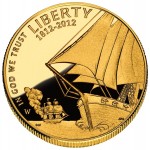
2012 Star-Spangled Banner Gold Commemorative Obverse depicts a naval battle scene from the War of 1812, with an American sailing ship in the foreground and a damaged and fleeing British ship in the background. Designed by Donna Weaver and engraved by Joseph Menna.
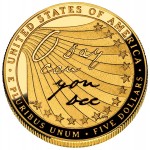
2012 Star-Spangled Banner Gold Commemorative Reverse Depicts the first words of the Star-Spangled Banner anthem, O say can you see, in Francis Scott Key’s handwriting against a backdrop of 15 stars and 15 stripes, representing the Star-Spangled Banner flag. Designed by Richard Masters and engraved by Joseph Menna.
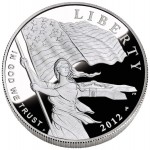
2012 Star-Spangled Banner Silver Commemorative Obverse depicts Lady Liberty waving the 15-star, 15-stripe Star-Spangled Banner flag with Fort McHenry in the background. Designed by Joel Iskowitz and engraved by Phebe Hemphill.
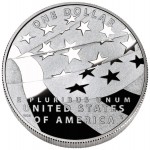
2012 Star-Spangled Banner Silver Commemorative Reverse depicts a waving modern American flag. Designed by William C. Burgard III and engraved by Don Everhart.
Proceeds from the sales ($35 for each gold coin and $10 for each silver coin) to support the Maryland War of 1812 Bicentennial Commission. The commission will use these funds to support its bicentennial activities, educational outreach, and preservation and improvement of the sites and structures related to the War of 1812. Help support the commission’s activities by purchasing a commemorative coin today!
Those of us here in the Washington, DC area who work with or for the Federal Government knows that this week is the home stretch to the end of the fiscal year. Many of us who work for the government are not directly involved with the political infighting that makes the national news. Federal employees are prohibited to be involved with politics by law and contractors usually have employer policies that limit their political activities.
One thing we worry about is the funding issues that have not been resolved. Although the news reported that congress has passed a continuing resolution to fund the government for six months, what the reports did not say is that the continuing funding are only at the levels negotiated last year which rolled back funding to Fiscal Year 2007 (FY07) levels. FY07 dollars do not have the same buying power as today’s dollars and the amount of work required by the laws passed by congress have increased.
You might have heard about the budget “sequestration.” Sequestration is the mechanism that was instituted as part of the Budget Control Act of 2011 to force congress to negotiate a budget or automatic, across the board cuts totaling $1.2 trillion will go into effect on January 1, 2013. Sequestration has made a lot of people in the DC area nervous because it will cause contractors to cut jobs. In fact, with the uncertainty of sequestration, large contractors, like Lockheed-Martin, are providing 90 day layoff notices they are required to give employees when defense and other security-related contracts are ended early.
For the money manufacturing operations under the Department of the Treasury, there should not be any problems from sequestration because the U.S. Mint and the Bureau of Engraving and Printing are profitable agencies that uses their profits for operations. If there are shortfalls in providing funding for operations, the Secretary of the Treasury is allowed to withdraw funds from the Public Enterprise Funds (the accounts where the profits are deposited).
Problems remain for both agencies. The most significant of the issues are the problems with printing the new $100 Federal Reserve Notes. BEP continues to report that the new notes have folding issues that have delayed their release for two years. Inquiries by numismatic industry news outlets have reported that the problems are still under investigation and that no new release date has been set.
The U.S. Mint recently reported striking problems with the First Spouse Gold Coins. Apparently, the design caused metal flow problems in trial strikes that caused delays in releasing the coins. While the U.S. Mint has said they rectified the problems, the coins have not been issued.
In addition to the coining problems, the U.S. Mint also suspended its attempt to update its technology infrastructure. After receiving the responses from a formal Request For Information (RFI), the U.S. Mint pulled back on its attempt to update its infrastructure and online ordering services to re-examine the requirements and the business processes that would be part of that contract. The U.S. Mint press office said that they had no further information other than what has been published. They did confirm that the RFI responses will not be released because they contain proprietary information that is protected from public release.
It is difficult to know whether the federal budget situation will effect the U.S. Mint and BEP or whether the attempt to reduce costs in order to ensure they do not access more money from their respective Public Enterprise Funds. This is because money in excess of budgeted operations plus a reserve must be withdrawn from these Public Enterprise Funds and deposited in to the general treasury accounts at the discretion of the Secretary of the Treasury (31 U.S.C. § 5136 for the U.S. Mint and 31 U.S.C. § 5142 for the BEP). It is reasonable to question the management of these funds in the light of the federal budget situation.
Right now, the way the BEP and the Federal Reserve has handled the situation with the new $100 note suggests there is more to that issue than meets the eye. Nether the BEP or the Fed are answering question and the BEP did not issue an annual report for 2011 which would have to report on the production of the $100 notes. Inquiries to the BEP were returned with a reply that the report “is not ready.”
The annual reports for both these bureaus will make for interesting reading, if the BEP produces one for 2012.
For the 31 years prior to her entry into politics, Boerio worked for Ford in corporate finance where she became the Chief Financial Officer of Ford Motor Credit in 2000. In 2004, Boerio was named Managing Director of Jaguar Cars Ltd., then a subsidiary of Ford.
Boerio, who is a native of Latrobe, Pennsylvania, earned a Bachelor of Science from Seton Hall University and an Master of Business Administration from the University of Pittsburgh.
Moy announced his resignation in December 2010 and left in early January 2011. For 21 months the U.S. Mint has been without a permanent director. With a little more than a month to go until the election and the results in doubt, it is curious as to why this appointment was made now. It is doubtful the Senate will take up this nomination before adjourning next week to allow members to return to their states to campaign.
Every week, Heritage Auctions sends out an email newsletter from their various auctions. Saturdays, they send out a newsletter about their coin auctions. While the newsletter is mostly about their upcoming auction and tips for using their website, there are some interesting tidbits that make it worth reading. One of the interesting features is the interactive section toward the end of the note.
Up until recently, the interactive section was more of a numismatic trivia-type of section where they asked two questions. You selected your answers and clicked through to their site to see how you did compared to others. Recently, Heritage changed the section to be a poll. This week’s question (copied so you can participate):
This got me thinking as to why were these coins chosen out of all of the possible modern commemoratives. Two are based on classic designs: 1999 George Washington Commemorative $5 gold coin was based on the design that Laura Gardin Fraser submitted for the design of the 1932 Washington Quarter that was turned down by then Secretary of the Treasury Andrew Mellon, a known misogynist; the 2001 American Buffalo Commemorative Silver Dollar was based on James Earle Fraser’s Type 1 Buffalo Nickel design. James Earle Fraser and Laura Gardin Fraser were husband and wife.
The 1992 Olympic Silver Dollar features a baseball pitcher that is similar to the image of Nolan Ryan that appeared on the 1991 Fleer baseball card. Although designer John Deecken denied the connection, the coin is sometimes referred to as the “Nolan Ryan Commemorative.”
One of the significant attributes of the 1999 Dolley Madison Silver dollar is that the coin was designed by Tiffany & Co., the famous jewelry company, whose moniker “T&Co” appears on the coin as the designer. It marks the first time that a private company’s name appears on a United States coin.
Finally, the 2000 Library of Congress $10 Bimetallic Commemorative Coin is the only coin featuring this type of bimetallic composition. The coin features an outer ring made of gold surrounding a center made from platinum.
As I looked at the list, I knew that the 2001 Buffalo Dollar would be the most popular even though I think the 2000 Library of Congress Bimetallic commemorative is the most unique. But why these coins? The U.S. Mint has issued a lot of commemorative coins with great designs since restarting the commemorative coin program with the 1982 George Washington Half Dollar with the 2012 Star Spangled Banner coins being the most recent.
Since I am not a collector of commemorative coins, I was thinking that if I had to choose five coins what would I have chosen and why. Here is my list (in date order):
1982 George Washington Half Dollar because it is the first of what we consider the modern commemorative period.
2000 Library of Congress $10 Bimetallic Commemorative Coin because it is the only bimetallic coin of its type made by the U.S. Mint.
2001 American Buffalo Commemorative Silver Dollar because it is similar to the design of the Buffalo nickel, one of my favorite coins.
2008 Bald Eagle Half Dollar with the obverse showing two baby eaglets and an egg in an eagle’s nest with the reverse an image of the Bald Eagle “Challenger.” This coin shows the continuing of the Bald Eagle like the continuing of the nation. I love the symbolism.
2012 Star Spangled Banner Silver Dollar screams “United States of America!”
I do own a 2012 Star Spangled Banner Proof Silver Dollar.
As we look at remembering those who died 11 years after the attacks on New York, Washington, and those who brought that plane down in Shanksville, Pennsylvania, the U.S. Mint published a video where they interviewed members of the die and polishing department about their part in the making of the 2011 September 11 National Medal.
It may also be time for congress to do something bipartisan and create a medal to raise funds for the Flight 93 National Memorial that will be erected in Shanksville. With the museum in New York and The National 9/11 Pentagon Memorial, it will complete the honor of those who died on that day. Then we can work on a memorial to honor the military who have shouldered the burden since.
First, the U.S. Mint’s product offerings do not make sense, specifically in the area of coins minted at the San Francisco Mint. First, in an attempt to resolve the issues surrounding the release of the 25th Anniversary Silver Eagle Set, the U.S. Mint changes their approach by making the ordering period for the 75th Anniversary of the San Francisco Mint Silver Eagle Set a month long and announcing they will mint enough coins to the demand.
Of course some people believed that would be the extent of the run of Silver Eagles with the “S” mintmark. However, many missed the fine print that said the U.S. Mint may continue to strike and sell S mint Silver Eagles following the sale—which they did. Buried in the news was the announcement of the Making American History Coin and Currency Set, a combined set to celebrate the U.S. Mint’s 220th anniversary and the Bureau of Engraving and Printing’s 150th anniversary. The set contains an S Mint Silver Eagle and a $5 Federal Reserve Note from the Federal Reserve Bank of San Francisco with the serial number beginning with “150.”
Even though that set has limits (100,000 based on the number of $5 FRN available), there have been some complaints from the buying public about not putting limits on the number of S Mint American Silver Eagle products.
But does this matter? Is this a case of collectors trying to dabble with investment in their collection? I know we all would like our collection to be worth more than what we paid, but are we collectors or investors? As a collector, I am not concerned that my 1928 Peace Dollar is not worth that much more than I paid for it.
Legally (31 U.S.C §5112(e)), the U.S. Mint is required to supply the bullion market with American Eagle coins to demand. Striking of coins for the collector market is up to “the Secretary’s discretion,” which we saw with the American Eagle Proof non-production fiasco of 2009.
The American Eagle bullion coins are the most popular investments coins in the world with Canada’s Maple Leaf coming in a close second because of currency exchange rates. Even as the Canadian dollar passes the U.S. dollar in value, American Eagles are still selling. The demand for the product is there and by law, the U.S. Mint is required to supply the demand. There is even demand for the collector versions of the American Eagles, as we saw in 2009. The U.S. Mint does not have to limit sales, and why should they? After all, the U.S. Mint is one of the few profit making mechanisms for the federal government—and even with the price controls placed on them by the law, why should they not be allowed to take advantage of the market? If a complaint about the government is that they do not act like a business, and it is a business decision to sell more American Eagle collector products to satisfy market demand, then why are they being criticized?
The Royal Canadian Mint produces the popular Maple Leaf bullion coins as well as other issues based on the Maple Leaf and other precious metal coins. They can do this because the RCM is not a government agency. The RCM is what is known as a “Crown Corporation,” legally owned by the Crown of the Commonwealth Realm (Queen Elizabeth II) with exclusive rights to produce coins on behalf of the Bank of Canada. Issues and designs are decided by a committee within the RCM which is then approved by the Bank of Canada so that they have legal tender status before being approved by the Governor General of Canada, the Queen’s representative in Canada.
Since the RCM can issue many different non-circulating legal tender (NCLT) coins without the onerous permission requirements that the U.S. Mint needs to go through by getting a law passed, the RCM can create many limited availability issues and use the limited availability as part of their promotion. In the mean time, the U.S. Mint has a limited number of coins they can produce because this is what congress has allowed them to do.
Golino writes, “We need more coins with different and better designs.” This one is difficult to answer because of how the U.S. Mint is regulated by congress. Even if you try to extend the American Silver Eagle coins with different design, the law (31 U.S.C §5112(e)) says the design must be “symbolic of Liberty on the obverse side” and “of an eagle on the reverse side.” Maybe the U.S. Mint could use the American Silver Eagle coins to reprise old designs like the Christian Gobrecht’s Seated Liberty design with the reverse eagle designed by Titian Peale from the Gobrecht Dollar, but to create something else requires an act of congress.
Even if the U.S. Mint was allowed to alter the designs of the American Eagle coins, these designs have to be vetted by the U.S. Commission of Fine Arts and the Citizens Coinage Advisory Committee. While a vetting process should continue, the redundant process of having to run the designs by both the CFA and CCAC is a business risk that the U.S. Mint will probably choose not to go through.
There is no incentive for the U.S. Mint to request a change in its current operating structure because it would require cooperation from congress where the current oversight subcommittee chair, Ron Paul, is not considered a friend to the the agency.
As a first step, it would be nice for the U.S. Mint to be able to leverage the American Eagle program to create a changing design for collectibles. One would be to revive some of the older one-dollar designs as a tribute to the large silver coins. Another would be to do the same for gold coins, such as a year where the Bela Lyon Pratt incuse half-eagle Indian Head design would be featured. But this would require a change in the law since the obverse design is not a representative of liberty.
If you want something different, write to your member of congress and suggest that the law be changed. Otherwise, if you do not like the offering, do not buy it. Nothing speaks louder than consumers exercising their rights not to buy a product.
Robert Burns wrote in his poem To A Mouse “The best laid schemes of mice and men/Go often awry” describes how I tried to leave early yet something always gets in the way. Such was my journey this morning when I tried to leave before my morning note posted. But after a stop at a local coffee shop, I was able to take to the road to Philadelphia.
With traffic, the drive to Philadelphia was 2 hours and 45 minutes with a stop to refill the coffee cup. I made such good time that I was too early to check in. So I left my luggage with the concierge and walked across the street to the Pennsylvania Convention Center.
I know I should not compare facilities because each city builds a convention center for its own purposes, but it seems that this facility was not as big as I thought it would be. Maybe I am not seeing the entire facility. But it is a nice place. It is well laid out, decently lit in the bourse area, and nicely positioned in downtown Philadelphia.
Every city has its charm, especially the old cities in the northeast corridor. Their growth, problems, and gentrification reflect the character of the city and how the city wants to show itself. Philadelphia seems to want to balance between the history of the colonial city while maintaining its melting pot atmosphere. The problem is that Philadelphia was so successful that it has made supporting services, such as hotels and parking, more expensive.
While I am not a fan of the American Numismatic Association’s decision to hold the World’s Fair of Money in the suburbs of Chicago, I am not sure they could sustain other shows in the downtowns of major cities. While I like Philadelphia, costs and the economy suggest a more cost effective location.
Maybe it is the cost and the economy why I was a little disappointed when I entered the bourse area of the World’s Fair of Money. Maybe the halls are bigger than they seem, but the show does not take up the entire hall. The back area is very open and there are sections blocked off so the show does not take up the entire hall.
The last time I attended the World’s Fair of Money was the 2008 show in Baltimore where they took up three halls in the Baltimore Convention Center and had a waiting list. While I have missed a few since (should have had my hip replaced sooner!), the differences are drastic.
Regardless of the size, the one thing you have to give to the ANA is that they know how to put on a show! The schedule is packed with interesting lectures, meetings, and other activities. They get the U.S. Mint, Bureau of Engraving and Printing, and a few world mints here including the Royal Canadian Mint, Perth Mint, Holy Land Mint, and the Polish Mint—which are only the ones I saw today. I think there are others I will explore tomorrow.
When I arrived, I did make a dash to the U.S. Mint and BEP areas. At the U.S. Mint I was able to purchase the 2012 Making American History Coin and Currency Set, saving the $4.95 shipping costs. The set includes a 2012-S Proof American Silver Eagle and a Series 2009 $5 Federal Reserve Note from the Federal Reserve Bank Branch of San Francisco with the serial number beginning with “150.” The set looks like the U.S. Mint used the same supplier for this packaging as they have for other products. I like the set and glad I bought it.
At the BEP area, aside from taking pictures of their display (see my Pinterest board for images), I purchased the $10 Generations Set. This set contains a Series 1995, 2001, and 2009 $10 Federal Reserve Note from the Federal Reserve Bank in Philadelphia showing the evolution of the note. What is really great is that all three notes have matching serial numbers. My three have serial number “0527.” Now if I would have understood that the sticky note on the cover was the serial number, I would have asked for something more interesting. At least I have the lowest available.
The packaging of the $10 Generations set is phenomenal. Inside the box is a binder with a booklet showing the history of the $10 note slipped in the pocket, the $10 FRNs in two pages with an intaglio print of Independence Hall on the second page. With only 3,333 to be produced, I am glad I purchased a set.
Comparatively, the BEP can teach the U.S. Mint a little something about packaging—although the wood boxes used for the Eagles and 2009 High Relief Gold Coin were pretty nice, too! But the $10 Generations set looks better than the Making American History Set.
While I did do some walking around and shmoozing, I did spend time at the Maryland State Numismatic Association table. I will be there off and on during the week and at the Gold and Silver Political Action Committee table right across the aisle. I will also try to attend some of the meetings and talks.
Before I forget, I found out there is a group called the Society of Bearded Numismatists who will meet at the show. I was told that they have been inactive for a while and this is the first time they will meet in many years. Well, since I qualify, I want to check this out. They are meeting at 3:00 PM at the World Mint Stage. This should be fun!
Otherwise, if anyone is in the area, come say hello. Whether you are in Philadelphia or watching from afar, watch Twitter (@coinsblog) and my board on Pinterest to see what I find.








 Loading ...