Mar 9, 2012 | commemorative, news, US Mint
The following is the full version of the article that appeared in Numismatic News.
 Eighty-one years (and two days) after President Herbert Hoover signed he law that make “The Star-Spangled Banner” the United State’s official national anthem, the U.S. Mint and Maryland dignitaries came to Fort McHenry to launch the 2012 Star-Spangled Banner Commemorative Coin Program. The commemorative coins are designed to honor the role of the fort in the Battle of Baltimore and Francis Scott Key’s composing the poem after seeing the 15-star and 15-stripe flag still flying after an evening of bombardment by the British Royal Navy.
During the march to Baltimore after the British attack on Washington, D.C., the British took Dr. William Beanes as a prisoner for his role in capturing British stragglers and deserters. Beanes was imprisoned in Baltimore as the Royal Navy gathered forces for their attack on Fort McHenry in Baltimore Harbor.
Word of Beanes’s capture reached Francis Scott Key, an accomplished lawyer, prosecutor, poet, and friend of Dr. Beanes. Key, who was known as a skilled negotiator and a very temperate man, was asked by the Army to accompany prisoner exchange agent Colonel John Stuart Skinner to Baltimore to secure the release of Dr. Beanes. On September 7, 1814, Key and COL Skinner dined with British officers abroad the HMS Tonnant to negotiate the release of prisoners. Although Beanes was released, the British would not let the men leave the ship because they had heard about the British plans to attack Fort McHenry.
That night, Key, Skinner, and Beanes watched as the Royal Navy bombarded the fort and surrounding areas of Baltimore. As the smoke cleared on the morning of September 14, 1814, after 25-hours of bombardment, Key was able to see the U.S. flag still flying over Fort McHenry. Key was so moved by the sight that after returning home, he wrote the poem “The Defence of Fort McHenry.” The poem was published in the Baltimore Patriot on September 20, 1814.
When the poem was published, it was noted that it could be sung to the music of The Anacreontic Song, the official song of the Anacreontic Society. Shortly after publication, the music and words were published together by Thomas Carr and renamed the Star-Spangled Banner.
Tina Orcutt, Superintendent of the Fort McHenry National Memorial & Historic Shrine, led the attendees in the Pledge of Allegiance to open the launch ceremony. After her welcome message, Baltimore’s WBAL reporter Sarah Caldwell took over as master of ceremonies to introduce the dignitaries. Senator Ben Cardin spoke on how he helped push the bill through the senate with the chiding from Rep. C.A. “ Dutch” Ruppersberger who sponsored the original bill. Rep. John Sarbanes, whose district includes Fort McHenry, spoke next and Maryland Governor Martin O’Malley followed. The program concluded with a few words from U.S. Mint Chief Counsel Daniel Shaver to open the sale of the coins.
Waiting in line to purchase the silver proof coin following the ceremony was Melissa, a paramedic from Orlando who was in Baltimore for training. She was with her family visiting Fort McHenry not knowing about the launch ceremony. When asked about the ceremony, she said, “I thought it was very professional. It was awesome. It was moving very moving.” After purchasing the coin Melissa and her family toured the new Visitor Center before visiting the fort.
Richard Hughes came to the ceremony from Annapolis, the state capital for the launch. He was asked about the silver coin he was about to purchase and said, “I like it. It’s provocative. I think they did a good job.” Several people standing nearby in the line agreed.
Also attending was Shaun Butcher who came from Frederick, Maryland “to be one of the first to buy [the coin] when it was released,” noting Frederick was Francis Scott Key’s hometown. “I think the design is unique in terms of highlighting the War of 1812 and the Star Spangled Banner,” Butcher said. “We should be proud a Marylander wrote the National Anthem.”
Butcher is a member of the Frederick Arts Council and is an elected board member of the Frederick Tourism Council. He boasted how Frederick is part of the War of 1812 Bicentennial celebration organized by the state and that Frederick is planning an additional celebration to honor Key’s writing of the poem to take place in September 2014.
The 2012 Star-Spangled Banner Commemorative Coins are available as $5 gold coins and $1 silver. Both can be purchased as uncirculated or proof coins from the U.S. Mint. Surcharges collected from sales of these coins, $35 for the gold coin and $10 for the silver coin, will be paid to the Maryland War of 1812 Bicentennial Commission to support the celebration that will last through 2014.
Image of original manuscript of “The Defence of Fort McHenry” courtesy of Wikimedia.
Mar 5, 2012 | Baltimore, celebration, commemorative, news, US Mint
Today, March 5, 2012, the 2012 Star-Spangled Banner Commemorative Coins will go on sale with a launch ceremony at the the Fort McHenry National Monument and Historic Shrine. Program is scheduled to begin at 11:00 A.M. at the Visitor Center and sales to begin at 11:30 A.M.
According to the media release from Maryland War of 1812 Bicentennial Commission, the group organizing the bicentennial of what historians consider America’s second revolutionary war against the British, “Those who purchase a coin that day will receive a Certificate of Authenticity from the United States Mint and a special acknowledgement from the Maryland War of 1812 Bicentennial Commission.”
In addition to the coin sales, specially made chocolate versions of the coins will be offered by Kirchmayr Chocolatiers, a Baltimore company specializing in fine European chocolate.
If you cannot make it to Baltimore for the launch, fear not! Your intrepid blogger will be making the trip, camera and iPhone in hand. As part of the trip, I will be live tweeting on Twitter from Baltimore. Follow me @coinsblog to read about the ceremony and see some the pictures I take. I plan to shoot video of the ceremony and will post an edited version later this week.
 Did You Know?
Fort McHenry was built prior to the War of 1812. The fort is named for
James McHenry, Secretary of War, 1796-1800.
Fort McHenry aerial image and nugget courtesy of the National Park Service.
Feb 25, 2012 | coins, education, US Mint, video
When I went to college for my undergraduate degree, the university’s programs did not include the ability to “minor” in a subject. Aside from the core courses, we were allowed to take eight classes in our major and four electives. Along with other requirements fill-ins I was able to take history and political science classes that would qualify as a minor today. It made taking some of those required courses tolerable.
History is what makes numismatics interesting. If you look beyond the shiny metal disks, you can follow the history of the country by studying the history of the numismatics. From the first Chain Cent through the Presidential Dollars, each coin tells the story of its time. What is even more amazing is that there are people researching further than ever before and finding new information that improves our knowledge. Others are looking at that history in different ways to better understand this history better.
When a friend sent a link to a recently discovered video about the manufacturing process at the U.S. Mint, I saw it as an opportunity to see where the U.S. Mint has come from. Ignoring the opening and closing titles from the company that posted the video which provides little relevant information, the film shows the process of manufacturing coins at the U.S. Mint in the early 20th century. Watch:
There is very little in the video to try to ascertain when the film was made. To try to date this film, let’s apply a little History Detectives-like logic. Looking at the video:
- Silent films started sometime in the late 1870s with experimental films. The first narrative film was created in 1888 and by 1894, silent movies began to be shown in public spawning the initial growth of local movie houses.
- The problem with early film was that the movies were in black and while and shown as very stark on the screens. Two methods were used to “mute” the shading. One was to shoot the movie darker using darker backgrounds and lighter foregrounds. The other was tinting. Tinting added color and contrast by using special solutions of salts or dyes replacing some of the silver particles in the developing solution. Tinting was first used in 1898 but was not used on a regular basis until the early 1910s.
- Intertitles, the full screen words drawn on paper and intermixed between scenes in the folk to help narrate the story, began in 1899 but were in common use by 1901.
- The silent film era began to fade quickly after the release of the first “talkie,” The Jazz Singer, in 1927.
Based on this, we can assume that this was filmed between 1910 and 1927. But what does the film show? A lot of manual processes but the use of electricity to drive the machinery. This does not help narrow the dating except there was a large mintage of silver coins being shown. At the beginning there were also large stores of gold and silver and it film showed how the metals were smelted, formed into bars, and rolled flat to make the planchets.
At around the 36-second mark, the intertitle says “Another tidy fortune—$60,000 worth of silver bars ready to be converted into dollars, half dollars, and church collection.” (emphasis added) Converting silver into dollars stopped in 1904 and did not start again until 1921. The scenes makes the U.S. Mint look very busy and the striking of silver dollars to back silver certificates were necessary following World War I. Remember, the Pittman Act was passed in 1918 to allow the the melting of no more than 350 million silver dollars into bullion where a total of 259,121,554 ounces were sold to Great Britain at $1 per ounce to help them pay for the war. When the silver was replaced by mining and being paid back by Great Britain, it became important to replace the melted coinage for backing of silver certificates.
Providing the maker of the film did not take a little editorial liberties, that shifts the date of the film in the era of 1921-1927.
At 3:59 an intertitle is shown that reads “A forty-ton friction drive press stamps the die which later stamps the coin.” Then at 4:07, we are show the top of the friction drive press that pans down to a Mint worker positioning the dies in the press. But the press does identify itself. Arching across the top it reads “TAYLOR & CHALLEN LTD ENGINEERS BIRMINGHAM 1907.” Then below on the house for the large screw it says “PRESS 724.”
 Taylor & Challen Ltd. Engineers were based in Birmingham, England. Founded in 1850 by Joseph Taylor, the company quickly rose as a leading maker of coining equipment. Their popularity came from being able to improve on the knuckle-joint action to efficiently strike and eject coins quickly from the press. According to one reference, the Model 724 was used in what we today call “hubbing,” the creating of the die by pressing the master hub into the die. What made the Model 724 well suited for this task was that the way Taylor & Challen was able to make construct the friction drive to provide the 40 tons of steady force at a slower speed than other presses to raise the clearest images on the dies with a single pressing. The U.S. Mint installed their first Model 724 in 1911 and was in use until 1933.
Just as Taylor & Challen out engineered their competition, they were out engineered by the Schuler company of Germany. Schuler invented the mechanisms to strike coins vertically so that gravity was used to speed up the striking process. Schuler remain the most popular presses around the world, including at the U.S. Mint. Taylor & Challen was never able to catch up and eventually went out of business in 1970.
As interesting as learning about Taylor & Challen was, it did not help narrow the date.
Unless I missed something, the only other observation was that most of the coins being shown in various forms were quarters. The bag tipping over at the end held a lot of quarters—Standing Liberty Quarters to be exact. So let’s say that this film was not taken in 1921 because the U.S. Mint was busy striking silver dollars. Since no quarters were struck in 1922, I can assert that the film was made between 1923-1927. I think that is as far as I can go with the evidence I can see.
If you have additional information or see evidence that I did not catch, please leave a comment to this post.
Image of the former Taylor & Challen building courtesy of Roger Marks on Flickr
Feb 17, 2012 | BEP, commentary, currency, dollar, US Mint
The media, blogs, and pundits who do not read government reports beyond the executive summary have shown their lack of journalistic credibility over the latest report from the Government Accountability Office titled Alternative Scenarios Suggest Different Benefits and Losses from Replacing the $1 Note with a $1 Coin (GAO-12-307 [PDF] published February 15, 2012).
The latest tome from the GAO is a followup to GAO-11-281, Replacing the $1 Note with a $1 Coin Would Provide a Financial Benefit to the Government published almost a year ago. It was a report produced for the Senate Committee on Banking, Housing and Urban Affairs and addressed to Sens. Richard Shelby (R-AL), Bob Casey (D-PA), and Tom Harkin (D-IA) after being asked to analyze the cost differences to the government using a dollar coin over the dollar note. In that report, the GAO estimated that replacing the note with a coin will save an estimated $5.5 billion over the 30 year lifetime of a coin.
Rather than accepting that report, Sen. Scott Brown (R-MA) used his position as the Ranking Member of the Senate Subcommittee on Federal Financial Management, Government Information, Federal Services, and International Security, commissioned the GAO to rework the report under different condition. Sen. Brown asked the GAO not to add seigniorage to the calculation, reduce the report to cover ten years, and calculate the a one-to-one replacement rather than the 1.5 coins to one note replacement used in the 2011 report.
Seigniorage is the profit the U.S. Mint and the Bureau of Engraving and Printing earns on producing their products. It is calculated by the difference between the cost of producing the money versus its face value, which is what the Federal Reserve pays for that money. For example, the BEP reports that it costs 7½ cents to print one note. When they sell a one dollar Federal Reserve Note to the Federal Reserve, the BEP collects 92½ cents for that transaction. By law, both the U.S. Mint and BEP deposit seigniorage into their respective Public Enterprise Funds (see 31 U.S.C. § 5136 for the U.S. Mint and 31 U.S.C. § 5142 for the BEP). Both laws require the Secretary of the Treasury to deposit excess over what is needed for operations into the General Fund. Not only are these bureaus manufacturing money, they earn money that is deposited for the general use of the government.
Seigniorage is an important factor in the operations of the money manufacturing operations of the U.S. Mint and BEP which is why it is important in the analysis of any bill introduced in congress. This analysis is performed by the Congressional Budget Office. When the economists of the CBO to reads a bill and determine its effect the country’s budget, they are supposed to take every aspect of the bill into consideration. Since all coin-related bills requires the U.S. Mint to deposit its profit in their Public Enterprise Fund, calculating the effect that seigniorage has is required. If fact, when the CBO analyzed the Presidential $1 Coin Act of 2005, the “CBO estimates that replacing the Golden Dollar with the $1 Presidential coin would increase seigniorage by about $280 million over the 2006-2015 period.”
What Sen. Brown asked the CBO to do is to figure out what would happen if the U.S. Mint was to produce more coins but not count their profit what would the effect be. The answer is not based in any reality because if you do not count the profit (seigniorage) you are only telling part of the story. Basically, Senator Brown is asking to the CBO to use the sin of omission in an attempt to justify his policy position.
Remember, Senator Scott Brown is the junior senator from Massachusetts where the Dalton-based Crane & Co. is the sole supplier of currency paper to the Bureau of Engraving and Printing. Brown, who is completing the term of the late Senator Ted Kennedy, would never have been appointed the Ranking Member of any subcommittee as a freshman member except that he is a Republican who won a long standing Democratic seat. Brown is currently locked in a heated campaign against Elizabeth Warren (D) for the 2012 election.
It is clear that Sen. Brown changed the parameters of the original GAO report (GAO-11-281) as a way to stop attempts to replace the paper note with coin to use in his campaign for his senate seat as a favor to Crane & Co. Unfortunately, the media outlets who covered the release of this report has chosen to read the executive summary and skipped Page 1 that begins “Dear Senator Brown.”
Feb 1, 2012 | Eagles, silver, US Mint
You might have read that the U.S. Mint surveyed purchasers of their 25th Anniversary American Silver Eagle sets to ask whether they would buy different options of the coins. Amongst the options surveyed include coins minted in Denver, reverse proofs, and a high relief coin.
Mint Director of public affairs Tom Jurkowsky was quoted by Numismatic New as saying, “Just because a question is presented doesn’t mean that a product would be offered.”
I was one of those asked by the U.S. Mint to participate in the survey. As I was answering the question I was excited because the American Silver Eagle is my favorite modern coin. Aside of being 40mm with one troy ounce of beautiful silver, Adolph A. Weinman’s Walking Liberty design is one of the best designs to be featured on a United States coin. With the John Mercanti designed heraldic eagle on the reverse, the coin screams of being an American coin.
Later in the day, I received a product notice from the Royal Canadian Mint for yet another non-circulating legal tender (NCLT) collectible. That is when I realized that the Royal Canadian Mint produces a lot of NCLT coins including ones that celebrate Canada with the use of the maple leaf. Don’t get me wrong, I love Canada. I collect Canadian circulated coins and I am a member of the Royal Canadian Numismatic Society. But the Royal Canadian Mint just produces too many products.
While I sometimes look at some of the RCM’s products and think that the U.S. Mint could produce coins of the same themes if congress would release their shackles, I also know that the overload of products from the RCM appears to cheapen their product offerings.
Additional American Silver Eagles would be nice, but I question whether adding additional options would push the U.S. Mint into overload? Even though the reverse proof American Silver Eagle is a beautiful coin, does it really have to be produced every year? What is wrong with producing the coin for special anniversary sets?
After seeing the reverse proof and the U.S. Mint’s previous high relief coin, I think they would produce a phenomenal coin. But why waste the design on an ordinary release. Why not wait until 2016 and produce a high relief American Silver Eagle to commemorate the 100 year anniversary of the first release of the design on the Walking Liberty Half Dollar? That would make the high relief coin special. In fact, since it is beyond the 25th year of the design, why not produce the reverse of the 2016 high relief American Silver Eagle using the same reverse as the Walking Liberty Half Dollar?
I hope the excitement over the survey calms down and that cooler heads will prevail.
Dec 23, 2011 | base metals, coins, legislative, US Mint
Let’s start with a trivia question:
What is the only coin (not pattern) struck by the U.S. Mint that contained no copper?
(cue “Jeopardy!” music)
Give up?
If you said the 1943 Lincoln Steel Cents, you are correct. Every other coin struck by the U.S. Mint has contained some amount of copper in the alloy. Even the 1942-1945 war-time alloy used for the Jefferson Nickel was changed from a copper-nickel alloy to one made of copper-silver-manganese.
After the bombing of Pearl Harbor by the Japanese on December 7, 1941, the next day congress passed a formal Declaration of War on Japan. Three days later, a Declaration of War was passed against Germany. Mobilization took a while and the United States did not formally enter the European theater until landing on Normandy Beach on June 6, 1944, better known as D-Day. Between those declaration and full-scale fighting in both Europe and the Pacific, copper was a critical element necessary to manufacture bullets for training.
Rather than using the copper for coins, the government had bullets manufactured. In order to ensure there was a supply of circulating currency, the U.S. Mint changed the composition of the cent to zinc coated steel. Similarly, to save the nickel needed to make other armaments, the Jefferson 5-Cent coin was changed to 56-percent copper, 35-percent silver, and 9-percent manganese.
To say that 1943 Steel Cent was a disaster would be an understatement. Because of its silver color, it was not accepted by the public. Also, since the steel was not treated, it oxidized quickly and became a dark, dirty color. After a while, the coins would begin to rust. In 1944, Lincoln cents were made using the spent shell casing picked up from the training fields. This continued through 1946, the end of World War II giving the coins the nickname of “Shotgun Cents.”
One other coin that was not made using copper was a 1974 Lincoln Cent pattern that was made of aluminum. The U.S. Mint struck over 1.5 million examples in 1973 in order to convince congress to allow them to circulate them. A few was given out to members of congress as part of the U.S. Mint’s lobbying effort. After the measure was defeated, the members of congress was supposed to return the coins. However, one coin was allegedly “dropped” by a senator and retrieved by U.S. Capitol Police Officer Albert Toven. The Toven Specimen was graded MS62 by PCGS in 2005. It is estimated that 18-44 more still exist but have yet to be discovered.
Today there is another issue. Since 2006, the cost of the metals to manufacture the current Lincoln Cent (99.2-percent zinc covered with .8-percent copper) and Jefferson Nickel (75-percent copper and 25-percent nickel) has raised its base cost to at least 150-percent of face value before considering manufacturing costs. The cost has caused several “discussions” about the fate of these coins—there are some who want to eliminate the cents; others want to change its composition; and there is a small group who understands the concept of the loss-leader and is willing to let it go as long as seignorage for other coins cover the costs.
First term Rep. Steve Stivers (R-OH) wants to settle the discussion by introducing two bills that if passed will change the composition of the one-cent and five-cent coins. Stivers introduced H.R. 3693, Cents and Sensibility Act, and H.R. 3694, Saving Taxpayer Expenditures by Employing Less (STEEL) Imported Nickel Act on December 15, 2011. Both bills are being co-sponsored by Reps. Tim Ryan (D-OH) and Pat Tiberi (R-OH).
H.R. 3693 is very straight forward. It says that the “1-cent coin shall be produced primarily of steel” and “shall be treated to impart a copper color to the appearance of the coins.” If the law is enacted, the coins will use only steel produced in the United States. If it is not possible to use U.S. manufactured steel, the reason has to be published in the Federal Register. The size of the coin will not change but the weight is allowed to be altered as necessary.
H.R. 3694 is similar to H.R. 3693 in that it strives to keep the 5-cent coin to look the same using U.S. manufactured steel. Where the bill differs is how the coins are to be designed for use in circulation. The three provisions required for the conversion is that whatever composition is used, the new alloy is not supposed “require more than 1 change to coin-accepting and coin-handling equipment to accommodate coins,” use the same alloy or specifications that is used by another country, and “require changes to coin-accepting or coin-handling equipment whatsoever to accommodate both coins produced with the new specifications.”
Every time there is a proposed change in the composition of U.S. coins, the one group that has the biggest say is the vending machine industry. When silver was removed from U.S. coins in the 1960s, the decision was made to use the current copper-nickel clad coins so that it produces the same electro-mechanical signature its silver counterparts. The electro-mechanical signature is the combination of the coin’s size, weight, and how electricity is conducted by the coin. If the coin can match the specifications, it is determined to be real (as opposed to a slug) and is accepted by the machine. Considering that steel has a different density from the copper-nickel alloy, the coin will have a different weight and be a stronger conductor of electricity. Steel coins may require two changes to vending machines making it nearly impossible to comply with the law. The vending machine lobby will not like the results of this bill and will lobby for its defeat.
Before considering other options, by saying that the coins cannot use the same alloy or specifications that is used by another country, the U.S. Mint could not consider using aluminum, especially since it is being used in Canada.
The professional organizations that cover the vending machine industry has not comment on these bills.
The bill was referred to the House Committee on Financial Services. Coin bills are referred to the Domestic Monetary Policy and Technology subcommittee, chaired by Rep. Ron Paul (R-TX). Aside from Rep. Paul’s current status as a candidate for the Republican nomination for president, he is known for not being a fan of using base-metals for coins and “wasting time” on coinage changes. Remember, it took a the members of this subcommittee to bring the measure to the Financial Services Committee as a whole to have the Baseball Hall of Fame Commemorative referred to the floor for a vote.
While H.R. 3693 and H.R. 3694 may make for an interesting discussion, politics suggests that these bills may never make it out of committee.
Dec 16, 2011 | commemorative, US Mint
If you have not purchased your 2011 commemorative coins, you have until 5:00 P.M. Eastern Time to place your order before the U.S. Mint takes the coins off sale. For 2011, the two commemorative programs are for the Medal of Honor and the U.S. Army. Both programs feature a proof and uncirculated $5 gold coins, silver dollars, and clad half-dollars.
Surcharges for both programs are $35 for each gold coin, $10 for each silver coin, and $5 for each clad coin. For the Medal of Honor Commemorative, the surcharge will be paid to the Congressional Medal of Honor Foundation. Surcharges collected for sales of the U.S. Army Commemorative will support the construction of the National Museum of the United States Army at Fort Belvoir, Virginia.
The U.S. Mint reports that there are plenty of coins available. To purchase the coins, visit the U.S. Mint online catalog at catalog.usmint.gov.
Oct 31, 2011 | ANA, CCAC, legislative, US Mint
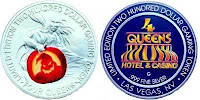 In celebration of All-Hallows-Eve, the Coin Collectors Blog presents some of the 2011 numismatic trick-or-treat.
25th Anniversary American Silver Eagle Set
TRICK: Anyone who tried to order the 25th Anniversary American Silver Eagle Set starting at 12:00 Noon ET on Thursday, October 27 found that the U.S. Mint provided the most recent trick by not being able to keep up with the ordering demand
TREAT: If you were able to order your set, it should be a fantastic collectible.
American Numismatic Association
TRICK: There is never a good way to handle certain personnel issues. But regardless of whose feelings were hurt, the last statement issued by the ANA Board of Directors was unnecessary, uncalled for, and really lacked and an adult approach to a tough situation.
TREAT: The ANA actually using social media to reach out to members and respond.
American Numismatic Association, Part II
TRICK: The ANA Board of Directors making a myopic decision on how to handle club tables at their shows. Rather than make simple rules saying that the tables must be staffed at all times except during meetings, the Board went beyond reasonableness and added restriction as to how many clubs could share a table.
TREAT: A regional organization could have one table with the support of member clubs and tangentially fit within the rules. After all, these are “members” under one umbrella organization and only members will be staffing the table without violating the ANA’s ridiculous rules.
Over productions of Presidential Dollars
TRICK: National Public Radio did a highly inaccurate story about how the Federal Reserve is holding more than $1 billion in dollar coins in its vaults costing the taxpayers money.
TREAT: Rep. David Schweikert (R-AZ) introducing H.R. 2977, the Currency Optimization, Innovation, and National Savings Act (COINS Act) to transition the U.S. from paper dollars to coins. Add to this the unconfirmed rumor that the “Super Committee” is considering adding this to their final bill.
The United States Mint
TRICK: Since the resignation of Ed Moy as Director of the U.S. Mint, the position has gone unfilled.
TREAT: Since being hired as Deputy Director on January 25, Richard Peterson has lead the U.S. Mint in a professional manner questioning whether the U.S. Mint really needs a politician as a director. As for the problems occurred while ordering the 25th Anniversary American Silver Eagle Set, it could be said that the systems not being able to keep up with the loads are a residual problem left over from the previous director not managing the technology properly.
CCAC Blueprint Report
TRICK: As a concept, the Citizens Coinage Advisory Committee’s report “A Blueprint for Advancing Artistic Creativity and Excellence in United States Coins and Medals” should not be controversial. However, it seems that the CCAC has found two ways of making a good idea irrelevant. First, the CCAC, whose first “C” stands for Citizens, forgot the citizens. They created the report and did not ask for comment from the citizens. Even though I provided comments, I was basically told, “Thanks, but no thanks.” It would be nice if they were inclusive. The other TRICK was that the report has appeared to have become shelfware—a document sitting on the shelf without impact.
TREAT: Even with the issues in the report, it is a step in the right direction and should be something the U.S. Mint should be working on now!
What are your numismatic trick-or-treats for 2011?
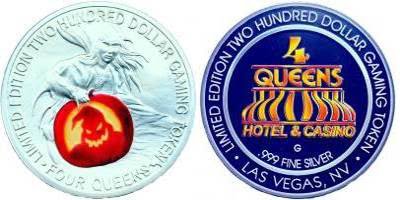
Image is of a 2007 $200 commemorative casino token from the Four Queens Hotel & Casino, Las Vegas, NV. Image is courtesy of the Silver Strikers Club. Details of this token can be found on the Silver Strikers Club website.
Oct 28, 2011 | Eagles, silver, technology, US Mint
After going on sale at noon, the U.S. Mint changed the catalog page for the 2011 American Eagle 25th Anniversary Silver Coin Set to say the sets have been SOLD OUT at 6:00 PM.
Those of us who were able to order sets found that the U.S. Mint early was faced with slow response time at the website and busy signals on the phone. In fact, the phone system was the most frustrating. After calling 1-800-USA-MINT, the interactive voice response (IVR) system answered and presented the options. After pressing “1” to order products, we were told “Your call may be monitored for quality assurance purposes.” Sometimes, it was followed by a message saying that I was selected to participate in a survey after the call. But I never got to the survey when the call reverted to a busy signal.
The website was no better. Many times it did not respond. When it did, users could only get back to the front page. After being able to select the sets and change the quantity, trying to check out became an act of futility. For the first hour, if you could get back to the online shopping cart, requests to checkout was not responded to by the U.S. Mint servers.
Fifty minutes into this adventure, my call sailed past the intro to actually place me on hold. A few moments later, a pleasant woman answered the phone and helped me place my order for five sets, the household limit.
Once the order was completed, I turned back to the computer and continued trying to place an order anyway. After trying for 90 minutes, I gave up and decided to have lunch.
U.S. Mint ordering limits prevented a quicker sellout. Two friends were able to order sets by phone at 3:00 PM. They called from work and each placed their order with the same representative.
Although I do my work for a different government agency, we always attempt to architect the systems, including the VRS, for the worst case scenario. Although predicting the maximum load and how to build systems is more of an art than a science, there are tools that helps the performance engineers’ job easier. The U.S. Mint should consider finding system engineers who come with performance engineering support to fix their systems.
Now that I have that off my chest, I am looking forward to seeing this set, especially the reverse proof. The reverse proof was the highlight of the 20th Anniversary set and should be the highlight of the 25th Anniversary Set.
Oct 22, 2011 | Eagles, silver, US Mint
 On Thursday, October 20, the U.S. Mint not only confirmed that the American Eagle 25th Anniversary Silver Coin Set at noon Eastern Time (ET) on October 27, 2011, but that the price was set at $299.95 with a limit of 5 sets per household. The U.S. Mint caveated the price noting that the price is subject to change depending on the price of silver.
Earlier this week, I attempted to predict the price of the set. At that time, the guess was $368.95 with the price of silver at $42—which was the price when I did the calculations, not posted the article. If we give me the approximate $10 drop in silver ($50 for five coins), and take away the 33-percent markup ($16.50) should have lowered my guess to $312.45. That would be only a $13.50 difference. So my guess was only significantly off by my assumed price of silver.
Spin aside, I am looking forward to this set. Hopefully, their website will stay up long enough to allow me to place my order!
Image courtesy of the U.S. Mint.

 Eighty-one years (and two days) after President Herbert Hoover signed he law that make “The Star-Spangled Banner” the United State’s official national anthem, the U.S. Mint and Maryland dignitaries came to Fort McHenry to launch the 2012 Star-Spangled Banner Commemorative Coin Program. The commemorative coins are designed to honor the role of the fort in the Battle of Baltimore and Francis Scott Key’s composing the poem after seeing the 15-star and 15-stripe flag still flying after an evening of bombardment by the British Royal Navy.





 Loading ...