Feb 1, 2011 | base metals, coins, copper, economy, US Mint
The base metals market woke up this morning trumpeting record high futures prices for copper, nickel, and aluminum on the London Metals Exchange (LME) and COMEX Metals Exchange (New York). Analysts credit this rise in price to low supplies and higher demand, specifically in China.
![[Most Recent Quotes from www.kitco.com]](http://www.kitconet.com/charts/metals/base/spot-copper-6m.gif) Copper closed at $4.5135 per pound in New York and $9,878 per metric ton in London on Monday, January 31, 2011.
Copper closed at $4.5135 per pound in New York and $9,878 per metric ton in London on Monday, January 31, 2011.
For numismatists watching production at the U.S. Mint, this means that the material costs to produce U.S. coins will increase. With the exception of the cent, the predominant metal used in the manufacture of U.S. coins being copper—the Lincoln cent is 97.5-percent zinc with a coating using a 2.5-percent copper coating. Since most coins are composed of an average 88-percent copper and the nickel containing 75-percent copper, the rise in the cost of materials will reduce the seigniorage (profit) collected by the U.S. Mint.
Second most used metal used in U.S. coinage is nickel. While nickel has been up for the last six month and approaching its one-year high, it is down from its previous high reached in 2007 when it the U.S. Mint said the cost of manufacturing the nickel was nearly double its face value. If we use the average production costs from the last three years of 21-percent of face value (as reported in the U.S. Mint Annual Reports), it costs approximately 8.16-cents per coin to manufacture (metals cost 7.06-cents and approximately 1.1 cents to manufacture).
As for the Lincoln Cent, it has fared better in its materials cost. The price of Zinc has also dropped from its five-year high and is trading around $1.09 per pound. Zinc is also in ample supply to meet market demands meaning that the price should not be that volatile. This means that the materials cost to make the Lincoln Cent is 0.644-cents. Using the average cost to manufacture the cent at 35-percent of face value (as reported in the U.S. Mint Annual Reports), the overall cost to manufacture the cent should be on par with its face value.
However, the FY2009 U.S. Mint Annual Report showed a marked rise in manufacturing costs (I have not analyzed the FY2010 Annual Report as of this post) wondering if the production costs estimates are too low. However, if copper continues to rise, then the costs to manufacture all U.S. coins will rise and reduce the profit collected by the U.S. Mint.
Jan 28, 2011 | history, national park quarters, US Mint, video
The Battle of Gettyburg was the pivotal battle of the Civil War. The three day battle (July 1-3, 1863) started when Confederate General Robert E. Lee attacked the Union position in an attempt to invade the North after successful battles in Northern Virginia. Gettysburg was defended by Major General George G. Meade who arrived at Gettysburg three days before the battle began. The Confederate Army began its Retreat from Gettysburg on July 4, 1863 following the resounding defeat after (Maj. Gen. George) Pickett’s Charge on Cemetery Hill.
The Battle of Gettysburg is considered the turning point of the American Civil War because of the morale boost it provided the Union forces. But when the battle was over, there was no mistaking the cost of this battle in that between 46,000 and 51,000 Americans died on the battlefield.
The Gettysburg National Cemetery was dedicated on November 19, 1863 with speeches from Edward Everett and President Abraham Lincoln. Everett’s two-hour formal speech at the event preceded Lincoln’s 271-word Gettysburg Address, a speech that proved Lincoln was not a good prognosticator: “The world will little note, nor long remember what we say here….”
The Gettysburg National Military Park came into existence on February 11, 1895 when President Grover Cleveland signed the legislation into law. Originally, the law required the park was to be administered by the War Department. In 1933, control was passed to the National Park Service.
On January 25, 2011, the U.S. Mint launched the The Gettysburg National Military Park Quarter held at park’s Museum and Visitors Center. U.S. Mint Associate Director for Sales and Marketing B. B. Craig and Gettysburg National Military Park Superintendent Bob Kirby co-hosted the event, with Barbara Finfrock, vice chair of the Gettysburg Foundation, serving as master of ceremonies.
The reverse of the quarter depicts the 72nd Pennsylvania Infantry Monument, which is located on the battle line of the Union Army at Cemetery Ridge. It was designed by Artistic Infusion Program Master Designer Joel Iskowitz and engraved by U.S. Mint Sculptor-Engraver Phebe Hemphill.
As with previous releases, the U.S. Mint released an edited B-roll video of the launch with highlights, scenery, production footage.
This is the first quarter in the America the Beautiful Quarters Program representing a piece of United States history. We should always note and long remember what happened in Gettysburg and learn about the events leading up to the worst conflict in U.S. history so that we may never relive that history again.
Jan 24, 2011 | national park quarters, US Mint
Followers of the U.S. Mint may have read the announcement that the launch launch of the 2011 Gettysburg National Military Park quarter will be held Tuesday, January 25 at 11:00 A.M (Eastern Time) at the Gettysburg National Military Park Museum and Visitor Center. The public event will include a cash exchange for $10 rolls of the new quarters. Attendees 18 years old and younger will receive a free quarter to commemorate the event.
After the launch ceremony, the U.S. Mint will host a forum where the public will have an opportunity to ask questions and share their ideas about the future of the Nation’s coinage. The forum will be held Monday, January 24 at 5:30 p.m. ET in the Ford Motor Company Fund Education Center at the Gettysburg National Military Park Museum and Visitor Center. No word as to whether someone from the Citizens Coinage Advisory Committee will be at this forum.
What the announcement did not include was that B. B. Craig, the Associate Director of Sales and Marketing for the U.S. Mint, will be the Mint’s representative at these events. In checking the 2008 Plum Book, the Associate Director of Sales and Marketing is not listed as a policy or supporting position. Thus, Mr. Craig may be a career professional stepping up to represent the U.S. Mint. Regardless of what you read in the press or hear from politicians, government career professionals are hard working citizens doing the jobs prescribed by the laws passed by congress on behalf of the American people. I wish Mr. Craig well in his appearance!
Jan 19, 2011 | CCAC, coin design, US Mint
If you are in the Washington, DC area, the Citizens Coinage Advisory Committee is meeting today in the 8th Floor Board Room a at the U.S. Mint Headquarters located at 801 9th Street NW.
Today’s agenda includes the review and consideration of the draft report “A Blueprint for Advancing Artistic Creativity and Excellence in United States Coins and Medals.” Last June, the CCAC formed a subcommittee after being consistently frustrated with “overall disappointment with the poor quality of the alternatives presented for the 2011 commemoratives” and reminding the Director Edmund Moy that he wanted “and intend to spark a Neo-Renaissance of coin design and achieve a new level of design excellence that will be sustained long after my term expires.”
Although Moy resigned as director, the challenge remains.
Earlier today, CCAC Member Donald Scarinci tweeted, “CCAC will hopefully adopt the design excellence subcommittee report today. The info in it might be shocking to some, but all accurate.” While wondering what was so shocking, I asked Scarinci if the report will be release to the public today. He said yes. However, given the low information aspect of the CCAC’s website, I hope the report is given prominent place on the front page.
If you cannot attend the meeting you can follow along as Donald Scarinci tweets from the meeting. You can follow Donald at @scarinci on Twitter.
Jan 18, 2011 | BEP, US Mint
It is not often a member of the federal government’s Senior Executive Service makes the news for changing jobs. But when that person is Andy Brunhart, it has the numismatic media noticing. CoinWorld is reporting in its January 31, 2011 edition that Brunhart left the U.S. Mint four days after Ed Moy’s last day.
Brunhart is now working for the Bureau of Engraving and Printing and will oversee quality and strategic integrated production issues. His arrival at the BEP comes after the mainstream media picked up on the production problems plaguing the printing of the new $100 federal reserve note.
CoinWorld reports that the Treasurer of the United States Rosie Rios will carry out the duties of the Director until a new director is appointed by President Obama.
Dec 27, 2010 | US Mint
Now that the holidays are over, the U.S. Mint is adding to the post-holiday shopping rush by sending a note to their subscribers announcing that the 2010 Abraham Lincoln $1 Coin Cover will be available and the remaining 2009 products will go off sale on December 30. A quick check of the U.S. Mint’s catalog shows only three products left:
- United States Mint 2009 District of Columbia & U.S. Territories Quarters Proof Set™ (Q09)
- 2009 United States Mint Presidential $1 Coin & First Spouse Medal Set™ – James K. Polk (XP3)
- 2009 United States Mint Presidential $1 Coin & First Spouse Medal Set™ – Zachary Taylor (XQ3)
Buy now while supplies lasts.
Also announced is the launch of the Native American $1 Coin in Plymouth, Massachusetts. The public ceremony will be held at 10:30 a.m. Eastern Time (ET) on January 12, 2011, at the Plimoth Plantation Henry Hornblower II Visitor Center.
Finally, in keeping with their new policy of making annual products available earlier in the year, the U.S. Mint announced the release data of the 2011 annual sets:
- January 11: 2011 United States Mint Proof Set
- January 25: 2011 United States Mint Silver Proof Set
- February 8: 2011 United States Mint Uncirculated Coin Set
The U.S. Mint said that if you sign up for an online subscription for these products by January 4, 2011 you will receive these 2011 issues as your first sets.
Happy Shopping!
Dec 21, 2010 | commentary, US Mint
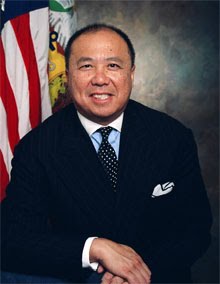
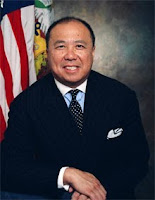 Yesterday, the U.S. Mint issued a press release announcing that Director Edmund C. Moy submitted his resignation effective on January 9, 2011. Moy was appointed as the 38th Director of the U.S. Mint in September 2006 after being appointed by President George W. Bush and being confirmed by the Senate. His five year term was to expire on September 5, 2011.
Moy will join L&L Energy, Inc., a Seattle-based company with coal mining and distribution businesses in China. In a press release issued today, Moy will join the company on January 10, 2011 as Vice President of Corporate Infrastructure. L&L Energy said that Moy’s responsibility will “include corporate development, global logistics, and general administration.”
In his remarks, Moy said, “I’m proud of the progress we’ve made over four and a half years. The Mint is a better place and delivering more value to the American taxpayers.” However, the failures of the public face of the U.S. Mint was very evident during Moy’s tenure. From problems with the U.S. Mint’s website to the debacle over not having enough bullion planchets to meet demands of investor and collectors, there is enough to question how successful Moy’s tenure was at the U.S. Mint.
The U.S. Mint has had missteps in customer server that anecdotal evidence of the comments that appear in my Inbox suggests has not been resolved. In fact, a search of any of the online collector’s forums will show that customer service has not improved in the last two years.
Finally, I have questioned Moy’s leadership ability to manage the U.S. Mint when the Fiscal Year 2009 Annual Report showed that U.S. Mint’s operating costs rose significantly in FY09 even though the demand for its products were reduced. In my analysis I noted that in FY09 it cost the U.S. Mint 1.1-percent more to produce 40-percent fewer coins than in FY08. CEOs have been fired for this type of negative turn around!
It has been recent history that appointed members of an administration resign their posts at the end of the president’s term. Moy did not resign opting to try to fulfill his term. Over time, I have accused Moy of being more of a bureaucrat than a leader. This was a change from his predecessor, Henrietta Holsman Fore, a Bush appointee who had experience with manufacturing in the private sector and a history of successful government service.
With Moy’s resignation, President Barack Obama has the opportunity to appoint a new director with the skills to manage the world’s largest coin manufacturer. In an open letter I wrote when he was President-Elect I suggested that the next Director of the U.S. Mint be a leader whose experience includes manufacturing, supply chain management, and customer service.
I realize that this may not be a top priority for the president. In the current political climate, it is possible that the appointment will not be made until after the holidays. Even if the president was to announce the appointment tomorrow, the lame duck session is about to end meaning that the confirmation will be taken up by the Senate of the 112th Congress. In the mean time, Deputy Director Andrew D. Brunhart will become acting U.S. Mint Director. Brunhart, the former General Manager of the community-owned water and sewer company in the Maryland suburbs, may not be up to the job based on his performance at the water and sewer company. The business infrastructure at the water and sewer company has continued to under perform based on the policies and structure he left leaving questions as to whether Brunhart could manage the U.S. Mint for an extended period of time.
I wish Ed Moy success in his new endeavor and enjoy the coffee out in Seattle. Even though it is more of a tourist destination, the Pike Place Market is still one of my favorite destinations and hope you enjoy it as much as I do. Just watch for the flying fish!
Portrait of Ed Moy courtesy of the U.S. Mint.
Dec 15, 2010 | review, US Mint, web
 In the quite of the night, the U.S. Mint flipped their virtual switch to unveil a website for both their main site and their online catalog and e-commerce site. The new design used the new logo and branding features the branding consulting firm Siegel+Gale and the U.S. Mint unveiled in August.
When visiting the redesigned site, the front page is simply laid out and more striking. The black background and updated design is more inviting. Half of the opening screen is dominated by a rotation slide show with images that general visitors and other collectors would find inviting. In fact, the image used to guide the user to view their coin and medals programs features classics such as a Morgan and Peace Dollars. Under the slideshow is a sliding visual menu with the current coins that are links to their information page. It is is a nice element.
The new design appears to be with the theme only and not the underlying organization of their site. Text and other visual features of each page are the same as they were yesterday except surrounded by the new theme. Even though they were designed using the old theme, they visually fit with on the new site.
Everything that was said about the main U.S. Mint website also goes to their online catalog and e-commerce site. The new darker theme works with the current catalog information and seems to work as it did prior to the change. Hopefully, the U.S. Mint changed the backend of the site in order to make their customer service better.
No change was made to the America the Beautiful® Quarters Program microsite. It was well designed from the beginning and used the same basic theme as introduced today.
One nit on the catalog site is that the Product and Services lists on the left side has no order to them. Reordering those menu lists to be alphabetized would be beneficial to the site. If they want to put the “Last Opportunity” menu item at the top of the list and highlight it in some way, that would work. Otherwise, an alphabetized list would work better.
Overall, the U.S. Mint’s redesigned site gets a grade of MS 66 for its freshness, luster, and striking visual balance. They earn points for keeping the underlying structure while there are some little things to work on, including adding additional historic information. Kudos to the U.S. Mint for a job well done!
Logo image courtesy of the U.S. Mint.
Dec 12, 2010 | bullion, coins, dollar, national park quarters, US Mint
It is difficult to determine if 2010 was a good year for those collecting coins from the U.S. Mint. Unlike 2009, the U.S. Mint was able to strike both bullion and proof American Silver Eagle and American Gold Eagle coins. After the outrage of 2009, collectors appear to be happy that the proof Eagles have made a return.
Also new in 2010 were the American the Beautiful Quarters program with designs representing the first five national parks created by an act of congress. As part of each park’s introduction, either Director Edmund Moy or Associate Director Andy Brunhart has visited each of the 2010 celebrated sites for the introduction of the new quarters. Although it has been difficult finding these quarters in pocket change, these new coins had nice designs and was a chance for people to learn about the United State’s wonderful national parks.
Bullion
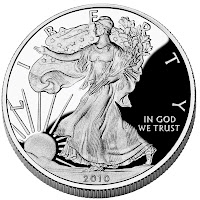 Bullion programs have caused angst amongst collectors and the U.S. Mint. Collectors found their collections with holes for the 2009 American Eagle Proof coins while waiting close to the end of 2010 to find out that proof Eagles will be produced.
Sales of bullion American Eagles have had mixed results. While the U.S. Mint has not produced bullion Platinum Eagles since 2008, sale of gold bullion has dropped from 2009. With the price of gold climbing from $1,100 at the beginning of the year to over $1,300 since September, investors may be looking for more cost effective investment option.
One investment option has been silver. With over 33 million silver Eagles produced through the first week of December, the U.S. Mint has produced more silver Eagles this year than in any years since the program started in 1986. Silver started the year around $17 per ounce, staggered into March, and then the prices began a slow rise. After breaking the $20 mark in September, the price has been hovering close to $30 the last few weeks. Silver closed at $30.50 on December 7 before dropping below $29 since.
From a collector’s perspective, this has made collecting American Eagles more expensive. Thankfully, the U.S. Mint has resolved its production issues and produced proof Eagles this year. We will see proof Eagles in 2011 with the passage of the Coin Modernization, Oversight, and Continuity Act of 2010 that changes the American Eagle Bullion law to allow the U.S. Mint to divert some metals for collectors coins.
Missing from the 2010 line up was the American Buffalo 24-karat Gold Coin. While still an authorized issued, the coin has not roamed the United States since 2008 in both bullion and proof issues. There has been no comment from the U.S. Mint as to whether the coins will make an appearance in 2011.
Circulating Coins
For 2011, the U.S. Mint will produce the Lincoln Cent as redesigned in 2010, the Jefferson Nickel that was redesigned in 2006, the Roosevelt Dime as it was designed in 1946, and the Kennedy Half Dollar as it was released in 1964. No changes are planned for these circulating issues.
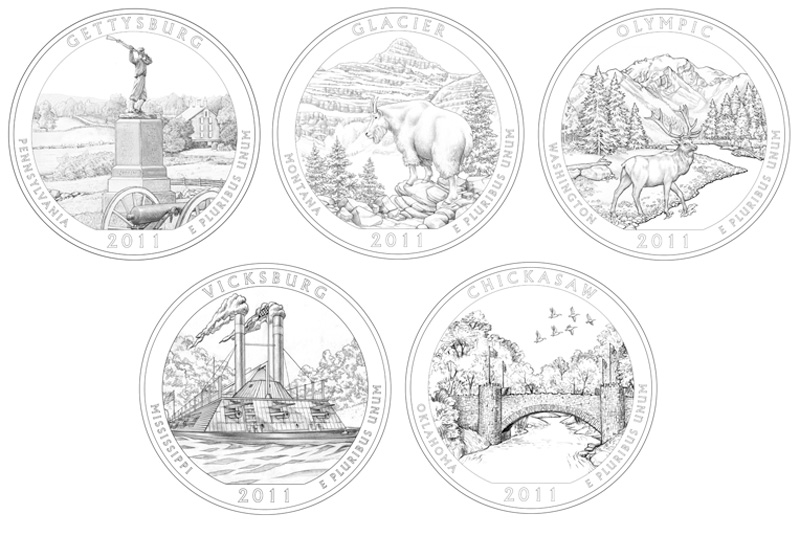
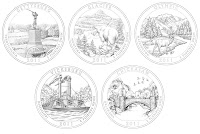 In the second year of the American the Beautiful Quarters Program. If the second year designs are as well executed as the first year, the program will continue to be a success from a collector perspective. The second group of quarters will honor Gettysburg National Military Park in Pennsylvania, Glacier National Park in Montana, Olympic National Park in Washington, Vicksburg National Military Park in Mississippi, and Chickasaw National Recreation Area in Oklahoma. The U.S. Mint’s line art shows promise for a very nice looking series.
One part of the American the Beautiful Quarters Program has been the issue of three-inch five-ounce .999 silver bullion coins. Production problems have delayed the release of these coins. According to the U.S. Mint’s press release, there may be collector versions of the coin with limited production runs. Considering the high costs set by the U.S. Mint, it may be difficult for some collectors to justify. But with the production issues worked out, maybe the 2011 versions may sell better.
Dollars
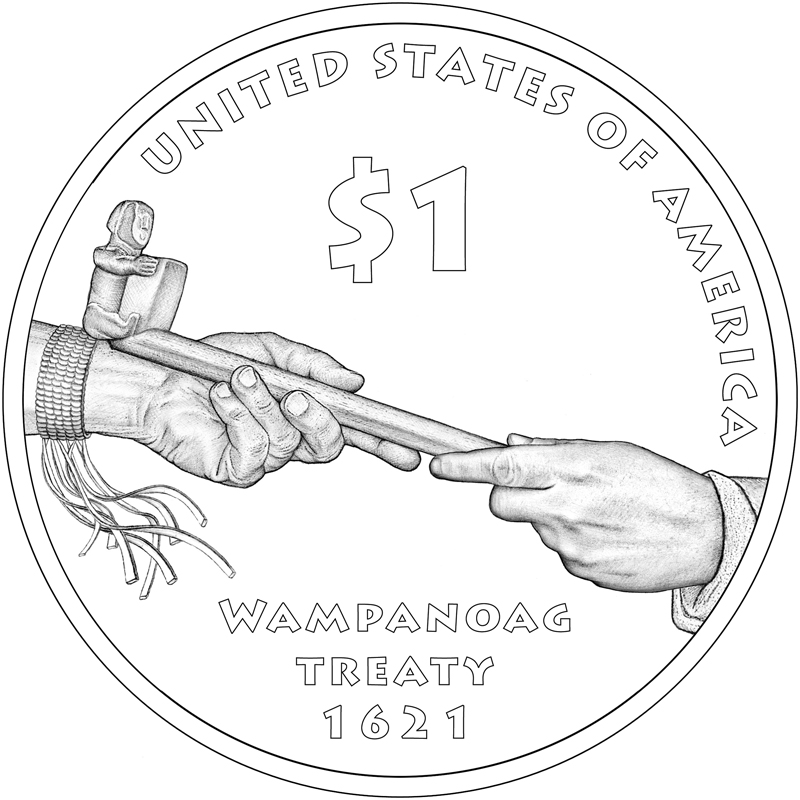
 For the third year of the Native American $1 Coin program, the theme for 2011 is “Supreme Sachem Ousamequin, Massasoit of the Great Wampanoag Nation Creates Alliance with Settlers at Plymouth Bay (1621)” celebrating one of the first peace treaties between the Native Americans and the Puritans who settled at Plymouth Bay. The reverse of the coin depicts the hands of the Supreme Sachem Ousamequin Massasoit and Governor John Carver symbolically offering the ceremonial peace pipe after the initiation of the first formal written peace treaty. The designs of the Native American coins have been so well thought out and executed that this one will be a wonderful addition to your collection.
Continuing the Presidential $1 Coin program, the 2011 coins will honor Presidents Andrew Johnson, Ulysses S. Grant, Rutherford B. Hayes, and James A. Garfield. History buffs will begin with President Johnson who was the first president that was impeached but not convicted, followed by three bearded Republicans who started and perpetuated reconstruction through the 19th century. The 2011 series ends with President Garfield whose 200 day term ended with his death on September 18, 1881.
Those collecting the First Spouse Gold Coins will have a year where all four issues will depict the First Lady’s of the era. Standing behind or along side the Presidents where Eliza Johnson, Julia Grant, Lucy Hayes, and Lucretia Garfield. Remember, if you cannot afford the gold coins, the U.S. Mint sells bronze medals using the same design but without the denomination.
Commemoratives
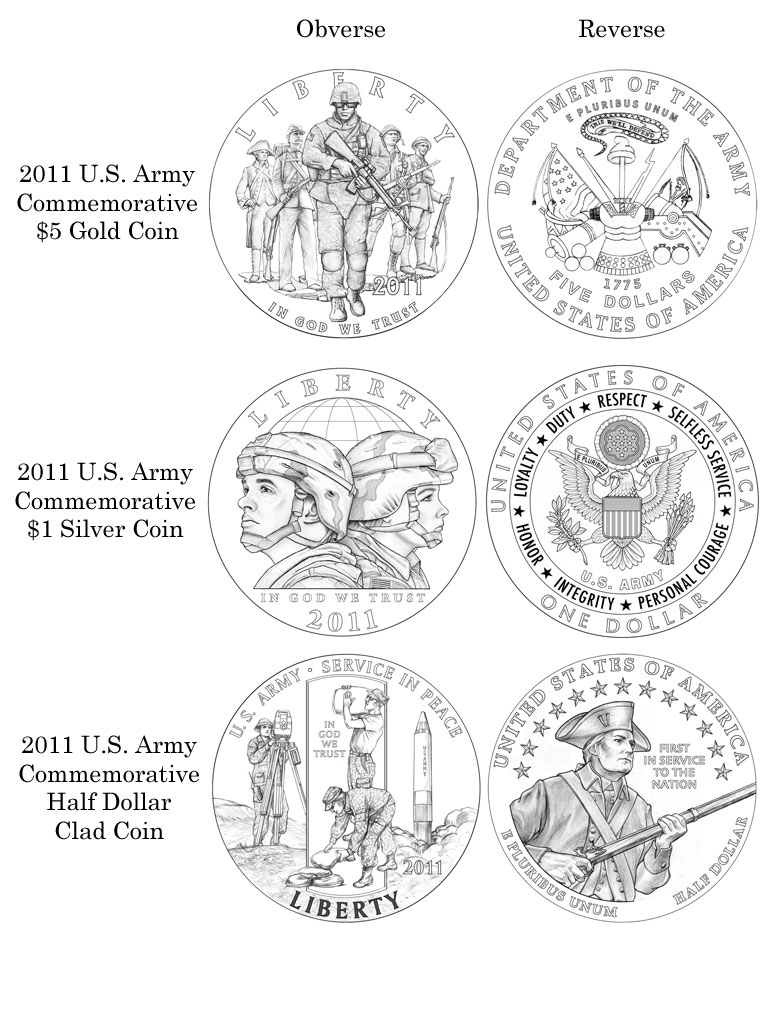
 Collectors of commemorative coins will have two multi-coin commemorative issues in 2011, both with a military theme. The first commemorative will be the United States Army Commemorative to honor the history of the U.S. Army from the Revolutionary War through today. The U.S. Army Commemorative will be a three-coin set consisting of a gold $5 proof, silver $1 proof, and cupronickel clad half-dollar proof. The obverse of the gold coin represents the U.S. Army’s war service from the Revolutionary War through today. It features a representation of Continental, Civil War, modern, World War II and World War I soldiers. The reverse is based on the official U.S. Army emblem and represents the unbroken history of loyalty and commitment to defend the Nation.
The obverse of the silver proof depicts the busts of a male and female soldier, symbolizing worldwide deployment of the 21st century U.S. Army. On the reverse, the design symbolizes the seven core values of the U.S. Army featuring an image of the Great Seal of the United States that has been worn on U.S. Army dress and service uniforms since the early 19th Century.
The obverse of the clad half-dollar proof represents the significant contributions of the U.S. Army during peacetime and features a U.S. Army soldier surveying, two servicemen building a flood wall and a Redstone Army rocket used during early space exploration. The reverse design symbolizes the U.S. Army as the first military service to defend the country and its key role in the Nation’s internal development. It features an enlisted Continental soldier armed with a musket and 13 stars representing the original Colonies.
Mintage is limited to 100,000 gold, 500,000 silver, and 750,000 clad coins. The sales price will include a $35 surcharge for each gold coin, a $10 surcharge for each silver coin, and $5 for each clad coin sold. Proceeds from the sales of this commemorative ($12.25 million if all coins are sold) will go to the construction of the National Museum of the United States Army.
 The other commemorative will be the 2011 Medal of Honor Commemorative Coin program. This two-coin set features a $5 gold proof and $1 silver proof coin. The obverse of the gold coin depicts the original Medal of Honor designed in 1861 by the U.S. Mint. The reverse design of the gold coin features Minerva, the Roman goddess wisdom and war, who is featured on the medals. Minerva is standing with a shield representing the Army and Navy in her right hand and the Union flag in her left hand. She is flanked by a field artillery cannon and wheel of the Civil War era.
The obverse of the silver commemorative coin will feature the three current Army, Navy, and Air Force medals with their ribbon and the connecting pad featuring 13 stars. Since the Medal of Honor is the only medal not pinned to the uniform, it was important to depict the ribbon that is used to wear the medal around the recipient’s neck. The reverse design depicts an Army infantry soldier carrying a wounded soldier to safety under enemy fire. This image conveys the courage, selfless sacrifice and patriotism of Medal of Honor recipients.
Mintage is limited to 100,000 gold and 500,000 silver coins. The sales price will include a $35 surcharge for each gold coin and a $10 surcharge for each silver coin sold. Proceeds for the sale ($8.5 million if sold out) will be distributed to the Congressional Medal of Honor Foundation to support their educational, scholarship and outreach programs.
It appears that 2010 was better than 2009 as the economy improved. Maybe there will be more of a recovery to help make 2011 even better.
Click on any image to see the larger version.
Coin images courtesy of the U.S. Mint.
Dec 2, 2010 | bullion, legislative, national park quarters, palladium, US Mint
In a rare move of bipartisanship, the Senate passed two bills coin-related bills by Unanimous Consent on Tuesday that were previously passed by the House of Representatives. Bills passed by Unanimous Consent are agree upon by both party’s leaders and a voice vote is taken on the floor as a formality. No record of the vote is taken.
The first bill that passed is the Coin Modernization, Oversight, and Continuity Act of 2010 (H.R.6166). Introduced by Melvin Watt (D-NC), Chairman of the Subcommittee on Domestic Monetary Policy and Technology following the hearing of “The State of U.S. Coins and Currency” held on July 20, 2010. As passed, the law requires the U.S. Mint to research minting metals used for coining money and to report to congress what changes should be made to prevent coin production from costing more than its face value. One forward thinking aspect of the law is that it requires to U.S. Mint to tie the research to actual production numbers, as opposed to hypothetical figures. The U.S. Mint has two years to complete the research and report back to the subcommittee.
H.R.6166 also includes two technical changes to the law that will affect collectors. One change allows the U.S. Mint to change size of the planchet used for the National Park Bullion Program from 3-inches to a size between 2.5 and 3-inches. This will help the U.S. Mint deal with technical issues that has delayed the issue of the five ounce bullion coins.
For fans of the American Eagle proof programs, a wording change in the law allows the U.S. Mint to divert gold and silver to meet the demand for numismatic collectible coins. The change does not set minimum or maximum limits of coins struck but it will prevent future gaps in our collections.
Speaking of the American Eagle program, the Senate also passed the American Eagle Palladium Bullion Coin Act of 2010 (H.R.6166). The bill was introduced by Rep. Dennis Rehberg (R-MT) in support of the primary support of palladium mining in Montana where 95-percent of all United States palladium deposits are. The new law will add a one-ounce .9995 fine palladium bullion coin to the American Eagle Bullion Program. 
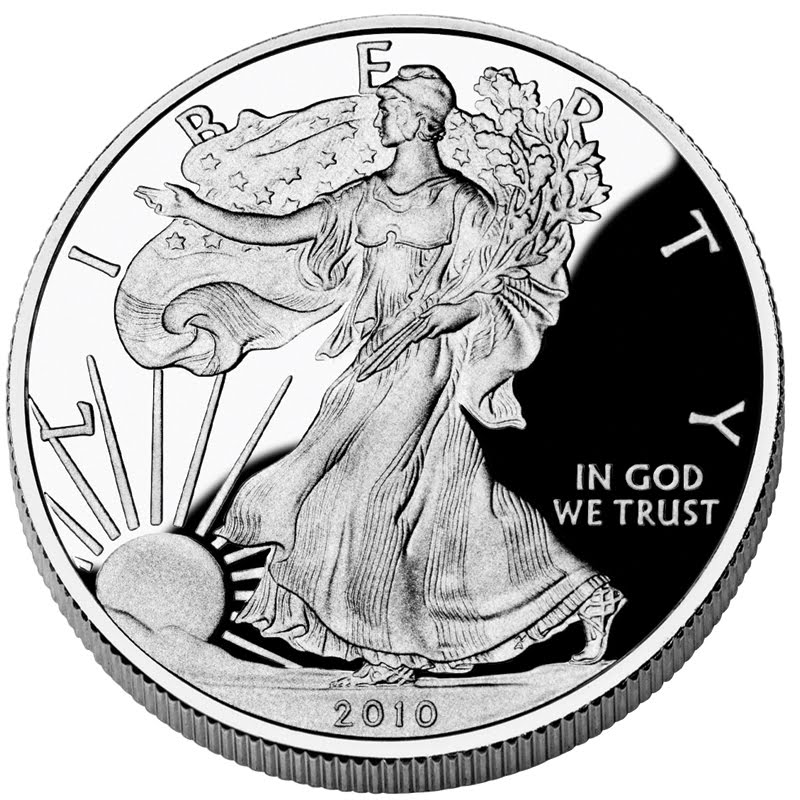
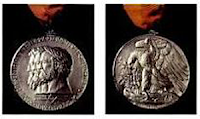 The coin will have a $25 face value and require that “the obverse shall bear a high-relief likeness of the ‘Winged Liberty’ design used on the obverse of the so-called ‘Mercury dime’” making it yet another bullion coin that will feature a design from the early 20th century. For the reverse, the law says that the coin “shall bear a high-relief version of the reverse design of the 1907 American Institute of Architects medal.” Both the Mercury Dime and 1907 AIA medal were design by Adolph A. Weinman, whose Walking Liberty design is used on the American Silver Eagle coins.
When the same bill passes both houses of congress, the bill is formally enrolled by being printed in the Congressional Record and printed on archival paper before being sent to the White House for the president’s signature. President Obama is expected to sign both bills when the paperwork makes it way down Pennsylvania Avenue.
1938 Mercury Dime image is owned by the author.
Image of the 1907 AIA Medal copied from Architecture: celebrating the past, designing the future by Nancy B. Solomon.



 Loading ...