Dec 30, 2018 | coins, markets, news
While considering the news of the past week, the one thing that sticks out is the press release from the Professional Numismatic Guild. The release touts the strength of the high-end, rare coin market with a throwaway line that notes there may trouble for the general collector.
While prices declined during the year for some U.S. coins in easily available lower grades, hundreds of noteworthy coins from early American to modern that are among the finest known of their kind set auction price records….
Prices for collector coins are driven by two principles: the spot price of silver and other metals that were used to strike the coins; the ability for the supply to meet the demand.
Primary spot price that drives the general collector coin market is silver. Silver opened on January 2, 2018, at $17.06 per troy ounce. On Friday, December 28, the price of silver was $15.29. This is a decline of $1.80 for the year or 10.55-percent decrease. This is not something that has occurred in the last month as the stock market had problems. Silver reached its highest price on January 15 when it reached $17.325. The spot price of silver dropped below $17.00 on February 5 and has been on a steady decline all year.
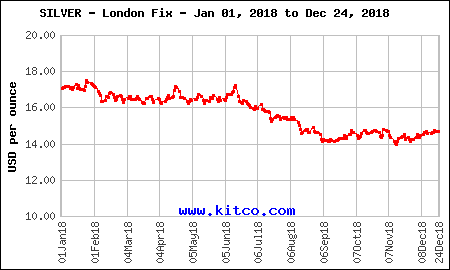
There has been a steady decrease in the spot prices of silver in 2018
(chart courtesy of Kitco; this is a static chart and will not update)
But the price of silver alone is not enough to drive collector coin prices down to get PNG’s attention. The problem is the other part of the equation: supply and demand.
The supply of collector coins is not changing. The coin market is relatively stagnant since the U.S. Mint is no longer making Mercury dimes, Walking Liberty half dollars, or Morgan dollars. There may be an increase in those coins coming to the market as collectors liquidate or the families of deceased collectors liquidate, but is this more than usual?
The number of people collecting may not be enough to drive the market simply because numismatics is not as popular a hobby as it once was.
PNG notes that the success of their high-end business may be coming from investors, not collectors:
“With the stock market dropping during the fourth quarter of 2018 we saw an increase in interest in the rare coin market with some people taking profits from stocks and buying coins that have proven to show sizeable and consistent increases in value over the years, as well as buying precious metals,” said Professional Numismatists Guild President Barry Stuppler.
While it is good that the PNG touts the work of their members in the Top 10% of the market, the general public is not buying. PNG can pat themselves on the back all they want but if they are not helping the entire industry, they are losing the opportunity to turn a general collector into one of their customers.
Further, the American Numismatic Association, which is dominated by the same dealers who are members of the PNG, seem to have a blind spot that prevents them from seeing the general collector as a viable business model to cultivate.
There are only so many times that the industry can claim successes by selling the same 1913 Liberty Head Nickel before everyone, including investors, consider this a market with stale inventory.
This is not to say that the PNG dealers are bad people or have bad intentions. This is saying that the PNG needs to look beyond the top 10-percent of the market to ensure the other 90-percent is just as healthy. Without a market balance and without market diversity, the hobby will be in trouble. Even in the equity markets, low volume low capitalized stocks can cause harm to the market.
And now the news…

December 24, 2018
JEDDAH: The Kingdom’s fiscal trajectory in many ways mirrors the tribulations it endured before emerging as one of the world’s foremost trade and financial hubs. Before the Kingdom was unified by its late founder, King Abdul Aziz, the Arabian Peninsula had suffered its fair share of economic woes thanks to war and political strife within tribal factions.  → Read more at arabnews.com
December 25, 2018
Coinages issued in Maharashtra dating back to 2600 BCE on display → Read more at thehindu.com
December 25, 2018
Gold prices advanced for a second straight day on Tuesday and rose Rs 125 on higher demand from local jewellers → Read more at livemint.com
December 27, 2018
In a sign of precious metals demand, sales of U.S. Mint American Eagle gold and … → Read more at reuters.com
December 27, 2018
Earlier this month, my friend Hugo Salinas Price emailed an interesting story about a single gold coin that that he still holds dearly. As I was shuffling papers in some old files, I came across a slip of paper on which I had written down the price I had paid for a Mexican $50 gold peso coin: 717 Mexican pesos. → Read more at moneymaven.io
December 27, 2018
Israel Antiquities Authority, JNF and Border Police stopped a band of thieves from stealing ancient coins from the Hukuk Synagogue archeological site in northern Israel on Thursday. "A quick response prevented damage to the magnificent and important treasures of the site," Nir Distelfeld, the antiquities theft inspector, said. → Read more at jpost.com
December 28, 2018
Operators of the historic Coin Press No. 1 inside Carson City's Nevada State Museum began striking silver medallions Friday with a commemorative Abraham Curry design created just for the occasion. On the last Friday of each month, the Nevada State Museum runs the coin press, which now mints unique collectible medallions. → Read more at carsonnow.org
Dec 26, 2018 | obituary, personal
This post does not contain any numismatic content.

The day Boomer fell into our hearts: December 2, 2006.
Boomer was far more intelligent than he originally let on. As many puppies do, he explored his limits he began to not only understand what he could or could not do, but how to pull at his new mommy and daddy’s heartstrings.
A cross between a pug and a beagle, Boomer showed more of the personality of the beagle but had the snuggle ability of the pug. Boomer was a snuggler, always wanting to sit on the couch or crawl into bed to snuggle with us.
Like the beagle, Boomer could bark and howl with the best of them. He was our storm warning system. When the thunderstorms were off in the distance, Boomer would warn us and howl right through the storm. We nicknamed him Thunder Boomer.
When we brought home Tessa, he was tolerant of her mishegas. She was much more active than the laid back Boomer but I think they grew to like each other. Tessa was really attached to her brother.

This is our last picture of Boomer taken the morning of December 24, 2018. Good bye sweet prince!
Of all things, Boomer was a kind, sensitive, and loving dog who loved to be around us always wanted to snuggle and loved the attention. Since my wife and I could not have children, Boomer was our son.
At 5:25 am on December 25, our baby Boomer left us for his next adventure. He was a beautiful and smart boy. Always loved and always loving. Goodbye to our sweet prince.
Dec 25, 2018 | administrative, celebration
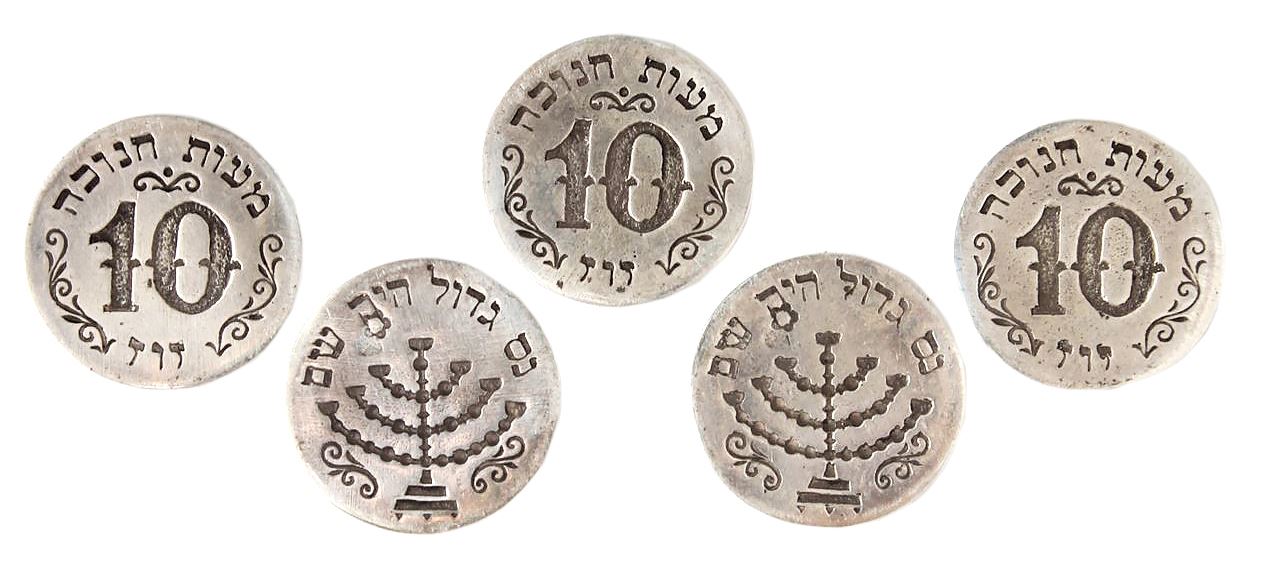
Whether you celebrated Chanukah
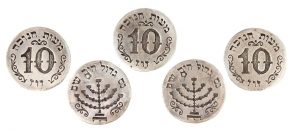
“10 Zuz” Silver Hanukkah Gelt — ca. 19th Century from Eastern Europe (Image courtesy of Moreshet Auctions)
Observed Festivus, for the rest of us
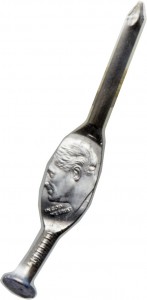
FDR dime struck on a nail (stand in for Festivus Pole) (Imaget courtesy of Heritage Auctions)
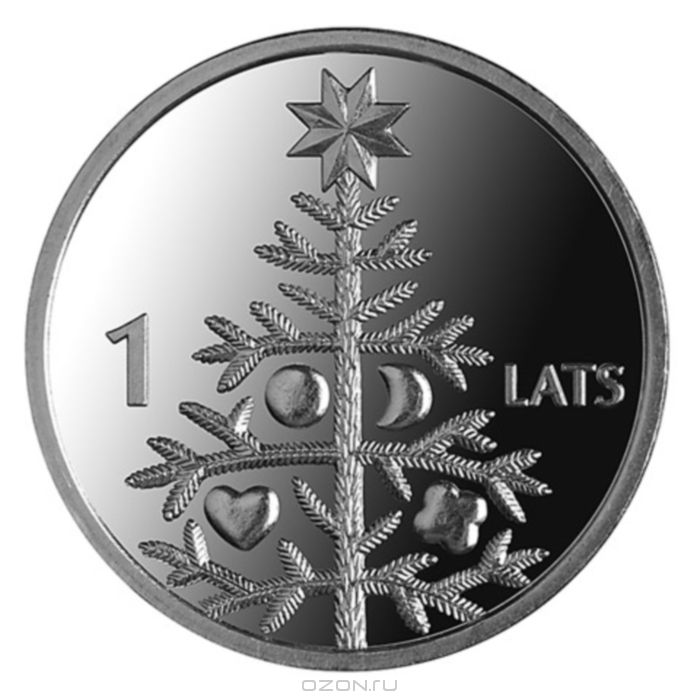
Having a Merry Christmas
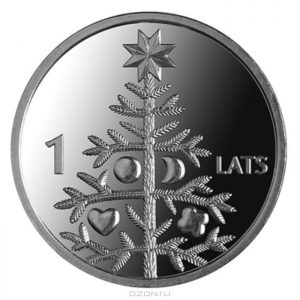
Reverse of the 2009 Latvia 1 Lat coin with the Christmas Tree on the reverse (Image courtesy of Latvijas Banka via Numista)
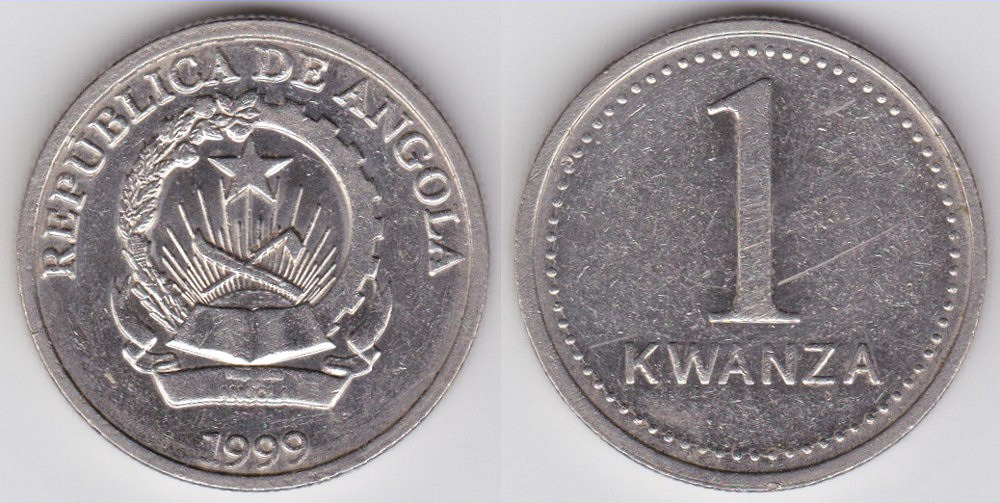
Or will begin celebrating Kwanzaa
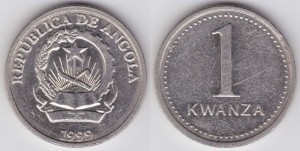
1999 Angola 1 kwanza as a stand-in to help celebrate Kwanzaa (Image courtesy of the Currency Wiki)
I hope you are having a joyous holiday season!
 On a personal note, my wife and I just left Boomer at the vet hospital. Boomer is 12 years old and celebrated his 12th anniversary with us on December 2. Since we were never able to have children, Boomer was our first four-legged child. It will be hard to imagine life without Boomer so we are hoping for the best.
Dec 23, 2018 | auction, financial documents, news, scripophily
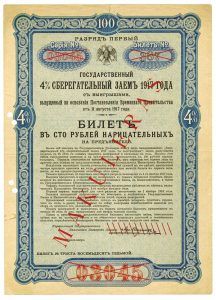
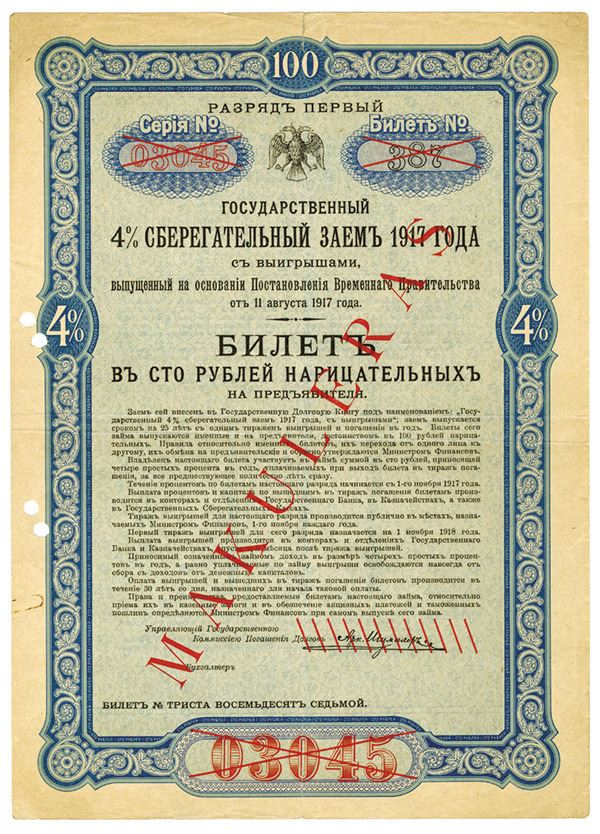
Imperial Russian Government, 1917 Specimen 4% Savings bond sold at auction for $12,810 (Image courtesy of Archives International)
This past week, Archives International announced that a 1917 Imperial Russian Government 4% Savings Bond Specimen that was estimated at $400-600 sold for $12,810 with buyer’s premium. It was a record for Russian Specimen bonds.
Archives International is not the standard numismatic auction house many have come to recognize. They specialize in all types of financial paper from around the world. From 2007 to 2011 the firm handled American Bank Note Archives Auctions, Parts I through VIII, which included their entire archives of samples and other financial paper ephemera from the worldwide customer base of ABN through history.
Recognizing this accomplishment is not only good for Archives Internation but for the numismatic industry. It shows everyone that there is more to collecting numismatics than coins. It shows that you can take an interest in collecting currency, bonds, stock certificates, and other scripophily and still be a numismatist.
Somewhere in grandpa or grandma’s belonging may be a stock certificate for The Haloid Photographic Company, Computing-Tabulating-Recording Company, or Minnesota Mining and Manufacturing Company that may not be worth anything financially, but what a wonderful piece of history would be added to your collection!
And now the news…
December 16, 2018
KARACHI: The State Bank of Pakistan (SBP) on Monday issued Rs50 commemorative coin with regard to International Anti-Corruption Day, ARY News reported. The federal government had authorised the central bank for issuing the coin, which was made available at the exchange counters of all the field offices of SBP Banking Services Corporation. → Read more at arynews.tv
December 17, 2018
(ArtfixDaily.com) FORT LEE, N.J. – Archives International Auction’s “50th Milestone Auction” held on December 3rd & 4th, 2018 was highlighted by a 1917 Imperial Russian Government 4% Savings Bond Specimen estimated at $400 to $600 and hammering for $12,810 smashing all previous records for Russian Specimen bonds on December 3rd, 2018, the first day of a two day sale, held at the historic Collectors Club in New York City. → Read more at artfixdaily.com
December 17, 2018
Editor's Note: Kitco News has officially launched Outlook 2019 – Rush To Safety – the definitive reference for precious metals investors for the new year. We chose this year's theme as financial markets face growing uncertainty. → Read more at kitco.com
December 18, 2018
NATIONAL Police warn the public to keep an eye out for coin scam going around Europe once again. → Read more at euroweeklynews.com
December 19, 2018
A Tudor coin hoard found in Shropshire which features Henry VIII and all his children is on display at Ludlow Museum. → Read more at shropshirestar.com
December 21, 2018
CBK lauded over new currency that is friendly to the blind → Read more at standardmedia.co.ke
BONUS
I named three very significant companies above. If you have not guessed who they are today and have read this far:
- The Haloid Photographic Company
- Founded in Rochester, NY in 1906 as a company that manufactured photographic paper and equipment. In 1938, Chester Carlson invented a process for using an electrically charged dry powder that could be transferred to paper by pressing it on a roller. It took nearly 20 years to perfect before it became a product. The company coined the term “xerography” from two Greek words meaning “dry writing.” In 1961, the company was renamed Xerox.
- Computing-Tabulating-Recording Company
- Formed in 1911 to be the holding company for four companies: The Tabulating Machine Company, International Time Recording Company, Computing Scale Company of America, and the Bundy Manufacturing Company. The four companies made a range of products from time-keeping systems, scales, meat slicers, and punch card equipment. Thomas J. Watson Sr. was hired by CTC in 1914 after he was fired from NCR. He became company president in 1915. In 1924, Watson renamed the company the International Business Machines Corporation (IBM).
- Minnesota Mining and Manufacturing Company
- The company was founded in 1902 in Two Harbors, Minnesota to attempt to mine corundum in Minnesota and provide manufacturing support. When the mines turned out to be a failure, the company moved to Duluth and began to manufacture sandpaper. Over the years, the company found new products to manufacture and diverged from its mining roots. The name was too cumbersome to put in packages so they used the trade name “Three-M.” Later it was shortened to 3M and in 2002, the company officially changed their name to 3M.
As Paul Harvey used to say, “Now you know the rest of the story.”
Dec 22, 2018 | coins, grading, news
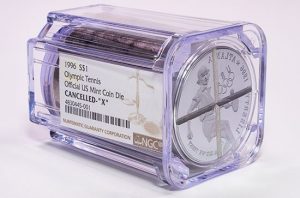
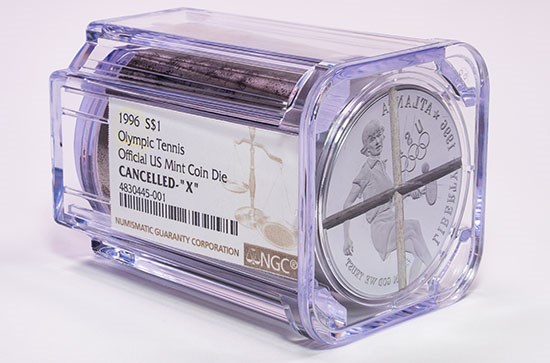
1996 Olympic Tennis Commemorative silver dollar “X” cancelled die encapsulated by NGC (Image courtesy of NGC)
Fees for this service range from $20 for a defaced die to $50 for a die that was canceled with an “X” to $100 for a die that was not canceled.
The holder appears to be similar to those used to encapsulate rolled coins. It will hold a die up to 40.6mm wide and 59.6mm tall, likely the largest die that the U.S. Mint would use to strike coins. The holder will be too small for the dies that would have struck 3-inch medals.
NGC does not say how the holders would keep smaller dies in place.
NGC will accept coin dies from any country.
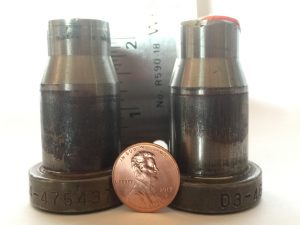
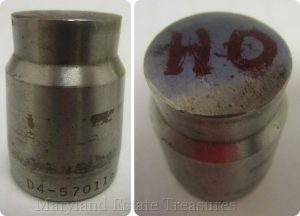
Since I found coin dies interesting, I bought a few. Two Lincoln cent dies were ground down except still have a small part of the design visible. The other is a 1994 half-dollar obverse die. The one cent dies are on my desk at home and the half-dollar dollar dies is in my office.
-
-
Lincoln Cent Dies from the Denver Mint
-
-
Canceled obverse die from a 1994-D Kennedy Half Dollar
Having the die sitting on my desk is a great conversation starter. Visitors will ask what it is and when I explain they have the same reaction that I had when I bought it at the 2018 World’s Fair of Money: “ooo, neat!”
I am not sure how I feel about this news for the industry but I will not be submitting my dies for encapsulation. I do not think the die’s industrial look would look good entombed in plastic.
Dec 20, 2018 | coin design, coins, dollar, US Mint
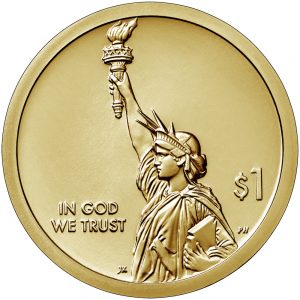 Since U.S. Mint announced the launch of the American Innovation $1 Coin Program there has been nothing but complaints from the community about the coin.
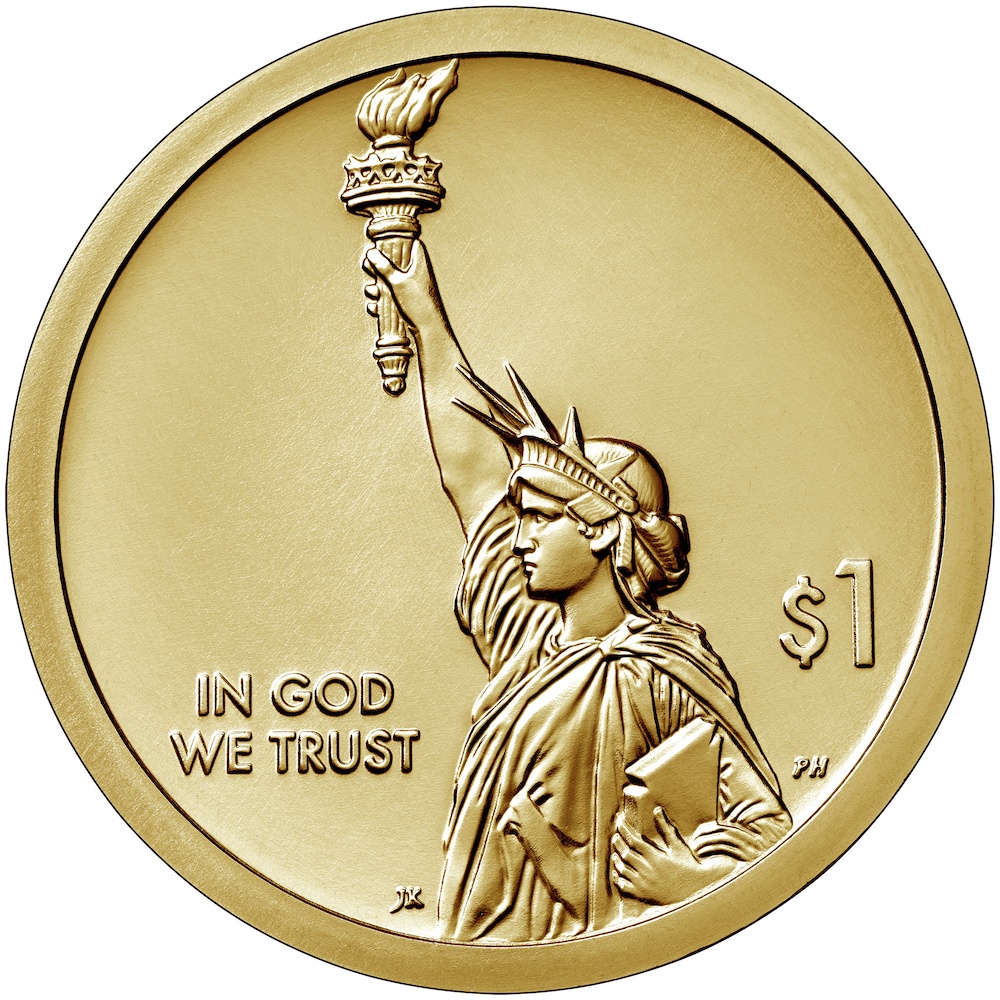
According to the law (Public Law No: 115-97), “The common design on the obverse of each coin issued under this subsection shall contain a likeness of the Statue of Liberty extending to the rim of the coin and large enough to provide a dramatic representation of Liberty.” With the U.S. Mint under a short deadline because of when the bill became law (July 20, 2018), there were a number of disagreements with the Citizens Coinage Advisory Committee regarding the obverse design of the coin. The U.S. Mint tried to modify an old design but the CCAC did not like that. Eventually, the design from Miss Liberty’s left side was used.
It has turned out to be an elegant design that does not duplicate any previous one. She stands on the coin as stately as she stands in New York Harbor, extending from rim to rim as required by law. For once, the CCAC and I agree on a good design.
But that is not enough for some people. The design is too plain.
The reason why the coin appears plain is that two elements that could have been on the obverse, the date and motto “E Pluribus Unum,” are on the edge of the coin.
Edge lettering for the $1 coins began in 2007 with the introduction of the Presidential $1 Program. It was decided to move these elements, along with “In God We Trust” to the edge because the obverse was to include the years of the president’s term. Aside from providing more space for the design, relocating the date would prevent potential confusion as to the date of the coin.
“In God We Trust” was restored to the obverse of the coin in 2009 after striking errors caused the edge of the coin to be blank. This caused overzealous conspiracy theorists and the gullible believing that this was done purposely against the religious communities.
Some argue that since the conditions have changed, the coin should not have edge lettering.
Aesthetically, the obverse design was well executed. It would be how the statue would look if you were standing in Battery Park located at the southern tip of Manhattan, and looked across the water on a clear day. There should be no reason to change the design.
However, there is a problem with the edge lettering in that it makes it difficult to see. As someone who has reached the age where an annual eye exam is a requirement and “corrective lenses” is now a permanent fixture on my driver’s license, having the mintmark on the edge requires me to use magnification to find the mintmark.
As a member of the Baby Boomer generation whose glasses seem to get stronger every year, I would be in favor of moving the date and mintmark to the obverse of the coin. But if the problem is only aesthetics, then I have no problems with having to use a 16x loupe to help identify where the coin was struck.
Dec 16, 2018 | coins, commemorative, dollar, news, US Mint
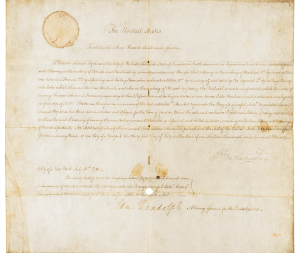
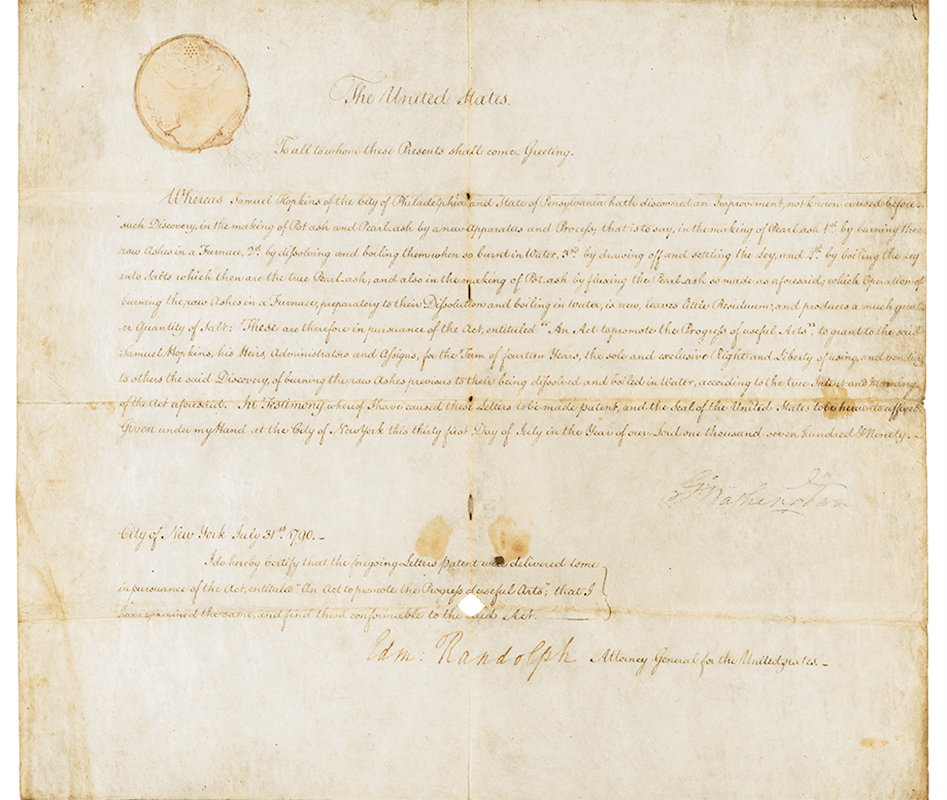
Patent X1 issued to Samuel Hopkins and signed by President George Washington on July 31, 1790 (USPTO Image)
On July 31, 1790, Samuel Hopkins was granted patent number X00001 for this method “in the making of Pot ash and Pearl ash by a new Apparatus and Process.” In June of this year, the U.S. Patent and Trademark Office (USPTO) issued Patent #10,000,000 based on the current numbering system that began in 1836. According to the USPTO, there were 9,433 patents issued from 1790 through 1835.
The other news from the U.S. Mint was the first strike ceremony for the Apollo 11 50th Anniversary Commemorative Coins at the Philadelphia Mint. Children of the three astronauts who flew on Apollo 11 represented their fathers at the ceremony: Mark Armstrong, Andrew Aldrin, and Ann (Collins) Starr.
Coins will be offered for sale to the public on January 24, 2019. The money raised from this commemorative coin program will benefit the Astronauts Memorial Foundation, the Astronaut Scholarship Foundation and the Smithsonian National Air and Space Museum’s “Destination Moon” gallery.

A pair of 5-ounce silver proof $1 coins struck during the First Strike Ceremony at the U.S. Mint (photo courtesy of collectSPACE.com)
And now the news…
December 10, 2018
Cash use has plummeted in Australia over the last few years but Eric Eigner isn't worried. "People will want to collect something that appears to be more scarce," he says. "I think it's a good thing to a certain extent." → Read more at smh.com.au
December 10, 2018
The patterns on Guangxi commemorative coins reveal special cultural elements and how the region has developed in the past 60 years. → Read more at news.cgtn.com
December 10, 2018
Museum intern Roo Weed ’18.5, a physics major, is using digital solutions to make the College’s rare coin collection more accessible to the public. → Read more at middlebury.edu
December 11, 2018
"> <META PROPERTY= → Read more at miningnewsnorth.com
December 14, 2018
From Alexander the Great to the Byzantium and the Middle Ages until the modern era all periods are covered in an exhibition featuring a rare collection of gold coins. This collection contains coins that are considered to have paved the way for the use of coins in world history and is being staged by the … → Read more at cyprus-mail.com
December 14, 2018
The United States Mint reveals a new coin collection to commemorate the 50th anniversary of the Apollo 11 moon landing. Item includes great video of striking coins in the mint → Read more at myhighplains.com
December 15, 2018
The U.S. Mint has struck its initial coins commemorating the 50th anniversary of the first moon landing. You could say it was one small strike for the Mint, one not-so-giant press for Apollo history. The coins were stamped as part of a "first strike" ceremony. → Read more at collectspace.com
December 15, 2018
The finds are "of great benefit" in helping understand Wales' "unique history", National Museum Wales says. → Read more at bbc.com
Dec 14, 2018 | coins, dollar, US Mint
Later today, the U.S. Mint will have a ceremony to begin the American Innovation $1 Coin Program. The ceremony is scheduled for 11:30 am at the U.S. Mint’s headquarters at 801 9th Street NW in Washington, D.C.
The American Innovation $1 Coin Program will issue four dollar coins a year in recognition of the significant innovation and pioneering efforts of individuals or groups from each of the 50 States, the District of Columbia, and the United States territories. Coins will be issued in the order that the states entered the union followed by the District of Columbia, Puerto Rico, Guam, American Samoa, the U.S. Virgin Islands, and the Northern Mariana Islands.
As allowed by law (Public Law 115-197), the U.S. Mint is producing an introductory coin for the program that will be presented as part of the launch.
The obverse of the coin, which will be featured throughout the series, is a view of the Statue of Liberty in profile. The view of the upper third of her body with the torch extended to the edge of the coin with a plain background gives the image a quiet elegance that is not usual for a U.S. Mint design. It was designed by Justin Kunz of the Artistic Infusion Program with credit to the Citizens Coinage Advisory Committee for pushing the U.S. Mint to come up with something different.
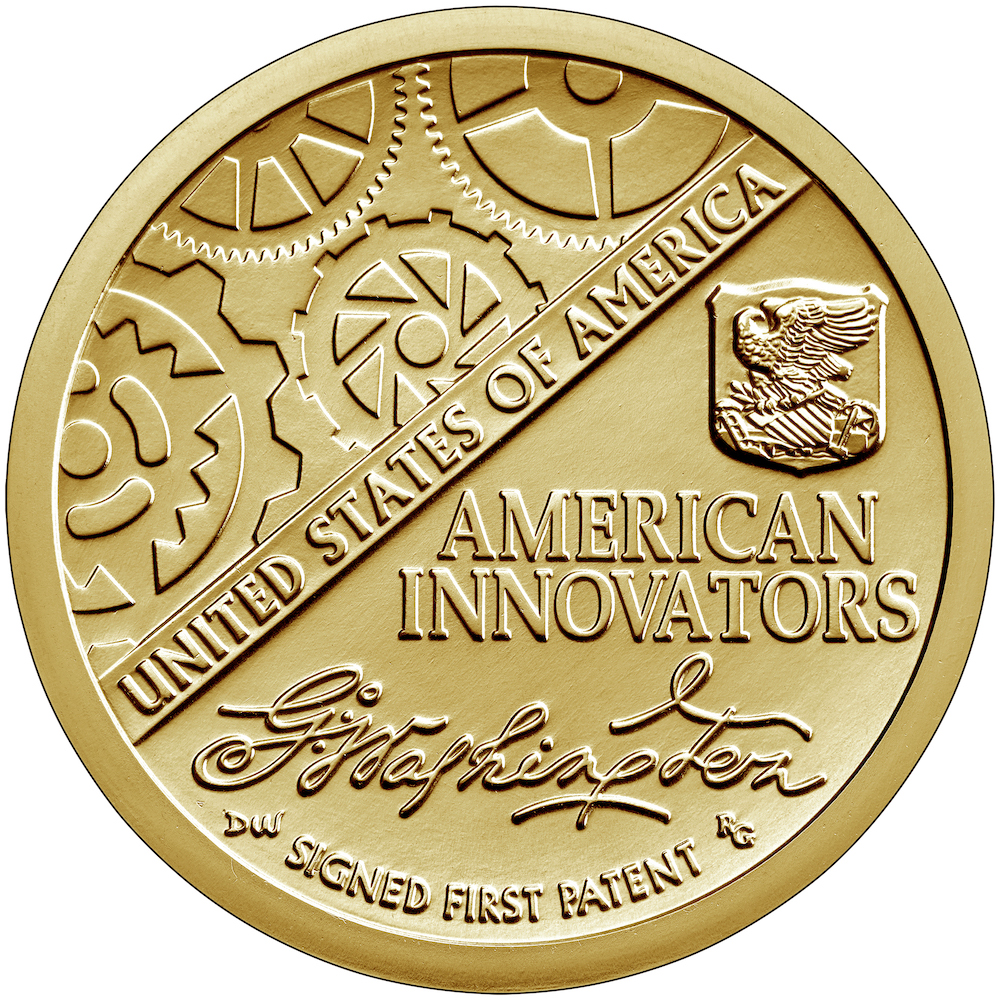
The reverse design of this introductory coin provides hope that the future of this program will not be mired in trite designs. It honors American Innovation by recognizing the first U.S. patent signed by President George Washington that was issued to Samuel Hopkins on July 31, 1790, for developing a process for making potash. The gears representing innovation appears next to Washington’s autograph.
The year, mint mark, and E PLURIBUS UNUM (Out of many, one) will appear on the edge of the coin as it does with all $1 coins since 2007.
Although it is a fantastic design worthy of a collection that includes the Native American Dollar designs, it will have the same impact as all dollar coins issued in the 21st century. It is a coin that will barely circulate and will not grab the attention of the U.S. public without its circulation.
Even though Congress creates these programs and has been told that this program will be a failure because the coins will not circulate alongside the paper dollar, they continue as if nothing is wrong. Even the Government Accounting Office, their own agency that helps with investigations and oversight of the federal government, has recommended eliminating the one-dollar note.
I will collect these coins as I have done for all of the special series introduced in the 21st century. But I will not be as enthusiastic about this series as I should be until something is done to make these coins circulate.
Dec 10, 2018 | coins, commentary, markets, silver
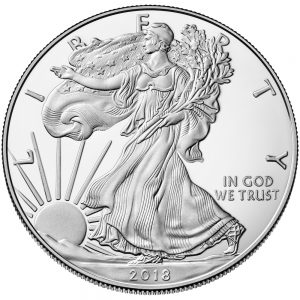 Each week I look at the news from the week in order to highlight something interesting. With the holiday season upon us, I was hoping to find something nice to write about. Instead, Kitco’s story about the increasing sales of silver and a marketplace that is now moving is more concerning than positive.
Precious metals are the investment of last resort. While some portfolios will diversify into metals for a safe haven, metals become active when there is uncertainty in the market. The trade wars between the United States and China have caused market players to reduce their risk by investing in silver.
Although most prefer gold, silver has been the metal of choice for the Chinese for hundreds of years. It has been the benchmark of their trade and the basis for their monetary system prior to all countries moving off precious metals standards. It was the basis of trade that the United States thought would be resolved by creating the Trade Dollar coin in 1873.
The rise in silver sales from the U.S. Mint is good in that it will increase seigniorage. It is not so good in that it indicates there is the potential for the markets to change course. Markets hate uncertainty and this could be their answer to the uncertainty brewing in trade between China and the United States.
And now the news…
November 28, 2018
Currencies / Fiat Currency The first gold coins appeared around 560 B.C. Over time it became a practice to store larger amounts of gold in warehouses. → Read more at marketoracle.co.uk
November 29, 2018
These days, you can't buy much with 5¢ – including the cost of making one. That's right, the cost of producing a 5¢ piece is about 5.059¢, and this is about the cheapest it's been in recent years. In 2015, the cost of producing a 5¢ piece hit a high of 7¢ due to the fluctuating cost of nickel and copper. → Read more at smh.com.au
November 29, 2018
Inmates in a Bulgarian prison were in for a shock when they stumbled across an enormous hoard of silver coins from the Ottoman Empire. The incredible haul was discovered alongside two broken treasure pots in a prison in the Bulgarian city of Pleven. → Read more at mirror.co.uk
December 2, 2018
The National Bank of Romania (BNR) has put into circulation, for numismatic purposes, a commemorative collector banknote with face value of lei 100 dedicated to the anniversary of 100 years since the Great Union on December 1, 1918. → Read more at romania-insider.com
December 3, 2018
Correcton:The U.S. Mint provided incorrect information on its website Monday morning, misstating the number of ounces sold in December. In an update of its sales data the U.S. → Read more at kitco.com
December 4, 2018
Rare gold coins and a golden earring have been discovered in the ancient Mediterranean port of Caesarea in northern Israel—possibly left and never recovered as Crusaders conquered the area 900 years ago. → Read more at phys.org
December 6, 2018
It was 150 years ago this month when one of Nevada's most treasured artifacts first arrived in Carson City. → Read more at carsonnow.org
December 6, 2018
Lianna Spurrier has the tooth fairy to thank for a hobby that transformed into sudden job opportunities. → Read more at thetrailblazeronline.net
December 8, 2018
This article first appeared in the Nevada Appeal on July 20, 2014. Abe Curry received papers on July 16, 1866, approving the start of construction on the Carson Mint.On → Read more at nevadaappeal.com
Dec 4, 2018 | coins
 Every two years, the United States elects a new Congress to carry on the people’s legislative business. The election last month will have the Democrats in control of the House of Representatives and the Republicans with an additional two seats in the Senate. While this has some profound implications for the political environment of the country, what does it mean for future numismatic-related legislation?
First, we have to conclude the business of the 115th Congress. When it comes to numismatic-related accomplishments, this congressional session yielded only two laws:
- The American Legion 100th Anniversary Commemorative Coin Act (Public Law No: 115-65)
- American Innovation $1 Coin Act (Public Law No: 115-97)
The American Legion 100th Anniversary Commemorative Coin Program will be issued in 2019 along with the Apollo 11 50th Anniversary Commemorative Program. The American Innovation $1 Coin Program will also begin in 2019 that will likely be as successful as the Presidential $1 Coin Program. Someday, Congress will learn that to see any success with the $1 coin that they have to eliminate the $1 paper note.
Through November, Congress has not acted on any numismatic-related legislation. There have been updates on various bills as the current Congress shuffles papers and as others try to attract additional co-sponsors in order to gain notice by the majority leaders.
Given the current state of chaos in Congress, it is difficult to predict what will be passed in December.
The 116th Congress will convene at noon on January 3, 2019, as required by the Constitution. Most of the first day is set aside for procedural issues including the formal election of leadership. Both chambers will then introduce their respective first bills which formalize the budget. This has been a tradition in Congress dating back to the Reagan Administration. It has also been a tradition for these bills be the biggest source of contention between the parties.
For the last three congressional sessions, the Republican-controlled House Financial Services Committee created a rule that required two-thirds of the members to co-sponsor any commemorative coin legislation to be considered. In reality, this has not helped or hurt any potential legislation since many of the bills that have passed have barely been debated in committee and have been passed by unanimous consent.
It is not known if incoming Financial Services Committee Chairperson, Maxine Waters (D-CA), will keep the same rules. Given the recent history of contentious relations between the parties, it would not be surprising for Waters to dust off the rules from the previous Democratically-controlled House for this session.
Congress has not passed a commemorative coin bill for 2020 and later. It could happen in the lame-duck session. Then again, anything is possible!





 Loading ...