
NNP Symposium 2020 Was A Success
 This past weekend, the Newman Numismatic Portal (NNP) sponsored the NNP Symposium. For three days, NNP used Zoom to facilitate 38 sessions about different aspects of numismatics. The topics covered everything from U.S. and foreign numismatics to discussions about the industry. The Numismatic Bibliomania Society held its Annual Meeting via Zoom, and Matt Dinger & Mike Nottelmann did a live version of The Coin Show. After listening to them for a while, I now see what they look like — I do not know if that is a good or bad thing.
I was able to attend several of the sessions and deliver one of my own. Every session I attended was interesting and informative. The only complaint I had was that I could not attend every session. However, the NNP recorded each session and will be making them available online.
If you wanted to attend the symposium, you had to register to receive the Zoom credentials. There was no cost to register and no restrictions on the device you used. I attended the session before mine, presented by Doug Mudd, using my iPad. Since he went a little long, I was able to log into my session on my computer while watching the end of Doug’s on my iPad.
The entire numismatic community must commend the NNP and Lianna Spurrier, who coordinated the online event. Spurrier did the call for speakers, training sessions with the speakers, and probably a lot more behind the scenes we did not see.
As a member of the Numismatic Literary Guild, if there is an award for excellence in facilitating education, please allow me to nominate Spurrier for the award.
The NNP Symposium came due to an unusual set of circumstances that has seen the ANA’s Summer Seminar and every major coin show canceled. The NNP hit a homerun with its effort. The symposium was such a success that I hope the NNP makes this an annual event.
Remembrance Day 2012
Between the crosses, row on row,
That mark our place; and in the sky
The larks, still bravely singing, fly
Scarce heard amid the guns below.
We are the Dead. Short days ago
We lived, felt dawn, saw sunset glow,
Loved and were loved, and now we lie
In Flanders fields.
Take up our quarrel with the foe:
To you from failing hands we throw
The torch; be yours to hold it high.
If ye break faith with us who die
We shall not sleep, though poppies grow
In Flanders fields.
“In Flanders Fields” was written during World War I by Lieutenant Colonel John McCrae, a Canadian physician stationed in northern France. Aside from being a physician, he was a teacher, poet, and author. McCrea was appointed as a field surgeon and was in charge of a field hospital during the Second Battle of Ypres when his friend and former student Lieutenant Alexis Helmer was killed in the battle. The death and funeral of his friend inspired McCrae to write the poem.
“In Flanders Fields” was published anonymously in the British magazine Punch on December 8, 1915. However, the index for the year printed only a few weeks later attributed the poem to McCrea. The poem became one of the most popular of the war and was extensively printed in the United States while its leaders were debated whether to join the war.
McCrae died of pneumonia on January 28, 1918 while commanding No. 3 Canadian General Hospital (McGill) at Boulogne. He was buried with full military honors at Wimereaux Cemetery near the English Channel 3 miles from Boulogne.
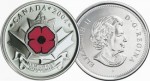
2004 Canada Poppy Quarter, the first colorized coin ever issued for circulation by any mint.
The remembrance poppy is not as strong a symbol in the United States since the nation did not declare war on Germany until April 1917. The American Legion has used the poppy as part of its fund raising efforts.
Maybe the United States should embrace the poppy as well. Why not create a commemorative coin with a colored poppy as the design and use the seignorage from the sales to support the work of the Department of Veterans Affairs? How about changing the reverse of the Roosevelt Dime to be a red-colored poppy to raise awareness of all our veterans? Using the Roosevelt Dime would give it a needed refresh and would tie both World Wars in one coin. Then the U.S. Mint could strike special silver dime for sale to the public.
Maybe it is an idea whose time has come.
- British Remembrance Day coin courtesy of the Daily Mail Online
- Australian Remembrance Day coin courtesy of the Royal Australian Mint
- Canadian Poppy Quarter courtesy of Talisman Coins
U.S. Mint and BEP Making American History

Rosie Rios
Here is a basic history of the United State’s money manufacturing organizations:
For reference, the official “birth date” for the U.S. Mint is April 2, 1792 when President George Washington signed the Coinage Act of 1792.
On February 25, 1863, President Abraham Lincoln signed the National Bank Act of 1863 that created a single currency standard for the United States where the notes would be backed by the United States Treasury and printed by the federal government. The result of this act lead to the establishment of the National Currency Bureau which was later rename to the Bureau of Engraving and Printing.
And You Think This Election Is Bad
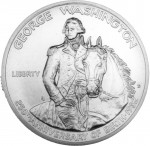
1982 George Washington 250th Anniversary Commemorative Half Dollar
At that time, it was not customary for the candidates to campaign. During the campaign Adams remained in his home in Quincy and Jefferson stayed at Monticello while members of their respective parties campaigned for their nominees. In a near evenly divided country, Adams won the electoral votes 71 to 68. Since Jefferson came in second, the constitution mandated that the second place electoral vote recipient would become vice president.
The election prompted the introduction of what would be the 12th Amendment to the United States Constitution that changed the ballot would be cast for a president/vice president as a single ticket. But the amendment did not see floor action and left the door open for probably the most contentious election in United States history.
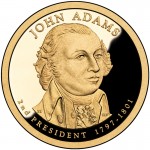
2007 John Adams Dollar
This was the United States’ first really partisan election. The evenly divided parties, electorate, and was one of the first where what we call today “the ground game” was very important especially since each state was allowed to choose its own election day. With the election lasting from April to October, the election came down to the vote in South Carolina with an electoral tie of 65-65. Even though Pinckney was a South Carolinian, the Democratic-Republican state majority chose the state’s eight electors.
Constitutionally in 1800, each elector was to cast two votes, which is where the problem began. Because electors that voted for Jefferson also voted for Burr, both were electorally tied. When all eight electors voted for both Jefferson and Burr, the electoral vote would be tied between Jefferson and Burr.
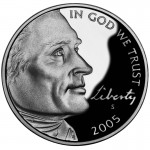
2005 Westward Journey Nickel Obverse designed by Joe Fitzgerald
When the votes from New York were counted, one elector voted twice for Aaron Burr in violation of Electoral College rules. After a contentious discussion, the New York delegation convinced the Jefferson to switch the vote for Jefferson. This gave Jefferson and Burr and official 73-73 electoral vote tie.
As required by the constitution, Jefferson adjourned the joint session of congress and the House of Representatives convened to break the electoral tie. When the House of Representatives selects the president, each state delegation is given one vote and the candidate with the majority wins. Since there were 16 states, the winner must receive the vote of nine state delegations. From February 11 through February 17, the House held 35 ballots with the result of Jefferson receiving 8 votes, Burr received 6, and two submitted blank ballots.
Federalists would not support Jefferson and the Democratic-Republicans did not hold enough state delegations to sway the election. Alexander Hamilton became the lone bi-partisan voice amongst the Federalists. Even though the Federalists did not like Jefferson, Hamilton embarked on a letter writing campaign to convince at least one delegation to change their vote because he felt Jefferson was “by far not so dangerous a man” as Burr. On the 36th ballot, Maryland and Vermont changed their ballots from blank and voted for Jefferson as President.
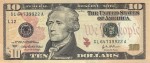
Series 2004A $10 Federal Reserve Note (Cabral/Snow)
This lead to not-so-nice letters being sent between the two men and mutual friends tried to intervene. Despite the pleas against it, a duel was scheduled for July 11, 1804 in Weehawken, New Jersey. Vice President Aaron Burr shot Alexander Hamilton in the abdomen while Hamilton’s shot struck a tree branch over Burr’s head. Burr was shuttle back to Washington, D.C. and Hamilton was taken to a friend in New York City where he died on July 12, 1804.
Although this year’s election may seem contentious, it will not lead the the death of a participant. Aside from the fact that duels were outlawed after the Burr-Hamilton Duel, we have become more “sophisticated” in managing our disputes. Just ask Al Gore!
On this Election Day, it is your duty as a citizen of the United States of America to VOTE! Make sure you do so today.
Did you?
- Coin images courtesy of the U.S. Mint.
- Image of the $10 Federal Reserve Note courtesy of WikiMedia Commons.
- The “I Voted” sticker image from RocketXL Launchpad.
Passing of an American Hero
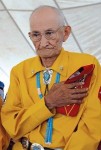
Navajo Code Talker George Smith
After learning that Japanese intelligence experts broke every code the United States armed forces could devise, Philip Johnston, a missionary who learned the difficult Navajo language, proposed to create a code based on that spoken-only language. Johnston recruited 29 Navajo native speakers and they devised a code based on the Navajo language that Japanese intelligence was never able to decipher.
From the 200 word code, it grew to over 600 words and required 400 additional native Navajo soldiers to help with the communications across the Pacific theater.
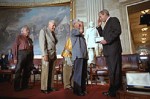
President George W. Bush presented the Congressional Gold Medal to Navajo code talkers on July 26, 2001.
As part of the authorizing legislation, the U.S. Mint produced bronze versions of the medal for the public. These medals are no longer for sale by are still on sale at the U.S. Mint. [Correction complements of the Mint News Blog]
“This news has saddened me. Our Navajo Code Talkers have been real life heroes to generations of Navajo people. They have brought pride to our Navajo people in so many ways. The Nation’s prayers and thoughts are with the family at this time as they mourn the passing of a great family man who served his country and protected his people,” President Shelly said.
We are all saddened by the passing of this true American hero. May his family and friends take comfort and pride in his memory.
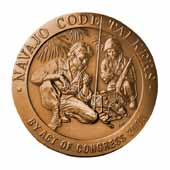
- Obverse
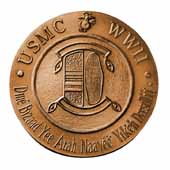
- Reverse
- † From “Semper Fidelis, Code Talkers” by Adam Jevec.
- Photo of George Smith courtesy of Navajo Times photographer Paul Natonabah via Navajo Nation President Ben Shelly’s website.
- Congressional Gold Medal Presentation image courtesy of the White House Photo Office.
- Bronze medal image courtesy of the U.S. Mint.
Coin Magic for a Saturday
It is homecoming weekend at my undergraduate alma mater. For the first time in many years, I am off to join other alumni to relive some good times from our youth in front of more than 92,000 of our closest friends. I’m sure we will find time to watch some football.
In the mean time, let me leave you with this video for a little weekend fun. Magician Rick Lax performs a trick to penetrate a clear drinking glass with a coin.
Rick Lax sent the link to me in hopes I would give him some free publicity. Since it is a cool trick and it only costs $19.95 to learn how to do it, I thought I would give him a shout out for the trick. Click here to learn more about the trick.
 If you want to really have some fun, you can watch my personal Twitter stream. I might take some pictures before the game, from the field during pre-game, and provide other commentary during the game!
Support the Coin Collectors Blog
 Buy me a coffee
Thank you for your support!
Let Me Know What You Think
Are you going to the World's Fair of Money
Total Voters: 17
 Loading ...