
Weekly World Numismatic News for July 5, 2020
 An article on Yahoo Finance asked the same question many have asked me: are the high premiums for physical gold a scam or a supply crisis?
Gold is in high demand. As a safe haven for uncertain markets, the current markets have driven investors looking to have some stability in their portfolio. Some have suggested that the preppers, those who prepare themselves for a pending disaster, have been hoarding gold. A favorite among preppers is the small 1 gram through 10 gram gold bars because they will be more useful in daily transactions.
According to market analysts, the demand outpaced the available supply. The available supply is what is available to buy. The problem was that the pandemic caused many supply chains to break down with precious metals stuck somewhere and not being delivered to the buyers.
Another problem in the supply was the perception that the demand could not be satisfied after the West Point Mint’s temporary closing. Although the Philadelphia Mint stepped in to produce silver coins, the gold coin production stopped. Subsequently, there were conflicting reports on whether there was enough physical gold entering the supply chain or whether the gold was not getting to the sellers because of the pandemic.
During the shutdown, there were reports that gold mining slowed or stopped as travel became limited. It was also a problem when the major Swiss gold retailers had to shut down because of the quarantine since most as near the Italian border. While gold was available on the secondary market, perception became that if these retailers were closed, there would not be enough for the future. The uncertainty caused the gold buyers to increase their purchases.
One gold dealer reported that they had sufficient gold to satisfy the market but not in the form the customers wanted. The demand for American Gold Eagle exceeded their supply while the non-Swiss made bars were not selling. Customers that demanded Canadian Gold Maple Leaf coins were also disappointed but refused to buy gold coins from other European mints.
There is also no consistency between the premiums dealers charge. Some of the larger dealers use software to calculate the market price that examines other online sales to determine an average. Smaller dealers have said that they watch what the larger dealers are charging and adjust their premium below the average.
Nearly every analyst is bullish on the future of gold pricing. Being bullish on gold means that those watching the markets are not comfortable with the equities market’s stability. We can be in for a bumpy ride.
And now the news…
 June 26, 2020
 → Read more at finance.yahoo.com
June 27, 2020 → Read more at toledoblade.com
June 27, 2020 → Read more at timesargus.com
June 29, 2020 → Read more at edmonton.ctvnews.ca
June 30, 2020 → Read more at yorkshirepost.co.uk
July 1, 2020 → Read more at pressrepublican.com
→ Read more at finance.yahoo.com
June 27, 2020 → Read more at toledoblade.com
June 27, 2020 → Read more at timesargus.com
June 29, 2020 → Read more at edmonton.ctvnews.ca
June 30, 2020 → Read more at yorkshirepost.co.uk
July 1, 2020 → Read more at pressrepublican.com
Figures Never Lie But A Liar Figures
The media, blogs, and pundits who do not read government reports beyond the executive summary have shown their lack of journalistic credibility over the latest report from the Government Accountability Office titled Alternative Scenarios Suggest Different Benefits and Losses from Replacing the $1 Note with a $1 Coin (GAO-12-307 [PDF] published February 15, 2012).
The latest tome from the GAO is a followup to GAO-11-281, Replacing the $1 Note with a $1 Coin Would Provide a Financial Benefit to the Government published almost a year ago. It was a report produced for the Senate Committee on Banking, Housing and Urban Affairs and addressed to Sens. Richard Shelby (R-AL), Bob Casey (D-PA), and Tom Harkin (D-IA) after being asked to analyze the cost differences to the government using a dollar coin over the dollar note. In that report, the GAO estimated that replacing the note with a coin will save an estimated $5.5 billion over the 30 year lifetime of a coin.
Rather than accepting that report, Sen. Scott Brown (R-MA) used his position as the Ranking Member of the Senate Subcommittee on Federal Financial Management, Government Information, Federal Services, and International Security, commissioned the GAO to rework the report under different condition. Sen. Brown asked the GAO not to add seigniorage to the calculation, reduce the report to cover ten years, and calculate the a one-to-one replacement rather than the 1.5 coins to one note replacement used in the 2011 report.
Seigniorage is the profit the U.S. Mint and the Bureau of Engraving and Printing earns on producing their products. It is calculated by the difference between the cost of producing the money versus its face value, which is what the Federal Reserve pays for that money. For example, the BEP reports that it costs 7½ cents to print one note. When they sell a one dollar Federal Reserve Note to the Federal Reserve, the BEP collects 92½ cents for that transaction. By law, both the U.S. Mint and BEP deposit seigniorage into their respective Public Enterprise Funds (see 31 U.S.C. § 5136 for the U.S. Mint and 31 U.S.C. § 5142 for the BEP). Both laws require the Secretary of the Treasury to deposit excess over what is needed for operations into the General Fund. Not only are these bureaus manufacturing money, they earn money that is deposited for the general use of the government.
Seigniorage is an important factor in the operations of the money manufacturing operations of the U.S. Mint and BEP which is why it is important in the analysis of any bill introduced in congress. This analysis is performed by the Congressional Budget Office. When the economists of the CBO to reads a bill and determine its effect the country’s budget, they are supposed to take every aspect of the bill into consideration. Since all coin-related bills requires the U.S. Mint to deposit its profit in their Public Enterprise Fund, calculating the effect that seigniorage has is required. If fact, when the CBO analyzed the Presidential $1 Coin Act of 2005, the “CBO estimates that replacing the Golden Dollar with the $1 Presidential coin would increase seigniorage by about $280 million over the 2006-2015 period.”
What Sen. Brown asked the CBO to do is to figure out what would happen if the U.S. Mint was to produce more coins but not count their profit what would the effect be. The answer is not based in any reality because if you do not count the profit (seigniorage) you are only telling part of the story. Basically, Senator Brown is asking to the CBO to use the sin of omission in an attempt to justify his policy position.
Remember, Senator Scott Brown is the junior senator from Massachusetts where the Dalton-based Crane & Co. is the sole supplier of currency paper to the Bureau of Engraving and Printing. Brown, who is completing the term of the late Senator Ted Kennedy, would never have been appointed the Ranking Member of any subcommittee as a freshman member except that he is a Republican who won a long standing Democratic seat. Brown is currently locked in a heated campaign against Elizabeth Warren (D) for the 2012 election.
It is clear that Sen. Brown changed the parameters of the original GAO report (GAO-11-281) as a way to stop attempts to replace the paper note with coin to use in his campaign for his senate seat as a favor to Crane & Co. Unfortunately, the media outlets who covered the release of this report has chosen to read the executive summary and skipped Page 1 that begins “Dear Senator Brown.”
ANA Is More Than The Money Museum
Anyone who has followed the issues at the American Numismatic Association over the last few years does not have to be told that the organization has had its share of problems. While the economic problems appear to be settled for now, the ANA continues to have issues that have not been addressed by the current or previous Boards of Governors.
Recently, Dr. Lawrence J. Lee, the former director of the ANA Money Museum in Colorado Springs had an opinion piece published in CoinWorld basically saying that the ANA should be reorganized around the museum.
“What I find is that most people confuse the ANA organization, its structure and goals and board members and all of their ‘stuff,’ with the ANA Money Museum, as if they were one and the same,” writes Lee. “If only they were. One is the dog. One is the tail. The problem is that for many years the tail has been wagging the dog.”
With all due respect to Dr. Lee, the ANA is more than the Money Museum. The ANA is an association of collectors of all types and dealers of all sizes for the sole purpose of perpetuating and promoting numismatics as a hobby, investment, and business. To support its members, the ANA provides many services that members can use to enhance their collecting pursuits and enjoyment of numismatics. Along with the Edward C. Rochette Money Museum, the ANA publishes The Numismatist monthly, offers education through the Florence Schook School of Numismatics, provides research materials through the Dwight N. Manley Numismatic Library, and the offering of other group benefits available to all members.
In short, the ANA is, and should be, a comprehensive organization that should be focused on education where the Money Museum is only one attraction of the resources provided to its members and the communities it touches.
Lee, who worked with Executive Director Edward Rochette “to increase the level of professionalism at the museum” so that the Money Museum could be accredited by the American Association of Museums (AAM) and become a leader in numismatic exhibitions. However, even Lee admits that in order to become AAM accredited, the association must be reorganized around the Money Museum:
While the Money Museum is an important benefit of the ANA, it is not the reason for the ANA’s existence.
If the ANA were to follow Lee’s recommendation, the ANA’s charter and by-laws would require it being amended to include a diverse mix that would include those from academia and other nonprofit organizations while diminishing the role of coin dealers. While Lee appropriately notes that most Board members are from the for-profit world and try to manage a nonprofit with that mindset, it is the Board that the membership elected to run their organization.
The ANA and the Board of Governors has its problems. It needs strong leaders who can professionally lead a nonprofit and develop a cohesive professional organization in Colorado Springs that could run the organization without the micromanagement from the Board. The Board should be structured in a manner that would best represent all its members while providing the professionals in the Colorado Springs headquarters the support they deserve—including professional development, which seems to be lacking for the ANA’s professional staff.
Lee suggests that the library and museum should be staffed with properly educated and trained professionals, it would help the current staff maintain these jewels in the ANA’s crown for the benefit of its members.
“The ANA coin collection is more than the sum total of all of its individual coins,” writes Lee. But the ANA is more than the sum total of all of its assets and should not be defined in the terms of those assets.
PCGS Slabs Hong Kong
Last month, PCGS announced they will open an office in Hong Kong to help Asian dealers authenticate and grade coins for their market. With the flood of counterfeits from that area of the world, providing access to a third-party grading service could help in reducing the proliferation of fake coins.
Recently, PCGS announced that their new Hong Kong company will be grading coins prior to and during the Hong Kong International Coin Convention and Antique Watch Fair beginning on March 24 and continuing through April 6, 2012. If you are interested in submitting coins to PCGS Hong Kong, read the story at coinnews.net.
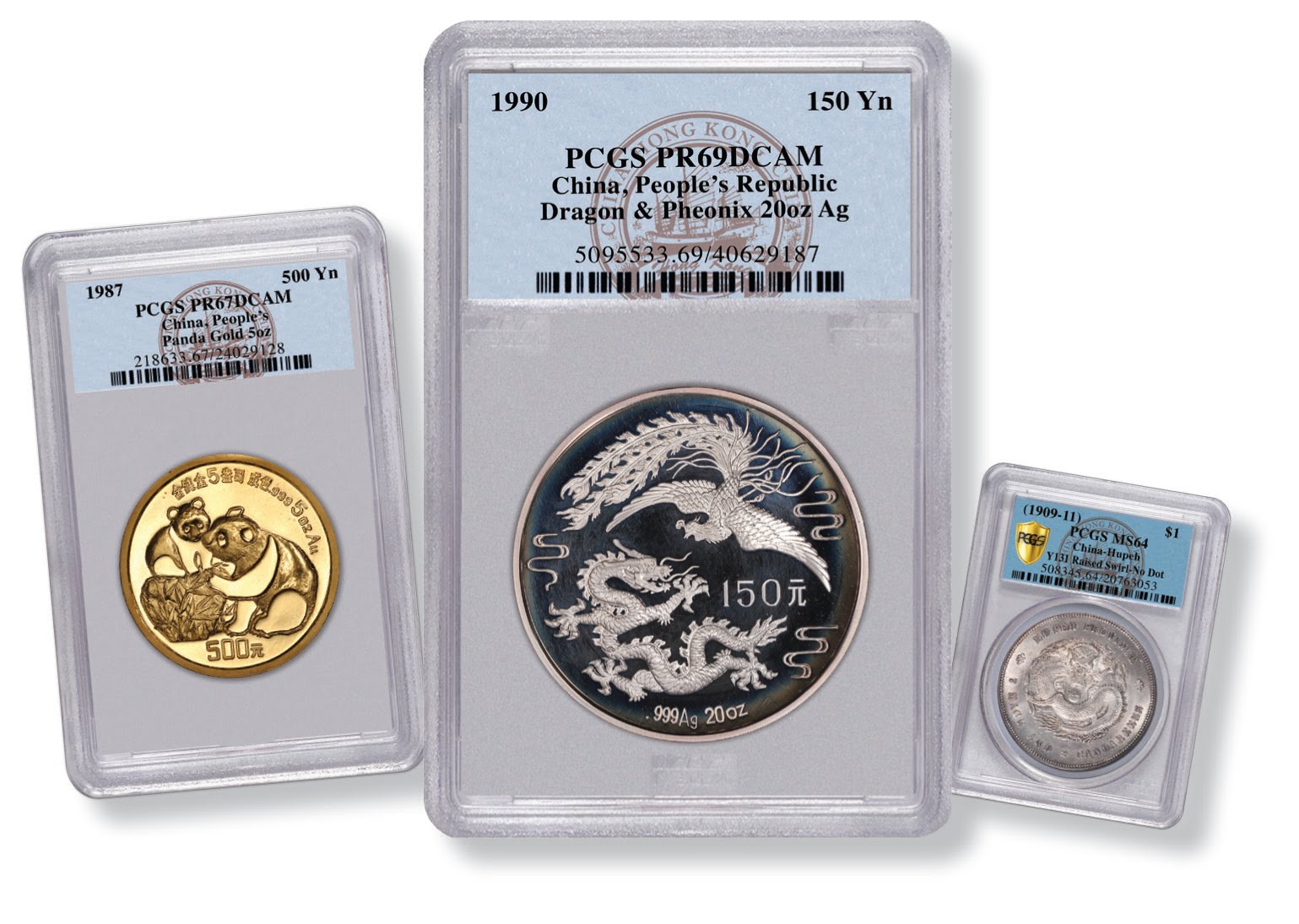 More interesting are the sample of the holders PCGS published with the press release. PCGS will continue to use slabs similar to those used in the United States without the edge-revealing prongs. The medium sized slab in the image (right) appears similar to those used to encase the 5 ounce America The Beautiful Silver Bullion Coins. What appears to be new is the large-size slab for those large silver coins issued for the new lunar year, for example.
To identify coins graded by the PCGS Hong Kong subsidiary, the label used on the slab apparently will have a circular logo colored in red.
This is reported with mixed feelings. While I prefer raw (ungraded) coins, I understand the the necessity to authenticate coins especially from that area of the world. If you do not know about the extent of the problem with Chinese counterfeit coins, this article by Susan Headly includes detailed images of a Chinese counterfeiting operation and should be a scary reminder.
And XLVI Makes IV
Your blog host is happy today as his favorite team, New York Giants, lead by MVP Eli Manning, beat the New England Patriots in Super Bowl XLVI. As a die-hard Giants fan, I worried if the team that was dominated by the 5-11 Redskins in Week 16 would show up or would the run that started the next week against the Jets continue. Like every game in the run, the Giants did just enough to hang in before putting the ball in Eli’s hands to let him do his magic.
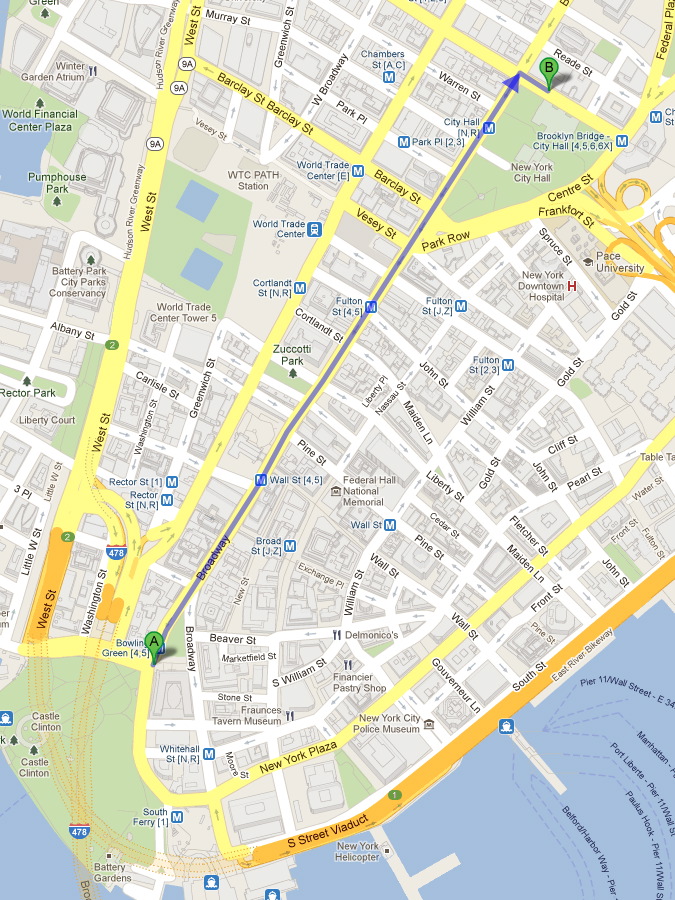 Next stop for the Giants is a ticker-tape parade down the Canyon of Heroes on Tuesday February 7. The Canyon of Heroes is the section of lower Broadway in the Financial District that runs from Bowling Green to City Hall Park.
The game started like every other football game does with the coin toss. For the last 21 Super Bowls, including Sunday’s Super Bowl XLVI, the Official Coin used for the coin toss is made by The Highland Mint of Melbourne, Florida.
You can find out more about how the coin is made complements of FloridaToday.com:
The Highland Mint strikes 10,000 coins and are numbered. The first 100 are sent to the NFL where number 1 is used for the coin toss. After the game, it is sent to the Pro Football Hall of Fame in Canton, Ohio.
In the following video, you can see more of the manual aspects of the minting process, including the gentleman sitting at a machine that stamps numbers into the coins which is shown in the second-to-last scene.
If you are a member of the Papa Rewards Program, the loyalty program for Papa John’s Pizza, your interest in the coin toss ended when it landed on heads and you won a free pizza and soda. Enjoy your pizza!
Maryland’s Groundhog Moment
During Maryland Governor Martin O’Malley’s (D) State of the State Address in front of the Maryland General Assembly, he outlined his vision for the state and how it will support its citizens. As a resident, I was interested in what Governor O’Malley said because of some of the rumored policy initiatives.
Like every other state, Maryland needs to raise money in order to fulfill state current state obligations without considering new initiatives. O’Malley, who is in his second term and has not shied away from talk about seeking a federal office, put forward an aggressive agenda that includes “revenue enhancers” to pay for his proposal.
One revenue enhancer is one that was defeated last year: the repeal of the sales tax exemption for coin sales of more than $1,000, bullion, and coin shows. According to the Budget Highlights published by the governor’s office, it is estimated that repealing the exemption will bring in an addition $3 million in revenue.
One difference between the bill introduced in 2011 and this one being proposed by the governor is that last year’s bill was introduced late in the session making it easier for delegates to prevent it from being reported out of committee. This year, the bill will introduced early, possibly this week, giving legislators the entire session to work on its provisions.
I received a note from David Crenshaw, General Manager of Whitman Expos as I did last year talking about this proposal. Once again, Whitman is saying that if the law was repealed they would likely move their shows “to a friendlier state with no sales tax.” This would effect the loss of ancillary taxes at hotels, restaurants, and other establishments in the Inner Harbor that would be generated by show participants.
While the proposed tax change is yet another example of a government not looking at the collateral damage that may be caused by this type of proposal, I do not agree with Crenshaw that now is the time to act. Since the bill has not been introduced in the legislature for consideration, referencing an issue without a bill to associate it with will not make an impact. With the limited time that the legislature is in session (four months), comments need to be concise and germane to the legislative agenda—basically a bill that has been introduced. This was confirmed to me after a conversation with one of my representative to the General Assembly.
I will oppose this bill and some of the other “revenue enhancers” that will have regressive effects on Maryland’s economy. Once the bills are introduced and assigned bill numbers, I will have something specific to tell my representatives my opposition.
Support the Coin Collectors Blog
 Buy me a coffee
Thank you for your support!
Let Me Know What You Think
Are you going to the World's Fair of Money
Total Voters: 17
 Loading ...