
Weekly World Numismatic News for February 3, 2019
Sorry for being late, but there was this boring football game on. And the commercials stunk, too!
A story that resonated with me was from the American Physical Society that discussed research being done in Germany that could digitally examine coins.
Currently, the research is using ancient coins stored by their local heritage society. The purpose is to aid in the identification of the coins and to maintain an accurate description of these coins.
Although there have been similar attempts including smaller programs, this appears the first attempt to use computer imaging on a large scale to analyze the characteristics of coins. If it is successful, the imaging can also be used to determine the grade of coins.
-
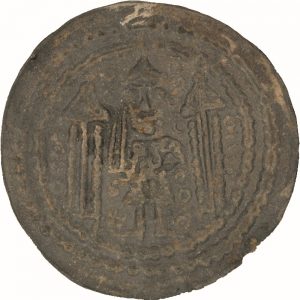
- The coin as it appears without digital enhancement
-
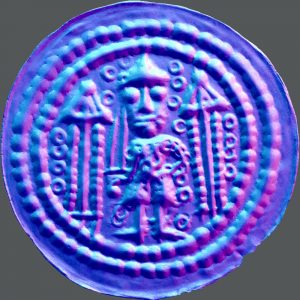
- When the coin is imaged, the imaging software analyzes the surface to highlight its features
-
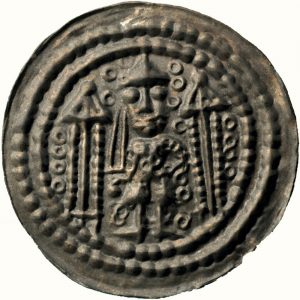
- A computer representation of the coin as it might have looked when it was originally struck.
Yes, I am saying that computers can do the grading of coins and probably do a better job than humans.
Computer imaging has come such a long way that it is an enhancement to almost everything that requires visual work. Nothing is more impressive than the system that uses medical imaging to virtually recreate a surgery scene so that a doctor and team can practice the most delicate surgery before cutting open the patient. Imaging can see beyond blood, organs, and even ordinary body fat to guide instruments through the body allowing for minimally invasive surgery.
Those of us with a smart telephone in our pocket that was purchased within the last three years has a device with the imaging capabilities and computing power that is equivalent to those used in those medical situations.
We can perform medical miracles, detect people from satellites thousands of miles in space, and even capture clear images of someone committing a crime with a phone from your pocket but the numismatic industry pedantically resists the use of computer imaging to grade coins.
The problem is that computer imaging will disrupt the status quo and make the grading services nearly obsolete if it was an acceptable way of analyzing coins. Dealers would lose their advantage of being the experienced eye looking at coins.
The result will be a consistency in coin grading that is not available today.
Think about it. There would be no need for crossovers, crack-outs, or a fourth-party sticker service that is nothing more than an arbitrage system to drive prices up. Collectors would be in control. Take out your phone and scan the coin. It will tell you the grade. And it will be the same grade whether I do the scan or if you do.
Computers do not like. Computers do not have emotions. Computers do not have an agenda. Take the picture, analyze, and provide a result. It puts the power in the hands of the collectors.
Of course, putting the power in the hands of the collectors is not what the dealers want. It is not what the grading services want. Computer imaging will disrupt their business.
And now the news…
 January 29, 2019
During school field trip, student finds coin bearing the inscription "King Agrippa."  → Read more at israelnationalnews.com
January 30, 2019At the same time, the number of fake banknotes has dropped. → Read more at spectator.sme.sk
January 30, 2019The County → Read more at thecounty.me
January 31, 2019The massive medallion, made of the purest gold bullion ever refined and worth $5.8 million, was stolen from the Bode Museum in Berlin—and has never been found → Read more at macleans.ca
February 1, 2019A new exhibit at a landmark Vermont museum showcases the work of a renowned artist who calls New England Home. In his Windham County workspace, Johnny Swing transforms quarters, half dollars, and other… → Read more at nbcboston.com
February 1, 2019Countless historical coins that differ from each other only in details are in storage at German state museums. Unlike paintings, these archaeological artifacts may not be labeled, marked or barcoded. Researchers at the Fraunhofer Institute for Factory Operation and Automation IFF developed a scanner and analysis software in collaboration with the Saxony-Anhalt State Office for Heritage Management and Archaeology, which digitally capture the visual features of coins and describe them exactly in a matter of seconds. The scanning system can be used to identify and recognize coin finds. → Read more at phys.org
SF Commem Design Moves Quickly
Sitting at my desk eating a late lunch after long weekend, I was surfing the Internet looking for news from the numismatic community. I surfed to the website for the US Commission of Fine Arts (CFA) and started to read their meeting notes from their June 15 meeting. The notes include a letter to David A. Lebryk, Deputy Director of the US Mint, about the proposed designs for the San Francisco Old Mint Commemorative Coin.
Judging by CFA’s response to Lebryk, the Mint may have been thinking about concepts to use for the commemorative but did not try to execute anything until the passage of the San Francisco Old Mint Commemorative Coin Act (Public Law 109-230 [GPO: text/pdf]) and submitted designs to the CFA for consideration. Apparently, the CFA was not quite happy with the submissions. For their review of the reverse of the $1 silver coin, they wrote:
“The Commission did not like either SR-01-A or SR-01-B, because the drawing of the Mint used for both was so poor. The suggestion was to use one of the designs proposed for the gold reverse or, if it was felt necessary to use a design based on Shirl J. Winter’s medal, at least make a better drawing of it.”
When I wrote “This bill is going to put the system to a real test,” in The Granite Lady Gets Her Commem, I was anticipating problems since the bill says that the coins can be issued “only during the 1-year period beginning on January 1, 2006.”
While I applaud the Mint for its quick work and the CFA for its quick consideration, I wish the Mint would have done a better job. It is not clear if the Mint can just use the rejected reverses from the gold coin and start making dies or do they have to return to the CFA for approval. If approval is necessary they have until the next CFA meeting on July 27 to come up with a new design.
An Independence Day Find
On this, the 230th anniversary of the signing of our Declaration of Independence, it is fitting that while searching my pocket change I found a Bicentenial Washington Quarter. Remember, this quarter was issued in 1975 and 1976 with the dual date 1776-1976. The reverse features a colonial drummer boy designed by artist Jack L. Ahr. Ahr’s design was selected amongst 12 semi-finalists. He was awarded $5,000 for the design.
On this Day of Independence, I wish those in the military who are helping others gain and maintain their Independence best wishes and a safe return home.
Drying Out with Currency
It was a very tough week here in the Mid-Atlantic Region. We had more rain in four days than we had all year. Then it rained on Wednesday and Thursday to add insult to injury. Days of flooding and horrendous traffic left a lot of us thinking we were having a eight day work week. I had to find something numismatic to soothe my nerves. I found it on Wednesday.
 Although I am not a currency collector, I have been watching the currency market out of curiosity. Over the last few years, that market has been seeing a phenomenal growth in interest, which has lead to record auction prices.
  While visiting the website for Heritage Auction Galleries, I saw that they sold two notes for $2.1 million! One was a Series 1891 $1000 Treasury Note and the other was a Series 1863 $100 Gold Certificate (images are from the Heritage website). These are very rare notes that were sold to a single collector.
 While reading about this auction, I remembered that the Bureau of Engraving and Printing (BEP) was selling the Texas Coin and Currency Set that started at noon. This set contains uncirculated Series 2003 $1, $2, $5, and $10 notes with matching low serial numbers that represent the Federal Reserve Bank of Dallas. The set also includes uncirculated Texas State Quarters. BEP announced that only 2,000 sets will be sold at $129.95 each.
Sure the set includes Texas State Quarters, but it extends BEP’s Federal Reserve Evolution Collection (FREC). When the FREC sets were sold last July, it included $20 and $50 notes with matching low serial numbers along with a special book for the Federal Reserve Banks (FRB) of New York, Philadelphia, St. Louis, and San Francisco. Other Evolution sets features FRB of Richmond, Atlanta, and Chicago. All are sold out and command premium prices at the bourse. With the Baltimore Coin and Currency Convention set to begin on July 14, I am interested to see what the dealers will be selling these set for.
As a numismatist whose collection consists mainly of coins, finding a new collectible that includes coins and adds a little diversity to the collection is a lot of fun. But to find a hot collectible with a limited distribution that has quickly appreciated within days of a sell-out, buying a few extra is a nice investment. So I bought five sets with remorse that I could not afford to purchase more!
There’s Gold in Them There Buffaloes
The 2006 American Buffalo Gold Proof One Ounce Coin is now on sale from the US Mint for $800. There is a purchase limit of 10 coins with delivery scheduled for July 13, 2006.
Although the Mint is selling only proof coins to the general public, dealers have sending offers to sell the uncirculated coins in the range of $675-699. As I write this, the spot price of gold is $580.
The James Earle Fraser Type 1 Buffalo design is one of my favorite coin designs. It is a truely American design. It will be interesting to see how the rest of the world reacts to this coin. I only wish I could afford one!
Commemorating 400 Years of Living in America
The US Mint has been very active the last two weeks announcing new coins and collectibles. Colorado is the latest state to be honored in the 50 States Quarters program with formal ceremonies being head Denver, the Colorado capital. Yesterday began the Buffalo 24-karat Gold Coin program with a striking ceremony at the West Point branch mint. But somewhat lost in the fanfare was the unveiling of the design for the 2007 Jamestown 400th Anniversary Commemorative.
Jamestown was founded in 1607 by members of the Virginia Company who were sent across the Atlantic Ocean on three ships to make a profit from the natural resources found in the New World. From 1607 through 1698, Jamestown was the capital of the Virginia colony and the primary gateway for shipping goods back to England and other areas of the world. Today, archeologists are excavating the original settlement as part of the Jamestown Rediscovery project. Their findings will be part of the overall 400th anniversary celebration.
To commemorate this anniversary, Public Law 108-289 [GPO: text/PDF] authorizes the minting of 100,000 $5 coins made from 90-percent gold that weighs no more than 8.359 grams and 500,000 $1 coins made from 90-percent silver that weighs no more than 26.73 grams. Surcharges from the coin will be given to the Jamestown-Yorktown Foundation. The Mint unveiled the designs to the public on June 16, 2006. Line art images of the coins are from the US Mint Image Library.
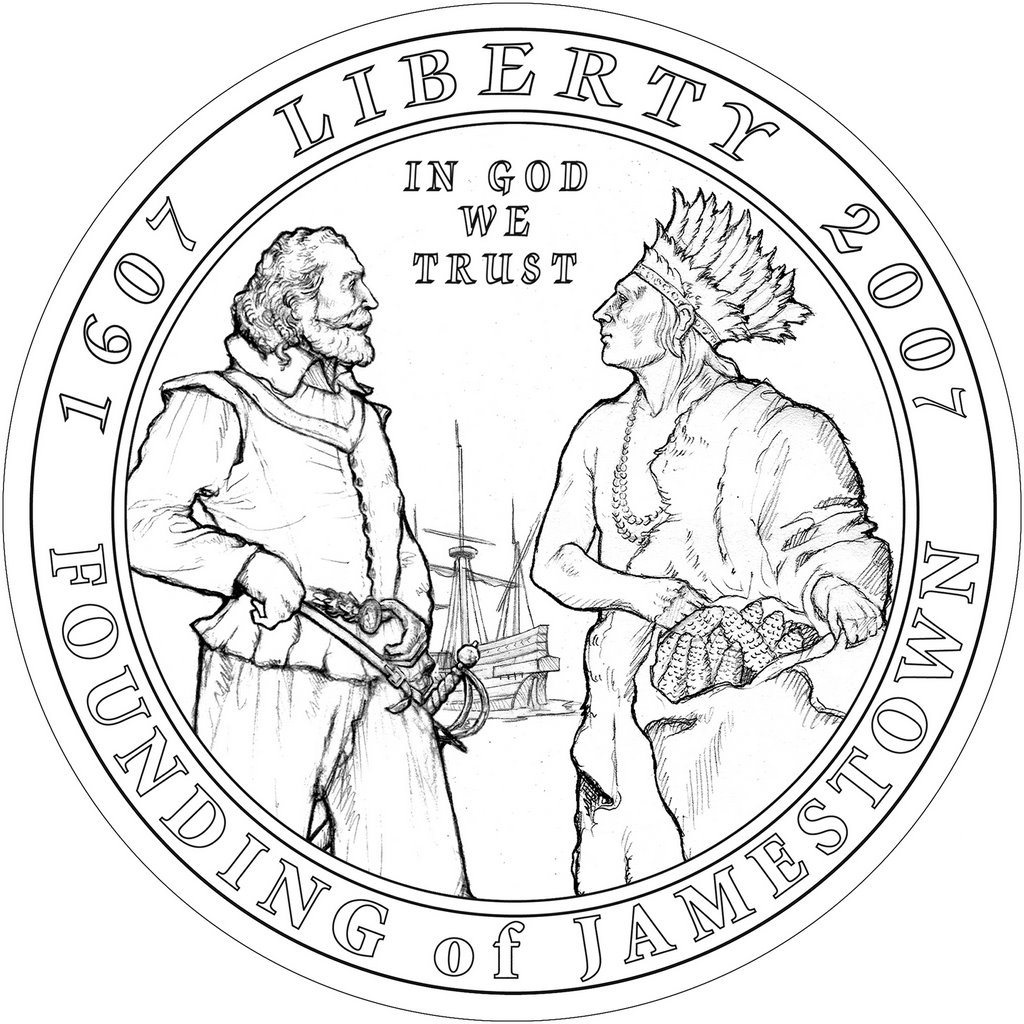
 Mint Sculptor-Engraver John Mercanti designed the obverse of the $5 gold coin depicting Captain John Smith conversing with an American Indian. The reverse of the gold coin shows the Jamestown Memorial Church, the only structure remaining from the original settlement. It was design by Artistic Infusion Program Master Designer Susan Gamble.
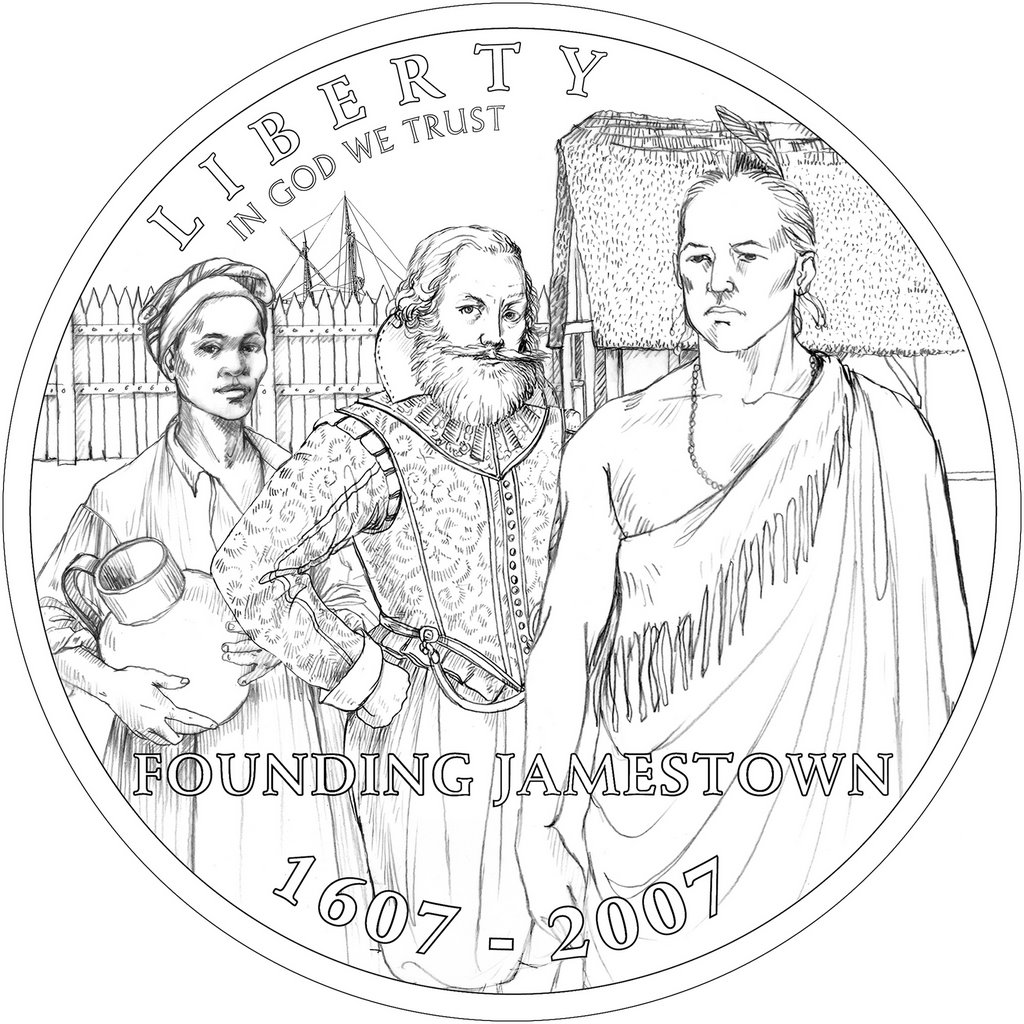
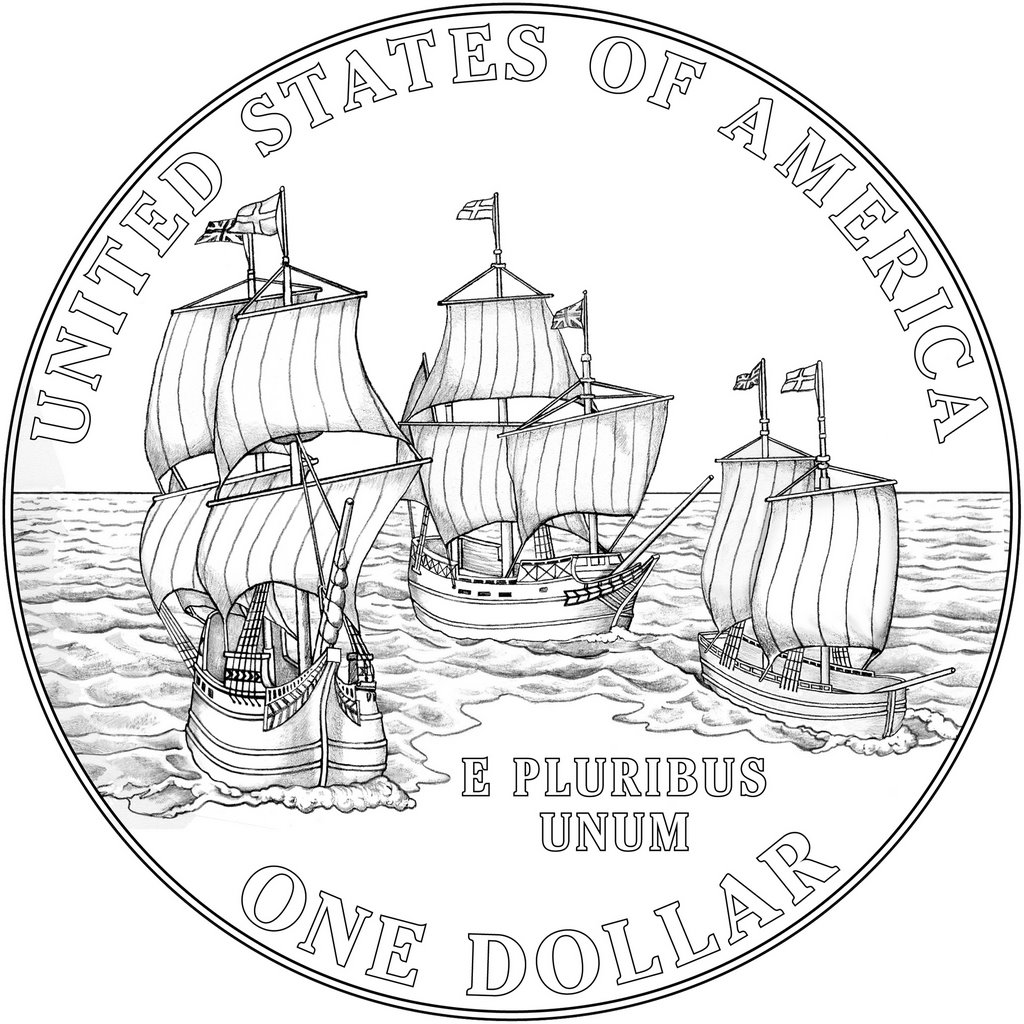 Donna Weaver, the recently retired Mint Sculptor-Engraver, design the obverse of the $1 silver coin to depict the “Three Faces of Diversity” to represent the three cultures that came together in Jamestown. Susan Gamble designed the reverse of the silver coin to depict the three ships that carried the first settlers across the Atlantic Ocean: the Godspeed, the Susan Constant, and Discovery.
Both appear to be very pretty coins in their line art form. The reverse of the coins by Susan Gamble from the Artistic Infusion Program look to be well executed and has the potential for great eye appeal in the yellow and white metals. This is going to make a nice collectable and confirm the success of the Artistic Infusion Program.
Support the Coin Collectors Blog
 Buy me a coffee
Thank you for your support!
Let Me Know What You Think
Are you going to the World's Fair of Money
Total Voters: 17
 Loading ...