
Is this backward “D” an error?
 One of the more popular collector series is the Indian Head or Buffalo Nickels. Designed by James Earl Fraser, a student of Augustus Saint-Gaudens, this design was a continuation of President Theodore Roosevelt’s “pet crime” to change the look of the nation’s coinage.
Introduced in 1913, the coin features a right-facing Indian head (now called a Native American head). Although there have been claims by several tribal chiefs that they were the model, Fraser’s notes suggest the image was created using the features of several men.
The reverse features the image of a buffalo, which in reality is a North American bison. The 38 different types of buffaloes live in Africa and feature larger horns similar to a longhorn steer. Most are domesticated and are raised like cattle is in the United States. Bison are largely wild animals native to the western hemisphere. Aside from their shorter horns, they have beards hanging from their chin and heavier coats that allow them to survive in colder climates.
But that has not stopped people from referring to the coin as a Buffalo nickel. It is a design so popular that when it has been used in coinage, the available supply usually sells out.
Like every five-cents coin made since the introduction of the 1883 Liberty Head or “V” nickel, the planchet is made from an alloy of 75-percent copper and 25-percent nickel. Most vending machines will not be able to tell the difference between a Buffalo nickel and a Jefferson nickel.
The coin’s ability to be used in vending machines and how a worn coin could pass the unwatchful eye of a cashier, it is possible to find a Buffalo nickel in change. Although there are very few of these coins remain in circulation, avid change hunters say they can find one every 12-16 months.
This was the case when a reader found what was thought to be a 1914-D Buffalo nickel. Although not a rare or key date, a 1914-D coin could be worth upwards of $70-80 in good (G-4) condition. Finding a Denver mint coin from that year would be better than finding a Philadelphia mint coin since a coin in good (G-4) condition would be worth $16-18.
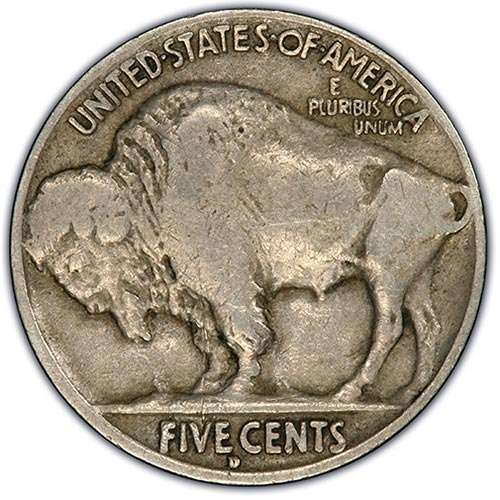
But this coin was different. Rather than having a “D” mintmark on the reverse, the “D” was backward!
-
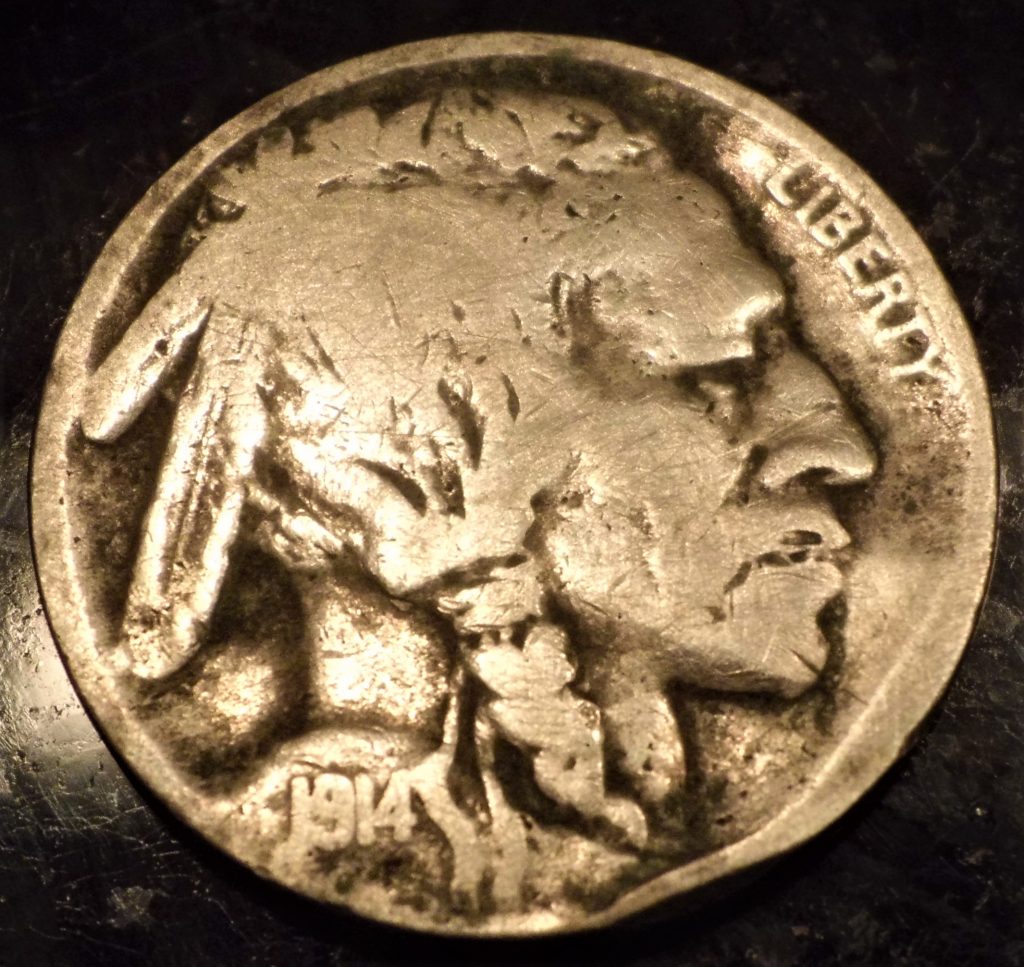
- The found coin, a 1914-D Buffalo Nickel (obverse)
-
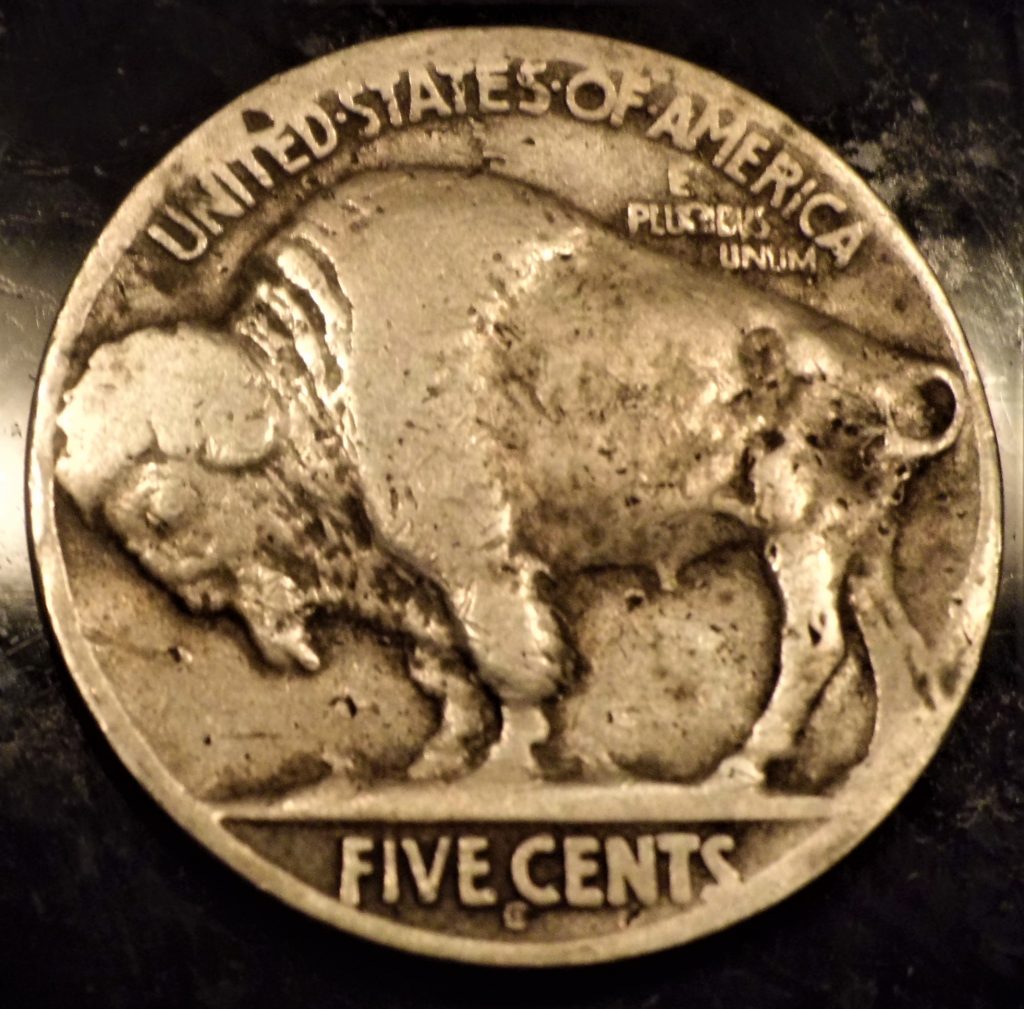
- The reverse of the found 1914-D with an alleged “Inverted D” mintmark
Prior to the U.S. Mint creating dies with mintmarks in Philadelphia, they would send dies to the branch mints without mintmarks. The coiners at the branch mint would use a punch to imprint the mintmark into the die before striking coins. Of course, this manual process was not perfect and there are cases of mispunched, repunched, overpunched, and other such errors.
There have been cases of a mintmark that was punched horizontally into the die. Those mintmarks were repunched correctly. Coins from the San Francisco mint has had errors where the “S” is punched upside down known as an inverted mintmark. This is a fun error to find because noticing this error requires a careful eye and patience along with understanding the shape of the “S” in the font used.
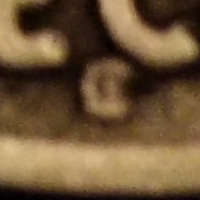
A closer look at the “inverted” D mintmark
Adding or removing mintmarks is a common method to artificially change the value of a coin. Remove the “S” from a 1921 Walking Liberty half-dollar and watch its value raise by 300-percent. Or practice adding a “D” to a 1914 Buffalo nickel to make a 400-percent profit.
After checking several references and speaking with two dealers, I sat with a box of Buffalo nickels I have to compare the mintmarks to the one on the coin. Additionally, I consulted with the images at PCGS Photograde. After all, it could be a real, undiscovered error.
The first thing I noticed on the image and with the coins I have on hand is that the mintmark on this coin is too defined for the grade. When comparing the coin to the images on Photograde, if the coin was sent in for grading it would probably be assigned a grade of G-6 of VG-8. Because of the worn rims, this coin would not grade higher than VG-8 and could be assigned a G-4.
As I was looking at the coins, those that would grade VG-8 or lower with worn rims also had mintmarks that were almost worn into the rim. In more than a dozen examples from my box, the mintmarks on all of the low-grade coins showed the rims and mintmark worn together.
Another aspect of the mintmark that bothered me was that the “D” seemed smaller than those on the coins I was looking at. For comparison, I pulled out my album with higher grade Buffalo nickels and found that the mintmark was similar in size to those in higher grades.
-
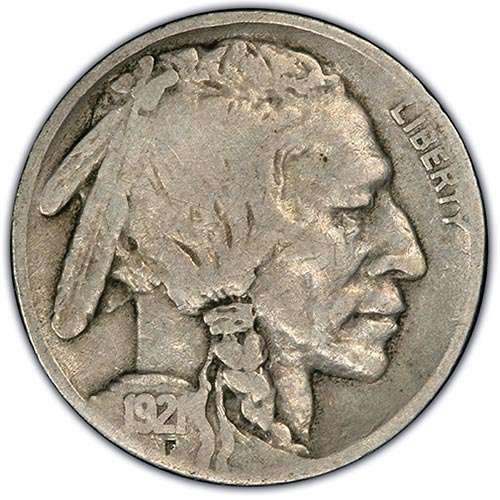
- According to PCGS Photograde, this 1921 Buffalo Nickel represents a VG8 grade.
-
- Look at the “D” mintmark on this 1929-D nickel graded F12 as part of PCGS Photograde
Then there is the coloring around the mintmark. Comparing it to the examples in my box, the dirt patterns around the “D” seems off. While the coloring around all of the letters appears to be uneven, there appears to be a consistent line around the “D.” In fact, the coloring at the bottom of the “D” is inconsistent with that of the other letters around it.
If I had the coin in hand, I would be able to examine it closer with a 15x loupe. I would even attempt to pick at it with a toothpick to see if the “D” would fall off. However, given all of the issues with the coin based on the images alone, I am reasonably certain that the “D” was added by someone outside of the U.S. Mint.
Of course, if you have your own theories then please post them as a comment, below.
Still Trying to Catch Up
In trying to catch up I was reading the US Mint Press Releases and noticed that the Denver Branch Mint celebrated its 100th Anniversary. Finding that interesting, I searched for an article from the Denver Post and found one with a picture that was identified from the 1950s or 1960s. The article said that the Denver Branch Mint produces over 30 million coins annually. That’s a lot of change!
I found a new Jefferson Nickel in my change today. The 2006-P coin was easy to notice, even with the reverse facing up in my hand, since it was very shiny. After the shine, I noticed the nice details made to the Monticello to bring out its highlights. Although I did not have a chance to carefully examine the coin, it appears as if the field has been made a little concave. But this could be an illusion because of the shine. I will examine the coin and get back to you on my impressions.
I am not sure I like the new portrait of Jefferson. There is something about this portrait that does not seem right. I will have to find a copy of the 1800 Rembrandt Peale portrait that this was based upon. But as I said in New at the US Mint, I prefer the Joe Fitzgerald design for the 2005 nickels. That portrait really ads a sense of character to Jefferson.
Finally, I received email notices from the US Mint, British Royal Mint, and the Royal Canadian Mint advertising various releases. Some of these offers look interesting. I will write more as I investigate further.
Aloha!
I apologize to those who wrote to me and did not receive an answer. We returned from Hawaii where I married my sweetheart and enjoyed a nice honeymoon. We are trying to readjust to east coast time and do our laundry.
One thing I tried to do in Hawaii was search through change and other purchasing opportunities for numismatic items. Although I missed the Hawaii All-Collectors’ Expo 2006 that included all types of collectibles, I tried to search for unique items.
First, I was disappointed in how things have changed. As little as 10 years ago, small shops and booths at the International Market Place had a variety of items that really shows the culture that makes up the people of Hawaii. Today, these booths and small sellers are awash with bland sameness. I walked through galleries in Lahina that was dominated with one artist. The independent booths all had the same mass produced souvenirs and less than fine jewelry from the same distributors. It made hunting for numismatics difficult.
But not impossible. Since I live on the east coast, I am used to seeing a lot of Philadelphia Mint coins in my change. When I paid for my first items on Maui, I was handed a handful of Denver minted coins. When I emptied my pockets at the hotel, I found a 2004-D and 2006-D Roosevelt Dimes. Both have been added to my circulated collection.
Rather than spending my change, I saved the coins in a small paper bag to bring back to the DC area. Once I search through the coins, I will put the rest back into circulation so that other area change pickers can have the pleasure of finding Denver-minted coins.
In the next few days, I will write about my finds. I will also write about the one nice collectible I found.
Finally, 2006!
I was beginning to wonder if the Mint was producing 2006 coins. On Thursday, I received an email announcing the availability of Nevada quarter rolls and bags. But I had not seen any 2006 coins in change.
But it was like I hit the 2006 jackpot today. While running errands I received a Nevada quater and several 2006 Lincoln cents in change. The cents were obvious since the bright red shine immediately caught my eye. These were nice strikes and very clean fields with almost no scratches. The unique color and shine is something I find very appealing.
After arriving home, I emptied my pockets and examined my change. I admired the red cent again. Then I noticed a shining silver item, a quarter, in my pile of change. I turned it over and found the galloping horses representing Nevada. It was very fitting that the first coin I find from The Silver State was a very shiny silver. Yes, I know circulated quarters do not contain any silver. But it was still shiny.
Now if I can only find one of the new nickels.
The 2006 Eagles Have Landed
I was going through some back email and found a note from the US Mint advertising the availability of the 2006 American Eagle Proof Bullion Coins. The American Eagle Bullion program was created in 1986 to provide investors a way to invest in precious metals. American Eagle coins are available in silver, gold, and platinum in uncirculated and proof coins. Gold and platinum Eagles consist of different weights and nominal denominations. But all silver Eagles are one ounce of fine silver with a nominal value of one dollar.
Although the intent of the program was not to create numismatic collectibles, the market dictated otherwise. One of the reasons has to be the images of Liberty used on the silver and gold coins. The American Silver Eagle recreates Adolph A. Weinman‘s Walking Liberty design used on the half-dollar 1916-1947, which is one of my favorite designs. The reverse is the Heraldic Eagle designed by Mint engraver John Mercanti. The Gold American Eagle uses the Augustus Saint-Gaudens‘ Double Eagle ($20) design used from 1907-1932 (a few 1933 coins have been recently found). Sculptor Miley Busiek created the reverse of the Gold American Eagles. These are beautiful designs that makes them very popular by world bullion collectors.
The design of the Platinum American Eagle recreates a design by John Mercanti that was used on the 1986 Statue of Liberty Commemorative Dollar. This is not one of Mercanti’s better designs and another should have been chosen. But the Mint makes up for the bland design by changing the reverse every year. Too bad the price of platinum puts this coin out of the price range for most collectors.
You can buy American Eagle proof coins from the Mint. If you want uncirculated strikes, they need to be purchased from a dealer. A few weeks ago, I responded to an ad from Littleton Coin Company to buy a small quantity of uncirculated first strike Silver Eagles. When I received them, they were every bit as beautiful as I expected. I will have one of the coins graded to add to my collection.
Aside from the aesthetic qualities, I like the investment opportunities of the precious metals. I am looking forward to the arrival of my proof Eagles.
More on Young Numismatists and My Links Notebook
Since I posted Encourage a Young Numismatist, I have heard from a few people wanting more information about numismatic collecting. It seems that a number of parents are reading the trade papers about high-priced auctions and worried that numismatics is not a hobby for their child. That could not be further from the truth.
I spoke with them of how I started by just collecting coins from change and how I still have those familiar blue Whitman folders my father purchased for me in 1971. I also mentioned that many coin shows offer grab bags for Young Numismatics (YNs) and that there are a number of dealers with “junk bins” that are filled with common coins at a low cost. Not only it is a great way to build a collection, but sometimes you can find some nice coins in those bins.
Another thing I suggested is to contact an organization that promotes young numismatists. Thanks to reader elite_investor, I passed along the web address of Young Numismatics of America (YNA). I also sent them to the Young Numismatics program with the American Numismatic Association (ANA). Both organizations have newsletters and other opportunities for YNs to learn.
During these conversations, I was asked for more information… more links to numismatic information. This was not a problem since I regularly surf the Internet looking for interesting numismatic information. So rather than blogging for the last week, I have been revisiting many of the websites to verify they exist and entering them in my Links notebook.
For now on, rather than just post the links I use in my blog entries, I am going to post links as I find them. I hope you find them useful.
Support the Coin Collectors Blog
 Buy me a coffee
Thank you for your support!
Let Me Know What You Think
Are you going to the World's Fair of Money
Total Voters: 17
 Loading ...