
No 2021 Silver Dollars For You!
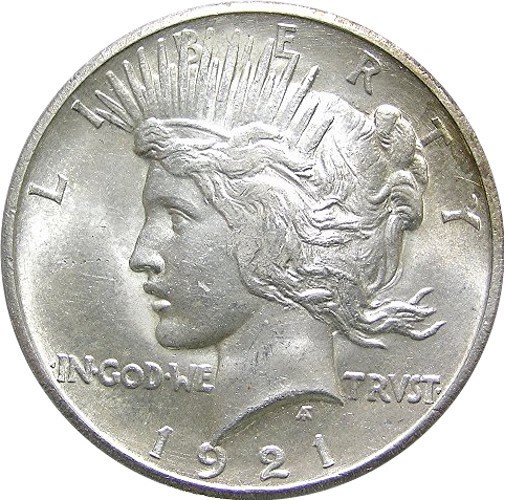 The 2021 commemorative coin calendar is full and it does not include a commemorative Morgan or Peace silver dollar.
Last October, Congress passed the Christa McAuliffe Commemorative Coin Act of 2019 (Public Law No. 116-65) to be issued in 2021. In December, they passed the National Law Enforcement Museum Commemorative Coin Act (as part of Public Law No. 116-94). With two commemorative coin programs in 2021, there is no room for the 1921 Silver Dollar Commemorative Coin Act.
The odds of Congress creating a third commemorative program for 2021 is less than 1-percent.
When H.R. 3757 was introduced, the American Numismatic Association sent out a press release and asked the members to write their member of Congress. The numismatic press also carried that mantle at the beginning. Some suggested that a commemorative Morgan Dollar could be struck at the former mint in Carson City.
But that was in July, 2019, prior to the World’s Fair of Money.
During the World’s Fair of Money, a new Board of Governors was installed to allegedly lead the ANA. Since then, there has been little said by the ANA about H.R. 3757. This is the opposite of the response lead by Farran Zerbe.
Zerbe’s proposal for what became the Peace Dollar led to the appointment of a committee that lobbied Congress for the coin’s creation. It was not an easy road for the proposal, but Zerbe persisted, and a bill was passed.
Zerbe, who was ANA President from 1908 t0 1910, showed extraordinary leadership in getting this bill passed.
Many others have stepped up to represent the community with the support of the ANA and the hobby. Amongst the community’s achievements are the Bicentennial coins and the 50 State Quarters program.
Where is that support today?
Where has the ANA been since August 2019?
Like the 1921 Peace Dollar, a 2021 commemorative coin would not only highlight history but make sure the public knows about the ANA’s place in that history. It would introduce new collectors to one of the 20th century’s best designs and the ANA at the same time.
Aside from the public relations boost, 40-percent of the program’s surcharge would be paid to the ANA. With a mintage limit of 500,000 coins with a surcharge of $10 per coin, a potential $2 million could have been added to the ANA’s treasury.
A one-time payment of $2 million would provide a cushion of 35-percent, based on the ANA’s published 2019 budget. It would furnish a down payment on new education initiatives and outreach to promote the ANA’s growth.
The ANA has been business-as-usual with little said from the current Board.
It is difficult to understand why the ANA Board of Governors would let this opportunity pass. Is this a sign of leadership we are to expect during its two-year term?
Laura Legend Steps In It Again
There are a people in the numismatic industry I like, but there are some I watch with amusement for various reasons. One of those I watch with a certain amount of amusement is Laura Sperber of Legend Numismatics from Lincroft, New Jersey. Sperber and Legend deals with a higher end segment of the market where their “lower-end” products cost more than $1,000.
There is nothing wrong with the high-end market, but most of the people I have associated with in numismatics that are not dealers look at $1,000 as being out of our budget. We are happy finding nice coins and putting together fun sets that may not be the type of coins that Legend and similar companies would sell.
While I respect Sperber for her views on the market, she acts and writes like it the view of everyone who participates in the market. Thus is the case with her Market Report regarding the recently ended Whitman Baltimore Coin and Currency Expo.
Sperber opens her tome noting that the show was “decent but quiet.” As with many June shows in Baltimore, it is not as active as the March or November shows and Sperber notes that the timing and the location works against this show. This is a fair comment and something the people at Whitman needs to consider in the future.
What is not fair is that her views are caveated at the beginning saying that the dealers she spoke with “on our level” was a few paragraphs before a section titled “When Dreck Rules.” On one hand she is saying that, “we know of a few smaller dealers who had nice coins and did VERY well.” Then a few paragraphs down she noted that, “[there] were few fresh and nice coins in anyones display case.” Which is it? Were there dealers with nice coins or where there few nice coins? It cannot be both.
Sperber also forgets that there are more aspects of the market than this “on [her] level.” Some of us are on a budget whose budget may not include paying thousands of dollars for coins. But we like to look and even learn so that maybe if that coin ever becomes affordable we can consider a purchase. She disparages some who she said were not serious buyers who “came to kick some tires and chat.” Using this logic, we are not to go to a high-end dealer to look, ask questions, and learn. Maybe, people did not like the quality of your coins; after all, you said that there were not enough “fresh and nice coins in anyones [sic] display case”
But according to Sperber, “we need cool and better CAC stickered coins” as if CAC stickered coins are the answer to her problems. It is hard to say whether CAC coins are the answer, but the concept of a coin having eye appeal and being entombed in a plastic slab stickered by someone else does not give the coin good eye appeal. In fact, a high grade coin, with our without the sticker, can be quite ugly. As someone who is not a fan of toned coins, I find many toned coins unattractive, yet I have seen a few with a CAC sticker that I would never buy even if offered as a raw coin.
What Sperber does not tell you is that she and/or Legend Numismatics have a stake in the CAC. That lack of disclosure in her promoting of the CAC is disingenuous, at best. In the future, Sperber should caveat discussion she is involved with about the CAC noting her association.
I understand that the good people at Legend Numismatics have to make a living, but it is time for Laura Sperber to show some respect for the entire numismatic community and not just those who can afford what her company sells. Sperber has demonstrated an interesting perspective on the market that could be respected if she does not come off as a Jersey-tuff person as she has done on other occasions. Even this Brooklyn-born blogger is turned off by that Jersey-tuff attitude. She must start to learn that there is room for everyone in the numismatics market including the tire kickers, looky loos, low-end buyers, and those of us having fun. Until then, if I should be looking for a coin of that caliber I will probably not purchase it from Laura Sperber or Legend Numismatics.
Safety and Security Traveling With Coins
 During the last week, there were two more stories of dealers being robbed. One occurred in Witchita Falls, Texas and the other in Parisippany, New Jersey. In both cases, the dealers stopped at a restaurant after the show ended, had the windows broken to take what was in the car. The incident in Wichita Falls also involved an assault on the dealer and his wife.
Earlier this year, a coin dealer was robbed in Acton, Massachusetts after leaving a coin show in Westford. Also, a coin dealer from Jacksonville, North Carolina was robbed in Wilmington when he went to visit someone’s home he thought was interested in purchasing coins.
These incidents show that it is time for dealers to step up their security awareness and learn to protect themselves from the risks of robberies. Dealers with store fronts have a lot of options to protect their assets, although some have fatal ramifications. For the dealer who travels to and from shows, the security of their vehicle is very important.
During the holiday season we are reminded not to leave anything in the car that would invite someone to break in. Sometimes, you cannot fit everything in your trunk because between your clothes and inventory everything does not fit. Since many shows are one or two days, consider using a small, flat suitcase that could fit on the floor of the back seat and place it under the floor mats. It is not the best hiding place but it attracts less attention.
Aside from the usual precautions of locking doors and hiding the valuables, be particular where you park. Since thieves do not want to attract attention to themselves, park in well-lighted, crowded areas. Park close to the building especially close to the entry door. Avoid areas with trees and bushes that could be used to hide from view. Look around and think like a thief. If you can think of how to hide yourself around your car, then the thief can, too. Either find someplace else to park or another establishment for dinner.
Better security requires an investment into additional protection for your car. Car alarms are popular options and also the most hated. If not installed correctly, car alarms are prone to false alarms that can annoy everyone around. Since early car alarms did sound for seemingly no reason, some have learned to ignore them. However, the noise will draw attention to the car and scare away the thief breaking in to rob the contents. If you find an alarm with a distinctive sound you can also be quickly alerted if something happens. Car alarms range from the inexpensive that are installed by the car’s owner to a theft deterrent that could cost thousands of dollars. The website eHow.com has a good section about Car Alarm Systems to get you started.
Since many of these robberies start with someone smashing the car’s window, consider technologies that strengthen the windows. Bulletproof glass is an option, but that may be too expensive for many of us. An option is installing a laminate made from a material called polycarbonate thermoplastic over the windows. Polycarbonate thermoplastic laminates are thin, clear sheets that are sturdier than glass that does not break like glass. When installed over glass, the underlying glass will shatter but the laminate will remain intact. Thinner sheets will prevent break-ins while thicker or multiple layers can be use to make the glass bullet resistant. An auto service specializing in aftermarket add ons for cars in the Washington, D.C. metropolitan area said that it could cost from $600 to over $2,000 depending on the product used and the amount of window surface that has to be covered. There are local businesses in every major metropolitan area that can install these laminates.
Another security add-on that was recommended by the dealer was reinforced locks. A local locksmith described how easy it is to break into most cars just by using force in the right places—especially for the thief not interested in maintaining the car’s look. Although we rely on them to secure our cars, locks are a weak area in the metal and the ringed design around some locks can be pried off and the locks pulled out with a pair of pliers. Simple plates secured over the locks may act as a deterrent but may also advertise that the car may have something of value inside. Locksmiths and auto security companies can install tamper resistant locks and reinforce the area around the door, trunk, and tailgate latches to prevent someone from prying into your vehicle.
The downside to installing aftermarket tamper-resistant locks and reinforcing around the latches is that it will void the structural warranties of most vehicles. Also, poorly installed car alarms will not be covered by most vehicle warranties. Professional installation by a dealer or a qualified aftermarket seller can prevent these issues.
One call you should make is to your auto and business insurance companies. By increasing the security of your car, both insurance companies may offer discounts for lower their risk exposure. Laminates will prevent broken windows and potentially reduce the amount of money that would be necessary to fix your car to just the shattered glass and the laminate and not other items. Your business insurance may also find the lowered risk appealing since you have taken steps to prevent a potential loss. The savings may be an incentive to purchase better security for your car.
Finally, dealers must consider their situational awareness—what their surroundings look like and quickly assess what is around them. Some people may not think like this, but if you are going to carry expensive inventory and cash to and from a show you have to consider the environment. Thieves like the dark because it is easier to hide. Traveling in daylight is better than traveling during the night. But if you travel at night, stay in well lighted areas and crowded areas. What is the neighborhood like? Is it a travel stop that is used by a transient clientele? That type of movement is also inviting the thieves who knows that people traveling through those areas may have something worth stealing. Will you go into a restaurant where you cannot watch your car or should you consider a restaurant where your car is visible from within the restaurant?
Does the area “feel right?” Do you feel comfortable in the area? Are you worried about the strangers around you? What is your gut feeling? If you are not comfortable and just have that feeling that the area is not safe, go with that feeling and try another place. Consider bringing nonperishable snacks in the car so that if the first place you stop at makes you uncomfortable, you have something to tie you over until you find someplace with more comfortable surroundings.
Security is an ongoing process. Thieves will adapt and find other ways to rob you. But if you take the time to prepare yourself and pay attention to your surroundings, you should be able to reduce the risk of being robbed. Stay safe!
Spend Nights at the Smithsonian
When I was a youngster and was asked what I wanted to be when I grew up, I gave the typical answers of a child too young for the 1960s to have an effect yet unknowing of what the future would bring. After graduating high school and going to college down one road, I was greeted with many forks in that road and ended up programming computers. In those days, it was the beginning of the explosive growth of an industry that set the stage to the Internet revolution. While it has been a fun ride, there are times when I had not travelled so far down this road. This may be one of those times.
The Smithsonian Institution, the museum and research facility founded on the bequeath by James Smithson following his death in 1829, has a job opening for curator of the National Numismatic Collection at the National Museum of American History. According to the job post, the person hired for this job will carry “out the research, collections management, exhibitions development and education mission of the museum.”
What a fantastic opportunity for someone who has an interest in numismatics and history as researched through numismatics. As part of the job, you could potentially handle some of the most priceless coins in history including the 1933 Saint-Gaudens Double Eagle, 1804 silver dollar, and even the Series 1934 $100,000 gold certificate—though not a coin a very significant artifact of U.S. history. The Smithsonian has coins from the Byzantine Empire, the coinage of Spain that played a role in the early economic history of the United States, and gold rush coins.
The job is with the federal government and paid on the general schedule (GS) at grades 12 or 13, depending on previous experience. GS-12 ranges from $74,872 to $97,333 per year including the adjustment for locality pay. If you are hired as a GS-13, the range is from $89,033 to $115,742. As a Fed, you will be eligible for one of the best benefits packages available to all government workers, even members of congress. There is a competition for various insurance programs, the Thrift Savings Plan is a protected retirement plan for government workers, leadership training, and other programs that keeps good people working for the federal government. You can read more about working for the federal government at the website for the Office of Personnel Management.
If you are selected for the job, you would be working in Washington, D.C. on the National Mall where the Smithsonian museums are located. Within the same area are nearly all of the government agencies, monuments, memorials, the capital and the White House. Even for those of us who live here it is cool being able to pass by the U.S. Capital building and the White House on a regular basis.
The downside is that the job is in Washington, D.C., regularly rated as having the worst traffic problems after the Los Angeles area. Although the recession has lowered housing prices, they remain high since the presence of the federal government has kept unemployment low in this area. Good housing can be found in desirable areas of the region including further away from the District with access to mass transportation so you can commute downtown.
If this job was available 15 years ago, I would have applied. The job may will probably not be like Night at the Museum: Battle of the Smithsonian but it looks like a fantastic opportunity. I hope that someone with a love for numismatics is able to land this job.
NGC Grades 20 Million Coins
Numismatic Guaranty Corporation has announced that it has passed the 20 million coins in certified coins. NGC said that it has received submissions from 43 different countries spanning 2,600 years of history. The earliest ancient coin was from as early as 600 B.C.E.
“While 20 million graded coins is a huge accomplishment and we celebrate it, we really are focused on the future,” said Mark Salzberg, chairman of NGC. “We look forward to continuing to push the industry envelope to develop and implement innovations that benefit not only our loyal customers, but the hobby as a whole.”
While this is quite an accomplishment, NGC has to be watching its competition. Over the last few months, the Professional Coin Grading Service has innovated far more than NGC with new services that will benefit the community. While both PCGS and NGC added plus grading to their service to mark premium quality coins, PCGS’s “Big One” that included the PCGS Secure Plus™ service. Coins grade through Secure Plus will be scanned by an optical device that will map the surface of the coin creating a digital signature of its characteristics that can be used for later reference and to compare them with other specimens including the same coin possibly resubmitted.
In addition to Secure Plus, PCGS also introduced the PCGS Coin Sniffer,™ a technology that will recognize the use of chemicals on coins submitted to PCGS. Between the surface and chemical analysis, PCGS is leading the industry in the use of technology to improve on the certification service.
Having been an advocate for the use of technology to assist in the grading process, I feel that this use of technology places PCGS ahead of all grading services. If NGC wants to remain in the top tier of coin grading services, they must integrate technology into their service or risk falling behind.
LaHood and DOT Honored for Disabled Vets Memorial
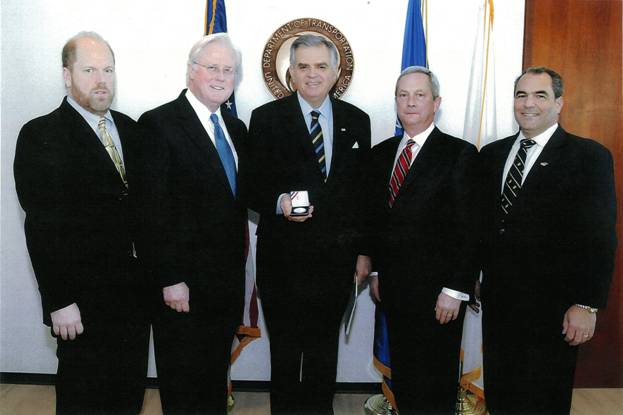
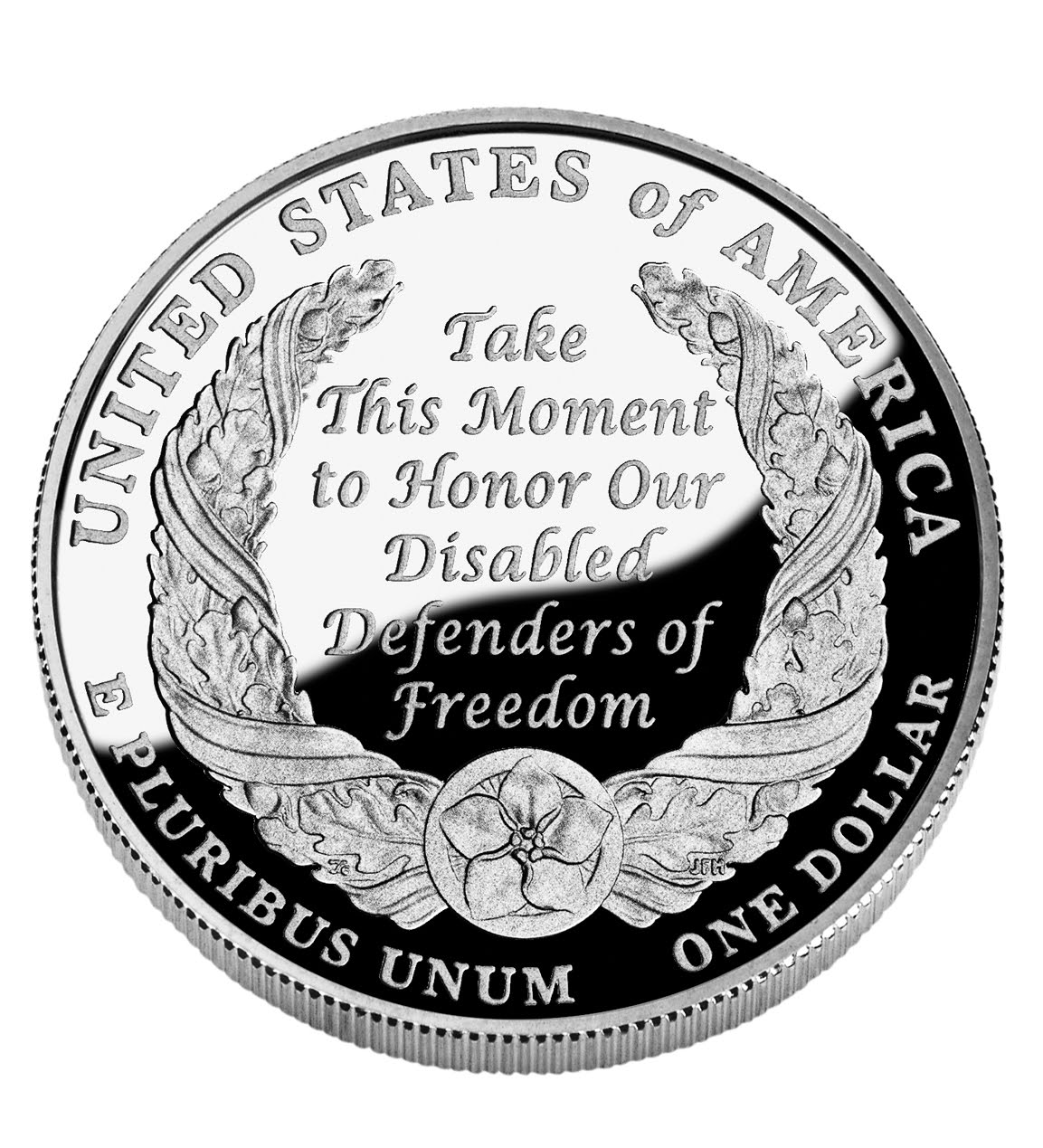
Secretary of Transportation Ray LaHood receives a 2010 American Veterans Disabled for Live Silver Dollar to thank the U.S. Department of Transportation for its support of street and road infrastructure projects surrounding the site of upcoming American Veterans Disabled for Life Memorial in Washington, D.C. The American Veterans Disabled for Life Memorial will be the country’s first national memorial dedicated to living and deceased disabled veterans and is planned for a site within view of the U.S. Capitol. For more information on the Memorial, visit www.avdlm.org. Silver dollars can be ordered from the U.S. Mint with proceeds benefitting the Memorial.
Pictured, left to right (above):
Peter Dickinson, Disabled American Veterans; Ray McGrath, Downey McGrath Group; Secretary Ray LaHood; Barry Owenby, Disabled Veterans LIFE Memorial Foundation; Joseph Violante, Disabled American Veterans.

Support the Coin Collectors Blog
 Buy me a coffee
Thank you for your support!
Let Me Know What You Think
Are you going to the World's Fair of Money
Total Voters: 17
 Loading ...