
Weekly World Numismatic News for October 20, 2019
 Perusing the wide world of coins, I noticed that it is only here in the United States that collectors complain about modern coinage. Why?
My Twitter followers (@coinsblog) have seen the articles coming from the United Kingdom. U.K. news outlets have staff that follows the special issues from the Royal Mint that are selling for hundreds of times over their face value in online auctions. These coins have a limited run and are issued as circulating commemorative coins.
Similarly, the Royal Australian Mint recently released an alphabet series, similar to what the Royal Mint did in 2018. As part of the series, they created a stir when they used the letter “X” to highlight a small village in Western Australia. Aussies learned something about their own country.
In the United States, we bemoan new issues by the U.S. Mint. We look at the coins and come up with some reason to dislike them. Many of the reasons range from the parochial to the absurd.
Dealers do not like them because they make more money on selling you what they think are “better” coins. Rather than try to use the opportunity to get people interested and into their shop, they would rather sell a more expensive coin. Note to dealer: selling 100 coins at a $1 profit is the same as selling one coin for a $100 profit except that you now have 100 new customers rather than recycling old ones.
Another reason I hear is that modern coins are not worth the money and, therefore, not worth the time. Really? Are you collecting or investing? Are you enjoying your collection, or is it something to do?
Recently, I sold off my Morgan Dollar collection. I started the collection many years ago and realized that I did not have the eye for coins that I have today. I also lost interest.
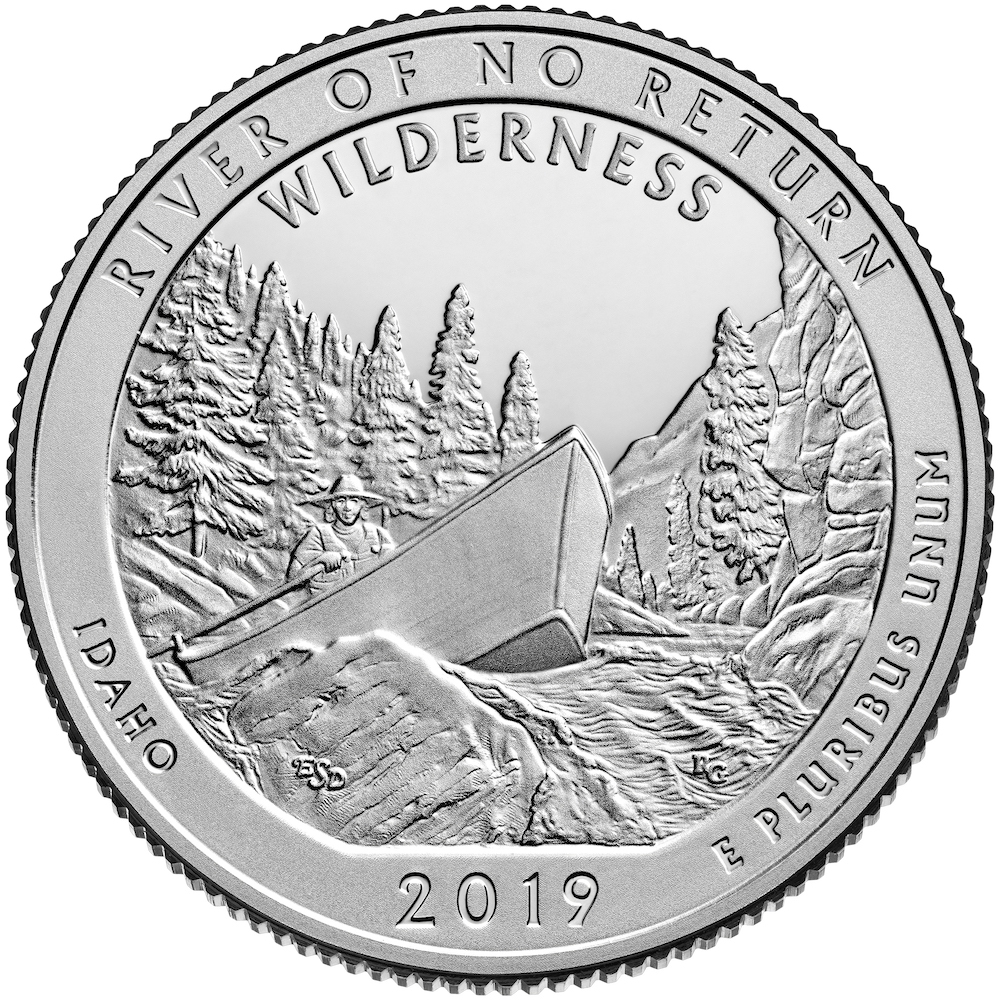 Someone asked what am I collecting today. I respond with modern circulating commemoratives. When I get a strange look, I have been responding with, “do you know what the Frank Church River of No Return Wilderness is?”
Who is Frank Church, and what is the River of No Return? If you paid attention to the American the Beautiful Quarters program, you would learn more about your own country. I did not know about this wilderness area in Idaho until I looked at the quarter.
I also learned that the Northern Mariana Islands and Guam, both United States territories, have beautiful memorials to those who gave their lives in World War II.
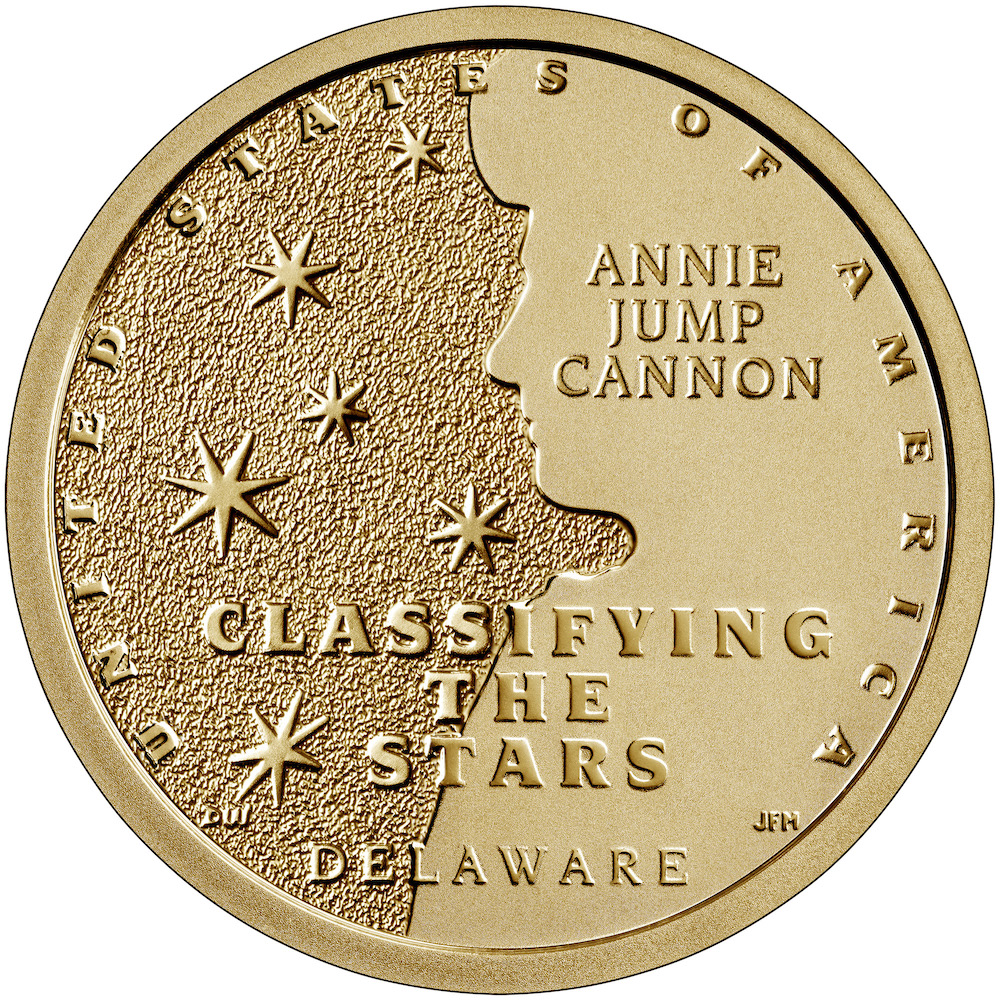
Now collectors are lamenting the new American Innovation $1 coins. Why? Because they do not circulate? Then go pick up a roll and start spending them! You can show people the series that is beginning with honoring Annie Jump Cannon, who invented a system for classifying the stars still used today. Aside from being a Delaware native, Cannon was a suffragist and hearing impaired.
Stop being so stuck up about modern coins, buy a roll, and give someone a William Henry Harrison dollar. Then ask them why Harrison is so important to U.S. history? Pick a president who is not famous and do the same exercise.
If you have children, why not plan a trip based on the quarter that has been released. If you cannot travel to Guam to see the War in the Pacific National Park, then a trip to San Antonio Missions National Historic Park. You can also Remember the Alamo and visit a fascinating area of the country.
Collecting modern coins may not make the dealers rich or be a great investment. But there is enough material to have fun beyond just accumulating metal discs.
And now the news…
 October 10, 2019
 → Read more at adventistreview.org
October 11, 2019 → Read more at businessinsider.co.za
October 12, 2019 → Read more at thehindu.com
October 12, 2019 → Read more at seattletimes.com
October 15, 2019 → Read more at postandcourier.com
October 16, 2019 → Read more at dailymail.co.uk
October 16, 2019 → Read more at thewest.com.au
October 16, 2019 → Read more at coastmountainnews.com
October 18, 2019 → Read more at nuwireinvestor.com
October 19, 2019 → Read more at israelnationalnews.com
→ Read more at adventistreview.org
October 11, 2019 → Read more at businessinsider.co.za
October 12, 2019 → Read more at thehindu.com
October 12, 2019 → Read more at seattletimes.com
October 15, 2019 → Read more at postandcourier.com
October 16, 2019 → Read more at dailymail.co.uk
October 16, 2019 → Read more at thewest.com.au
October 16, 2019 → Read more at coastmountainnews.com
October 18, 2019 → Read more at nuwireinvestor.com
October 19, 2019 → Read more at israelnationalnews.com
Harrison Dollar and History
 William Henry Harrison was elected the 9th President of the United States in 1840. A retired Major General of the United States Army, Harrison was famous for the Battle of Tippecanoe where he defeated the Shawnee Indians and lead by the brothers of Chief Tecumseh and Tenskwatawa The Prophet preserving the Indiana territory from further attack.
When Harrison won the Whig Party nomination for president, Harrison and his running mate, John Tyler adopted the campaign slogan, Tippecanoe and Tyler too to promote Harrison’s military record and reputation as a battle hero.
Harrison was inaugurated on very cold and wet day in Washington on March 4, 1841, without wearing an overcoat or hat in order to continue to show his toughness. His inaugural speech was the longest in American history, lasting nearly two hours. And this was the short version of the speech after it was edited by Daniel Webster for length.
President Harrison became ill with a cold on March 26 presumably as a result from the inauguration. The illness progressed to pneumonia, pleurisy and other symptoms not understood by the doctors of the period. Harrison died on April 4, 1841, after 32 days in office.
Harrison’s presidency and death was as historic as it was a test of the Constitution. Harrison was the oldest elected president at 68 until the election of Ronald Reagan in 1980. As the first president elected from the Whig Party, his two hour inaugural speech is the longest of any president and his term of 32 days is the shortest in United States history. Harrison was the only president to never appoint a federal judge.
Harrison was the first president to die in office. While we understand the rules of succession today, Harrison’s death caused a constitutional crisis in the young nation. The debate surrounded the interpretation of Article II of the Constitution:
In Case of the Removal of the President from Office, or of his Death, Resignation, or Inability to discharge the Powers and Duties of the said Office, the Same shall devolve on the Vice President, and the Congress may by Law provide for the Case of Removal, Death, Resignation or Inability, both of the President and Vice President, declaring what Officer shall then act as President, and such Officer shall act accordingly, until the Disability be removed, or a President shall be elected.
The vague wording caused a debate as to wether Vice President Tyler would take the oath of office as President or would he become an “acting president.” After debate in congress and by the cabinet, Chief Justice Roger Taney was consulted. Chief Justice Taney said that he thought the constitution meant for Tyler to take the oath of office as president. Based on Taney’s opinion, Tyler was given the oath on April 6, 1841.
As a historical note, Chief Justice Taney was presiding when the Supreme Court ruled on the infamous Dred Scott v. Sanford case in 1857.
This precedence was used in the transitions following the death of seven presidents. The 20th Amendment to the Constitution, ratified on January 23, 1933, codified the line of succession as well as change the inauguration date to noon on January 20th. Rules of succession was strengthened with the 25th Amendment that was ratified on February 10, 1967.
 On February 16, the US Mint used 2009 President’s Day to pre-release the Harrison Dollar Coin to an audience in Charles City, Virginia. The coin officially goes into circulation on February 19. The reverse was designed and engraved by Mint Sculptor-Engraver Joseph Menna.
As Harrison was the cause of a number of firsts, the coin honoring his short presidency is the first of the Presidential Dollars to feature the motto In G-D We Trust on the obverse rather than the rim as mandated by law.
Image of William Henry Harrison from the White House website.
Image of the Harrison Dollar obverse courtesy of the US Mint.
Happy 200th Birthday Mr. Lincoln
The US Mint will introduce the first in a series of redesigned Lincoln Cents honoring our 16th President’s 200th birthday at the Abraham Lincoln Brithplace in Hodgenville, Kentucky. Unveiling will occur at 10:00 AM during The Kentucky Abraham Lincoln Bicentennial Celebration to be held at LaRue County High School in Hodgenville, Kentucky.
 Billed as the first redesign of the Lincoln Cent in over 50 years, the first coin issued will honor his birth and early childhood in what is now known as Hodgenville, Kentucky. Lincoln was born on February 12, 1809, in a log cabin to Thomas and Nancy Hank Lincoln. While the log cabin where Lincoln lived has been lost to history, a replica of common design for the era was used as a model for the coin. The reverse was design by Artistic Infusion Program (AIP) Master Designer Richard Masters and sculpted by Sculptor-Engraver Jim Licaretz
However, it may be a while before the new coin will be seen in change. Susan Headley points out that the way coins are distributed through the Federal Reserve system, there may be a backlog of coins in stock that will prevent the new cents from reaching the public. Susan explains that the bad economy has caused more coins being returned to the Fed than being distributed. Since the Fed buys only what it needs from the US Mint, it may be a while before the inventory is depleted enough for the Fed to order coins.
Susan reported that when she visited the Philadelphia Mint last week, she found that three of the lines striking cents were not running. When I visited the Philadelphia Mint in the summer of 2007, we were told that the machines that strike cents run 24 hours a day, seven days a week. To hear that the Mint has reduced production of cents is very worrisome for the economy and those who work at the Mint. I hope their superintendent has the chutzpa that Mae Biester showed in the 1950s.
Image courtesy of the US Mint.
Commemorating Abraham Lincoln
 Starting at 12:00 Noon Eastern Time, the US Mint will begin to sell the 2009 Abraham Lincoln Commemorative Silver Dollar. The commemorative is limited to a production of 500,000 coins by law and will be available in proof and uncirculated versions. Coins will be struck in 90-percent silver and will have a face value of one dollar.
The obverse of the coin was created by United States Mint Artistic Infusion Program Master Designer Justin Kunz and sculpted by Sculptor-Engraver Don Everhart. The image was inspired by Daniel Chester French’s famous sculpture of the President that sits inside the Lincoln Memorial in Washington, DC.
 The reverse was designed and sculpted by Sculptor-Engraver Phebe Hemphill. The design features the an inscription of the last 43 words of the Gettysburg Address:
WE HERE HIGHLY RESOLVE THAT THESE DEAD SHALL NOT HAVE DIED IN VAIN–THAT THIS NATION, UNDER GOD, SHALL HAVE A NEW BIRTH OF FREEDOM—AND THAT GOVERNMENT OF THE PEOPLE, BY THE PEOPLE, FOR THE PEOPLE, SHALL NOT PERISH FROM THE EARTH.
These words are encircled by a laurel wreath with Lincoln’s signature incuse into a banner at the bottom of the design.
From the first availability until 5:00 PM on March 16, 2009, the Mint will sell these coins at a reduced price. According to the Mint’s press release pricing has been set as follows:
| Product Code | Description | Introductory Price | Regular Price |
| LN7 | Proof Silver Dollar | $37.95 | $41.95 |
| LN8 | Uncirculated Silver Dollar | $31.95 | $33.95 |
| LN6 | Special Set | — | — |
The special set will contain a proof silver dollar and proof versions of the four 2009 Lincoln Cents. The set will be available in the spring and will be limited to 50,000 units. The special set sounds interesting and worth waiting to see how the Mint will price this option.
Images courtesy of the US Mint.
US Mint Changes Return Policy
Apparently, the management at the US Mint has blog posts like mine that talks about the cost of precious metal products and the their liberal return policy. Today, following a week where the prices were adjusted upward, the Mint announced a new return policy. The return policy has been reduced from 30-days to seven days.
Considering that the Mint’s pricing policy for precious metals changes weekly, it makes business sense to change the return policy to match. The seven day period starts from the day your package is delivered, which can be obtained from the package tracking information from the carrier used. Returned items must be postmarked within seven days of delivery.
So how can the Mint get a policy right and wrong at the same time? When the bureaucrats change the policy for all collectibles and not just bullion. According to the press release:
Rather than have two separate return policies – seven days for numismatic products containing gold and platinum coins and 30 days for other numismatic products – the United States Mint elected to implement a uniform seven-day policy for all numismatic products. This gives customers consistency and clarity when purchasing its products.
BULL FEATHERS! (I have to keep it clean!)
We live in a world where merchants have different return policies. Go into any big-box electronics store and look at their return policy—14 days for computers, 21 days for other electronics, and don’t open that software or music if you want to return it. Other stores have special sales that are not returnable and then there others who will take anything back.
Coin and metals dealers also have separate return policies for bullion and numismatic products. In fact, some dealers have different policies for graded and non-graded numismatic products.
By saying that the new policy “gives customers consistency and clarity” the US Mint is either patronizing, covering up for their own deficiencies, or showing disrespect for their fine employees telling them that they cannot handle a variable policy. If the Mint believes that the public cannot understand a variable return policy, then they are underestimating their buying public. And considering that Deputy Director Andrew Brunhart has a history of employee discontent from when he was General Manager of the Washington Suburban Sanitary Commission (WSSC), it is possible he does not trust the Mint workers.
A more plausible explanation is that the US Mint may not be able to implement a variable return policy because of technology and contractual issues. Since the US Mint entered into a contract with a new fulfillment provider, the order management system may not be able to handle the new requirement. After all, the contract was negotiated with the requirement of the one 30-day return policy. It is possible that the contract and the technology used by the contractor cannot implement the requirement. Rather than issuing a change request so that the tools meet the requirement, the US Mint is allowing the tool to dictate the requirement.
While I do not expect the US Mint to tell the truth, even though the administration it serves has declared a policy of transparency, I did not expect the US Mint to issue a press release with a shallow and patronizing statement as part of its policy driver.
I know that President Obama has serious issues to deal with, but the US Mint is a profitable enterprise that may be on the brink of imploding and needs attention. The president’s team must consider leadership change very soon before the implosion.
Gold Minting Video
As an avid collector and purveyor of the “neat” things in numismatics, I find it difficult to pass up a “how it’s done” video. A friend who knows this, saw the video I posted about Rae Biester, Superintendent of the Philadelphia Mint, appearing on the game show What’s My Line, and sent along a link to another interesting video.
 This video is from the Mayer Mint, a private mint in Germany, and sponsored by the Gold Refining Forum. It shows the making of a 2002 non-circulating legal tender gold coin honoring the Year of the Horse. It is part of the Bhutan Lunar Series. The coins struck in the video are 5 ounces of 999.9 gold proofs with the denomination of 20,000 Ngultrum issued by the Royal Monetary Authority of Bhutan.
I love videos like this!
Coin specification image courtesy of the Mayer Mint GmbH
Support the Coin Collectors Blog
 Buy me a coffee
Thank you for your support!
Let Me Know What You Think
Are you going to the World's Fair of Money
Total Voters: 17
 Loading ...