Dec 22, 2013 | BEP, celebration, commentary, currency, Federal Reserve
It is that time of then when the pundit class of this country puts together their list of the best, worst, or most impactful stories of the year being concluded. There was even an advertisement on satellite radio about an upcoming show that will list the Top 10 moments in music for 2013. After a meeting of the Board of Directors for the Coin Collectors Blog (all three of us: me, myself, and I), the last ten days of the year will count down what we feel are the Top 10 Numismatic-Related Stories of 2013.
Number 10: Lew’s Lewpts

75th Secretary of the Treasury Jacob “Jack” Lew
Lew, whose autograph has been called “lewpty” and been compared to the decorative icing on a Hostess cupcake, made a promise to the president that he would do better with his penmanship. During his confirmation hearing, Lew told Sen. Max Baucus (D-MT), Chairman of the Senate Finance Committee, that he promised the president he would do better. This did not satisfy those with an ironic sense for the different when a petition appeared on the White House website to “Save the Lewpty-Lew.”
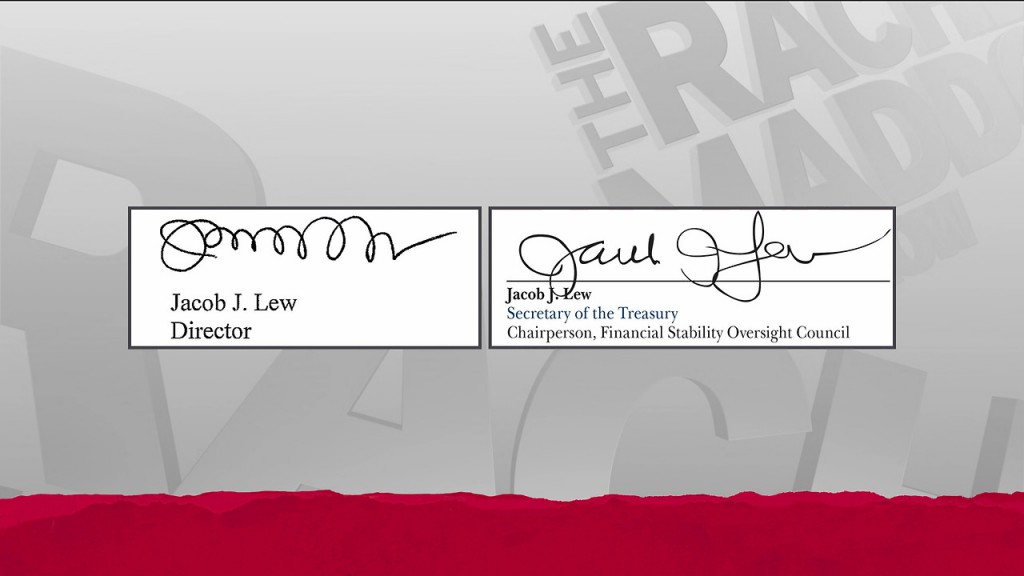
MSNBC on-air comparison of Jack Lew’s autographs: the original Lewpts on the left and what will appear on U.S. currency to the right.
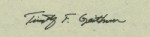
The other signature on U.S. currency is that of Rosa “Rosie” Gumataotao Rios, Treasurer of the United States. Rios was sworn in as Treasurer on August 20, 2009 and has served in that office ever since. Rios’s signature appears with former Secretary of the Treasury Timothy F. Geithner on Series 2009 notes. Ironically, Geithner also changed his signature when he became secretary.
-

-
Tim Geithner’s autograph before becoming Treasury Secretary.
-
-
Tim Geithner’s signature as it appears on U.S. currency
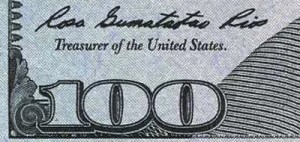
Rosie Rios signature on the older (Series 2009) $100 Federal Reserve Note
Notes that will include Jack Lew’s signature will appear on all Series 2009-A notes.
Glad we were able to resolve this pressing issue!
Dec 12, 2013 | celebration, coins, love token
Fly me to the moon
Let me play among the stars
Let me see what spring is like
On a-Jupiter and Mars
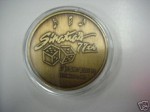
Gift coin presented to guests at Sinatra’s 77th birthday bash at the Star’s Desert Inn casino
Born in Hoboken, New Jersey, Sinatra never graduated high school having been expelled for not being a good buy. While working as a riveter and delivering newspapers, Sinatra used to sing for tips—something he had done since he was eight years old. Eventually, Sinatra began signing at local clubs in Hoboken before becoming a professional singer in the 1930s.
Sinatra was a troublemaker throughout his career. Starting with his break-up with the Hoboken Four and subsequent disagreements with Tommy Dorsey, Sinatra went in the 1040s and the beginning of World War II as a capable musician but not liked amongst his peers. Although he was classified as 4-F for military service (“Registrant not acceptable for military service” by the draft board) because of a perforated ear drum, many active-duty entertainers and journalists hated that he flaunted his lifestyle while many were serving, even if they were just entertaining or acting as clerks without the fame or glamor.
Although Sinatra started to act in 1944 and co-starred with Gene Kelly and Kathryn Grayson in Anchors Aweigh, Sinatra returned to acting to help repair his image. He co-starred with Gene Kelly and Esther Williams in Take Me Out to the Ballgame to critical acclaim.
The best is yet to come, and wont that be fine
You think you’ve seen the sun, but you ain’t seen it shine
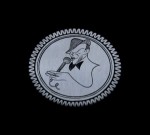
Modern Hobo Nickel based on the Hirschfeld portrait of Sinatra by AG
Sinatra was a his acting stride in 1960 when he starred with Dean Martin, Sammy Davis Jr., and Peter Lawford, the original “Rat Pack,” in Ocean’s Eleven. He appeared in 17 more movies until 1970. After 36 years in show business, Sinatra announced his retirement in 1970.
Of course he made a comeback playing concerts and making guest television appearances. Sinatra also sang for songs that appeared in movies and later appeared with other artists in duets. He was one of the recipients of the 1983 Kennedy Center Honors with Katherine Dunham, James Stewart, Elia Kazan, and Virgil Thomson.
Sinatra’s last public concert was held in Japan in December 1994. The last time he sang for an audience was at a private part for the closing night of the Frank Sinatra Desert Classic golf tournament in February 1995. He ended the show singing “My Way.”
After that show he began reducing his appearances and stopped appearing publicly following a heart attack in February 1997. He died in May 1998 following a second heart attack at Cedars-Sinai Medical Center at 82 years old.
Frank Sinatra courted controversy throughout his life. Although a later release of FBI files showed he had almost no ties to organized crime, Sinatra embraced that controversy in order to overcome his own insecurities and to gain acceptance and access to what was then mob-controlled Las Vegas, where he saw great success. In fact, the Gaming Hall of Fame inducted Sinatra as a member in 1997.
And now, the end is near
And so I face the final curtain
My friend, I’ll say it clear
I’ll state my case, of which I’m certain
I’ve lived a life that’s full
I traveled each and ev’ry highway
And more, much more than this, I did it my way.
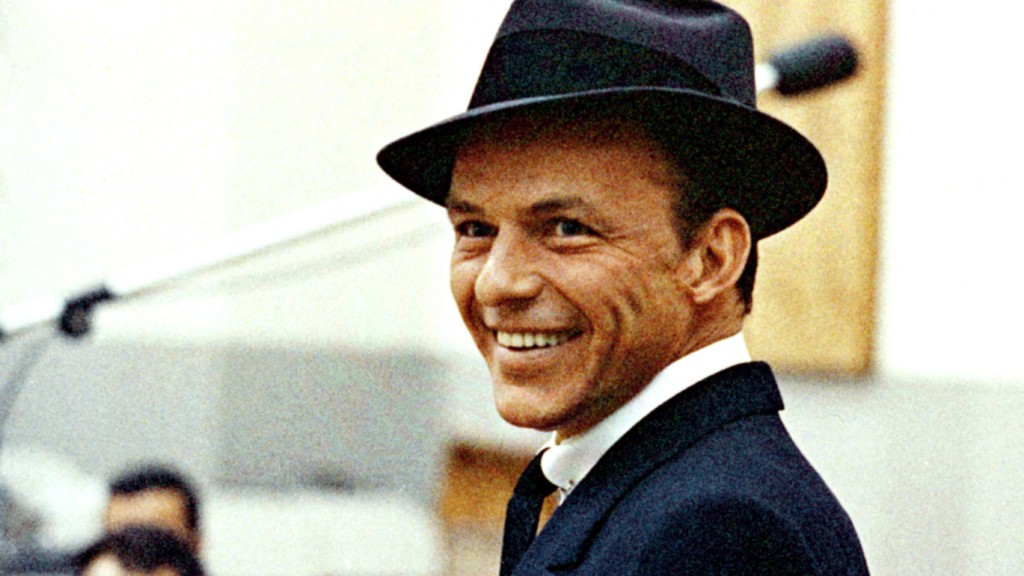
Ol’ Blue Eyes himself.
Dec 7, 2013 | BEP, coins, currency, news, US Mint
 While the products that the U.S. Mint can offer are restricted to what congress allows them to do by law, it does not mean that congress controls how the U.S. Mint markets and sells its numismatic products. To try to get more people to buy its products, the U.S. Mint has made a series of announcements,
Free is still better
U.S. Mint’s Black Friday and Cyber Week sale of FREE SHIPPING for items sent via standard shipping that was supposed to end at 5:00 PM ET today, December 6th, has been extended to5:00 PM ET on December 17th. The U.S. Mint cited they are doing this for holiday “shoppers seeking online deals and discounts.” December 17 is also the first day of sale of the 2013 Teddy Roosevelt Coins and Chronicles set. Those interested in the Coins and Chronicles set can have it shipped free if they order the set on December 17.
New brick and mortar storefront
Last month, the U.S. Mint “partnered” with the Bureau of Engraving and Printing by cross advertising each other’s products on their websites. Essentially, these Department of the Treasury bureaus created a page on their respective websites pointing to each other.
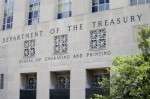
Bureau of Engraving and Printing Washington, D.C. Headquarters
Credit for this move can probably be given to Deputy Director and Acting Director of the U.S. Mint Richard Peterson, Director of the Bureau of Engraving and Printing, Larry Felix, and Treasurer of the United States Rosie Rios. What makes this interesting is that Peterson and Felix are career government employees and were not appointed by the President.
Peterson began his work with the U.S. Mint in 2009 when he was hired as their Associate Director of Manufacturing.
Felix, a long-term professional employee of the Bureau of Engraving and Printing, has been the bureau’s Director since January 2006.
Although Rios was appointed by President Obama and took office in August 2009, has not been the prototypical political appointee. Rios has been outspoken in her support of the numismatic community and seeks out ways to participate. She is a staple at coin and currency shows autographic Series 2009 $1 Federal Reserve Notes that bear her signature—something she calls “Rosi notes.&rdquots; It would not be surprising to learn she was instrumental in making this cross-bureau initiative happen.
Get your Rosie Dollars autographed

Treasurer of the United States Rosie Rios
The BEP will allow visitors to exchange notes on site and have a supply of new $100 Federal Reserve Notes to purchase for Rios’s autograph. Having a $100 note autographed by Rios would be interesting. Many people may not spend $100 to set aside for this type of collectible making it possible that it could increase in value. How many speculators will there be at her next autograph session?
Last chance!
As we approach the end of the year, the U.S. Mint announced that they will be ending sales of the 2013 5-Star Generals Commemorative Coin Program and Girl Scouts of the USA Centennial Silver Dollar. Also on the last chance are 2012 coin sets, 2012 Platinum American Eagles, and 2012 First Spouse coins.
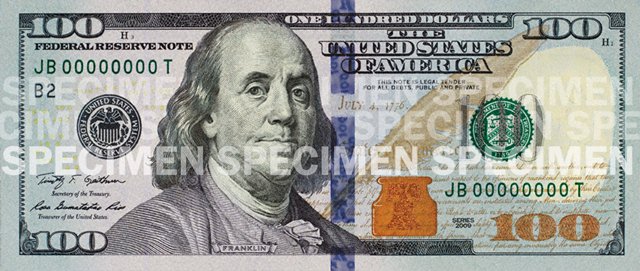
Will you trade $100 for a new $100 note to have it autographed by Treasurer of the United States Rosie Rios?
Dec 4, 2013 | coins, legislative, policy, US Mint
Cue the crickets…
There were no bills introduced, discussed or voted on by congress in November.
Regardless of the side of the political aisle you sit there is no denying that congress’s approval ratings being at an an all time low is not surprising. In the context of numismatics, congress decides what is produced making those of us interested in the numismatic market a watcher of congress as closely as the spot prices of precious metals. The monthly article describing the monthly legilsative activity in congress is from watching what may be in the pipeline for future products from the U.S. Mint.
Just so there is something to report, here is a list of the coin-related legislation and its status for the 113th congress:
Signed into Law
Believe it or not, there has been some law making in this congress. The following has passed both the House of Representatives and Senate and has be signed by the President of the United States into law:
H.R. 1071: To specify the size of the precious-metal blanks that will be used in the production of the National Baseball Hall of Fame commemorative coins.
Sponsor: Rep. Richard Hanna (R-NY)
• This bill is a technical change to the National Baseball Hall of Fame Commemorative Coin Act.
• Signed by the President on May 17, 213
• This bill became Public Law 113-10
See the information about this bill at http://www.govtrack.us/congress/bills/113/hr1071
Passed in the House of Representatives
Bills introduced and passed in the House of Representatives are sent to the Senate for consideration. The following bill passed the House and is awaiting action in the Senate:
H.R. 2754: Collectible Coin Protection Act
Sponsor: Rep. George “G.K.” Butterfield, Jr. (D-NC)
• To amend the Hobby Protection Act to make unlawful the provision of assistance or support in violation of that Act
• Introduced: Jul 19, 2013; Referred to House Energy and Commerce Committee
• Passed in the House of Representatives: Jul 30, 2013 (voice vote)
• Received in the Senate: July 31, 2013; Referred to Senate Committee on Commerce, Science, and Transportation
Track this bill at http://www.govtrack.us/congress/bills/113/hr2754
Introduced in the House of Representatives
Coin-related bills introduced in the House of Representatives are usually referred o the House Committee on Financial Services. Bills referred to other committees are noted in the following list of bills introduced in the House:
H.R. 77: Free Competition in Currency Act of 2013
Sponsor: Rep. Paul Broun Jr. (R-GA)
• To repeal the legal tender laws, to prohibit taxation on certain coins and bullion, and to repeal superfluous sections related to coinage.
• Introduced on January 3, 2013
• Referred to the Financial Services, Ways and Means, and the Judiciary Committees on January 3, 2013
Track this bill at http://www.govtrack.us/congress/bills/113/hr77
H.R. 220: Stop the Coin Act
Sponsor: Rep. Greg Walden (R-OR)
• To limit the face value of coins that the Secretary of the Treasury may issue.
• Introduced on January 14, 2013
• Referred to the House Committee on Financial Services on January 14, 2013
Track this bill at http://www.govtrack.us/congress/bills/113/hr220
H.R. 627: National Park Service 100th Anniversary Commemorative Coin Act
Sponsor: Rep. Erik Paulsen (R-MN)
• To provide for the issuance of coins to commemorate the 100th anniversary of the establishment of the National Park Service.
• Introduced: February 13, 2013
• Referred to the House Financial Services Committee on February 13, 2013
Track this bill at
H.R. 1218: Commemorative Coins Reform Act of 2013
Sponsor: Rep. Justin Amash (R-MI)
• To prohibit the payment of surcharges for commemorative coin programs to private organizations or entities
• Introduced: March 15, 2013
• Referred to the House Financial Services Committee on March 15, 2013
Track this bill at http://www.govtrack.us/congress/bills/113/hr1218
H.R. 1653: Pro Football Hall of Fame Commemorative Coin Act
Sponsor: Rep. James Renacci (R-OH)
• Introduced: April 18, 2013
Track this bill at http://www.govtrack.us/congress/bills/113/hr1653
H.R. 1719: Cents and Sensibility Act
Sponsor: Rep. Steve Stivers (R-OH)
• To amend title 31, United States Code, to save the American taxpayers money by immediately altering the metallic composition of the one-cent, five-cent, dime, and quarter dollar coins, and for other purposes.
• Introduced: April 24, 2013
Track this bill at http://www.govtrack.us/congress/bills/113/hr1719
H.R. 1905: Mother’s Day Centennial Commemorative Coin Act
Sponsor: Rep. David McKinley (R-WV)
• Introduced: May 9, 2013
Track this bill at http://www.govtrack.us/congress/bills/113/hr1905
H.R. 2366: World War I American Veterans Centennial Commemorative Coin Act
Sponsor: Rep. Doug Lamborn (R-CO)
• Introduced: June 13, 2013
Track this bill at http://www.govtrack.us/congress/bills/113/hr2366
H.R. 2633: Thirteenth Amendment Commemorative Coin Act
Sponsor: Rep. Danny Davis (D-IL)
• To require the Treasury to mint coins in commemoration of the Sesquicentennial Anniversary of the adoption of the Thirteenth Amendment to the United States Constitution, which officially marked the abolishment of slavery in the United States.
• Introduced: July 9, 2013
Track this bill at http://www.govtrack.us/congress/bills/113/hr2633
H.R. 2760: Panama Canal and Pan-Pacific Exhibition Centennial Celebration Act
Sponsor: Rep. Nancy Pelosi (D-CA)
• To require the Secretary of the Treasury to mint coins in commemoration of the centennial of the Panama-Pacific International Exposition and the Panama Canal
• Introduced: July 19, 2013
Track this bill at http://www.govtrack.us/congress/bills/113/hr2760
H.R. 2932: United States Coast Guard Commemorative Coin Act
Sponsor: Rep. Joe Courtney (D-CT)
• To require the Secretary of the Treasury to mint coins in commemoration of the United States Coast Guard.
• Introduced: August 1, 2013
Track this bill at http://www.govtrack.us/congress/bills/113/hr2932
H.R. 3146: Savings, Accountability, Value, and Efficiency (SAVE) II Act
Sponsor: Rep. Patrick Murphy (D-FL)
• To take steps to reduce the deficit of the Federal Government.
• Sec. 8. Prohibition On Non-Cost Effective Minting and Printing Of Coins and Currency
• Introduced: September 18, 2013
• Referred to many committees including the Committee on Ways and Means
Track this bill at http://www.govtrack.us/congress/bills/113/hr3146
Sponsor: Rep. Michael Fitzpatrick (R-PA)
• To improve the circulation of $1 coins, to remove barriers to the circulation of such coins.
• Introduced: October 22, 2013
Track this bill at http://www.govtrack.us/congress/bills/113/hr3305
Introduced in the Senate
Even though financial bills are constitutionally required to begin in the House of Representatives, it is not beneath the Senate to introduce their own legislation or concurrent bills with the House. Coin-related bills introduced in the Senate are usually referred to the Senate Committee on Banking, Housing, and Urban Affairs. The bills introduced in the Senate are as follows:
S. 94: To terminate the $1 presidential coin program
Sponsor: Sen. David Vitter (R-LA)
• Introduced on January 23, 2013
• Referred to the Senate Committee on Banking, Housing, and Urban Affairs on January 23, 2013
Track this bill at http://www.govtrack.us/congress/bills/113/s94
S. 203: Pro Football Hall of Fame Commemorative Coin Act
Sponsor: Sen. Robert “Rob” Portman (R-OH)
• A bill to require the Secretary of the Treasury to mint coins in recognition and celebration of the Pro Football Hall of Fame.
• Introduced on January 31, 2013
• Senate Banking, Housing, and Urban Affairs Committee on January 31, 2013
Track this bill at http://www.govtrack.us/congress/bills/113/s203
S. 768: Sound Money Promotion Act
Sponsor: Sen. Mike Lee (R-UT)
• A bill to treat gold and silver coins used as legal tender in the same manner as United States currency for taxation purposes.
• Introduced: April 18, 2013
• Referred to the Senate Committee on Finance
Track this bill at http://www.govtrack.us/congress/bills/113/s768
S. 1011: Boys Town Centennial Commemorative Coin Act
Sponsor: Sen. Mike Johanns (R-NE)
• A bill to require the Secretary of the Treasury to mint coins in commemoration of the centennial of Boys Town
• Introduced: May 22, 2013
• Referred to the Senate Committee on Finance
Track this bill at http://www.govtrack.us/congress/bills/113/s1011
S. 1105: Currency Optimization, Innovation, and National Savings Act
Sponsor: Sen. Tom Harkin (D-IA)
• To improve the circulation of $1 coins, to remove barrier to the circulation of such coins
• Introduced: June 6, 2013
Track this bill at http://www.govtrack.us/congress/bills/113/s1105
S. 1158: National Park Service 100th Anniversary Commemorative Coin Act
Sponsor: Sen. Mark Warner (D-VA)
• Introduced: June 13, 2013
Track this bill at http://www.govtrack.us/congress/bills/113/s1158
Nov 29, 2013 | celebration, coins, US Mint
 As we welcome Black Friday and the holiday shopping season, the U.S. Mint is getting into the act by bringing back Free Standard Shipping. Buy whatever your want from the U.S. Mint online catalog and get free standard shipping until December 6, 2013.
According to sources, the free shipping promotion in September went very well bringing increased sales volume to the U.S. Mint. Since shipping and packaging are the few aspects that the U.S. Mint can control on its own, they are going to use whatever it takes to get noticed to bring collectors and gift buyers to their site.
They got me. I am going to be ordering my 2013 Presidential Dollar First Day Covers with the free shipping. I have to keep my collection up to date!
Unfortunately, the Teddy Roosevelt Coins and Chronicles set will not be released until December 17, after the free shipping sale.
Nov 28, 2013 | celebration, history, other
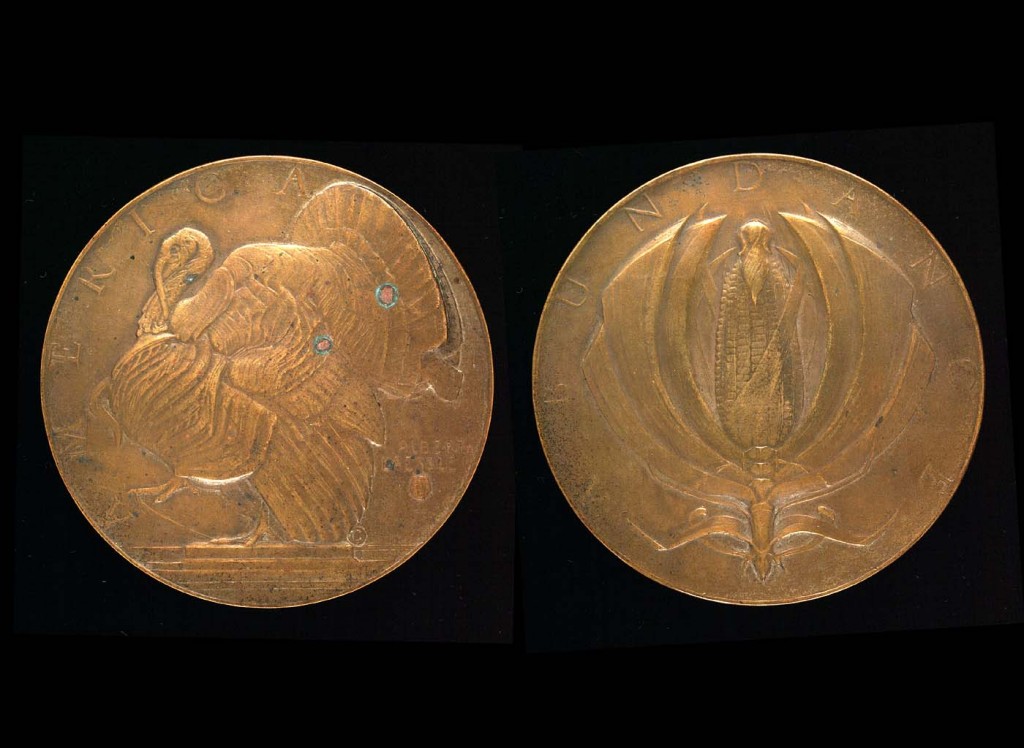
American Abundance designed by Albert Laessle and issued in 1934
After arriving in the New World in 1620, the Pilgrims celebrated their first harvest in 1621. The three-day even was attended by 53 Pilgrims and 90 Native Americans that lasted three days. The tradition of giving thanks for successes was a tradition that the Pilgrims brought with them from England. This three-day celebration in 1621 is considered the first Thanksgiving.
Thanksgiving was celebrated during many different times within the colonies, mainly to give thanks for something that was honorable to the colony or the locality that observed the celebration. The first national recognition of a Thanksgiving celebration came when General George Washington declared December 1777 as Thanksgiving honoring the defeat of the British at Saratoga. As President, George Washington declared the first national Thanksgiving celebration on November 26, 1789. The only other president to issue a Thanksgiving proclamation was President James Madison. From then, it was up to the individual states to declare a Thanksgiving holiday.
As part of his attempt to maintain the union, President Abraham Lincoln issued a proclamation that made Thanksgiving Day a national annual event on the last Thursday in November beginning in 1863.
Thanksgiving remained the last Thursday of November until 1939 when he declared Thanksgiving to be on the fourth Thursday of the month to give merchants more time to sell good during the Christmas shopping season. Congress passed a joint resolution in 1942 fixing Thanksgiving to the fourth Thursday of November.
In 1947, the National Turkey Federation has provided the President of the United State with one live turkey and two dressed turkeys. President Harry Truman is credited with pardoning the first turkey in 1947 but it did not become a tradition until President Ronald Reagan started in 1987 and continued by President George H.W. Bush in 1989. Since 1989, the pardoned turkeys have lived the rest of their lives at Frying Pan Park in Herndon, Virginia. Those pardoned by President Obama have gone to live at George and Martha’s old place in Mount Vernon, Virginia.
Happy Thanksgiving!
Medal image courtesy of the Smithsonian Institute.
Nov 25, 2013 | bullion, coins, commemorative, Eagles, poll, US Mint
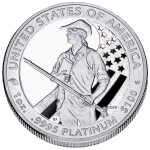
2012 American Eagle Platinum Proof reverse “To Provide for the Common Defence”
Let’s pretend that the Citizens Coinage Advisory Committee could bypass congress (very wishful thinking!), Citizens Coinage Advisory Committee, and the U.S. Commission of Fine Arts to build a portfolio of non-circulating legal tender commemoratives to increase collector sales. Today’s poll, which will run for two weeks, asks what the U.S. Mint should do with its pretend freedom.

Loading ...
For the record, I am in favor of allowing the U.S. Mint to increase the offerings under the American Eagle program. The U.S. Mint has done some of that to this point with the enhanced reverse uncirculated coins and special sets. There should be more special offerings or different offerings. The U.S. Mint could change the reverse designs to honor different themes like they have been doing on the reverse of the platinum American Eagle coins.
I would also like to see more of the enhanced uncirculated American Silver Eagle coins. The way it enhanced Adolph Weinman’s Walking Liberty design makes it a great looking collectible.
Nov 24, 2013 | coin design, commentary, foreign, other, US Mint
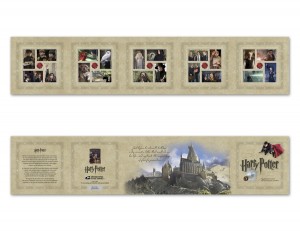 A story appeared in the November 18, 2013 edition of The Washington Post that the hard-core stamp collectors, the ones that will buy the products released by the United States Postal Service, are apoplectic about selection of Harry Potter as a subject for a series of stamps.
The objections are two-fold. First, Harry Potter is not American and neither is the author of the series J.K. Rowling. The other reason is that the Postal Service bypassed the Citizens’ Stamp Advisory Committee (CSAC) to make the deal with the various commercial concerns to issue the 20-stamp tribute to the boy wizard.
Unlike the Citizens Coinage Advisory Committee, the CSAC is not mandated by law. It was established in 1957 “to select subjects of broad national interest for recommendation to the Postmaster General that is both interesting and educational.” Apparently, there has been tension between the Postal Service and the CSAC.
Like coin collecting, stamp collecting has been in decline as the awareness and usage of their product declines. Coin collectors can point to the decline in coin collecting following the big start of the 50 State Quarters® program, stamp collectors can point to the growth of email, e-publishing, and electronic stamp capabilities as part of the decline of the postal service. The Postal Service feels it has to do something in order to bring new collectors to buy its goods.
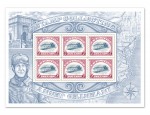
The US Postal Service pays tribute to their own famous error, the Inverted Jenny
The Postal Service has been an independent agency of the federal government since 1971. Their operating expenses largely come from the sale of postage and the collection of duties for cross-border movement of the mail. Other revenues are generated from the sales of collectibles including special sets, first-day covers, and other collectibles. Interesting items sell well including the Elvis Presley stamps which were the Postal Service’s bestseller.
One area of regulation that has hurt the Postal Service was a law passed in 2005 that forced the agency to pre-pay retirement benefits for the next 75-years in a series of very large lump-sum payments. Their inability to meet the obligation and maintain the 75-year cushion has been widely reported causing the agency to lose significant revenues while trying to adhere to this ridiculous statutory requirement. No other agency or company is required to pre-pay 75-years of retirement benefits.
Knowing that they have to generate new revenues, Postmaster General Patrick R. Donahoe was quoted as saying that the Postal Service “needs to change its focus toward stamps that are more commercial.”
In other words, Donahoe recognizes that the organization he leads has to think differently in order to attract new customers.
The reaction from the philately community is almost the same as I would expect from the numismatic community if this was done by the United States Mint.

New Zealand Mint produces Monopoly coins for the Island nation of Niue. Did you pass Go?
Next year, the U.S. Mint will issue a curved coin to honor the National Baseball Hall of Fame. While it will be a round coin, the coin will be concave when looking at its obverse. While the closest thing to “different” the U.S. Mint has produced was the 2009 Ultra High Relief Gold Coin, the sales of the Baseball Hall of Fame Commemorative coins may do well because of the theme and they are different.

2007 Somalia Motorcycle Non-circulating Legal Tender Coins
“Harry Potter is not American. It’s foreign, and it’s so blatantly commercial it’s off the charts,” said John Hotchner who was once president of the American Philatelic Society and served on the CSAC for 12 years. Hotchner should be asked about the stamps to commemorate Pixar animation, Disney, and muscle cars. Even though I am a coin collector, I have bought the muscle car commemorative panel along with sheets of motorcycle stamps and a collector book with the stamp of Edgar Allen Poe because I was interested in the theme.
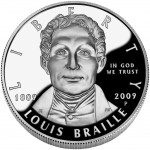
Louis Braille was not American nor did he do his work in America, but congress authorized a commemorative issued in 2009
Coin and stamp collectors have to take their heads out of the past. Stamps are losing to email and coins are losing to credit cards. Neither are going away anytime soon, but if there is to be a future both the U.S. Mint and U.S. Postal Service has to be innovative in order to attract new collectors. While the U.S. Mint is handcuffed by the whims of a dysfunctional congress, the Postal Service can capitalize on one of the most popular books and stories of this generation. If it helps promote stamp collecting and allows them to sell more products, then the Postmaster General should be congratulated for a job well done.
Maybe there is something that can be done to add to the catalog of the U.S. Mint in order to generate more interest. Until then, this muggle will be ordering something from the Harry Potter collectibles offered by the Postal Service for his wife who is a Harry Potter fanatic!
What do you think? Weigh in on the discussion in the comments (below).
Credits
- All stamp images courtesy of the United States Postal Service.
- Monopoly coin image courtesy of the New Zealand Mint.
- Louis Braille Commemorative image courtesy of the U.S. Mint.
- Somalia motorcycle coin images are courtesy of the author.
Nov 22, 2013 | coins, halves, history, US Mint
It was the modern day “Shot heard ’round the world.” At 12:30 PM Central Time, while the motorcade carrying President John F. Kennedy, First Lady Jacqueline Kennedy, Texas Governor John Connally, and Connally’s wife Nellie was twice fired upon while passing through Dealey Plaza in Dallas. Lee Harvey Oswald fired two shots from the Texas School Book Repository at the convertible. The first shot hit the President under his arm which was held up as he waved at the crowd. The bullet passed through his body and struck Governor Connally. The second bullet struck the President in the head.
At 1:00 PM, President John Fitzgerald Kennedy was pronounced dead at Parkland Hospital.
Vice President Lyndon B. Johnson refused to leave Dallas for Washington without the Jacqueline Kennedy or the body of the president. At 2:38 PM, Johnson took the oath of office aboard Air Force One with Mrs. Kennedy at his side. She wore the blood-splattered coat to remind people of the tragedy that just occurred.
Fifty years later, those who experienced the assassination as part of the American family continues to remember the sadness and grieving by everyone, even those that did not support Kennedy. Some have described the feeling as more profound than what we experienced on September 11, 2001 because while both were tragedies, Kennedy was the living symbol of a bright future.
“We choose to go to the Moon in this decade and do the other things, not because they are easy, but because they are hard.”
—John F. Kennedy
Sept. 12, 1962
Kennedy became the youngest person to ever be elected as President and the first Roman Catholic. At 43, Kennedy was the promise of a new vision that would have the United States leading the world in fighting the “common enemies of man: tyranny, poverty, disease, and war itself.” In his inaugural address, he called the nation to arms for its own sake when he said, “Ask not what your country can do for you, ask what you can do for your country.”
Kennedy made an impact on this country in such a short period of time that one can wonder what would have happened if….
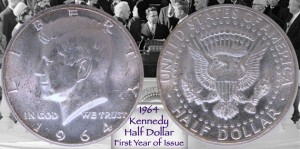 A few days after Kennedy’s assassination on November 22, 1963, U.S. Mint Director Eva Adams, Chief Engraver Gilroy Roberts reported that there was discussions about putting Kennedy’s portrait on a silver coin. Since Jacqueline Kennedy did not want to replace Washington’s portrait on the quarter, it was decided to use the half-dollar. Roberts used models from the inaugural medal for the obverse design and Assistant Engraver Frank Gasparro prepared the reverse design using the Presidential Seal.
Since the law stated that coinage design could not be changed more often than 25 years, and that the Franklin Half was only 15 years old, it required Congress to authorize the change. The Act of December 30, 1963 allowed the design to be changed.
When the coin was released in 1964, the 90-percent silver coin was saved by a grieving nation wanting something that represented the fallen President. Over 273 million coins were struck in Philadelphia and 156 million in Denver. The composition was changed in 1965 with the introduction of clad coinage. Half-dollars consisted of 40-percent silver that included a core made from 79-percent copper and 21-percent silver. In 1971, the composition was changed to current copper-nickel clad that is in use today.
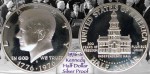 There has been one design change to the coin and that occurred in 1975 and 1976 in honor of the American Revolution Bicentennial. A special reverse depicting Independence Hall in Philadelphia was designed by Seth G. Huntington. For both years, the obverse featured the dual date 1776-1976 in celebration.
On the 50th anniversary of his assassination, we salute President John Fitzgerald Kennedy for his service and mourn the loss to this country.
Nov 20, 2013 | advice, coin design, commemorative, legislative, policy, US Mint
As a comment on my post about the selection design for my 2014 Baseball Hall of Fame Commemorative coin a reader commented with a simple question: Can you offer a suggestion as to who I can approach to offer an idea for a commemorative dollar?
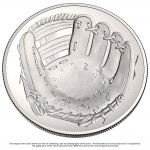
National Baseball Hall of Fame Commemorative was introduced by Rep. Richard Hanna (R-NY) whose district includes Cooperstown, NY
While I cannot fix the fractious nature of congress, I can offer suggestions as to how to get a commemorative coin recognized as a good idea.
As you read this post, let me remind you that former German Chancellor Otto von Bismarck once said, “Laws are like sausages, it is better not to see them being made.” What follows is a look into what it takes to make the sausage in order to propose a commemorative coin and have it become law.
First, rather than starting with congress talk with organizations in the area of interest. After all, commemorative coin programs are fundraising vehicles for the organizations. It helps congress know who will receive the money. In this case, my correspondent wants to see a commemorative coin to be issued in 2017 commemorate the 50th anniversary of the first ever heart transplant.
“My hope is to get more people aware of the need of people to sign up for the donor list to make more organs available,” my correspondent writes. “A donor sign up card could be included with each order. Proceeds could fund awareness program….”
The problem is that this is a good and noble idea but the first question a congress person would ask is what organization would receive the money? Unfortunately, congress is not into creative thinking and would like to know who could receive the money, how the money would be used, and what guarantees that the money earned from the commemorative program would be used for its intended purposes.
Do not expect the representative to do all of the work. In fact, do not expect the congress person to do much of the work until the bill is written and submitted. Even though congress will be in session fewer hours this year than in recent recorded memory, the members will tell you they are too busy to work on this issue. The nature of modern politics is that unless you are going to cut them, the party, their political action committee, or one of their other campaign committees a check, your chance for success is diminished.
However, you can cut through the fog of politics by working with a credible non-profit organization—or a coalition of non-profit organizations—with your interest.

I’m just a bill
Yes, I’m only a bill
And I’m sitting here on Capitol Hill
When contacting these people, I would have an elevator-speech ready. An elevator speech is one that pitches your idea in the time it would take to ride an elevator. In other words, keep it short and to the point. Make sure your pitch includes something compelling to want them ask for more information and make sure you anticipate any questions.
The nice part about partnering with the AHA is that they are very experienced with legislative affairs. I have no doubt that they either have a full-time lobbyist on staff or have hired a lobbying firm to represent their interests before congress. This is one area where you do not have to answer questions. However you should know a little about commemorative coin bills that congress has considered. These issues are as follows:
Q: After a commemorative coin bill is introduced, which committee will it be assigned?
Q: How does the organization make money from a commemorative coin?
A: Congress sets a surcharge over and above the cost to produce the coin that will be given to the sponsoring organization. Usually, the surcharges are $35 for gold coins, $10 for silver dollars, and $5 for clad 50-cent coins.
Q: Are limits set for the number of coins sold?
A: There are no pre-set limits unless written into the law. Usually, congress has set the limits to be not more than 100,000 $5 gold coins, 500,000 $1 silver coins, and 750,000 50-cent clad coins. The number of uncirculated versus proof issues is determined by the
U.S. Mint as long as they remain within these limits. Coins are produced and sold by the U.S. Mint only during the year of issue.
Q: Who designs the coins?
Q: How do we request that heart health and transplant awareness be inserted into the coins with the Certificate of Authenticity?
A: Make sure that the information is added to the law. Unless the sponsoring organization can compel the U.S. Mint to add it, you are better off making sure the law requires that the U.S. Mint does this.
Q: Can you give me an example of how one of these bills is written?
A: Most of the time, when you read the bills submitted to congress, you will see text that calls for editing of the law, which is called the United States Code (U.S.C.). It may say to strike words, replace words, add paragraphs, add sections, and all sorts of other editing that does not make sense unless you know what the U.S.C. says when the bill was written.
Since most commemorative coin bills are additions to the law, they are usually added to Title 31, Section 5112 of the United States Code (31 U.S.C. § 5112). Many times, the bill does not mention where the new law will be inserted when it is introduced. It will be corrected before passage.
If you want to provide the member of congress with the text of a bill, which many times is helpful, you may want to use something that has already been introduced as an example to write your own text. Two good examples are as follows:
When visiting the website, look on the right side in the lower half for the link marked “Read Bill Text.”
Both bills specify gold, silver, and clad coins. Your proposal does not have to include all three. In fact, to raise awareness, you might want to consider just a silver dollar and a clad half-dollar.

Too bad there’s so much dysfunction in such a beautiful building.
Once you convince a member of congress to submit the bill and get the member’s support, a professional legislative affairs person would know how to convince other members to sign up as co-sponsors. While having a lot of co-sponsors does not guarantee success, it helps with the bill’s awareness and make it more attractive to pass.
There are other political maneuvers that can be used to have the bill passed, such as convincing a member to bring up the bill under a procedure called “suspension of the rules.” In the House of Representatives, a bill brought to a floor vote under the suspension of the rules are usually non-controversial measures that have no objections—or no objections that would be voiced on the floor. The bill would then pass by unanimous consent or a voice vote.
The procedure is similar in the Senate.
Once the bill passes one chamber, it is sent to the other for it to work on passage.
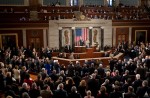
House of Representatives
While the bill is in congress it does not mean you have to sit on your hands and wait. One of the best things you can do is to tell your friends, relatives, and anyone else who will listen to call or email their representative to support the bill. If they are not a co-sponsor, tell their staff that they member should be and why. If they are a co-sponsor, thank them for their support and ask if they could get other members signed on as co-sponsors. If you can find people whose representatives are a member of the House Financial Services Committee or the Senate Banking Committee, then they should modify their support by saying to please help get the bill passed through the committee.
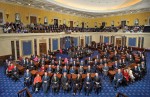
The World’s Most Deliberative Body, the United States Senate
But that does not mean to stop your efforts. Citizen lobbying efforts in the Senate are doubled because each state has two senators. Make sure you and your supporters contact both of your senators. Remember, it is your right as a citizen to meet with your representatives and this includes senators. You can make an appointment to let your senators know how your feel. If your senator is a member of the Senate Banking Committee, then they should be asked to help move the bill out of committee and to the floor for a vote.
The work is not done until the bill is passed or congress is adjourned for the last time on January 2, 2015. Bills not acted upon when congress adjourns for the last time in the session will be considered to have “died in committee.” If the bill dies in committee, you can do this all over again and try to convince a member of congress to submit the bill in the 114th congress that would open its session at noon on January 3, 2015.
If the bill passes both chambers it is likely it will be signed by the president. As far as I know there has never been a commemorative coin bill to have been vetoed by any president.
Although there are a lot of good ideas, many of them are not properly introduced to congress. The few that do make it do not receive enough support to move beyond introduction. Even fewer are passed by one chamber and not both. Those that make it past congress to the president’s desk had some effort behind them besides being just a good idea. After all, with only two commemorative coin programs allowed per year, congress has to be convinced to believe your commemorative idea is better than another for that same year.
Sausage anyone?
Baseball Hall of Fame Commemorative coin courtesy of the
U.S. Mint.
Images of congress and the capitol courtesy of the
Architect of the Capitol.
Image from School House Rock’s “I’m Just a Bill” can be found all over the interwebs.


