Sep 4, 2013 | administrative, Israel, medals
To all my Jewish readers,
L’shanah tovah tikatev v’taihatem
May you be inscribed and sealed for a good year
This is the earliest that Rosh Hashanah has appeared on the Gregorian Calendar since 1899. Later this year, Chanukah and Thanksgiving will occur on the same day for the first time in history. With the nuances of the calendars, this will not happen again for 77,789 years.
It will be 5774 on the Jewish calendar which is a leap year. Since the Jewish calendar is lunisolar, a calendar whose date indicates both the moon phase and the time of the solar year, a leap year adds one month to the calendar. Adar I will begin on February 1 and last for 29 days. All Adar holidays, such as Purim, occur in Adar II.
A Happy and Healthy New Year to you and your family!
Sep 3, 2013 | books, cents, coins, review
Rosie was not just a riveter during World War II but she also worked at the U.S. Mint in Philadelphia making blanks for coins.
Working in the blanking room at the U.S. Mint was not an easy job. It was hot, loud, and Rosie was confused. Even though she was supposed to feed a sheet of zinc coated steel into the blanking press, Rosie fed a sheet of copper. With the press of a button, 40 copper blanks were made.
Rosie panicked. The president ordered that the U.S. Mint not use the copper for coins so it could be used for the war effort. Not knowing what to do, Rosie let the coins proceed to the next stations where they were washed and “pinched” to create rims keeping her fingers crossed that nobody found out.
The copper blanks were fed into the press along with the zinc-coated steel blanks and thus was born Penny, a 1943 copper cent.
The Wishful Penny is the story of Penny’s adventure from her accidental birth, to an ice cream shop, across the Atlantic, back again, and how one wish made on Penny comes true.
Written for readers in grades 3-5 with a story that can be appreciated by younger students, The Wishful Penny written by J.J. (Jennifer Jo) Young, co-founder of the publisher See the Wish, surrounds the story of a wish made on a penny as it is thrown into a fountain with factual information about the coin and conditions. The story opens with the book’s Rosie, a name obviously chosen, who never worked before but was thrown into working at the U.S. Mint in Philadelphia because the men were off at war. It mentions that President Roosevelt order that copper be preserved for the war effort and even approaches the angst of the time with relative off at war and businesses hoping for survival in difficult times.
The use of factual information makes the story more appealing. Forget the fact that I am some-number-of-many-years beyond the target age group for this book, it has the ability to not only teach the students but also the teachers who may have not thought about using coins as a teaching tool. If a teacher wants to use this book for classroom instruction, the authors offer a teacher’s kit that includes books, worksheets, discussion questions, activities, history tie-ins, and script with a CD of music to allow the students to perform the book as a play.
Aside from the history, the book teaches about real world perseverance from the perspective of Penny, whose optimism about carrying her wish is a good lesson for all children. While having optimism is good, the book also teaches how there is a long road to fulfilling goals that comes with the bumpy road of life. As someone who grew up with parents who wanted me to skin my knees because learning not to was as important as losing the game in order to understand life is just not handed to you, the book portrays that as a series of disappointments. With optimism in tact, Penny goes from the fountain where she meets the silver coins, to Ireland where she lives in a safe with other coins, to running away from thieves, and helping catch them before being mailed back to the United States and finding that a coin is different from the stamps that make the journey with her.
If you buy the book individually, it will come with a CD with 12 songs interspersed with acted audio scenes from the book. It is not exactly faithful to the dialog in the book, but your youngster may not mind. Remember, that the music is intended for your children and that an adult may request their child listen with headphones. After growing up with Peter, Paul and Mary, I am not sure I would have ever like the music. Since I am not the target audience I am not going to complain! However, the audio CD could be just the thing to keep your child busy for an hour during a long drive.
You can also buy the book as an audio CD. The audio book is read by January M. Akselrad, the other co-founder of See the Wish. Ms. Akselrad reads the book just like you would expect to a younger audience. However, I found myself re-reading the book along with her thinking that this might be good for a student who may have a difficult time reading to follow along while listening to the book being read for them.
Although I am not a teacher, I can see using the audio CD with the books in order to show visual highlights of story but the history it shows. Since I was not provided the teaching materials, I can only hope the authors provide teachers with this information.
Coins can teach us a lot about history and history can teach us a lot about ourselves. Although the exact reason for the existence of the copper 1943 cents can only be speculated, turning it into a story for children works on so many levels. I even like that the person who found Penny only to realize she was special was a girl learning about collecting coins. Add to that the collector who buys the coin was a woman is also a lesson that this should not be a male-dominated hobby!
I did not know what to expect when I agreed to review this book. But I was surprised how engaging it was even for a “vintage” person like me. Even though Penny ends up at less than an Mint State (MS) grade by the end of the book, I grade this book MS68 with a recommendation that if your young reader does have reading difficulties also purchase the audio CD. In fact, you may want to consider purchasing the teacher’s kit and donate it to your child’s school. Or for the classes looking to put on a play, why not consider the full-length musical with recorded music. It has to be a great idea for teachers needing new material!
POST SCRIPT FOR PARENTS: After your child reads the book and she wants more information about coins and collecting, let them vista the U.S. Mint h.i.p. pocket change website. “H.I.P.” stands for History In your Pocket, which best describes how many of us see coins.
POST SCRIPT FOR TEACHERS: After your class read this book and performs the play, I would recommend teachers visit the U.S. Mint teacher’s website for additional resources to using coins in the classroom. Who knows, maybe we can turn you and your students into numismatists!
Disclaimer
A copy of the book and audio CD was provided by the author in exchange for this review. Even as I type this, the author does not know what I will say. However, I did inform her I will be donating the audio CD to the county library to be placed in an area where the children need the most help.
Apology
I want to take this opportunity to apologize to the author for taking so long to do this review. She was prompt in sending the book and I should have made the time to reward her promptness with a timely review. I appreciate her patience.
Sep 1, 2013 | ANA, books, charity, coins, education, personal, review
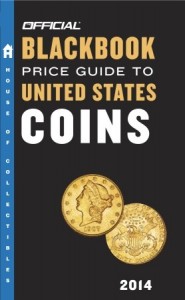 Last year I reviewed The Official 2013 Blackbook Price Guide to United States Coins I received as an e-book from the publisher. In that review I was surprised as to the quality information that was in the book including articles that were written by numismatists sharing their expertise with the collecting public. Unfortunately, some of the information seemed dated and needed updating. Apparently the editors agreed and worked to update information.
Based on the review, the editors turned to a numismatist whose experience with computers, the Internet, and writing for the collector who could add the information about using technology to enhance the collecting experience.
This is where your favorite blogger enters the picture.
The Official 2014 Blackbook Price Guide to United States Coins has an new chapter, “Using Technology to Enhance Your Collecting Experience.” Written in plain language for the collector, the chapter discusses what numismatic-related resources are online.
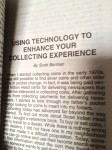 The chapter opens with a brief history of how computers and the Internet has advanced my collecting experiences. This includes a brief history of the Internet from its birth as ARPAnet through the invention of the birth of the World Wide Web and the services we now take for granted. I wrote it so that when you hear something Internet and web history in the news you have the background to understand why it is important.
Following the introduction are sections that helps you find the information you want online. These sections are titled:
- Online Price Guides
- News and Blogs
- Mobile Computing
- E-books
- Social Media
- Buying and Selling Online
- Auctions (Established auction houses and their online options)
- Looking into the Future
- Your Security Online
If nothing else, the section “Your Security Online” may be worth the price of the book. It is something I have written in many forms, in many places, and have lectured about locally. These are general awareness tips that everyone should follow.
To their credit, the editors Mark Hudgeons, Tom Hudgeons Jr., and Tom Hudgeons Sr. read my review and updated the 52nd Edition of The Blackbook to address many of my concerns outside of my chapter. It is a better reference than in the past and worthy of a place in your numismatic library!
Autographs For Education
After autographing my first copy of the book I decided that rather than give away my autograph I want to use it to help raise money for numismatic education. For every autograph, I am asking for a minimum donation of $25 to the American Numismatic Association Florence Schook School of Numismatics to be used to further all numismatic education.
You can either mail the check yourself to the ANA and show me that you donated or give me the check and I will mail all of them together. Checks given to me should be made payable to the “American Numismatic Association” (NOT ME!) with a note on the memo line saying “For The Florence Schook School of Numismatics.”
For your donation, I will autograph the first page of my article above the title and give you recognition here on the blog. Since the ANA is a not-for-profit organization, your donations are tax deductible to maximum allowed by law.
One way to find out where I will be is to follow me here on the blog since I usually announce when I am going to a show. For planning purposes, I will attend the Virginia Numismatic Association Show on Saturday, September 28; the Pennsylvania Association of Numismatists show during October 24-26 (my attendance dates TBD) in Monroeville (a suburb of Pittsburgh); and the Whitman Baltimore Expo on Saturday, November 9. I might attend the Wall Street Coin, Currency and Collectibles Show in October if I can resolve a scheduling conflict.
Of course scheduling conflicts do arise, but let me know you if you will be looking for me at a show.
Post Script
Collectors of paper money, world coins, and stamps will be happy to know that the chapter will be adopted for the Blackbook covering those areas in 2015. I will also update the the current chapter since the online world has changed a little since it was written (e.g., Google shutdown the Reader service).
Book cover image courtesy of Random House.
Sep 1, 2013 | coins, education, medals, tokens
One of the benefits of living in the Washington, DC area is the access to the great museums. Even better, most of them are free or charge a convenience fee to register for entry times online. A few weeks ago, I was able to take advantage of this when my nephew and nice brought their parents, my brother and sister-in-law, to the area in order to visit a few of the museums in the area.
After a late breakfast, we went to the United States Holocaust Memorial Museum. Aside from its mission to memorialize and teach the lessons of the atrocities during World War II it strives to educate people as to their responsibilities in the face of hatred and genocide while promoting human dignity. The museum is celebrating 20 years having been dedicated on April 22, 1993 and opening to the public on April 26, 1993. You can read more about the history of the museum here.
If you come to visit the Washington, D.C. area, I highly recommend that you allocate at least four hours to go through the museum. If you are like me and like to read everything, view all of the exhibits and displays, and watch all of the videos then you should consider scheduling more time.
What does the Holocaust have to do with numismatics? First, in some of the displays are scrip and coupons used mainly in Jewish ghettos for rationing of goods and services. It shows how an economy attempted to survive in the harshest of circumstances. While some of the scrip are reproductions, it gives the museum goer a sense of what those in the ghetto might have gone through.
Another group that created their own script were the Roma (Gypsies). Although the Roma were Aryan, they were persecuted as being inferior to the Germans. However, when they were rounded up and brought to the concentration camps, the Gypsies created their own order along with the other non-Jewish population as they were segregated in the camps.
There is not a lot of money-related artifacts, especially for the period following the start of World War II, but what is there shows its importance as part of the survival of the persecuted. The power of money was on display the movie Schindler’s List where Jewish artists were forced to create printing plates in order to counterfeit British money. In fact, the movie The Counterfeiters is about the counterfeit operation set up by Nazis to weaken the economies of the enemies.
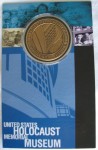
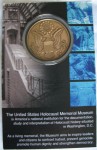
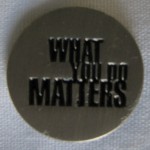
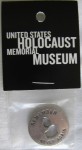
Before leaving the museum requires a stop in the gift shop. Amongst the books and other items to help you remember your visit are the official medal and some smaller tokens. The medal is made of bronze and is about the size of a United States half-dollar (30 mm). The medal appears to be in a ringed holder that is embedded in a card. Two smaller tokens includes one that reads “What You Do Matters” and one with an image of a candle cut out from the metal with the words “Remember” across the top and “Never Again” on the bottom. Both tokens are 20 mm in diameter.
-
-
Obverse of the US Holocaust Memorial Museum Medal
-
-
Reverse of the US Holocaust Memorial Museum Medal
-
-
“What you do matters” refers to how you react in the face of genocide where ever it occurs matters.
-
-
“Always Remember” token with cutout of a candle.
Collecting coins, tokens, and medals of the places you visit is one way to enhance your collection. To complete the collection from this visit I also purchased three postcards. The postcards, medal, and tokens were placed in a page that holds three 4×6 items with two postcards in one pocket, the medal in its own pocket, and the tokens in the pocket with the single card. The page is in a binder with a note describing when I obtained these items, who I was with, and some other thoughts. Adding the note personalizes the collection and will remind me of the visit many years from now.
Aug 31, 2013 | coins
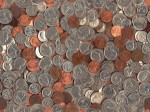 During the last few weeks I have been doing some business traveling. One of my trips was to the west coast on a flight that required a transfer of planes at the Dallas-Fort Worth Airport. DFW is an interesting airport, very spread apart, and travelers are dependent on the Skylink unmanned train system to go between the five terminals.
On the trip to and from the west coast, I was able to spend a few dollars for incidentals in order to collect the change to see what I could find. While airports are not necessarily the best place to go change hunting, there is always the possibility that something may be found.
Unfortunately, in two trips I did not find anything interesting from my airport hunts and my west coast spending. In fact, lack of interesting finds is in itself an interesting story because I found more coins with “P” or no mintmarks than with “D” or older “S” mintmark coins.
During this trip not only did I leave an item that I did not think would pass through the TSA checkpoint but I also forgot a necessity. Rather than buying it from the hotel shop, I ventured out to a local big box store to see what I can find in change. Aside from the sticker shock of having to pay 10-cents for a paper bag to carry my purchase out of the store, but the change returned had nothing interesting. The only “D” mint coins I found was a dime and two Memorial reverse Lincoln cents.
Before returning home, I put my change in a zippy bag that was in a side pocket of my carry bag. The bag contained more than $3 in change with only six coins with a “D” mintmark—no early “S” mintmarks or coins older than 1991.
On the way out of the airport to retrieve my car, I stopped at an airport shop for a bottle of water. Aside from being shocked at the $2.50 price, of the two quarters I received in change one was dated 1998-D.
At least the trip was more successful than my change hunting efforts.
Aug 21, 2013 | ANA, coins, medals, shows
The 2013 American Numismatic Association World’s Fair of Money will be a show I am not likely to forgot. Even though I was only able to attend three days there was a lot to do, a lot to see, and work to be done.
As with every World’s Fair of Money nearly every national organization held their annual meeting during the show. These organizations cover the gamut of interests that fall under the category of numismatics. For me, it was the first time I attended the American Israel Numismatic Association annual meeting. After a few years of conversing with President Mel Wacks via email, we were able to me in person for the first time.
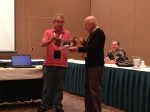
AINA President Mel Wacks (R) presents an Award of Appreciation to David Hendin for his talk at the AINA Annual Meeting
We also heard from the director of the Holy Land Mint about their plans for future coins and medals.
Because I was at the AINA meeting, I missed the meeting of the Numismatic Bibliomania Society, another organization which I belong. I really wanted to go to their meeting not only because I am a member, because as a blogger and soon-to-be publisher (my book is almost done), I want to work with the community on the best way to move forward with the concept of e-books. Not only should there be more e-books but there should be some way to preserve older books electronically.
In the news…
Here are some of the stories out of Chicago for the week:
Thursday evening I attended the part of the closed Board of Governors meeting that involved the Technology Committee and the new web infrastructure for the ANA. While I am a proponent of opening as much of the ANA business to the membership at large, I will say that there were discussion about the pending contract for the work that qualified for this discussion to be done in private. The meeting was productive in that the Board has an understanding what was being proposed and provocative in that the dissenting voices will ensure that the project does not fly off the proverbial rails.
At the open Board Meeting on Friday there was a lively discussion on the website, the costs, and the future. This is something I will comment on at another time. However, in a motion by then Vice President Walt Ostromecki, a motion to approve the contract with Riser Media to build the new ANA website and Euclid for their ClearVantage association management software. The motion was passed with a 9-0 voice vote.
During the open forum, a discussion was put forth by then Governor-elect Laura Sperber about the positioning of the auction companies and other non-dealers by the entrance to the bourse floor. Apparently, there has been a lot of angst amongst the dealer community about something referred to as the “star system” used to allow dealers, donors, and others to gain advantages to their position at the shows. As a collector, I agree with Ms. Sperber in that I would rather see the dealers than the auction companies and the other huge booths that are pushed up front.
This year, the World Mint Pavilion was the first set of tables you came to when you entered the bourse floor. In front was the booth for the Holy Land Mint who was showing off their new coins including a lot of gold. Near by were the Royal Australian Mint, the Bank of Russia with their Socci 2014 coins, the Pobjoy Mint, Royal Canadian Mint, and others. I was disappointed that the Royal Mint was not present.
At the end of the aisle was the Bureau of Engraving and Printing and next to them the U.S. Mint. Rather than being apart, the two money manufacturing bureaus under the Department of the Treasury were side-by-side. I was told by someone from the U.S. Mint that this was done on request of both bureaus and that there may be some co-sponsoring of collectibles and events.
It was in this area where I saw United States Treasurer Rosie Rios. Treasurer Rios, whose autograph appears on U.S. currency, is a regular attendee at ANA shows. She is very approachable and an interesting person. You can also tell that Rios still gets a kick out of her celebrity status within the numismatic community and will gladly sign a Federal Reserve Note with her printed signature on it (Series 2009).
The World’s Fair of Money is unique in that it is the center of the numismatic universe for the week. This brings out many different types of dealers of all types of collectibles. Not only were there coins, but there was artwork that was credited to the designers of coins but there were other collectible and ancient artifacts for sale. There were also four different book dealers, three supply dealers, auction companies other than the “official auction house” Stacks-Bowers, and dealers of all types of coins and currency.
One difference I noticed from last year is that silver was more popular than gold. A few dealers said that silver dimes and silver dollars were very popular. On Saturday when the scouts attended in force, the dealers were reporting better than average sales of silver Roosevelt and Mercury dimes.
Friday night I attended the ANA Banquet. I had the pleasure of sitting next to Gerald Kwok from Honolulu, Hawaii. Kwok is a collector of Hawaiian coins and I later found out a recognized expert in that area of numismatics. He also received his 50th anniversary pin for his service to the ANA. I hope he had a good trip back to Hawaii and I look forward to seeing him again next time.
Those who attended the banquet were given a set of three elongated cents, a reproduction menu from a past ANA banquet in Chicago from the 1950s, and a copy of David Lange’s Coin Collecting Boards of the 1930s & 1940s. If you missed the banquet and want a copy for yourself, Dave is selling them at half-off ($20, plus $5 for shipping+handling) at his website.
I spent a lot of time schmoozing rather than buying. Wearing my newly purchased red sports jacket as a representative of the Maryland State Numismatic Association and a new video name tag that captured a lot of attention, I wanted to talk more than buy. I did buy some items, but meeting people and talking about collecting, coins, currency, and the ANA was a lot of fun, too.
Aside from the various free items like elongated coins, the 2013 F.U.N. convention medal, I was able to fill in the some of the holes in my Canadian nickel and dime collection. I found a few tokens including the addition of another New York City Subway token with an error, which I thought was going to be the neat find of this trip until I found something even better.
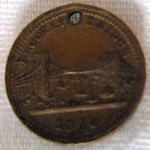
While flipping through a box of tokens and medals I stumbled on a little medal that is 13 mm in diameter with a hole in it that looks like someone used it as a charm. On the obverse is an image of the Brooklyn Bridge with the legend “Brooklyn Bridge” across the top and dated 1883 when the bridge opened.
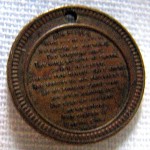
What makes this token unusual is that the reverse has the entire The Lord’s Prayer as it occurs in Matthew 6:9-13. The lettering is so small I had to use a 16x loupe to read the text.
-
-
Obverse of the 13 mm Brooklyn Bridge Medal showing an image of the bridge and 1883, the year the bridge opened.
-
-
Reverse of the Soley Brooklyn Bridge medal has the text of the Lord’s Prayer.
This mini-medal was produced by George B. Soley, a die sinker who ran a shop on Chestnut Street in Philadelphia. In 1875, Soley bought the first steam-powered press that was used by the U.S. Mint after it was take out of commission. Soley exhibited the press around the country striking medals of his design to the delight of the crowds.
Soley displayed the press at the Centennial Exposition in 1876 and used it to strike commemorative medals. In 1883, it appeared at the opening of the Brooklyn Bridge and the Southern Exposition in Louisville. Soley brought the press to the Columbian Exposition in Chicago in 1893, the Pan American Exposition in Buffalo in 1891, and the 1904 Louisiana Purchase Exposition in St. Louis. During these events, Soley struck 13 mm medals with the something resembling the official logo on one side and The Lord’s Prayer on the other that sold for 25-cents.
The medals Soley produces were made of bronze and holed at the top to use as a charm. There are referenced to gilt and medals that were not plated.
It is difficult to tell whether the medal was struck at the opening of the Brooklyn Bridge or a re-strike made during the Columbian Exposition. According to an article that appeared in the December 12, 1894 edition of The New York Times, the Secret Service asked Soley to stop making the “History of the Philadelphia Mint” medals that he first struck in 1876. It suggests that he was re-striking medals at these various fairs. In either case, the medal is 120 or 130 years old!
The steam press that Soley used was acquired by the Franklin Institute from his widow in 1927. It was reconditioned, motorized and moved to the museum in 1933 to strike aluminum tokens for visitors. On March 23, 2000, the press was moved from the museum to the rotunda to celebrate the 164th anniversary of its first usage by the U.S. Mint. Later that August, the press was part of a special exhibit at the World’s Fair of Money in Philadelphia. Following the show, the Franklin Institute has since loaned the press to the ANA Museum in Colorado Springs where it is displayed at the entrance behind protective glass.
As you could tell from my first day report, I unapologetically had a good time and highly recommend everyone attend the World’s Fair of Money.
Aug 16, 2013 | ANA, coins, shows
One of the great things about going to a show like the World’s Fair of Money is seeing a lot of people. If you like to meet people, talk numismatics, and see lots of interesting items, you should attend one of these shows.
The convention center is across the street from several hotels connected by a walkway where you do not even have to walk outside. Inside the convention center, the hall and the meeting rooms are on the same level almost side-by-side. Inside the entrance to the bourse floor is the World Mint Pavilion and you come right to the booth for the Israel Coins and Medals Corporation, who now calls themselves the Holy Land Mint.
Unless you have no interest in foreign coins, you are immediately drawn to that area. Amongst the mints represented includes the China Gold Coins Company, the group that produces the popular Panda coins; the private Pobjoy Mint that serves smaller countries in the Commonwealth Realm; the Austrian Mint and the Australian Mint that are next to each other and makes for an interesting tongue-twister. The Royal Canadian Mint is here, too.
Straight to the back is the Bureau of Engraving and Printing where they have a number of their products for sale, a display of currency, and the spider press. When I walked up to the spider press, Treasurer of the United States Rosie Rios was talking with the gentleman who runs the spider press. Rios, an Obama appointee, is very personable and loves to talk with the public. She even allowed me to take a picture while she was looking at an intaglio print while listening to an explanation of the process.
Next to the BEP is the U.S. Mint. Even though the U.S. Mint takes a lot of floor space, they really do not show much. We have heard reports that they do have a quite a collection of numismatic items but they rarely take it out for the public to see. It would be nice for the U.S. Mint to do more than they do. I saw reports that Deputy Director Richard Peterson who is also filling in as the acting director is here. If I see him I will ask about bringing out some of their archival materials.
After that, the floor is big with a lot of dealers. Since I came without a real plan I started to wander based on what catches my eye. First, I started with the row of book sellers in the back of the room. While I am a proponent of electronic books, there are physical books that are not available electronically. I found a few books that I purchases.
Although I will discuss my purchases when I return home, I will say that I spent more on books than other numismatic items.
While looking though the booth of contemporary supplies and books, I found a really nice book about coin collecting for kids. It looks like an excellent book for kids to learn about coin collecting. I thought it was so cool that I will buy a copy for my niece who has shown interest in coin collecting.
I did attend the American Israel Numismatic Association meeting for the first time since becoming a member. I have been a member for a number of years but never was able to attend an AINA meeting. It was great to meet the people of that organization and hear an interesting lecture about ancient Judean coins and about what is coming at the Holy Land Mint.
Being able to meet and talk with different people is both a lot of fun and a small curse. It is fun because coin collectors are fun people. It is a small curse in that I missed a number of talks that I wanted to attend. But I cannot complain because meeting the people are a lot of fun. I figure out how to get the information from the missed lectures another time!
After the bourse closed, it seems that a lot of people “ran” to the Stacks-Bowers auction for the free food. The food was okay but I was there for the auction. While it was Rarities Night, I was interested in the currency auction which was going on concurrently in an adjoining room. But I didn’t realize the two auctions were separate and missed bidding on Maryland colonial currency I was interested in.
I did leave absentee bids for some Maryland colonials in the John J. Ford collection. I did not receive an email saying that I won, so I will have to check with Stacks-Bowers to see if I did. Some how, I doubt I won.
My time at the convention center end after attending the Board of Governors closed session with the Technology Committee. It was a productive meeting and worth talking with the Board of Governors about the issues. Members interested in what the future has in store for the ANA and technology should attend the open board meeting on Friday.
That’s it for now, Watch for more on Twitter and Pinterest on Friday!
Aug 14, 2013 | ANA, personal, shows, video
Come on, Baby don’t you wanna go
Hidehey, baby don’t you wanna go
Back to that same old place
Sweet home Chicago
Few things make me happier than music. I have been listening and playing music since I was young and learned to play the clarinet in elementary school. This was before I learned about collecting coins. As I get ready to fly to Chicago for this year’s World’s Fair of Money I keep hearing the Blues Brothers singing “Sweet Home Chicago!”
I don’t care what the critics say, the
Blue Brothers is one of my favorite guilty pleasure movies!
While you have image of Jake and Elwood Blues dancing on the stage at the Palace Hotel with the Chicago Police and the Good Ol’ Boys looking for justice and revenge, I am on my way to the Windy City to join other American Numismatic Association members in this year’s convention.
Over the next few days, I will be tweeting from the convention center. You can either follow @coinsblog on Twitter or use the widget on the right side of this page. I will also be adding pictures to Pinterest on the board I set up for this show. I will also try to provide a daily update here.
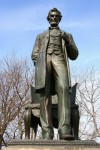
In the mean time, did you know that Augustus Saint-Gaudens, the designer of the last $20 gold double eagle and $10 eagle coins made for circulation also created statues that are in Chicago?
-
-
Abraham Lincoln Monument by Augustus Saint-Gaudens in Lincoln Park, Chicago
(Credit: Public Art in Chicago)
-

-
General John Logan Memorial by Augustus Saint-Gaudens in Grant Park, Chicago
(Credit: Public Art in Chicago)
Stay tuned for reports from Chicago!
Credits
- Chicago collage is the box cover of the “Sweet Home Chicago” puzzle from Buffalo Games.
- Clip from the Blues Brothers is probably copyrighted by someone but it’s on YouTube and now linked here.
- Images of the statues by Augustus Saint Gaudens from the blog Public Art in Chicago.
Aug 13, 2013 | awards, coins, news, shows
Some things are just too good to not share. Yesterday, Professional Numismatic Guild presented their annual awards at the eve of the American Numismatic Association’s World’s Fair of Money in the Chicago suburb of Rosemont. The picture accompanying the announcement is priceless.
Eloise Ullman, who is retiring soon as Executive Director of the Industry Council For Tangible Assets, was awarded the PNG’s Lifetime Achievement Award in recognition of her years of dedicated service and achievements in numismatics.
The award was presented to Ullman by ICTA Industry Affairs Director and PNG Associate Member Diane Piret. Ullman has provided the numismatic hobby and profession with 23 years of service as ICTA Executive Director, and the PNG is grateful for her outstanding efforts on legislative and tax issues facing dealers and collectors across the country.
Piret was honored with the PNG’s Significant Contribution Award for her40 years of dedication and significant contributions to numismatics. The award was jointly presented by PNG Board of Directors members Dana Samuelson and Barry Stuppler.
But the picture of Ullman’s reaction is priceless.
I met Ullman last year when I began to work with the Gold & Silver Political Action Committee. From what I could see she was a tireless working for ICTA for over 23 years and they will have a difficult time finding someone to succeed her.
Congratulations Eloise and the other PNG Award winnerss.
Image courtesy of Donn Pearlman.
Aug 12, 2013 | ANA, coins, news, shows
The American Numismatic Association World’s Fair of Money begins tomorrow, August 13 at the Donald E. Stephens Convention Center in Rosemont, Illinois. Rosemont is a suburb of Chicago and not far from O’Hare Airport.
As with any World’s Fair of Money, there will be quite a few announcements. Some may appear here others will be tweeted as they come in.

Terry Hanlon, newly elected president of the Professional Numismatists Guild
PNG’s Board of Directors are Mitchell A. Battino of Hudson Rare Coins, Princeton, New Jersey; PNG Immediate Past President Jeffrey Bernberg of Rare Coin Company of America, Willowbrook, Illinois; John Maben of John Maben Rare Coins, Sarasota, Florida; James A. Simek of Numisgraphic Enterprises, Westchester, Illinois; and Richard A. Weaver of Delaware Valley Rare Coin, Broomhall, Pennsylvania.
Congratulations to all!
 Professional Coin Grading Service announced that they are teaming with eBay to expand the eBay U.S. and Canada Coins Catalog feature. When the new catalog from PCGS goes online this fall it will immediately grow from the current 8,500 products to more than 41,000.
The renewed U.S. and Canada coins catalog will allow for more detailed descriptions of specific coin attributes, as well as further differentiation for the collecting community. These detailed descriptions, item specifics and high resolution images in the catalog will allow novice and experienced sellers alike to more accurately identify the coin they are selling on eBay.
An expanded catalog should help provide education to collectors buying and selling on eBay. Anything that makes that marketplace safer os good for the hobby.
Although the ribbon cutting is on Tuesday, my schedule will not allow me to get away until Wednesday night. Stay tuned for more news.


 Loading ...