Oct 13, 2013 | BEP, coins, currency, news, US Mint, web
On Friday, the U.S. Mint and the Bureau of Engraving and Printing announced that they would be cross-promoting each other’s products. As one of the few agencies in full operation, the U.S. Mint and BEP updated their website with two pages, one provides information about the other agency and the other points to their online store.
This probably would have gone unnoticed except for the email announcement sent by the Bureau of Engraving and Printing to subscribers. It was sent in such haste that the link they provided to the U.S. Mint’s site is broken.
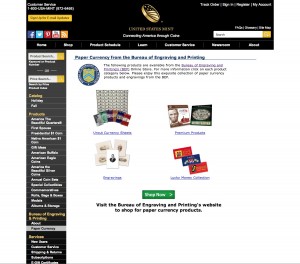
Promoting BEP’s Currency at the U.S. Mint
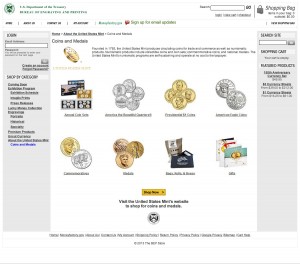
Promoting U.S. Mint’s coins at the BEP
Click on the preview to visit the site.
I bet you thought there was no good news to come out of Washington, D.C. last week!
Oct 10, 2013 | BEP, currency, dollar, Federal Reserve, news, video
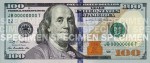 With the fanfare of a hard cough, the Federal Reserve released the new $100 Federal Reserve Note on Tuesday, October 8, 2013 to financial institutions. Various factors will effect how quickly these notes are seen in circulation including the demand and ordering policy of the financial institutions. In fact, the launch was introduced with a video by Sonja Danburg, Program Manager of the U.S. Currency Education Program at the Federal Reserve.
This launch is three years in the making as Bureau of Engraving and Printing reported problems with folding during the printing of the new notes. The announcement on April 21, 2010 said that the new notes would be released on February 10, 2011. On October 1, 2010, the Federal Reserve announced that the new note would be delayed. Later, the folding problems were revealed following a report released by the Treasury Office of the Inspector General.
The reason for the new notes are for the addition of security features. Aside from the ecurity thread, portrait watermark, color-shifting ink, microprinting, and the strategic use of color, the new note has a 3-D security ribbon and the use of color-shifting ink used to reveal a bell in the inkwell. If you look at the blue ribbon on the front of the note, tilt the note and watch the bells on the ribbon change to “100s” as the reflection of light changes. The 3-D ribbon is embedded in the paper and not printed. Looking at the copper-colored inkwell on the front of the note, tilting the note will reveal a bell that was embedded using color-shifting ink. Using these light sensitive features, the Federal Reserve hopes to significantly reduce the number of counterfeit notes, especially overseas where half of the $100 notes are known to circulate.
The Federal Reserve released a video about the new anti-counterfeiting features:
As an aside, the Bank of England recently announced that they will be transitioning to polymer banknotes by 2015.
Oct 3, 2013 | coins, commemorative, legislative, policy, US Mint
H.R. 3146: Savings, Accountability, Value, and Efficiency (SAVE) II Act
Sponsor: Rep. Patrick Murphy (D-FL)
• To take steps to reduce the deficit of the Federal Government.
• Sec. 8. Prohibition On Non-Cost Effective Minting and Printing Of Coins and Currency
• Introduced: September 18, 2013
• Referred to many committees including the Committee on Ways and Means
Track this bill at http://www.govtrack.us/congress/bills/113/hr3146
H.R. 3186: Hank Aaron Congressional Gold Medal Act
Sponsor: Rep. Ron Kind (D-WI)
• To award a Congressional Gold Medal to Hank Aaron, in recognition of his contributions to the national pastime of baseball and his perseverance in overcoming discrimination and adversity to become a role model for all Americans.
• Introduced: September 26, 2013
• Referred to the House Financial Services Committee
Track this bill at http://www.govtrack.us/congress/bills/113/hr3186
I usually do not include bill for congressional gold medals. As a fan of Hank Aaron, I am including it to show my support. If congress should ever get its act together, it would be nice if they would immediately pass this by unanimous consent.
Sep 30, 2013 | BEP, coins, currency, Federal Reserve, news, policy, US Mint
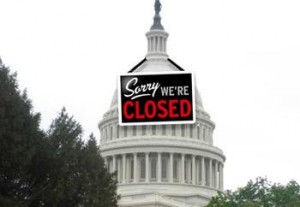 In the ongoing drama that is United States Federal government, a shutdown is looming over the shear idiocy of idiot-loges on both sides of the aisle attempting the rule and not govern. All 537 politicians elected to federal office are in need of a good spanking.
First, here are some impacts:
- According to the Office of Management and Budget, a government shutdown will cost taxpayers an extra $40-60 million per day.
- The District of Columbia is reporting that a shutdown will cost the city about $2 million per day in lost revenues.
- Maryland and Virginia has not reported their potential economic impact of a shutdown.
- UPDATE (4:40pm): Local news reports say that over 835,000 workers will be effected by a shutdown with at least 80-percent being in the Washington, D.C. metropolitan area. Some estimates are saying that it could cost the region up to $20 million per day.
What does this mean for the money manufacturing bureaus of the country?
- The U.S. Mint is not answering inquiries about pending shutdown. Media is directed to contact OMB for more information.
UPDATE (1:40pm): The U.S. Mint will not allow tours of the Philadelphia and Denver mints during a government shutdown.
- Office of Management and Budget is not answering the telephone. Rather, they requested that an email be sent with detailed questions. Email inquiries have yet to be answered.
- When calling the Bureau of Engraving and Printing, their phone is either busy or when trying to get past the voice response system for the Office of External Relations, the system says “the person you attempted to reach is unavailable.” An email was sent to the BEP’s general inquiry account and OMB asking about the operations at the BEP.
UPDATE (3:30pm): An email note was received from the BEP saying to contact a spokesperson at the Department of the Treasury. Telephone and email messages have not been returned.
UPDATE (4:10pm): Both the Washington and Fort Worth plants will not hold tours if there is a government shutdown at midnight tonight.
- Since the Federal Reserve is an independent organization and not subject to congressional appropriations, they will remain open during a shutdown. The shutdown will not affect the launch of the new $100 Federal Reserve Note planned for October 8.
UPDATE (5:30pm): According to the Treasury Department:
Operations of the following bureaus are funded from sources other than annual Congressional appropriations, and would operate normally if a government shutdown were to occur: the Office of the Comptroller of the Currency (OCC), the United States Mint, and the Bureau of Engraving and Printing (BEP).
This post will be updated as new information is provided.
Representatives of these agencies may contact me via email to provide additional information. Please note that I do respect the confidentiality of sources!
NOTE: I am not a member of any political party. I am a proponent of government employees who do not deserve the way they are being treated by the elected officials.
Sep 26, 2013 | ancient, coins, commentary, foreign, legal
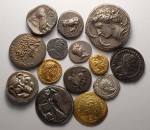 Fred and Wilma (not their real names) are friends who decided to celebrate their empty nest by taking a trip to the Mediterranean after dropping their youngest child off at college. Fred is what I respectfully call a hacker. He is a wizard programming computers and someone who I go to in order to understand some of the more esoteric aspects of computer exploits he researches. In his spare time, Fred plays with his computers and tinkers with electronics. Fred is also known as an overgrown boy scout. He is contentious about his work, children, and the activities he is involved with. Fred is probably the most honest person I know.
Fred is not a coin collector and has no interest in collecting coins even though he does own the 2004 Thomas Edison commemorative coin and the 2005 Albert Einstein 2 Shekel proof coin from Israel because these are two people he admires. On many occasions, Fred has said that he did not understand what I saw in collecting coins. Even after showing him my original Lincoln cent folder with coins I have found in change dating back to when I started collecting, he did not understand the lure of the chase.
While sitting on a beach along the Mediterranean, Wilma started to dig in the sand around a sleeping Fred to have fun at his expense. After she dug nearly two feet down, Wilma unearthed metal object that she originally thought was trash. After waking Fred and watching him roll into her newly dug hole, Fred brushed himself off and looked at what she found. A trip to the water to rinse off the items to find three ancient coins and a shell. The way it was described to me was that the coins were sitting in the shell as if it were a change holder. They dug some more and found three more coins. To some degree, he began to understand the thrill of the chase.
With the help of the hotel concierge, Fred and Wilma found a coin dealer who spoke English to ask about the coins. After talking with the dealer they found that the coins were common and would only be worth the equivalent of a few dollars. Undeterred, the coins were placed in a small bag and throw in the bottom of their carry on luggage as souvenirs and continued with their vacation.
A few days later, Fred and Wilma packed their bags and went to the airport to return home. At their host country’s departure screening, Fred was asked if there was anything to declare. Fred, being an overgrown boy scout, declared everything—even things he did not have to declare. As the officers were inspecting the items on the table, one picked up the bag with the coins and asked about coins. Fred showed the officer the written estimate from the dealer thinking that would resolve any issue.
According to Fred, the officer took coins and the estimate to another officer he described as having more decorations on his uniform. This higher ranking officer looked at the coins and paper while discussing the situation in their native language. After a moment, Fred became concerned and Wilma became nervous.
Another officer walked over with the higher ranking officer and acted as a translator as it was explained to Fred that the coins were “cultural antiquities” and would be confiscated. Fred was not happy but he accepted the situation until the translator said that Fred and Wilma would be detained while the officials investigated. They were allowed to gather their luggage and were escorted to a nearby room.
After waiting for an hour, another official came into the room and spoke to Fred and Wilma in English. Fred explained how he obtained the coins and why he was taking them home. After the official started questioning them as if they were criminals Fred asked to speak with the United States Embassy.
Fred and Wilma were escorted by local police to two separate facilities to be incarcerated pending an investigation. The facilities were in separate parts of town since these were not co-ed accommodations. They waited two days before seeing anyone other than the guards.
Two days later, both were escorted to a local judge and said they were being charged with trying to smuggle antiquities out of the country. An attorney was appointed to represent them. The attorney did not speak English and only wanted them to plead guilty for a three-year sentence. Thankfully, there was an American in the courtroom who told the attorney that he would contact the U.S. Embassy and not to plead on the case.
The next day, someone from the Embassy was able to have Fred and Wilma released to their custody, recovered their luggage, and let them stay in the embassy while trying to resolve the situation.
Obviously, the embassy accommodations were better than what they had at the local jail. Fred described the embassy staff as very nice including the natives who worked non-diplomatic jobs. Unfortunately, they could not leave the embassy since they were technically under house arrest. Although it was a gilded cage it was still a cage.
It took nine days to resolve the issue which Fred was told was lightning speed for that country. The coins were left in the country they were visiting, which Fred offered to do at the airport when confronted by the officials. They were driven to the airport by a U.S. military driver and escorted to the screening area by a member of the diplomatic staff who ensured their passports were returned and that they were allowed to board the plane.
The plane landed in a more friendly country where Fred and Wilma were met by local and U.S. officials for a debrief. Although the debrief was friendly, it did come after a stressful period in another country and lasted a few hours. Eight hours after landing in London, Fred and Wilma was en route back to the United States.
The country where this incident occurred is allegedly friendly with the United States but that did not stop the officials at the airport from treating them with suspicion over the possession of a few common ancient coins. Based on Fred’s description of the coins, I asked a dealer who said that $20 would be an average retail price for the coins. When asked if Fred wanted to buy similar coins, Fred could not decline fast enough!
I have written several posts about the impact of the Convention on Cultural Property Implementation Act (CPIA; 19 U.S.C. §§ 2601 et seq.) and the potential for foreign countries to use Memoranda of Understanding that the State Department’s Cultural Property Advisory Committee (CPAC) agrees to without considering citizen comments. The CPAC has said that the collateral issues raised by the comments are baseless. Fred can tell them otherwise.
Fred said that the embassy would not answer questions about what happened. Neither did the government officials during their layover in Europe. He was told that they should be thankful that this “only” lasted two weeks because it could have taken two months or even two years to resolve.
Next time the Ancient Coin Collectors Guild (ACCG) asks for assistance in addressing a call for comments from the CPAC regarding a foreign country’s MOU request, please remember the plight of Fred and Wilma. Although their ordeal lasted “only” two weeks, the next person may not be as lucky and find themselves in the jail of a country whose laws are far less humane than the United States.
Image of the ancient coins courtesy of
NGC. These are
not the coins the story is about.
Sep 22, 2013 | celebration, coins, national park quarters, quarter, US Mint
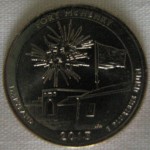 On Monday, September 12, 1814 the British invasion fleet landed at North Point in Baltimore and tried to capture Baltimore by attacking Fort McHenry. Before the attack on Baltimore, the British marched through Washington, D.C. and burned the capital building. On their march to Baltimore, the British took Dr. William Beanes as a prisoner for his role in capturing British stragglers and deserters. Beanes was imprisoned in Baltimore as the Royal Navy gathered forces for their attack on Fort McHenry in Baltimore Harbor.
Word of Beanes’s capture reached Francis Scott Key, an accomplished lawyer, prosecutor, poet, and friend of Dr. Beanes. Key, who was known as a skilled negotiator and a very temperate man, was asked by the Army to accompany prisoner exchange agent Colonel John Stuart Skinner to Baltimore to secure the release of Dr. Beanes. On September 7, 1814, Key and COL Skinner dined with British officers abroad the HMS Tonnant to negotiate the release of prisoners. Although Beanes was released, the British would not let the men leave the ship because they had heard about the British plans to attack Fort McHenry.
Key, Skinner, and Beanes watched as the Royal Navy bombarded the fort and surrounding areas of Baltimore. As the smoke cleared on the morning of September 14, 1814, after 25-hours of bombardment, Key was able to see the U.S. flag still flying over Fort McHenry. Key was so moved by the sight that after returning home, he wrote the poem “The Defence of Fort McHenry.” The poem was published in the Baltimore Patriot on September 20, 1814.
Following the War of 1812, Baltimoreans celebrated the victory every year on September 12 but did not gain statewide recognition until the centennial celebration in 1914, even though the celebration was overshadowed by World War I. Celebrations waned during the Great Depression until it became an official holiday in 1957. Defenders Day would become popular again in the 1980s with the help of the National Park Service and the Fort McHenry Guard.
-
-
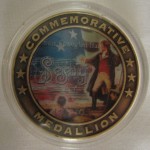
Obverse of the Fort McHenry Commemorative Medallion for sale at the gift shop.
-
-
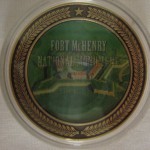
Reverse of the Fort McHenry Commemorative Medallion for sale at the gift shop.
This year, Defenders Day was celebrated on Friday, September 13. With a crowd of area students, area residents, dignitaries, and members of the Maryland State Numismatic Association, the Defenders Day celebration kicked off at Fort McHenry with the launch ceremony of the Fort McHenry National Monument and Historic Shrine quarter.
With Ranger Bailey as the master of ceremonies, the program features Park Superintendent Tina Cappetta, Maryland Senator Ben Cardin (D), Representative John Sarbanes (D) whose district includes Fort McHenry, Representative C.A. “Dutch” Ruppersberger (D) whose district covers parts of Baltimore not in Sarbanes’ district, Baltimore Mayor Stephanie Rawlings-Blake (D), and Treasurer of the United States Rosie Rios.
Speeches were interspersed with a performance from the Notre Dame Prep (Towson, MD) Choir, ceremonial drills from the Fort McHenry Guard, and the Fort McHenry Fife and Drum Corps. Prior to end of the ceremony, Treasurer Rosie Rios presented a special plaque with examples of the Fort McHenry Quarters to Superintendent Cappetta.
The ceremony ended with the dignitaries on the stage pouring a bucket of quarters into a old ammunition box.
Following the ceremony the dignitaries handed out quarters to to the students who sat through the ceremony. These children were attentive and appreciative of the ceremony and the quarter.
Clearly, the most popular person giving out quarters was Mayor Rawlings-Blake of Baltimore. Rawlings-Blake is a native of Baltimore, mother, and younger than the other politicians in attendance. It was clear that she connected better with the students than the other politicians.
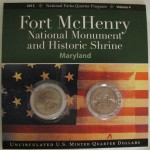
Fort McHenry Quarters display folder issued by the National Park Service
On my way out of the park, I made the obligatory stop in the gift shop. Surrounded by students having fun looking at the items for sale, I found a card issued by the National Park Service with the Fort McHenry quarters commemorating the fort. The back of the card says that a portion of the proceeds are donated to the National Park Conservation Alliance. I also purchased a commemorative medal with a hologram on both sides. The images on the obverse commemorate the Star-Spangled Banner while the reverse shows the fort.
Not a bad way to spend the morning in Baltimore before having to return to work.
All images owned by the author.
Sep 13, 2013 | cents, coins, fun
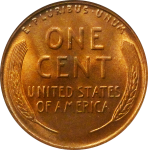 When Teddy Roosevelt became the 26th President of the United States following the assassination of William McKinley, he set out to reform the United States into a robust nation giving everyone opportunities while protecting what he felt made this nation great. One of Roosevelt’s reform was to redesign U.S. coinage that he called his “pet crime.”
Roosevelt hated the designs created by U.S. Mint Chief Engraver Charles E. Barber. In fact, Roosevelt had called Barber’s designs “atrociously hideous.” Roosevelt ordered coinage whose designs were more than 25 years old to be redesigned. Since Roosevelt was a fan of sculptor Augustus Saint-Gaudens, he asked Saint-Gaudens to help redesign American coinage.
Before Saint-Gaudens would finish, he died of cancer in 1907.
Roosevelt still wanted to redesign the cent but did not have any ideas. In 1908, Roosevelt was posing for a Panama Canal service medal that was being designed by Victor David Brenner. Brenner, an immigrant who admired Abraham Lincoln, suggested that he design a coin honoring Lincoln to coincide with the centennial of Lincoln’s birthday in 1909. Roosevelt asked for samples and agreed to Brenner’s design proposal.
Brenner designed the reverse of the with two ears of durum wheat, one the most prolific wheat grown in the United States today. Wheat is the United States’ most successful crop and largest agricultural export.
Not only is it a successful crop, but over the 50 years in production, the U.S. Mint has produced a lot of its own wheat with every cent it made.
If you think about it, all that wheat could make a lot of bread.
- The seeds on the stalk of wheat is called a kernel.
- On average, there are 48 kernels in a head of wheat and 15,000 to 17,000 kernels in a pound.
- According to the National Association of Wheat Growers, there are 1 million kernels of wheat in a bushel.
- Since there are two heads of wheat on the reverse of the Lincoln cent, there are about 96 kernels of wheat per coin.
- According to the U.S. Mint, there were 25,980,000,000 (25.98 billion) wheat cents struck between 1909 and 1958.
- To find the number of kernels of wheat produced, multiply the number of kernels per cent (96) by the number of cents struck: 96 x 25,980,000,000 = 2,494,080,000,000 (2.49408 trillion) kernels of wheat.
- If there are 1 million kernels of wheat per bushel, 2.49408 trillion kernels/1 million = 2,494,080 bushels of wheat produced by the U.S. Mint.
- The National Association of Wheat Growers claim a bushel of wheat yields 42 one-and-a-half pound commercial loaves of white bread or about 90 one-pound loaves of whole wheat bread. Let’s use an average of 66 loaves of bread per bushel.
If 25.98 billion wheat cents yields 2.494 million bushels of wheat where each bushel yields 66 loaves of bread, if the U.S. Mint all the wheat struck on every Lincoln cent between 1909 and 1958 would have produced 164,609,280 loaves of bread.
Don’t like bread? What about pasta?
If a bushel of wheat makes 42 pounds of pasta, which is about 210 servings of spaghetti, 2.494 million bushels of wheat would have produced 104,748,000 or 523,740,000 servings of spaghetti.
We’ll need a few extra meatballs for dinner!
Credits
- The idea for this post came from Montgomery County Coin Club Treasurer Jack Schadegg during a talk at our recent coin club meeting.
- Various sources were used to calculate and verify the production of Lincoln cents from 1909 though 1958.
- The National Association of Wheat Growers’ website provided the capacity figure.
- Lincoln cent wheat ears reverse image courtesy of Wikipedia.
Sep 11, 2013 | coins, commemorative, commentary, personal
Twelve years ago, I was a few miles away from the Pentagon when a plane crashed into its side. I remember driving to work hearing about the plan crashes in New York originally thinking that what I predicted many years ago finally came true, a small plane crashed into the World Trade Center. The reports turned grim as I kept driving toward my office.
When I arrived, I sat in the car a while listening to the radio and trying to call friends I knew who worked in lower Manhattan. I remember one was working in the World Financial Center across the street from the Twin Towers. I later found out that he had taken a job on the other side of the river in New Jersey a year earlier.
Another friend was working in 6 WTC, a 40 story building next to 2 WTC or Tower 2. Thankfully, he and his coworkers were able to escape before the second tower collapsed onto that building.
Just after the plane crashed into the Pentagon we were sent home.
I came home to the empty house my late first wife and I bought. She had died five months earlier and this time, the quiet of the house was deafening. I tuned on the television just before the second tower collapsed.
Although it was twelve years ago, I remember the day like it happened yesterday. Those who were around when President Kennedy was assassinated say the same thing about that day. It is difficult to forget these traumatic events, which is good. We should not only remember them but remember what happened after in order to do better next time. We need to learn from history rather than repeat it.
-
-
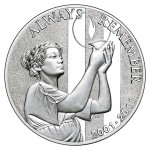
September 11 National Medal obverse features Lady Liberty holding the Lamp of Remembrance. Behind her are beacons of light stretching skyward. Liberty, the lamp and the light symbolize not just the immeasurable loss on that fateful day, but also the resiliency and triumph of those who persevered. The inscriptions are ALWAYS REMEMBER and 2001–2011.
Designer: Donna Weaver
Engraver: Phebe Hemphill
-
-
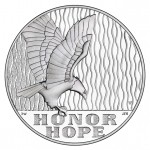
September 11 National Medal reverse depicts an eagle, symbolizing the strength of the survivors, families and Nation, against a backdrop of cascading water. The flowing water is emblematic of peace, serenity, healing and the continuity of life. The inscriptions are HONOR and HOPE.
Designer: Donna Weaver
Engraver: Joseph Menna
Medal images and descriptions courtesy of the U.S. Mint.
Sep 10, 2013 | administrative, coins
Although many of us have agreed to speak in a common language, communities tend to take the language and mold it to make it unique to their situation. It is the most evident in the differences between terms we use here in the United States versus those used in Great Britain. Just look at your car and know that the compartment that contains the engine is under the hood here in the United States while the engine is in the bonnet in England. As George Bernard Shaw is credited with saying, “England and America are two countries separated by a common language.”
Numismatics is no different. Tell a numismatist that a coin is in good condition and the novice does not understand why the numismatist is no longer interested in the coin. Depending on the coin, a fine coin does not excite either.
What does it mean?
What is a a “bourse?”
Or to say a coins has been plugged?
What is “mint state?”
Now you have a place to look up the words. Under the tab, “Collector’s Reference” at the top of this page there is a new submenu titled Numismatic Glossary. The Coinblog’s Numismatic Glossary is the result of a one year collection of numismatic terms and the attempt to write good (or just decent) definitions of those terms.
I am publishing the Numismatic Glossary is a resource to the numismatic community. While I tried to be as accurate as possible, it is possible that I made a mistake. It is also possible that I left something out. If you have a correction or a request for me to add a term, please drop me a note and let me know.
EDITED TO ADD: I also updated the U.S. Coins by Type page to include the 2013 American Buffalo reverse proof coin.
Happy Collecting!
Sep 6, 2013 | coins, commemorative, legislative, policy, US Mint
H.R. 2932: United States Coast Guard Commemorative Coin Act
Sponsor: Rep. Joe Courtney (D-CT)
• To require the Secretary of the Treasury to mint coins in commemoration of the United States Coast Guard.
• Introduced: August 1, 2013
• Referred to the House Committee on Financial Services
Track this bill at http://www.govtrack.us/congress/bills/113/hr2932



 Loading ...