Aug 11, 2010 | US Mint
The U.S. Mint has joined the 21st century and is now on Facebook and Twitter. Judging by the dates of their first messages, they have been using these messaging services since the end of July. Both accounts appear to be used by their public information service to announce various programs and other news of the U.S. Mint.
While comparing the two sites, it appears that the same messages are being posted on both services.
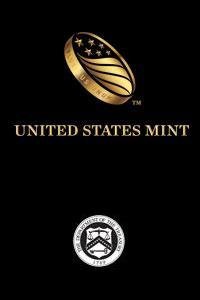
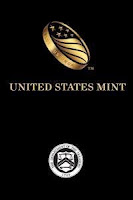 Another change that appears on both services is a new logo. Rather than using the logo that was based on the U.S. Mint seal with a red, white, and blue banner flying to the right (see image to the left),
  the new logo (right) uses a medal-like device with a flag impression that also has edge lettering that say “US Mint” placed over capital letters reading, “United States Mint” in a serif font. The new logo has appeared in email and on their “microsite” for the America the Beautiful Quarters Program. However, no change has been made to their main website and the online catalog replace the old banner logo with a black-and-white seal.
While the microsite is nicely designed, appealing, and informative, the rest of the U.S. Mint online infrastructure is in dire need of a refresh. It would be nice if they could extend the design used for the America the Beautiful Quarters Program. But it seems the U.S. Mint progresses in baby steps and this may be a small preview of what is to come—sometime in 2012 I figure.
In the mean time, if the U.S. Mint make their Twitter page (see @usmint) and Facebook wall a resource for all collectors, it will be a welcome change from how they have treated the collecting public.
U.S. Mint logo images courtesy of the U.S. Mint.
Aug 9, 2010 | coins, national park quarters, US Mint, video
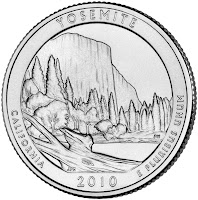 On July 29, 2010, US Mint director Ed Moy introduced the Yosemite National Park Quarter at the park in California. The coin fathers the image of El Capitan, the 3,000-foot vertical rock formation that is prominent formation that looms over Yosemite Valley.
Prior to being discovered by European-Americans in 1833, the Ahwahneechee people inhabited Yosemite Valley. As the gold-rush expanded the non-native population, U.S. troops burned Ahwahneechee villages in 1851, eventually driving them out of the valley. Within a few years, the lack of gold lead to entrepreneurs to use early photographs of the area to turn the area into a tourist destination.
By 1864, the commercial use of the area became a concern. Prominent citizens lobbied congress to pass a bill to declare the area a national park. The bill creating the Yosemite Grand was signed by President Abraham Lincoln on June 30, 1864. Yosemite Grant was managed by the Army until the National Park Service was created in 1916.
A coin exchange and roll sale followed the launch ceremony.
The following video of the launch ceremony was released by the U.S. Mint:
You can find the B-Roll package at NewsInfusion.com.
Coin image courtesy of the U.S. Mint.
Aug 2, 2010 | BEP, coins, currency, Federal Reserve, fun, gold, technology, US Mint
It has been said that the dog days of summer is when it is very hot causing a period where there is a lot of inactivity or stagnation. There has been little of the dog days here in the nation’s capital. Aside from a lot of work to do, severe storms can wreak havoc with electrical lines—which causes computers not to work. July has been an interesting month and I hope August is more like the dog days without the same heat and humidity!
For something a little different we turn to the technology website CNET. CNET is a long time resource for the consumer technology community that was acquired by CBS Interactive last year. With the commitment of growth from CBS, CNET has been expanding their technology coverage in a number of interesting ways. For CNET, reporter Daniel Terdiman, writer of the Geek Gestalt blog, is taking another road trip. Road Trip 2010 brings Daniel to the east coast where he has visited a few sites of numismatic interest.
While in Washington, D.C., Daniel stopped at the Bureau of Engraving and Printing where he was given a tour Behind the scenes with the next-gen $100 bill. Daniel opens up his trip report by saying, “I’m staring at $38.4 million in cash, and it’s hard not to drool.” It is a nice look behind the scenes at the BEP from the eyes of someone who is not a collector. Do not forget to check out the stacks of money in the photo gallery.
After making other stops, Daniel was in Philadelphia and visited the US Mint. Daniel opens his article talking about the gold-colored planchets that will be struck into dollar coins. Aside from watching the minting process, he spoke with the U.S. Mint’s Chief Engraver John Mercanti about the technology used in creating coins. Daniel spoke with Engraver Joseph Menna about the digital production process—do not forget to watch the YouTube video. When you check out the pictures and when you get to picture 18 imagine the amount of money you could make on the error market if you had access to this bin!
Finally, stopping in New York City required a stop of the Federal Reserve Bank of New York. Located at 33 Liberty Street in lower Manhattan, it is the branch of the Federal Reserve that distributes U.S. currency worldwide. Eighty feet below the bedrock that the building is constructed on is the gold vault where 36 countries have deposited $255 billion worth of gold. More gold is stored at the New York Fed than anywhere in the world including the U.S. Bullion Depository at Fort Knox, Kentucky. Since photography is not allowed at the N.Y. Fed, they did provide pictures that Daniel used in his report.
Although Daniel did not get much of a tour through the New York Fed, the series of numismatic-related articles are still a good read from someone without a numismatic background. You may want to check out stories on some of his other stops, including the one place I want to visit!
Jun 28, 2010 | CCAC, coin design, US Mint
According to the tweets of Citizens Coinage Advisory Committee member Donald Scarinci (@Scarinci), CCAC Chair Gary Marks announced the establishment of a subcommittee to help U.S. Mint Director Ed Moy to initiate his vision for a neo-renaissance of U.S. coins. Members of the subcommittee will be made up Mitch Sanders, Donald Scarinci, Roger Burdette, Heidi Wastweet, and Gary Marks. Their report due by October 31, 2010.
During a presentation at the FIDEM conference on September 19, 2007, held in Colorado Springs, Moy said, “I want and intend to spark a Neo-Renaissance of coin design and achieve a new level of design excellence that will be sustained long after my term expires.”
Recently, Moy and the U.S. Mint came under attack from both the CCAC and the Committee of Fine Arts for the “overall disappointment with the poor quality” of the alternatives presented for the 2011 commemoratives,” as written in a letter to Moy from the CFA sent on May 28, 2010.
During the 2010 FIDEM conference, there were reports that the design of U.S. coins were not up to the standard set by Moy during his 2007 talk. None of the attendees to the conference in Finland would comment for the record, but the off the record comments were less then complementary about U.S. coin and medal designs.
Scarinci reported that “Support for the creation and mission of the historic first subcommittee of the CCAC is unanimous.” The CCAC included the May 28 letter from the CFA as part of their record.
When Theodore Roosevelt became president in 1901, he initiated the “Golden Age of American Coin Design.” Using his bully pulpit, he held the designs of the U.S. Mint’s Chief Engraver Charles E. Barber in contempt and ordered coinage whose designs were more than 25 years old to be redesigned. Roosevelt was a fan of sculptor Augustus Saint-Gaudens and asked Saint-Gaudens to redesign the small cent. Rather than use the Liberty design in an Indian Headdress for the small cent, it was used on the 1907 $10 gold coin. Roosevelt also asked Saint-Gaudens to design the $20 gold double eagle coin to rival the beauty of all classic coins.
Roosevelt called this his “pet crime.”
With the decent of the political bureaucracy it would be impossible for a modern president to follow the example of Roosevelt. For those of us who lament the poor quality of the designs emanating from the U.S. Mint, we should support this new subcommittee and hope the figure out how to “fix” the processes and artistry of coin designs.
Jun 28, 2010 | CCAC, coin design, US Mint
Members of the Citizens Coinage Advisory Committee are in Colorado this week for their monthly meeting to be held on June 28, 2010 at Colorado College. The meeting corresponds with the first week of the American Numismatic Association’s Summer Seminar.
CCAC members met in Denver this morning for a closed-door administrative meeting at the U.S. Mint’s Denver facility. According to the tweets from CCAC member Don Scarinci (@scarinci), the meeting included U.S. Mint Chief Engraver John Mercanti, the Mint’s chief marketing director, and the chief counsel.
After the meeting, Scarinci tweeted, “Based on morning conversations, tonight’s CCAC meeting will be quite lively. It is time for CCAC to demand change.” It will be interesting to watch his tweets during the meeting.
Jun 3, 2010 | coins, national park quarters, US Mint, video
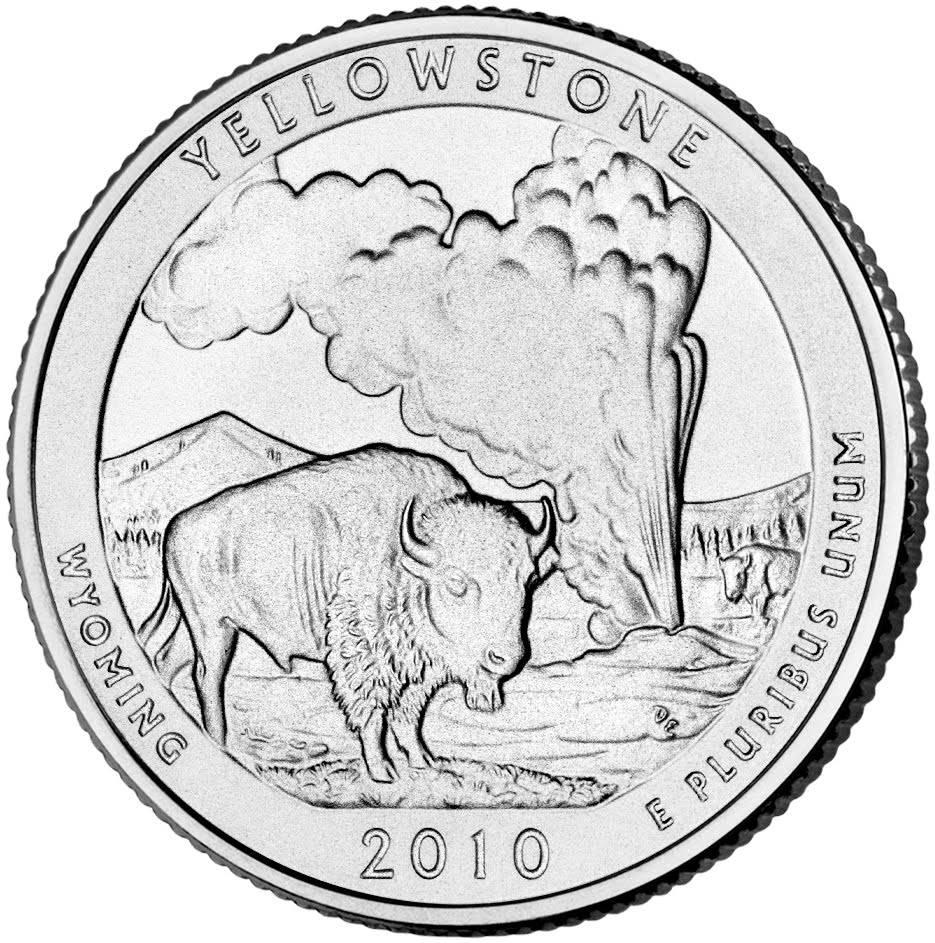
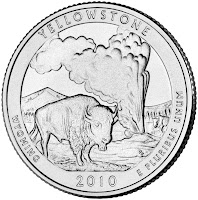 While the U.S. Mint fights trademark issues over the name of their program, Director and professional politician Ed Moy travelled to Yellowstone National Park in Wyoming today to launch the Yellowstone National Park Quarter. Moy was joined by Suzanne Lewis, Superintendent of Yellowstone National Park.
Yellowstone National Park was established by an act of congress on March 1, 1872. Its 2.2 million acres is home to grizzly bears, elk, wolves, and bison. Along with the Old Faithful Geyser are a collection of an extraordinary group of geysers that do not receive the same press as Old Faithful.
The reverse of the coin features Old Faithful Geyser and a bison, both excellent representatives of the nation’s second National Park.
Here is the B-roll video from the U.S. Mint and the launch ceremony:
Quarter image Courtesy of the U.S. Mint
May 31, 2010 | legal, national park quarters, US Mint
According to the lawyers at the U.S. Mint, the term “America the Beautiful” cannot be used when referring to the quarter series without noting that it is a trademark.
Coin World is reporting that Numismatic Guarantee Corporation will change the labels they use on certified 2010 quarters to remove “America The Beautiful” from across the top because the lawyers at the U.S. Mint complained.
According to registered trademark number 77823874, the trademark is for the term America the Beautiful Quarter™ with the disclaimer “No claim is made to the exclusive right to use America or Quarters apart from the mark as shown.”
Although NGC said that they would not fight the request, NGC’s original label did not use the word “Quarter” and is well within the spirit of what was written in the trademark application.
Prior to the quarters program, many of us knew America the Beautiful as the patriotic song based on the poem by Katharine Lee Bates and music by Samuel A. Ward. We also knew the phenomenal rendition by the late Ray Charles. Does the U.S. Mint’s actions mean that Charles’s estate can issue a cease and desist order against the U.S. Mint?
But did you know there was a documentary titled America the Beautiful asking whether is America obsessed with beauty? The film had a limited release in 2008. Does this mean that the U.S. Mint is infringing on the filmmakers copyright?
Will the U.S. Mint and the United States Geologic Survey become entangled in an inter-Executive Branch tussle over the name? The USGS sells the “America The Beautiful – The National Parks and Federal Recreational Lands Annual Pass.” that allows the holder to use these lands without paying an additional fee. Will this be the case of prior usage when the Department of the Treasury fights it out with the Department of the Interior? DoI may not be in a good mood given their involvement with the current disaster in the Gulf of Mexico.
This is an overzealous prosecution by the U.S. Mint’s Office of Chief Counsel (OCC). It appears that the U.S. Mint is taking a common phrase out of the American lexicon and claiming it as their exclusive rights. In the process, OCC is using legal antagonism against the secondary market that serves the collecting community who is being asked to buy these coins.
Considering the reduction in sales caused by the “Great Recession” and collector fatigue over yet another series, it is not in the U.S. Mint’s interest to alienate the collecting community. I urge the U.S. Mint to reread Bates’s historic poem and reconsider its actions regarding a name.
AMERICA THE BEAUTIFUL!
Not a trademark but a sentiment.
May 9, 2010 | CCAC, technology, US Mint
As a proponent of using technology to advance all my favorite activities, I was happy to read about Citizens Coinage Advisory Committee member Donald Scarinci was tweeting about the last CCAC meeting in Philadelphia. The posts on his Twitter account (@Scarinci) made for an interesting read as to what was discussed at the meeting.
If you are unfamiliar with Twitter, I recommend that you read my previous blogpost about the service.
A few days after the meeting, I heard from Scarinci via email who said that he had been studying Twitter for a few months before deciding to use the service. This is understandable because for the uninitiated, Twitter can be confusing. Scarinci, whose interests include law, numismatics, and art, decided to try Twitter to share his interest with others. “I decided to go forward with Twitter in order to communicate to people and at the same time make it worthwhile for people to follow. I didn’t want to focus just on law or just on numismatics or just on art,” Scarinci wrote. “I wanted to show myself as a full multidimensional person—opinionated, insightful, diverse, sensitive, at times insensitive. If used thoughtfully, twitter will allow me to display my personality and my interests as a mosaic rather than as a single static snapshot.”
What makes Scarinci’s perspective on using Twitter interesting is that it provides an insight into one member of the CCAC. Many of us never meet the CCAC members. Sometimes we hear them speak at various shows. But using Twitter as a way to allow us to meet him, at least virtually, allows us to understand at least one of the personalities making the selection on the coinage we care about.
When Scarinci contacted me, I said that I wish I would have known before the meeting because I would have followed his tweets. Since discovering his tweets, I have added @Scarinci to my list of followers on both the account that I use with this blog (@coinsblog) and my personal account. Although it was difficult to be one his followers when he tweeted he went to Katz Deli in Manhattan the other day (stop thinking of their corned beef… it’s the best!).
After a recent online and public “discussion” with CCAC member Gary Marks about the lack of communications from the CCAC, it was refreshing to hear from Donald Scarinci with a very different and positive attitude on communication with the public. Scarinci wrote:
Reporting from the CCAC meeting as it was happening is something I always thought should be done. I never understood and still don’t understand why the Mint does not web cast the CCAC meetings. We are, after all, a citizens committee. Each one of us on the committee has different perspectives and different levels of knowledge about numismatics and about art. The CCAC is very much as congress intended it to be—a peoples’ committee. While imperfect, it is probably the only way to debate and decide coinage designs in a democracy. So why not bring people in as the discussion unfolds and involve anyone who has an interest into the very core of the process. Twitter allows that to happen in real time without attaching people to a viewing screen for hours at a time. Instead anyone interested in the subject can get information in brief sentences. If the writing is clear and simple, the communication will work for busy people with day jobs even better than a web cam. That’s my opinion.
Amen!
I applaud Scarinci’s initiative and appreciate his efforts. I hope the concept of using modern communication techniques can be institutionalized by the CCAC and the US Mint and expanded to include more citizens in the process. Scarinci will be tweeting during future meetings. I will be following those updates (@Scarinci) and suggest anyone interested in the work of the CCAC to follow, too.
Apr 18, 2010 | BEP, coins, currency, Federal Reserve, national park quarters, US Mint
In what has the potential to be an exciting week in numismatics, the US Mint and the Bureau of Engraving and Printing will be introducing newly designed money to the public.
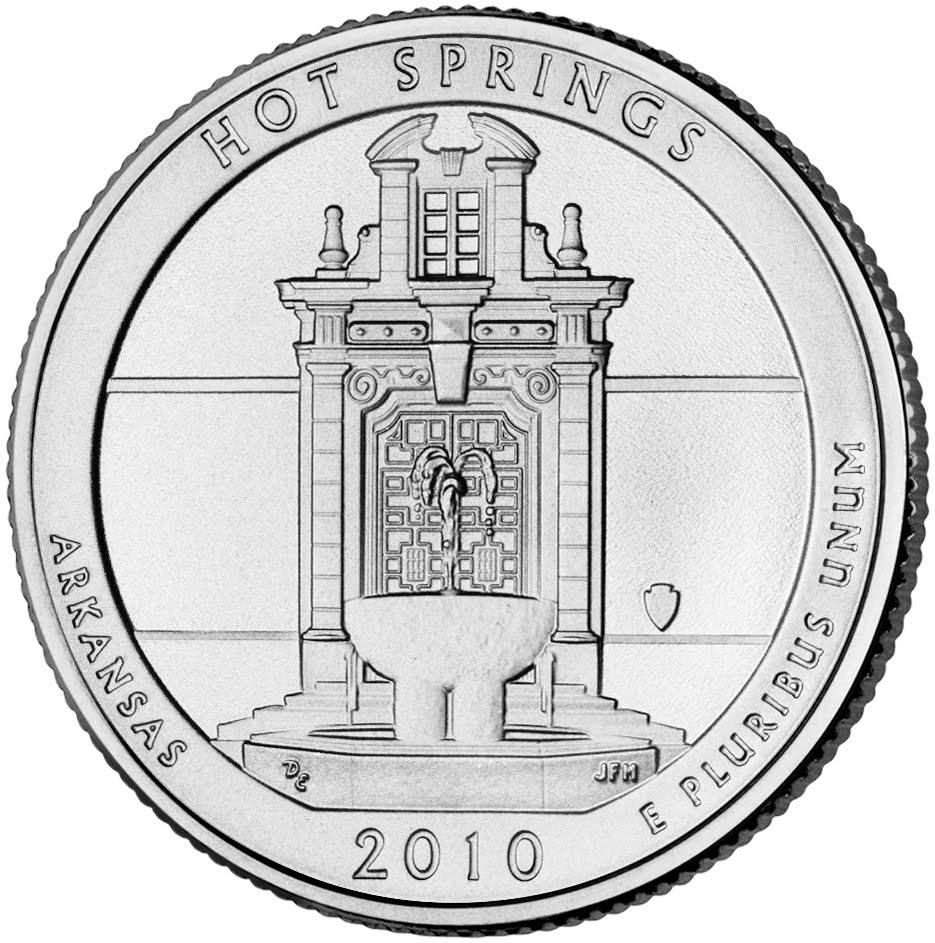
 As part of the 2010 National Coin Week, on April 20, the U.S. Mint will launch the America the Beautiful Quarters™ Program with the release of the Hot Springs National Park Quarter. The ceremony will take place on the park’s 178th anniversary in front of the Administration Building at 10 A.M. Central Time (CT). A coin exchange will follow the event. The ceremony will be broadcast live on the web at americathebeautifulquarters.gov beginning at 9:55 A.M. (CT).
The United States Mint will hold a Coin Forum on Monday evening, April 19, at 5 P.M. (CT) at the Quapaw Bath House. The Coin Forum is an opportunity for the public to express their views about future coinage, and to learn about upcoming United States Mint coin programs and initiatives.
As part of the promotion for the launch, the US Mint has released B-Roll with images of the site, design footage showing the computer design of the coin, production footage including creating of the dies, and striking of the quarters.
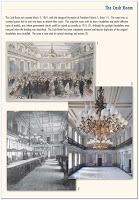 Then, on April 21 in the Treasury Cash Room, the Bureau of Engraving and Printing will unveil a newly designed $100 Note. The U.S. government redesigns currency in order to stay ahead of counterfeiters and protect the public. The BEP has not previewed the new design.
The unveiling of the $100 note is the first step in a global multi-government agency public education program implemented by the Department of the Treasury, the Federal Reserve Board and the U.S. Secret Service, to educate those who use the $100 note about its changes before it begins circulating. The $100 note is the highest value denomination of U.S. currency in general circulation, and it circulates broadly around the world.
Program will begin at 10 A.M. Eastern Time (ET) and will include Secretary of the Treasury Timothy Geithner, Chairman of the Board of Governors of the Federal Reserve System Ben Bernanke, Treasurer of the United States Rosie Rios, Director of the United States Secret Service Mark Sullivan. Education and media materials, including the B-roll, will be available at www.newmoney.gov.
Hot Springs Quarter courtesy of the US Mint
Cash Room images courtesy of the US Department of the Treasury
Apr 8, 2010 | bullion, US Mint
While speaking at a public forum during the recent American Numismatic Association’s National Money Show, US Mint Director Ed Moy said that it is possible that the Mint will not produce collector American Eagle coins. The US Mint cancelled the American Eagle Proof program “[because] of unprecedented demand for American Eagle Gold and Silver Bullion Coins.”
It is being reported that the demand for gold and silver bullion coins remain high making it possible that collector American Eagle coins may become extinct in 2010. Moy was quoted as saying:
I will tell you that in the last five weeks or so, we caught up to gold demand. And so with that, we’ve been storing gold coins. We’re still waiting to see if there’s going to be another spike in the near future. Silver unfortunately is still red hot.
As I had previously noted, the US Mint reported a 40-percent reduction in the coins they produced in 2009 costing 1.1-percent more than it did to produce more coins in 2008 while claiming that they introduced new efficiencies in their business process. Then why did the reporters who attended this forum not ask Moy why the resources could not be added to the production of Eagles?
Why is the numismatic press not pressing Moy for answers? Moy is an appointed official of the United States government. It is the job of the fourth estate to keep politicians accountable for the jobs they do on behalf of the American people. Unfortunately, it appears that numismatic journalists have abrogated their responsibility to serve their readers.

 Another change that appears on both services is a new logo. Rather than using the logo that was based on the U.S. Mint seal with a red, white, and blue banner flying to the right (see image to the left),
  the new logo (right) uses a medal-like device with a flag impression that also has edge lettering that say “US Mint” placed over capital letters reading, “United States Mint” in a serif font. The new logo has appeared in email and on their “microsite” for the America the Beautiful Quarters Program. However, no change has been made to their main website and the online catalog replace the old banner logo with a black-and-white seal.


 Loading ...