In January, I reacted to the intent of one of the candidates announced to run for President of the American Numismatic Association. Since then, I learned there will be competition for that position. Last week, it was reported that Don Kagin will run for Vice President and the various numismatic outlets have been reporting on others interested in making a run for the ANA Board of Governors.
While reading the stories of the people who announced their intention of running for the Board of Governors, I have to admit that I do not recognize any of them. But that is great. It means that there are people who are working more on a local level to apply their knowledge nationally. It also means that there are new people to give the Board new life. I applaud those who have stepped up to run.
Since my missives about the ANA Board of Governors, I have heard from several members urging me to run. It is both humbling and an honor to hear from these members offering their support. Following a few conversations with past Board members and my family, I have decided not to run for the Board of Governors.
Although I remain committed to the mission of the ANA and would like to see the ANA expand to be more inclusive to every demographic other that old, white men, my decision is based simply on timing. I was presented with a business opportunity that will take a significant amount of my personal effort to launch, especially since the opportunity is based on my vision. It would not be possible start a business venture and appropriately serve the ANA at the same time.
Because of conflicts with my business venture, I will not be able to attend the National Money Show in March. This is too bad because I had a plan to use Mickey Mouse ears get attention and talk about the Board of Governors on the bourse floor!
For now, I will continue to serve on the Technical Committee as long as the President, Board, and the committee will allow me. I will also continue to write this blog and include any information and criticism necessary to further the mission of the ANA.
An adage of numismatics is “Buy the book before the coin.” It was first used by numismatist and dealer Aaron Feldman in an advertisement that appeared in the March 1966 issue of The Numismatist. Aside from being used to sell books, this sound advice tells collectors to enhance their knowledge of the hobby.
Education is important because helps build the skills and tools they need to navigate the world. Education helps us read, write, calculate and communicate. Without education, we would not be able to perform our jobs competently, accurately and safely. Education also gives us a view of the world which we live and provides a context to how we arrived at society today.
Numismatic education is important because it teaches us how to understand the and navigate the world of money and the economics that made it necessary. Without numismatic education coins, currency, bonds, tokens, and medals are just objects to be ogled without context. We would not know why these items are important or how to collect them. Numismatic education not only teaches us about how to identify these items and collect them but provides the background into history that explains how these items represent today’s society.
The areas I find interesting are the history and policies that have led to how things are today. History gives us the lessons learned as to how it was once done and the evolution of the policies that govern the way any institution is run. This is no different for the money manufacturing apparatus of the United States.
I have been on a book buying binge. If I find a book that will add to my curiosity, then it will become part of my growing library. Over the last few months, I have probably spent more on books than coins. With the exception of the few review copies (that I really should review), most of the books I buy are older and have information that I have not found anywhere else.
There are books from my new stack of older books I would like to highlight.
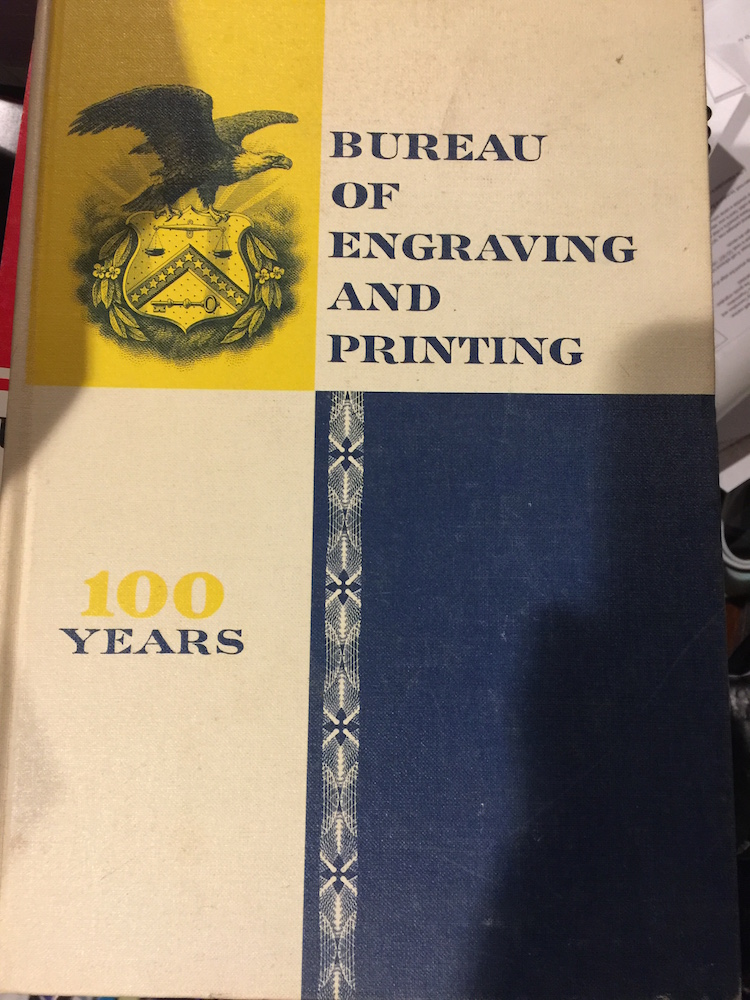
History of the Bureau of Engraving and Printing
Bureau of Engraving and Printing, 100 Years
Compared to the U.S. Mint, the Bureau of Engraving and Printing does not get the same love by collectors. Created as the National Currency Bureau in 1862, it became the official security printing agency of the United States government. History of the Bureau of Engraving and Printing covers the first 100 years of the agency’s history. Printed by the Bureau of Engraving and Printing and sold for $7.00 in 1962, this book outlines the growth of the agency from cutting fractional currency printed by commercial printers to pioneering currency production including new press operations and how to create plates.
It is a beautifully produced book that stands out for its quality in both production and writing. The history of the BEP is well written with images of the process with images of some of the printing element interspersed throughout the text. Also included are intaglio printed images from the Bureau of Engraving and Printing archives. Between the pages with the intaglio prints is a tissue-like paper to help protect and preserve the images.
Although there are many good online histories of the Bureau of Engraving and Printing none of them are complete and does not include the other security printing history of the agency including bonds and stamps.
Three on Counterfeiting Currency
The most read post on the Coin Collectors Blog is “How easy is it to pass counterfeit currency.” I am fascinated that since I published that post there it has logged over 5,000 unique hits. I am sure that the post is being picked up by search engines and shown to people who are looking for illicit information. They are probably disappointed that the post is not an instruction manual, but I am fascinated that so many people would be interested.
It made me curious about the history of counterfeiting in the United States. Since I am on a book buying binge, it was time to find some interesting titles:
Illegal Tender, Counterfeiting and the Secret Service in Nineteenth-Century America by David R. Johnson. To save money, this is a former library book in very good condition. I have skimmed this book and it looks like it will provide a good background as to the evolution of the U.S. Secret Service. The U.S. Secret Service is a unique agency. It was formed to investigate and deter counterfeiting of U.S. currency starting in 1865. They were so well respected that they were asked to protect President Theodore Roosevelt following the assassination of President William McKinley in 1901. Although many countries have divisions of their law enforcement services that investigate counterfeiting, the United States is the only country that has an agency whose mission to protect the currency from counterfeiting.
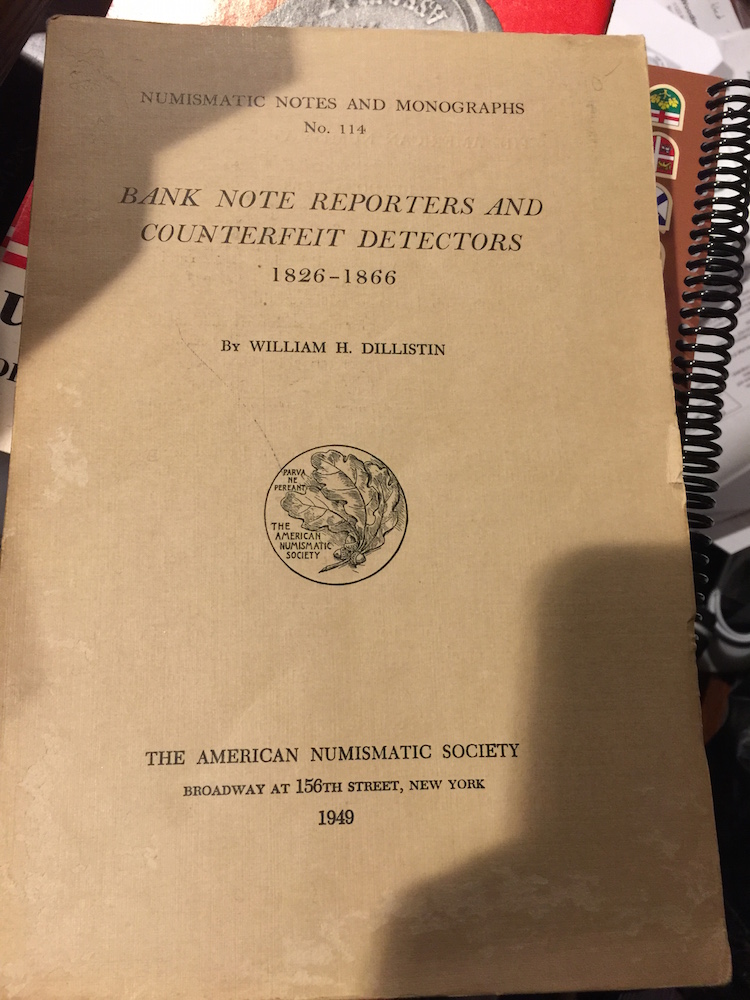
Banknote Reporters and Counterfeit Detectors from 1949
Counterfeit, Mis-Struck and Unofficial, U.S. Coins by Don Taxay. While my copy has condition issues, including water damage, it is still a book written by Taxay that has to be worth reading. Since this is my most recent purchase it has been added to the “up next” queue.
Bank Note Reporters and Counterfeit Detectors, 1826-1866, by William H. Dillistin. Published by the American Numismatic Society in 1949, this book is a survey of experts in counterfeit detection that describes what to look for. It is also a catalog of publications in counterfeit detection and the authors. An interesting exercise may be to work on trying to find the papers and pamphlets listed in this book. I also liked the images in the back of the book that shows what to look for to detect counterfeits.
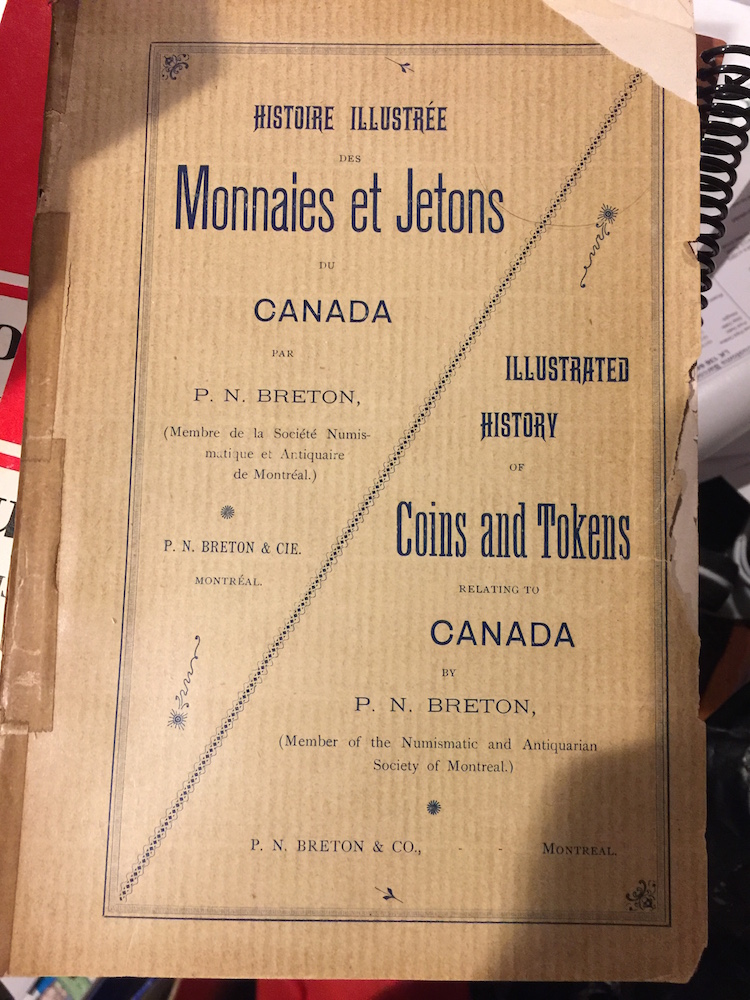
Illustrated History of Coins and Tokens Relating to Canada
Illustrated History of Coins and Tokens Relating to Canada by P.N. Breton
When I reviewed 2017 Canadian Circulating Coins, Tokens & Paper Money I noted that the third section of the book is dedicated to Breton Tokens. Breton Tokens refer to the coins and tokens that were documented by Pierre Napoleon Breton in 1894. Although I am not a collector of Breton Tokens it would be great to have a copy of the book. Think of it as owning a copy of “Penny Whimsy” by Dr. William Sheldon or the first edition of United States Pattern Coins by J. Hewitt Judd.
I have to admit to “picking” this book during a sale of books from my local coin club. The club is selling off items in its library that there seems to be little interest. Periodically, a few books are brought to a meeting and sold by silent auction. When Illustrated History of Coins and Tokens Relating to Canada, I did not pay attention. I was drawn that it was an older book about Canadian coins and that it is written in both French and English. What made this book stand out is that each page had two columns with the French text on the left and the English on the right. The format was fascinating I bid and won the book. Only after I started to go through my pile this past week to prioritize my reading list did I realize what I had purchased.
Although this is not a priority read, to have a contemporary reference about Breton Tokens written by P.N. Breton should make a fascinating read.
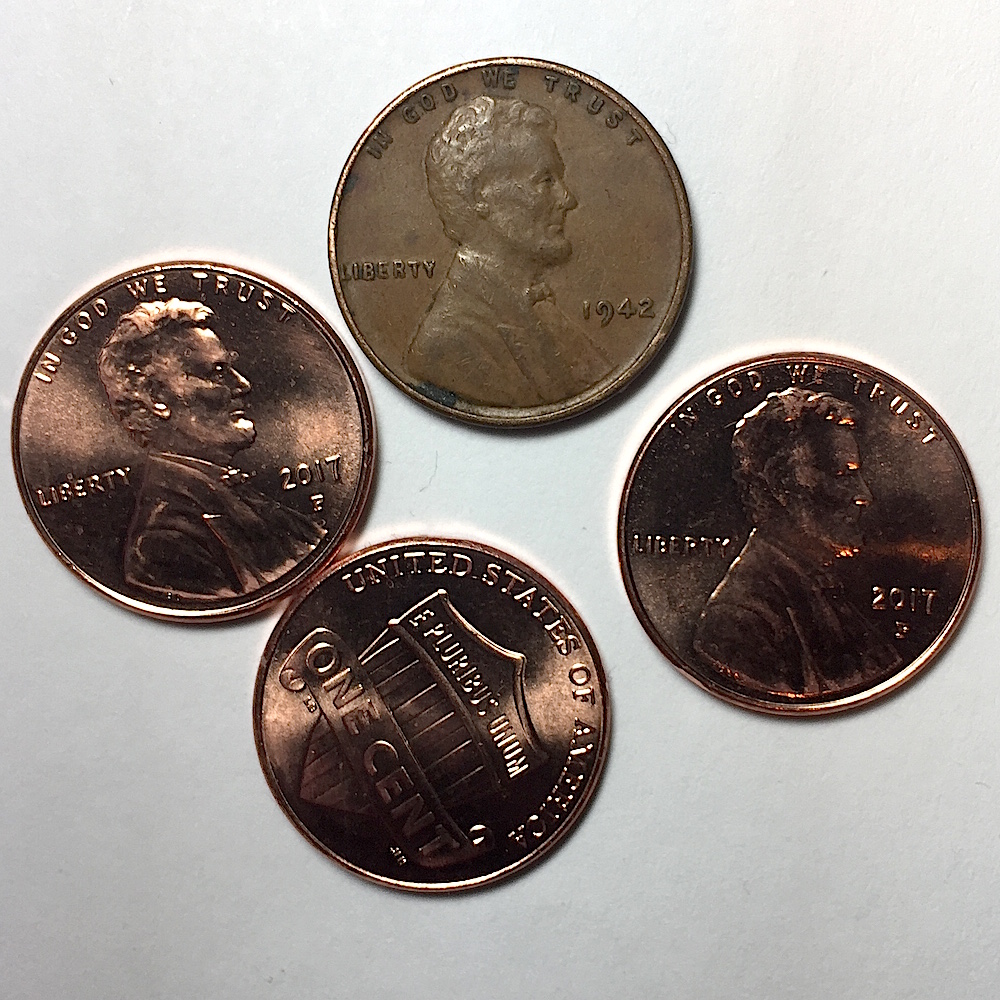
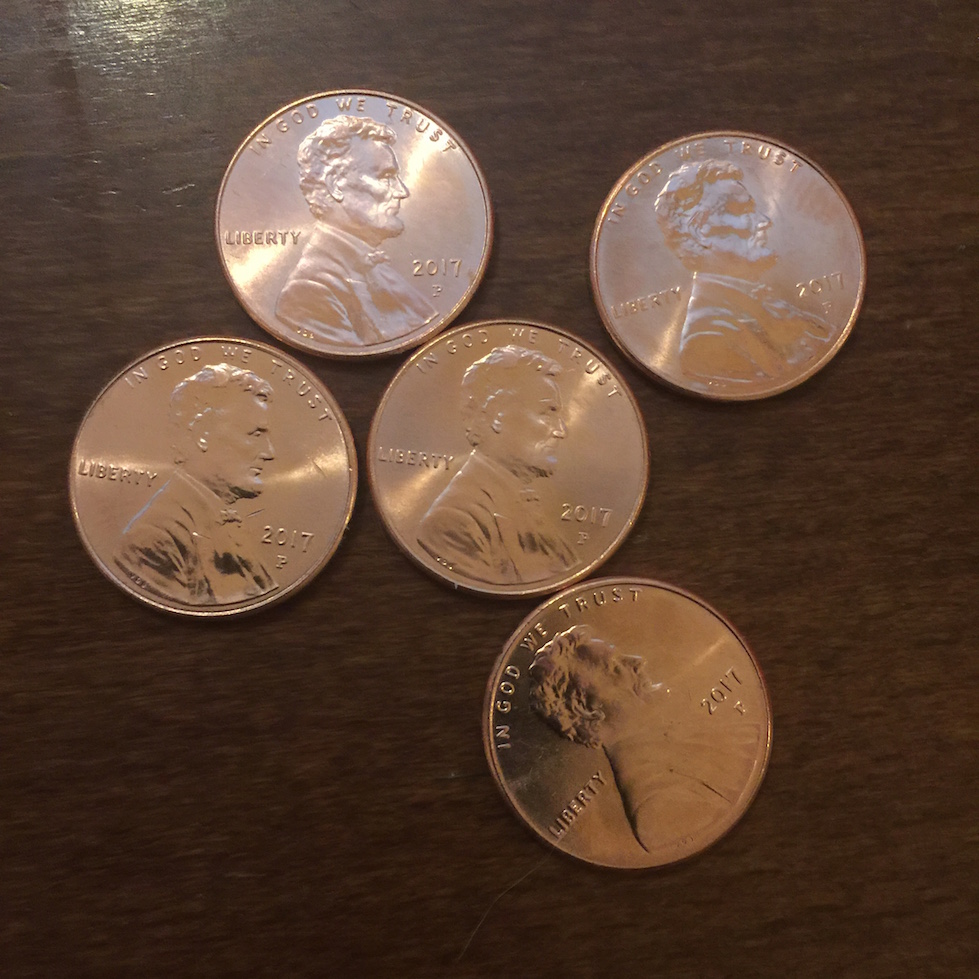
Pocket change find of three 2017-P and a 1941 Lincoln Cent
Although I have a number of stories to post and have a few articles started, I continue to look for coins for various reasons. Sure, some of the coins I find are not part of a collection I am working on. But there are a few that when they appear in my pocket change get stored in my desktop bank.
After buying lunch, the changed included four cents. When she handed the change, I looked into my hand and noticed three very shiny, red Lincoln cents and one very brown cent. A quick glance of the red cents showed three 2017-P Lincoln cents. These are the new, one-year issue Lincoln cents with the P mintmark honoring the 225th anniversary of the U.S. Mint.
For the brown cent, I had to stop a moment and turn it into the light to see it closer. The first thing I noticed is the wheat ears reverse. Nowadays, to find a wheat back cent almost as rare as finding a pre-1965 coin in change. A quick flip and an adjustment of the bifocals reveals it is from 1942, a coin still rattling around in circulation for 75 years.
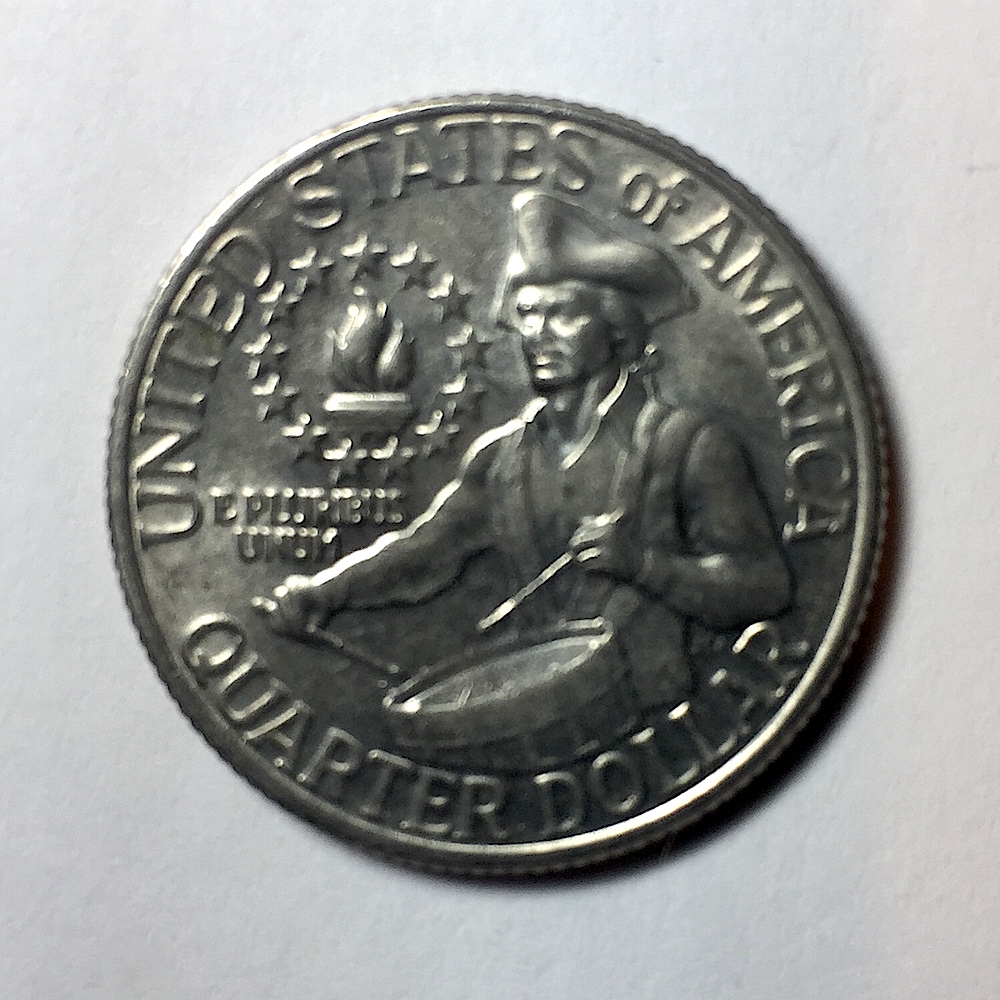
1976 Washington Quarter with my favorite, the Drummer Boy reverse
While marveling about finding a wheat back cent, I move some of the other change around and noticed the distinct Drummer Boy reverse of at 1976 Washington quarter. Although there have been quite a few new designs over the last 20 years with all of the different programs, I still reach back to the 1976 Drummer Boy reverse as my favorite modern circulating coin design.
The wheatie and the Drummer Boy quarter have been dropped in my special bank. As for the 2017-P cents, they will go back into circulation for someone else to enjoy.
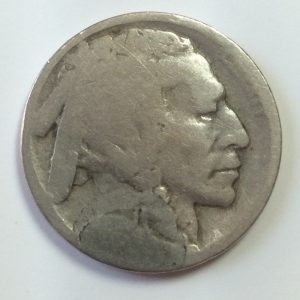
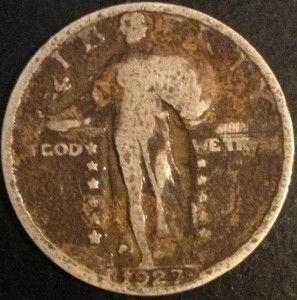
A dateless Buffalo Nickel with acid stain from a pocket change find
As a longtime numismatic blogger, I am on many mailing lists and receive many press releases and announcements. Since there are many other good numismatic news-related outlets that will publish these stories, I will leave it up to them to bring you that news. Sometimes, the announcement is interesting and worthy of a spotlight.
Whitman publishing, the people who give us the Red Book and the famous blue folders and albums, is looking for pictures of your problem coins. Here, let Dennis Tucker, Publisher at Whitman, explain:
Whitman Publishing Wants Your Imperfect Coins
(Atlanta, Georgia) — Whitman Publishing is looking for sharp, high-resolution photographs or scans of “ problem” coins to illustrate in upcoming books. Hobbyists who share their images will be credited in the books’ acknowledgments.
“Most of the time we show Mint State pieces with strong details, to give our readers a good understanding of each coin type or die variety,” said Whitman publisher Dennis Tucker. “But coins with problems can be educational, too.”
The publishing firm is looking for coins with: PVC damage; bag marks; scratches; edge bumps, nicks, or dents; holes; or extreme wear.
Image files should be at least 300 dpi at two times actual size. Scans and cell-phone photographs are acceptable as long as the image is high-resolution and clearly illustrates the coin’s problem.
This was the last of the quarter-finals of the Jeopardy! College tournament. One would think that even if you were not in tune with the working of the U.S. Mint like we collectors that the word “coins” would be a big enough clue. At least one person had the right department!
It’s the weekend and the weather is warming here. I won’t get into a “get off my lawn”-like rant!
Jeopardy! hero graphics courtesy of Sony Pictures Entertainment.
A few weekends ago, I was out picking when someone offered to sell a box of lapel pins and buttons. Most of the buttons were modern political mainly from the 1988 election through the 2008 election. There was a mix of both major parties along with a number of local and state races, primarily from Virginia.
The box was nothing remarkable. It was originally for high-priced basketball shoes from a well-known company in the western United States. Alongside many of the political buttons were lapel pins and some sports pins. I also noticed some buttons with cute sayings. While being stuck in the fingers I was thinking that I could buy the box and use it as junk filler at a show. Just like coin dealers have junk boxes, those of us in other collectible areas have our versions of junk boxes. In this case, I can lay them out in felt-lined trays and let buyers pick over them for a dollar each.
Flag and ribbon pins always sell. So do buttons that say, “I usually don’t wake up grumpy, I sometimes let him sleep.” This gets the ladies to laugh and look at some of my other items.
After setting up the card table I use to work on this type of sorting, I dumped the box in the middle of the table. Expecting to have to sort through a few hundred pins and buttons when I noticed a 2×2 flip on top of the pile. It was a coin sitting that was sitting in the bottom of the box now at the top of the list of things to look at.
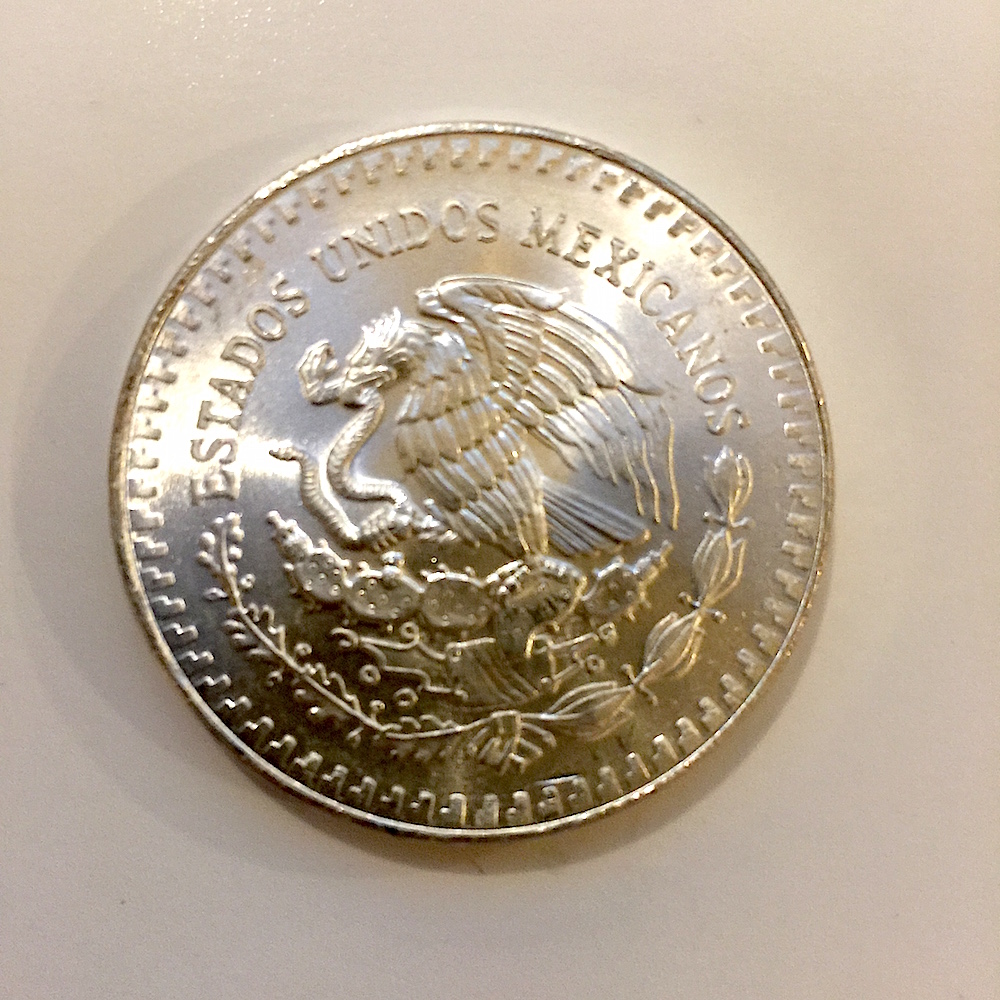
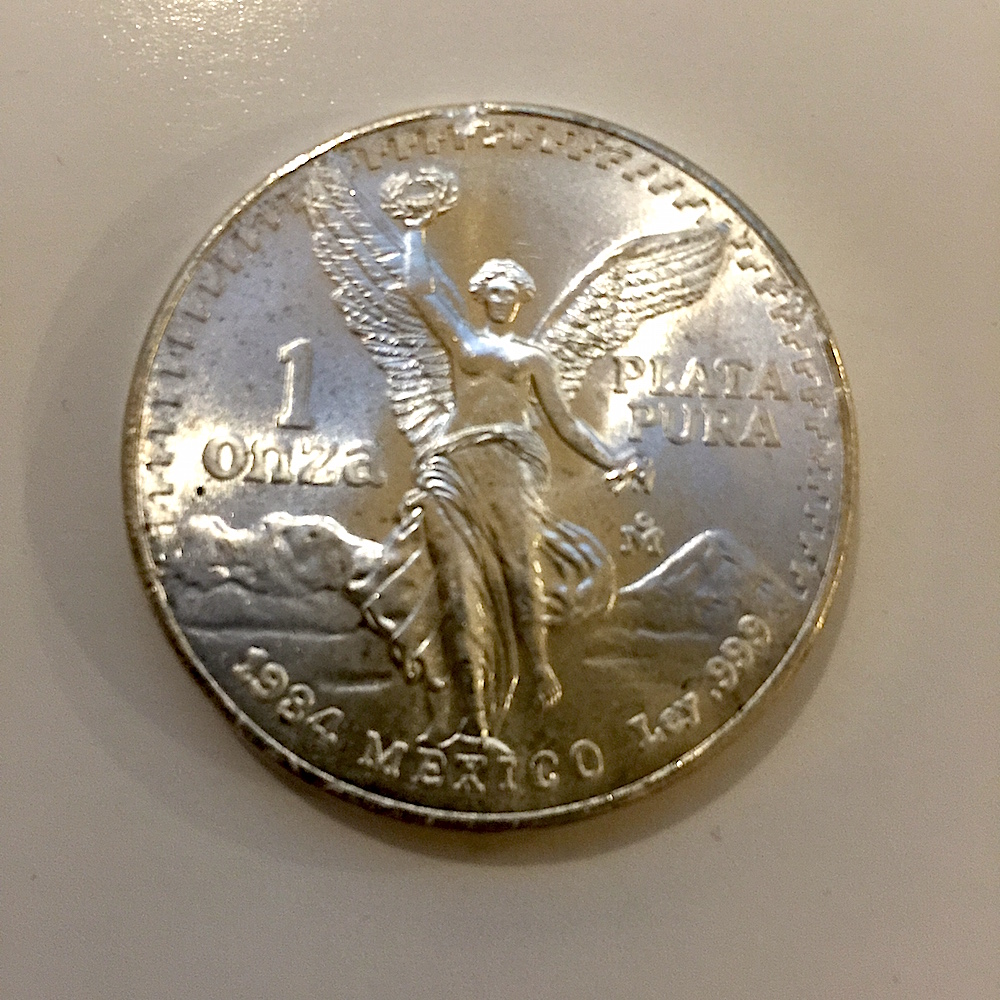
At first glance, I noticed it was not a U.S. coin and thought that it just could be an uncirculated copper-nickel coin until I looked closer. Shifting my glasses to get a better view there was no mistaking the reverse design as a Mexican Liberatad. The 1984 Libertad is clearly marked “1 ONZA PLATA PURA” (1-ounce pure silver) with the obverse declaring it from “ESTADOS UNIDOS MEXICANOS” (United States of Mexico).
I found a beautiful, uncirculated 1984 Mexico Libertad worth more than what I paid for the box!
Obverse of a 1984 Mexico Libertad
Reverse of a 1984 Mexico Libertad
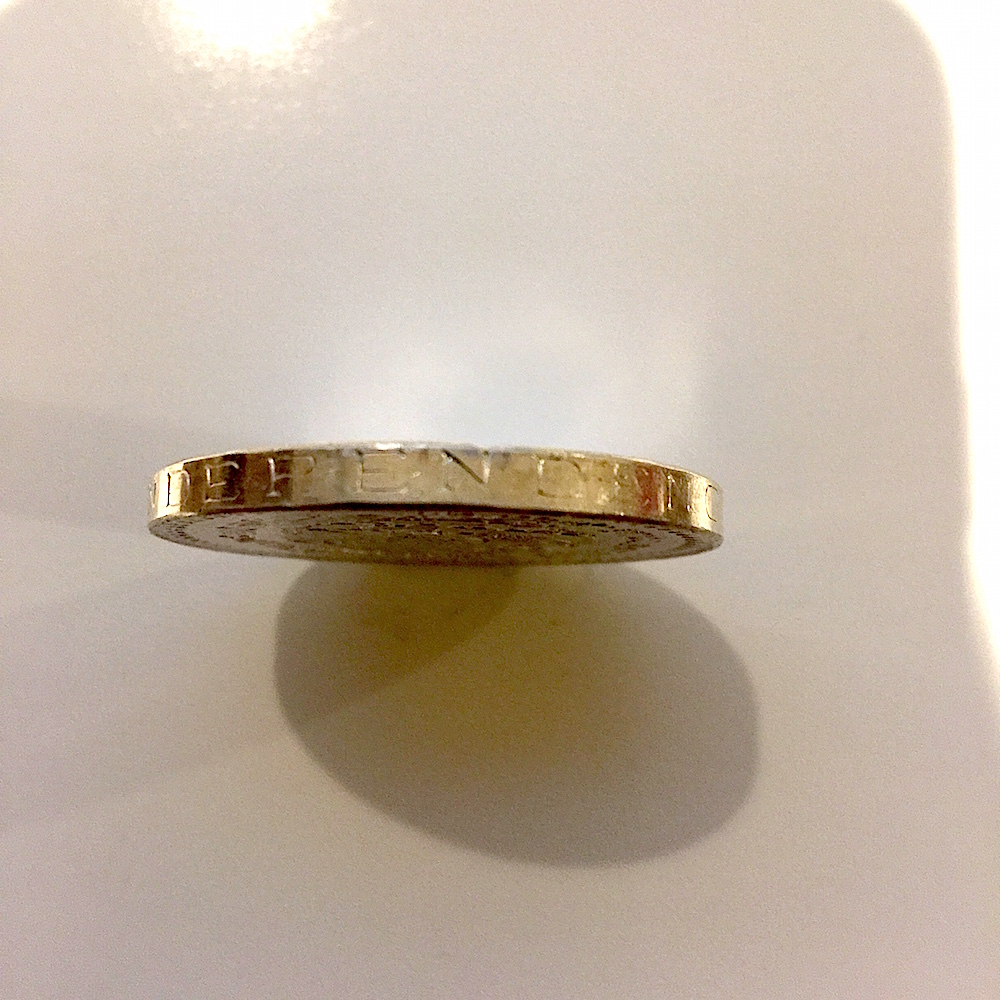
Edge lettering on a 1984 Mexico Liberdad
Although I love large silver coins, I have never owned a Libertad. Did you know that the edge of the Libertad has edge lettering? It reads “INDEPENDENCIA Y LIBERTAD” (Independence and Freedom). The distinctive mintmark of the Mexico Mint is on the reverse and has an overall great look.
Yesterday, I wrote about sales of 2017-P Lincoln cents selling at nearly 20-times face value online. These are coins in production that the U.S. Mint will continue to strike until December 2017 at a pace that should yield over 5 billion coins.
At the end of the post, I wrote:
Maybe it is time for the American Numismatic Association and Professional Numismatic Guild to issue a statement warning the public. If these organizations are about protecting the collector, here is a clear case of price gouging that they should show concern!
2017-P Lincoln Cents are selling for high multiples over face value
Sometimes, I do not understand collectors and the speculation market.
I had read a few stories about the one-year-only 2017-P Lincoln cent selling for high multiples online. I had to check it out for myself. What I found are rolls of uncirculated Lincoln cent selling for upward of 20-times face value!
Since the U.S. Mint did not announce that they would be adding the “P” mintmark to the one-cent coin as a one year issue, there has been a frenzy of interest. It seems to the point of overpaying for a coin that is really not worth more than its face value!
These are business strike coins, struck for circulation. They are the coins ordered by the Federal Reserve to satisfy the nation’s commerce. Although they have a mintmark “P,” the U.S. Mint will strike billions of these coins. In 2016, the Philadelphia mint struck over 4 billion one cent coins—4,698,000,000 to be exact.
According to the U.S. Mint production figures, 515,200,000 of the 2017-P Lincoln Cents were struck. Extended out over 12 months, that means the U.S. Mint will strike over 6 BILLION of these coins.
One day of 2017-P pocket change finds
Before typing this blog post, I checked my pocket change to see how many I had. Since I empty the change from my pocket daily, I found five coins just from my daily travels on Saturday.
This is an unfortunate state of society. The collective ADD and instant satisfaction will have people spending more than they should only to be disappointed later when the coins are not worth more than face value. It will be like those who bought 50 State Quarters on the home shopping channels only to later realize they would be lucky if they could recover half of what they paid.
I understand that online sellers are trying to satisfy the market. Capitalism at its most greedy. But it is not good for the hobby.
Maybe it is time for the American Numismatic Association and Professional Numismatic Guild to issue a statement warning the public. If these organizations are about protecting the collector, here is a clear case of price gouging that they should show concern!
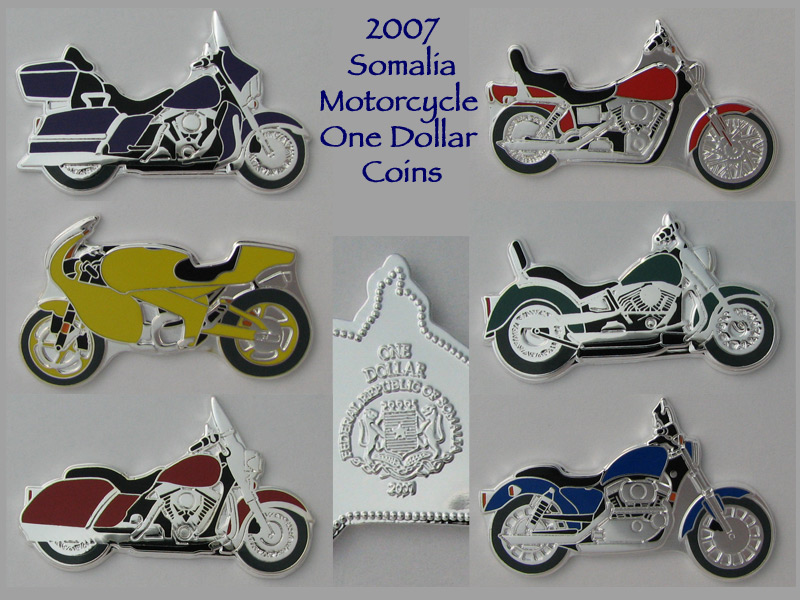
One of my favoite items in my collection are these 2007 Somalia Motorcycle Coins
During the last month, I have had email conversations with a few readers about the future of the hobby. To sum up the several conversations, the following are summaries of the issues I heard:
Politics: In the last 20-years, the American Numismatic Association and many of the regional organizations and clubs have be overcome by politics. If you are not with the “in crowd” you are welcome to come to the meetings but do not expect the same treatment as those within the inner circle.
Acceptance: A progressions from politics, if you are not the same demographic of the inner circle, usually white male over 50, you have no chance of being admitted into the inner circle.
Elitism: You do not collect something cool like Bust Dollars or Morgan VAMs? What is this, transportation tokens? Gaming Tokens? That is not cool and you cannot be in our club.
We live in a politically charged society where opinions are magnified into binary choices: yes or no, up or down, for or against, etc. There are no shades of gray and common sense is not as common as we would like to think. Things are so bad that it is reported that a woman filed for divorce after 22-years of marriage because her husband voted for Donald Trump!
While I am be guilty of adding politics to the hobby, I believe I have worked in the hobby’s best interest. During my tenure as president of the Maryland State Numismatic Association I told the board that we look too much like an insular club and need to branch out. My final President’s Letter published in the Maryland Numismatist spoke of this.
If your club’s board has consisted of the same people for more than a few years, it is time for you to step down and let someone else take the position. While it may be fun to be the king of the club, adding new people is not only good for the hobby but it will allow newer members a chance to participate. If you are not working to turn over your leadership every few years, then you are helping to destroy your organization through stagnation.
In order to have a lineup of people ready to take over leadership of the club or organization, we have to get more inclusive. This is one of the aspects of the hobby that has bothered me for a long time. If you go to many club meetings, shows, and even ANA conventions, you look out over the crowd and see an overwhelming number of white males over the age of 50. As a white male over the age of 50, I can say there is nothing wrong with that demographic. But it is not the demographic that will sustain the hobby.
I stull own this Fort McHenry Commemorative Medallion I bought at the gift shop.
Over the years there has been an effort to bring more women into the hobby. Since half of the population consists of women, that is a good start. However, the few women I see roaming the bourse floors are either middle-aged and white or accompanying their children. And given my previous discussions about bad customer service, it is no wonder women stay way from the hobby.
And someone please tell the Girl Scouts that the conditions surrounding the failure of the Girl Scouts commemorative still exist. On many occasions, the Girl Scouts have been accused of being insular and parochial in their attitudes. Maybe, if they step away from their cookie boxes they will better help the girls expand beyond the attitudes these leaders think are keeping women back.
Another problem I have seen in numismatics is the lack of ethnic diversity. Where are the people of color? We work with the Young Numismatist programs through schools and the Scouts appear to reach youngsters of all ethnicities. Why does this stop after the age of 18? Why is there no outreach to non-white adults?
You cannot tell me there are no non-white adults who collect numismatics. One place I have seen a nice mix of ethnicities has been at the FUN shows. And the argument that Florida is more ethnically diverse than someplace like the Chicagoland area where the World’s Fair of Money has been held for too long is not a good argument.
I created my own Large Cent collection using a Gardmaster album
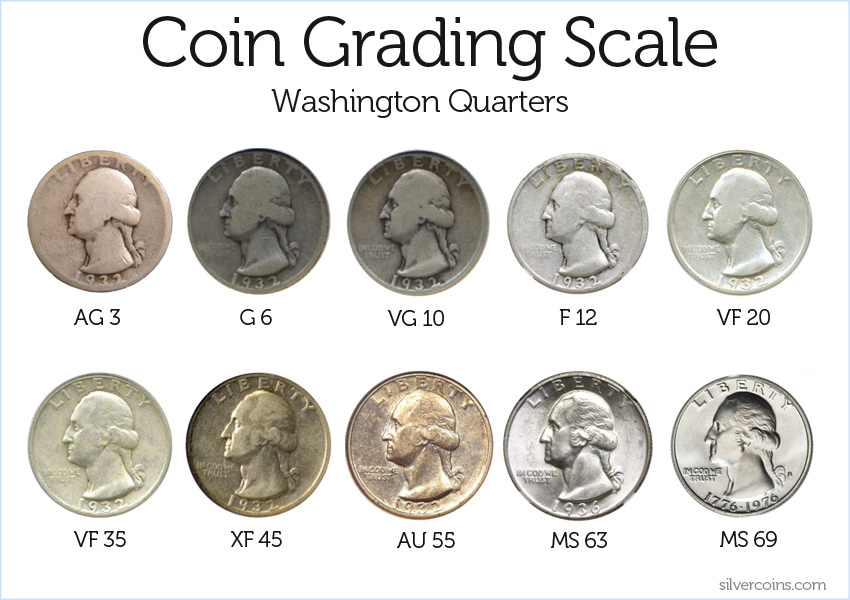
Maybe it is because of the stuck up nature of the hobby. Why does everyone have to create a set that fits nicely into a blue, brown, or green album? Why does everyone have to buy plastic holders with numbers as close to 70 as possible? Why are most of the emphasis and programs surrounding numismatics have to be about coins or currency?
We pay lip-service to numismatics being an all inclusive hobby but the mid-to-lower collector can be made to feel unwelcome. Dealers who are older may have a difficult time relating to younger and, frankly, a non-white demographic. It has created a culture where if you are not white, male, and collecting the thousands of Morgan dollars that are on the bourse floor or the more expensive stuff in the cases, you are a nuisance.
Although there are dealers who do cater to the average collector, the rest treat the books, boxes, and junk bins as a necessary evil. And even if you are a white male over the age of 50 but enjoy searching the junk boxes for that odd item or the rows of tokens for something from your hometown you have never seen before, you are just not the type of person the dealer wants to work with. While this is not true of every dealer, I have experienced a lot of dirty looks while carefully searching through red boxes of tokens and other items in 2×2 holders looking for that cool item from Brooklyn and New York City.
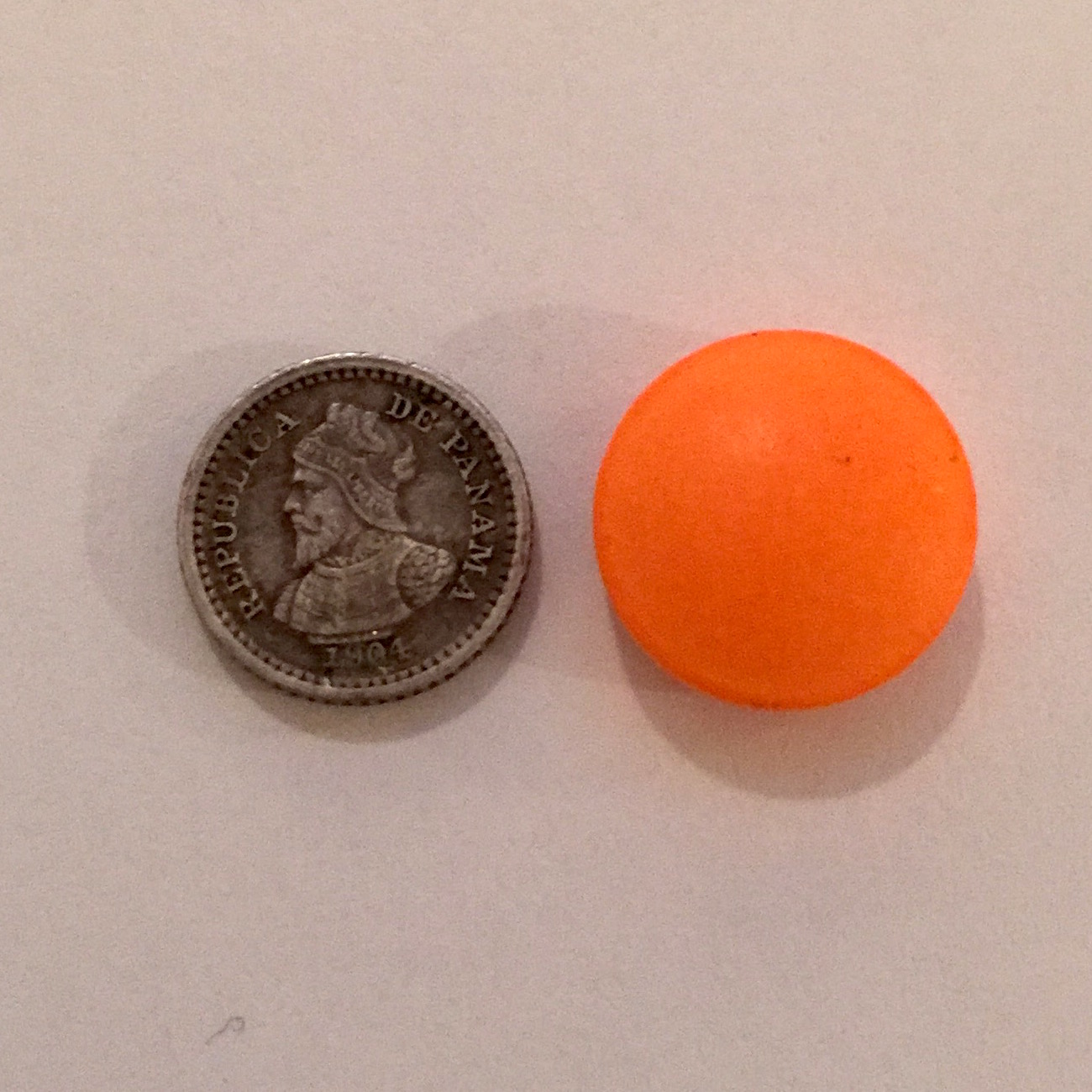
My 1902 Panama 2½ Centesimos on the left known as the “Panama Pill.” On the right is a national brand coated aspirin. I still own the coin because I think it is interesting.
EVERYONE needs to be more inclusive or risk the hobby dying. Mainstream publishers may want to consider creating an imprint to support niche publications in order to get that information into the hands of the collectors. And an open note to the members of the Numismatic Bibliomania Society that devoted an edition of The Asylum, their quarterly publication, to electronic publishing of numismatic information, those who worry about maintaining the status quo may want to think about how the status quo is making numismatics look like an exclusive club. Stop hoarding information and make it available to anyone who will appreciate it.
Now that we have identified the problem, how do you we fix it? How do we get the YNs to continue to collect into their 20s and 30s? How do we recruit women and people of color into the hobby? How can we teach the dealers that can barely spell customer service that they need to change their ways or there will be nobody to buy their coins because they chased all their potential customers away? I am open to suggestions!
A check from the First National Bank of Inwood (NY). Inwood is a hamlet on Long Island where I grew up. Even though FNBI was bought out long before I was born, having this in my numismatic collection gives my collection a personal touch.
There’s a revolution brewing in the numismatics markets that is being fed by its own successes causing its own failures.
The first salvo was fired by the Professional Numismatic Guild and Industry Council for Tangible Assets in 2006 when they jointly performed their own survey. One of the results was that PNG and ICTA were sued by a few of the services whose services were deemed unacceptable.
In the meantime, most of those companies rated “Unacceptable” in the PNG-ICTA report either went out of business or have been marginalized to the point of irrelevance.
Next was the creation of the Certified Acceptance Corporation as a grader of the graders. As I have explained in the past, although a fourth-party or validation service might be helpful, the CAC is not an independent organization providing the service. The company trades on its inside information in what it calls “market-making.” This type of arbitrage activity would be illegal in the securities industry but has given a false sense of security in the numismatics world.
Now there are rumblings again and this time there are a few significant people doing the talking.
In other words, third-party grading and authentication is good for the hobby but the services have problems.
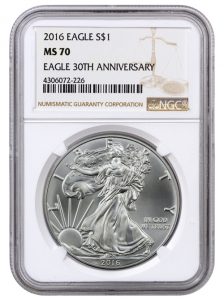
Could you tell the difference if they were not in the holders?
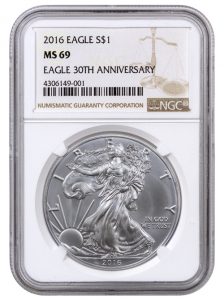
2016 American Silver Eagle graded MS-69 by NGC
2016 American Silver Eagle graded MS-70 by NGC
Following NGC’s change in its registry rules to no longer allow coins graded by PCGS in their sponsored registry sets, NGC Chairman Mark Salzberg publishes an analysis on what he claims is the decline in PCGS-graded coins. In his analysis, Salzberg looks at the prices realized from auction sales of certain PCGS coins over time and compares them to PCGS population reports for those coins.
Through a set of charts that resemble the supply-and-demand curves, it is unsure if the charts prove anything. If Salzberg is trying to say that PCGS is practicing grade inflation, known as gradeflation, then he could prove that with the changes in the grading for many modern coins. However, comparing the population report (supply) of a classic coin like the 1912-S Liberty Nickel, may not be valid without looking at other factors, such as the population report of lower grades declining. Also, Salzberg only uses the prices realize from auctions held by Heritage Auctions and not a survey of the industry as a whole.
Does PCGS practice gradeflation? Can we also ask does NGC practice gradeflation? And we do not know how these services fare with CAC who keeps its raw data hidden from the public while using it to increase the value of the coins it examines.
Dave Bowers provides good insight into the problems with coin grading without trying to overburden the reader with statistics even with the suggestion that dealers may overly emphasize grade differences and not the aesthetics of the coin.
Bowers is not the only one complaining about grading, last September, Rick Snow wrote an article on the CDN Publishing Blog suggesting grading be adjusted to a 15-point technical scale without the qualifying notations such as “”Full Head” or “Full Bands.”
The numismatics industry has put too much trust in these grading services without oversight. When oversight was tried by industry representative organizations, the companies that did not like the results litigated rather than fix their problems causing the attempt at oversight to be eliminated. Then a validation service appears to only turn out to be something they are using to manipulate the markets in their favor.
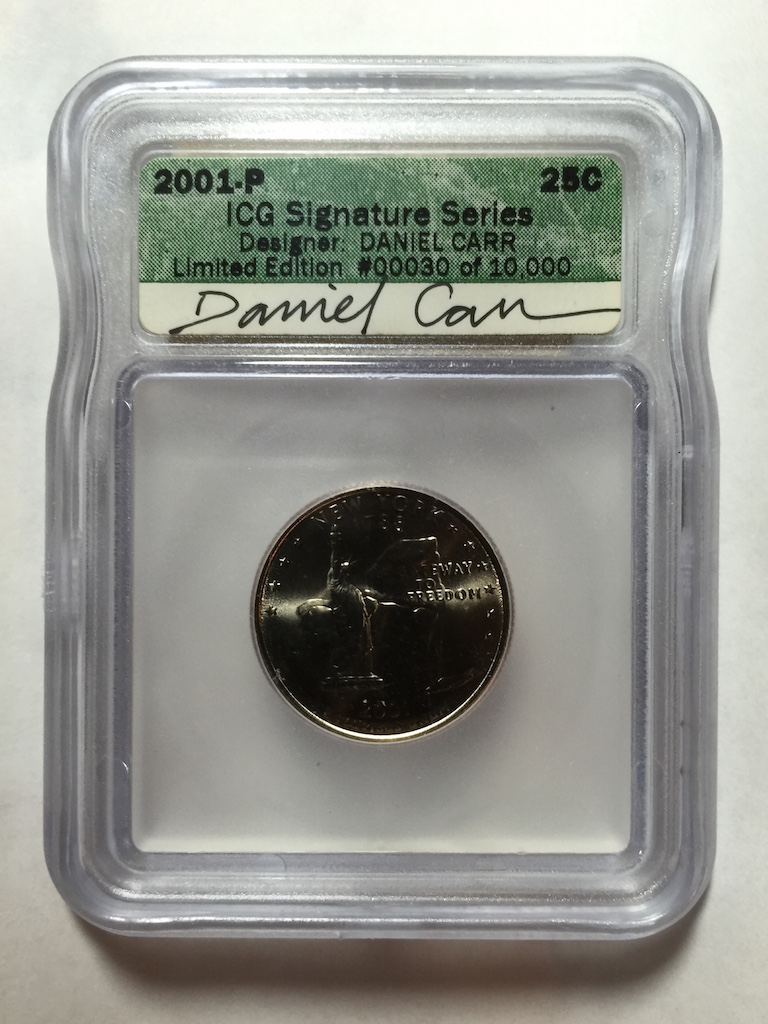
Is this coin worth less because it is is in an ICG holder?
In numismatics as in politics, I agree with Thomas Jefferson when he said, “I hold it that a little rebellion now and then is a good thing, and as necessary in the political world as storms in the physical.” Maybe it is time to stand up and ask PCGS why their population reports are going up in higher grades? We should ask why NGC is concentrating more on gimmick holders than the coin in those holders? And are NGC’s population reports without reproach? I am sure we can find problems with their population reporting. What happened to ANACS? Did Taylor get too cozy with the television shopping networks to justify general feeling that their coins are better priced as raw? And what the heck happened to ICG?
Rather than implicitly trusting these companies, collectors and investors may want to start questioning all of these companies about their practices. Otherwise, you may find that coin you paid MS-70 prices for is really not worth more than an MS-68, which was a better looking, to begin with!

 In January, I reacted to the intent of one of the candidates announced to run for President of the American Numismatic Association. Since then, I learned there will be competition for that position. Last week, it was reported that Don Kagin will run for Vice President and the various numismatic outlets have been reporting on others interested in making a run for the ANA Board of Governors.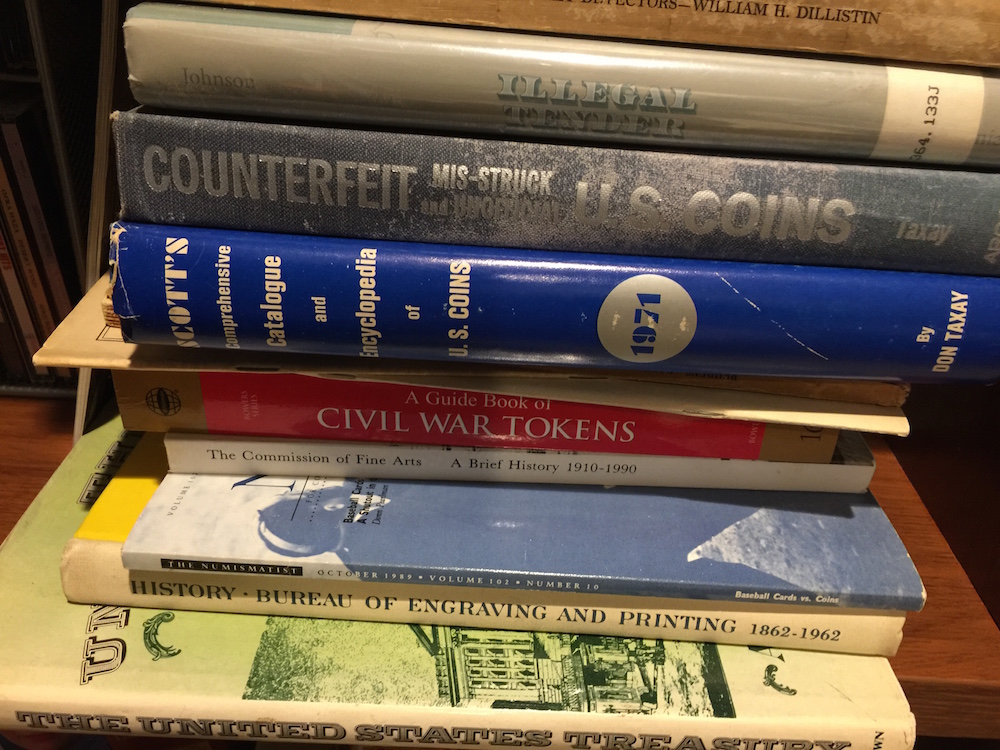


 Loading ...