
Announcing the Coin Collectors Handbook and Guides
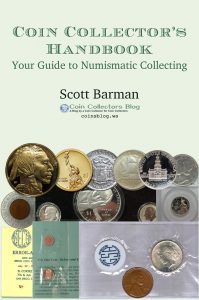 Today I am announcing the Coin Collector’s Handbook release and the Coin Collectors Handbook Series of Guides.
Since writing the first article on the Coin Collectors Blog in October 2005, I shared my collecting experiences and collected knowledge with his worldwide audience. After 15 years, it was time to give back to the hobby by creating a guide book based on my experience.
The Coin Collector’s Handbook is by a collector from the perspective of a collector. The book takes the most popular posts and pages from the blog and republished them in book form for the average collector regardless of what you collect. I want to see people enjoy collecting coins or anything else they like without being told that they must create a specific set.
The Coin Collector’s Handbook can be ordered online at the introductory price of $17.95 with free shipping. That is $2.00 off the list price! Just click here to order your copy.
Coin Collector’s Handbook Guides
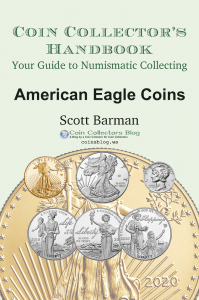 During the recent quarantine, collectors have been using their available time to learn more about their collections. In the last several months, the most popular posts have been about the American Eagle Bullion Program.
Using my previous posts about the American Eagle Bullion Program, posts from the blog are now available in e-book form. The book opens with an essay about the American Eagle Program’s start, followed by chapters that expand on the original posts with coin specifications, design details, and mintage statistics. It includes a glossary of terms used in the book.
Coin Collectors Handbook: American Eagle Coins is available to download as a PDF  from the blog’s new Buy Me A Coffee Shop for $9.00, just three cups of coffee!
Based on what the blog readers are clicking on, there will be more guides to come. Stay tuned!

Announcing My Candidacy for the ANA Board of Governors
 Montgomery County, Maryland—Newly installed Montgomery County Coin Club (MCCC) President Scott Barman announced that he would be running for a seat on the American Numismatic Association (ANA) Board of Governors.
“I would like to bring new ideas to the ANA that will increase its membership beyond the steady 25,000-28,000 of the last decade,” Scott said in his announcement. “Not only does the ANA need to embrace the future, but find ways of keeping young numismatists engaged after they reach 18 years old instead of waiting for them to find their way back after 40.”
Like many young numismatists, Scott’s collecting pursuits waned when he entered college. Although he carried his old blue folders and albums through adulthood, there was never time to engage in the hobby while growing a career and family. Like many, that changed in his 40s after becoming a widower.
Scott believes that if the technology was as available as it is today, he could have integrated collecting into his young adult activities into his life and continued with his collecting interests.
“Technology has changed a lot since I wrote my first program on punch cards,” Scott noted. “We use technology for everything from our work to talking with our neighbors. Schools teach classes online. Seminars are held online. Virtual organizations meet online. The ANA should embrace technology to keep those between 18 and 40 engaged.”
In keeping up with the technology industry, Scott knows that social media and computer-based learning are part of the fabric of life for those under 40. There is a lot that can be done with modest investments to keep young numismatists engaged as they advance to adulthood and help others interested to engage.
“A number of reports said that more than 3 million people were collecting State Quarters since the program started in 1999,” Scott said. “Why hasn’t that interest translated into more ANA members?”
Aside from making the services and resources of the ANA more available to its members, Scott is worried that the Association does not feel more accessible to the average collector. While the support from the commercial community is important, the ANA would benefit by engaging more collectors.
Building a service platform that the ANA can deliver its content to a wider audience will go a long way to engage current and new collectors. This will help make the ANA a leader in educating the public and possibly a model for similar organizations to emulate.
Another area that has to be addressed is the stability of the ANA Headquarters. For the second time, a dismissed executive director has chosen to pursue a claim against the ANA in court. This gives the appearance of a dysfunctional situation in Colorado Springs. Scott believes that the professionals working for the ANA are competent and qualified, but the Board of Governors must look into what it will take to create an atmosphere to support them and prevent the problems of the past.
“With support for the professionals in Colorado Springs and expanding the use of technology to engage more collectors, the future of the ANA will be very bright,” Scott added.
When Scott returned to collecting in 2002, he joined the Montgomery County Coin Club. Finding a club with an active membership, Scott embraced the challenge to become more active and looked to make an immediate impact. Shortly after joining, Scott became Webmaster of the MCCC website (montgomerycoinclub.org) and began to contribute to meetings with presentations. Eventually, Scott was elected to the MCCC Board of Directors before being first elected club president in 2008.
Scott served two terms as MCCC president including 2009, the club’s 50th anniversary. Club rules prohibited seeking a third consecutive term, so he became a board member and then vice president. Scott was elected president for 2013 and will continue to serve the club as its president and Webmaster.
After becoming hooked on numismatics again, Scott joined the ANA in 2003 and read everything he could find about his collecting interests. This has lead to Scott joining the American Israel Numismatic Association while collecting Israel currency and exploring his Jewish heritage, and the Royal Canadian Numismatic Association to learn more about Canadian coinage since his second wife’s family is from Canada.
Following his time as a club representative to the Maryland State Numismatic Association (MSNA), Scott became a member and the organization’s webmaster (mdstatenumisassn.org), board member, then was elected vice president for 2012. MSNA Vice President Scott Barman is serving his second term in 2013.
In 2005, Scott started the Coin Collectors Blog (coinsblog.ws) that he continues to write today. The Coin Collectors Blog is where Scott has spoken directly to other collectors writing about news, history, instructions, opinions, and whatever else has come to mind. This has lead to articles that have appeared in on-line and printed numismatic publications.
For the last year, Scott has worked with the ad-hoc ANA Technology Committee providing assistance to the ANA Board of Governors to repair and grow the ANA’s technology platforms. His work will continue with this committee and support it being made a permanent advisory committee to the ANA Board of Governors.
Recently, Scott has been working with the Gold & Silver Political Action Committee as political coordinator keeping the membership informed of the numismatic and precious metal news in his locale, Washington, DC.
When not involved in numismatics, Scott is an information security and systems architecture analyst for a not-for-profit corporation that works with the Federal Government. His job is to help the government build systems to serve the public and protect personal information. Scott holds a Bachelor of Science with a major in Computer Science from the University of Georgia and a Master of Information Systems Management with a concentration in information security and public policy management from Carnegie Mellon University.
Scott is currently finishing a book about collecting titled Enjoying Numismatics, A Conversation in Collecting. This will be published as an electronic book to reach the same audience he wants to interest in becoming ANA members.
Scott’s next project is tentatively titled The Policy and Politics of Money Manufacturing in the United States. The plan is to use his interest in public policy and numismatics and study what is behind the minting and printing of money in the United States. It will also help answer the perpetual question, “Why did the Mint do that?”
Scott’s collecting passion includes the coins of the 20th Century, numismatics representing his hometown of New York City and Inwood, Long Island; Maryland Colonial Currency; and Israel banknotes. He is also a fan of Philatelic Numismatic Covers also called coin covers with interesting themes.
Scott is passionate about collecting and the organizations that support the collector and dealer communities. He would like to use his unique background to bring a new perspective to the Board of Governors and to ensure the ANA’s future.
For more information, please contact Scott Barman at scott@vote4scott.info.
To read more about my platform, visit my campaign website at vote4scott.info.
POLL: Fund the Government Using Commemorative Coins?
Last year, I wrote an article suggesting that congress could authorize the U.S. Mint to issue commemorative coins to raise money to fix our national monuments that were damaged by an earthquake. After all, commemorative coins have been used to raise money for various other efforts, why not help the National Park Service and their fundraising efforts.
What about expanding that program to fund other areas of the government? Congress can authorize the commemorative program, the project that will be funded, and whatever money is raised from the sale of the coins will be used for that program. No taxpayer money, just funds from the sales and donations. It has the advantage of not costing the government money and involves citizens in the direct funding of their favorite projects.
What do you think? Let me know in this week’s poll!
Should congress use commemorative coins to pay for federal projects?
Total Voters: 26
 Loading ...
44, 57, & 43
Today was the ceremonial inauguration of Barack Obama for his second term as the 44th President of the United States. This is the 57th presidential inauguration in United States history. Obama is the 43rd person to hold the office of the presidency (Grover Cleveland served two non-consecutive terms).
The inauguration was held the day after the constitutionally mandated January 20th date because for the seventh time in history, the mandated date fell on a Sunday. Obama was inaugurated for his second term during a private ceremony held in the Blue Room of the White House.
Although the only part of the inauguration required by the constittution is the oath of office, all of the 57 presidential inaugurals have been as unique as the presidents and the times they served.
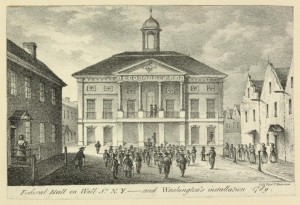
Federal Hall on Wall St. N.Y. and Washington’s installation 1789 / lith. Risso & Browne.
Thomas Jefferson was the first president to be inaugurated in Washington, DC on March 4, 1801. Six presidents were not inaugurated in Washington, DC including Washington and John Adams. The last was Lyndon B. Johnson whose first inauguration was on in Dallas on Air Force One following the assassination of John F. Kennedy. Johnson was the first and so far only president to be sworn in by a woman, U.S. District Judge Sarah T. Hughes.
Presidential fashion was changed on March 4, 1825 when John Quincy Adams was the first to wear long pants rather than knickers.
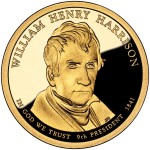
2009 William Henry Harrison Proof Obverse
Speaking of ascension to the presidency by the Vice President, this has happened nine times. Aside from Tyler being the first, the last and most significant was probably Gerald R. Ford, who was appointed Vice President under the provisions of the provisions of the 25th Amendment to the U.S. Constitution. This made Ford the only president not to be elected to national office.
Although the U.S. Constitution requires the president to be born in the United States, New York-born Millard Fillmore was the first president not to be born a British subject. Although Tyler was the governor of Tennessee, the first state that was not an original colony, Tyler was born in North Carolina which was an original colony. Kentucky-born Abraham Lincoln was the first president not born in one of the original 13 colonies. Obama was the first president to be born in Hawaii and the first not to be born in the continental United States.
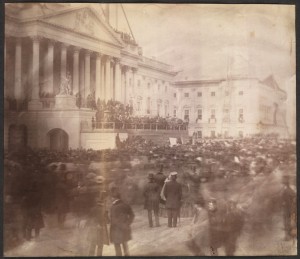
Photograph of the Inauguration of James Buchanan, March 4, 1857 by John Wood
Washington, DC is not known to have the best weather. Even the moving of the inauguration from March 4 to January 20 by the 20th Amendment (effective with Franklin D. Roosevelt’s second inaugural) has not done much to change this. Rain plagued ten inaugurations. It snowed for seven inaugurations. Even though the warmest was 55-degrees for Ronald Reagan’s first inaugural on January 20, 1981, he experienced the coldest inauguration for his second go around on January 21, 1985 when the mercury was 7-degrees.
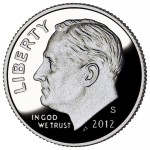 While Franklin D. Roosevelt was the only president to be inaugurated for four terms, Obama tied Roosevelt’s record for being the only presidents to receive the oath of office four times. Obama was given the oath of office a second time on January 20, 2009 after Chief Justice John G. Roberts, Jr. did not exactly get the words right the first time. This year, Roberts delivered the oath on January 20, 2013 as required by the constitution and then delivered it again on January 21 in a public ceremony.
Finally, following the tradition of all presidents, the 2013 Presidential Inaugural Committee commissioned an official inaugural medal that was struck in bronze, silver, and gold. Struck by the Medalcraft Mint of Green Bay, Wisconsin. Medals are available in bronze, silver, and gold. If you sign up for their mailing list, you will receive a code for discounts that can be applied to purchases. The last code I received was “2013” to take 15-percent off your order, but that could change as time passes.
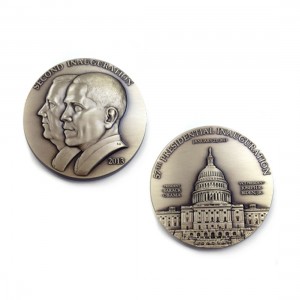
Barack Obama Second Term Bronze Inaugural Medal
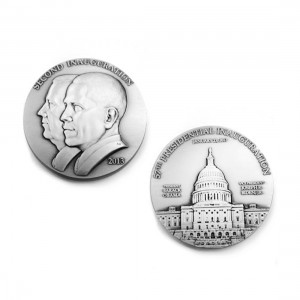
Barack Obama Second Term Silver Inaugural Medal
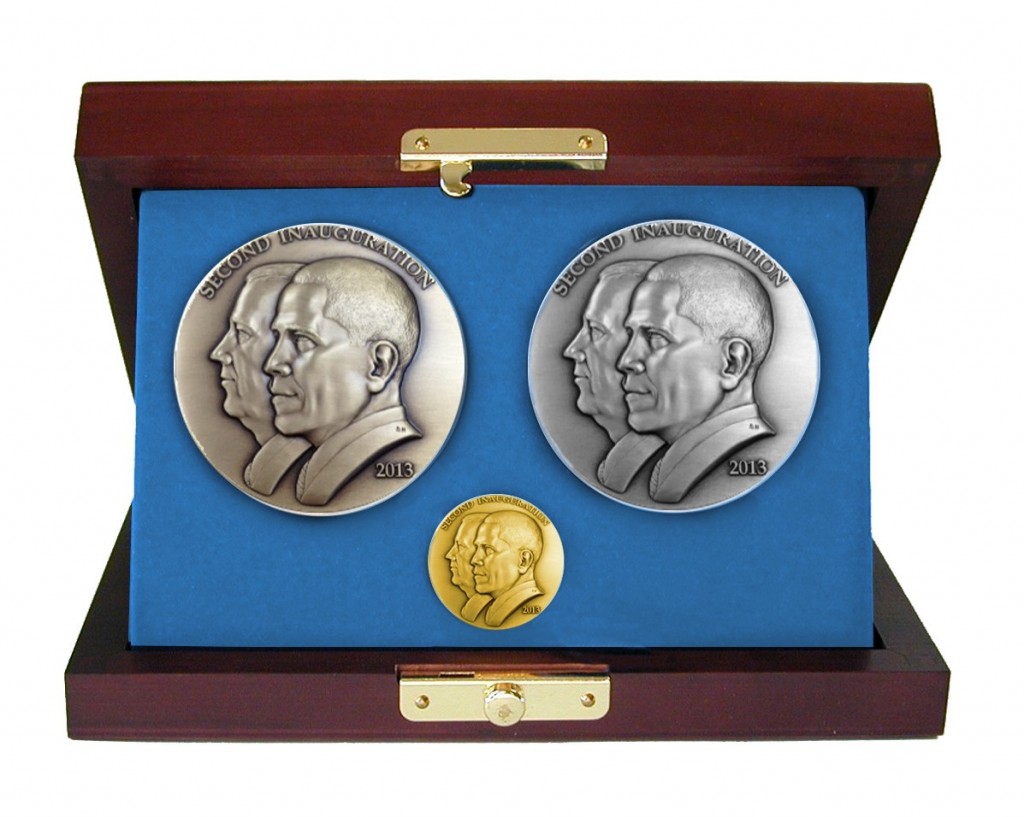
Barack Obama Second Term Inaugural Medal Set (L to R: bonze, gold, silver)
- Inaugural Medal images courtesy of Presidential Inaugural Committee 2013.
- Washington Inauguration at Federal Hall image courtesy of the New York Public Library.
- Coin images courtesy of the U.S. Mint.
- Photograph of James Buchanan Inauguration courtesy of Wikimedia Commons.
You Should Attend a Local Coin Show
Although I am a proponent of the virtual world and want to see numismatics expand virtually, there is something to be said about going to a local coin show. You know the type, one that is held in a large meeting room at a local hotel where 40-50 tables are setup attended by local dealers and people in the area. Sometimes, it could be more interesting than a larger show.
Earlier today, I had the pleasure of going to the Baltimore Area Numismatic Coalition (BANC) Show at a hotel in Timonium, Maryland. BANC is coalition of the Baltimore Coin Club, Catonsville Coin Club, and the Maryland Token & Medal Society who works together to put on a local quarterly show to bring together people in the Baltimore area and numismatists that may be visiting.
My visit to the BANC Show came about because the Maryland State Numismatic Association (MSNA) held a Board of Directors meeting after the show closed. Since I am Vice President of MSNA, I drove from the metro Washington region to northwest Baltimore a little early to do a little early shopping before the meeting.
Smaller shows do not attract the type of crowd that you will see in a larger venue, like a convention center. Fewer people go to these local shows making it a more relaxed atmosphere. You also see many of the local dealers, the men and (some) women who you want to get to know better because these are the people who can really help you put together your collection. And since the crowds are more relaxed, there is time to talk with those dealers and even catch up with pther collectors you may know.
Another advantage of being at a local show is to be able to talk with people who just come to the show because they have an interest. At this show, I was introduced to a woman who initially had a question about purchasing coins directly from the U.S. Mint at their facilities in the District of Columbia. What then happened is that you get an enthusiastic collector (me) and someone who wants to talk about collecting together and it turned into a wonderful conversation.
While I forgot to ask her name, I did give her the address to this blog. If you are the woman I spoke with, I hope you enjoyed our conversation as much as I did and hope it inspired you to expand your collecting pursuits. Also, we spoke about my write up about negotiating for coins. It was part of my two-part series “How Are Coins Priced.” You can read Part I first then Part II where the section on negotiating is included.
How can I go to a coin show without buying something?! Today, I kept with my New York collectibles and found a Bureau of Engraving and Printing folder with a Series 2003 $2 Single Star Note from the Federal Reserve Bank of New York. For those not familiar with the concept of Star Notes, the best short description is from the Bureau of Engraving and Printing:
The other purchase was an 1830 Matron Head large cent that looks like it was dipped a long time ago and has re-toned. Although I prefer original surfaces, it is a good looking coin for its age and condition. Since I am passively working on a large cent year set (no varieties), it will fill a hole in that book. Too bad the dealer did not have other large cents to fill the holes since the price was right. But other coins were either too vigorously cleaned or had some corrosion.
-
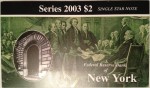
- Folder for the Series 2003 $2 Single Star Note from the Federal Reserve Bank of New York
-
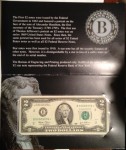
- Series 2003 $2 Star Note from the Federal Reserve Bank of New York. Rosario Marin/John Snow signatures.
-
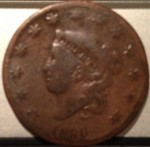
- 1830 Matron Head Large Cent
-
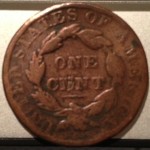
- 1830 Matron Head Large Cent reverse
If you want to find a local show, you can find one at the calendar at NumisMaster.com or the Events page at CoinWorld.com. Go forth and enjoy a local show!
Let the Legislative Looney Toons Begin
Anyone that holds congress in contempt for the dysfunction that plagues the government should love the first two coin-related bills that have been introduced to congress.
The first pitch of political piffle is H.R. 77, the Free Competition in Currency Act of 2013. This folly was introduced by Rep. Paul Broun (R-GA) that takes up where the now retired Ron Paul has left off by introducing a bill “To repeal the legal tender laws, to prohibit taxation on certain coins and bullion, and to repeal superfluous sections related to coinage.” It marks the fourth congressional session that this bill has been introduced and it is likely to meet the same fate as its predecessors.
Although I took this seriously in the past, it appears that Broun did not get the memo that the government needs people to govern and not pontificate. Then again, it is difficult to find anyone of the 535 members of congress who really wants to govern on either side of the aisle, so I expect more of this hooey from this congress. It is unfortunate that he and I share the same undergraduate alma mater.
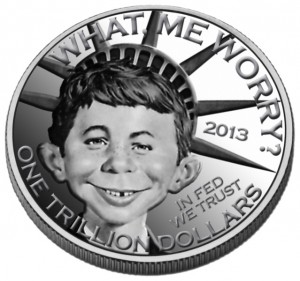
Dallas-based Heritage Auctions, the world’s largest collectibles auctioneer, is asking the public to suggest names, and has even created a proposed design for the coin. Information about naming the coin now is on Heritage’s Facebook pages.
I love that phrase, “and for other purposes.” Adding it allows congress to add their favorite brand of pork onto any bill.
The problem is that H.R. 77 might make sense if it was not introduced in reaction to the rumored $1 Trillion platinum coin. Aside from the platinum coin idea being a nonsense proposal, the idea did not even come from the administration. The best I can find, it was some blogger’s delusion that problems can be solved without the understanding of basic accounting—essentially, balancing the books when you create money. It is amongst the reasons why the nation is in such debt.
Besides, there does not seem to be anyone around who could afford such a coin. It would make a heck of a collectible!
At another time and in a different context, it might be worth discussing the merits of H.R. 77, which would limit the face value of any coin produced by the U.S. Mint to $200. But for now, both the Department of the Treasury and the Federal Reserve said that it is not going to happen and that neither “… believes that the law can or should be used to facilitate the production of platinum coins for the purpose of avoiding an increase in the debt limit.”
Unfortunately, I have a feeling that the Treasury’s statement will not end the discussion.
Maybe we can change the subject to replacing the paper dollar with a coin!
The Alfred E. Neuman-head Trillion Dollar coin mockup courtesy of Heritage Auctions. And if you think that’s funny, it seems that the mad folks at Mad magazine thought if it first!
Support the Coin Collectors Blog
 Buy me a coffee
Thank you for your support!
Let Me Know What You Think
Are you going to the World's Fair of Money
Total Voters: 17
Loading ...