
Weekly World Numismatic News for June 28, 2020
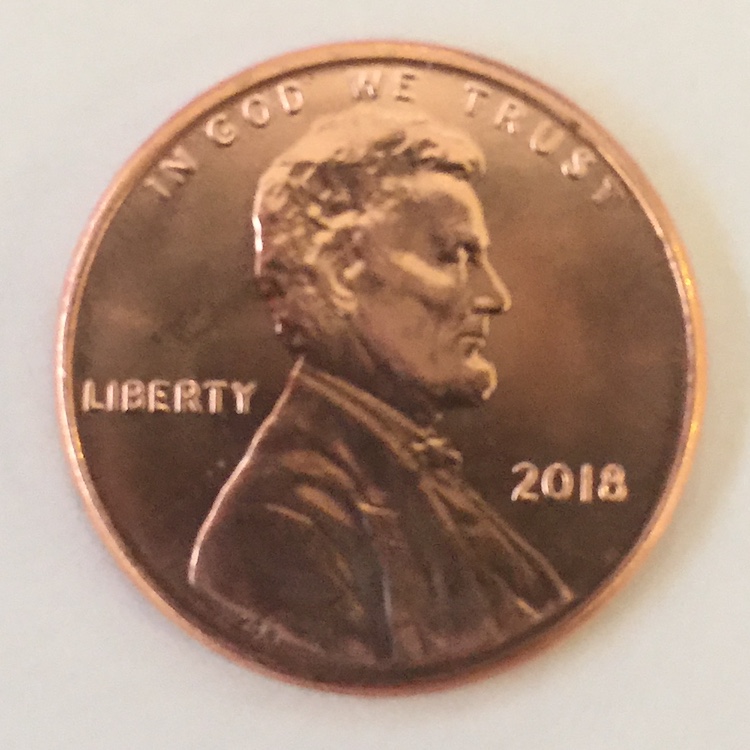 Somewhere along the line, logic and reality have not reconciled the meme that cash is dead because everyone uses credit cards. Although there has been an increase in credit card usage because of the COVID-19 pandemic and quarantine orders, banks and retail outlets have been reporting a shortage of cash.
For the most part, the U.S. Mint coin manufacturing processes have been fully operational during the pandemic except closing West Point briefly. The coin factory is mostly automated and does not require many workers. The U.S. Mint reports that the offices that include in the engravers are working from home, but the manufacturing continues.
But reports from the St. Louis Federal Reserve noted that even with the reduction in foot traffic, the rate of people paying with cash remained steady. The San Francisco Federal Reserve noted that the rise in credit card use coincides with the increase in online shopping.
The U.S. Mint is not the cause of supply chain problems. The problems are within the Federal Reserve and how they operate their coin storage. When Federal Reserve Chairman Jerome Powell discussed the coin shortage, he also said that the problems magnified when the quarantine impacted the logistics companies that move the coins from place to place.
Like many things, congress took the wrong message from Powell and prompted what may be a necessary action but for the wrong reasons. Sens. Mike Enzi (R-WY), and Maggie Hassan (D-NH) introduced the Coin Metal Modification Authorization and Cost Savings Act (S. 4006) to allow the U.S. Mint to change the metal used in your change.
While the senators are patting themselves on the back for looking like they are doing something, changing coning metals will not help. Although the U.S. Mint has studied alternative metals, several steps will take many years to complete. Canada and the United Kingdom have to change coins and coining metals in recent years. Both countries made the transition in four years and continued to have problems.
Another lesson learned is that to help Canada and the U.K. to make the transition, their respective central banks demonetized the old coins. The United States does not demonetize its coinage. Even with significant media coverage, the Bank of England reports over £1 million of demonetized coins in the public’s hands.
When the United States transitioned from silver to base metals, a six-year transition did not go as planned. We learned later that the U.S. Mint continued to produce silver coins in 1965 and 1966 with 1964 dates to ease market pressures.
Changes to coining metals may be necessary. Over the last ten years, the U.S. Mint has seen seignorage reduced as the price of copper and nickel rise. But to tie the change in metals to the pandemic is a very congressional thing to do.
And now the news…
 June 22, 2020
 → Read more at valuewalk.com
June 24, 2020 → Read more at thehustle.co
June 26, 2020 → Read more at finance.yahoo.com
June 26, 2020 → Read more at highlandcountypress.com
June 26, 2020 → Read more at grocerydive.com
→ Read more at valuewalk.com
June 24, 2020 → Read more at thehustle.co
June 26, 2020 → Read more at finance.yahoo.com
June 26, 2020 → Read more at highlandcountypress.com
June 26, 2020 → Read more at grocerydive.com
Did You Know The ANA Board Had a Meeting?
On Friday, January 6, 2012, the American Numismatic Association Board of Governors held an open meeting at the annual Florida United Numismatists Show in Orlando, Florida. Although it was reported that it was a “dull” meeting, I was disappointed to find out about the meeting on Monday from the press. No other communication options were offered.
This is not making the organization open to its members.
During a Board of Governors meeting in November, an ANA staff member posted highlights to the ANA Twitter and Facebook accounts—and only if you happen to be paying attention at the time. After the meeting I wrote, “Someday the ANA will have a better information management and communications policies so that this information is more accessible to the membership in ways other than relying on Twitter.”
This time, the ANA did not even use Twitter or Facebook.
For an organization whose membership has remained relatively stagnant for the last 20 years, the ANA must find ways to involve membership, especially those under 40 who should be mentored to carry on the association’s long term visions.
Every time I discuss the issue of communications and leveraging social media, I am told that the nuances of social media has to be explained to one or more board members. With all due respect to the members of the Board of Governors, social media is the future of communications and this is how you are going to reach potential members under 40.
I know that Governor Greg Lyon is leading an effort from the Board to look at how technology can help the ANA. But that committee will require a little time to start looking into the issues and suggest policy. That does not mean the Board of Governors could not set interim policies. The new policy can be something as simple as requiring that ANA communications use social media to announce meetings and perform live updates during those meetings.
At least make an attempt to reach out using social media. You might find interest not only with current members but find potential new members in the process.
Using A Commem to Fix National Monuments
Commemorative coin programs are known to be able raise a lot of money for many organizations. This past year, congress authorized commemorative coins to support the Congressional Medal of Honor Foundation and the construction of the National Museum of the United States Army at Fort Belvoir. These and other organizations have greatly benefitted from collectors and other interested people buying commemoratives.
With that in mind, Dave Harper of Numismatic News has suggested that commemorative be issued to repair the Washington Monument that was damaged during the earthquake in the Washington, DC area on August 23, 2011.
Dave reports that $7.5 million was appropriated to the National Parks Service with hopes that it could be equally matched with private donations.
In 1986, the Statue of Liberty commemorative raised $81 million for the repairs needed before her 100th birthday. Why not do the same for the Washington Monument?
Harper suggests that the Washington Monument may not generate as much interest as the Statue of Liberty. That may be so, but why limit the the program to just the Washington Monument? How about a The National Monument Commemorative Coin Act of 2012?
The National Monument Commemorative Coin Act of 2012 will honor all of the United States’s national monuments, the U.S. Mint would issue one silver dollar commemorating all national monuments and five half-dollars commemorating various national monuments. The silver dollar could use the logo of the National Park Service that manages 76 of the 101 registered national monuments. As for the half-dollars, the suggested national monuments could include the Washington Monument, Mount Rushmore, the boyhood home of George Washington Carver, the Great Sequoia in Sequoia National Park, and the Navajo Monument on the Shonto plateau
Proceeds from the surcharges collected by the sales of these coins would be placed in a trust fund managed by the Department of the Interior that could only be used for the maintenance of all national monuments, including the Washington Monument.
If you think this is a good idea, please let your member of congress know. You can find your representative at the House website by entering your zip code +4 in the box on the upper right of the page. Use any of the information mentioned above to tell them how good of an idea this is.
Help the Ancient Coin Hobby TODAY
Start your new year off right and help the ancient coin collectors in the United States!
On December 17, I posted “First They Came For The Ancient Coins…” about the State Department accepting public comment on the extension of the Memoranda of Understanding with Cyprus by the State Department’s Cultural Property Advisory Committee (CPAC). The deadline for submitting comments is on January 3, 2012—TOMORROW!
Recently, the American Numismatic Association joined the cause. “We are deeply concerned that ever-expanding import restrictions have gravely damaged the ability of American citizens to learn about ancient cultures through handling common ancient coinage of the sort that is avidly collected worldwide,” ANA President Tom Hallenbeck said. “Such regulations, to the extent they exist at all, should be narrowly tailored to restrict goods that could only be the product of looting from archaeological sites. Coins cannot meet this test. By their nature, ancient coins have circulated far from their place of origin, have been extensively collected throughout the world in modern centuries, and like common mass-produced items, ancient coins do not normally have any verifiable provenance.”
To submit comments three pages in length or less electronically, go here: http://www.regulations.gov/#!submitComment;D=DOS-2011-0135-0002.
For more information and ideas of what to say, please reread my earlier post.
Allowing the State Department to entertain these types of actions should be abhorrent to any collector because if it begins with the ancient coins, then where does it stop? To borrow the concept from Pastor Martin Niemöller’s “First they came…”:
and I didn’t speak out because I wasn’t a ancient coin collector.
Then they came for all foreign coins,
and I didn’t speak out because I wasn’t a foreign coin collector.
Then they came for the obsolete currency,
and I didn’t speak out because I wasn’t a obsolete currency collector.
Then they came for the pattern coins,
and I didn’t speak out because I wasn’t a pattern coin collector.
Then they came for my silver and gold United State coins,
and there was no one left to speak out for me.
Make it your resolution to help maintain the hobby for all of us!
2012
As we begin a new year, we should look forward to better times for our hobby, our nation, and our world. I wish you and yours a Happy and Healthy 2012 and hope that you find the key coin of your dreams!
Why Do You Collect
Why do you collect? Around here we collect coins, currency, exonumia, and other forms of numismatics. In addition to coins, I collect post cards with subjects that are meaningful to me—such as the little village on Long Island where I first grew up. I also collect lapel pins that I have either picked up over the years or have some other meaning to me. For me, my collection has a meaning to me, including the set to New York City Subway tokens.
Those of us who are collectors knows that along with the thrill of the chase, there are times when we can take it too far. When does it become too much?
The New York Times opinion section, Room for Debate, asked seven experts in various areas of collecting to try to answer these questions. One of the experts that were invited to write a short item for the December 30th discussion, “Why We Collect Stuff” is your favorite blog host.
Besides, if you are curious as to what I look like, there is a current picture (a head shot taken last Sunday) associated with the article.
All of the articles are well written and add value to the discussion about collecting and hoarding. I invite my readers to read the discussion. You can either comment on The New York Times website or you can return here—or both!
Support the Coin Collectors Blog
 Buy me a coffee
Thank you for your support!
Let Me Know What You Think
Are you going to the World's Fair of Money
Total Voters: 17
 Loading ...