
WFM Planning Continues but will the ANA?
 Earlier today, the American Numismatic Association published a press release announcing that planning is continuing for the World’s Fair of Money this August in Pittsburgh.
Whatever happens, will depend on the state of the pandemic and the restrictions set by Pennsylvania and Pittsburgh. It will also depend on how the David L. Lawrence Convention Center can help stage the show to keep all participants safe.
I have confidence that the ANA staff will do the best job they can so that the show can go on.
The leadership is challenging my confidence in the ANA.
It has been more than two months since the ANA Headquarters had to close because of the pandemic, but we have not heard from the ANA president.
On April 8, 2020, the ANA canceled Summer Seminar, but we have not heard from the ANA president.
On April 10, 2020, I explained that the ANA did not have online education because the ANA president killed the process.
On April 16, 2020, I provided several ideas as to how the ANA could provide stop-gap processes to expand online education in the short term.
But we have not heard from the ANA president.
As the country begins to reopen, the ANA has missed a golden opportunity to put itself online to attract an audience. Using a professional staff who could probably use a break from the mundane, the ANA could have created great content to attract people surfing the web looking for something different.
The ANA has many brilliant members with knowledge they can share with the public under the ANA’s banner. Others can generate content for the more serious collectors.
Since the ANA staff is already on the payroll, the costs would be whatever cost production and communications. All it would take is a commitment from the ANA to do this.
Where was the ANA’s commitment?
Where was the Board of Governors to push this?
Where was ANA President Steve Ellsworth?
American Silver Eagle 25th Anniversary Set Coming
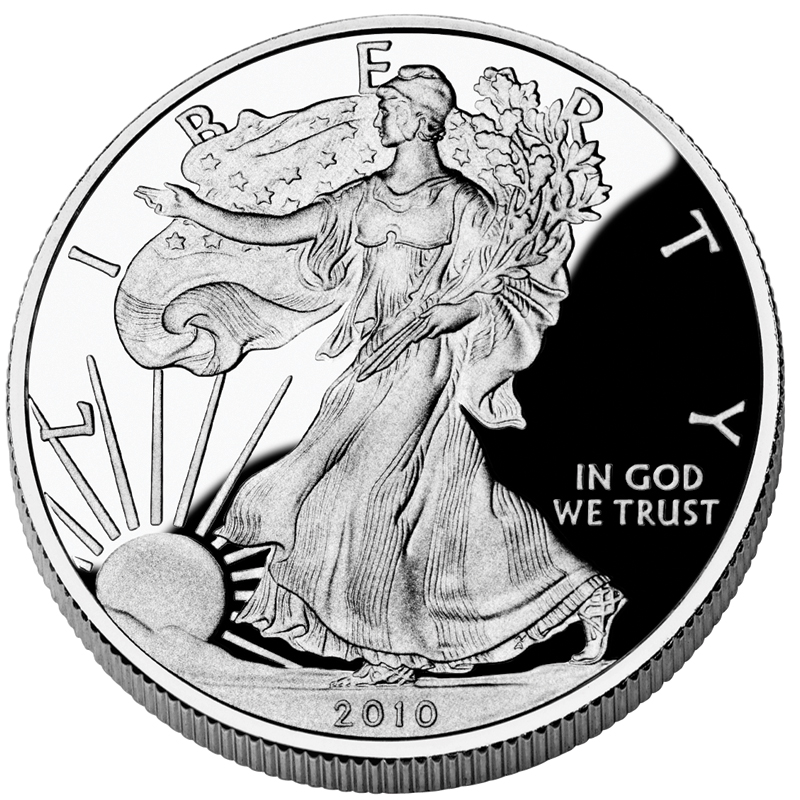 The U.S. Mint announced that they will issue a limited-edition five coin silver set to commemorate the 25th anniversary of the American Eagle program.
The United States Mint American Eagle 25th Anniversary Silver Coin Set will include five one-ounce American Eagle Silver Coins:
- one proof coin from the United States Mint at West Point
- one uncirculated coin from the United States Mint at West Point
- one uncirculated coin from the United States Mint at San Francisco
- one reverse proof coin from the United States Mint at Philadelphia
- one bullion coin
All five coins will be mounted in one custom-designed, highly polished, lacquered hardwood presentation case accompanied by a Certificate of Authenticity.
The U.S. Mint plans to produce 100,000 of these set with a limit of 5 sets per household. They anticipates accepting orders in late October. Price has not been set.
The reverse proof American Silver Eagle appeared in the 20th anniversary set in 2006. It is am impressive looking coin of the Adolph A. Weinman’s Walking Liberty design. I will definitely be working the phones and online to order sets of these coins.
Image courtesy of the U.S. Mint.
CCAC Looking For Two New Members
On Thursday, the U.S. Mint posted an announcement looking for applicants for two people to be appointed to the Citizens Coinage Advisory Committee (CCAC). The CCAC is one of the advisory committees that reviews designs for coins and medals produced by the U.S. Mint (the other is the U.S. Commission of Fine Arts).
One of the open positions is for someone who is qualified in numismatic curation. This person would be someone who has been trained for or is working in an environment where they select, organize, and maintain a collection or exhibit. Most curators work for a library in their special collections department or a museum. There are some curators who work with private collections and foundations.
The other open position will represent the interest of the general public. In recent history, the person filling this position has been a coin collector but the person who is appointed to this position does not have to be a collector. An interest in coin design would be a great asset.
CCAC members serve four year terms and are considered Special Government Employees. CCAC members are not paid but can have travel expenses reimbursed at standard schedule rates. As a government employee, CCAC members are subject to conflict of interest laws and ethics regulations.
Individuals wanting to be considered for appointment as the CCAC member who is specifically qualified in numismatic curation or as a member representing the interests of the general public, should submit a letter, along with a resume or curriculum vitae, detailing specific educational credentials, skills, talents and experience. Applicants must specify the position for which they would like to be considered. Applications should be submitted by fax to 202-756-6830, or by mail to the United States Mint, 801 9th St., N.W., Washington, DC 20001, Attn: Andrew Fishburn. Submissions must be postmarked no later than September 15, 2011.
Good luck to any applicant!
Be Patriotic: Eliminate the Paper Dollar
When congress comes back to Washington to (hopefully) represent their constituency to carry out the nation’s legislative interests, a twelve-member bipartisan commission (a “super congress” as the press is calling them) must find a way to deal with the government’s debt and deficit by Thanksgiving or the law requires an additional $1.5 trillion in cuts, mostly to defense.
Followers of the debate have found that there are fundamental differences between both sides of the aisle as to how to manage the affairs of government. Rather than look for common ground and try to negotiate about the differences, their actions are reminiscent of a smoker who quits their habit but uses food to make up for the cigarettes trading one condition (cancer risk) for another (obesity). In an attempt to get them started, I have a proposal:
According to the most recent report from the Government Accountability Office, the independent, nonpartisan legislative branch agency that investigates how the federal government spends taxpayer dollar, the government could realize a savings of $5.5 billion dollars over 30 years by eliminating the paper dollar for coins.
By eliminating the one-dollar Federal Reserve Note, congress can begin show that they are willing make “difficult decisions” to help the economy while not stepping on either side’s political hot buttons. Also, if congress votes to eliminate the paper dollar, the approximately $1.1 billion of dollar coins sitting the Federal Reserve’s coin vaults will start to circulate in the economy. This is $1.1 billion dollars of money not doing anything but sitting. It would be a $1.1 billion stimulus to the economy that will not add any money to the deficit because the coins are already paid for.
If you add the $1.1 billion of existing money to a $5.5 billion in long term savings, that is a total of $6.6 billion of economic immediate economic stimulus that does not cost the government anything. Further, once the $1.1 billion is circulated in the economy, the money spent will generate additional revenues from the taxes collected by the economic activity, something both parties said they want to encourage.
But this is such a small amount compared to the total debt, why do it?
Using the correct form of the Lao-tzu quote: “The journey of a thousand miles begins beneath one’s feet.” Lao-tzu believed action naturally arises from stillness. This country has been still on its money production policies, it is a natural move to eliminate the one-dollar note. Or to use the more colloquial version: “A journey of a thousand miles begins with a single step.”
Borrowing an anonymous response to a previous post:
It looks like saying that countries like Australia, Canada, France, Japan, the Netherlands, New Zealand, Russia, and the United Kingdom eliminated their unit currency in favor of coins is not a good argument for some. Or that the European Union started this century with producing only a coin for the 1-Euro denomination will not work either. How about this:
Is it patriotic to continue to waste money? Or is it our patriotic duty to do what is in the best interest of the country even it means making a few minor sacrifices for the common good? True patriots will make the adjustments and do what is right by the country!
Sacrificing for your country is the patriotic thing to do!
Congress Fires a Fastball
Every week I check the progress of coin bills in winding its way through congress. As there are new bills or updates, I make sure the Coin Bills in the 112th Congress page is updated. Having not done so since congress went on their summer vacation, I decided to see if there was anyto change prior to their leaving Washington.
As opposed to previous congresses, the 112th congress has been pretty dull when it comes to coin legislation. Not only have fewer bills been introduced, but the bills that have been introduced have been sitting in committee going nowhere. That is until now.
According to the record, the National Baseball Hall of Fame Commemorative Coin Act (H.R. 2527) was voted out of the House Financial Services Committee by voice vote on July 20 and ordered to be reported to the House Floor for consideration. Although the bill was also referred to the House Budget Committee, House rules allow Speaker of the House John Boehner to schedule it for debate and vote on the House floor without consent of the Budget Committee.
Of all the coin-related bills introduced in the 112th congress, this is the only one that has had any action following introduction.
Other than directing the U.S. Mint to strike $5 gold coins, silver dollars, and clad half-dollars in recognition of the National Baseball Hall of Fame during 2015, H.R. 2527 requires the coin to be concave/convex to depict a baseball on the reverse and have a competition for the obverse. Read my prior post, “A Commem to Take Out to the Ball Game” for more on this bill.
Given the toxic nature of how both sides of the aisle has done business, it is good to see at least one committee can come together for at least one bill!
A Manageable Lincoln Cent Collection [UPDATED]
After writing Collecting a Herd of Buffaloes, a reader and I have been discussing creating another type collection that would best represent the Lincoln Cent. The thought was that since the Lincoln Cent is over 100 years old with so many key (1909-S VDB, 1914-D, and 1931-S) and semi-key dates (1910-1915 S mint coins, 1924-D, and 1926-S) with some very interesting errors and varieties (1955 DDO, 1922 No/Weak D, and various small and large dates), that collecting the series may be too challenging for someone just starting collecting.
How does someone represent a series that spans over 100 years? First, looking at the basic type-set there are a lot of holes in the series. For example, after collecting the Type 1 Lincoln Cent (VDB on the reverse), the wheat-back design continues until 1958 with the only “change” being the zinc-coated steel cents struck in 1943. Aside from being uninteresting, it did not represent the history that the Lincoln Cent has seen through its first 50 years.
 If we look at 20th century history, there seems to be a pattern of history being recorded every decade, or so. It is not a perfect cycle, but close enough to look at putting together a series by decade accounting for history, type changes, another of other factors to make the collection interesting. The first coin of this set is the 1909 VDB. With more than 27 million coins struck in Philadelphia, it is possible to get a fair price on a nice uncirculated red example. Since the Lincoln Cent was first struck in Philadelphia, it is appropriate to start a collection with the first coin produced for the series.
There was a lot of history in the 1910s. For collectors, much of the coins of the first half of the decade are expansive to find in higher grades. The only year that is affordable in higher grades is 1919. In 1919, the Treaty of Versailles officially ended the “War to End All Wars” (World War I) and the economy in the United States was still producing goods not only to rebuild the military but to sell to war-torn Europe. The high demand for cents made 1919 the year with the highest production making it more likely to find good examples in high grades.
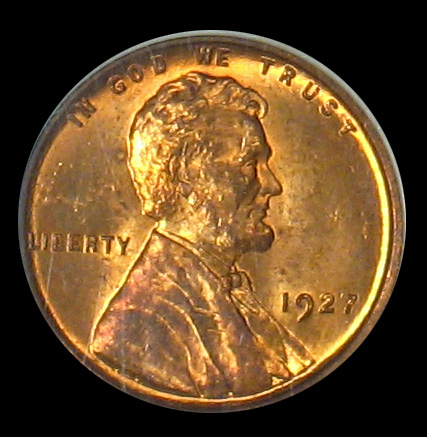 The Roaring Twenties was known for its sustained economic stability, industrial growth, new inventions, art deco, women’s suffrage, and the wide acceptance of jazz music. It was also the decade that saw the growth of the organized crime controlling the illegal flow of alcohol and speakeasies. The demand for coins were great, especially in the second half of the decade. Almost any Lincoln Cent from 1926 through 1929 can be affordably purchased in uncirculated grades so we decided on 1927 to be a good representation of the era.
All went well until October 29, 1929, Black Tuesday. Subsequent years marked a great panic that included bank runs and high unemployment. Things became worse when Secretary of the Treasury Andrew Mellon insisted on draconian measures that would close what he considered weak banks and transfer assets to larger banks at pennies on the dollar that wiped out many people’s savings. Rather than trying to infuse cash into circulation to try to spur the economy, Mellon advocated deep federal spending cuts to balance the federal budget and opposed economic stimulus measures. His plan did not help the economy and plunged the country deeper into the Great Depression. Mellon was accused purposely sabotaging the economy and colluding with bankers and industrialists to profit from the crisis. Just before a vote on the whether articles of impeachment would be sent to the full House from the House Judiciary Committee, Mellon was appointed Ambassador to the Court of St. James (United Kingdom) and resigned as Treasury Secretary.
 When Franklin D. Roosevelt was inaugurated, he appointed William Woodin as Secretary of the Treasury. Working with his predecessor, Ogden Mills, these men came up with a plan to try bring the country out o the depression. Part of the plan was to have FDR order gold withdrawn from private hands. Since Woodin was a coin collector, he made certain that the order include an exception for “rare and unusual coin types.” To honor Woodin and to have the collection represent the era, this Lincoln Cent collection will include a nice 1933 cent.
 It is generally accepted that World War II began on September 1, 1939 when German invaded Poland although Japan invaded China in 1936. With Germany and Italy trying to conquer Europe and Japan attacking China and Russia from the Far East, there was a passivist movement in the United States. The problem was “over there” and had nothing to do with us. That changed on December 7, 1941 when the Japanese Navy attacked the U.S. Naval Base at Pearl Harbor. A Declaration of War on Japan was passed on December 8 and on Germany and Italy on December 11. Since copper was necessary for the manufacture of ammunition and other armaments, laws were passed that changed the composition of the Lincoln Cent from bronze (copper-zinc) to zinc-coated steel. When the U.S. Mint struck the steel cents in 1943, it marked the only time in the country’s history that a circulating coin was struck without any copper. Finding high grades of steel cents are relatively easy and inexpensive because so many were minted. Thus, our collection will have one steel cent from each branch Mint.
From 1944-1946, spent shells from military training grounds were collected and melted to use for striking coins. Using those shells, the bronze composition returned and copper cents began to circulate driving the unpopular steel cents out of circulation. As a type, these coins are known as “Shotgun Cents” because of the use of the shell casings. Since both V-E Day and V-J Day both happened in 1945, this set will include a 1945 Lincoln Cent.
 Following 1946, the composition of the cent changed slightly to a bronze that included copper (.950), zinc and tin (.050). This would remain the composition until 1982. Before then, the reverse design would change to the Memorial Reverse in 1959. First, we need a coin for this new composition. For this we decided on a 1955 cent. Aside from being plentiful and inexpensive in uncirculated red grades, it was the year that the Brooklyn Dodgers finally won the World Series—a fitting tribute for the decade. Then, add a 1959 first-year Memorial Cent to the collection to complement the first issue wheat-back cents.
Finding uncirculated red Memorial Cents are very easy. Many were struck in the billions and many were saved in collections and rolls making them highly available and very affordable. Choosing Memorial Cents is a matter of trying to match the dates with historical significance. For example, after the coin shortages of the early 1960s, the U.S. Mint stopped producing coins with mint marks. By omitting the mint marks, it was felt that collectors, who were initially blamed for the shortage, would not hoard coins. Once it was determined that collectors were not the cause of the shortage, mint marks returned to the Lincoln Cent in 1968. So let’s add a 1968-D cent to the collection to include the first coins struck with a mint mark after their removal in 1965.
The 1970s was an interesting decade that included the resignation of Richard Nixon, the American Revolution Bicentennial Celebration in 1976, and my high school graduation. But for the Lincoln Cent, this collection will have a 1974-S to represent the last S mint marked coin struck for circulation in San Francisco. Although some cents were struck in San Francisco in the 1980s, they were struck without mint marks and cannot be differentiated from coins struck in Philadelphia.
 One more change in composition came in 1982 when the Lincoln Cent went from bronze to copper-coated zinc. Also in 1982, there was a change in the dies that caused both large and small dates to appear on both compositions. To mark this transition, the collection will include a set of all seven varieties that includes coins from both Philadelphia and Denver. Rather than buying these coins individually, the collection can include a pre-packaged set that can be bought from any dealer, at a coin show, or online for under $25. It is a perfect way to mark the transition.
For the Lincoln Cent, history there after was bland. But the collection needs a representative from the copper-coated zinc era to end the 20th century. We chose a 1999 Lincoln Cent for no other reason that while thinking about it, the song “1999” by Prince came up in the discussion. Since the song was release in 1982 on the album titled “1999,” it seemed a fitting tie in for the collection.

Next is a 2001 cent to celebrate the start of a new century/millennium (we count years from one, not zero!) and one from 2008 as the last Memorial Cent of the series. Of course the set will include the four types from the Lincoln Bicentennial and Cent Centennial celebration. However, since the bronze (copper-zinc) versions are available from the sets sold by the U.S. Mint, the set will include those instead of the copper-coated zinc coins that were circulated.
Finally, this collection ends (for now) with a 2010 Shield Reverse Cent so that we continue with the pattern with including an example from the first issues.
<UPDATE>
One of the reason I love my readers is that they can pick up on something I miss. One reader reminded me that a type set should include a Lincoln Cent with no designer initials. After the U.S. Mint removed the “V.D.B” on the reverse of the early 1909 cents, Victor D. Brenner’s initials did not reappear on the coin until 1918. So that the set is complete, a first-issue without initials 1909 is an affordable option.
</UPDATE>
When complete, our Lincoln Cent representative collection looks like:
- 1909 VDB, first issues
- 1909, for the first year of no “VDB” initials
- 1919, end of World War I
- 1927, the Roaring Twenties
- 1933, the Great Depression
- 1943 P-D-S Steel Cents
- 1944 Shotgun Shell Cents
- 1955, the 50s
- 1959 first issues of the Memorial Reverse Cents
- 1968-D, return of mint marks
- 1974-S, last year of S-mint circulated coins
- 1982 7-coin copper/zinc cents
- 1999, copper-coated zinc cents
- 2001, the new millennium
- 2009, 4-coin copper set
- 2010, first issues of the Shield Reverse
This collection is 26 27 coins making it more manageable and affordable than collecting the entire set. Dates can be changed or added to represent significant family events, such as the birth of family members. Youngsters can enhance their collection by writing a paragraph or two about each of the coins.
- 1909 VDB image courtesy of NW Coin & Stamp Co.
- 1927 Cent image courtesy of Mt. Lassen Coins
- 1933 Cent image courtesy of PCGS Coin Facts
- 1943 Steel Cents courtesy of user jeffg at upillar.com
- 1959 Memorial Reverse courtesy of the U.S. Mint
- 1982 Cent Set courtesy of J&J Coins
- 2010 Shield Cent Reverse courtesy of the U.S. Mint
Support the Coin Collectors Blog
 Buy me a coffee
Thank you for your support!
Let Me Know What You Think
Are you going to the World's Fair of Money
Total Voters: 17
 Loading ...