
Weekly World Numismatic News for May 17, 2020

Dennis Rodman with his former agent Dwight Manley (Image courtesy of The Rob Report)
One of the players making an impact of the story early and later is Dennis “The Worm” Rodman. Today, Rodman may be known for his outrageous style and friendship with North Korean leader Kim Jung Un, but when he was playing, Rodman put the term “power” in his position of Power Forward. He started his career with the Detroit Pistons, the Bad Boys of basketball, who dominated the Bulls to win a pair of championships.
Rodman signed with San Antonio as a free agent in 1993 then was traded to Chicago before the 1995-96 season. In Chicago, he went on to win three straight championships.
Throughout Rodman’s journey in the NBA was his friend and agent, Dwight Manley.
The numismatic community knows Manley as a collector and the person who the ANA’s Dwight N. Manley Numismatic Library is named. Among the support that Manley provided to the ANA, he donated the first known illustrated numismatic book printed in 1517.
In a recent interview, Manley spoke about purchasing the Collection of William Spohn Baker that features the finest Washington Medals known to collectors. He said that the ANA would exhibit the medals in 2021. In the future, the medals will likely be in a museum because he feels that the collection should not be broken up.
It may not be easy to impact one area, but Manley can claim he had an impact on sports and numismatics.
And now the news…
 May 11, 2020
 → Read more at robbreport.com
May 11, 2020 → Read more at jpost.com
May 12, 2020 → Read more at usmint.gov
May 15, 2020 → Read more at radio.cz
→ Read more at robbreport.com
May 11, 2020 → Read more at jpost.com
May 12, 2020 → Read more at usmint.gov
May 15, 2020 → Read more at radio.cz
Bill to End Presidential Dollar Program
On July 19, 2011, Sen. David Vitter (R-LA) and Sen. Jim DeMint (R-SC) introduced S. 1385, To terminate the $1 presidential coin program. Simply, the bill removes subsection n of Section 5112 of title 31 United States Code (31 U.S.C. § 5112), which is the law authorizing for the Presidential $1 Coin Program.
The bill reads as follows:
1st Session
S. 1385
July 19, 2011
Mr. VITTER (for himself and Mr. DEMINT) introduced the following bill; which was read twice and referred to the Committee on Banking, Housing, and Urban Affairs
A BILL To terminate the $1 presidential coin program. Be it enacted by the Senate and House of Representatives of the United States of America in Congress assembled, SECTION 1. TERMINATION OF PRESIDENTIAL $1 COIN PROGRAM. Section 5112 of title 31 United States Code, is amended by striking subsection (n) and inserting the following: `(n) [Reserved.]’.
This is clearly an over reaction to the slanted report by NPR that suggests this is a taxpayer issue and not an issue of the broken monetary system in the United States. Rather than figure if this bill will properly achieve their purpose, Messrs. Vitter and DeMint wrote the most expedient bill regardless of its ramifications.
First, if this bill is passed, it will not do anything to relieve the oversupply of dollars being held by the Federal Reserve. All it will do is not increase the current supply leaving about $1 billion of coins in the Fed’s coin vaults and not circulating in the economy.
Another problem with the bill is that it leaves the First Spouse Gold Coin program in place. A closer look at the law shows that the First Spouse Program is codified in 31 U.S.C. § 5112(p). In order to stop the entire program, the bill would have to remove both subsections “n” and “p.”
Further, 31 U.S.C. § 5112(q) (subsection “q”) requires the U.S. Mint to promote the Presidential Dollar program and includes the requirements about the government and commercial acceptance of the coins. If the bill passes by removing subsection “n,” both the U.S. Mint and Federal Reserve will have difficulty complying with this law.
For numismatists who have been collecting Presidential Dollars, this bill’s passage will end the program early leaving us with a partial series. Teachers who use the coins and the good materials produced by the U.S. Mint to help teach history will have to find different tangible aids than coins. Coins would be a better teaching aid since it is tangible and money gets everyone’s attention.
The ONLY way to reduce the oversupply of dollars being held in the Federal Reserve coin vaults is to eliminate the $1 Federal Reserve Note. With out the paper, coins become the currency of the realm and will start to circulate.
I am sure that within a day someone will send a comment saying that Americans like paper and do not like coins. While there are segments of the population that will complain, Americans are resilient and will adapt. We can adapt to anything that the government can do and be successful. We can adapt to anything that market forces place on us and bees successful. We went from an all cash society to adding credit cards; cell phones are now everywhere as compared to 10 years ago; we have survived many changes in the economy; we went from leaded gas to unleaded; transit tokens to electronic metro passes; and now many cities are moving to paying for parking electronically rather than feeding quarters into meters. Americans adapt to change all of the time. Now it is time for all Americans to dig into their souls and change their currency habits for the good of the country.
Do You Feel Vindicated?
“People of the United States of America have been vindicated.”
This utterance came from Assistant U.S. Attorney Jacqueline Romero, the government’s lead attorney in the case Langbord v. United States after the jury deliberation said that the ten 1933 Saint-Gaudens Double Eagle coins found by Joan Langbord is government property.
For years, the government has wasted taxpayer dollars on attorneys, staff, investigators, and expert witnesses (the government paid David Tripp $300 per hour) to deny the numismatic world the coins of legend. For what purpose? As a result, the jury set a precedence by saying that these coins “left the Mint illegally and were concealed.” It is an argument that can be used to confiscate any coin or pattern that has left the U.S. Mint.
What does this verdict say about the five 1913 Liberty Head Nickels? While the 1933 Saint-Gaudens Double Eagles were legally struck before the order to cease their distribution and melt the coins, the five 1913 Liberty Head Nickels were not supposed to exist. The U.S. Mint was supposed to start striking Buffalo Nickels for circulation, yet someone at the Mint struck five coins using Charles Barber’s Liberty Head design and they left the Mint without any record of their existence.
What does this verdict say about the pattern coins that are in collector hands. None of these patters were supposed to leave the U.S. Mint. Yet there are records of patterns being given out as favors to “important people” to curry favor. Aside from being Secretary of the Treasury at the beginning of the first Franklin D. Roosevelt administration, William H. Woodin was a collector of coins and patterns he collected mostly while director of the New York Federal Reserve Bank. Are those pattern now illegal since they left the Mint illegally and were concealed?
What does this verdict say about the 1974 Aluminum Cent? The U.S. Mint struck these patterns to show to try to convince congress to change the composition of the cent to save money. After they were distributed to congress as “demonstrations,” the U.S. Mint asked for their return. Not all of the congress members returned the coins and some ended up in collectors hands. Are these aluminum coins illegal since they were not legally issued coins?
With all due respect to Assistant U.S. Attorney Romero, I do not feel vindicated. I feel cheated!
A Tale Told By NPR Full of Fury Signifying Nothing
According to the website at National Public Radio, “The mission of NPR is to work in partnership with member stations to create a more informed public – one challenged and invigorated by a deeper understanding and appreciation of events, ideas and cultures.” Unfortunately, it looks like NPR drowned in the shallow end when it published its story “$1 Billion That Nobody Wants.”
While the Federal Reserve is holding about $1 billion in dollar coins in its coin vaults, its assertion that, “Some 2.4 billion dollar coins have been minted since the start of the program in 2007, costing taxpayers about $720 million,” is false. To quote myself:
The U.S. Mint can strike trillions of coins that will sit in the Federal Reserve’s vaults, but none of the money used to strike the coins comes from taxpayer dollars. For our friends at NPR, money used by the U.S. Mint is withdrawn from the United States Mint Public Enterprise Fund (PEF). The PEF is the account where the seigniorage, the profit from selling the coins, is deposited. As sales are deposited in the PEF, the law requires that the U.S. Mint use the money in the PEF for budgetary reasons like to manufacture coins, maintain facilities, pay employees, etc. No tax money is deposited in the Public Enterprise Fund.
While the NPR story says, “The government has made about $680 million in profit by selling some 1.4 billion dollar coins to the public since the program began,” they failed to mention that this profit comes from the money paid by the Federal Reserve to buy the coins. Excess profit over and above the U.S. Mint’s operations funds are returned to the Treasury general fund.
Wait! Did you say that the program actually made a profit?
Yes, I did and so did the NPR story. And it did not cost the taxpayer anything to make that profit. Not one red cent!
But what about the $1 billion in the Federal Reserve’s vaults?
Those coins were not purchased from the U.S. Mint using taxpayer money. Each and every dollar coin in those vaults were paid for by the Federal Reserve at face value. Since it costs the U.S. Mint about 30-cents to strike one dollar coin, the U.S. Mint made a profit (seigniorage) of 70-cents per coin. The money was paid by the Federal Reserve and NOT taxpayer money.
Think about it: the U.S. Mint is generating 70-percent profit for striking $1 coins with most of that money will eventually make its way to the Treasury general fund.
If it is not taxpayer money, then whose money is it?
It is the money earned by the Federal Reserve through its banking operations as the United States central banking infrastructure. Deposits made to the Federal Reserve are made by member banks. Fees are paid by those banks for cash services, check clearing, and transfer services. The Federal Reserve also earns its money from making loans made to member banks. Some Federal Reserve branches make money on other services. For example, the New York Fed stores gold for foreign countries and sells currency overseas.
But it’s our money, right?
Yes, it is the money that is the heart of the economy of the United States. It is not classified as taxpayer money because no tax dollars were collected in order to fill its coffers.
You don’t make it sound like a problem. Why did the story go viral?
Actually, the $1 billion in coins sitting in the Federal Reserve’s vaults is a problem. It represents $1 billion of working capital that is not circulating in the economy. It is money that cannot be invested by loaning it to other banks or be used in other banking operations. In a tight economy, it is not a good idea to have $1 billion sitting idle. Unfortunately, the NPR story and subsequent follow-ups by various news outlets made it sound like it was $1 billion of taxpayer money being wasted by the government. On the contrary, the federal government earned $680 million!
If those dollar coins sitting in the Fed’s vaults is a problem, what can be done about it?
Stop printing $1 paper notes! The United States is the only “first world” country still producing its unit currency in paper. Two currencies whose value has stood up against the dollar during the current economic crisis, the British Pound and Euro, use coins for their unit currency and not paper. In fact, European Union use coins for the 1 Euro and 5 Euro denominations.
I know that “public sentiment” says to keep the $1 note. But when is governing about bowing to public sentiment. I thought government was supposed to do what is in the nation’s best interest. If it will save money in the long term, then let’s drop the paper for coins. American’s are resilient, they will get used to it.
A Commem to Take Out to the Ball Game
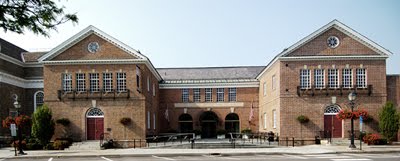 In a very rare show of bipartisan ship in the House of Representatives, Rep. Richard Hanna (R-NY24) introduced H.R. 2527, National Baseball Hall of Fame Commemorative Coin Act. Hanna, whose district includes Cooperstown, submitted the bill with 293 sponsors, including the entire New York delegation from both parties. This might be the first coin-related legislation to see action in the 112th congress.
The National Baseball Hall of Fame and Museum opened in Cooperstown, New York on June 12, 1939. Its first inductees class include five payers who many consider amongst the greatest who have ever played professional baseball. These inductees were (in alphabetical order):
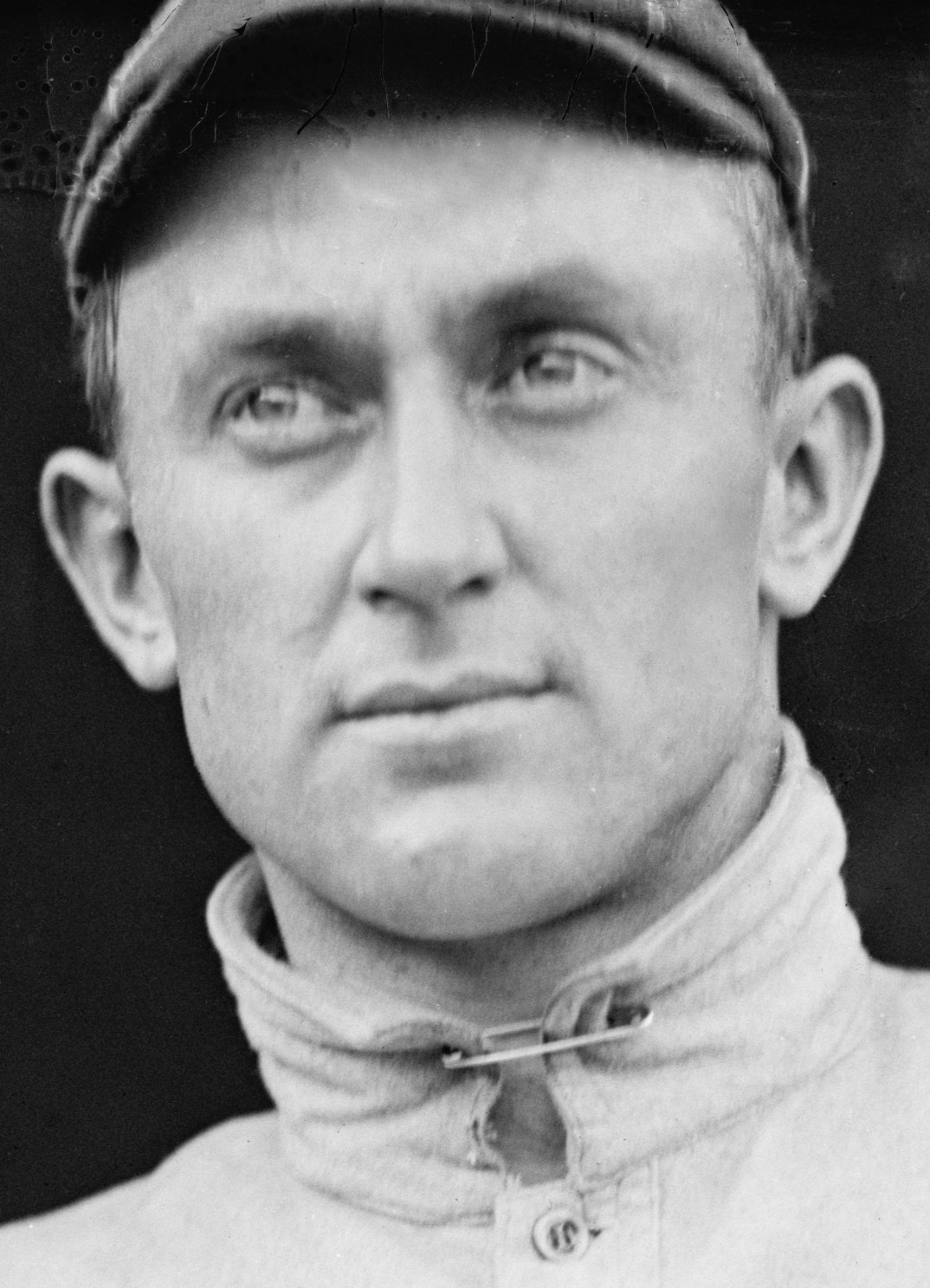
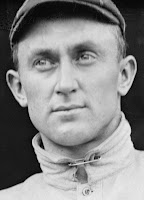 Tyrus Raymond “Ty” Cobb, also known as “The Georgia Peach,” set 90 Major League Baseball Records including highest career batting average (.367) and most career batting titles (12) which he still holds today. His 24-year career was also memorable for his surly temperament and aggressive playing style. When he was voted in to National Baseball Hall of Fame on its inaugural ballot in 1936, he received 222 out of a possible 226 votes, the most of this entry class. The other four votes were probably from sportswriters Cobb made upset during the course of his career.
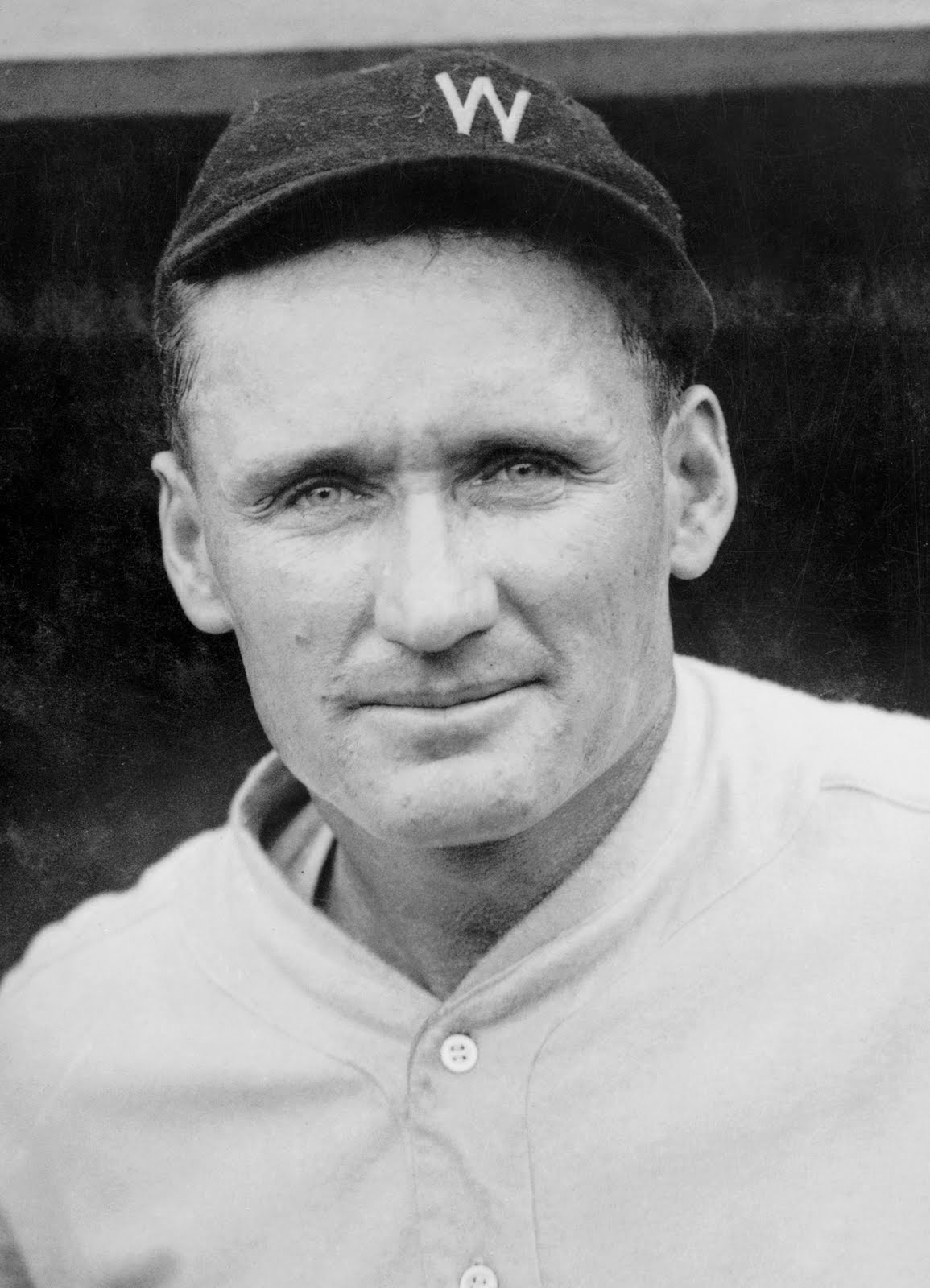
 Walter “Big Train” Johnson played 21 years for the original Washington Senators, 1907-1927. Johnson is second in all time wins with 417 (Cy Young won 511) and is still the all-time career leader in shutouts with 110. Using scientific tests available at the time, Johnson’s fastball was clocked at over 91 miles per hour which was phenomenal for the time. His motion and fastball fooled many hitters, especially right handers. Many of his strikeout records lasted more than 50 years before being broken by future Hall of Famers Bob Gibson, Nolan Ryan, Steve Carlton, and Gaylord Perry.
 Christy Mathewson holds the National League record for wins with 373. In 17 years, he won all but one of those games with the New York Giants. In 1916, Mathewson was traded to the Cincinnati Reds and became their manager. During his career, Mathewson was famous for his duels with Mordecai “Three Finger” Brown, mostly against the Chicago Cubs. Brown got the best of Mathewson 13-11 with one no-decision. Johnson’s career was cut short when he was accidentally gassed during World War I.
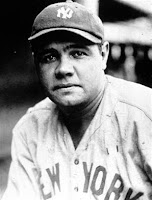 George Herman “Babe” Ruth, “the Bambino,” “the Sultan of Swat,” the former pitcher turned outfielder is largely credited for saving baseball after the Chicago Black Sox Scandal during the 1919 World Series. Baseball needed a new hero and Babe Ruth was there with a mighty bat. The sale of his contract from the Red Sox to the Yankees in December 1919 had been part of Red Sox lore and hung like an albatross until the BoSox won the World Series in 2004—which they beat the Yankees to get into the World Series after being down three games to one in the ALCS!
Babe Ruth was baseball’s first home run king. In 1921, Ruth hit 59 home runs while the Yankees shared the Polo Grounds with the Giants. That record stood until Ruth belted 60 for the “Murderer’s Row” team of 1927. It was a record that stood until Roger Maris hit 61 in 1961. His 714 career home runs served as a record until broken by Hank Aaron in 1974. Ruth’s .690 slugging percentage remains a record.
George Herman “Babe” Ruth, “the Bambino,” “the Sultan of Swat,” the former pitcher turned outfielder is largely credited for saving baseball after the Chicago Black Sox Scandal during the 1919 World Series. Baseball needed a new hero and Babe Ruth was there with a mighty bat. The sale of his contract from the Red Sox to the Yankees in December 1919 had been part of Red Sox lore and hung like an albatross until the BoSox won the World Series in 2004—which they beat the Yankees to get into the World Series after being down three games to one in the ALCS!
Babe Ruth was baseball’s first home run king. In 1921, Ruth hit 59 home runs while the Yankees shared the Polo Grounds with the Giants. That record stood until Ruth belted 60 for the “Murderer’s Row” team of 1927. It was a record that stood until Roger Maris hit 61 in 1961. His 714 career home runs served as a record until broken by Hank Aaron in 1974. Ruth’s .690 slugging percentage remains a record.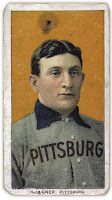 Johannes Peter “Honus” Wagner was probably baseball’s first superstar. Playing most of his career with the Pittsburgh Pirates, Wagner won eight batting titles which is tied for the most in the National League with Tony Gwynn. One of the highlights of Wagner’s career was when the Pirates faced the Detroit Tigers in the 1909 World Series. The Tigers were lead by the 22-year old Ty Cobb. Vowing not to have the same poor showing as he did during the 1903 World Series, Wagner out hit Cobb .333 to .231 and stole six bases, setting a World Series record. At 35 years old, Wagner lead his Pirates to victory over the Tigers, 4-3. Wanger’s T206 Baseball card made by the American Tobacco Company is the most expensive baseball card in the world—only 57 are known to exist.

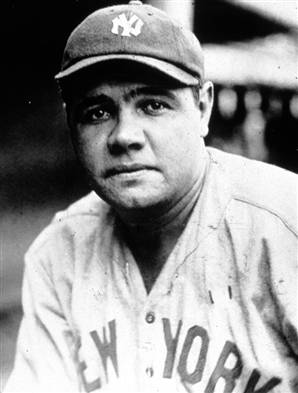
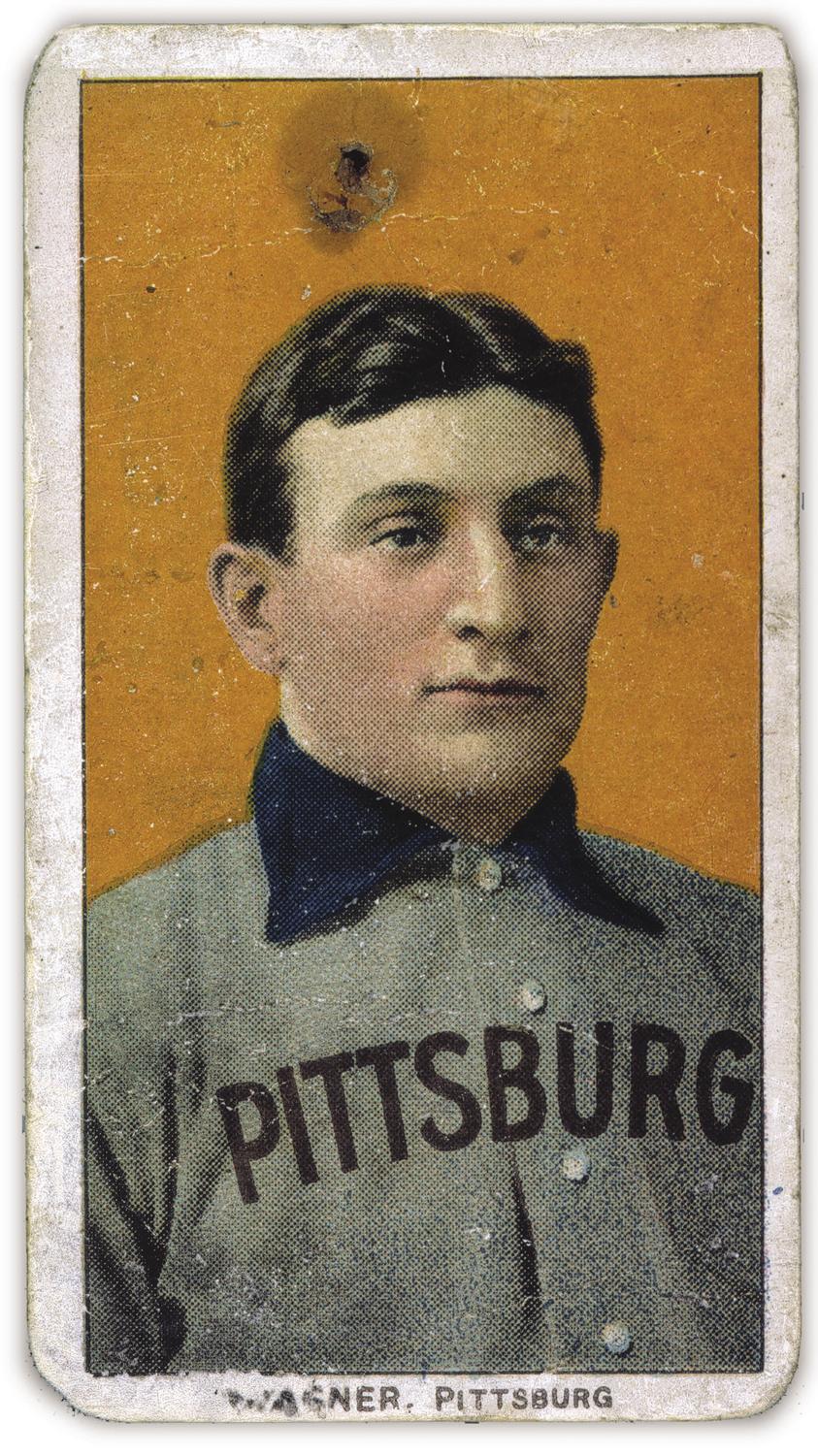
There have been 205 former major leaguers, 27 executives, 35 Negro League players, 19 managers, and 9 umpires elected to the Hall of Fame. There are currently 63 living members. Exhibits include Women in Baseball, ¡Viva Baseball! celebrating baseball in Latin America and the Caribbean, and The Records Room that shows off the real equipment used to set Major League records.
Should the bill pass, it calls for the minting of 750,000 half-dollar clad coins, 400,000 $1 silver coins, and 50,000 $5 dollar gold coins in 2015. The sale of these coins will include a $35 surcharge for the gold coin, $10 for the silver dollar, and $5 for the clad half-dollar. The potential income of $9.5 million will be paid to the National Baseball Hall of Fame to help finance its operations.
According to the bill, the obverse design of the coin will require an open competition. “The competition shall be judged by an expert jury chaired by the Secretary and consisting of 3 members from the Citizens Coinage Advisory Committee who shall be elected by such Committee and 3 members from the Commission of Fine Arts who shall be elected by such Commission.” The bill said that the “Secretary shall determine compensation for the winning design, which shall be not less than $5,000.” Of course there is a catch. The bill says that the “Secretary may not accept a design for the competition unless a plaster model accompanies the design.”
For the reverse, the bill says the coins “shall depict a baseball similar to those used by Major League Baseball.”
But there is an interesting catch to the design specified in the bill. The bill wants the coin design “fashion[ed] similar to the 2009 International Year of Astronomy coins issued by Monnaie de Paris, the French (sic) Mint, so that the reverse of the coin is convex to more closely resemble a baseball and the obverse concave, providing a more dramatic display of the obverse design chosen.” This should give the U.S. Mint some use for the machinery they used to strike the 2009 Ultra High Relief Double Eagle Gold Coin.
With 293 co-sponsors from both sides of the aisle, there should be no reason for this this bill not to pass—but stranger things have happened with this congress already. The bill has been referred to the House Financial Services Committee where it will likely to be assigned to the Subcommittee on Domestic Monetary Policy and Technology chaired by Rep. Ron Paul (R-TX). In the “what could go wrong” category, Rep. Paul is not considered a friend to the U.S. Mint or its practices.
The bill has also been referred to the House Budget Committee who has its hands full with other matters. Budget Committee Chairman Rep. Paul Ryan (R-WI) is also known not to be a fan of the government.
Neither Paul or Ryan are co-sponsors of this bill. Maybe they can put aside their partisan differences like others who have co-sponsored the bill since baseball is something we can all agree on. As a long time baseball fan, I would buy these commemoratives. I hope congress gives me the chance!
Baseball Hall of Fame image courtesy of the National Baseball Hall of Fame and Museum.
All other pictures courtesy of Wikimedia.
Collecting a Herd of Buffaloes [updated]
Looking around for something interesting I was thinking about putting together a type collection. I was looking for an interesting type collection. Rather than a type collection by coin types, how about by a theme. How about a Buffalo Type Collection.
The American Buffalo, or more accurately called the American Bison, was once king of the American Plains. Until the 19th century, it roamed freely until they were almost hunted and slaughtered to extinction. Still, the buffalo represents the United State’s expansion to the west and the growth of the nation. It is just an All-American symbol.
Putting together a Buffalo Type set could be easy, depending on the coins you choose, but it can get expensive. If you choose all proof coins, it could get very expensive. In any case, you can put together a nice collection of coins with buffaloes on them.
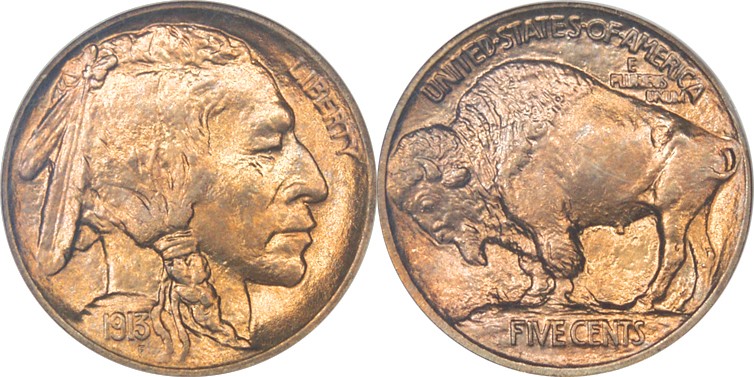 Looking at a buffalo type collection, we have to start with the Buffalo Nickel. Designed by James Earle Fraser, the Buffalo Nickel was struck by the U.S. Mint from 1913 to 1987. The obverse of the coin features a Native American that Fraser said was a composite design of three chiefs and the reverse is a buffalo that Fraser was modeled after Black Diamond, an American bison he found at the Bronx Zoo. Both claims by Fraser has been controversial since several American Indian Chiefs claimed to have been Fraser’s model and Black Diamond was housed at the Central Park Zoo. In either case, it is a wonderful coin and a great start to a collection.
For the type collection, there are two varieties of Buffalo Nickels. Variety 1 is the original where the buffalo is standing on a mound that was only issued in 1913. After finding that the lettering that said “Five Cents” and the mint mark wore off easily, the U.S. Mint hollowed out the mound making it look like a line that the buffalo stood on. The second variety was used until the last Buffalo Nickel was struck in 1938.
To start this set, I can purchase a nice 1913 (P) Type 1 Buffalo Nickel for $35-50 and a 1938-D for $25-40. These would be attractive uncirculated coins but not top of the grading scale.
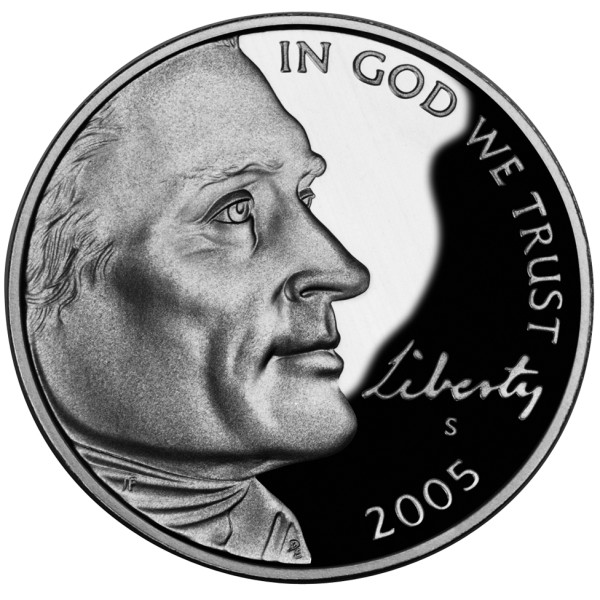
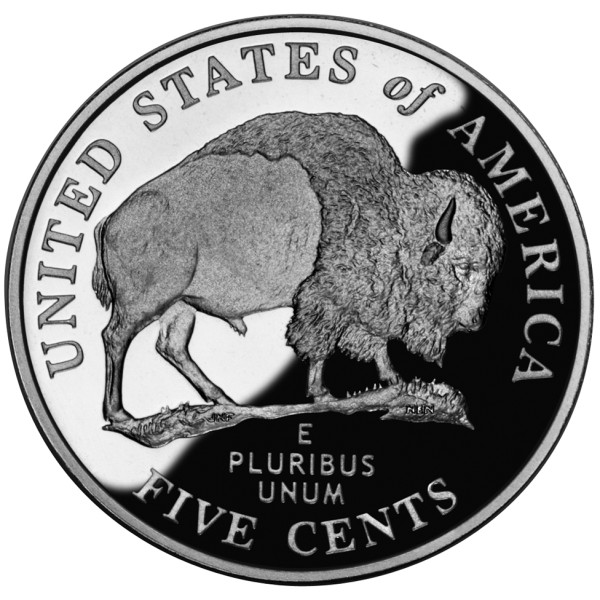 Keeping with nickels, the first issue of the 2005 Westward Journey Nickels had a bison on the reverse. Not only did it have a bison, but it featured an attractive portrait of Thomas Jefferson by artist Joe Fitzgerald. That portrait of Jefferson has the most character of any presidential portrait that has appeared on a coin. Too bad they U.S. Mint issued it only in 2005. Since this is an easy and inexpensive purchase, I think I would add both the P and D business strikes along with an S mint proof coin.
Two more easy coins are the 2005 Kansas State Quarter and the 2006 North Dakota State Quarter. Both quarters are highly available in uncirculated grades making it easy to collect P and D mint coins. The question then is whether to collect one proof or the clad and silver proof. Since both are readily available, I am going to add both to the collection.
<UPDATE>
Originally, I forgot about looking at the National Park Quarters for buffaloes. One of the reasons is that I have yet to see one in pocket change. But the 2010 Yellowstone National Park Quarter does feature a buffalo standing in front of Old Faithful erupting. Like the state quarters, circulating coins were struck in Philadelphia and Denver. There were also clad proof and silver proof. It is probably costs the same to collect these sets as with the State Quarters, so we will add all four coins to this collection.
</UPDATE>
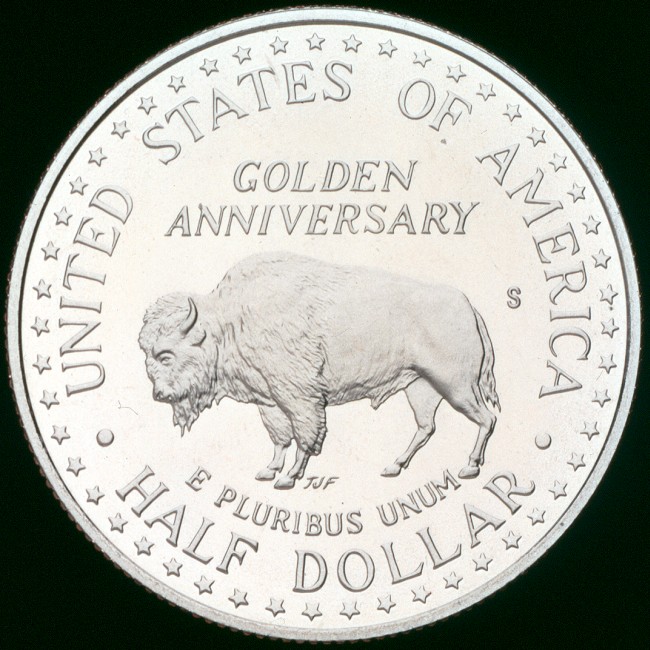 Moving from circulating coins to commemoratives, the first coin is the 1991 Mount Rushmore Golden Anniversary Half Dollar. While the the obverse has a nice image of the Gutzon Borglum masterpiece carved into the Black Hills of North Dakota, the reverse uses a classic design of a buffalo. Since there were so many of these coins struck, both the 1991-D (uncirculated) and 1991-S (proof) are available as inexpensive additions. So let’s get both for our type collection!
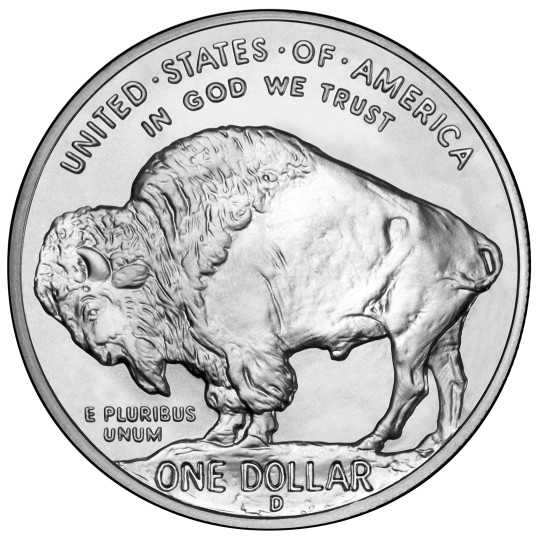 A little more expensive addition is the 2001 American Buffalo Dollar. Struck as uncirculated in Denver and proof in Philadelphia, this coin has been in high demand, which shows in its price. Although the coin was criticized for not being as faithful to James Earle Frasier’s original design, the buffalo on the reverse is well done while being proportionally smaller than it should have been. Even though both the uncirculated and proof coins can cost between $150-200, I think I will stick with the proof. I think proof coins are better looking.
<UPDATE> Another commemorative that includes a buffalo is the 1999 Yellowstone National Park Commemorative Silver Dollar. Struck to commemorate the 125th anniversary of the park’s establishment by Ulysses S. Grant in 1872, the proceeds given to the Yellowstone National Park and the National Park Foundation to help maintain the U.S. national park system. The obverse is shows Old Faithful, one of the park’s main attractions, erupting. The reverse is an adaptation of the National Park Service’s official agency logo. Since there is little difference in the price between the uncirculated and the proof, I will add both for somewhere in the $35-40 range, each.
</UPDATE>

 Now for the higher end is the American Buffalo 24-Karat Bullion Gold Coin. Since the program started in 2006, the U.S. Mint has been producing a one-ounce 24-karat gold coin with a very faithful image of James Earle Frasier’s Type 1 design. The textured fields on the obverse of the coin adds character to the large gold disk and makes it a very attractive coin. Fortunately for me, I own a 2006 proof American Buffalo coin from when the spot price of gold is almost half of what it is today. But if I was starting this collection today, I would only purchase the proof coin since it looks much nicer than its uncirculated cousin.
In 2008 and 2009, the U.S. Mint struck fractional gold American Buffalo coins in ½-, ¼-, and 1⁄10-ounce coins. If you can afford the one-ounce coin, I would suggest buying one. But if you cannot, the 1⁄10-ounce proof coin is worth the spot price of its gold content ($159.41 as I type this) plus 10-15 percent. Having the option to purchase the fractional gold coins makes this set more affordable.
For extra credit, how about adding one currency item to the collection? In 1901, the Bureau of Engraving and Printing printed the $10 Legal Tender Note (Fr.#114-122) with an image of a buffalo surrounded by portraits of Meriwether Lewis and William Clark. Aside from being my favorite note, it is ranked sixth in the book 100 Greatest American Currency Notes, by Q.David Bowers and David M. Sundman. It is possible for find a nice specimen in Fine and Very Fine condition for $500-800 depending which issue you purchase and where you buy one. Higher grades can push the price over $2,000! Adding one to this type collection would be wonderful.

This would make an attractive type set consisting of:
- 1913 (P) Buffalo Nickel
- 1938-D Buffalo Nickel
- 2005-P Westward Journey Nickel, Bison Reverse, uncirculated
- 2005-D Westward Journey Nickel, Bison Reverse, uncirculated
- 2005-S Westward Journey Nickel, Bison Reverse, proof
- 2005-P Kansas Quarter, uncirculated
- 2005-D Kansas Quarter, uncirculated
- 2005-S Kansas Quarter, clad proof
- 2005-S Kansas Quarter, silver proof
- 2005-P North Dakota Quarter, uncirculated
- 2005-D North Dakota Quarter, uncirculated
- 2005-S North Dakota Quarter, clad proof
- 2005-S North Dakota Quarter, silver proof
- 2010-P Yellowstone National Park Quarter, uncirculated
- 2010-D Yellowstone National Park Quarter, uncirculated
- 2010-S Yellowstone National Park Quarter, clad proof
- 2010-S Yellowstone National Park Quarter, silver proof
- 1991-D Mount Rushmore Golden Anniversary Half Dollar, uncirculated
- 1991-P Mount Rushmore Golden Anniversary Half Dollar, proof
- 1999 Yellowstone National Park Commemorative Dollar, uncirculated
- 1999 Yellowstone National Park Commemorative Dollar, proof
- American Buffalo Bullion Coin, one-ounce proof
- 1901 $10 Legal Tender Note (Fr.#114-122)
It is such a good idea, I might just put together a set!
Buffalo Nickel, Buffalo Dollar, and Mount Rushmore Commemorative images are courtesy of The Coin Page.
Westward Journey Nickel, Yellowstone National Park Dollar, and American Buffalo Gold images are courtesy of the U.S. Mint.
$10 Legal Tender Note image is courtesy of Wikimedia.
Prices confirmed with NumisMedia.
Support the Coin Collectors Blog
 Buy me a coffee
Thank you for your support!
Let Me Know What You Think
Are you going to the World's Fair of Money
Total Voters: 17
 Loading ...