As I do research for an article on great coin collections from around the world, I was looking into the coin collection at the Staatlichen Museen zu Berlin (National Museums in Berlin). The collectioncollection at the Staatliche Museen is well known as being very comprehensive and diverse covering the beginnings of coinage through the coins of today. With over 500,000, it is one of the largest collections in Europe. Staatliche Museen boasts large collections of Greek, Roman, and European coins from the Middle Ages to today. They also have an extensive collection of art medals dating from 1400.
In addition to the coins and medals, the collection also contains an extensive collection of paper currency primarily from Europe and items used as money from all over the world. The non-coin collection includes tools and dies that were used to strike coins in Berlin since the 17th century. The Staatliche Museen online English version of their online catalog can be found here.
Curators and museum staff made an introductory video about the collection. The narration is in German with English subtitles. Maybe it will entice someone to visit the collection and tell me about it!
Coins: Questions & Answers can best be described as a Frequently Asked Questions (FAQ) of coins with sections for paper money, Civil War era money whose section is entitled “Money of the War Between the States,” exonumia, and foreign coins. Each section covers the questions every collector should know about and even bring tidbits that escape even the most seasoned collected. For example, I learned that the word “Liberty” has been used on every coin except the Flying Eagle Cent and the Shield Nickel. It was thought the eagle and the union shield would satisfy the requirement.
For each coin type, the book seem to cover the basic information and some other fun facts about U.S. coins, including my favorite: which is the only coin with the portrait of the same person on the obverse and reverse? If you did not answer the Lincoln Memorial Cent, last struck in 2008, then maybe you should pick up a copy of the book!
One area that the book falls short is in the sections after the coins. There is a history of currency and questions I have seen on public forums that are not covered in this book. Some of the questions that are in the FAQ Library one the Bureau of Engraving and Printing website has some additional items that should appear in the book. One question that I people send me is what all the elements are on the U.S. Federal Reserve Note. These are not intuitive elements and I even forgot what each means (I use this page). An idea would be to produce a similar book for currency, separate from the coins.
Other sections do have enough information for a general purpose book. I am sure that there will be collectors looking for the more information on those topics. For those, Whitman does point to other books in its collation for more information. While they do this for the currency section, I think that currency is more mainstream that expanding this section would make the book more complete.
My one complaint is that the book does not have an index. While the reader can find the general area of their question using the table of contents, it would make a better reference if it included a fully referenced index.
Coins: Questions & Answers should not be your only reference, especially without an index, but it should be one of the books on your shelf. The answers are clear, concise, and those that require more than a paragraph are well written. For this book, I grade it MS66* giving points off for not having an index and the need to beef up the currency section. But like any coin with a star grade, it has good eye appeal and worth adding to your collection.
With the VCU versus Butler Final Four game (Go Rams!) at halftime, I was poking around YouTube watching a video friend sent then clicking around to the related videos. I stumbled across two videos a group called WalletPop, a personal finance site, created about coin making at the U.S. Mint.
The first video opens with looking at the plaster models of coin designs on display at the U.S. Mint in Philadelphia. This is followed by an interview with Joseph Menna showing how coins are designed using using the same 3D modeling software that is used in Hollywood to create special effects. The design process concentrates on the America the Beautiful Quarters.
Part 1
In the second video, the tour continues to the manufacturing floor where they show how the manufacturing process goes from the 2-ton roll of metal, creating blanks, making of the dies from the master die, and striking over 750 coins per minute to the finished product.
Part 2
No matter how many videos I find about the manufacturing of coins at the U.S. Mint, I am always fascinated by the process.
One of the most recognizable coin from ancient Rome is the Eid Mardenarius commemorative coin issued by Marcus Junius Brutus after he participated in the assassination of Julius Cæsar on the Ides of March (15th of March), 44 B.C.E. The fame of this coin was already cemented by the time Roman historian Cassius Dio wrote sometime in the second century, “Brutus stamped upon the coins which were being minted in his own likeness and a cap and two daggers, indicating by this and by the inscription that he and Cassius had liberated the fatherland.”
On the Ides of March, a group of senators conspired to assassinate Julius Cæsar to liberate the Roman Republic and save it from Cæsar’s tyranny. Brutus, who Cæsar thought was a friend and ally, was a leader of the conspirators. After Cæsar arrived at the senate, the conspirators stabbed Cæsar 23 times using daggers they hid under their robes. Cæsar died after seeing that Brutus was part of the conspiracy. William Shakespeare dramatizes this scene in Act 3, Scene 1 of the play Julius Cæsar:
Cæsar: Doth not Brutus bootless kneel? Casca: Speak, hands, for me! [The conspirators stab Cæsar] Cæsar: [Turning to Brutus] Et tu, Brute? Then fall, Cæsar! [Cæsar dies] Cinna: Liberty! Freedom! Tyranny is dead! Run hence, proclaim, cry it about the streets. Cassius: Some to the common pulpits, and cry out ‘Liberty, freedom, and enfranchisement!’ Brutus: People and senators, be not affrighted; Fly not; stand stiff: ambition’s debt is paid.
There are 60 known examples of the EID MAR denarius in silver and only one known gold example. The gold coin is on loan to the British Museum. The obverse of the coin features the bust of Brutus with the inscription “BRVT IMP L PLAET CEST” which means “Brutus, Imperator (honored military commander), Lucius Plætorius Cestianus.” Lucius Plætorius Cestianus was the manager of the mint workers. It was common for the coiner’s name to appear on Roman coinage as a guarantee to the quality of the metal. The reverse features two daggers on either side of a liberty cap, a symbol of freedom. Inscribed below the cap is “EID MAR,” for the Latin Eidibus Martiis or the “Ides of March” to commemorate the day he saved the republic.
Anyone in the area of the British Museum on the Ides of March, they are presenting a gallery talk by Ian Leins of the British Museum about the Ides of March. The free 45-minute gallery talk will begin at 13.15 (1:15 P.M. London Time) in Room 68. This would be a fantastic… visit one of the world’s greatest museums and take a break with an interesting talk!
Image of the Eid Mar silver coin courtesy of dig4coins.com. Image of the Eid Mar gold coin courtesy of the British Museum via guardian.co.uk.
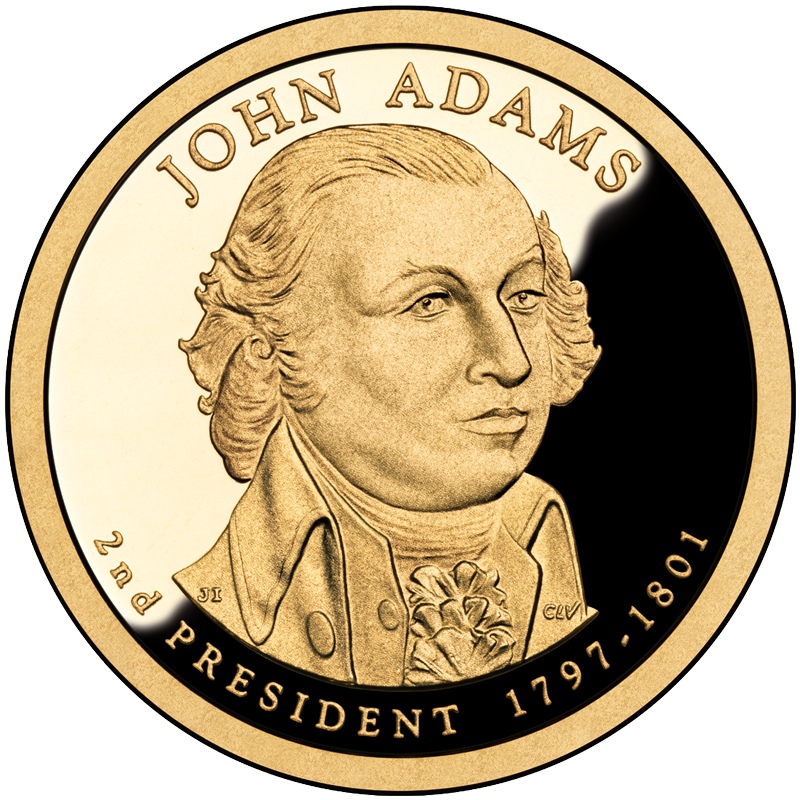
Did you know that the Presidential $1 Coins are “vanishing from circulation at an alarming rate” because they are being hoarded by collectors? Did you also know that the Presidential $1 Coins were “highly coveted coins every produced by the U.S. Mint” and that they are “vanishing from circulation at an alarming rate?”
This piffle was detailed on a half-hour infomercial entitled DCN Coin Talk starring a pitchman with an official sounding voice and his vapid female sidekick both acting from a script that would have made Phineas Taylor Barnum proud.
Rather than lying awake in the wee hours of the morning, I treated myself to a snack and sat down on the couch in front of the television. After removing the dog’s bone from under my behind, I started channel surfing to find something interesting. I guess cable television does not think anyone would be awake at 5:00 A.M. since the hundreds of stations were filled with bad reruns and infomercials. I found the end of something interesting and watched. After the closing credits, I was greeted with the opening to DCN Coin Talk.
After the opening banter between the pitchman and his muse, they spoke to their correspondent on the scene somewhere in a white room with only a bank vault-like door. The correspondent standing there in a pitch silent room holding his ear as if he holding an IFB in his ear regurgitating his score that ensured he agreed with the pitchman anchor.
To prove this is a legitimate offer, the pitchman anchor introduces David Ganz, “The Father of the 50 State Quarters Series.” Ganz, a long time numismatic author, former President of the American Numismatic Association, lawyer, and Bergen County (NJ) Freeholder, was presented as their numismatic expert as to the potential value of the coins. If you listened carefully, Ganz really did not endorse the product or the claims of their potential price. Ganz did talk about the worth of Morgan Dollars, which were large coins made from 90-percent silver whose population is lower than modern coins. Ganz did not equate the Morgan Dollar to the current Presidential Dollars, but the pitchman anchor really spun what Ganz said into something so positive that it bordered on overreaching.
“You can pay up to six time face value for some of these coins,” the anchor pitchman announced with a smile almost suggesting you could realize a similar profit as well.
After reaching into my pocket for my iPhone, I opened the browser and searched for an article that was familiar sounding. I found an article written by Ganz for Numismatic News that described his experiences making this informercial.
However, the Danbury Mint can help! For $34.95, the Danbury Mint will sell you a roll of 12 “gem uncirculated dollar coins” encased in a plastic roll. Surrounding the roll is an official-looking paper seal that looks like the type placed over the cap on liquor bottles.
But wait, there’s more. In addition to the roll of 12 gem uncirculated dollar coins, you will also receive an additional coin encased in a capsule so that you can have one to admire that is not in the roll. You will receive one roll a month to catch up on the program. All you do is pay $34.95 plus shipping and handling. And since you need to be able to store you new collection, you will also get a beautiful wood case with a tray to hold the capsules above a drawer to hold the rolls. There is a limited supply. Act now before it’s too late!
While the show was entertaining in its absurdity, I am shocked at the chutzpah. What is even more shocking is that I am sure someone is going to buy into this program. I understand that the coins, materials, case, and infomercial costs money, and the purchaser does not care and wants their investment in these coins to appreciate over time. While nobody can predict the future costs of these coins, the truth is that it is doubtful that the buyer would recover the purchase price!
The truth is quite different than what is claimed by this infomercial.
The largest hoards of Presidential $1 Coins are in the coin rooms of the 12 Federal Reserve branches. According to the testimony during a hearing held in July 2010, the representative from the Fed testified that there were $1.1 billion worth of dollar coins waiting to be circulated. When asked why there were so many coins, then U.S. Mint Director Ed Moy testified that even though they have tried to educate the public on the benefit of the coin, most people prefer to use the paper dollar. The hoard is the result of statutory requirements that regulate how many coins are produced.
Rolls purchased from the bank, dealers, or the U.S. Mint’s Direct Ship Program contains 25 coins. Rolls purchased from a bank or the U.S. Mint are sold at face value. Most dealers are selling the rolls at a $8-12 premium including rolls of dollars that are no longer in circulation. You can also purchase older rolls at banks at face value. Visit your bank branch and ask what they have available.
Roll collectors I have spoken with are not interested in short rolls, especially at the retail price of a full roll. Further, roll collectors want to know that the coins within the rolls are from a specific mint. From what I could tell, it is not possible to determine the mint mark on the coins in the Danbury Mint rolls.
If the roll collector wants to collect encased rolls, they usually opt for PCGS Certified Rolls. The PCGS service only accepts rolls from Mint-sealed packaging and places the coins in sonically sealed rolls with their label and tamper evident hologram. These rolls contain 25 coins and dealers have been selling for $50-65.
I have informally polled several online dealers and found that the only Presidential Dollar coins that cost more than $6 are error coins, specifically those with edge errors. Even the most expensive dealer was selling both P & D as a set for $5.75. The most expensive single coin I found was for the uncirculated Lincoln Dollar for $3.50.
While you can buy capsules to hold the coins for around 50-cents each, the coin tubes you can buy holds 25 coins, a full roll. All companies that sell capsules have a storage system that can be displayed on your credenza and easily stored. Some companies make special albums and folders that display the Presidential Dollars well for a fraction of the cost.
Unless you like the display format and do not care about the long term value of the set as sold by the Danbury Mint, then I would not recommend anyone buy into this offer.
Let’s do something different. Let’s talk collecting!
I am finding quite a few 2011 coins in pocket change. Most of my finds are Lincoln cents, but there have been a few 2011-P nickels mixed in. For the first time, I found 2010 dimes in change. I have yet to find any America the Beautiful Quarters® in change. Finding 2011 coins in pocket change this early is a good sign, until oil prices rise and put us back into the “Big Recession.”
In recent years, I have purchased the $2 Single Note Collection from the Bureau of Engraving and Printing. I don’t collect the notes from all of the Federal Reserve branches, I only collect the ones from the Federal Reserve Bank New York. The $2 Single Note Collection features a Series 2003A Federal Reserve note with a a serial number beginning with “2010xxxxD” in a special holder. During the pre-release period, the BEP will only sell the 2011 $2 Single Note Collection as a set. They will begin to sell the individual notes on March 15.
Last week, I purchased the 2010 Presidential $1 Coin Covers. I have been buying U.S. Mint coin covers since they were first released in 1999 for the 50 State Quarters. I find these very cool collectibles and have enjoyed showing them off. They are not popular with collectors and do not sell well in the secondary market, but I like them. To store and display them, I use a two pocket first day cover page stored in a loose leaf binder with anticorrosion pages in the front and back of the book.
I did not buy the 2010 annual sets. The proof sets contain 14 coins and the mint set has 28 coins. Because of the number of coins, the prices for these sets are high. I am not sure it is worth the price since since I collect uncirculated and proof coins in various blue albums and feel that these sets are redundant collectibles. Up until now, I was collecting mint and proof sets dating back to my birth year. But I am not sure I want to continue. I may stop collecting these sets and sell off the collection except for my birth year and the 1965-67 Special Mint Sets.
In fact, I was looking at my collection and may sell a lot of it to just concentrate on my date-mintmark collection, U.S. Mint First Day Covers, interesting world Philatelic-Numismatic Covers (PNC), and some other smaller specialized collections. The rest may end up on eBay!
Speaking of Maryland Colonial currency, I have seen buyer-friendly prices on different auction websites. I wonder if the lack of activity is because of the economy or general interest. For collectors, this is good since we can buy what we want at a good price with a potential for a good future return.
Yesterday, I received one of those charity solicitations in the mail with a nickel attached to the form. After opening the envelope, I found a shiny, new 2011-P Jefferson Nickel. Usually, I send back the nickel with a donation. This time, I kept the nickel as my first 2011 nickel of the year. When I write the check I will add 5-cents to my donation instead.
I thought this was an unusual place for a coin find!
After a week that included surgery (I’m fine… just healing), there are two issues that dominated my Inbox: my commentary about the CCAC Blueprint Report and more on electronic publishing. I will discuss these at another time following research I am doing.
In the mean time, I am happy to report that I found 2011 coins in change. As I was searching my wife’s change looking for something interesting, I found three 2011 Lincoln Cents! These three very bright, red, well struck examples with Victor David Brenner’s portrait of Abraham Lincoln, our 16th president, and the Union Shield designed by Lyndall Bass and engraved by Joseph Menna.
This is the first time in a few years that I have seen new coins this early in the year. What would really make this more exciting if these were Denver minted coins. Hopefully, we can find these in the D.C. area soon!
The base metals market woke up this morning trumpeting record high futures prices for copper, nickel, and aluminum on the London Metals Exchange (LME) and COMEX Metals Exchange (New York). Analysts credit this rise in price to low supplies and higher demand, specifically in China.
Copper closed at $4.5135 per pound in New York and $9,878 per metric ton in London on Monday, January 31, 2011.
For numismatists watching production at the U.S. Mint, this means that the material costs to produce U.S. coins will increase. With the exception of the cent, the predominant metal used in the manufacture of U.S. coins being copper—the Lincoln cent is 97.5-percent zinc with a coating using a 2.5-percent copper coating. Since most coins are composed of an average 88-percent copper and the nickel containing 75-percent copper, the rise in the cost of materials will reduce the seigniorage (profit) collected by the U.S. Mint.
Second most used metal used in U.S. coinage is nickel. While nickel has been up for the last six month and approaching its one-year high, it is down from its previous high reached in 2007 when it the U.S. Mint said the cost of manufacturing the nickel was nearly double its face value. If we use the average production costs from the last three years of 21-percent of face value (as reported in the U.S. Mint Annual Reports), it costs approximately 8.16-cents per coin to manufacture (metals cost 7.06-cents and approximately 1.1 cents to manufacture).
As for the Lincoln Cent, it has fared better in its materials cost. The price of Zinc has also dropped from its five-year high and is trading around $1.09 per pound. Zinc is also in ample supply to meet market demands meaning that the price should not be that volatile. This means that the materials cost to make the Lincoln Cent is 0.644-cents. Using the average cost to manufacture the cent at 35-percent of face value (as reported in the U.S. Mint Annual Reports), the overall cost to manufacture the cent should be on par with its face value.
However, the FY2009 U.S. Mint Annual Report showed a marked rise in manufacturing costs (I have not analyzed the FY2010 Annual Report as of this post) wondering if the production costs estimates are too low. However, if copper continues to rise, then the costs to manufacture all U.S. coins will rise and reduce the profit collected by the U.S. Mint.
Many things can be said about 2010, but for numismatics and precious metals it was quite a ride. What could this ride tell us about 2011?
Looking at the economy, the real gross domestic product—the output of goods and services produced by labor and property located in the United States—increased at an annual rate of 2.6 percent in the third quarter of 2010. A rate greater than in 2009. Although real disposable personal income increased 0.2 percent through November, the consumer price index rose at a faster rate of 1.1-percent while unemployment reached a one-year high of 9.8 percent in November.
If the slow improving economy and expanding unemployment has you confused, the simple explanation is that if the economy was a bus, it just pulled away from the curb and the driver started to shift into second gear while employment has yet to be allowed aboard. Although economists agree that employment and Consumer Confidence Index are lagging indicators, neither have seen improvement in 2010. Although the politicians are hoping their lame duck legislative efforts will help the unemployed to board the employment bus, it is possible that the bus will be too far down the road to make a difference in 2011. Let’s hope it is not too late!
In an attempt to provide its version of stimulus in 2010, the Federal Reserve’s lowered its discount rates and its ability to manipulate the money supply to try to provide relief. Although the Fed has increased the money supply, the United States dollar has not been significantly weakened against most of the world currencies—although some would say that it was seriously weakened in 2009. While the dollar has fluctuated against other major currencies throughout the year, the dollar has shown marginal only weakness against the British Pound, Euro, and Yen year-over-year while there were no weaknesses against the Reniminbi (or Yuan) because of institutionalized currency manipulation in China. Many economists believe that the avoidance of a dollar free-fall was because of the failure and pending failure of some Eurozone economies and China’s desire to reduce its own inflation concerns. The rumblings to remove the dollar as the standard and benchmark currency that we heard in 2009 subsided in 2010.
To measure the effect of the economy on the numismatic markets, I use the PCGS3000® Index as an indicator. The PCGS3000 Index is a market basket of 3,000 coins that PCGS their analysts believe represents the broad market. The variety of coins makes for a good indicator but as a broad market basket, movement indicates trends rather than a real-time indicator (similar to the Russell 2000).
The PCGS3000 Index opened 2010 with at 68,476.87. After dropping to a 12-month low of 66,886.27 (↓2.3-percent) in August, the index closed at 67,323.11, down ↓1.68-percent for the year. For a market basket that consists of 3,000 non-volatile items made from a variety of metals an in different grades, a downward trend of one-to-two percentage points indicates a weakness in the numismatic market. While some think the markets are strong—and there has been no slow down in the high-end coin market—collectors and some investors are either pushing prices downward or waiting for prices to drop before buying. Like in retail sales, many purchasers are standing on the sidelines waiting for the bargains or the market to settle.
But if the economic indicators do not show weaknesses except in employment, then why should the numismatic market show a weakness? The answer can be summed up in two words: gold and silver.
Some dealers and auction houses have found that the buyers for the high-end coins have continued their strong buying but the rest of the market has not joined them. One of the factors can be that the price of gold has scared many people away. When the markets opened on January 4, 2010, the price was $1,087.50 for one troy ounce of gold. During the year, the price never dipped below $1,050 climbing to $1,420 on December 7 before closing at $1,405.50 on December 30. As a result, investors who bought gold prior to 2010 saw their investment to rise 29.2 during the year. One would think it makes sense that the generic gold coin market would rise with the gold market. But a look at the PCGS Generic Gold Coin Index found that even with gold’s rise through the year, the generic gold coin market also saw a 17.76-percent drop in prices. However, Proof Gold rose only four-tenths of one-percent (0.41%) showing that there continued to be a little activity in the high-end market.
If there was a bull market in 2010 they were running for silver. After opening the year at $16.99 per troy ounce, silver closed at $30.63—a whopping 80.4-percent increase! Although less than the $54 ($143 adjusted for inflation in 2010 dollars) that it reached when the Hunt Brothers tried to corner the silver market in 1980, the 2010 rise is significant because few believe that the markets are being manipulated. In fact, one analyst believes that the silver market is undervalued as compared to the gold market. He said, “The gold rush of the 2000s is going to be nothing [compared] to the silver rush of the 2010s.”
When looking at the numismatics market, silver is the key metal. Up until 1964, every dime, quarter, half-dollar, and non-gold dollars were made of silver. Silver has been a key coining metal since the creation of the United States Mint in 1792. Many of the most collectible coin ever created by the U.S. Mint were struck in silver. Nothing represents silver coins like Morgan and Peace Dollars. Arguably one of the most popular numismatic collectibles, Morgan and Peace dollars are 26.73 grams made of 90-percent silver and 10-percent copper making its melt value $23.03 at the end of 2010.
But the value of Morgan and Peace dollars extend beyond their melt value. Morgan and Peace dollars are tied to the late 19th and early 20th century history of silver manipulation in the United States with designs popular with collectors. Morgan dollars struct at the Carson City mint are amongst the most desired. Since the GSA sales in the 1970s, the prices of these coins have gone up—in some cases beyond the reach of the average collector. Of the Peace dollar series, the high-relief 1921-D dollar is very desirable as is the low mintage 1928 dollar, and the 1935 last year of issue dollars. And the rumor that not all of the 1964-D Peace dollars were melted makes finding out the absolute truth a great interest to the numismatic world. However, with the rest of the market trending downward and silver skyrocketing, the PCGS3000 Morgan and Peace Dollar Index found the market rise-then-fall-then-rise again to end the year up eight-tenths of one-percent (0.825-percent) for 2010. Not a great showing, but demonstrating that Morgan and Peace dollars are still popular amongst collectors.
What is clear is that the coin market was down in 2010 while investors and even some collectors might have been concentrating on gold and silver bullion.
In speaking with some dealers, many have said that they have survived the last two years buying and selling bullion including American Eagle coins. One said that the numismatic market has been very slow that the bullion market has allowed him to stay in business during this era being dubbed “The Great Recession.”
Just because the calendar turns does not mean the market will turn along with it. Even though the lame duck congress passed significant stimulus legislation, it will take some time for those measures to settle into the markets. Some experts think that the eventual hiring may not occur for at least six monist and that there will not be a significant drop in unemployment until the fall. Others point to the infrastructure project the new laws are supposed to support forgetting that even shovel-ready projects have legal requirements, such as contract and environmental restrictions, that have to be address before a shovel can be used. In short, we may be in for more of the same through the first and even second quarters of 2011.
The new congress will help keep the economic uncertainty alive. Although the Republicans will control the House of Representatives, the Senate will be controlled by the Democrats with an active Republican minority who has shown that they will use the body’s rules to try to force their will. In other words, prepare for gridlock. None of this takes into consideration that Rep. Ron Paul (R-TX) will be the chairman of the House Finance Committee, thus allowing him to have control over economic policy in the House!
Neither the lame duck stimulus or the new congress will do anything to settle the markets in the short term. With the uncertainty, investors will continue hedge their bets using precious metals. Gold will continue to rise but at a rate less than in 2010. It is fair to say that with the current valuation being so high, it is likely that 2011 will end with gold only rising by 20-percent. However, the argument that the gold-to-silver ratio is out of balance being very compelling, we may see silver continue to climb. Silver may not climb at the 80-percent rate we saw in 2010, but a 40-percent rate may be reasonable. If this holds true, this time next year we could be talking about gold being $1,680 per troy ounce and silver closing at $42.
During the Fall of 2010, the PCGS3000 Index rose a bit from its low for the year and the low since the index’s all-time high in 2008. But with other factors not changing in the short term, could this be the coin market’s version of a “dead cat bounce?” A dead cat bounce is a small yet brief market recovery derived from the idea that “even a dead cat will bounce if it falls from a great height.” It is more likely that the numismatic market will flatten a bit while the rest of the markets figure out which direction they will go.
The first indication of how the numismatic market starts the year will be at the F.U.N. Show held January 4-9 in Tampa, Florida. With F.U.N. being one of the largest non-ANA shows of the year, sales and dealer impressions will set the tone for at least the next few months. Under the premise that markets do not turnaround quickly and that the last major show, Whitman Baltimore Expo in November, saw only nominal sales, one can assume a similar atmosphere for F.U.N. It will be more reasonable to wait until the National Money Show March 17-19 in Sacramento and the Whitman Baltimore Expo held March 31-April 3 to determine if the numismatic market will be better in 2011. At the end of the year, it is reasonable to expect that the PCGS3000 Index will be up 2.5-percent by the end of 2011 given the other market forces.
Of course predicting any market is a total crap shoot. While my roll of the dice may be no better than others, I would caution against thinking that my crystal ball is clearer than anyone else’s. All I have done is read the proverbial tea leaves and drank the tea while throwing darts at the wall trying to guess what the future will bring. Or as one comedian used to say, “That’s my opinion, I could be wrong.”



![[Most Recent Quotes from www.kitco.com]](http://www.kitconet.com/charts/metals/base/spot-copper-6m.gif)


 Loading ...