Jul 28, 2021 | coins, commentary, grading
Last April, PCGS announced that they had certified the 1933 Saint-Gaudens Double Eagle Gold Coin that Stuart Weitzman recently sold at auction. The coin sold for $18.9 million to an undisclosed buyer on June 8, 2021, by Sotheby’s
On July 27, 2021, PCGS announced that they entombed the most expensive coin in the world in their plastic.
-
-
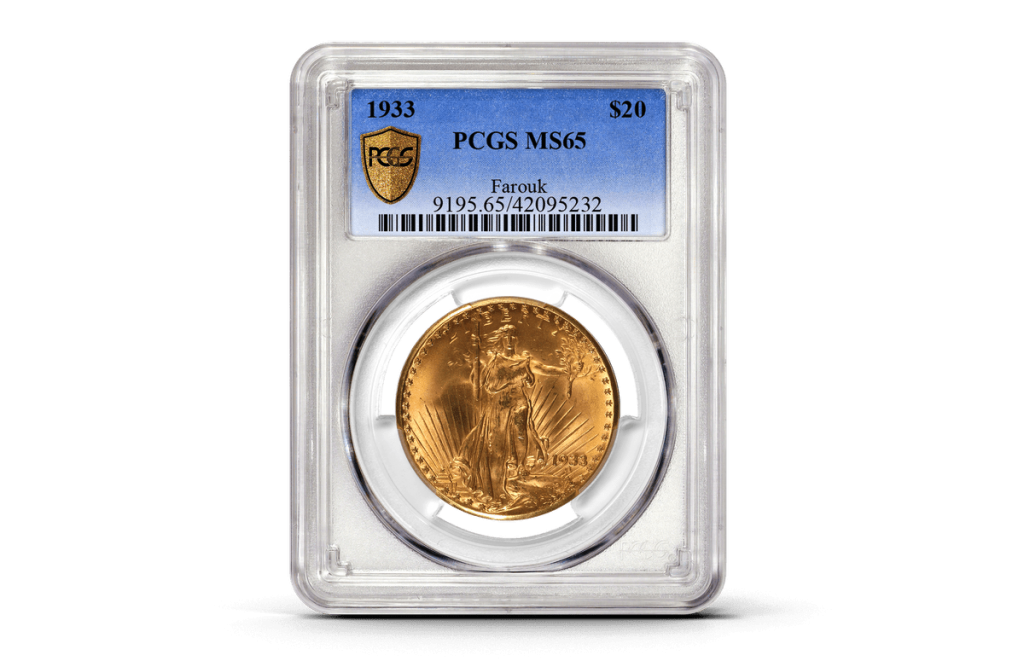
1933 $20 Obv – The 1933 Saint-Gaudens Double Eagle is a gold coin with a $20 face value that sold for nearly $19 million in June 2021 and was graded MS65 by Professional Coin Grading Service. The obverse, seen here, depicts a striding Miss Liberty before a sunrise over the U.S. Capitol in Washington, D.C. Courtesy of Professional Coin Grading Service.
-
-
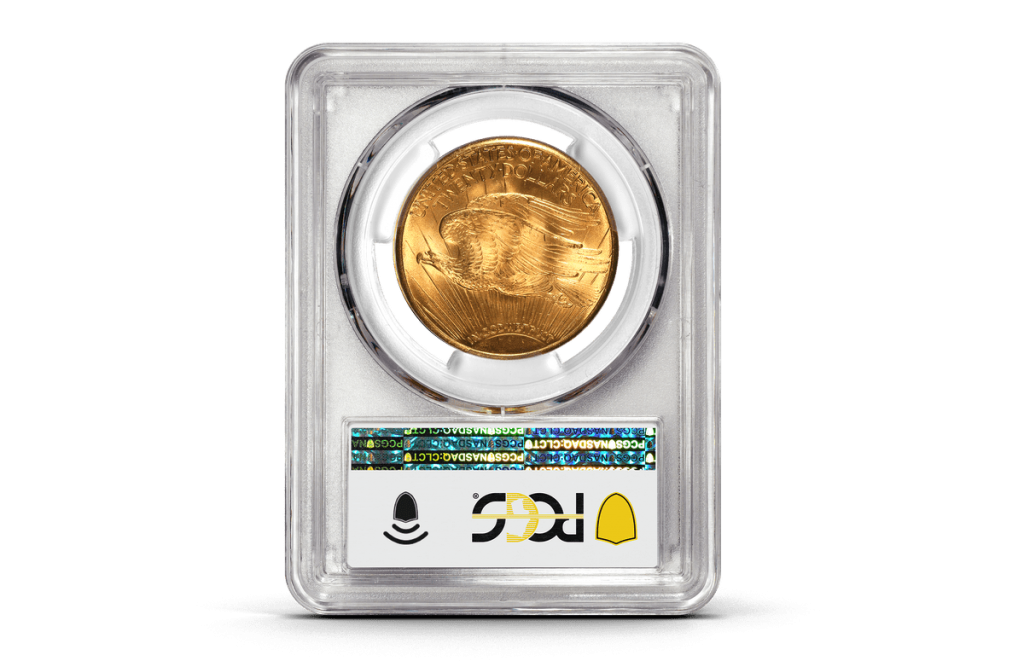
1933 $20 Rev – A flying eagle graces the reverse of the 1933 Saint-Gaudens Double Eagle, a gold coin with the face value of $20 that was originally designed by namesake sculptor Augustus Saint-Gaudens in 1907. Courtesy of Professional Coin Grading Service.
While I acknowledge there is a place for third-party grading services in the collecting market, certifying and encasing the most valuable coin in the world does not qualify.
Although forgeries and fakes are infesting the market, a coin like this one-of-a-kind wonder with a story that reads like a best-selling whodunit the coin is so unique that encasing it away from the world has no equivalent in other collectibles.
Art collectors spend more money for the rarest of paintings only to display them without encapsulation. For example, Salvator Mundi attributed Leonardo da Vinci sold in 2017 for a world record of $450.3 million to Prince Badr bin Abdullah of Saudi Arabia. The prince intends to display it at the Louvre Abu Dhabi. Although the display will have security, the painting will be on display for all to see, not entombed in plastic.
Slabs give coins a homogenous feeling. All slabs look the same. There is little to distinguish the coins other than the information on the label. But the label is not the coin. It hides the differences away from the admirer. A row of slabbed coins does little to enhance the fact that each is different.
Coin collectors have given up eye appeal and the emotion of seeing a beautiful coin to the third-party grading services. Collectors have become mesmerized by labels, numbers, and even stickers without truly understanding what they mean.
Recently, a friend purchased a Carson City minted Morgan Dollar that we thought should grade DMPL (deep-mirrored proof-like). The coin was beautiful but had some slight inclusions. There were bag and handling marks on the coin, but we were confident that the coin would earn the DMPL designation.
When he sent the coin to a third-party grading service for encapsulation (not my coin, so it was not my decision), we played “guess the grade.” My guess was lower than my friend’s. He was more optimistic and overlooked some of the issues I saw. Even though the coin was graded MS-62 DMPL, it did not take anything away from the coin’s beauty.
Except my friend was upset, and the coin is in plastic.
He was conditioned by the phenomenon of grading every coin that the higher the grade, the better the coin. Forget that the coin was beautiful to look at, and he paid less for the coin than if it was graded. He really wanted the coin to grade MS-64. After all, MS-64 is better than MS-62, right?
Now that the coin is encased in plastic, it has lost its luster. I am sure the coin is fine, and the third-party grading service did not damage the coin, but the plastic mutes the impressive DMPL fields. I do not have the same emotional response to the coin in the plastic.
As a result, he wants to crack out the coin and send it to the other third-party grading service to see if he can get a higher grade. I shook my head and wished him good luck.
I am worried that by encasing the only 1933 Saint-Gaudens Double Eagle Gold Coin that is legal to own in a plastic case, the coin will lose its impressive look and make it like any other coin.
If you like what you read, share, and show your support 
Jul 25, 2021 | coins, news
 According to reports, there continues to be a coin shortage. In areas of the country where the people primarily use cash, retailers tell news outlets that they are receiving fractions of their orders from the banks. The banks are countering that they are not receiving their complete orders from the Federal Reserve.
The Federal Reserve Banks have not commented on the problem, but the U.S. Coin Task Force continues their Get Coins Moving promotion. When speaking on background, sources say that there are coins in the Fed’s cash rooms but that the amount they keep in reserve for emergencies is lower than usual. Some report that there is an overabundance of dollar coins if someone wants them.
While other areas of the country are experiencing coin shortages, the D.C. area does not seem to have problems. The only advertising for the Get Coins Moving program is on national telecasts. Very few businesses have signs asking for customers to spend their coins.
To see what I can find in change, I have been paying with cash for local transactions. When traveling away from home, I will use cash to test the diversity of the change I receive. While doing this in the last three months, there is a lack of diversity in the change I receive.
Even though the U.S. Mint produced more coins than it had in its history in 2020, the change I receive is full of 2019 coins and older 50 State Quarters. Over the weekend, my change had six Ohio state quarters complete with the hanging astronaut.
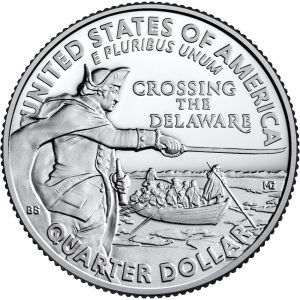
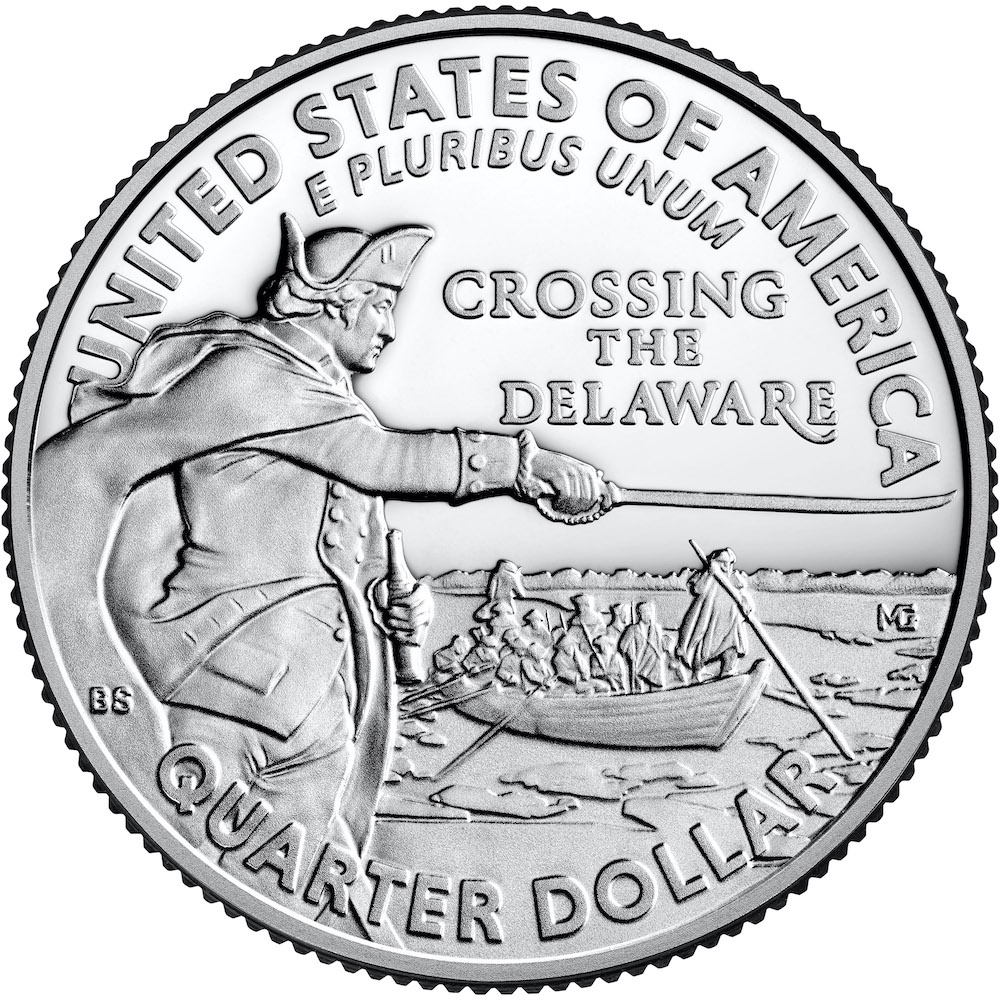
We are getting close to the end of July, and I have not seen a 2021 coin, including the Washington Crossing the Delaware quarter.
There is money out there. People have to spend it for it to circulate. Please spend your pocket change so I can find something interesting.
And now the news…

July 19, 2021
Despite disruptions brought on by the pandemic, the SA Mint managed to produce the Reserve Bank's full order of 811 million coins in its 2020/21 financial year.

→ Read more at
businessinsider.co.za
July 21, 2021
An extremely rare 22-carat gold coin dating from the reign of Henry VIII has sold for £64,000.
→ Read more at
dailymail.co.uk
July 22, 2021
The silver market faces some short-term headwinds as focus on the potential for tighter monetary policy; however, the precious metal's drop to a three-month low below $25 an ounce has exaggerated the market's weakness, according to one research firm.
→ Read more at
kitco.com
July 23, 2021
Historians are wondering how 118 coins minted during the Carolingian Empire, a Frankish dynasty who ruled over what is today much of France, Germany and Italy in the period 750–887 AD, managed to find their way to Poland.
→ Read more at
thefirstnews.com
July 23, 2021
An unprovenanced ancient coin, identified as a Stater (c. 500-480 B.C.), was handed over to the Greek Ambassador to the US, Alexandra Papadopoulou, on Thursday, by officers of the US Immigration and Customs Enforcement.
→ Read more at
ekathimerini.com
July 23, 2021
Archaeologists from the Institute of Archaeology of the Russian Academy of Sciences have announced the discovery of a coin hoard in the ancient city of Phanagoria. Phanagoria was founded by Teian colonists around 543 BC, and developed into a Greek centre of trade between the coast of the Maeotian, and the countries on the southern side of the Caucasus.
→ Read more at
heritagedaily.com
If you like what you read, share, and show your support
Jul 23, 2021 | commentary, US Mint
In this final installment of my look at the U.S. Mint’s current problems, I will translate the expletives I wrote in the margins of my notes into an editorial about what I learned.
 The impression left by the U.S. Mint officials I spoke with is that the lawyers had more say over policy than the appointed director or the career executives. When questioned as to why the U.S. Mint did not implement additional cybersecurity measures against Internet robots, the answer was that the lawyers prevented a sound business decision.
I do not know why the lawyers prevented the U.S. Mint from implementing appropriate cybersecurity controls to prevent Internet robots and other abuses. Whatever the reason, it caused the U.S. Mint to violate the Federal Information Security Management Act (FISMA). Ignorance of FISMA put the U.S. Mint’s cybersecurity in jeopardy during a time when the Internet is becoming more dangerous.
When I used to work as an information security contractor for the U.S. government, including with Treasury bureaus, agencies would work in anticipation of the passage of relevant laws. When I worked for the IRS, another Treasury bureau, the lawyers and analysts would work on the implementation requirements for the new law. They drafted everything from new forms to planning for the programming necessary to implement the new law. Other agencies did the same. If the lawyers prevented the U.S. Mint from anticipating the passage of a law, then the lawyers are overanalyzing the law. It is called being pedantic.
Where was the U.S. Mint management? The lawyers are supposed to provide advice. They are not supposed to be the final answer. Even though the U.S. Mint did not have a permanent director until David Ryder was confirmed by the Senate, someone was in charge. Why is that person not held responsible for the problems?

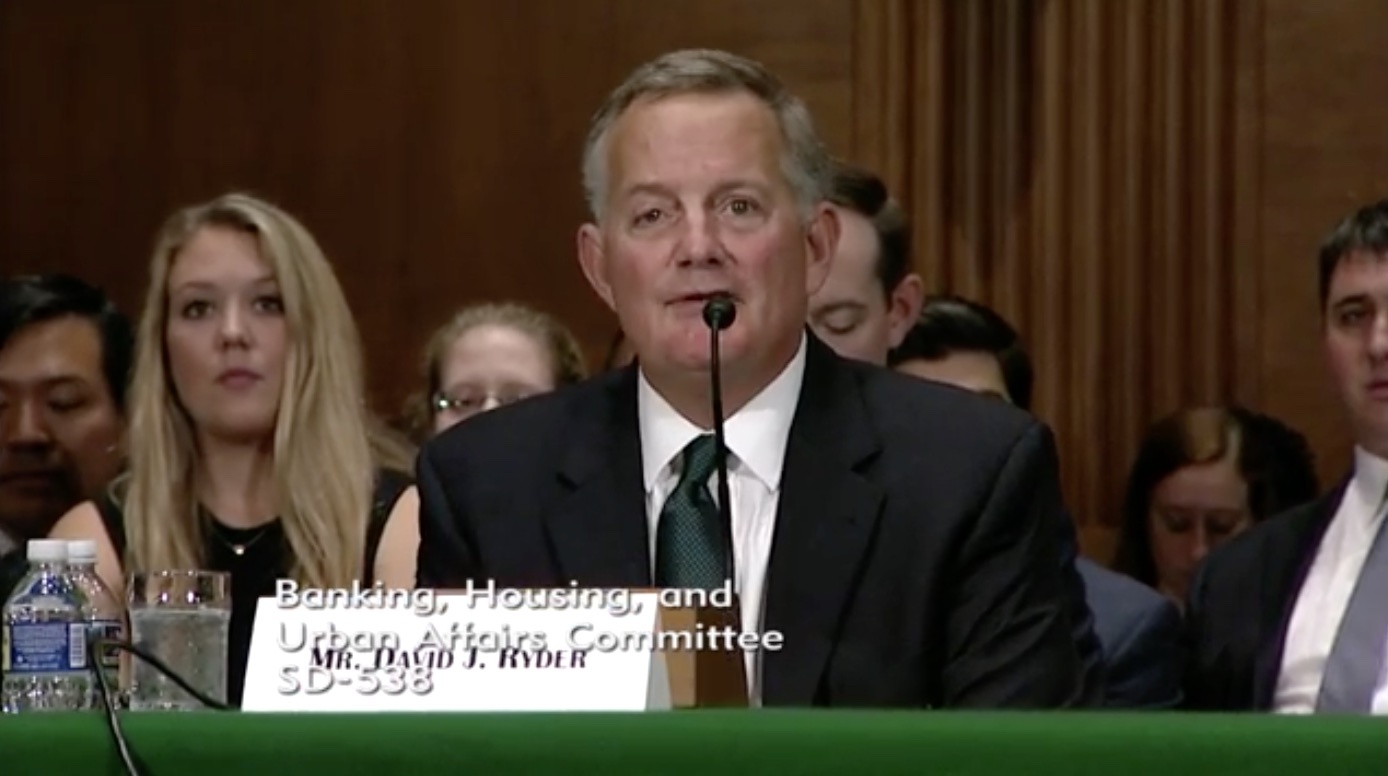
David J. Ryder at the hearing regarding his nomination to be the 39th Director of the U.S. Mint
Has Ryder even worked on the security of U.S. coinage? Criminals are duping the collecting public by peddling counterfeit American Silver Eagles. Why has the U.S. Mint not implemented security features in the American Eagle program? If the security of the physical currency is Ryder’s specialty, why has he not implemented it to protect the public?
This is not Ryder’s first rodeo. He was appointed the U.S. Mint director in 1992 by President George H.W. Bush. Ryder should understand how the government works. But his performance during his current appointment and the decisions he has made have the numismatic public questioning his competence.
When someone writes a critical opinion piece, they should provide possible solutions. In this case, I am not sure that any suggestion would work. The U.S. Mint does not listen to the collecting public. When they feign interest, the people who try to be responsive move along with the political winds, and new appointees ignore the lessons of the past under the guise of “Not invented here.”
A common problem among political appointees is that they come into any job thinking they know better than career appointees. It causes them to ignore the past and rediscover previous mistakes. I spent a career fixing the security problems caused by mistakes made by appointees.
I wonder if a civilian advisory board would help the U.S. Mint? The board would consist of experts in numismatics and government processes. But it will give the bureau someone to blame if something goes wrong because if I learned nothing else from my 25 years working for the government, career executives and appointees are collectively risk-averse.
If you like what you read, share, and show your support
Jul 22, 2021 | security, silver, US Mint
This is the second article of three regarding the recent problems at the U.S. Mint.

It is as if the U.S. Mint did not learn a lot since the fiasco of the 2014 Kennedy Half Dollar 50th Anniversary Gold Coin release. (Image courtesy of ABC 7 News, Denver)
Last month, a discussion was held with a representative of the U.S. Mint’s communications department and a manufacturing supervisor to understand better the 2021 Morgan Dollar ordering failures. When asked about lessons learned from previous sales, they admitted to working at the U.S. Mint for four years or less and could not talk about previous issues.
After asking about lessons learned from the past with responses ringing like “not on my watch,” it brought to mind the first Numismatic Forum in 2016, where the only blogger in attendance asked whether the discussions would survive changes of leadership and administrations. Rhett Jeppson was nominated to be Director of the U.S. Mint but was never confirmed. Although there were three more Numismatic Forums, it is apparent that none of the discussions survived leadership changes.
Part of the problem is with the government’s Senior Executive Service (SES) program. Members of the SES are government employees hired to senior management positions within the federal government. They undergo special training in government leadership and understand how to lead their sections through policy changes. SES employees are supposed to be non-partisan government workers. There are also limited reasons for the SES to stay with the agency to build collective knowledge.
There are three ways an SES employee can be appointed. A career appointment is a merit position staffed by a qualified executive. A noncareer appointment is a temporary appointment and is subject to several restrictions, including the number of temporary appointees the government can hire. Finally, a limited appointment is hired for an 18 month to a three-year term. Rhett Jeppson’s role that made him the acting Director was the result of a limited appointment.
SES members are also encouraged to change agencies every four years. Although there are exceptions, the SES program is designed not to allow executives to become too powerful within the agencies. Forcing them to move reduces the risk of potential abuse of power.
As SES members come and go, the U.S. Mint loses the institutional knowledge they earned over the years. Experience working with members of the SES program shows that the new appointees rarely refer to documentation left by their predecessors. Their egos also have them ignoring employees and contractors with the institutional knowledge.
The U.S. Mint has resources in the numismatic community that can help teach them about the past. Having an engaged numismatic community available to help the U.S. Mint makes the bureau unique among government agencies. If their egos prevent them from reaching out to the numismatic community, the SES members can perform a web search on any topic to read what the numismatic press wrote about any issue.
During the discussion, the U.S. Mint emphasized how they wanted to work with the numismatic community and do their best to make the products accessible. While they will talk with members of the numismatic media, the U.S. Mint will not reach out for the community’s help.
The numismatic community wants the U.S. Mint to be able to support our collecting habits. They have a unique opportunity to engage a community willing to help. If the U.S. Mint wants to demonstrate that they are, they should set up a program of numismatic advisors to help them understand what went wrong in the past and how to make it better for the future.
If you like what you read, share, and show your support
Jul 21, 2021 | bullion, coins, silver, US Mint
This is the first article of three regarding the recent problems at the U.S. Mint.
 Economic analysts believe there is a silver shortage but that it is not critical. According to the supply chain reports, a sufficient supply of industrial silver for manufacturers to keep up with production. The reduction in computer chip production because of COVID-based plant shutdowns is the greatest threat to manufacturing.
Jewelry and other businesses that use silver for their beauty are experiencing a slowdown but not to the extent of the computer chip industry. The industry has been able to use recycled silver fueled by people cashing in their scrap silver. One silver refiner reports that they have more work than they can process.
Although manufacturers have silver to maintain production, the U.S. Mint announced on May 28, 2021, that “The global silver shortage has driven demand for many of our bullion and numismatic products to record heights.”
On June 2, the U.S. Mint clarified their statement by saying, “In a message released Friday, May 28, we made reference to a global shortage of silver. In more precise terms, the silver shortage being experienced by the United States Mint pertains only to the supply of silver blanks among suppliers to the U.S. Mint.”
Why is the U.S. Mint different from the other industries?
The short answer is that the U.S. Mint is just another government agency subject to federal law.
The U.S. Mint is required to buy silver mined in the United States within one year of its mining (31 U.S. Code §5132(a)(2)(D)). Under this law, the U.S. Mint cannot use recycled silver or silver that the government has not purchased from the mines.
The U.S. Mint discontinued assay operations shortly after the passage of the Coinage Act of 1964. Since then, the bureau has bought the metals from other manufacturers, either sheets or already formed planchets. When the American Eagle Program started, the law required the U.S. Mint to use the silver in the Strategic and Critical Materials Stockpile. The U.S. Mint manufactured the planchets in West Point.
When the program depleted the Strategic Stockpile, Congress updated the law to require the U.S. Mint to use freshly mined silver. They found that it was more cost-effective to have a commercial vendor manufacture the planchets.
Hiring a commercial vendor to do work for the federal government is different from a business-to-business transaction. The government requires all contracts and contractors to follow the Federal Acquisition Regulations (FAR) to purchase goods and services.
For the government to contract with any company, a bidding and vetting process can last from weeks to years. The agency has to produce requirements, selection criteria and evaluate the proposals, called source selection.
Congress purposely made the process challenging to promote fairness in the bidding process and ensure the government pays a fair price. Unfortunately, the process is expensive and fraught with problems.
For the U.S. Mint, the problem is that FAR does not allow the latitude to find alternate vendors when there are supply issues.
The U.S. Mint has contracts with four vendors to make silver planchets. They have vetted the contractors, their processes and have contractual quality control measures to ensure the planchets comply with the Treasury’s legal and quality requirements. If the vendors cannot fulfill the U.S. Mint’s order, the law prevents them from looking for immediate alternatives.
According to the U.S. Mint, the suppliers of silver planchets had production slowdowns because of COVID-19 operating precautions. In addition to manufacturing issues, the mining operators also experienced slowdowns because of the same operating precautions. Every industry is experiencing supply chain interruptions.
Where the U.S. Mint could have done better was to order the planchets sooner. The U.S. Mint reported that agency attorneys refused to allow their purchasers to order planchets before the law was signed. The bill, H.R. 6192, was sent to the president on December 24, 2020. The president signed the bill into law on January 5, 2021 (Public Law No. 116-286).
When a law is signed, the White House will tell the appropriate Departments. If that does not happen, the agencies receive notice from the Government Printing Office (GPO) who publishes the laws. Like everything else, the GPO has experienced interruptions because of pandemic protocols.
According to a government attorney that works for the Inspector General’s office in a non-Treasury department, agencies have the latitude to work on anticipated laws. An example cited is that the IRS works on drafting forms and regulations based on the bills in progress to be ready for the filing season.
Although Congress did not do the U.S. Mint a favor by passing the bill on Christmas Eve, the White House did not do the U.S. Mint a favor by not letting the Treasury know they signed the bill. However, the leadership of the U.S. Mint allowed the lawyers to dictate operations. The lawyers are supposed to be advisors, not the last word.
If you like what you read, share, and show your support
Jul 20, 2021 | coins, Eagles, US Mint
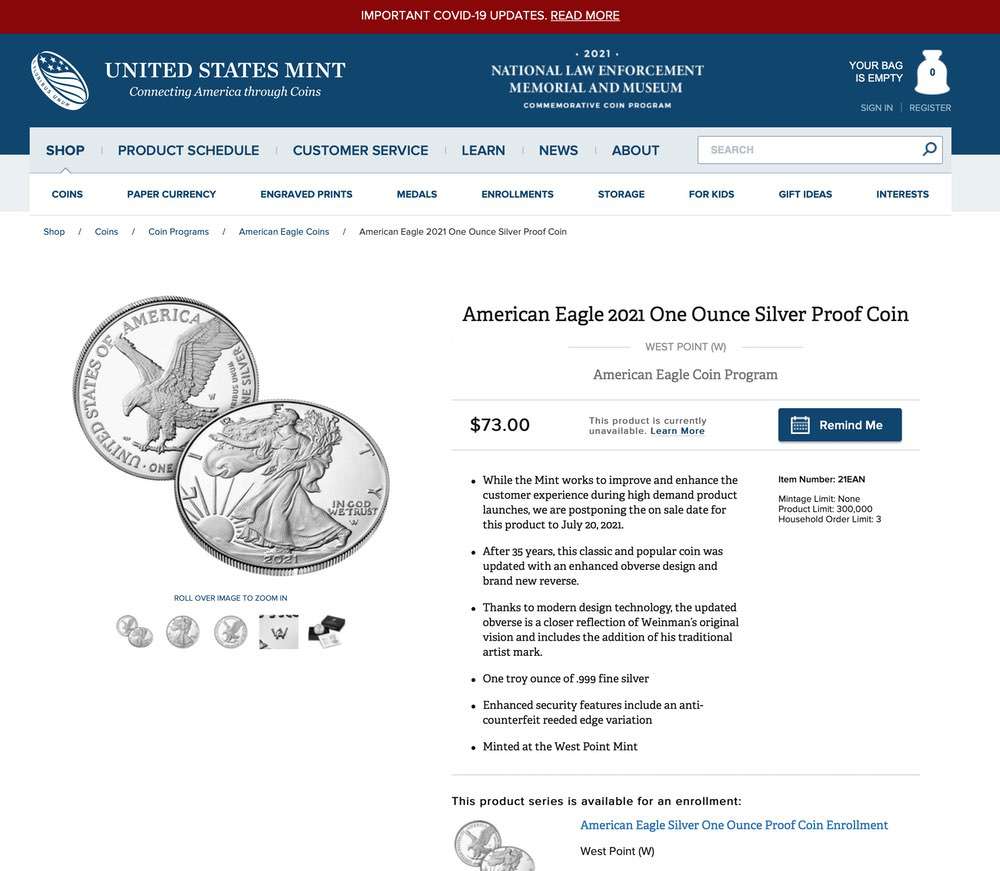
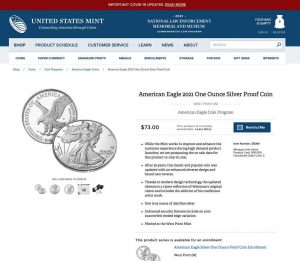 I was able to order the 2021-W American Silver Eagle one-ounce proof coin today with only minor issues.
Like every other time I ordered new releases from the U.S. Mint, I logged into my account before the sale. I verified that the credit card I had registered was the correct card. The card was in front of me just in case something went wrong.
As the time closed in at noon, I tapped the refresh button. As soon as the button changed from “Remind Me” to “Add to Bag,” I began tapping.
When the page did not respond immediately, I panicked and tapped again. Of course, I should know better. But I am an anxious collector who cares what my background is. After tapping more than once, the coin appeared in my bag, and I pressed checkout.
I did not look at the contents of my bag as I scrolled down to my payment option. I selected my stored credit card then watched as it took too long to fill the form. As it took time, I was pressing buttons faster than the website responded. After the system finally filled in the form, I forgot to enter the CVV for my card. Then another tap.
Once the confirmation page appeared, I took a screenshot of the information for safekeeping. That is when I realized my nervous tapping added more than one coin to my bag. It looks like I ordered three coins. It also may explain an error I received during the tapping on the link when the system thought I was overfilling my bag.
As I type this, the coin sold out. I do not know how long it was before the coin sold out because I had to put down my iPad and go back to work. It looks like if you missed the opportunity to order, then you would have to purchase one on the secondary market.
A quick search on eBay suggests that the presale for graded coins is averaging $135-150.
Jul 20, 2021 | Canada, coins, fun
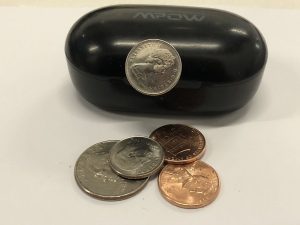 With everything going on, it is nice to find something amusing. Over the weekend, I wanted to listen to a couple of podcasts. I reached into my pocket for the case containing my wireless earbuds and found something came along for the ride.
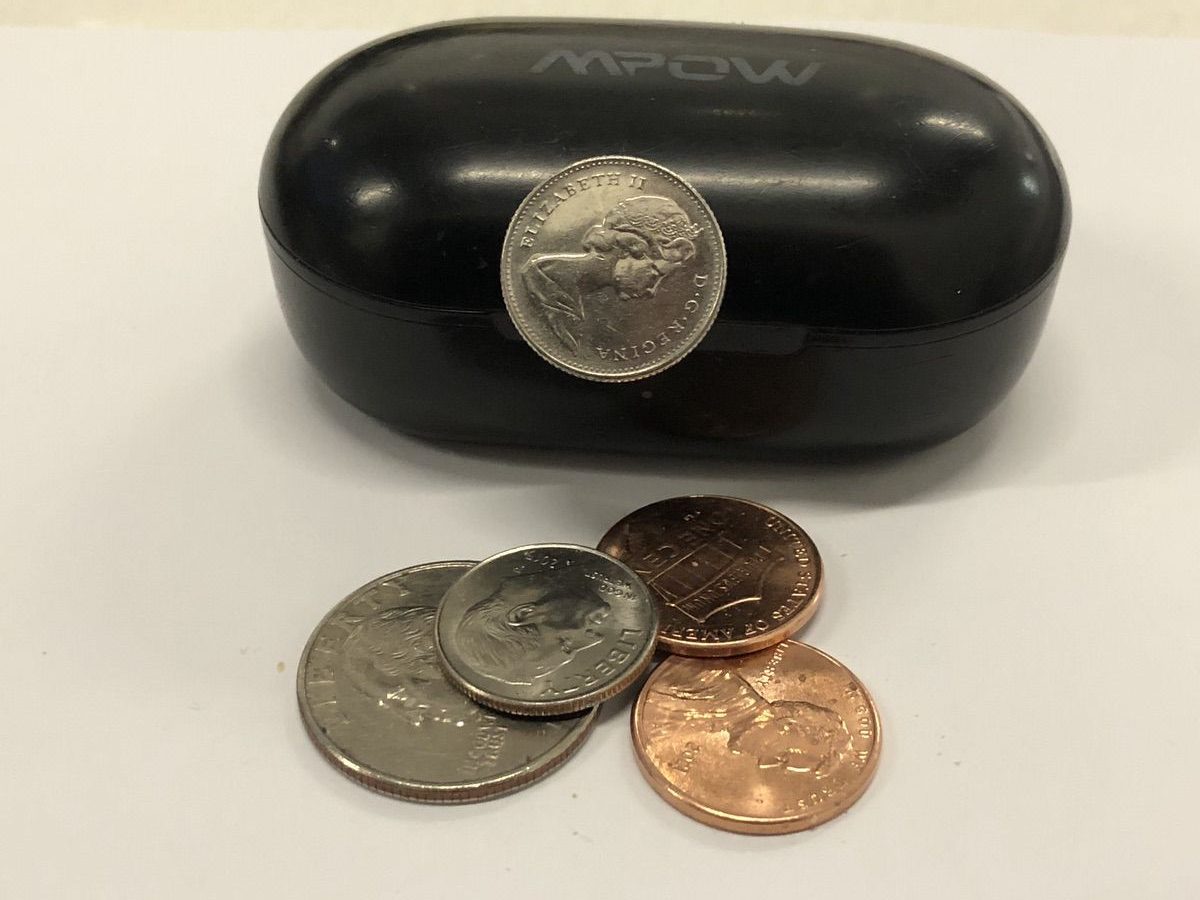
Stuck to the magnetic closure was a coin. A closer look found the coin is a 1978 Canada 10-pent coin. Or that is what the coin appears to be.
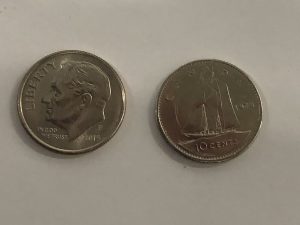
The Canada 10-cent coin is slightly larger than the U.S. dime (18.03 mm versus 17.91 mm), and today, the Canadian coin is made of plated steel. But this is a 1978 coin and may not be steel. While investigating the coin’s specification, it is supposed to be made of nickel. I thought nickel was not magnetic. Time to review my basic science
-
-
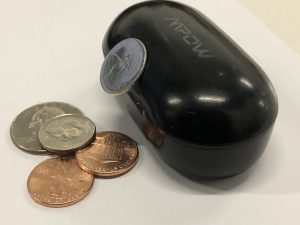
My earbud case magnetized the Canada 10¢ coin made of nickel.
-
-
The Canada 10¢ coin is very slightly larger than the U.S. dime.
Nickel is one of the transition metals, an element used to form bonds with other elements. While I let you explore the chemistry on your own, let us say that it mixes well with other elements to create valuable compounds. In numismatics, nickel provides the silver color on many base metal coins.
But that does not explain why the coin stuck to my wireless earphone case.
I found that nickel is a ferromagnetic metal, meaning that it can become magnets or be attracted to magnets. Nickel is not naturally attracted to magnets or easily magnetized. But nickel is one of only four elements that can be magnetized easily at room temperature. The other three are cobalt, iron, and gadolinium.
For help, I turned to a high school chemistry teacher to refresh my memory. During the refresher lesson, I flashed back to the high school chemistry demonstration on magnetism, creating a magnet from a ferromagnetic item.
While the coin was in my pocket, the coin rubbed next to the magnet. The rubbing caused the nickel atoms to become orderly that turned the coin into a magnet. The Canadian ten-cent coin that stuck to the earbud case could pick up a straight pin to test the theory.
But why won’t any of my United States coins turn into a magnet in my pocket?
Since U.S. coins are made up of an alloy of 75-percent copper and 25-nickel, the copper and the nickel’s strong bond with the copper stops the ferromagnetic process. It would take a very strong magnet to order the nickel atoms in a U.S. coin to turn it into a weak magnet.
Not only can coins teach history, but they can also teach chemistry.
If you like what you read, share and show your support
Jul 18, 2021 | coins, news, US Mint
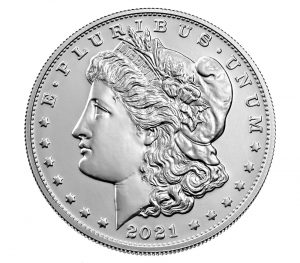 The U.S. Mint announced the new ordering procedures for upcoming silver products and that there will be changes to the bulk purchase system. Most collectors met both news items with a collective yawn.
For many years the U.S. Mint has promised improvements for the collector and access to their products. During that time, the collecting public held their collective breaths hoping that they will get it right. After failing to show progress, collectors are not optimistic.
According to the U.S. Mint, the problems are a low supply of planchets and Internet robot ordering on a broken ordering system. The supply issue has acceptable reasons external to the Mint. The broken ordering system and managing against the bots is the direct responsibility of the U.S. Mint.
Even if they fix the ordering and distribution systems for the upcoming product, it will take a long time for the U.S. Mint to gain the trust of collectors.
And now the news…
July 13, 2021
The association says the suspension of the program has been a burden to scrap recyclers across the country. The Washington-based Institute of Scrap Recycling Industries (ISRI) is urging the U.S. government to reinstate its mutilated coin redemption program, which was suspended in 2019.
→ Read more at
recyclingtoday.com
July 14, 2021
When the first modern Olympics were held in Athens in 1896, winners did not get gold medals as they will later this month when the Tokyo games get underway. Instead, they got silver, while runners-up got bronze. There were no medals for third place.
→ Read more at
thenationalherald.com
July 14, 2021
A rainstorm in London has led to the discovery of a hoard of more than 300 coins dated to the first century B.C.
→ Read more at
smithsonianmag.com
July 15, 2021
A German federal court on Tuesday rejected the appeal of two defendants who had been jailed for stealing a massive gold coin from Berlin's Bode Museum. The court in the city of Leipzig concluded that there were no "legal errors to the disadvantage of the defendants" in their February 2020 sentencing and, as such, their prison terms were found to be legally binding.
→ Read more at
dw.com
July 15, 2021
A Viking era "piggybank" of silver coins has been discovered on the Isle of Man by a metal detectorist who made another startling discovery last year.
→ Read more at
bbc.com
July 16, 2021
THE Bangko Sentral ng Pilipinas (BSP) issued a new warning to the public about the supposed "Brilliant Uncirculated 20-Piso" coin being sold online.
→ Read more at
manilatimes.net
If you like what you read, share, and show your support
Jul 11, 2021 | coins, counterfeit, currency
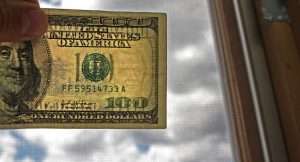
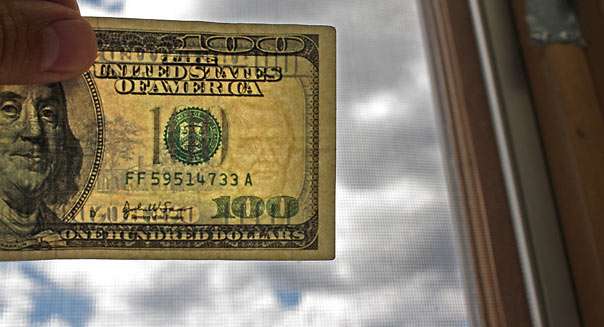
From 2019: An example of a $100 Federal Reserve Note printed on a bleached $5 note (Image courtesy of Prescott Police Department via AOL.com)
Stories that do not appear on the front page of the printed edition or the top of a website rarely receive the attention of the headline writers. Unless there is a murder or other major crime, most local crime stories do not earn over-the-top headlines. This week’s news has three examples of mundane headlines that display a concerning pattern about counterfeit coins and currency.
Counterfeit money has been a problem since its invention. Governments try to stop criminals from counterfeiting, but their efforts almost seem inevitable. The new trend appears to be the small-time criminals caught trying to make money from selling fake money to survive.
Recent stories about the arrest of counterfeiters report that the people are not career criminals trying to get rich. Those who are getting arrested are using the counterfeits for survival. The world economy has deteriorated to the point that buying and selling counterfeit money was worth the risk to buy a scooter to use as primary transportation.
The people caught passing counterfeit money admit it is not a mistake. In the statements to the police, they admit to using counterfeits to fill to earn a survivable living. Authorities continue to look for the distributors of the counterfeits.
And now the news…
July 4, 2021
An extremely rare 22-carat gold coin from the reign of Henry VIII, considered the origin of the pound, is set to go under the hammer this month for £50,000.
→ Read more at
dailymail.co.uk
July 7, 2021
In a major crackdown against the illegal counterfeit currency trade going on in the city, the district police arrested six persons and seized Rs1.47 lakh fake notes in denominations of Rs2,000 and Rs500.
→ Read more at
tribuneindia.com
July 7, 2021
ST. LOUIS, Mo. – Have you ever gone to the zoo or a museum and received a stretched coin as a souvenir? Well, the “The King of Elongated Coins” from the 1904 World’s Fair is up for auction and the lot including two other coins could be worth up to $4,000.
→ Read more at
fox2now.com
July 8, 2021
A team of French, Australian, and Israeli scientists has collected evidence proving there was an active and thriving silver trade network in the eastern Mediterranean region in the Late Bronze Age and Iron Age (approximately 1200 BC to 400 BC).
→ Read more at
ancient-origins.net
July 8, 2021
The Niger State Police Command has arrested a Catholic Church Catechist and two others for engaging in the sale of counterfeit currency of about N15,800,000. The trio of Emmanuel Akazuwa, 42, Catechist Sabastine Dabu, 48 and Umar Mohammed, 50, were arrested in a hotel in the Kontagora area of the state while trying to get a buyer for the N15.8million in their possession.
→ Read more at
saharareporters.com
July 9, 2021
Officers seized approximately $1,700 in counterfeit currency during an arrest on Thursday, July 8, 2021.
→ Read more at
sootoday.com
July 9, 2021
Byzantine coins were discovered last month at the port of Caesarea, a town in Northern Israel between Tel Aviv and Haifa.
→ Read more at
greekreporter.com
If you like what you read, share, and show your support
Jul 7, 2021 | ANA, commentary

Dr. Ralph Ross (photo credit: ANA)
The rest of the Board of Governors will consist of:
- Mary Lynn Garrett
- Clifford Mishler
- Shanna Schmidt
- Michael Ellis
- Rob Oberth
- Charles Morgan
- Mark Lighterman
Although this was not my choice for leadership, I will support them for their two-year term. The President, Vice President, and the Board of Governors deserve the support of the entire membership regardless of what you thought about the election.
In responding to the last election, I wrote, “The ANA is at a critical juncture in its modern history. There is a societal change happening that is affecting many hobbies and traditional institutions.” Rather than the situation getting better, it has only heightened the urgency.
The reaction to the pandemic showed that the ANA is an organization bogged down by people with old ideas and very little creativity when it comes to adapting to the changing culture. The ANA and its Board of Governors were dragged kicking and screaming into the 21st century to survive and not because they wanted growth.
At the time, the ANA looked clueless because the leadership of the Board of Governors was clueless. When they took the reigns off the people at the ANA headquarters, it was evident that they were working in the Association’s best interest despite the Board’s dysfunction. While the people at the headquarters were helping the ANA to survive while working from home, the Board seemed lost.
As I said two years ago, the status quo is no longer acceptable. Zoom is yesterday’s technology and not something to use to build a future. There are better technologies that have emerged from the pandemic that the ANA can use to expand its outreach.
In addition to the technology, the ANA must become a leader in consumer protection for the hobby. For the last year, the number of Chinese counterfeits has increased. Scammers are using new tactics to fool buyers into thinking they are getting a deal on silver coins. Rather than help the public, the ANA has been silent.
The ANA must be the organization to lead the effort against these counterfeits. They can partner with National Coin & Bullion Association (formerly ICTA) and the Professional Numismatic Guild (PNG) to create a nationwide anti-counterfeit education program. A plan can be formulated by the fall, with a national education program occurring shortly after.
President-elect Ross made his platform about education. Here is the first idea to make an educational impact for the ANA.
Overall, 19,027 ANA members were eligible to vote in this election. That is down from 19,737 in 2019. There were 5,560 votes cast, representing 29.22 of the eligible voters. That is down from 31.06 percent in 2019.
Fewer members and fewer voters are just one legacy of this past Board of Governors. If the ANA does not find ways to better engage with members and draw in new members, these numbers will be reduced in 2023.
If members have ideas that could help the ANA, let them know what you think. As a member, your input carries weight, and you should be able to participate. When you do write, please keep it respectful and include your membership number.
It is your ANA. Your ANA needs your input. Support the new Board and help them find their direction.
Note About the Makeup of the Board
Following the announcement, there were two persistent comments appearing in my Inbox about the demographics of the Board of Governors. I am very disturbed by the comments.
I do not subscribe to the idea that a person is not qualified for the job because of demographic characteristics. I never have. This is not because I am “woke,” but this is how I have been for as long as I can remember.
I will not respond well to a statement like, “I don’t like this person because…” and insert some ridiculous demographic reason. Let us all get along and work together to make the ANA better.




 Loading ...