Feb 29, 2016 | celebration, coins, medals
I am convinced that if there is something to celebrate there is a coin, medal, or token to collect in its honor.
Today, my challenge is to determine if there is something numismatically available to collect for Leap Day, that once every four years celebration of the 29th of February.
For today’s collecting adventure we venture into the world of geocaching. For those not familiar with geocaching, it is an adventure activity in which the participants use the global positioning system (GPS) to navigate to find small containers with treasures. The small containers are called a “geocache” or “cache.” These geocaches contains a logbook that is signed with by the finder with a code name and placed back where it was found.
Almost anything can be included in the geocache for a prize. One such prize is a geocoin. Similar to a challenge coin, a geocoin is a specially designed medal that is the prize for finding the geocache. There is a worldwide community of geocache enthusiasts that you can find at geocaching.com.
For one of the meeting at my coin club, two of our young numismatists taught some of us old folks about geocaching and showed off some of the geocoins they have found or collected from various sources. Some of the designs were phenomenal. There was one geocoin made for a gathering of Maryland enthusiasts that was so well done that I have been looking to buy one since.
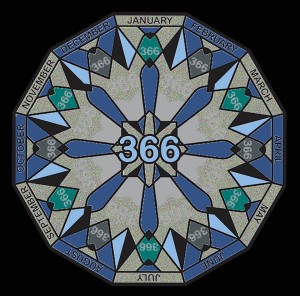
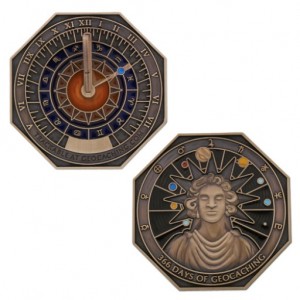
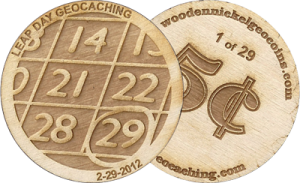
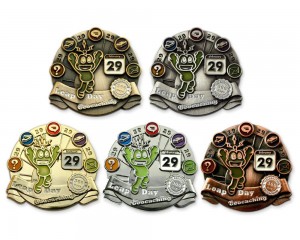
Without the constraint of rules, laws, and congress, some have created quite a number of interesting geocoins to celebrate the leap year. To celebrate Leap Day and the geocaching community for the inspiration, here are some of the interesting geocoins I have found on my online search.
Feb 26, 2016 | Canada, fun, pocket change, Royal Mint
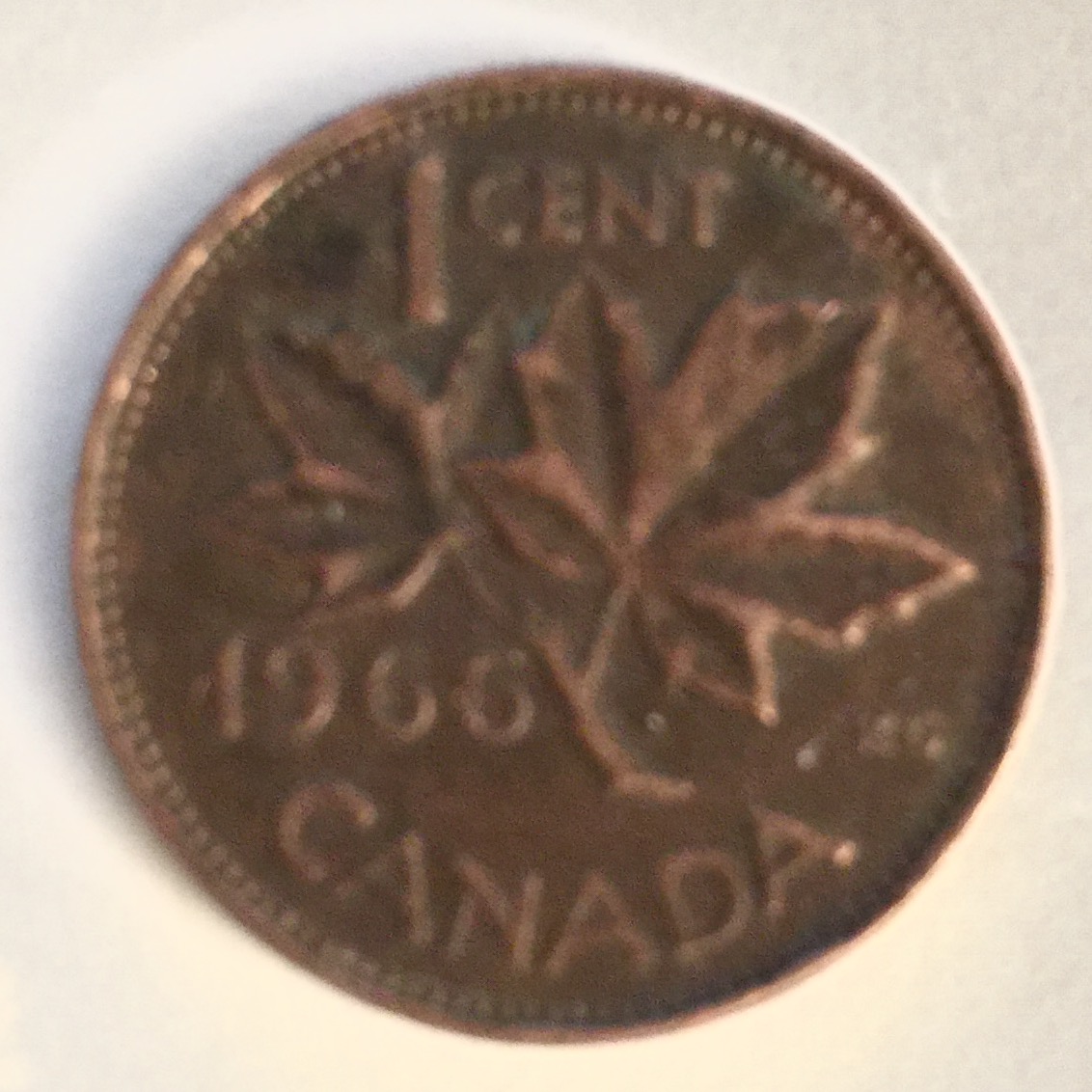
1966 Canadian one-cent found in pocket change
We need to build a wall!
We know that the Royal Canadian Mint struck their last 1-cent coin in 2012. During the six-month transition, Canadian banks were helping recall 1-cent coins while cash sales began to be rounded up or down to the nearest 5-cents.
But when I made a purchase at a local convenience store, my change included a 1966 Canadian 1-cent coin. Even though the coin is still legal tender it is not usable. I can visit an agent for the Bank of Canada or the Royal Canadian Mint to turn it in for updated coins. I was told that the minimum they will take for exchange is 100 coins. If I can scrape together 99 more coins I can trade it for a Loonie.
At the current exchange rate, the coin is worth only 0.0074 U.S. cents. Someone owes me 0.0026 cents!
Maybe I should go back to that store and see if they would give me a Canadian 5-cents coin and I would give them four U.S. cents. That would make it even.
It’s Friday. Why not have a little fun after finding a Canadian cent in my change!
Feb 25, 2016 | cash, currency, dollar, errors, news, policy
The latest attack on the money in your pocket is the talk about eliminating the highest denomination banknotes. This discussion was intensified in the political policy world with the article by Lawrence Summers that appeared in The Washington Post. Summers is a professor at Harvard and had once been the Secretary of the Treasury and Director of the White House’s National Economic Council.
Summers cites a paper by Peter Sands of Harvard and students that claims to make a compelling case to stop issuing high denomination notes and possibly withdraw them from circulation because of its use in crime and corruption.
Crime is mostly a cash-based enterprise. Criminals do not use gold, checks, or credit cards. As those of us who use cash over other payment types understand, cash is more anonymous. Cash transactions can be used to perform untraceable transaction that could be used to evade taxes. Criminals use cash to avoid law enforcement and terrorists use cash to fund their activities outside of the monitoring of financial transactions. In fact, Sands notes that these criminals have nicknamed the €500 note the “Bin Laden.”
In order to carry out cash-based transactions is the ability to carry the cash. Sands’ paper and Summers’ article both say that lower denomination currency will make it difficult to carry large volumes of currency in order to make these transactions. Considering the weight of United States currency, carrying $1 million worth of $100 Federal Reserve Notes would weigh about 10 kilograms (22.0462 pounds). Using a 15 liters (just under 4 gallons) as the “standard” briefcase capacity, you could carry $1 million in 0.7 cases.
As a comparison, $1 million worth of $50 Federal Reserve Notes would require 1.4 briefcases and 3.5 briefcases when using $20 notes. If the $1 million was being paid using €500 notes, it would weigh 2.2 kilograms or about 4.85 pounds that takes up a quarter of a briefcase.
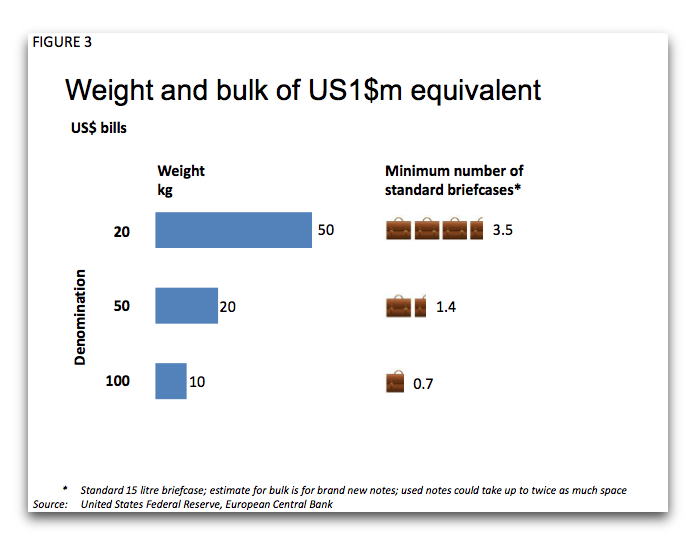
Comparison of the weight of the equivalent of $1 million using U.S. Federal Reserve Notes
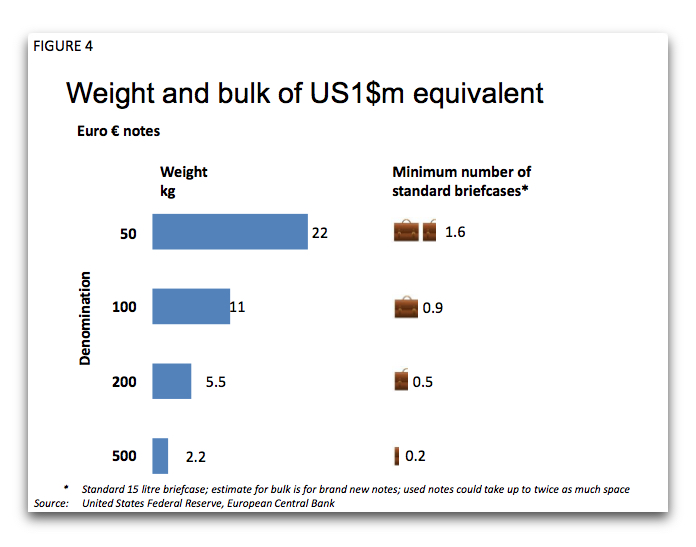
Comparison of the weight of the equivalent of $1 million using euro currency
Sands says:
By eliminating high denomination, high value notes we would make life harder for those pursuing tax evasion, financial crime, terrorist finance and corruption. Without being able to use high denomination notes, those engaged in illicit activities – the “bad guys” of our title – would face higher costs and greater risks of detection. Eliminating high denomination notes would disrupt their “business models”.
Summers agrees with Sands and even suggests that the baseline currencies, specifically the dollar and the euro, should “stop issuing notes worth more than say $50 or $100.” Both consider demonetizing these high denomination notes a step in the right direction.
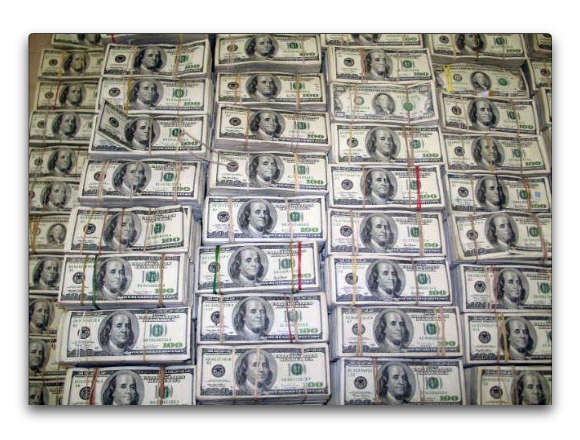
$207 Million in $100 notes seized as part of a drug raid in 2007
In the world of policy analysis there is the concept of the three-legged stool. The first leg is to identify the policy, which is what Sands’ paper does. Next would be to translate the policy idea into something that could be used as the basis for a law. The final step is something to drive the policy to be considered by the lawmakers in order to do something with the policy.
This is how the one cent coin went from being 95-percent copper to being copper-covered zinc. There was the idea to change the composition of the coin in order to save money. After the idea, there was the research and the law writing that went into changing the composition. As part of that second-leg exercise was the creation of the 1974 aluminum cent pattern. Finally, by 1982, the costs were so out of line that it became the driver that forced action.
Although the article and report has been well discussed as part of the financial press it is not likely to be acted on in the near future. It is only the first leg. It will take time before this stool gets its two other legs.
Images were copied from the report “Making it Harder for the Bad Guys: The Case for Eliminating High Denomination Notes,” by Peter Sands, et. al.
Feb 15, 2016 | grading, news, poll
In December, I coined a term “numismentos,” a portmanteau of numismatic + memento. I was reminded of that with the recent announcements from both major third-party grading services.
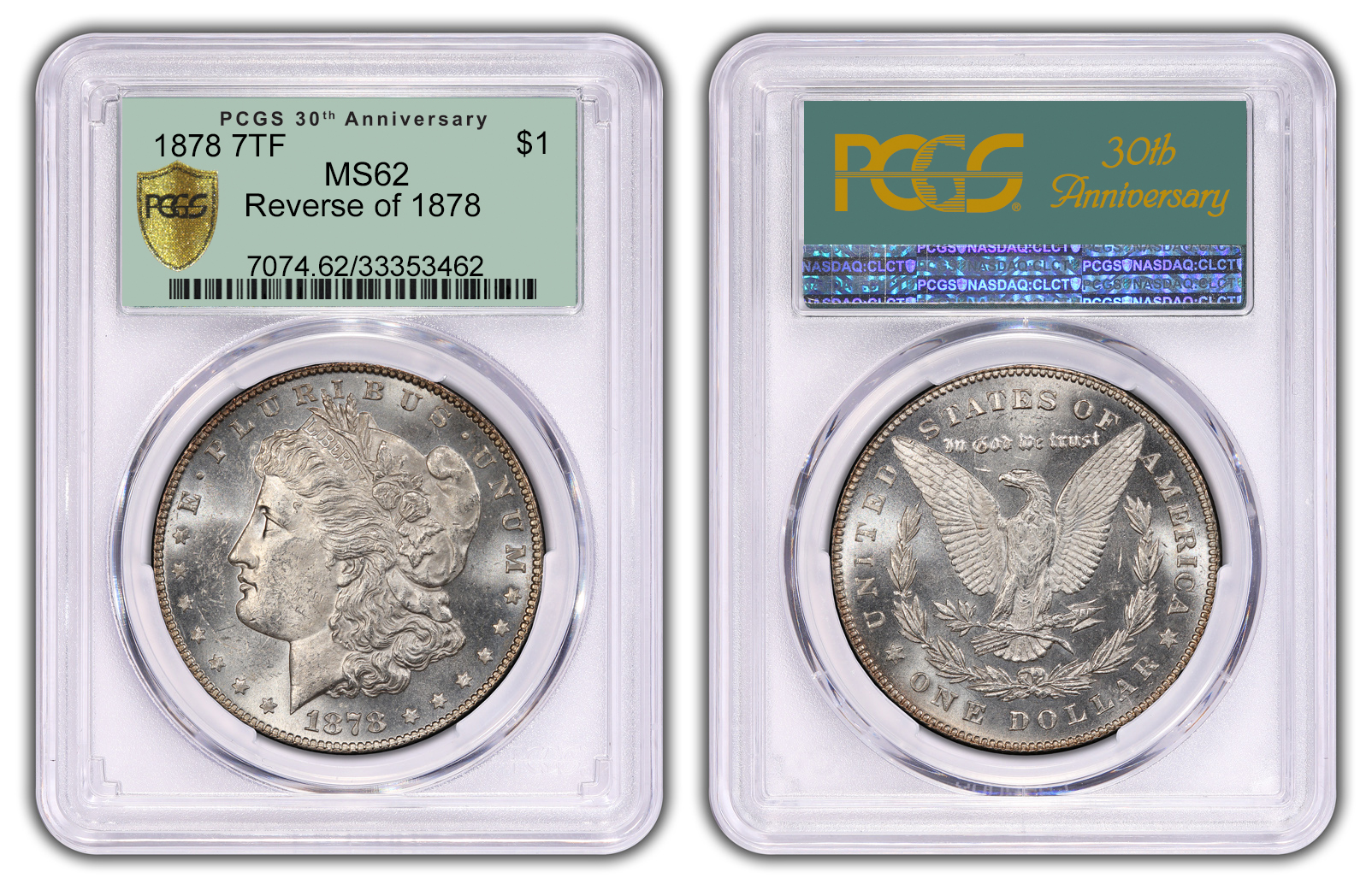
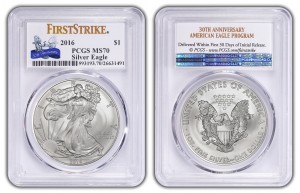
Professional Coin Grading Service announced that as part of their 30th Anniversary celebration that they created a series of labels for their slabs including a retro-green label similar to the first labels issued by PCGS 30 years ago. Some, like the Mark Twain “First Strike” label will only be available at shows like the recently held the Long Beach Expo.
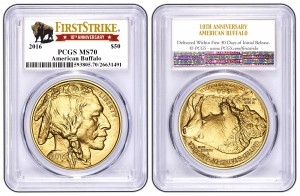
The PCGS 30th anniversary label for silver (shown here) and gold 2016 First Strike American Eagles. (PCGS)
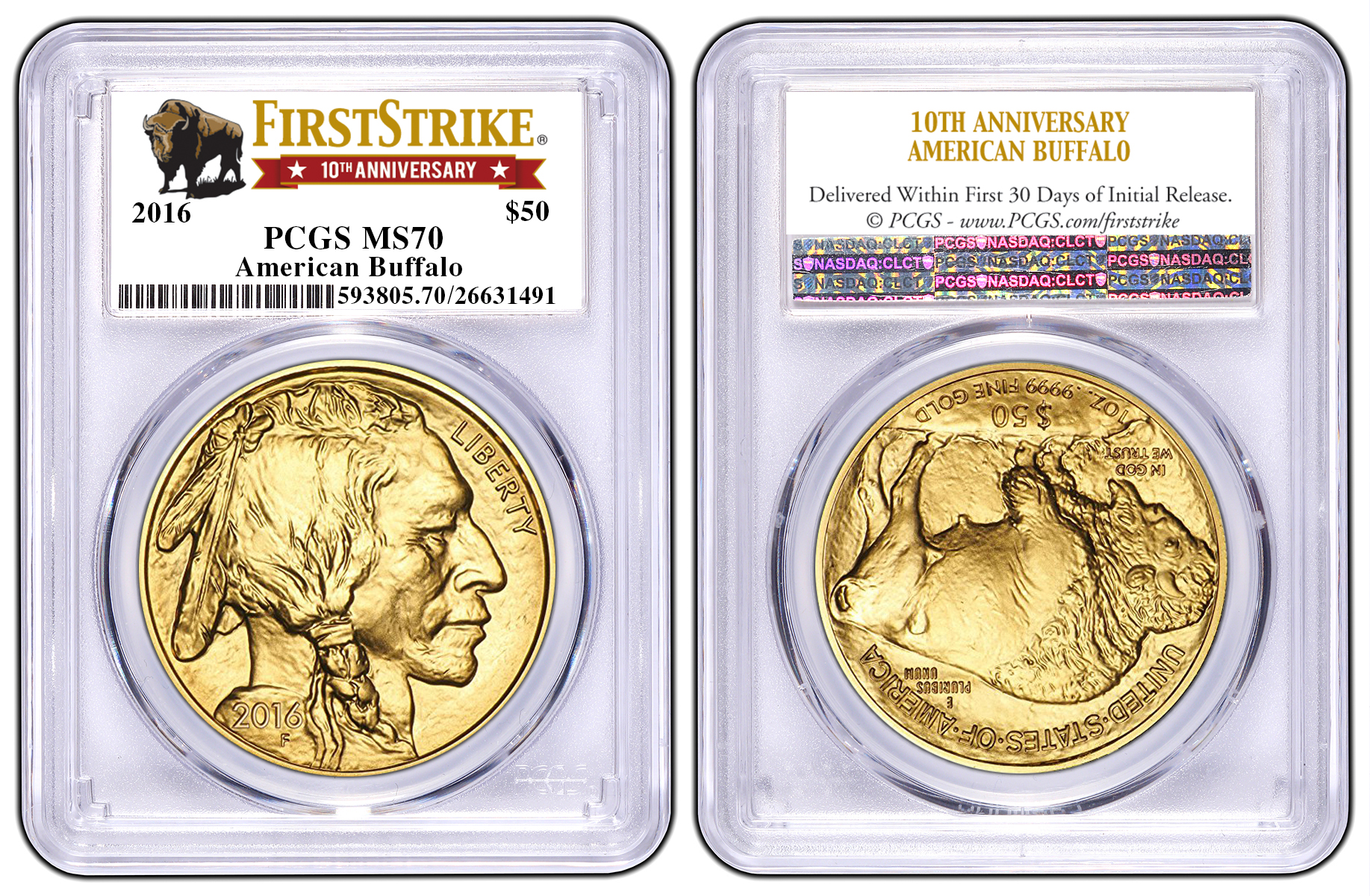
An example of a PCGS special First Strike insert label for the 2016 10th anniversary of the gold Buffalo coins.
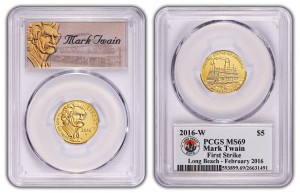
PCGS has produced special First Strike – Long Beach Expo labels for the new silver $1 and gold $5 (shown here) 2016 Mark Twain coins.
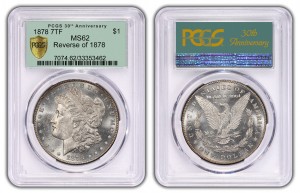
An example of the PCGS 30th anniversary retro 1986-era green label insert.
Numismatic Guarantee Corporation continues their signature labels march adding Former Perth Mint Director Ed Harbuz to the list of signatures that includes Elizabeth Jones and John Mercanti. Of course NGC as its other numismento labels.
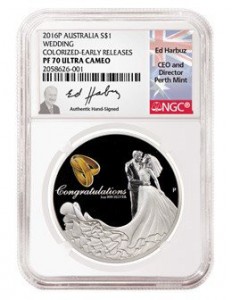
2016 Australia $1 Wedding silver proof coin with autograph label

Former Perth Mint Director Ed Harbuz
I was curious as to what my readers thought. Do you collect the labels? Do you look for the labels? Do you care? Take the survey and then weigh in with comments!

Loading ...
Feb 13, 2016 | coins, commemorative, news, US Mint
Have you ever looked at a coin and wondered where the design ideas come from? Have you ever said to yourself that you could do a better job? Then here is your chance!
 Beginning February 29, 2016, the U.S. Mint is having an open competition to design the 2018 World War I Centennial Commemorative silver dollar.
There is a caveat: you have to be an artist of some type and a U.S. citizen 18 years of age or older. Phase I of the competition is the evaluation of up to five examples of your work submitted digitally to the U.S. Mint who is hosting the competition committee. You have to be able to submit a digital portfolio. Even if your work is good and you think you can be part of the competition, you either have to be able to take a good picture of your work or find a photographer who can help.
The “expert jury” will review your portfolio and select no more than 20 artists for the second phase.
Phase II, those selected artists will be asked to submit one design along with a plaster model of both the obverse and reverse for the proposed coin. Only one artist’s design will be selected
The winning artist will receive $10,000 and have your name etched in numismatic lore for being the designer of the coin. For this, your initials will appear on the coin, the Certificate of Authenticity, and in places like the Red Book!
“Artists are expected to distill the program’s design theme to its essence, representing a complicated subject on a very small palette.” A silver dollar is 38 millimeters in diameter!
Application deadline is April 28, 2016.
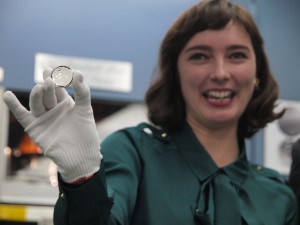
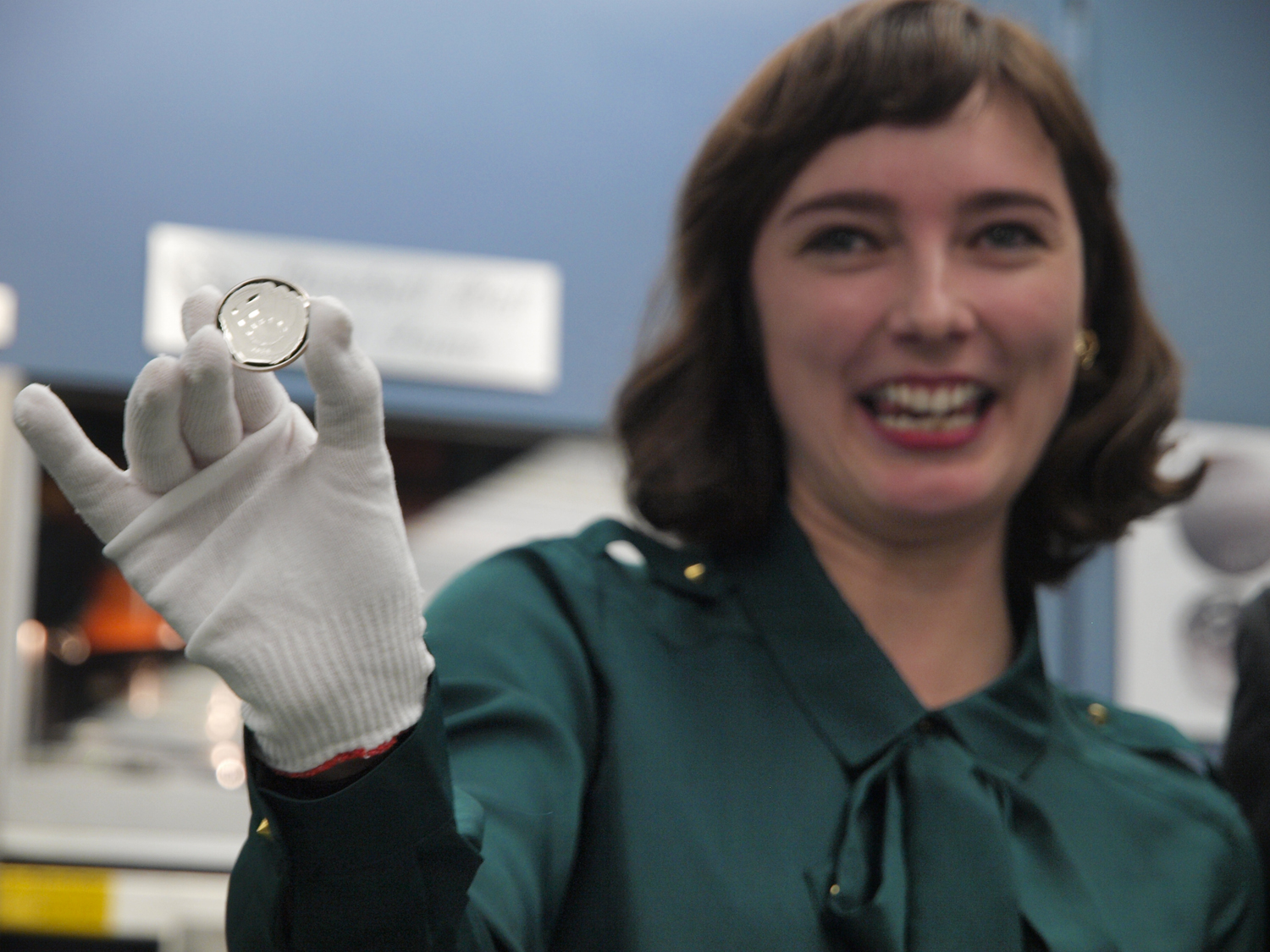
Cassie McFarland holds up Baseball Hall of Fame Commemorative Dollar with her design
Artists are always looking for a something to add to their portfolio. McFarland has had her picture in nearly every major newspaper throughout the United States and the image here has made the rounds on social media. I hope she has been able to boost her career with this. She definitely deserves any attention she receives.
Think about it… your design on thousands of coins in the hands of collectors, preserved forever. Cassie’s design is. How about you?
Images courtesy of the U.S. Mint.
Feb 12, 2016 | coins, education, history, Royal Mint
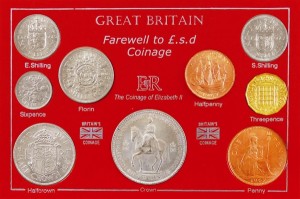
Collection of old pre-decimal coins from during the reign of Queen Elizabeth II.
A very short, simplistic, and incomplete history begins with the Norman conquest of England by William the Conqueror. His invasion of England from Normandy on the northern shores of what is France today in September of 1066 and coronation on December 25, 1066, marks the birth of what would become England.
During the next nearly 50 years, William I (1066-87), William II (1087-1100), and Henry I (1100-35), most of the emphasis has been to finish the conquest and consolidate the ruling under the single crown. The Treaty of Alton (1102) and the subsequent conquest of Normandy (1106) was capable of consolidating power and allowed Henry to attempt to create a sustainable government. Insurgencies from Whales, Rebellion of 1115-20 and the crisis of succession, where is his wife Matilda had not conceived a child, did not allow Henry to finish his work by his death in 1135.
£sd Symbolism
The pound symbol is a fancied “L” based on the Latin librae for weight or balance. It was intended that the 240 pence could be placed on a balance to weigh one pound sterling. The shilling, adapted from the Latin solidus, for solid, was the primary coin of commerce represented with an “s.” For the pence, it used the “d” from the Latin denarius, the smallest Roman coin. Multiple denominations are separated with a slash. For example, 1 shilling can be written as “1/-” while 2 shilling and 3 pence might be written as “2/3d.”
Henry I was succeeded by Stephen, the grandson of William I, with much contention. The problem was that Stephen’s younger brother, Henry of Blois, was embraced by Henry I and subsequently by the Normans. The subsequent civil war lead to a period called “The Anarchy” (1135-1154). During that time Stephen tried to continue with Henry’s reforms but was not able to hold on to the control of the government. Toward the end of his reign, Stephen recognized Henry as the heir to the throne.
With a peace treaty negotiated by Stephen, there was a new peace during the coronation of Henry II in 1154. During the peace, Henry II continued to consolidate power of Norman and Anjou (today this is northern France) and reconstructed the English government.
As part of his reconstruction, Henry II decided to base the currency on the troy pound. The troy pound was based on the Roman libra, which was the basis of weight that England accustomed with. In order to make the money more acceptable, it was divided into 20 units which were originally called testoons. Later, it was renamed as the shilling. As an attempt to make the testoon (shilling) the major unit of currency which corresponded to the Roman solidus. As the solidus was divided into 12 denarii, the testoon was divided further into 12 units with one called a penny and multiples called pence. This was to keep current with the current standard that a pound sterling weight 240 pennyweights.
Early on, it was clear that pence was not small enough of a denomination and was further divided into four parts, two halfpennies or four farthings (quarter pennies). This division was used because the one pennyweight coin representing a penny could not be cut further to represent smaller denominations. Farthings were further divided into smaller denominations using tokes until coins were first used in the 17th century.
To understand this system, I came up with the following table.
| Denomination |
Years struck |
Equivalents |
Relative to a Pound |
Nicknames |
| Quarter farthing |
1839-1853, 1868 |
1/16 d (16 = 1 penny) |
1/3840 pound |
|
| Third farthing |
1827-1913 |
1/12 d (12 = 1 penny) |
1/2880 pound |
|
| Half farthing a |
1828-1856 |
1/8 d (8 = 1 penny) |
1/1920 pound |
|
| Farthing |
1860-1956 |
1/4 d (4 = 1 penny) |
1/960 pound |
|
| Halfpenny |
1672-1860 |
1/2 d (2 = 1 penny) |
1/480 pound |
ha’penny |
| Penny |
1707-1970 |
1d |
240 pence = 1 pound |
|
| Three halfpence |
1834-43, 1860-62 |
11/2 d |
1/160 pound |
|
| Twopence |
1797 |
2d |
1/120 pound |
|
| Threepence b |
1547-1970 |
3d |
1/80 pound |
|
| Groat |
1836-1855, 1888 |
4d |
1/60 pound |
joey, sixpenny bit |
| Sixpence |
1551-1970 |
6d |
1/40 pound |
tanner |
| Shilling |
1503-1970 |
1/- (12 pence) |
1/20 pound |
bob |
| Florin |
1849-1970 |
2/- (24 pence) |
1/10 pound |
two bob bit |
| Half crown |
1707-1970 |
2/6p (26 pence) |
1/8 pound |
|
| Double florin |
1887-1890 |
4/- (52 pence) |
1/5 pound |
|
| Crown |
1707-1965 |
5/- (60 pence) |
1/4 pound |
|
| Sovereign (pound) c |
1817-1917, 1925, 1957- |
240 pence |
10 Shillings |
|
| Half guinea |
1699-1816 |
10/6d |
1/8 ounce of gold |
|
| Guinea d |
1663-1814 |
21/- |
1/4 ounce of gold |
|
Notes:
- Half farthing was originally made for Ceylon
- Three halfpence produced for circulation in the British colonies, mainly in Ceylon and the West Indies
- A one pound coin made of gold was called a Sovereign
- The guinea came into English after the Guinea region of West Africa was discovered by the British and mined its gold
- Not listed is “quid,” the nickname of a one-pound paper note
This was the system until Decimalization Day on February 15, 1971.
Today, British coins are divided into 100 pence to one pound. The coins struck for circulation by the Royal Mint are 1 Penny, 2 Pence, 5 Pence, 10 Pence, 20 Pence, 50 Pence or Half-Pound, £1 (pound), and £2. Paper currency is issued for denominations of £5 and greater.
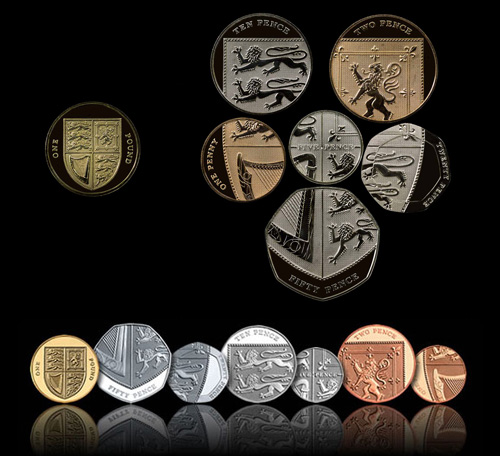
United Kingdom modern decimalization redesign of 2014 resembles a shield.
Credits
- Image of pre-decimalization coins courtesy of Coincraft
- Image of 2014 United Kingdom shield set courtesy of the Royal Mint
Feb 9, 2016 | BEP, currency, news
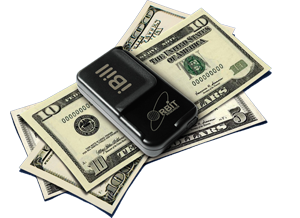
iBill® Talking Banknote Identifier
The iBill currency reader is a product of Orbit Research. Retailing at $119.00, iBill is a pocket-sized reader that can identify all Federal Reserve Notes in circulation. Orbit Research claims that “most bills are identified in less than one second” and can announce “the denomination in a clear female voice; tone and vibration modes protect privacy.” It requires one AAA battery that is included.
The Meaningful Access Program came about as the result of a settlement between the government and the American Council of the Blind who brought suit claiming that U.S. currency violated Section 504 of the Rehabilitation Act. This was first confirmed by the courts in 2006 and subsequent appeals had judges requesting a settlement. Following the 2009 settlement, the BEP began to work on meaningful access programs.
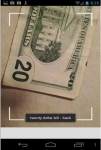
IDEAL Currency Identifier
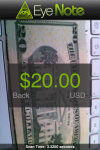
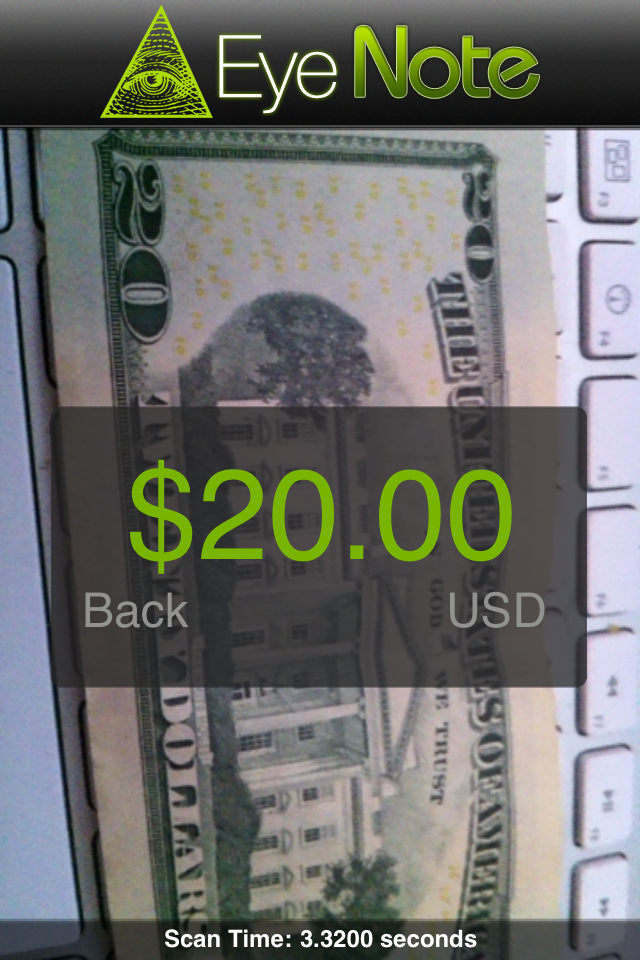
BEP developed EyeNote
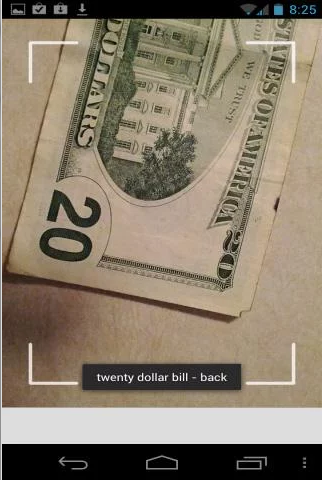
According to the BEP Meaningful Access mobile application page, the BEP worked in collaboration with the Department of Education to have the IDEAL Currency Identifier that works on Android devices. This app can be found on the Google Play Store.
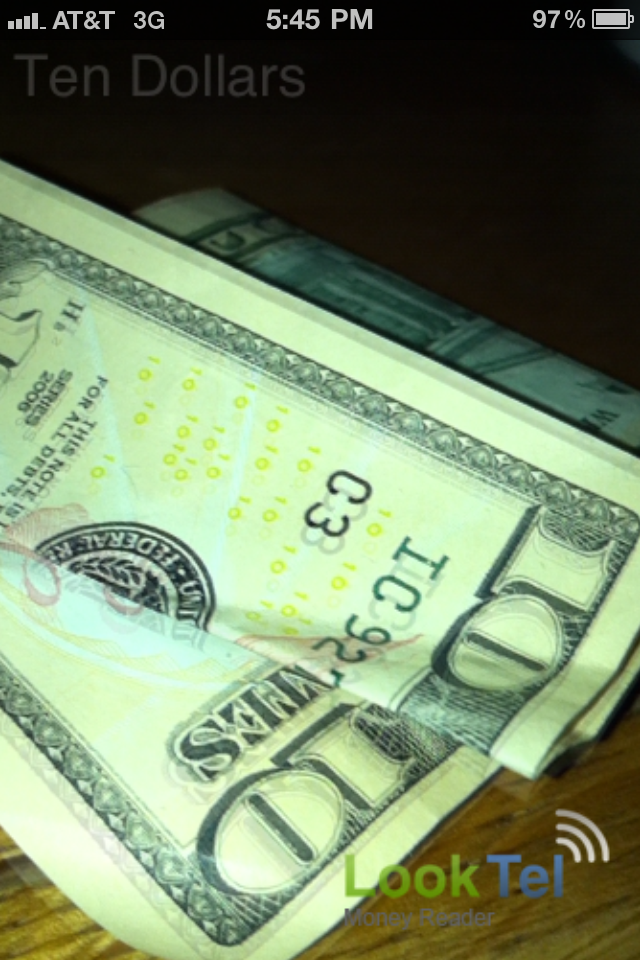
A more impressive app is the LookTel Money Reader available for iOS and the Mac. For the visually impaired traveler, not only can Money Reader recognize U.S. currency, but the currency of 20 other countries including the Australian Dollar, British Pound, Canadian Dollar, Euro, Indian Rupee, Japanese Yen, and Saudi Arabian Riyal. Money Reader is faster at identifying currency than EyeNote and can identify fragments, as I found in my last review.
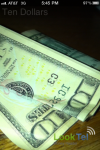
LookTel Money Reader
If you think you, a relative, or someone you care for qualifies, download and fill out the simple form and send it to the BEP address on the form&rsqou;s instructions. It will take up to eight weeks for you to receive your free iBill currency reader.
As an aside, this is not a taxpayer funded venture. BEP earns its funding from their business operations. Most of their money is earned from printing money for Federal Reserve. They also earn a smaller amount of profit from sales to collectors.
Credits
- iBill image courtesy of Orbit Research.
- IDEAL Currency Identifier screenshot courtesy of IDEAL Group Inc. on the Google Play Store.
- All other images are property of the author.
Feb 6, 2016 | administrative, coins, education
 Since having the Numismatic Dictionary active for over a month, the reception has been more than my expectations!
According to the server statistics, there have been over 500 unique visitors to that page with more 20-percent returning for another look. Since I put a bit of work into that database, it is nice to see it is being used.
I also received feedback with corrections and requests for additions. Corrections are wonderful and encouraged. If you see something wrong, send me a note and I will make the correction.
As for the additions, I received a request for 12 additional terms. As I was researching some of the terms to ensure I entered the right information, I found a few more to add. I had to stop at adding 51 additional terms. Some of the new additions include banknote, bit, branch mint, coin orientation, crown, encased postage stamps, euro, farthing, intaglio, legal tender, manganese, medal orientation, pet crime, pound, real, shilling, small dollar, and third-party grading service.
I really appreciate all of the input and hope it helps the numismatic community!
Feb 3, 2016 | administrative, coins, education, US Mint
 Recently, I was notified that the company whose notebook-like program decided to close its virtual doors. Its concept was simple: act like a notebook that you can stuff anything into. Although other programs passed it in some features, it was still a solid way of keeping a digital notebook. Now that they are out of business, I do not want to rely on what we call “abandonware.”
As I was reviewing a few of the notebooks I created, I found now with a lot of numismatic notes. This notebook contains lists, ideas, and other items of numismatic information. Rather than keep them hidden from the public on my disk, I will start to publish what I find as part of my Collector’s Reference section.
Today begins with two additions:
- Key Date Coins is a list of coins that may be considered key dates for their series. Determining key date coins sometimes is a matter of opinion, especially on older series. My notes had several lists which I used a basic polling system, mintage statistics, and third-party grading company’s population reports to determine what to add. This list only does this for non-gold coins. I will try to find similar references for gold coins and add them in the future.
- Mints and Mintmarks documents every branch mint operated by the U.S. Mint and provides a little information paragraph about them including the branch mint in Manila while the Philippines was a colony of the United States.
I hope you find this helpful. As always, you can always send me additions or corrections. Other comments are welcome below.