Hello from New Orleans: The Crescent City; The Big Easy; NOLA; N’awlins; the self-proclaimed America’s Most Interesting City; and home of the 2013 National Money Show.
After an early start and a change in planes in Atlanta, I made to Louis Armstrong International Airport. How could you not want to go to a place where the airport is named after the great Louis Armstrong! Oh yea!
I just checked into my hotel, freshened up a bit, and giving the phone a chance to charge so I can take pictures in the convention center. While waiting, I created a board on Pinterest where I will be posting those pictures. You can also follow me on Twitter where I will tweet and even post some images.
Of course, I will write an evening wrap-up. So keep your browser pointed here for what happens in New Orleans.
Remember, Saturday is the candidates forum for those running for the American Numismatic Association Board of Governors. I will be there along with the 15 other candidates including the president and Vice President candidates that are running unapposed.
Finally, at some point I have to make it to Café du Monde in the French Market for a café au lait. Going is a personal tradition that dates back to my first trip to New Orleans in 1980.
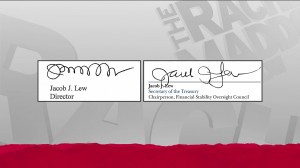
Although new currency with the autograph of Secretary of the TreasuryJacob “Jack” Lew have yet to be issued, Treasury documents signed by Lew have been seen with a new autograph.
During his confirmation hearings, it was reported that Lew told Sen. Max Baucus (D-Montana) that he made to the president “to make at least one letter legible.” It looks like he has made more than one letter legible based on the image broadcast by MSNBC.
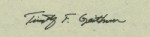
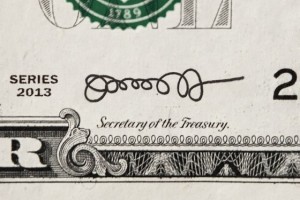
Lew is not the only Treasury Secretary to change his autograph. Timothy Geithner did the same on his appointment. When asked about his autograph, Geithner said, “Well, I think on the dollar bill I had to write something where people could read my name. That’s the rationale.”
Tim Geithner’s autograph before becoming Treasury Secretary.
Tim Geithner’s signature as it appears on U.S. currency
Not every autograph on U.S. currency could be considered legible. You can see all of the autographs on small size currency (since 1928) on this page at uspapermoney.info.
I wish Lew kept his lewpts!
A mock-up of what Jack Lew’s original signature would look like on a one-dollar note
Jack Lew autograph examples courtesy of MSNBC.
Tim Geithner autograph examples courtesy of American Public Media
May Day was an eventful day for the numismatic community. On May 1, the American Numismatic Association issued a press release announcing the appointment of Kim Kiick as the ANA’s new Executive Director.
I will support Kim Kiick as the ANA’s Executive Director as a member and if I should be privileged to be elected to the Board of Governors.
My issue is not with Kim but with the Board of Governors and the way this entire situation was handled.
Since my first comment regarding the firing of Jeff Shevlin, my Inbox has been flooded with reports and allegations of improprieties on all sides regarding this situation. Unfortunately, these are allegation without evidence. Unless someone can provide tangible evidence, any comments about this would be irresponsible. If anyone has evidence, they can contact me via email or hand it to me at the National Money Show in New Orleans next week.
If the evidence points to any type impropriety, I will look for remedies on behalf of the ANA. Remedies can include bringing an ethics complaint to the Board or if employment laws were broken, I can recommend appropriate legal action.
One issue I have is the hiring of Unlimited Potential, a management consulting firm based on Colorado Springs. According to the ANA press release, Beth Papiano of Unlimited Potential will “work with the Executive Director, Board of Governors and staff to increase the effectiveness of each and to improve communications and leadership skills.” While this appears to be the right approach, the selection of Ms. Papiano is suspect.
Sources provided evidence that Ms. Papiano was involved with the 360-degree feedback review of Jeff Shevlin. According to Wikipedia, a 360-degree review “is feedback that comes from members of an employee’s immediate work circle. Most often, 360-degree feedback will include direct feedback from an employee’s subordinates, peers, and supervisor(s), as well as a self-evaluation. It can also include, in some cases, feedback from external sources, such as customers and suppliers or other interested stakeholders.” According to my sources, the report provided to the Board of Governors did not contain reviews from everyone in the primary circle because they were not interviewed. Further, the 360-degree feedback review did not include indirect feedback because as a member of the ANA Technology Committee and an interested stakeholder based on my participation with this committee, I was not interviewed.
In reviewing 360-degree feedback, a Forbes article discusses why these types of reviews fail. If my sources are true, three of the points may have lead to this situation: The 360 tool/questions are too vague; People offer comments that are personal in nature rather than constructive; and Forgetting the strengths and only focusing on weaknesses.
While the Board of Governors will not talk about their deliberations, they should be taken to task about the process. Was the proper questions used? Was the feedback filtered for personal feelings leaving only constructive comments? Why was not everyone interviewed as part of the process? Finally, what experience does Ms. Papiano have in performing these 360-degree reviews?
It appears that experience matters. In criticizing the article that appeared in Forbes, Jack Zenger and Joseph Folkman published a commentary on the blog for the Harvard Business Review that “Yes, we sigh, there are too many 360 implementations that are pathetic wastes of time, resources, and—worst of all—opportunity.” Was the review a pathetic waste of an opportunity to properly review the organization and why there have been three dismissed executive directors in the last ten years?
I am trying to find out more about Ms. Papiano since her work resulted in the firing of one executive director and involved in the coaching of the current executive director. Unfortunately, for someone who claims to be a “nationally known coach and social systems consultant,” I cannot find any reference of her work before 2011. I am still researching in what context she is “nationally known” because everything I find only goes back for three years.
The Colorado Secretary of State Office has a record for the trade name Unlimited Potential being registered on September 1, 2004. Ms. Papiano is a sole proprietor with no indication of employees even though her company website uses a lot of first-person plural statements.
Does this mean she is not qualified? I am not sure. While trying to find more information about Papiano and Unlimited Potential, I found the profile she entered at Naymz, a site for people to manage their “social reputation” online. According to this information, Papiano has owned Unlimited Potential since 2004. Prior, she was an employee for Quantum (a computer storage company), Sun Microsystem (since purchased by Oracle), and Hewlett-Packard. There is no indication that she has any experience with the management or executive consulting of non-profit organizations. In fact, her Naymz profile does not mention any experiences with non-profit companies. The first sentence of her profile says “20+ years as an organizational effectiveness manager and executive coach inside Fortune 100 companies….”
One thing that bothers me is the obvious mistake of beginning a sentence with a number. While I admit that my writing on this blog has been less than perfect, when I write something in the professional arena I make sure it is grammatically and structurally correct. Mistakes happen, but someone who is responsible for communicating results should demonstrate a better command of the language.
But does this really mean Papiano is not qualified? I continue to be not sure but the search for qualifications continue to raise questions. It is possible that with all the market bluster that she tried to generate for herself over the last few years, that she could be an effective managing consultant. Then I visited the testimonials section of her website to find unattributed quotes and “client results” also without attribution. Maybe I have been living and working in the Washington, D.C. area too long because not having a history that could be verified is not comforting. “Trust, but verify” was a phrase made famous by Ronald Reagan. I think it applies here.
Papiano may be good at what she does but she may not be the right person for the ANA to have as a management consultant at this time. I question whether Ms. Papiano may have been either careless in performing the 360-feedback review, unwittingly complicit in a targeted attempt at having Jeff Shevlin fired, or an opportunist thinking that she could manipulate the situation to get a follow-on contract with the ANA.
In letters sent to numismatic publications and a note posted on the PCGS forums, I called for a management consultant to review the ANA organization. In the letters I wrote “Rather than begin the search for an executive director, I call on the ANA Board of Governors to hire an executive consulting firm to evaluate the operations of the ANA. The firm should have no connection with anyone in the ANA and should be directed to present their findings to the new board at their first meeting during the World’s Fair of Money in August.” Unfortunately, the Board chose to move forward quickly without allowing the new board to review the situation and also chose to retain Papiano.
If elected to the Board of Governors, the first motion I will make will be to hire an executive management firm that has a verifiable background in helping non-profit organizations to review the entire ANA management structure. This management consulting firm will be asked to asses the ANA as follows:
Review the organizational structure of the ANA headquarters
Review the employment policies for those working at the ANA headquarters
Review the employee environment at the ANA headquarters and make recommendations for improvement
Review the Board of Governors’ current and past relationships with the employees at the ANA headquarters
Review the 360-degree feedback review of Jeff Shevlin and the process which caused his termination
Perform a similar review with regard to the termination of Larry Shepherd
Review the mentoring plan for Kim Kiick for effectiveness
Provide recommendations to the by-laws and/or ANA policy to provide membership with the assurance that the ANA is being properly run
As part of my motion, I will provide recommendations as to who the Board of Governors could hire. These recommendation will consist of management consulting firms that have had verifiable experience working with non-profit companies and no ties to the ANA in any manner.
Of course the Board can vote against my proposal or I could not be elected to the Board of Governors. In either case, I will continue to pursue this issue because the status quo is unacceptable.
Sponsor: Sen. Mike Lee (R-UT)
• A bill to treat gold and silver coins used as legal tender in the same manner as United States currency for taxation purposes.
• Introduced: April 18, 2013
• Referred to the Senate Committee on Finance
Track this bill at http://www.govtrack.us/congress/bills/113/s768
H.R. 1653: Pro Football Hall of Fame Commemorative Coin Act
Sponsor: Rep. Steve Stivers (R-OH)
• To amend title 31, United States Code, to save the American taxpayers money by immediately altering the metallic composition of the one-cent, five-cent, dime, and quarter dollar coins, and for other purposes.
• Introduced: April 24, 2013
• Referred to the House Committee on Financial Services.
Track this bill at http://www.govtrack.us/congress/bills/113/hr1719
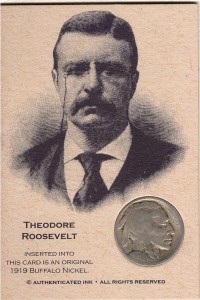
Theodore “Teddy” Roosevelt, Jr. became the 26th President of the United States on September 14, 1901 following the assassination of William McKinley. Prior to becoming president, Roosevelt was a deputy sheriff in the Dakota Territory, Police Commissioner of New York City, U.S. Civil Service Commissioner, Assistant Secretary of the Navy, and Colonel of the Rough Riders for which he was awarded the Medal of Honor. Roosevelt was elected to the New York State Assembly, Governor of New York, and Vice President of the United State. In fact, his nomination as vice president to run with William McKinley by the Republican Party was to get him out of New York because he was reforming the status quo out of existence.
On September 14, 1901, at 42 years and 322 days of age, Roosevelt became the youngest President when McKinley was assassinated (Kennedy was the youngest elected president when he was inaugurated at 43 years, 236 days). As president he was a trust buster, conservationist, and his slogan of “Speak softly and carry a big stick” set the tone for military and foreign policy that even impacts today’s policies. Roosevelt was the first U.S. citizen and sitting president to win the Nobel Peace Prize for negotiating the 1905 peace treaty ending the Russo-Japanese War.
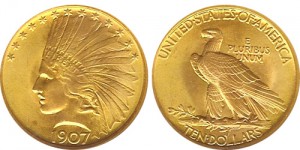
Augustus Saint-Gaudens designed the $10 Indian Head gold eagle that was first released in 1907.
Roosevelt initiated the “Golden Age of American Coin Design.” Using his bully pulpit, he held the designs of the U.S. Mint Chief Engraver Charles E. Barber in contempt. In fact, Roosevelt had called Barber’s designs “atrociously hideous.” Roosevelt ordered coinage whose designs were more than 25 years old to be redesigned. Roosevelt was a fan of sculptor Augustus Saint-Gaudens and asked him to help redesign American coinage.
After Saint-Gaudens died of cancer, Roosevelt continued to look to revitalize U.S. coinage. He seized upon Abraham Lincoln’s 100th birthday to redesign the small cent. He was steered to Victor David Brenner, whose bust of Lincoln was used as the model for the new Lincoln Cent first issued in 1909. Not only was Lincoln the first president to appear on a circulating coin, but Brenner’s obverse design is still in use today.
Roosevelt called his coinage redesign his “pet crime.”
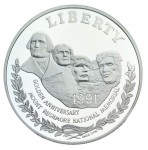
1991 Mount Rushmore Golden Anniversary Silver Dollar
Interestingly, the 2013 Mount Rushmore National Memorial quarter that will be released later this year will only show Washington and Jefferson during its sculpture. Lincoln and Roosevelt are not part of this image.
Teddy is now featured on the current one-dollar coin. The coin has a portrait Roosevelt facing to his right that even gives the impression of someone looking into the distance. It is fitting for a man who was always looking forward to preservation of America’s ideals and its place as a world leader.
Teddy Roosevelt is my favorite president for many reasons including his view on coin designs. BULLY!
Credits
2013 Theodore Roosevelt Dollar and 1991 Mount Rushmore Golden Anniversary Commemorative Silver Dollar images courtesy of the U.S. Mint.
I just received an email from the American Numismatic Association saying that the Board of Governors announced that they will not extend the contract of Executive Director Jeff Shevlin.
“After considering the Board’s mission and objectives, the Board of Governors concluded that Mr. Shevlin was not the right fit to lead the Association going forward,” Hallenbeck said. “The board felt that it was in the Association’s best interest to sever our relationship and seek new leadership for the Association.”
Unless Jeff did something wrong that the Board is not telling us, this is the wrong decision bordering on downright foolish!
I have had a working relationship with Jeff for more than a year participating with the ANA Technology Committee. I have found Jeff to be incredibly accommodating and wanting nothing but the best for the ANA. He had taken on the role with the ANA Technology Committee as a volunteer before being interviewed and hired as the organizations after being a college professor. In our conversations, he described being the ANA’s executive director as his dream job.
Jeff relocates to Colorado Springs to take over an organization whose last two executive directors were “dismissed” for various reasons. Both of his predecessors pursued legal action against the ANA. Christopher Chipoletti’s suit was settled a few years ago, Larry Shepherd filed his case last December.
What did Jeff do wrong to not be renewed?
Jeff initiated the work to start to bring the ANA into the 21st century by looking at its technology infrastructure. He is concerned that the aging population of the ANA cannot sustain the organization that is not attracting enough younger members. Jeff knows that the way to engage the younger members is to use technology to get them involved and keep them engaged.
Jeff is an enthusiastic ambassador for the hobby. Nicknamed the “So-Called Guy” for his interest and work on So-Called Dollars. So-called Dollars are medals approximately the size of a silver dollar that were struck to commemorate a U.S. historical event. Jeff and Bill Hyder co-wrote Discover the World of CHARBNEAU SO-CALLED DOLLARS. Jeff was a collector. Jeff was one of us.
Maybe that was his problem. Jeff was a collector and not a dealer. While dealers are an important part of the ANA, the dealers do not have buyers without a strong collecting community. Dealers need the collectors as much as the collectors need the dealers. However, the dealer population is limited compared with the potential number of collectors, researchers, and other interested people that could be members of the ANA.
From my perspective, Jeff was doing everything right to help the ANA recover some of its past problems. The ANA has to be an all inclusive organization and think about the collectors and not just the business. The ANA needs to be more open and be able to reach out. The only way to do that in today’s environment is to use technology. Jeff understood that and understood that the ANA has to look at the organization as a whole and find balance.
This move represents everything that has been wrong with the Board of Governors over the last 10 years and have shown that this board has done little to work on the issues that I referenced in my platform.
Rather than set clear policies and goals (one of planks of my platform), the current Board seemingly used Jeff to figure out what to do next. This is NOT how to run a national organization. There are no clear goals, policies, or objectives. If they were the Board would not be in this situation.
Unless the ANA Board of Governors has something more tangible than saying that Jeff “was not the right fit,” it appears that the Board of Governors has once again failed the ANA membership making it time to replace the entire Board of Governors.
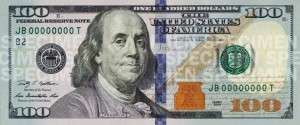
The redesign of the $100 note was announced with a press release that was to be held on April 21, 2010 at the Department of the TreasuryCash Room with all of the usual suspects: then Secretary of the Treasury Timothy Geithner, Chairman of the Board of Governors of the Federal Reserve System Ben Bernanke, Treasurer of the United States Rosie Rios, and the since retired Director of the United States Secret Service Mark Sullivan.
The date of the announcement, the Bureau of Engraving and Printing and Federal Reserve announced that Chairman of the Federal Reserve Board Ben S. Bernanke said, “When the new design $100 note is issued on February 10, 2011, the approximately 6.5 billion older design $100s already in circulation will remain legal tender.”
Throughout the summer of 2010, the BEP and Federal Reserve released a lot of training and education materials in anticipation of the release of the new notes.
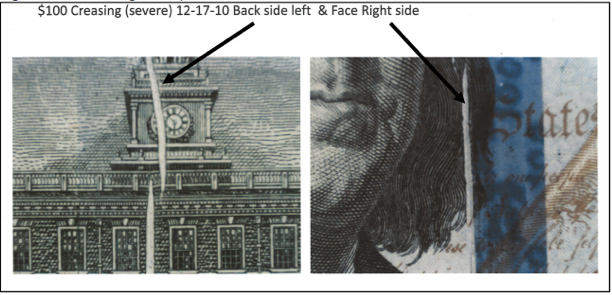
Everything seemed to be going well until October 1, 2010 when the Federal Reserve “announced a delay in the issue date of the redesigned $100 note.” The Federal Reserve and BEP said that there was a problem with creasing of the paper during the printing process. That was the last we heard from the Federal Reserve until today’s announcement.
Magnified images of the creasing showing up on the new $100 notes.
We consider the delayed introduction of the NexGen $100 note to be a production failure that potentially could have been avoided and has already resulted in increased costs. We found that BEP did not (1) perform necessary and required testing to resolve technical problems before starting full production of the NexGen $100 note, (2) implement comprehensive project management for the NexGen $100 note program, and (3) adequately complete a comprehensive cost-benefit analysis for the disposition of the approximately 1.4 billion finished NexGen $100 notes already printed but not accepted by FRB. [Federal Reserve Board]
After the report noted that the BEP basic responded by saying that they were sorry and are looking into it, the OIG caved and said that even though the BEP was bad, the corrective actions “are responsive to our recommendations.”
Then nothing. No follow up by the OIG or the Government Accountability Office. In fact, we have not heard from the GAO since their 2005 report suggesting whether a second supplier of currency paper is needed (see GAO-05-368).
Of course it is easy for the BEP to say that Crane & Co., the Dalton, Massachusetts company that has been the exclusive currency paper supplier since 1879, because it would be easy to justify. Some of the arguments against finding a second supplier includes the cost of entering the market and the established relationship with Crane who the BEP allows to “own” the innovations paid with taxpayer money. There was also the case of having two of the most powerful senators, Ted Kennedy and John Kerry, there to protect Crane. Neither are the senators from Massachusetts today.
While the BEP has been struggling with rag-bond paper, countries have been moving to using polymer “paper.”. The polymer “paper” was developed by the Reserve Bank of Australia to enhance the durability of the notes and to incorporate security features not possible with paper or rag-based paper. RBA has been distributing polymer notes since 1992. While the polymer substrate costs little more and the production is only marginally more expensive, the benefit will come from the reduction in counterfeiting and the durability of the note. Polymer will last three-to-six times longer than rag-based paper.
The Bank of Canada has reissued its C$100, C$50, and C$20 notes using the polymer paper and will issue the new C$5 and C$10 notes later this year.
Switching to polymer notes, especially for higher denominations, would be a better decision. It will reduce counterfeiting and reduce the costs over the lifetime of the note. And there is no law that would prevent the Federal Reserve from using the polymer paper.
Considering the Bureau of Engraving and Printing’s previous performance with the $100 notes, this should not be consider the time to celebrate. Especially since a pre-solicitation notice asking for information about purchasing a Single Note Inspection System is still open at FedBizOpps.gov and the BEP has not issued a request for proposal (RFP) to purchase such a system. Let’s wait for the BEP to deliver the notes to the Federal Reserve for distribution before considering this a success.
While waiting, enjoy this video announcement narrated by Federal Reserve Deputy Associate Director Michael Lambert about the new release date.
Images courtesy of the Bureau of Engraving and Printing. Video courtesy of the Federal Reserve.
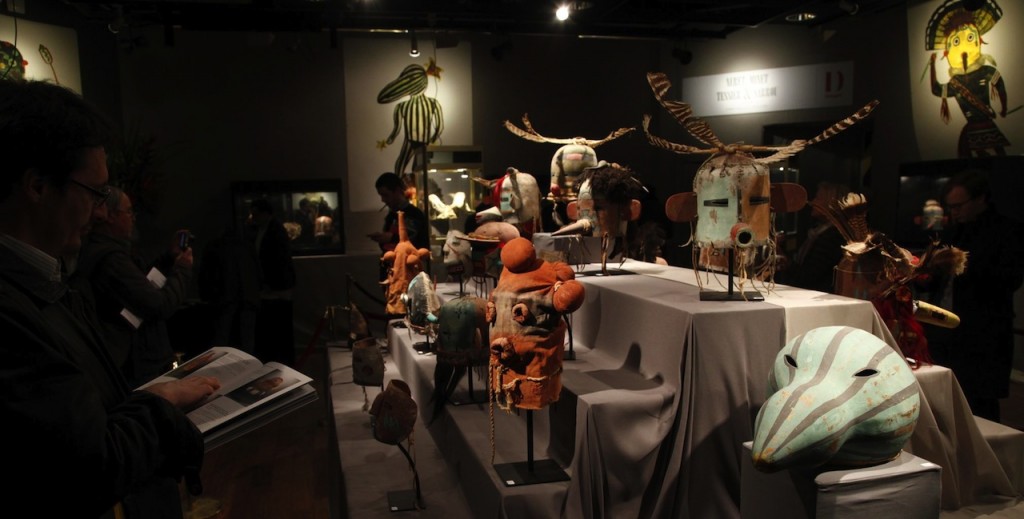
The case involves the sale of 70 artifacts from Arizona’s Hopi Tribe by the Paris auction house Néret-Minet. Hopi tribe members and historians believe that the items were illegally obtained. Representatives from Néret-Minet claim that the items were purchased legally from a collector in the United States.
A visitor looks at antique tribal masks revered as sacred ritual artifacts by a Native American tribe in Arizona which are displayed at an auction house in Paris April 11, 2013. (REUTERS/John Schults)
Following the ruling, Néret-Minet went ahead with the auction. According to The New York Times, the auction generated $1.2 million in sales (with buyer’s premiums). Five of the 70 items did not sell and not sold for less than their estimated value.
According to The New York Times:
Before starting, the auctioneer, Gilles Néret-Minet, told the crowd that the sale had been found by a judge to be perfectly legal, and that the objects were no longer sacred but had become “important works of art.” He added, “In France you cannot just up and seize the property of a person that is lawfully his.”
So let me get this straight, religious objects that are allegedly protected by the same treaties as ancient coins and United States law can be sold as “art objects” while foreign governments confront a dealer on a bourse floor while the State Department does little to protect collectors and those who have legitimate claims?
If France can do this with items of religious and cultural significance to the Hopi tribe, then will happen to the coin collecting hobby? I know some people can take their hobby seriously, but it is not religion. Most countries already have examples of the coins in question, so why are additional examples “culturally significant.” Remember, it was reported that when a dealer was approached in Baltimore by representatives of a foreign government, they were only interested in the more expensive coins and not the common coins from the same country with a lesser value.
The State Department is not doing enough to protect the American people, whether it is to protect what is really culturally significant items like the artifacts from the Hopi tribe or the abuse of international law as demonstrated by the actions of the State Department’s CPAC and the confrontation in Baltimore. This is something that must be addressed by the president!
Please take action!
I renew my request that all of my readers to go to http://wh.gov/MD2O and sign the petition. Share it on social media. I made it easy—just see the widget at the top of the right column. Petitions require 100,000 signatures in order to be answered by the White House. So far there are five signatures (THANK YOU!). Let’s see if we can motivate the coin collecting community to add more before you will not be able to own any foreign coin older than 100 years old!
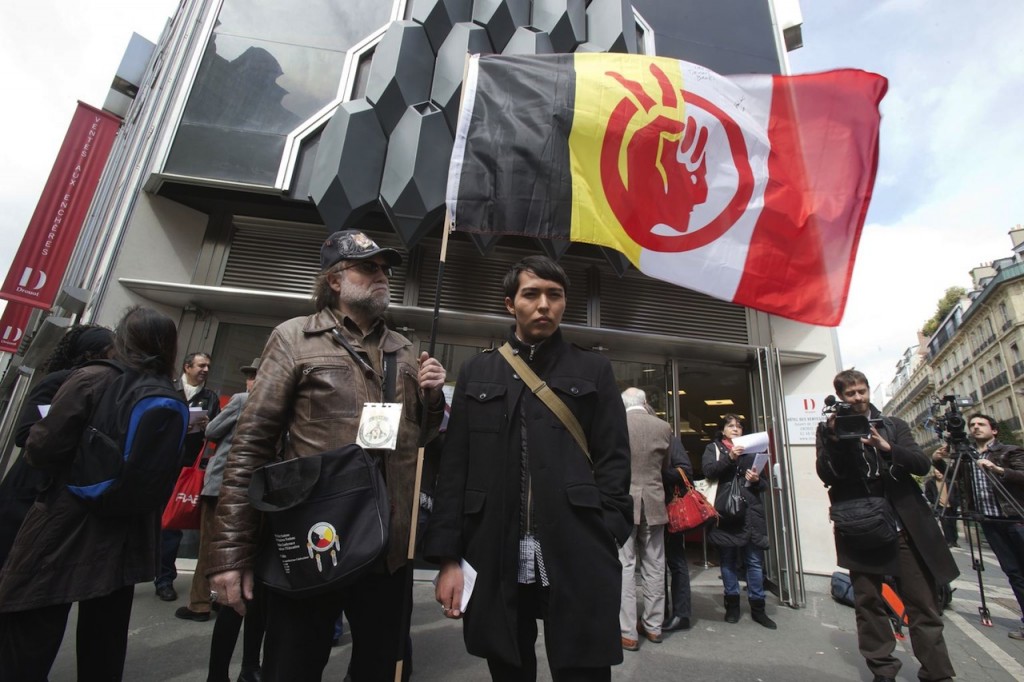
A French supporter of the Indian cause, who refused to give his name, left, holds a flag of the American Indian Movement and an American exchange student, member of the Arizona’s Hopi tribe, Bo Lomahquahu, right, stand outside of the Druout’s auction house to protest the auction of Native American Hopi tribe masks in Paris, Friday, April 12, 2013. A contested auction of dozens of Native American tribal masks went ahead Friday afternoon following a Paris court ruling, in spite of appeals for a delay by the Hopi tribe, its supporters including actor Robert Redford, and the U.S. government. (AP Photo/Michel Euler)
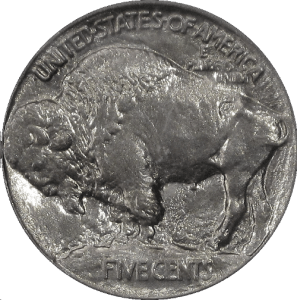
Welcome to National Coin Week. This year, from April 21 through April 27, the National Coin Week theme is “Black Diamond Strikes Again” to celebrate the 100th Anniversary of the introduction of James Earle Fraser’s Buffalo nickel.
According to legend, Black Diamond was Fraser’s model for the reverse of the Buffalo nickel. Black Diamond was a North American bison that was living in the Central Park Zoo. He was donated to the zoo by Barnum and Bailey and lived his life there until he was auctioned in 1915 to a game and poultry dealer who was later sold as steaks for $2 a pound.
James Earle Fraser, ca. 1920
When asked about the model for the coin, Fraser said it was Black Diamond and found him in the Bronx Zoo. At one time Fraser was not sure of the name of the animal but insisted his influence was at the Bronx Zoo. Black Diamond was never at the Bronx Zoo.
But like the story of who was the model for the Indian on the obverse, why should facts spoil a good story!
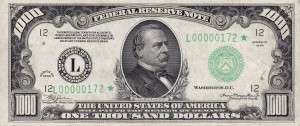
In Roman Numerals, one thousand is represented as “M.”
For the computer geeks, one thousand can be written as 1111101000 in binary, 01750 in octal (base 8), and 0x3E8 in hexadecimal (base 16).
If “A picture is worth a thousand words,” then what would one thousand blog posts be worth? You are reading what I never thought would occur. This is the one thousandth post to the Coin Collectors Blog!
When I started this blog on October 29, 2005, there were few websites for coin collectors. Back then, the numismatic publications were barely online and mostly as a place to subscribe to their print editions. Since starting this blog, there has been a growth in numismatic news outlets and other information. Rather than reporting the news, I moved to a little more analysis and opinion on the numismatic news of the day while keeping with other collecting information.
I like to think I started a trend but there are a lot of smart people out there with ideas of their own. I welcome them to online numismatic community.
It has been 7 years, 5 months, 16 days since my first post. I have had a lot of fun writing about my experiences, looking at the numismatic community, reporting some news, providing some analysis, and writing about whatever comes to mind. After all this time I can say that I am still having fun!
To those who have been around from the beginning, thank you for staying with me.
To those who joined since the beginning, thank you for reading.


 May Day was an eventful day for the numismatic community. On May 1, the
  Sponsor: Sen. Mike Lee (R-UT)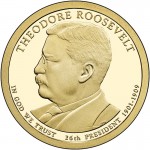

 Loading ...