The production and circulation of currency in the United States have been largely unchanged for decades, despite the growth in electronic financial transactions. Treasury is undertaking a comprehensive review of U.S. currency, including a review of both the production and use of coins, in order to efficiently promote commerce in the 21st Century. These studies will analyze alternative metals, the United States Mint facilities, and consumer behavior and preferences, and will result in the development of alternative options for the penny and the nickel.
Some of this has been ongoing for the last few years. As part of the Coin Modernization, Oversight, and Continuity Act of 2010, (Public Law 111-302 [PDF]), the U.S. Mint performed and Alternatives Metals study that was completed in August 2012 and then reported to Congress in December 2012.
The problem with the study is the politics written into the law which the report addresses in the executive summary. Key to the problem is the provision written into the law that gives too much consideration to the vending and coin-operated industry. Rather than find the best metals possible while considering the factors that would have to be changed to make new coins work in devices like vending machines, parking meters, and other machines that take coins for payment, the law is written as if the vending industry has veto power over the choices.
Reading the alternative metals report is like taking a college course in metallurgy. When reading the report, it is apparent that there is no perfect solution. Either the coin sizes and weights will have to change in order to meet electromagnetic signature (EMS) requirements to make new coins similar enough to provoke fewer changes to existing equipment or the EMS of the coins will have to change and the machines reprogrammed. In either case, something will have to change.
In short, the EMS is the waveforms that are sensed when a coin is exposed to low frequency radiation (harmless to humans). The waveforms are read by sensors and compared with a programmed baseline to verify that you dropped a real coin into the machine and not a slug.
As part of the alternative metal study, the U.S. Mint is holding a stakeholders meeting. Interested members of businesses, industries, and agencies will meet with the U.S. Mint study group to share their perspectives on the impacts of alternative metal compositions on circulating coins. This meeting will be held Thursday, March 13, 2014, from 10:30 a.m. to 3:30 p.m. (EDT) at the U.S. Mint Headquarters located at 801 Ninth Street NW, Washington, D.C., 2nd floor. Attendance is by invitation only. Anyone interested in attending can contact Leslie Schwager, Office of Coin Studies at OfficeofCoinStudies@usmint.treas.gov, or by calling 202–354–6600 no later than Monday, March 10, 2014 to request an invitation and obtain additional meeting information.
You can read the full announcement about this meeting in the Federal Register 79 F.R. 6672. [PDF]
Because of the recent storms and closing of the federal government, my work requirements have shifted making it difficult for me to attend. Anyone who will attend this meeting is invited to contact me. I would be interested in hearing all perspectives about the meeting.
Given the political nature of both the budget process and the law behind the alternative metals study, it is reasonable to believe that nothing will be accomplished by the president’s budget recommendation or the meeting at the U.S. Mint. In fact, since congress has to approve any changes to U.S. coinage and that this congress has been the least productive in history, do not expect change in your pocket change any time soon.
One of the numismatic events of the spring season is the American Numismatic AssociationNational Money Show. The 2014 show is set to begin on Thursday at the Cobb Galleria in Atlanta. Technically, I believe the area is in Smyrna, but the politics of Atlanta’s sprawl has areas around Atlanta but not in Atlanta calling themselves Atlanta. It is located at the northwest “corner” of the Perimeter where I-75 intersects the highway around the city. It is a nice area and the Cobb Galleria is a nice facility which should help make it a good show.
The Eagles (left to right): Glenn Frey, Don Henley, Joe Walsh, and Timothy B. Schmit
As much as I like the ANA shows, I will not be going. While I am in favor of moving the show earlier than May, when it was held in 2013, this weekend does not work for me. Aside from being my wife’s birthday, which of course is important, we also have tickets to the Eagles’ History of the Eagles Tour concert at the Verizon Center in Washington, D.C. No offense to the ANA, the Eagles announced that they will stop touring in 2015 and I want to see a concert before they retire. I missed my chance when we were younger, I want to go to one of their concerts at least once. After all, my “deserted island song,” the one song I would want to have if I was deserted on an island is ”Hotel California.” The acoustic version from the the Hell Freezes Over album is the most played song on my iTunes playlist.
But that’s my excuse, what about you?
Are you going to the National Money Show in Atlanta?
No, I do not have the time or other plans. (63%, 5 Votes)
Yes, I wouldn't miss it! (13%, 1 Votes)
I never go to the National Money Show (13%, 1 Votes)
Has Atlanta dug itself out of its snow, yet? (13%, 1 Votes)
One of the things I noticed over the last few years are the proliferation of local coin shows in Maryland. Part of the reason is an ambitious dealer finding areas to put on shows and do what it takes to make them successful.
The idea is simple: you have inventory that is not making money for you if it is sitting on the shelf. Rent a hall either in a local hotel or an organization’s building, set up the room so that each dealer has a space, provide a couple of chairs per dealer space, rent the dealer space, have a greeter at the door, and security which can be an off-duty police officer from the area. All that is left is the advertising.
Advertising is a key factor because without it, I would not have stumbled over a coin show this past weekend in Frederick, Maryland. After travelling to Frederick from the closer-in Washington suburbs for other business, I remembered reading that there was a coin show in the area. A quick search using my smartphone helped me find the address and my in-vehicle GPS helped me get there.
When I arrived I walked into the room with about a dozen dealers and a few empty tables. I was not concerned with the empty tables but the ones where dealers sat. Since this was a local show, I knew many of the dealers and spoke with those who were not otherwise busy. Since going to this show was a last minute decision, I did not have my want list with me but I looked around anyway.
While looking at some tokens, I heard one gentleman say that he is getting back into collecting after finding the coins he collected as a child. It is a typical story that many of us can relate. When I heard he was lived near where our local coin club met, I approached him, introduced myself as the coin club’s president, and invited him to our next meeting in March.
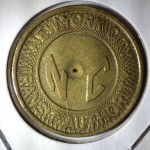
Finally, I did have a chance to look at some items. For the times I do not bring my lists, I can fall back on searching the tokens for anything from New York City or anything unusual. During this search, I did find two tokens that I thought were worth buying. The first is a token from the Triborough Bridge and Tunnel Authority (TBTA). For the non-New York readers, the TBTA is an affiliate agency of New York City’s Metropolitan Transportation Authority that manages the bridges and tunnels that have at least one end in Brooklyn or Queen plus the Henry Hudson Bridge which crosses the East River between the Bronx and Manhattan.
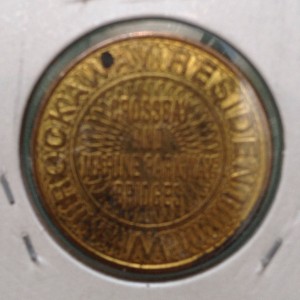
The token I found were issued for residents of the Rockaways, Queens for crossing the Cross Bay and Marine Park bridges at a reduced price. The Rockaway Peninsula is off southern Long Island in Queens that is very residential and used to be a very popular summer destination with areas of cabins only used during the summer. The TBTA made the tokens available to residents to help lower their commuting costs. Nowadays, the residents use the EZPass electronic toll collecting system for their discount.
The TBTA issued a few different residential tokens in various areas of the city to provide residents with discounts. While I have some of the others, including the one for Staten Island for use on the Verrazano-Narrows Bridge, this is the first one I found for the Rockaways. After all, these tokens were issued to be used by the residents. Most used the tokens they purchased and did not save them.
Obverse of the Triborough Bridge and Tunnel Authority Rockaways resident token.
Reverse of the Triborough Bridge and Tunnel Authority Rockaways resident token.
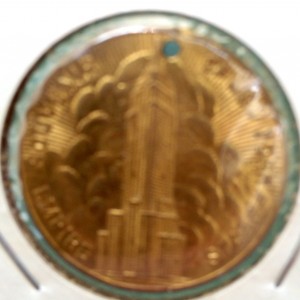
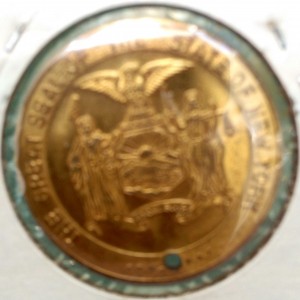
The other token I found was a souvenir from the Empire State Building. While I have a few tokens from the iconic building, this one not only looks newer but is also holed for use as jewelry. This is one of the better looking medals I have found since it look like it was minimally handled.
Obverse of the holed Empire State Building medal.
Reverse of the Empire State Building medal
One of the ways to make collecting more fun and personal is to collect exonumia that means something. Being from New York, I once used some of these items not thinking that I would be collecting them years later. Subway tokens were ubiquitous in New York life. I used to use TBTA tokens a lot, especially crossing the Verrazano Bridge for a daily commute to Piscataway. Later, when I moved to New Jersey, I had used tokens for the PATH (Port Authority Trans-Hudson) and was excited to find tokens from its predecessor, Hudson Railway.
Coins are still a lot of fun, but I am really having fun looking for various hometown-related tokens and medals. Aside from being a reminder of my past, it is also a look back on the history of my hometown New York, New York, a city so nice they named it twice!
President’s Day is supposed to be the day that we celebrate the lives of the Presidents of the United States (POTUS). It became a holiday in 1968 when congress passed the Unified Monday Holiday Act (Public Law 90-363, S.cornell.edu/uscode/text/5/6103″ title=”5 U.S.C. 6103(a)” target=”_blank”>5 U.S.C. § 6103(a)) to standardize holidays on Mondays. Prior, most of the country celebrated February 22, George Washington’s birthday, as a holiday while some but not all states celebrated Abraham Lincoln’s birthday on February 12. The law made the third Monday in February the holiday.
There are few traditions for the holiday except for sales by various retailers. Prior to the 1980s, many stores closed on George Washington’s Birthday. But amongst the first retailers to introduce George Washington’s Birthday sales were the automobile dealers. This was a time that the automobile manufacturers were going through a transition to more fuel efficient cars. Style was an issue since many began to look “boxy.” Seeing the success of increased sales, other stores followed and it has become rare to see a store closed on Presidents’ Day.
Even with the Winter Olympic Games in progress, just going out for usual errands required patience as many people chose to partake in the usual weekend sport of shopping. Rather than get worked up, I decided that I would see what I could find in my change by paying using cash.
I set out on Saturday and Sunday emptying my pocket of change along with my plans for the day. A stop at the gas station, where I admit to paying with a credit card, a proper beverage for the day (tall, 3-shot, extra hot, skim latte), and a stop at the bank for cash, I went on my way.
After two days of paying in cash, I counted my change. While collecting almost $18 in coins, I was surprised to find nothing remarkable. There were a few copper (pre-1982) Lincoln Memorial cents, but nothing that would give this post an interesting climax.
However, there was on interesting omission: no 2014 coins. In the half-dozen shiny, very red cents I found, all were 2013 cents except for one dated 2012. Those very shiny nickels were almost all dated 2013-D and there were no dimes newer than 2011. Similarly, the only of the National Parks quarters I found was a 2013 Fort McHenry quarter.
I also found three very shiny 2009-D Guam quarters and a mix of other circulated state quarters along with two pre-1999 quarters with the eagle reverse.
Under the guise of “A penny saved is a penny earned,” the entire lot was put into a container that sits on top of my dresser. When the container is full or in December, whichever comes first, I will bring the coins to a bank’s coin counter and donate the money to a worthy cause making the weekend’s activity worth something.
Whenever I comment on using design elements on coins that do not involve engraving I am reminded that one person’s gimmick is another’s innovation. I am also reminded that I have demonstrated a bit of hypocrisy by purchasing some of these coins for my collection including celebrating the innovation of one of these coins. So why do I have a near visceral reaction to the introduction of a coin whose purpose is to commemorate with a non-engraved design elements?
2014 Charlie Chaplin 1 oz lenticular commemorative coin from the Perth Mint
The question came to mind after the Perth Mint introduced the “Charlie Chaplin – 100 Years of Laughter 2014 1oz Silver Proof Lenticular Coin.” The coin is issued by the Pacific island nation of Tuvalu to honor the 100th anniversary of Charlie Chapin’s first movie appearance as The Tramp. The ingot-shaped coin features the Ian Rank-Broadley designed portrait of Queen Elizabeth II on the obverse and an image of Chaplin on the reverse.
The reverse does not use just any image. It is the iconic image of the waddling tramp walking away from the camera. Like the image on the screen, this is a moving image. Using lenticular technology, the image will shift as you move the coin making it appear that Chaplin is walking.
Chaplin was the nascent movie industry’s first megastar. Although Mary Pickford and Douglas Fairbanks were the most recognizable of the time, Chaplin was the first actor whose movies were considered a success because he was involved with them. And while there were posters and booklets printed about other stars, Chaplin was the first to be fully merchandised around the world including a Chaplin doll that is one of the most prized toy and movie memorabilia collectibles today.
Even though Chaplin was the phenomenon of this time and I consider myself a fan, I am having a difficult time liking this coin.
In fact, I downright hate it!
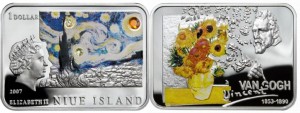
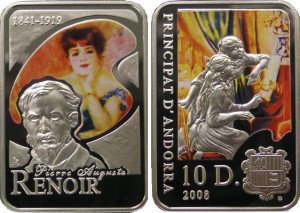
I cannot explain why I hate this coin because I am interested in the Niue 2007 Van Gogh silver coin and the Andorra 2008 Renoir 10 Diners silver coin. All three coins are colored coins and ingot shaped, but the Chaplin coin really bothers me.
Niue Island 2007 Great Painters – Vincent Van Gogh $1 Rectangular Silver Dollar with Color and Zircon Crystal Gemstones
Andorra 2008 Great Painters – Pierre August Renoir 10 Diners Rectangular Silver Proof with Color
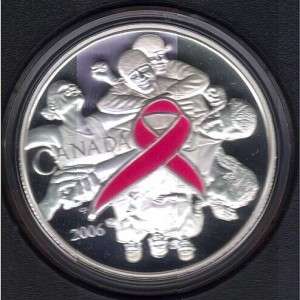
2006 Breast Cancer Silver Coin with colored pink ribbon.
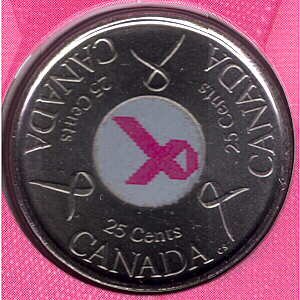
2006 Breast Cancer Quarter was Canada’s first colored circulating coin
One of the differences between the colored coins that I like versus those that I do not are the ones I like do have some engraving involved. And even though I do not like the Yves Klein commemorative, I do not find it as objectionable because the blue hand is an enhancement and not the entire design on the coin.
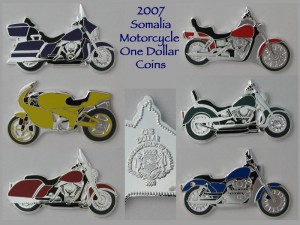
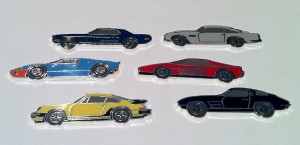
Not counting the Somalia motorcycle and sports car coins, I seem to have this response where the coloring or design gimmick encompasses the entire design of the coin. Once the coloring or other design elements that are not engraved go beyond enhancements and are used to create the design is when I begin to object.
It could also be the subject matter. As a resurgent gear-head with an eye toward the classics, the Somalia classic motorcycles and sports car coins appeal to me while the coins with colored birds and flowers do not. As the surviving spouse of a cancer victim, I supported the use of coins to raise money for cancer research by the Royal Canadian Mint, but none of the current hologram coins would interest me if they did not have the holograms.
Color and other enhancements on coins are here to stay. If there were not a market for them then the various mints would not produce these types of coins. It may be something that will attract more collectors and grow the hobby, which is good.
Maybe I should think about these enhancements like I think about cars: I want a car that drives and feels like a car and a coin that is engraved art; I do not want to drive a computer nor a coin that seems gimmicky.
Credits
Image of the 2014 Charlie Chaplin 1-ounce lenticular silver coin courtesy of the Perth Mint.
Images of the Van Gogh and Renoir coins courtesy of Talisman Coins.
Last week, when the U.S. Mint announced a meeting of the Citizens Coinage Advisory Committee will be held on February 11, they included an agenda item mentioning a discussion regarding a 24-karat gold Kennedy half-dollar special product for 2014.
No further information is available from the U.S. Mint prior to the CCAC meeting.
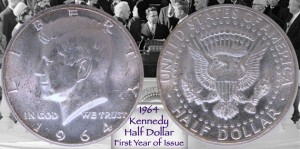
Shortly after Kennedy’s, U.S. Mint Director Eva Adams and Chief Engraver Gilroy Roberts reported that there was discussions about putting Kennedy’s portrait on a silver coin. Since Jacqueline Kennedy did not want to replace Washington’s portrait on the quarter, it was decided to use the half-dollar. Roberts used models from the inaugural medal for the obverse design and Assistant Engraver Frank Gasparro prepared the reverse design using the Presidential Seal.
Since the law stated that coinage design could not be changed more often than 25 years, and that the Franklin Half was only 15 years old, it required Congress to authorize the change. The Act of December 30, 1963 allowed the design to be changed.
When the coin was released in 1964, the 90-percent silver coin was saved by a grieving nation wanting something that represented the fallen President. Over 273 million coins were struck in Philadelphia and 156 million in Denver.
This year, the Kennedy half-dollar will celebrate its 50th anniversary. It appears that as part of that anniversary, the U.S. Mint will use the authorization it has to strike 24-karat gold Buffalo coins and use it to create a Kennedy half-dollar tribute.
Today’s poll asks if you like the idea of a gold tribute coin and whether you would buy one?
What do you think about the idea that the U.S. Mint will produce a 24-karat gold tribute to the 50th anniversary of the Kennedy half-dollar?
I like the idea and will buy at least one of the coins. (40%, 28 Votes)
I like the idea but gold is too expensive for me. (24%, 17 Votes)
Why don't they strike a silver half-dollar like the silver coin that came out in 1964? (21%, 15 Votes)
i do not like the idea (7%, 5 Votes)
Where's the reverse proof? I want a reverse proof! (6%, 4 Votes)
It doesn't matter what the U.S. Mint does. I don't buy any of their products! (1%, 1 Votes)
A persistent question that follows stories about counterfeiting is why do most of the counterfeits come from China and why do they get away with doing this? Unfortunately, the answer lies in differences in our laws, politics, and cultures that may not be as easily resolved as people would like. However, understanding the issues may make it easier to understand how to resolve the problems.
The easiest part of the explanation is the legal standpoint of what we see as counterfeiting versus what the Chinese legal system sees as ordinary commerce. In the United States, every coin ever minted is still legal tender and legally an instrument of the government. Although the Trade dollar was demonetized in 1876, it was remonetized as part of the Coinage Act of 1965 making it legal tender (31 U.S.C. § 5103) for trade in the United States. Even when the United States changes the design of a coin, it remains legal tender.
To protect its currency, the United States has anti-counterfeiting laws that say it is illegal to counterfeit the nation’s money and use in commerce. To protect the collection of collectible coins and currency, the United States created the Hobby Protection Act (15 U.S.C. § 2101 et. seq.) to protect the money supply when it is a collectible and not an instrument of commerce.
In the United States, laws a cumulative. Once passed, they remain the law until repealed or declared unconstitutional by the courts. This is not the way in many other countries. When a new government takes power they are given the authority to rewrite the laws in some form. Not only does this happen with authoritarian governments but in most parliamentary democracies. While new parliamentary governments have restrictions on the changes they make, authoritarian governments do not.
The People’s Republic of China has been run by the Communist Party since 1949. Their rules and laws were changed with the rise of Chairman Mao Zedong and get altered by the party every time a new chairman takes over the party. This includes the control over the money supply. Thus, when the Communist Party took over the country, they demonetized the money produced by the Republic of China and issued renminbi, the “people’s currency.”
In real terms, all coins struck since 1955, the first issued under the current government, are legal tender. Currency printed since 1999, the fifth series are the only legal tender notes. Any other coin or currency note has been demonetized.
Under Chinese anti-counterfeiting laws, it is illegal to duplicate any legal tender coin or currency note for any reason. However, since coinage from previous regimes is no longer legal tender, it is legal strike coins with designs that are no longer legal tender. Chinese laws do not recognize the collection of these coins as a market to protect. Coins are an instrument to facilitate commerce.
Buying and selling coins as an object is just a matter of commerce between individuals under Chinese law and not something that requires protection. While the Chinese buyer can use the obsolete coin as an object of barter, bartering does not hold the same legal status as paying with legal tender currency. Basically, once it is demonetized for new coinage, just about anything goes.
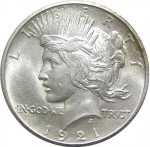
Unlike United States law Chinese law does not recognize the perpetual legal tender status of every coin issued. Chinese law also recognizes that counterfeiting current issues of other countries is also illegal because someone could try to use the coin in commerce where it is legal to use foreign currency. This means that in China, it would be illegal to reproduce a presidential dollar or Washington quarter, but producing Morgan dollars or a set of 1921 Walking Liberty half-dollars is legal in China because these are coins no longer issued in the United States.
When China is asked to assist the United States to stop the counterfeiting of coins, China does not recognize that its people are doing anything wrong. The coins are no longer being made, they are not in circulation, and their laws allow people to make copies of these coins. China does not recognize a collectible coin market. In fact, the only laws they have regarding collectibles are laws protecting antiquities and cultural properties. Under Chinese law, you cannot duplicate the proverbial Ming Dynasty vase and try to pass it off as real but it is legal to reproduce a Rembrandt masterpiece since he is not Chinese and his work was not made in China.
A trade attorney that was consulted for this article confirmed that when it comes to these issues, Chinese law is very protectionist. The claim is that they follow their laws consistently regardless of outside circumstances and they refuse to make exceptions citing the complication with enforcing their laws in a country with a population of more than 1.3 billion people.
Making the problem more difficult, copying and counterfeiting of grading service holders is not covered by Chinese law because they are not government entities. The grading services would have to fight the counterfeiters using Chinese patent and copyright law. A patent attorney confirmed that not only would this not stop the problem, but foreign challenges to alleged patent and copyright violations are rarely successful in Chinese courts.
The Chinese government has no incentive to help the United States or any other country fight counterfeiting in what is perceived by the Chinese as a small market problem. To put the resources necessary into what looks like a petty crime for selling inexpensive, non-circulating duplicate coins that are within Chinese law to manufacture is not worth their resources.
While there is anecdotal evidence that the Chinese government knows about the counterfeit trades and some officials informally support the efforts because they get kickbacks, official Chinese policy denies everything.
A lot has been written about the nature of the relationship between the United States and China since President Richard Nixon’s trip to China in 1972. Neither side trusts each other nor does neither side believe each other. Today, the United States decries the Chinese for buying too much of our debt, allegations of spying, industrial espionage, and cybercrimes. The Chinese say that the United States is trying to bully the world and that these naysayers are making up the stories to scare the world into following them. The United States talks about civil rights violations within Chinese border and the Chinese government tells the United States to mind its own business.
The greater opening of markets between the country and the increase in popularity of bullion coins has made the Chinese Panda a popular coin amongst collectors and investors. Those of us who buy these coins know that even with the production increases since 2010 new issues continue to command a premium greater than other bullion coins.
PCGS representatives showed Congressmen counterfeit U.S. coins in counterfeit PCGS holders during their recent meetings in Washington, DC. (Photo courtesy of PCGS.)
While the Chinese are happy to sell coins and be the factory to the United States, there remains an underlying tone of political and commercial hostility between the nations. A trade attorney said that the Chinese would rather keep the relationship to business between the countries that the United States should stay out of China’s domestic policy. In one example, it was explained that the Chinese central government was upset over how the United States passed judgment over companies in their high tech electronic manufacturing sector because these companies are doing better and is safer than other Chinese manufacturers. To the Chinese government, it is not a problem if a few workers die for whatever reason. There is an ample supply from the population to keep the plants running.
These are the values of the Chinese government. Whether you agree with them or not, Communist Party officials will resent anyone telling them how to manage their domestic affairs. They want advice about how to treat their citizens as much as the United States wants similar advice from China.
All things considered, there is no incentive for China to stop the manufacture of counterfeit collectable coins.
It is not against Chinese law for these people to manufacture coins that are no longer in production. Chinese people who are manufacturing these coins are working in China and many employ other people. It means there are fewer people on what little government assistance the Chinese government provides and they can collect taxes on the incomes.
When a United States trade representatives negotiate with their Chinese counterparts, it gives the Chinese a chance to lecture the United States how they resolved the counterfeiting issues which leads to a discussion on currency handling and management, which is a sore subject in the United States since the United States questions Chinese monetary policies.
Finally, it gives China a measure of moral superiority against the United States. After all, China figured out a way to prevent the impact of counterfeiting of older currency, why can’t the United States do the same?
China has no incentive to help the United States to solve a problem that they perceive does not exist. It is up to the United States to resolve these issues. This is why the industry needs the Collectible Coin Protection Act (H.R. 2754) to allow law enforcement to cut off the supply lines from the counterfeit manufacturers in the United States.
Of all the threats to the numismatics industry one stands out as being the biggest threat: counterfeiting. While thefts and violence of dealers are tragedies, the theft is more localized and easier to deal with because, for the most part, criminals are stupid and leave evidence. Also, since the dealer community is small and there is cooperation from the pawn industry, there is a higher resolution from thefts than expected.
Counterfeiting is worse. Counterfeiting can be a systemic problem that infects the industry in the same way a virus infects your body. To extend the analogy, thefts would be like breaking a finger. It will hurt and cause problems, but the rest of the body will survive. A virus hurts the entire body.
A counterfeit coin is added to the market and is sold to an unsuspecting buyer. The buyer figures out that the coin is counterfeit and is usually embarrassed to admit their mistake. Rather than report the crime or just chalk it up to bad luck, they try to resell the coin, even at a loss, to make up some of the money. The buyer, who is now the reseller, can plead ignorance by claiming buyer’s remorse and say that they decided they did not want the coin.
Overseas counterfeiters, mostly from China, also setup broker networks where they sell their creations to United States-based sellers for them to sell to unsuspecting buyers. While many use online sources to sell these counterfeits, many will try to sell them to low-end coin shops, bullion traders like the ones who setup in hotel rooms, and pawn shops. Unfortunately, they are successful in selling of these items to what should be trusted dealers keeping them in hobby circulation like a virus coursing through your veins.
The problem is not limited to raw coins. Counterfeiters have figured out ways to counterfeiting both the NGC and PCGS holders along with their holographs and seals in order to fool potential customers. Since both companies make it easy to look up serial numbers via their websites, counterfeiters will use the serial number of a real coin and counterfeit that coin for the holder. Both NGC and PCGS have been doing as much as technology allows when upgrading their holders and holographic seals to thwart counterfeiters.
A reminder of the issue landed in Inboxes today from Doug Davis of the Numismatic Crime Information Center. Rather than describe the warning, here it is in its entirety:
COUNTERFEIT SUSPECT
Dealers in Illinois, Missouri, Oklahoma and Kansas should be on the look out for a suspect selling counterfeit coins and bullion within the last ten days. The suspect has been identified as Gabe Owen and sometimes uses the alias Garet or Gabriel Owen. Owen is a white male and uses a Kansas driver’s license or a passport as identification. The vehicle driven by Owen is a white Yukon or Tahoe.
Owen is attempting to sell gold bars, one ounce gold eagles, a 1795 PCGS VF dollar and silver eagles. The same suspect was identified in similar incidents and reported by NCIC approximately one year ago.
We are working with authorities to get a current photo. At the present time there is no outstanding warrant for this subject.
A basic tool against counterfeiting is education. You should know and understand what you are buying. While this sounds basic, you have to think about the coins you are purchasing. For example, collectors of Morgan dollars might think they know what the coin looks like and what to look for, but do you really know? Could that variation in the strike be a known variety, known as VAMs after ground breaking research into Morgan dollar die varieties by Leroy C. Van Allen and A. George Mallis? What if it is a real Morgan dollar that was once cleaned or tooled that would be at least worth its value in silver?
Even if you do not have the education give a definitive answer, how many times have you heard the target of a scam say that something did not seem right or that they questioned a lot of what the seller was saying? More times than not, these instincts are usually right and the few times they are not right, you should feel better knowing that at least you had the sense to listen to that inner voice because you might need it next time.
Always remember, if the deal is too good to be true, it probably is not a good deal!
While counterfeiting is illegal and there are protections under the Hobby Protection Act, the only person that can be prosecuted is the seller. Under the law, the only other person who could be prosecuted is the manufacturer. In most cases, the manufacturer is outside of the United States and beyond the reach of law enforcement.
One tool that can help is H.R. 2754, the Collectible Coin Protection Act. The Collectible Coin Protection Act updates the Hobby Protection Act by allowing law enforcement to target the distributors as well as the sellers. By making the changes H.R. 2754 prescribes, it allows law enforcement to cut off the supply lines from the counterfeit manufacturers.
H.R. 2754 passed the House of Representatives on July 30, 2013 and was sent to Senate for their consideration. However, the bill is sitting in the Senate Commerce, Science, and Transportation waiting to be scheduled. Even if your senators are not a member of this committee, if they hear from constituents that this is a concern, they will speak with the committee chairman Sen. Jay Rockefeller (D-WV) or the ranking member Sen. John Thune (R-SD) to bring this to a vote.
Be part of the antidote to this virus and go to senate.gov, use the pull down menu in the upper-right corner of the page to select the state you live or work. Please contact both of your senators and let them know that you support the Collectible Coin Protection Act. When you contact your senators, tell them that the bill is revenue neutral. It will not add to the deficit and will not require additional appropriations.
In the meantime, please be careful and educate yourself before making that purchase. Buy the book before you buy the coin may be more important now than ever.
The advantage is that almost any book at almost any price is a bargain. You cannot buy them much cheaper. The profits come from knowing what is between the covers. The best collections are built on knowledge, not price sheets.
If you have not read “Hobby Must Fill the ‘Empty Chair’” that Michael S. Turini wrote a few weeks ago, then click here to read it first. Go ahead, I’ll wait.
How do we fill the empty chair?
After years of growth spurned by the 50 State Quarters program, the hobby seems to have plateaued at levels lower than expected. Explanations for the slowing in the hobby’s growth range from the downturn in the economy through the downturn in confidence of the products being produced by the U.S. Mint.
I think Michael Turini stumbled on the problem: those of us most interested are getting old.
Not only are we getting old, but we are not doing what it takes to make numismatics inviting to younger members.
We seem to do pretty well in attracting young numismatists (YN), those under 18 years old. In fact, there are programs that actively recruit YNs for the hobby. But we are not doing enough. Not only are there no programs to keep YNs interested after they stop being YNs, there is a real lack of diversity in the hobby.
During my recent trip to Orlando for the 2014 FUN Show, I noticed that there were an increased number of women than I have seen at other shows. I also noticed that other minorities were attracted to the show. Seeing this was great, but how can it be spread to more areas of the hobby?
Numismatics can be a fascinating look at our history. The money that was used reflects the economy of the time which can tell a great story. What can the Morgan dollar teach us about the history of silver, the economy, and the politics of the time that could interest someone? Would learning about the ‘Crime of ’73’ make people think differently about the impact of politics on our economy?
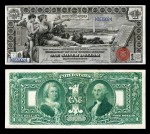
“History Instructing Youth” Educational Series $1 Silver Certificate, Series 1898,
What about the Educational notes series? These one, two, and five dollar notes depict neoclassical allegorical motifs as a representation of the theme written on the front of the note. The back pictured two American figures. Aside from the phenomenal artwork, why were they produced? What was the Bureau of Engraving and Printing hoping to do with these notes?
Our thoughts may also be too old.
There are great stories in other areas of numismatics beyond coins and currency. So-called dollars, tokens and medals the size of a dollar coin, were struck to commemorate something, some event, dedication, or anything of significance. So-called dollars tell stories that coin cannot and yet does not get the same attention in the numismatic press as coins.
If you are looking for new numismatic areas to explore or to use as a source to educate someone about history using numismatics, what about items like trade tokens or tax tokens? Trade and tax tokens were local currencies used to build business. In many ways, trade tokens could be considered coupons before someone issued paper coupons!
New York City Type 2 Subway Token error. It’s missing the punched out “Y”
Transportation tokens traces the history of mass transit which can make learning local history fun. For instance, a New Yorker can easily find subway tokens that can tell the history of both the subway and economics since the tokens were first issued in the 1950s. Adding a Metro card to your collection also explains why the token is no longer used.
In Canada, there are collectors who collect the interesting coupons from a particular tire company.
I know a European-based collector who collects communion medals from a particular region because it traces the history of Catholicism in the area where his family has lived for centuries.
You can even collect the coins of the country where your ancestors or other members of your family are from. I became interested in Canadian coins since my wife’s family is from Canada. Now I am looking at the large cents produced during Queen Victoria’s reign which are affectionately called ‘Vickie Cents.’
Numismatics does not have to be about plugging coins into the holes of a folder or album. It does not have to be about buying coins encased in plastic holders with high numbers or extra symbols. Use numismatics to learn about your past. You can learn more about yourself by understanding your past and what better way to understand your ancestral past than to collect something from that era.
Go collect something new and make sure you tell people about your finds. Tell someone the interesting stories of the past using numismatics as the prop. Make sure you tell them they can have fun with this, as well. Then invite them to your next club meeting and make sure someone is there to talk about their finds and history.
It is only when we can move beyond the cold metal and paper to make the stories interesting can we think about filling all of the empty chairs in the room.
Going to a coin show in another area of the country is an education on seeing how others do the shows and meeting dealers who do not travel to your area. For me, attending the FUN Convention in Orlando was this type of experience. Yes, there were the usual big name, high volume, and high-end dealers present as they are at any show, but there are other dealers whom I have never met before.
Saturday was spent in three parts. When I arrived at the convention center, I went directly to the exhibits area. As a wannabe exhibitor with two (what I think are) good ideas, I wanted to see how others present their ideas. For the most part, I was a little disappointed in the exhibits. Many were mundane and typical. There were only a few exhibits that really stood out.
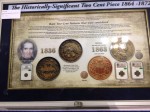
This Historically Significant 2-cent Piece by Tom Ulram of PAN
One of my favorites was a display on the two-cents coins that I found out was put together by Tom Uram, President of the Pennsylvania Association of Numismatists. What made the exhibit interesting is that rather than a flat display, he dressed it up using story boards on a backing that was raised from the bottom of the case, and colorful. It looks like Tom understood that the short-attention-span nature of somebody looking at numismatic material would be more attracted to and attractive presentation.
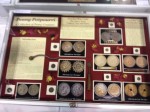
“Penny Potpourri” by Charmy Harker won Best in Class, Show, and People’s Choice
The other exhibit that was clearly about the others was Charmy Harker’s “Penny Potpourri.” Charmy reprised the exhibit from her near sweep at the 2013 World’s Fair of Money to sweep the awards at FUN including Best in Show and People’s Choice. If you have not seen this exhibit, it chronicles the various items made from the little copper one-cent coin. From small tools, decorative items, to dollhouse items, it is amazing what Charmy found. After all, she is known as “The Penny Lady” so it would be natural for her to put this type of exhibit together.
The second part of my day was schmoozing. There is nothing like meeting numismatists of all type on a bourse floor and just talk with them. I spoke with people I know, dealers I did not know until I sat at their table, and with visitors looking at various items wanting more information. I had the most fun at the American Numismatic Association traveling exhibit explaining the history behind the various items of currency that were on display.
Speaking of the ANA traveling exhibit, I was a little disappointed in the presentation of what was exhibited. Aside from not having the currency labeled with information, the case with the errors had just coins placed in the case without description or context. Many of the bland collector exhibits were done better than what the ANA presented.
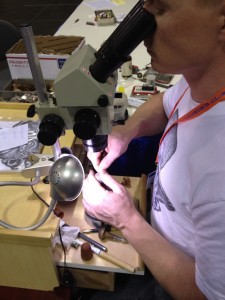
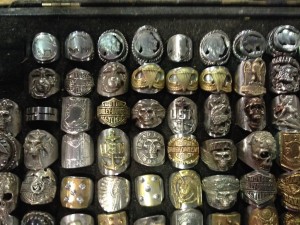
FUN organizers understand that the idea of having a how is to have fun (pun intended). One exhibit area that I have only seen at FUN is the artists’ area. The artists’ area was in the back of the hall off the center aisle where tables were set in a square that hand artists making jewelry and art from coins. There were a number of artists making modern Hobo Nickels, a bead artist who used coins as part of the beading work, and someone who made large rings with carved coins.
A modern Buffalo Nickel artist carves coins at the FUN Show
The rings from another artists features designs using coins (see top row)
Another fun area was the panning for gold. On the other side of the hall was a large booth set up with troughs that had mud and tiny gold nuggets. It was fun to walk up and watch the kids swirl the pan and find a tiny gold nugget. I do not know how much gold was in that water, but it was a lot of fun giving it a try. No, I did not find a gold nugget!
Of the large shows I have attended, FUN has had the most diverse attendance. There seemed to be more families, women, and minorities than even at the World’s Fair of Money. Another pleasant surprise was the number of women taking the lead with the young numismatists around the bourse floor and many of those YNs being girls. There were also quite a few Hispanic collectors with their YNs buzzing around the floor. Since I do not speak Spanish I could tell they were enjoying themselves just be observing their body language.
Diversity is good in both the hobby and life. No single group has the answers and attracting people with diverse backgrounds and perspectives is good for everyone. I do not know if the organizers of FUN advertise the show in minority communities or in areas that would attract diverse interests, but they should share what they do with the rest of the numismatic community since it is working.
As for my purchases, I was looking for a few silver bullion coins. Of the ones on my personal want list I was able to pick up the 2013 25th Anniversary Canadian Silver Maple Leaf and the 2014 Chinese Panda. I did not find the 2013 all-silver Britannia and I forgot about the 2013 and 2014 Australian Silver Koala. Since I already own the 2013 American Silver Eagle Proof, I should be almost caught up with my silver collection.
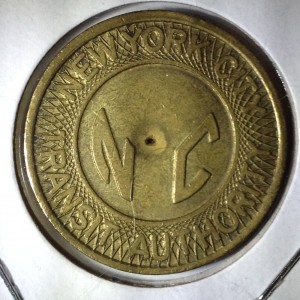
In my attempt to find something that I can say “oh… neat,” I did find three items that category. First, to add to my New York City collection is a Type 2 or “Large Y” subway token without the large “Y” punched. This token would have been used from 1970, when the fare was 30-cents, through 1980 for a 50-cents fare. I have seen many mis-punched tokens, but this is the first I have seen without the “Y.”
New York City Type 2 Subway Token error. It’s missing the punched out “Y”
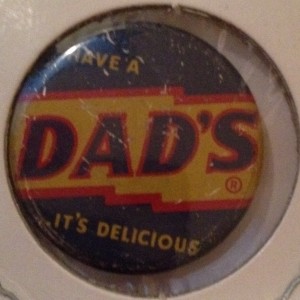
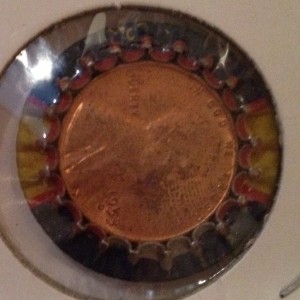
My next “oh… neat” item is a Dad’s root beer bottle cap but with a 1953-D Lincoln cent wedged inside the cap. I do not know if this was done by Dad’s or someone else, but the folding of the cap around the coin looks too perfect to have been done manually. Even if it was done by someone as a good luck piece, it was very interesting.
The bottle cap of a Dad’s Root Beer bottle. A 1953-D Lincoln cent is embedded in the reverse!
A 1953-D Lincoln Cent is “trapped” inside this Dad’s Root beer bottle cap
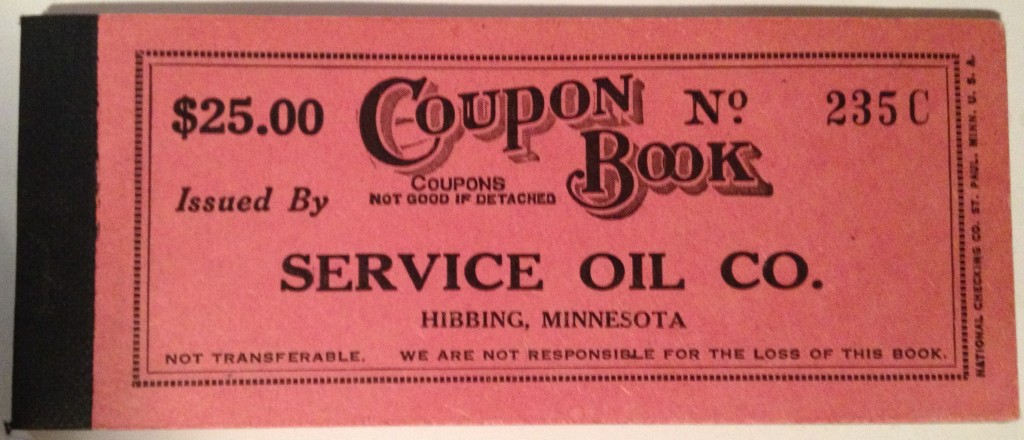
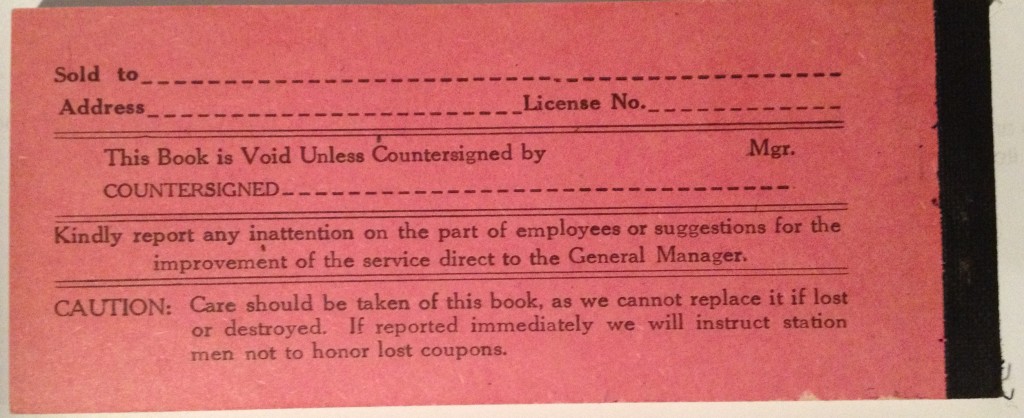
Finally, I found a 1940’s era oil rationing coupon book. Obviously issued during the war, the coupon book limited the holder to up to $25 of home heating oil from the Service Oil Company of Hibbing, Minnesota. Hibbing is in what can be described as northeast Minnesota where it is not exactly warm. As I type this, the Weather Channel is reporting that the temperature in Hibbing a 1F! What makes this coupon book unusual is that it is unused with all the coupons attached from frigid norther Minnesota. It has survived over 60 years in nearly pristine condition. Now that is “oh… neat!”
A never used home heating oil rationing coupon book from the World War II era.
Back cover of an unused home heating oil coupon book. It was printed for but never issued by Service Oil Company of Hibbing, MN
If you have not been to FUN you should try to go. At least take the family. They can go to a theme park while you hit the bourse floor!


 Loading ...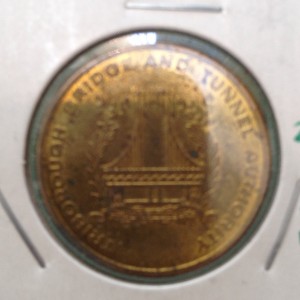
 President’s Day is supposed to be the day that we celebrate the lives of the Presidents of the United States (POTUS). It became a holiday in 1968 when congress passed the Unified Monday Holiday Act (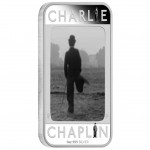
 If you have not read “