Jan 5, 2012 | coins, commemorative, legislative
Commemorative coin programs are known to be able raise a lot of money for many organizations. This past year, congress authorized commemorative coins to support the Congressional Medal of Honor Foundation and the construction of the National Museum of the United States Army at Fort Belvoir. These and other organizations have greatly benefitted from collectors and other interested people buying commemoratives.
With that in mind, Dave Harper of Numismatic News has suggested that commemorative be issued to repair the Washington Monument that was damaged during the earthquake in the Washington, DC area on August 23, 2011.
Dave reports that $7.5 million was appropriated to the National Parks Service with hopes that it could be equally matched with private donations.
In 1986, the Statue of Liberty commemorative raised $81 million for the repairs needed before her 100th birthday. Why not do the same for the Washington Monument?
Harper suggests that the Washington Monument may not generate as much interest as the Statue of Liberty. That may be so, but why limit the the program to just the Washington Monument? How about a The National Monument Commemorative Coin Act of 2012?
The National Monument Commemorative Coin Act of 2012 will honor all of the United States’s national monuments, the U.S. Mint would issue one silver dollar commemorating all national monuments and five half-dollars commemorating various national monuments. The silver dollar could use the logo of the National Park Service that manages 76 of the 101 registered national monuments. As for the half-dollars, the suggested national monuments could include the Washington Monument, Mount Rushmore, the boyhood home of George Washington Carver, the Great Sequoia in Sequoia National Park, and the Navajo Monument on the Shonto plateau
Proceeds from the surcharges collected by the sales of these coins would be placed in a trust fund managed by the Department of the Interior that could only be used for the maintenance of all national monuments, including the Washington Monument.
If you think this is a good idea, please let your member of congress know. You can find your representative at the House website by entering your zip code +4 in the box on the upper right of the page. Use any of the information mentioned above to tell them how good of an idea this is.
Dec 23, 2011 | base metals, coins, legislative, US Mint
Let’s start with a trivia question:
What is the only coin (not pattern) struck by the U.S. Mint that contained no copper?
(cue “Jeopardy!” music)
Give up?
If you said the 1943 Lincoln Steel Cents, you are correct. Every other coin struck by the U.S. Mint has contained some amount of copper in the alloy. Even the 1942-1945 war-time alloy used for the Jefferson Nickel was changed from a copper-nickel alloy to one made of copper-silver-manganese.
After the bombing of Pearl Harbor by the Japanese on December 7, 1941, the next day congress passed a formal Declaration of War on Japan. Three days later, a Declaration of War was passed against Germany. Mobilization took a while and the United States did not formally enter the European theater until landing on Normandy Beach on June 6, 1944, better known as D-Day. Between those declaration and full-scale fighting in both Europe and the Pacific, copper was a critical element necessary to manufacture bullets for training.
Rather than using the copper for coins, the government had bullets manufactured. In order to ensure there was a supply of circulating currency, the U.S. Mint changed the composition of the cent to zinc coated steel. Similarly, to save the nickel needed to make other armaments, the Jefferson 5-Cent coin was changed to 56-percent copper, 35-percent silver, and 9-percent manganese.
To say that 1943 Steel Cent was a disaster would be an understatement. Because of its silver color, it was not accepted by the public. Also, since the steel was not treated, it oxidized quickly and became a dark, dirty color. After a while, the coins would begin to rust. In 1944, Lincoln cents were made using the spent shell casing picked up from the training fields. This continued through 1946, the end of World War II giving the coins the nickname of “Shotgun Cents.”
One other coin that was not made using copper was a 1974 Lincoln Cent pattern that was made of aluminum. The U.S. Mint struck over 1.5 million examples in 1973 in order to convince congress to allow them to circulate them. A few was given out to members of congress as part of the U.S. Mint’s lobbying effort. After the measure was defeated, the members of congress was supposed to return the coins. However, one coin was allegedly “dropped” by a senator and retrieved by U.S. Capitol Police Officer Albert Toven. The Toven Specimen was graded MS62 by PCGS in 2005. It is estimated that 18-44 more still exist but have yet to be discovered.
Today there is another issue. Since 2006, the cost of the metals to manufacture the current Lincoln Cent (99.2-percent zinc covered with .8-percent copper) and Jefferson Nickel (75-percent copper and 25-percent nickel) has raised its base cost to at least 150-percent of face value before considering manufacturing costs. The cost has caused several “discussions” about the fate of these coins—there are some who want to eliminate the cents; others want to change its composition; and there is a small group who understands the concept of the loss-leader and is willing to let it go as long as seignorage for other coins cover the costs.
First term Rep. Steve Stivers (R-OH) wants to settle the discussion by introducing two bills that if passed will change the composition of the one-cent and five-cent coins. Stivers introduced H.R. 3693, Cents and Sensibility Act, and H.R. 3694, Saving Taxpayer Expenditures by Employing Less (STEEL) Imported Nickel Act on December 15, 2011. Both bills are being co-sponsored by Reps. Tim Ryan (D-OH) and Pat Tiberi (R-OH).
H.R. 3693 is very straight forward. It says that the “1-cent coin shall be produced primarily of steel” and “shall be treated to impart a copper color to the appearance of the coins.” If the law is enacted, the coins will use only steel produced in the United States. If it is not possible to use U.S. manufactured steel, the reason has to be published in the Federal Register. The size of the coin will not change but the weight is allowed to be altered as necessary.
H.R. 3694 is similar to H.R. 3693 in that it strives to keep the 5-cent coin to look the same using U.S. manufactured steel. Where the bill differs is how the coins are to be designed for use in circulation. The three provisions required for the conversion is that whatever composition is used, the new alloy is not supposed “require more than 1 change to coin-accepting and coin-handling equipment to accommodate coins,” use the same alloy or specifications that is used by another country, and “require changes to coin-accepting or coin-handling equipment whatsoever to accommodate both coins produced with the new specifications.”
Every time there is a proposed change in the composition of U.S. coins, the one group that has the biggest say is the vending machine industry. When silver was removed from U.S. coins in the 1960s, the decision was made to use the current copper-nickel clad coins so that it produces the same electro-mechanical signature its silver counterparts. The electro-mechanical signature is the combination of the coin’s size, weight, and how electricity is conducted by the coin. If the coin can match the specifications, it is determined to be real (as opposed to a slug) and is accepted by the machine. Considering that steel has a different density from the copper-nickel alloy, the coin will have a different weight and be a stronger conductor of electricity. Steel coins may require two changes to vending machines making it nearly impossible to comply with the law. The vending machine lobby will not like the results of this bill and will lobby for its defeat.
Before considering other options, by saying that the coins cannot use the same alloy or specifications that is used by another country, the U.S. Mint could not consider using aluminum, especially since it is being used in Canada.
The professional organizations that cover the vending machine industry has not comment on these bills.
The bill was referred to the House Committee on Financial Services. Coin bills are referred to the Domestic Monetary Policy and Technology subcommittee, chaired by Rep. Ron Paul (R-TX). Aside from Rep. Paul’s current status as a candidate for the Republican nomination for president, he is known for not being a fan of using base-metals for coins and “wasting time” on coinage changes. Remember, it took a the members of this subcommittee to bring the measure to the Financial Services Committee as a whole to have the Baseball Hall of Fame Commemorative referred to the floor for a vote.
While H.R. 3693 and H.R. 3694 may make for an interesting discussion, politics suggests that these bills may never make it out of committee.
Dec 21, 2011 | coins, COTY, foreign
On Monday, Krause Publications announce the winners of the 2012 Coin of the Year Awards. From these winners, judges will select an overall Coin of the Year winner which will be announced February 4, 2012, at the World Money Fair in Berlin, Germany. Voting for the People’s Choice Award will begin in early January with the winner also announced at the World Money Fair.
Krause reports that 95 coins issued in 2010 were nominated early in 2011 for consideration. The category winners are:
- Best Silver: Austrian Mint, 10 Euro Erzberg in Styria
- Most Popular Coin Design: Austrian Mint, Silver Philharmonic bullion coin
- Best Contemporary Event Coin: The German Federal Ministry of Finance, Silver 10 Euro celebrating German Unity
- Most Historically Significant Coin: Royal Canadian Mint, $100 gold coin commemorating the 400th Anniversary of the Hudson Bay Company
- Best Gold Coin: Royal Mint, £100k London Olymics Gold Coin
- Best Crown: Andorra Mint, 5 Dinar Brown Bear Pyrenees Silver Coin
- Most Artistic Coin: Israel Coins and Medals Corporation, Jonah in the Whale 2 NIS Silver Proof Coin
- Best Trade Coin:, San Marino, 2 Euro circulating coin
- Most Innovative Coin: Coin Invest Trust of Liechtenstein, 1500 Francs CFA Silver Proof featuring The Mecca Qibla Compass with magnetic spoon that points north.
- Most Inspirational Coin, Mont of Finland, Children and Creativity 20 Euro Coin; this coin is notable because it was the first theme for a Finnish coin selected by public vote. The coin was designed by Roope Määttä, an art student at the Kajaani Upper Secondary School, who describes his design as a reminder to always remember one’s roots.
For the second year in a row, no coin from the U.S. Mint was selected for any category.
Dec 14, 2011 | coins, dollar, policy
With the furor over the large number of dollar coins sitting in the Federal Reserve vaults, estimated to be over $1.4 million by a Federal Reserve report, Treasury Secretary Tim Geithner exercised his his authority to “mint and issue such number of $1 coins of each design selected under this subsection in uncirculated and proof qualities as the Secretary determines to be appropriate,” (31 U.S.C. § 5112(n)) and will cease to strike dollar coins for circulation. Dollar coins necessary to meet circulation demand will be drawn from existing inventory. The U.S. Mint will strike dollar coins to meet numismatic demands.
Announced as part of a blog post on the Treasury website by Deputy Secretary of the Treasury Neal S. Wolin, those wishing to purchase future Presidential $1 Coins will be able to purchase them directly from the U.S. Mint starting with the Chester A. Arthur dollar in Spring 2012. Prices and shipping costs will be announced in the near future.
Although this may be seen as a significant move, there is precedent for reducing striking of coins to primarily meet numismatic demand. Using a current example, the last time the U.S. Mint struck the Kennedy Half-Dollar for circulation was in 2001. In 2001, only Denver struck coins were delivered to the Federal Reserve.
Touted as part of President Obama’s executive order that established the executive branch’s Campaign to Cut Government Waste, Treasury estimates that this measure will save at least $50 million annually. Wollin wrote that this is, “the right decision for taxpayers. And going forward, we’ll continue our work to identify additional opportunities to support President Obama’s critical objective to cut waste and improve efficiency across government.”
I wonder if this move will keep any of those bills to eliminate the Presidential $1 Coin Act from even being heard in committee?
Nov 25, 2011 | Baltimore, coins, currency, shows
For the first time since the 2008 World’s Fair of Money, I went to a coin show. Attending the Whitman Baltimore Expo was timed so that I could be there before the Annual Meeting of the Maryland State Numismatic Association (MSNA), but so not to spend a lot of time on my bad leg. When I arrived after 1:30 PM, there was still nice activity on the bourse floor. Although some dealers had left the show, there was a significant presence. After carefully assessing the landscape, it appears that the folks at Whitman has moved dealers around so that the area near the entrance continues to have active dealers.
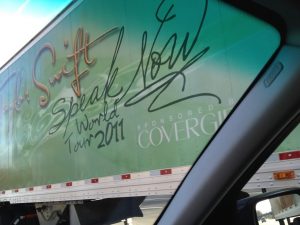
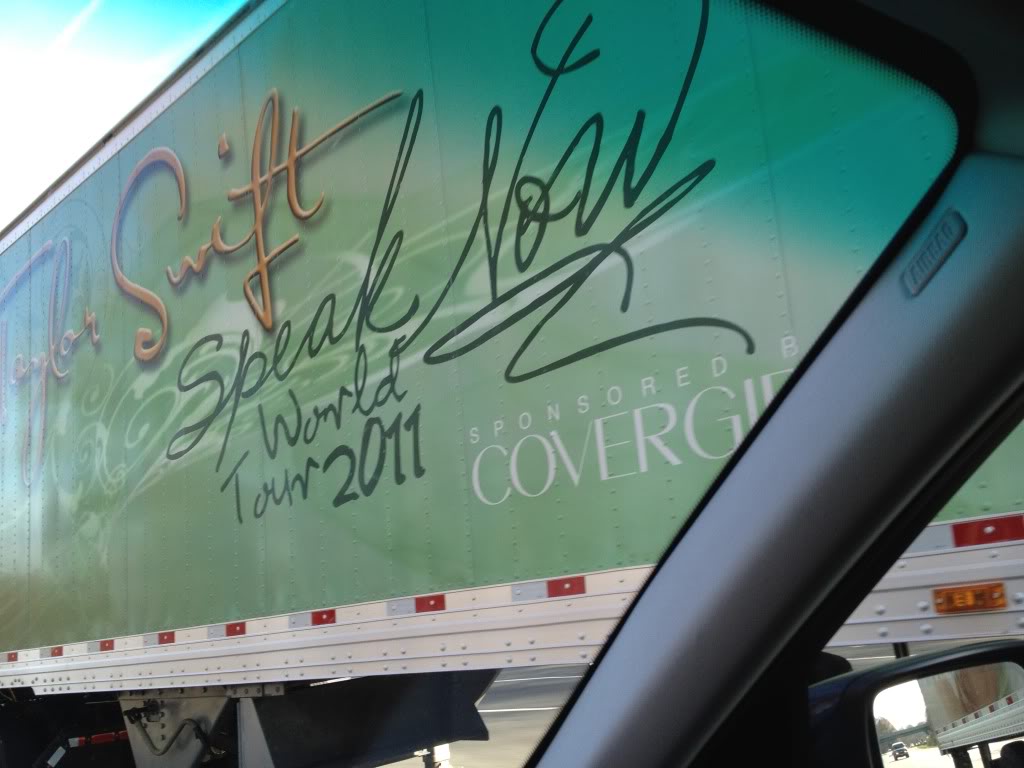
Seen on the way to the Whitman Baltimore Expo!
When I arrived I did a quick tour of the bourse floor toward Halls B and C. For this show, I found that the dealers in Hall C were the most active and had the some of the more interesting items. Before going into the Hall C area, I found a dealer in foreign coins to sell some Canadian silver dollars. With that money, I went to Hall C and purchased 2011 silver Panda and Britannia coins.
Time was short, so I went to the third floor to find the meeting room for the MSNA meeting. Since the floors above the bourse were reserved for educational seminars for the American Physical Society, meeting rooms for the Whitman show were reserved more than half-way to the Camden Yards end of the Baltimore Convention Center. If you have not visited the BCC, it is a very large structure and the walk is not easy for someone with a bad leg. But I made it and the MSNA Board accomplished some work.

2012 Maryland State Numismatic Association Officers
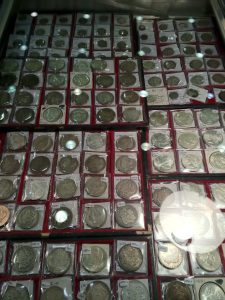 On my return to the bourse floor, I noticed more than half the dealers had packed and left the show. For me, this is not a problem since I was more interested in the interesting item from the dealers that were left, primarily at the far end of Hall B and the dealers in Hall C. For the first time, I stopped at the table of a dealer who was selling ancient coins. Although I am not a collector of ancients, I have supported Ancient Coin Collectors Guild (ACCG) and their efforts to prevent import/export restrictions on ancient coins. I spoke with the dealer for a few moments asking questions about the ancient coin market.
I also had the chance to speak with Bob Hall, a numismatic book dealer. Every time I see him at a show, I make sure I stop by his table. Hall has a wide selection of books from the current to the old. He is also a good conversationalist who really knows his stuff. Even though I did find a book I was interested in, it was a bit out of my price range. I will try again in March.
One thing I noticed is that there did not seem to be a currency area. Currency dealers were found in different places and not in one particular area.
At the end, I sat at the table of one dealer in Hall C and went through his “junk bag” of foreign currency. Flipping through those notes gave me an idea for a collection and potential exhibition. If I can find currency with the appropriate characteristics, I will have an exhibit ready for the Whitman Expo in March.
After the show closed for the evening, returned to my car happy to be off of my feet. After a stop for an appropriate beverage, I spent the next hour driving home.
That was a lot of fun, even for a few hours. I will have to look into going to a smaller show before the next Whitman Expo.
Nov 9, 2011 | coins, COTY, foreign
 Krause Publications announced the Coin of the Year (COTY) nominations for 2012. Coins nominated for the 2012 COTY Award were released in 2010. According to Krause, nominees are judged by a panel of mint and museum officials, numismatic journalists, and individual experts from around the world. Winners are selected in each category (see below) and one coin is selected as COTY.
Once the category winners are announced, an online poll will be made available on their website numismaster.com for readers to vote on their favorite. The winner will be awarded the People’s Choice award.
Awards will be presented at the World Money Fair in Berlin, Germany during the first weekend of February 2012.
And the nominees are…
Most Historically Significant Coin
- Bank of Lithuania – Battle of Gruenwald, 500 Litas, gold, KM #173
- Royal Canadian Mint – 400th Anniversary of Hudson Bay, 100 Dollars, gold KM #997
- Coin Invest Trust acting as agent for the country of Cameroon, Shroud of Turin, 1000 Francs, silver, KM #38
- Israel Coins and Medals Corp, Old Akko, 10 New Shequalim, gold, KM #470
- British Royal Mint, 350th Anniversary of the Restoration of the Monarchy, 5 Pounds, silver, KM #1151a
- Mint of Poland acting as agent for Niue – Czar Peter the Great, One Dollar, Silver, KM #433
- Netherlands Mint – Max Havelaar, 5 Euro, silver, KM #294
- National Bank of Ukraine – 600th Anniversary of Gruenwald, 20 Hryvin, silver, KM #596
- National Bank of Portuagal, Torres Defense Line, 2.5 Euros, Silver, KM #800
- National Bank of Belarus, Battle of Gruenwald, 50 Roubles, Silver, KM #270
Best Contemporary Event Coin
- National Bank of Cyprus – 50th Anniversary of the Republic, 5 Euro, silver, KM #94
- Monnaie de Paris – Georges Pompidou Center, 10 Euro, silver, KM #1066
- Mint of Poland – 65th Anniversary of Auschwitz Libertion, 10 Zlotych, Silver, Y #713
- German Federal Ministry of Finance – Unity, 10 Euro, Silver, KM #290
- South African Mint – World Cup, 1 Rand, gold, KM #508
- Hungarian Mint – The Ballpoint Pen, 1000 Forint, copper nickel square, KM #818
- National Bank of Morocco – 35th Anniversary of Green March, 250 Dirhams, Y #132
- China Gold Coin Corp – 30th Anniversary of the Founding of the Shenzhen Special Economic Zone, 10 Yuan, silver, KM #1953
- Royal Canadian Mint, 75TH Anniversary of Canadian Banknotes, 500 Dollars, gold, KM #1007
- Bank of Latvia – 20th Anniversary of Modern Republic, 1 Lats, silver, KM #113
Best Gold Coin
- Perth Mint – Kangaroos fighting, 100 Dollars, gold, KM #1365
- Denmark National Bank – 70th Birthday of Queen Margaret, 1000 Kroner, gold, KM #939
- Israel Coins and Medals Corp. Tower of David Near the Jaffa Gate, 20 New Shequalim, gold, KM #467
- Mint of Finland – 150th Anniversary of Autonomy, 100 Euro, gold, KM #150
- British Royal Mint – London Olympics, 100 pounds, gold, KM #1162
- China Gold Coin Corp – Year of the Tiger, 5 ounce, 2000 Yuan, KM #1914
- National Bank of Argentina –World Cup, 10 Pesos, gold, KM #163
- National Bank of Ukraine – Panticapeum Ruins, 100 Hyrvin, gold, KM #597
- Italian State Mint –Arts of Europe – Sweden, 20 Euro, gold, KM #335
- Royal Canadian Mint – Prairie Crocus, 350 Dollars, gold, KM #1019
Best Silver
- National Bank of the Republic of Belarus – Battle of Gruenwald, 20 Rubles, silver, KM #239,
- National Bank of Russia –Saint George, 3 Roubles, Y #1214
- National Bank of Hungary – Orseg National Park, 5000 Forint, silver, KM #820
- Czech National Bank – Marriage of John of Luxembourg, 200 Korun, silver, KM #115
- National Bank of Lithuania –Brazai Castle, 50 Litu, silver, KM #170
- German Federal Ministry of Finance – Konrad Zuse, 10 Euro, silver KM #289
- Japan Mint – Aomori Prefecture100 yen, silver, Y #168
- Austrian Mint –Erzberg in Styria, 10 Euro, silver, KM #3185
- Italian State Mint – Giorgione 500th Anniversary of Death, 10 Euro, silver, KM #333,
- New Zealand Mint acting as agent for the country of Niue – Antilocapra Americana, One Dollar, silver, KM #234
Best Crown
- National Bank of Ukraine – Pottery, 10 Hryven, silver, KM #605
- New Zealand Mint acting as agent for the country of Niue – Sitting Bull, One Dollar, Silver, KM #394
- Perth Mint –Koala Coin, One Dollar, Silver, KM #1464
- Andorra Mint – Brown Bear, 5 Diners, Silver, KM #315
- Monnaie de Paris– Mother Teresa, 10 Euro, silver, KM #1695
- Kazakhstan Mint –Deer Buckle, 500 Tenge, silver, KM #179
- United States Mint – Boy Scouts, One Dollar, silver, KM #480
- Coin Invest Trust acting as agent for the country of Samoa – Flying Fox, 10 Dollars, silver, KM #173
- Coin Invest Trust acting as agent for the country of Togo – Sunbird, 1000 Francs, silver, KM #48
- China Gold Coin Corp. – Year of the Tiger, 50 yuan, silver, KM #1921
Best Trade
- Mint of Poland –August of 1980 Solidarity, 2 Zloty, Brass, Y#737
- United States Mint – Native American Dollar, One Dollar, Copper-nickel, KM #474
- National Bank of Argentina –Silver Sea, One Peso, Copper Nickel, KM #158
- National Bank of Denmark –Greenland Kayaking, 20 Kroner, Aluminum-bronze, KM #940
- Japan Mint – Gifu Prefecture, 500 Yen, Bimetallic, Gifu Prefecture
- Lithuanian Mint – Battle of Grunwald 600th Anniversary, 1 Litas, Copper-nickel, KM #172
- National Bank of India –Mother Teresa, 5 Rupees, Stainless Steel, KM #381
- National Bank of Venezuela – 200th Anniversary of Independence, 25 Centimos, Nickel-plated steel, Y #99
- National Bank of the Republic of San Marino – 500th Anniversary Death of Botticeli, 2 Euro, Bimetallic, KM #494
- Royal Australian Mint –Sheep Industry, 20 Cents, Copper-nickel, KM #1502
Most Popular
- Perth Mint – 50 Cents, silver, Kangaroo Bush Babies, KM #1456,
- United States Mint –Hot Springs National Park, 25 Cents, Copper nickel, KM #469
- Coin Invest Trust acting as agent for the country of Benin – Marijuana Coin, 100 CFA Francs, Copper-Nickel Silver plated, KM #53
- Royal Canadian Mint – Poppy Coin, 25 Cents, Nickel finish on Steel, KM #1028
- Austrian Mint – Philharmonic, 1.5 Euro, One Ounce, Silver, KM #3159
- Coin Invest Trust acting as agent for the country of Tuvalu – Brown Snake, One Dollar, Silver, KM #134
- Mint of Sweden – Wedding of Princess Victoria, 300 Kronor, Silver, KM #917
- Royal Mint – London Olympics, 5 Pounds, Sterling Silver, KM #1139a
- Perth Mint – Discover Australia Koala, 15 Dollars, Silver, KM #1405,
- Banco de Mexico – Morelos, 5 pesos, bimetallic, KM #923
Most Artistic
- Israel Coins and Medals Corp. – Jonah and the Whale, 10 New Shequalim, Silver, KM #477,
- Perth Mint – Sydney Cove Medallion, One Dollar, Silver, KM #1568
- Fiji – H.C. Andersen’s The Nightingale, One Dollar, Silver, KM #127
- Kazakhstan Mint – Pelicans, 500 Tenge, Silver, KM #177
- Italian State Mint – Aquileia, 10 Euro, Silver, KM #334
- Bank of Latvia – Amber Eye, 1 Lats, Silver, KM #109
- Royal Canadian Mint – Polar Bear, 3 Dollars, Silver gilt square, KM #1051
- China Gold Coin Corp – Chinese Grotto Art, 300 Yuan, Silver, KM #1950
- Coin Invest Trust acting as agent for the country of Palau – Tiffany Art Rococo, 10 Dollars, Silver, KM #252,
- Czech Mint – Alphonse Mucha, 200 Korun, Sterling silver, KM #114
Most Innovative
- Coin Invest Trust acting as agent for the country of Cook Islands – Obama/King, 5 Dollars, Silver, KM #729 &730
- Royal Canadian Mint – Year of the Tiger Hologram 150 Dollars, Silver, KM #979
- Coin Invest Trust acting as agent for the country of Niue – Seven Pointed Christmas Star, One Dollar, Silver, KM #422
- Coin Invest Trust acting as agent for the country of Palau – Dealer Button Insert with Playing Cards, One Dollar, Silver, KM #307
- Coin Invest Trust acting as agent for the country of Ivory Coast – Qibia Compass, 1500 Francs, Silver, KM #7
- Japan Mint – Sakamoto, 1000 Yen, Silver, Y #160, First Effigy of a Real Person
- Perth Mint acting as agent for the country of Tuvalu – Gustav Mahler, One Dollar, silver, KM #124, Depicts Musical Score
Most Inspirational
- Royal Australian Mint –Fred Hallows Inspirational Australians – Healthcare, One Dollar, Aluminum Bronze, KM #1496,
- New Zealand Mint acting as agent for the country of Cook Islands – Windows of Heaven, 10 Dollars, Sterling Silver, KM #1258
- Mint of Poland – 30th Anniversary of Solidarity, 10 Zloty, Silver, KM #738
- Austrian Mint – Barron Clemons Von Pirquet Children’s Clinic, 50 Euro, Gold, KM #3194
- Royal Mint – London Olympics 2012 – Olympic Strength, 5 Pounds, Silver, KM #1155
- Royal Canadian Mint – Remembrance Day Poppy, One Dollar, Silver, KM #1050
- Andorra Mint –Gabriel and Mary Christmas Coin, 25 Diners, Gold, KM #288
- Mint of Finland – Children and Creativity, 20 Euro, Silver, KM #1532
Oct 13, 2011 | coins, fun, scripophily, video
Those watching television in the evening had the opportunity to watch two shows were numismatics played a role in the story. On Monday night, CBS’s Hawaii Five-0 had a story that included Spanish gold escudos and the Hawaii over-print dollars.
After a child found a disembodied hand floating in the water, the fingerprints identified its former owner. When they went to search his home, the Five-0 team found Spanish gold coins soaking in a tank of water. McGarrett and Danny Williams went to a local museum to learn that a Spanish galleon carrying a cargo of gold coins sunk near the islands. Being good detectives, Five-0 traces the search for the galleon to a diving company that specializes in searching for lost treasure. As part of looking for the rest of the body, Five-0 and the Coast Guard finds an abandoned boat—or what they thought was abandoned. This leads them to go diving to see what was below the surface.
In an underwater wreckage, they find a body. When the body was examined, the wallet contained currency that was washed out. Using whatever forensic techniques they used to identify the note, they enhanced the image to find that it was a Series 1934A Federal Reserve Note issued in 1942. The forensic scientist explains how the Hawaii overprint notes were issued in case the notes were captured by the Japanese during an invasion. If that happened, the notes could be demonetized, making them useless.
The note was used to help identify the body and the gold escudos were used to trace who was responsible for the murder.
To see the full episode of “Mea Makamae,” you can watch it on CBS’s website here.
One of my favorite shows is History Detectives on PBS. For those who have not seen the show, History Detectives explores the history behind artifacts that people find or are handed down by family members to discover its history and the history behind the objects. Anyone who loves history may want to add History Detectives to your must see list.
This past week, Gwen Wright, who is also a professor of architecture at Columbia University, investigate a stock certificate issued by the Harlem Associated Heirs Title Company.
The person who initiated the investigation was a collector of stock and bond certificates, a part of numismatics called scripophily. Those who collect these certificates have interests in financial history, the signatures, or artwork on the certificates. Early certificates were hand autographed by the presidents and treasurers of the companies making them more desirable. Today, stock certificates are a thing of the past since stocks are transacted electronically.
In this investigation, Wright traces the certificate to the history of Harlem. Originally, the area we know as Harlem was a remote area of Manhattan island, far away from what we know today as downtown where most of the people lived. The area was dotted with exclusive vacation homes of the rich with a section of land that was granted to a group of people. By the end of the 19th century and into the early 20th century, New York City grew so much that Harlem was no longer a remote area and the city worked with developers to develop the land regardless of alleged ownership. The Harlem Associated Heirs Title Company was a group who tried to reclaim the property after the turn of the 20th century.
Of course I left out some details. Watch the segment from this week’s show:
Oct 3, 2011 | advice, apps, coins, education, Red Book, values
One of the most common questions I receive is “what is my coin worth?” Which is then followed by, “why is this coin not worth more?” Both are good questions that cannot be answered in a quick email since price is determined on market value which is heavily influenced by the coin’s condition. Let me explain…
First misconception is that the older the coin, the more it is worth. While some of this is true, there are exception. Copper coin enthusiasts will tell you that the 1910’s Lincoln Cents are worth more on avert than the 1900’s Indian Head Cents, rarities not withstanding. But those rarities are represented of one of the significant drivers in the cost of a coin: supply and demand. Simply, if there is a lower supply for the coin and a high demand, then the prices will be higher. For example, there were only 484,000 1909-S VDB Lincoln Cents struck before the U.S. Mint stopped production of the coins to remove the “V.D.B” initials on the reverse. Although nobody is certain how many have survived, it is difficult to find a collector who does not want one in their collection. Low supply, high demand means high price.
Many of what collectors call “key date” coins are those that are in low supply. But not all of those coins have the same demand. One example is the 1909-S Indian Head Cent with a mintage of 309,000. Even though the supply is lower than the 1909-S VDB Lincoln Cent, its demand is not as high. With the lower demand, the average price of the 1909-S Indian Head Cent is lower than the 1909-S VDB. But if you looked at the price of the 1909-S Indian Head Cent at higher grades, the Indian Head Cent is more expensive. This is because the first year Lincoln Cent was save in greater numbers and there are a few more higher grade examples available. Fewer of the 1909-S Indian Head Cents were saved leaving a lower supply making the coin more expensive for those demanding a higher grade coin.
That brings up the second factor of price: the condition of the coin. The better the condition the more expensive the coin. Using the 1909-S VDB Lincoln Cent for an example, the “book price” of a brown cent (BN) in the average grade of Extra Fine (XF-40) is $1,300. If it was at the low end of being Uncirculated (MS-60), the coin is worth $1,680. A coin that has some mint red luster that can be classified as red-brown (RB) makes the coin worth $1,720. In higher grades, such as MS-65, the difference between having a 1909-S VDB in BN ($3,060) differs significantly from a RB cent ($4,230) which is less than if it was a full blazing red cent ($6,440).
Condition is a key factor. Even if you were to look up the price of a coin in almost any reference, you will find that the price is different for each grade. It is important that you know the grade of the coin. For U.S. coins, one of the best online resources for helping grade coins is PCGS Photograde Online. PCGS Photograde Online contains high quality images of pre-1964 coins in all grades so that you can compare your coin with the online images. If you have an Apple iPhone or iPad, you can download the app from the iTunes App Store (Photograde app was previously reviewed here).
Even with knowing the condition and rarity of the coin, pricing is more of an art than a science. Publishers of price guides look at market condition, reports of how coins are selling, auctions, and other factors to determine what they think a coin should be worth. Just remember, these guides are just guidelines. They are not definitive prices. Individual dealers set their prices based on how much they purchased the coin for, consignment agreements, what the price guides suggest, along with extra to make a profit. Depending on the dealer, coin, and circumstances, these prices are not firm and can be negotiated. However, if you are negotiating for a coin, you should know what the fair market value is of the coin. Otherwise, you will make the dealer upset and might not sell you the coin regardless of the price.
Negotiating tips will be the topic of another post in the near future.
A good place that I have found to determine what the fair market value is the NumisMedia Fair Market Value Price Guide. NumisMedia allows all web visitors to view the fair market values of the coins in all grades. For those at shows or visiting a coin shop doing quick research on their smartphone, NumisMedia offers a mobile version of their fair market value website at m.numismedia.com.
If you collect foreign coins, there are few, if any, online resources. Since I have an interest in Canadian coins, the best single reference is the Charlton Standard Catalogue, Canadian Coins. Now in its 66th edition, it is the definitive reference on everything minted by the Royal Canadian Mint and those issued by the provinces before the union. One minor drawback is that the images are in black and white. Also, the book is not available as an e-book, which would benefit mobile users.
The ultimate reference guide for world coins is the Standard Catalog of World Coins from Krause Publications. Not only are there volumes for the 18th, 19th, 20th, and 21st century, but all four volumes are available as PDF files on DVDs. Once the files are copied to your system, they can be downloaded to your e-reader or mobile device for taking on the road. The files are searchable and can help price your world coins. If you do not want the full catalog but want a few countries or regions of interest, Krause offers their “Coins of the World” for downloading. This will allow you to download on the section of the Standard Catalog that you are interested in.
Krause also offers sections of their U.S. Coin Digest for each coin type for download. This is a good service for those interested in just one type. For obsolete bank note collectors, Krause also offers sections of the multi-volume Standard Catalog of United States Obsolete Bank Notes by James A. Haxby as a per state download.
Other references you might consider are Whitman’s A Guide Book of United States Coins, also known as the “Red Book,” and Krause’s U.S. Coin Digest. Both traditional references are available for your favorite e-reader making them easily searchable and portable.
Using these references should help you understand what your coin is worth and why. Now go forth and build your collection!
Oct 2, 2011 | Canada, coins, YN
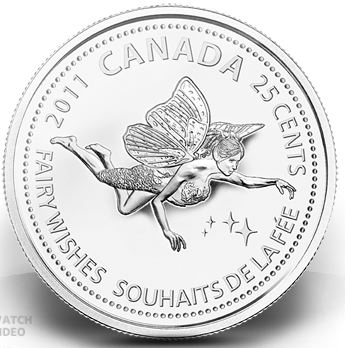
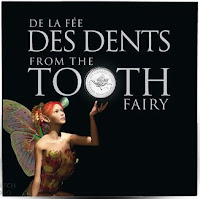 Are you a tooth fairy looking for something different to give leave that little loved under the pillow? Then the Royal Canadian Mint has an answer for you, especially if the toothless child is into coin collecting. Rather than leaving money, the RCM has produced a Tooth Fairy Gift Card with a special 25-cents Tooth Fairy coin.
Tooth Fairy legends started in Europe where it became a tradition to bury baby teeth as they fell out. Later, it became tradition to place the tooth under the pillow where the Tooth Fairy would collect the teeth, leave the children money, and give the teeth to the parents as a keepsake of their child’s growth. Whatever the tradition, the bottom line is the giving of money for the tooth. Why not make it memorable?
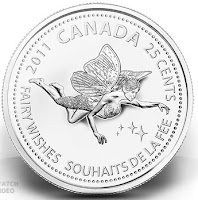 The card from the RCM also includes an envelop so that you can include more money than a quarter. For children in the United States, you can include other world coins if the child is a beginning collector or you can just leave some modern, legal tender alternatives. On either side of the border, an idea is to include the current Presidential $1 Coin or a few National Parks quarters. In Canada, the RCM has a animal and flower coins that would satisfy any child along with having the tooth fairy card.
Some traditions mark the sixth tooth as being special because it represents the strength in the child’s growth. For those, why not look at a large silver coin. the American Silver Eagle is a nice choice for U.S. children. In Canada, the 2011 Maple Leaf Forever silver coin with the three maple leaves is a symbol of Canada like no others.
I remember after the first few teeth how monotonous losing teeth became. This card could help a child along having those feelings.
This card is such a good idea, I wish I was playing tooth fairy for someone who could enjoy a card like this.
Images courtesy of the Royal Canadian Mint.
Oct 1, 2011 | coins, education, YN
The most popular way to collect coins is by date and mintmark, but that does not have to be the only way to build a collection. Some collections are built based on a single year, coin types, coins and tokens from a hometown, medals, transportation tokens, or the subject of the coins such as animals.
Children who are interested in collecting should start small and with manageable collections that can be collected from pocket change. By starting small with achievable goals, children can maintain their interest as they complete their collections.
Before you start a collection, sit with your child and set a goal by defining what will be collected and how it will be done. Although it is popular to collect coins from pocket change, buying coins from coin dealers, shows, or online auctions are certainly wonderful collecting ideas.
Let’s look at a few collecting ideas.
Collecting Tools
As you start to collect, you will need a few supplies to help manage the collection:
- A Magnifying Glass: Magnifying glasses come in various sizes and shapes. For children, it is best to have a handheld magnifying glass that is at least 4x or 6x power. Using a magnifying glass to examine coins allows the child to get used to closely examining coins.
- Coin Holders: Your child will need something to hold the coins collection. For these collections you have the choice of using 2×2 cardboard holders are Mylar flips.
- Cardboard holders are hinged cardboard that fold in half and measure 2-inches square. In the middle of each half are holes big enough to hold the coin. The holes are covered with a Mylar window to hold the coin. Cardboard holders come with different size holes for each type of coin. You can purchase holders that can be stapled or are self-sealing (I like self-sealing holders). The advantage of cardboard holders is that you can write information on holder.
- Mylar flips are hinged clear holders with pockets on both sides to hold the coins. Only buy flips that are made of Mylar. Plastic flips contain PVC (polyvinyl chloride) that will damage your coins over time. When folding new flips, make sure that the pocket openings are on the inside. The advantage of the flips are that they are less expensive than cardboard holders and coins can be easily changed and that the other pocket can be used to insert a paper label.
- Coin Pages: Once the coins are in a holder, you will want to arrange them to view. Coin pages are notebook-sized pages that have pockets that fit either of the holders mentioned above. You can also buy a loose-leaf binder to put the pages together. Dividers can separate multiple collections.
- Reference Book: You will need one book to learn what coins were minted for each year. Online resources are nice, but sitting at the table with the coins and holders spread out in front of you makes some online resources difficult. It is also fun to flip through the book at look at the different coin types and their prices. Two recommended books are:
- A Guide Book of United States Coins, known as the Red Book for the red cover that has been used for 65 years. A new version is issued every year with updated information and prices. It is a staple of U.S. coin collectors
- U.S. Coin Digest is a similar reference from another publisher. For ten years, this book has been good at bringing the latest information about U.S. coins. Newer editions include a CD-ROM with the contents of the book in PDF format. The PDF edition is easily searchable and portable for taking on trips using your smart phone or tablet computer.
Optional supplies include coin tubes to that fit each coin type, cotton gloves if you are going to handle uncirculated coins, and you can look into fancier albums with blank pages when the collection gets more advanced.
All of these supplies can be purchase at the your local coin store or online.
Year Sets
Year Sets are a type of collection that contains coins from one year. These collections can contain one coin per type or collect coins with different mintmarks. A good way to start is to collect coins from the child’s birth year. Children born 1999 and later have the added advantage of looking for State Quarters. Year sets do not have to be the child’s birth year. If the parents were born in 1965 or later, they could put together year sets of those years. We will discuss collecting coins from before 1965 later.
When collecting Year Sets, children may want to write an essay as to why that year was special. Those pages can then be inserted along with the coin pages to make the collection personal.
Travel Sets
The State Quarter and National Park Quarter series has introduced many people to world of coin collecting. But you do not have to collect the entire series. You can collect quarters from areas the family has visited.
While on the road, challenge the children to find quarters from the state you are currently visiting. If you visit a National Park whose quarter has been issued, try to find one of those quarters while in the area of that park. The collection could always be updated when you return home.
Some travel spots sell tokens, medals, and even elongated pennies. Many are inexpensive and helps show that collecting does not have to be limited to coins.
If your travels find your family outside of the United States, collect coins from the country you are visiting. A site like Don’s World Coin Gallery could help you find more information about the coins in the country you are visiting. If you are visiting Europe, remember that the Euro is a common currency where each country designs the reverse of coins they issue.
Travel diaries or essays written when you arrive home could be inserted into the binder along with photos and other souvenirs to make it a scrapbook with coins.
Westward Journey Nickel Series
In 2004 and 2005, the U.S. Mint issued special nickels to celebrate of the bicentennial of the Louisiana Purchase and the Lewis and Clark expedition. In 2006, the nickel was redesigned with a new portrait of President Thomas Jefferson. To collect this series, find the nickels dating back to 2003, the original design, along with the four designs issued in 2004 and 2005. Finish the collection with a 2006 nickel showing the new design.
Whitman Publishing produced a special folder for the Westward Journey Nickel Series that includes various types of Jefferson Nickels through since its first issue in 1938. The folder includes holes for other American nickels that can be filled in after visiting coin shows.
Lincoln Bicentennial Cents
Abraham Lincoln was the first presidential portrait to appear on a U.S. coin. The design by sculptor Victor D. Brenner has lasted over 100 years. On the 100-year anniversary of the coin and the bicentennial of Lincoln’s birth in 2009, the U.S. Mint issued four coin reverse designs representing Lincoln’s life. In 2010, the U.S. Mint issued a new permanent reverse design replacing the image of the Lincoln Memorial that had been used since 1959.
Collecting the Lincoln series can be expanded beyond just the 2009 and 2010 coins. The collection can include coins with the different reverses used. From 1909 through 1958, the reverse included two stalks of wheat surrounding the words “One Cent.” These are called “wheat ears cents” and can be found in pocket change with a little persistence.
For a bigger challenge, you can purchase the folder Whitman Publishing created to honor the Lincoln Cents. This colorful folder contains holes for older types of cents including the coins with the prominent “V.D.B.” initials on the reverse. It is a little more of an advanced collection better suited to teenagers.
Presidential Dollars
Since 2007, the U.S. Mint has been issuing one-dollar coins honoring each President of the United States in the order that they served (you can find the release schedule on the U.S. Mint’s website). Aside from being a great learning tool, the coins can be used as a collectible challenge. Some of the ideas include:
- Collect the dollars of the presidents who were from your home state
- Create a collection of dollars of presidents who were once vice presidents
- Create a Mount Rushmore series by collecting the presidents whose busts are carved into Mount Rushmore. This collection will not be complete until 2013.
- Add to you travel collection by adding the dollar coin of the president whose home or library visited. This may require future planning since the practice of preserving presidential homes is a 20th century phenomena.
Coins Prior to 1965
Starting in 1965, the U.S. Mint stop making coins from silver. Over the next few years, people started saving the coins they were finding in change dated 1964 and earlier. Even though the nickel has been made from the same metals since the 19th century, they have been saved, too. While you can find coins from before 1965 in pocket change, it is a rare to see these coins in circulation.
As a challenge for teenagers, there are two ways to find older coins to create collections:
- Buy a “hoard” of coins from an online resource that sells coins by the pound. Most of these hoards are from people who grew up around the time of the Great Depression and started to save their change to have money should the economy crash again. As they pass on, their families sell the hoards to dealers who sell them by the pound. They can be fun to search, especially if you have folders nearby to fill the holes.
- Go to a coin show and visit the dealers who have “junk boxes.” Junk boxes are filled with lower grade and common coins that sell inexpensively. Dealers fill the boxes with items they bought as part of larger lots and allow collectors to hunt for what they want. The thrill is searching for the coins you are looking for in these boxes and finding them or finding something unusual. Dealers usually give children special treatment including a bigger discount on the price.
Where’s George
Where’s George (www.wheresgeorge.com) is not a collection but a site where you can track where your currency has been. You might have seen a one-dollar bill with a stamp that may say “Track me at www.wheresgeorge.com!” If you go to the website and enter the serial number from the front of the bill, you can find out where it has been. By entering the serial number, you can register where it is in your hands.
A fun activity would be to register on the Where’s George website and track where the bills you spend go. Before you can track your bills, you should buy a rubber stamp to let others know that the bill is registered at www.wheresgeorge.com. Stamp the bill and enter the serial number into the website. Go out and spend the bill and watch where it goes.
If you travel and are carrying a computer or smart device that can surf the Internet, take bills you receive from different areas, register it on the site, stamp it, and then take it to your next destination and spend it there. If you happen upon a registered bill, enter your find on the website and take it somewhere else before spending it.
To find a rubber stamp with the information, just do a search for “Where’s George Rubber Stamps” to find a dealer with ready made stamps.




 Loading ...